Bp. Slattery: ad orientem in the Cathedral of Tulsa

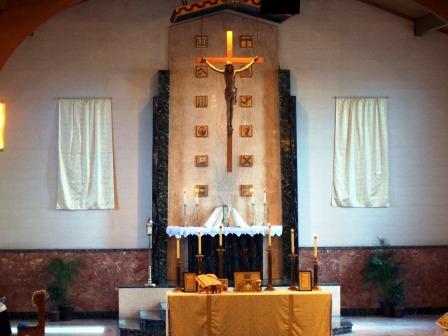
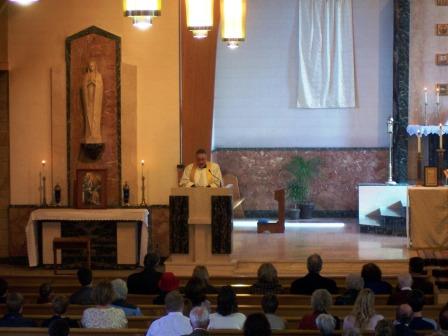
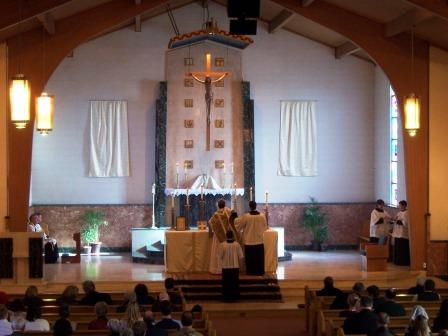
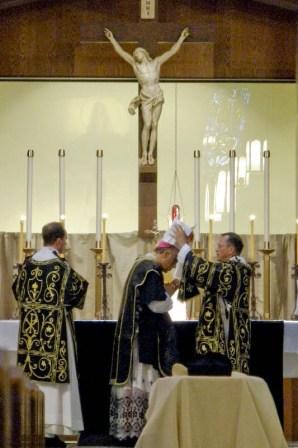
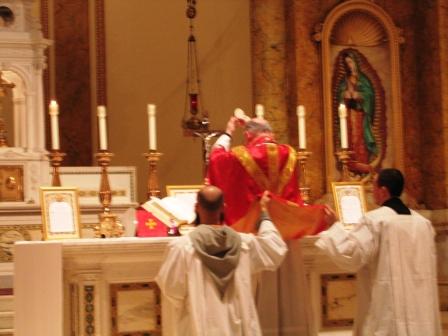
In the news bulletin of the Cathedral of Tulsa, there is news that His Excellency Most Reverend Edward Slattery

"…will celebrate the 10 a.m. Mass ad orientem (that is, facing the same direction as the people) during Advent and Christmastime.  

"I hope that this common posture of the Church at prayer will help you to experience the transcendent truth of the Mass in a new and timeless way," said Bishop Slattery, who explained that this posture is particularly apt for Advent when the Church celebrates Christ’s triple coming: his first in Bethlehem, his present coming at Mass and his future coming at the end of time. "I pray that this restored practice will help us understand that at Mass we participation in the authentic worship which Christ offers to His Father be being ‘obedient unto death.’" (Philippians 2:8)


Posted in SESSIUNCULA |
63 Comments

A note from a priest about the “gloom spreaders”

From a priest reader.  My emphases and comments:

Reverend and Dear Father Zuhlsdorf,

Firstly, thank you for your blog, which I enjoy reading very much.  I first became aware of it through a search for some or other phrase in the 1970 MR, and I was quite hooked from the moment I cyberstumbled upon it.  Good show.

Secondly, I appreciated very much your citation recently of the communication of the Sons of the Most Holy Redeemer (the erstwhile Transalpine Redemptorists).  Your simple statement that there are those who "try to spread the gloom" hit dead home with me.

You see, I am a member of a clerical community which is in the process of regularization with the Holy See.  As to the specifics of this process, I have precisely no insight as it is being attended to by my superior and the proper authorities.  (Having had my fill of bureaucracy in this lifetime, I am quite happy to be out of that particular loop for the time being).

I do, however, interject myself to beg most earnestly your prayers for us (and to ask your readers to pray, also).  Be assured that you remain in my own prayers every day.

Part of the problem of the gloomspreaders, in my opinion, is that they seem to think that such regularization is somehow going to "save the Church" in the twinkling of an eye.  Well, indeed.

All I can say is that last week I had to give the last sacraments to a seventeen year old girl who had been shot in the head in a drive-by shooting for no discernible reason.  I had to comfort as best I could her mother and family when her life signs had finally ceased.

I can not save the Church.  I can, if I allow Christ, the High Priest, to work through the nothing that I am, who am yet called to be His priest, exercise in some small way the power of His grace and His sacrifice in the soul of another person.  That’s all.  [Amen and Amen.]

So your words were comforting.  Sometimes, just pointing out the obvious shows how absurd it really is.  Let the gloomspreaders glower.  I will just continue to be a priest.

(Insert obligatory closure, mutatis mutandis, to semi-humorous effect:) Inclining with a minima minimarum to the sacred black, I remain,

A nice note.

Would you in your kindness stop, right now, and say a St. Michael prayer for these men and this priest in particular?

Posted in Mail from priests |
40 Comments

Report on the TLM with Mozart’s “Sparrow Mass” in Kalamazoo

UPDATE:

I added the audio of the sermon for the Mass.

____________

Our friends at St. Mary’s in Kalamazoo have sent photos and sound clips of the Mass yesterday for the Last Sunday after Pentecost (1962MR).

The music was Mozart’s "Sparrow Missa Brevis" (Mass No. 10 in C major, K. 220).

I was told that over 500 people attended.

This parish is staffed by a fledgling Oratorian community. 

Fr. David Grondz was celebrant and Fr. Robert Sirico delivered the sermon.

The audio files I was sent are at the bottom of this entry.

Brick by brick!

Report on the TLM with Mozart's "Sparrow Mass" in Kalamazoo

Report on the TLM with Mozart's "Sparrow Mass" in Kalamazoo

Report on the TLM with Mozart's "Sparrow Mass" in Kalamazoo

Report on the TLM with Mozart's "Sparrow Mass" in Kalamazoo

Report on the TLM with Mozart's "Sparrow Mass" in Kalamazoo

Report on the TLM with Mozart's "Sparrow Mass" in Kalamazoo

_________

UPDATE:

From Fr. David Grondz:

Dear Folks,
More information from the Mozart Mass this Sunday.  I include here the Introductory Letter/Explanatory Note that was printed in the program.
Post and comment with it as you like.

Fr. David


                                                  Sunday; 23 November 2008 Dear Friend,
            Many changes have taken place in the Catholic Church following the Second Vatican Council (1962-65), especially in the celebration of the Mass.  Today, due to the influence of Pope Benedict XVI, it is again possible to have a regular celebration of the Mass following the ceremonial of the Liturgical Books issued in 1962, that is, immediately preceding the Ecumenical Council.
            Here at St. Mary this type of Celebration is not a ³museum-piece².  Rather, by following the desire of the Holy Father, this Form of the Mass may become a familiar part of Catholic life and culture.
Over time, this will re-create a sense of continuity in our Liturgical heritage and tradition. This parish celebrates both forms of the Mass, that of the Second Vatican Council¹s Reform in English and that of the older usage, commonly called the ³Tridentine² or ³Latin² Mass.
            It has been my desire as a musician and now as a priest, to reclaim our Catholic tradition of music from the concert hall and return it to its intended use: the celebration of the Sacred Liturgy of the Church.
The Mass that we celebrate this afternoon is just such an attempt; the first, I might add, of its¹ kind at St. Mary and quite possibly in the Diocese of Kalamazoo.  You will hear Mozart¹s setting of the Mass in a different way, along with Gregorian Chant and all of the complexity and mystery of the Mass celebrated in Latin. Please remember that this is not a performance, but a Sacred Action.  Applause is not appropriate.  Although Mozart might have found it amusing, please turn off your cellular telephone or switch it to the ³vibrate² setting.
            I have included here some basic directions and translations of the texts used throughout the Mass, so that you may follow along and participate in the celebration more fully.  It is not important that you understand every word or gesture.  The experience of the Liturgy, which gives us a glimpse into Eternity, engages all of our human senses and not just our ability to understand the written or spoken word.
If you have ever been to the opera, it is a similar experience; at some point you put down the program and follow the story, perhaps imperfectly, but the gestures and costumes of the actors or the beauty of the music convey something to you as well.  In the celebration of the Mass, what is communicated to you is the Passion, Death and Resurrection of Jesus Christ, not as a symbol or a story, but in reality!  Christ, raised from the dead, is made present on the Altar and given as food to His people for the journey towards Eternal Life.
        I would encourage you to put down the program and enter into the great beauty and mystery of the celebration of the Holy Eucharist.
 
 
                                        Fr. David Grondz
                                        Parochial Vicar


Posted in Mail from priests, SESSIUNCULA, SUMMORUM PONTIFICUM |
4 Comments

A REAL Requiem for a priest

The following came to my attention via a kind reader:

Pontifical Requiem Mass on November 21st

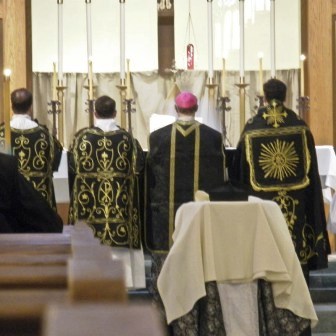
Pontifical Requiem Mass will [was] for the repose of the soul of the Rev. Msgr. Anthony Ferrero [RIP] of the Diocese of San Bernardino. Msgr. Ferrero died this October 12th, and will be remembered in San Diego for having served as Assistant Priest in Bp. Cordileone’s Solemn Pontifical High Mass for the Feast of the Exaltation of the Cross in 2005. The Mass will be served by the Brothers of the Little Oratory in San Diego, with polyphony provided by members of the Bach Collegium San Diego.

Someone sent photos of the Requiem


A REAL Requiem for a priest

A REAL Requiem for a priest

A REAL Requiem for a priest

A REAL Requiem for a priest

A REAL Requiem for a priest

Posted in SESSIUNCULA |
15 Comments

TLM at Dunwoodie, St. Joseph’s Seminary

From a seminarian:

I am a seminarian for the Archdiocese of New York and an avid reader of your blog. I thought the following piece of information might be of interest to similar readers. On the feast of St. Cecilia (11/22), St. Joseph’s Seminary held its first Mass in the Extraordinary Form in the main chapel. Last year the Mass was offered in one of our auxiliary chapels as the main chapel was being "touched-up" in anticipation of the papal visit. Many are very happy to welcome the Mass that formed the spiritualities of countless priests who have gone through our seminary. The Low Mass was celebrated by our previous house spiritual director and served by two seminarians. We hope that provisions will be made soon to offer practicums and training to all who are eager to discover the riches of our sacred and venerable tradition.

TLM at Dunwoodie, St. Joseph's Seminary

Posted in SESSIUNCULA |
16 Comments

Rem acu tetigerunt! The importance of knowing Latin

From a reader:

Hi Fr. Z,

While I think you would  appreciate the entire list of 10 that Victor Davis Hanson writes about today, #1 goes to the crux of what you’ve been talking about for years. Here is the link:

Here is the relevant excerpt:

1. Four years of high-school Latin would dramatically arrest the decline in American education. In particular, such instruction would do more for minority youths than all the ‘role model’ diversity sermons on Harriet Tubman, Malcolm X, Montezuma, and Caesar Chavez put together. Nothing so enriches the vocabulary, so instructs about English grammar and syntax, so creates a discipline of the mind, an elegance of expression, and serves as a gateway to the thinking and values of Western civilization as mastery of a page of Virgil or Livy (except perhaps Sophocles’s Antigone in Greek or Thucydides’ dialogue at Melos). [Nah… stick to Latin.]  After some 20 years of teaching mostly minority youth Greek, Latin, and ancient history and literature in translation (1984-2004), I came to the unfortunate conclusion that ethnic studies, women studies–indeed, anything "studies"– were perhaps the fruits of some evil plot dreamed up by illiberal white separatists to ensure that poor minority students in the public schools and universities were offered only a third-rate education. 

Again, I want to thank you for inspiring me to teach my young boys’ Latin.

Rem acu tetigerunt!

Posted in SESSIUNCULA |
26 Comments

QUAERITUR: Advent wreaths and my annual rant on BLUE vestments

QUAERITUR: Advent wreaths and my annual rant on BLUE vestmentsAbout this time of year I start getting questions about advent wreaths.

For example, this came from a a reader today:

Dear Fr. Zuhlsdorf,
 
Is it proper to use scented candles for the advent wreath?

Sure… if you want to deal with the smell.

I am much of a scented candles sort of guy, frankly.   But often it is hard to find unscented candles in the colors you need. 

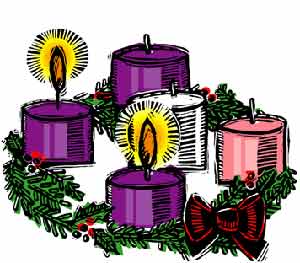
Those colors are, as everyone ought to know, purple or violet and rose (pink in a pinch).  Some people have white or cream candle in the center for Christmas Day. 

Those are the colors that should be used and other colors are, well, just plain wrong!

"But Father!  But Father!", more than a few of you might be saying.  "You are so judgmental!  Wrong?  How can you say that!  At my parish there is always an advent wreath and the colors are blue and white!  And if they do it that way it must be right!" 

Blue… yah… liturgical blue.  This comes up every year as well.

Remember, folks, that the colors of the candles on the Advent wreath have a purpose.

If people ask you, "Why are there three purple candles and one pink on an Advent wreath?" you can give them the straight and correct answer. 

Despite the claim of some Lutherans that they developed the Advent wreath, the answer I give is, "those are the colors a Catholic priest wears when saying Mass on those Sundays."

But why pink or properly rose on the third Sunday of Advent?

Easy: rose is the color used on the fourth Sunday of Lent!

Perpend:

In Rome for centuries now there are celebrations of Mass during the great seasons of Lent/Easter and Advent/Christmas at "station" churches. In Lent, the fourth Sunday is called "Laetare" (which means in Latin pretty much what "Gaudete" means…"rejoice!"). The station Mass for "Laetare" Sunday was at the Basilica of the Holy Cross in Jerusalem not far from the Lateran Basilica (the Pope’s cathedral in Rome).

It was the custom on this day, stretching perhaps back to the time of Pope St. Gregory III (740), for the Pope to bless special roses made of gold that were to be sent to the Catholic kings, queens and notables. Thus it was called Dominica de rosa…. Sunday of the Rose.

It doesn’t take much imagination to develop rose vestments from this custom.

Soon the practice of using rose (the technical term for the color to be used is rosacea… from the Latin adjective for "made of roses") spread from that basilica to the rest of the City. As a Roman practice it became part and parcel of the Roman Missal promulgated by Pius V through the world.

The custom is coming back into vogue again, thanks be to God. Once again you see rose vestments in church goods catalogues and shops.

Perhaps your parish needs them? Many churches threw them in the dumpster after Vatican II, along with all their black, all maniples and burses of all colors, and anything that wasn’t polyester, wasn’t finger-painted, and didn’t drape.

But I digress…

Because of the parallel between Advent’s "Gaudete" and "Laetare" of Lent, the use of rose vestments spread to "Gaudete" as well. So now there are two days of the year when rose is permitted.

It is not obligatory to use rose on Gaudete or Laetare, but it is a beautiful custom.

Now for the whole blue thing. 

Blue is not an approved liturgical color for Advent or any other time.

Sorry, I am not making this up.

Not that I have anything against blue, of course. It is simply liturgically illegal right now.

When the Holy See approves the use of blue I will happily put it on!

Instead of agitating for women priests, I wish the agitators would agitate for blue vestments… without breaking the law, of course.

Imagine! Traditional priests, deacons and subdeacons putting on blue maniples, blue dalmatics and tunics, covering chalices with blue veils and blue burses, hiding patens under blue humeral veils.  I believe some traditional groups use blue anyway, even now, on the rather thin excuse, IMO, that in Spain and Spanish territories there was, a zillion years ago, a special indult, etc. etc.  I find that argument a little weak.  But… I guess there are far more serious things to worry about.

This whole liturgical blue issue always brings to my ming a parody song made years ago by one of our participants here, the Timothy the Parodist, now the official WDTPRS parody songwriter. 

Sing this to the tune of O Come, O Come Emmanuel:

O come, o come liturgical blue;
out with the old, and in with the new.
Let’s banish purple vestments from here,
the color blue is very HOT this year.

REFRAIN:

Gaudy, gaudy, gaudy chasubles,
in baby, navy, powderpuff and teal.

Since Advent is the Blessed Virgin’s time,
we’ll wear blue, though it’s a canonic crime,
and in the third week, we’ll wear white.
Although it’s wrong, we’ll say that it’s alright.

R.

Around the wreath we’ll place blue candlelight,
and in one corner, we will place one white.
We’ll drape blue over our communion rail,
and use blue burses with blue chalice veils.

R.


Posted in ASK FATHER Question Box, Classic Posts, Parody Songs |
44 Comments

The spiritual danger in using gadgets, internet, etc.

From ZENIT:

Don’t Let Wi-Fi Leave Your Prayer Life Dry

Vatican Aide Encourages Setting Aside Times of Silence

VATICAN CITY, NOV. 23, 2008 (Zenit.org).- In the age of cell phones and the Internet, the Holy See’s spokesman warns that your prayer life could be in danger.

Jesuit Father Federico Lombardi, director of the Vatican press office, made these remarks on the most recent episode of the weekly Vatican Television program “Octavia Dies.”

“There is an interior and spiritual dimension of life that must be guarded and nourished. If it is not, it can become barren to the point of drying up and, indeed, dying” the Jesuit priest said.

“Reflection, meditation, contemplation are as necessary as breathing. Time for silence — external but above all internal — are a premise and an indispensable condition for it.”

Father Lombardi offered these reflections Friday on the occasion of “Pro Orantibus” Day, a day for men and women religious who dedicate themselves to a life of contemplation and prayer.

“In the age of the cell phone and the internet it is probably more difficult than before to protect silence and to nourish the interior dimension of life,” he observed. “It is difficult but necessary.

“For believers, in this dimension prayer, dialogue with God is developed, life in the spirit, which is more important that physical life itself. Jesus told us not to fear those who can kill the body as much as the one who can destroy our soul."

“What is true for the individual person, is true for the community of the Church, true for humanity," the spokesman continued. "If for each one of us it is essential to know how to preserve dialogue with God in daily life, for the Church it is essential to have the sign and reality of life dedicated to contemplation and prayer, and for humanity it is essential to know there are beacons of light, sages and masters of the spirit.”

Without attentiveness to and cultivation of the spiritual life “you will lose your soul," added Father Lombardi. "And today this is a very grave threat, and it is the most irreparable misfortune.”

Posted in SESSIUNCULA |
15 Comments

Interesting note from a reader about CHD

From a reader:

Fr. Z — in case you do a "call" for readers to submit Campaign for Human Development (a.k.a. ACORN fund) stories today, the traditional Latin Mass in Washington, D.C. raised a total of $10 from a congregation of several hundred after the priests there spoke bluntly about the organization.  (We have $20,000 raised out of $60,000 needed for the restoration of our Marian side altar, with several people earmarking the funds instead of the second collection.)
 
Also, the cathedral (!) in Arlington, Va. had its assistant rector talk about ACORN at today’s novus ordo.  He was chased down in the hallway by Obama supporters after that liturgy.
 
I am guessing this is but a small sample…


Posted in SESSIUNCULA |
Comments Off on Interesting note from a reader about CHD

News from the Transalpine Redemptorists

You might recall that the so-called Transalpine Redemptorists, now the Sons of the Most Holy Redeemer, in Scotland, reconciled with Rome and now enjoy the fruits of deeper unity with Peter.

There is an interesting update on their situation at their blog.

Submission to Peter is the right way to go.

Since our reconciliation with the Holy See on 18 June 2008 statements have been made on the internet indicating that we had a ‘slow thorny’ road ahead of us and that we had been wrong to trust the Church. It was quickly pointed out that we had no faculties.

We had to bear these remarks patiently; it is good for the soul. In truth though, the only thorn to be borne in these statements was that they came from those we love, some fellow traditional Catholics, seemingly intent on making the worst out of our decisions. [Some people are happy only when they are unhappy.  Alas, they also try to spread the gloom.]

In fact the road has not been ‘thorny’ nor has it been slow. Consider the facts. We were received by the Church as a community wanting to remain as such; but according to Canon Law we were not incardinated anywhere in the Church structures either individually as priests or collectively as a community. Normally speaking since we were not incardinated anywhere we would be without faculties until everything was perfectly regularised; this would take time.
But the Church being a true mother, aware of the needs of the community and the faithful in Stronsay who have recourse to us, has granted us interim faculties to see us over.  [The Pont. Comm. Ecclesia Dei can grant faculties in this manner.]

Surely since the Motu proprio of 7 July 2007 [Summorum Pontificum] there should be forgiveness and a return to trust in the Church. This is what we have done. We trust the Church. We trust the Holy Father. We are not being abused by the Church or the Holy See; as some have said. We are not being forced to say the New Mass; as many say. We are not being trapped to be destroyed. Dear friends we are being supported and accommodated without anybody asking us to compromise anything. The bishops of Aberdeen and Christchurch have gone the extra mile beyond the limits of the canonical requirements. This is well worth noting. My experience of the Holy See and regularisation has been excellent. It has not been a bad experience.

We invite any priest who wants to consider being reconciled to the Holy See, to stay on Papa Stronsay for as long as he wants, anonymously and with no strings attached. Submission to Peter is the right way to go.

Posted in SESSIUNCULA |
13 Comments