It gets dark and cold quickly in the evening here at the Sabine Farm.
And so when someone comes for supper, a fire is laid in the fireplace and the food is a bit more substantial.
The other night a friend came over and we had a cooperative meal: I made the first course and he made the second.
My contribution was cooperative in more than one way. One of you wonderful readers helped me make it by having sent me a critical ingredient through my amazon wish list!
And so I made risotto with taleggio (cheese) and pears. This stuff is very yummy and can be habit forming, so proceed with caution.
Before you start, it is a good idea to warm the broth you will use in a pan. For this recipe, you’ll want, say, 6 cups or so of vegetable or, if you want to go to the darker side of flavor, chicken broth.
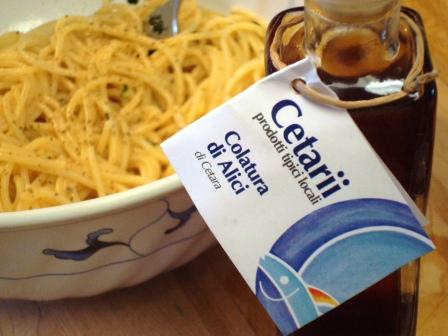
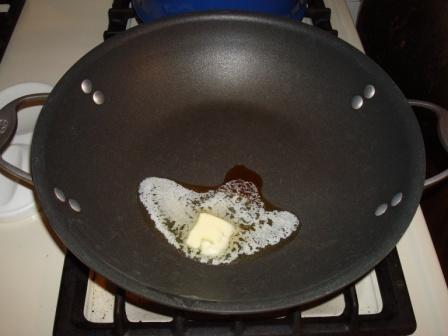
I started with some butter in the pan with just a tiny bit of sesame oil just to give an addition layer to the background flavor. This is not something I usually do when making risotto, but I decided to play around a bit. Let’s call it a couple tablespoons of butter and half a tsp of sesame oil.

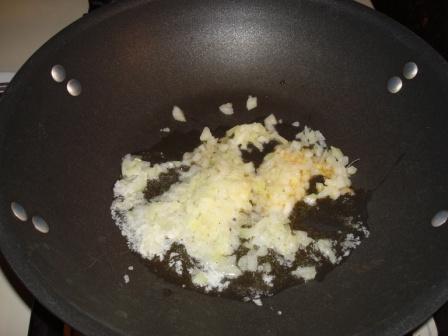
I goes the finely chopped yellow onion. I like vidalia.
Cook this on a low heat until it gets translucent. Or at least that is what I should have done, but I started working on something else and I got a few little brownies in there. No harm done.
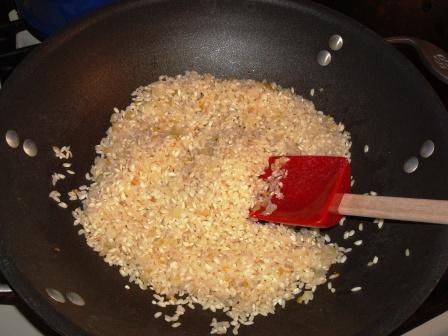
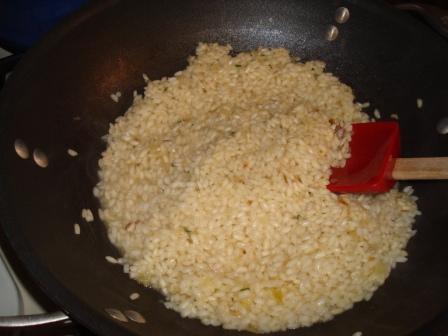
In goes the rice. You probably want to use arborio rice, which is high in starch. Let’s say about a cup and a half. Stir it around in the pan quickly to get all the grains coated and slightly cooked so that the kernels start releasing their starch in the broth as you add it.
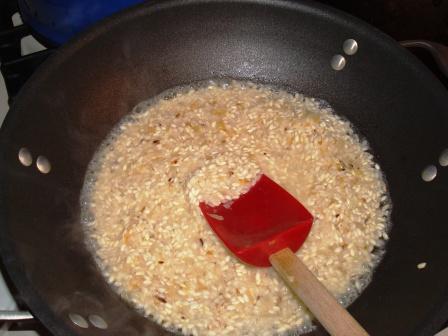
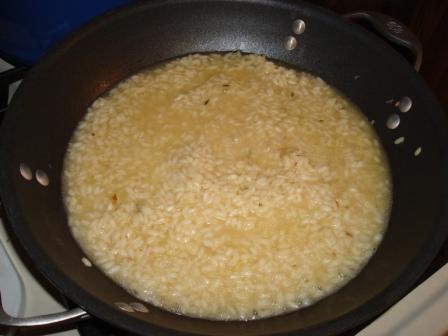
At this point toss in a glass of dry white wine, which you have probably been sipping at while working. Put it in and let it reduce will it is almost gone. Then replenish the liquid with the warm broth, a ladle at a time, stirring it in.
The key to making risotto is the patient adding of liquid and then letting it cook down. Then adding more and letting it cook down. The rice will begin to expand and release starches so that it starts getting creamy in texture. Risotto is therefore fairly easy to make, especially if you are working on some other things. Just turn around once in a while, add a little more broth, stir it, and do something else.
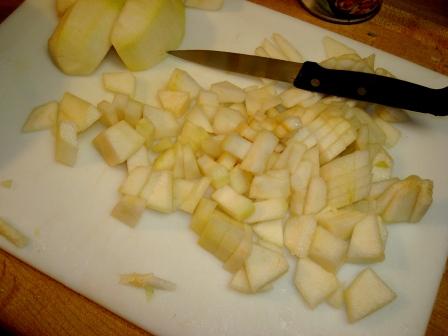
For example, peel, core and chop up a couple pears. I prefer those red pears. I forget what they are called. Anjou? Alas, I didn’t have any. But I did have a couple ripe green Bartlett pears.
I think the next time I make this, I will cut them into slightly larger chunks.
Back at the stove, the rice is expanding and the whole thing is getting thicker.
When the rice is just about al dente, you want to put in your pears. If the pears are really firm, give them a bit longer to cook in the rice and broth, perhaps about 3 minutes. At this point I also added about a 1/4 tsp of thyme fresh leaves I stripped off their little twigs. Again, this was just playing around a little. You have to be really careful with these savory herbs so that they don’t overwhelm your delicate flavors.
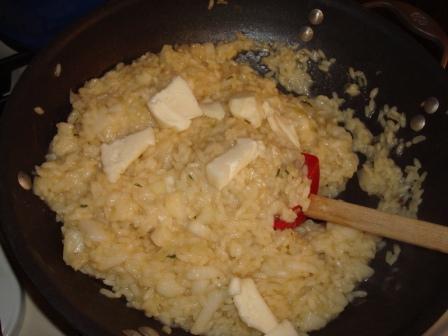
Then you can add your taleggio! I am guessing about put in about 4 oz, about half of what I received from the kind WDTPRSer. Because warm taleggio can get a little gooey, I kept it in the fridge until I needed it. Put it in a little at a time, stirring it through. It’ll blend in quickly. You can always add a touch of broth, if you have any left to adjust the consistency.
The final product is very smooth and creamy in texture. It is pretty filling, too. If you have additional courses, don’t plate up too much of the stuff, no matter how tempted. My recipe here would serve about four people.
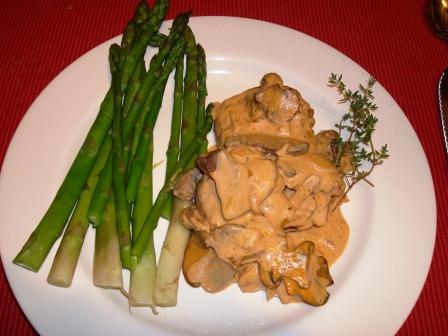
The second course was fresh wild pheasant cooked in cream with mushrooms, sherry and savory herbs, that is, rosemary, sage and thyme. My guest had started this at home, boning and carefully checking for shot, and brought it over. I steamed asparagus to go with it, obviously. It is really cheap right now.
I don’t have shots of the prep for the pheasant.
First, lightly kill the pheasant. A shotgun helps, unless you are really fast. Gut it, strip it down and bone it. Check for shot. Few things are as unpleasant and shot filled pheasant. Your teeth will appreciate your diligence.
After that, you can start with some onion in a big frying pan, again with the butter. Add the mushrooms. Pinch of salt and pepper. Wild mushrooms with a sturdy flavor are best for this. Put in the cream and start to reduce it. This time a tablespoon of tomate paste was added, for a little color and background flavor. You can add your herbs at this point. You might make a bouquet garni for this. I used dental floss to tie these. The point is that these savory herbs can really overwhelm your dish. Check the flavor and then pull your bouquet garni when you think it is right. Add your sherry to your taste. Put the pheasant into your pan, into the reduced cream and sherry and cook until done. Be careful. This’ll take about 10 minutes.
A knife was present, but not really necessary in the end, it was so tender. And the pheasant was fresh. It hadn’t ever been frozen.
So, that was a supper at the Sabine Farm.
And for those of you who think that this is extravagant, stop to think about the ingredients. A few tablespoons of butter, arborio rice maybe $2.50, a couple cans of broth purchased in bulk at Sam’s Club, say, $2.00, an onion – $1.25, some mushrooms which you can pick and dry or purchase for, say, $4.00, asparagus on sale for $2.50/lb, a couple shotgun shells for, say, $1.25 each, homegrown herbs, a bottle of wine, say, $15, cream about $3.50. Pears: $2.00 on sale. The wine was a gift and a WDTPRSers sent the tallegio. So let’s call it $15 for the meal for two with leftovers… except the wine. That’s all gone.
Then you just need the time and the will and a friend to help with the eating.


 Our friends at the Latin Mass Society in the UK sent the following report:
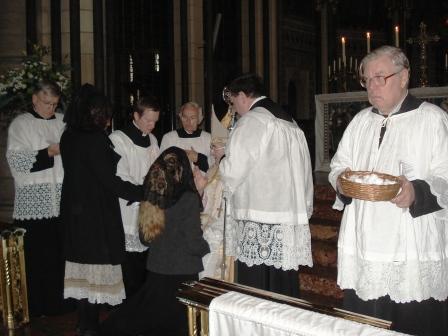 Bishop Stack administered Confirmation in the Extraordinary Form at the request of Cardinal Cormac Murphy-O’Connor. 45 candidates received the sacrament – 40 children and 5 adults. This was the fifth year of the annual ceremony.
 choir in singing the Veni Creator Spiritus and other traditional hymns. During the anointing, the choir sang polyphony and plain chant. After the confirmations, Bishop Stack conferred Benediction of the Blessed Sacrament and led the congregation in the Divine Praises.



 You know the KISS protocol, right?



 ex seaxe on Pope Leo XIV airplane interview: remarks about relaxing Traditional Latin Mass restrictions: “Asked whether he would reconsider his priorities after his surgery and the long trip, Leo replied, “I don’t feel like…”




























