Get updates in your inbox

About this blog…
“This blog is like a fusion of the Baroque ‘salon’ with its well-tuned harpsichord around which polite society gathered for entertainment and edification and, on the other hand, a Wild West “saloon” with its out-of-tune piano and swinging doors, where everyone has a gun and something to say. Nevertheless, we try to point our discussions back to what it is to be Catholic in this increasingly difficult age, to love God, and how to get to heaven.” – Fr. Z
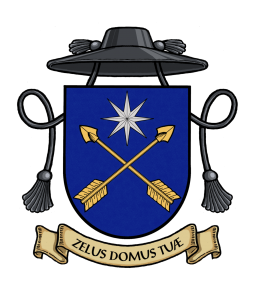
Coat of Arms by D Burkart
Recent Comments
- waalaw on Daily Rome Shot 1119: “In 1st variation, 2. . . . . . Q-g1# also works. As does 4. . . . . .…”
- on Daily Rome Shot 1119: “The folks in Charlotte need to test this by kneeling for Holy Communion right in front of the priest in…”
- on NB: Desktop and Posting – Zuhlsdorf’s Law kicks in – UPDATE: “I understood Windows 7, and stayed with that a long time, because it was such a stable and reliable system.…”
- on Daily Rome Shot 1119: “If the hoary old men of the Vatican wanted to instill a deep and abiding disgust of all things Vatican…”
- on Daily Rome Shot 1119: “Black mates in 4: 1. . . . Qe3+ 2. Ke1 Rg1+ (if 2. Kf1, Qg1++) 3. Rf1 RxR+ 4.…”
- on Pope Leo XIV airplane interview: remarks about relaxing Traditional Latin Mass restrictions: “@ProfessorCover: he did have a ready answer: no. That you disagree with the Roman Pontiff’s response does not make him…”
CLICK and say your daily offerings!
A Daily Prayer for Priests
Federated Computer… your safe and private alternative to big biz corporations that hate us while taking our money and mining our data. Have an online presence large or small? Catholic DIOCESE? Cottage industry? See what Federated has to offer. Save money and gain peace of mind.
ABORTION PILL RESCUE NETWORK
Everyone, work to get this into your parish bulletins and diocesan papers.
Donate using VENMO
GREAT BEER from Traditional Benedictine Monks in Italy
Good coffee and tea. Help monks.
I use this when I travel both in these USA and abroad. Very useful. Fast enough for Zoom. I connect my DMR (ham radio) through it. If you use my link, they give me more data. A GREAT back up.
Help support Fr. Z’s Gospel of Life work at no cost to you. Do you need a Real Estate Agent? Calling these people is the FIRST thing you should do!
They find you a pro-life agent in your area who commits to giving a portion of the fee to a pro-life group!
This blog has to earn its keep!
PLEASE subscribe via PayPal if it is useful. Zelle and Wise are better, but PayPal is convenient.
A monthly subscription donation means I have steady income I can plan on. I put you my list of benefactors for whom I pray and for whom I often say Holy Mass.
In view of the rapidly changing challenges I now face, I would like to add more $10/month subscribers. Will you please help?
For a one time donation...
To donate monthly I prefer Zelle because it doesn't extract fees. Use
frz AT wdtprs DOT com
Grand Rapids, Michigan
I drove first to Kalamazoo, MI – gotta love that name – isn’t there a Big Band era song that mentions Kalamazoo? – with a friend who came in from Rome. We were hosted by the gents at the new Oratory being formed in Kzoo.
On Saturday evening I addressed a group which had met for a workshop on Gregorian chant with Jeffrey Tucker of our friends over at New Liturgical Movement.
On Sunday morning I was celebrant for a Solemn Mass at St. Mary’s. The Mass was strictly according to the 1962 Missale Romanum. Thus the priest sat for the singing of the Epistle, there was no extra Confiteor before Communion and a couple other little changes. I don’t think I have ever been celebrant for a Solemn Mass strictly according to the 1962 rubrics.
However, as you know by now, there were terrible storms in the region and KZoo was also hit. Power lines went down in our area, thus leaving our house without electricity. Therefore I couldn’t get on line.
So, we made the decision that we would come up to Grand Rapids a day or so early. We are to participate here in GR at the annual meeting of the Acton University sponsored by the Acton Institute. Some 400 people will be here for the conference from, I am told, several dozen countries around the world.
Acton Institute is a very interesting organization. I got to know it in Rome, where there in an office. Acton sponsored a series of conferences in Rome a couple years ago focused on Centessimus annus of Pope John Paul II. I attended almost all of them and each one was gem. I’ll give you reports about this year’s Acton U. It might be something you might be interested in participating in some year, especially if you are interested in the Church’s voice in public square about human freedom and economics.
Since the AC doesn’t start until tonight, my Italian friend and I, Fabrizio… famous staffer of the Catholic Online Forum and long time friend, went across the street from our hotel to visit the President Gerald R. Ford Presidential Museum. Here it is as viewed from my room:

In the entrance to the building you see some words from President Ford’s speech when he assumed office. Truly a tough job in difficult times.


Tough times indeed.

The Museum has interesting objects. Here are some of the very tools used during the break in of the Democrate Committee Headquaters at the Wategate Hotel.

Modern Presidential Libraries/Museum’s have replicas of the Oval Office as it was in the time of that President.
Fabrizio and I were both favorably impressed with the number of pipes President Ford had. They are everywhere around the office.

One of the most controversial things Pres. Ford did was pardon former Pres. Nixon.

Some of the issues they faced back then… well… it all sounds very familiar.

It was a very interesting morning.
Now I just got a call from the offices of The Wanderer, to which you should subscribe, telling me that I have to get my article in early so that they can get the paper in the mail a day early this week. You can subscribe, by the way, to an online edition that gives you the full paper in a very good graphic form: cut down your time in getting it in the mail, save The Wanderer the postal expense which is becoming crushing.
I understand that some big publications pushed the US Postal Service to raise rates on small publications. Hmmm….
Back in business but pretty busy
I am now in Grand Rapids, Michigan – where there is indeed electricity.
I’ll be a little busy this morning, but I should be able to get online later and get some work done.
At that time I will post a bit.
Now? BREAKFAST!
Then we will have a visit to the Gerald Ford Presidential Library/Museum.
This will be the first time I have ever visited a presidential library.
I imagine this one will be rather interesting, in how it presents the fascinating and difficult period following the resignation of President Nixon.
Ireland: International Liturgy Conference
A reader sent me a reminder about the upcoming conference in Ireland. It seems very interesting. I wish I could attend.
Ireland: International Liturgy Conference
“Benedict XVI and the Sacred Liturgy” is the title of an international liturgical conference to be held on Saturday, July 12, on Fota Island, a beautiful island in Cork Harbor, near Cobh (Queenstown), Ireland.
Speakers will include:
Father Manfred Hauke of Lugano, Switzerland, professor of dogmatic theology at the Theological Faculty of Lugano; and author of The Priesthood and Women;Father Uwe Michael Lang, a priest of the London Oratory, author of Turning Toward the Lord: Orientation in Liturgical Prayer.
Father Dennis McManus, Georgetown University professor and chaplain, and former associate director of the US Bishops’ Committee on the Liturgy, and consultant to the Vox Clara committee to review the new Roman Missal translation;
Alcuin Reid, Australian author of The Monastic Diurnal, and The Organic Development of the Liturgy;
Father Neil J. Roy, visiting assistant professor at Notre Dame University and editor of Antiphon, the journal of the Society of Catholic Liturgy.
James F. Hitchcock, professor of history at St. Louis University, author of Recovery of the Sacred; and
Helen Hull Hitchcock, editor of the Adoremus Bulletin and co-founder of Adoremus: Society for the Renewal of Catholic Liturgy.
The event will take place at the Sheraton Fota Island Golf Resort and Spa.For complete details of the conference program and registration information, e-mail: colman.liturgy@yahoo.co.uk.
Bp. Robert Morlino of Madison get it
I have written to you before about His Excellency Most Reverend Robert Morlino, Bishop of Madison, Wisconsin.
You might remember that Bishop Morlino had a change of view on the older form of Mass after Summorum Pontificum was released.
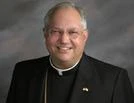 You might remember how he celebrated a Pontifical Mass in the older rite with the help of members of the Institute of Christ the King.
It seems that Bishop Morlino is paying attention to the Holy Father, understanding the message in Pope Benedict’s examples, documents and sermons, and is getting on board.
Now I receive this from a reader:
Father,
I found a wonderful homily by Bishop Robert C. Morlino of the Madison, WI diocese on the Feast of Corpus Christi. He talks about the reverence we should have when receiving the Eucharist. He talks to the congregation about how he set up 6 kneelers in the front of the church for the Mass and invites the people to receive Communion while kneeling and on the tongue.
Bishop Morlino – Corpus Christi Communion (VIDEO)
Bishop Morlino – Corpus Christi Homily (VIDEO)
Please share this. It is part of the Pope’s Plan.
I notice on the website of the diocese they have prominently displayed the prayer to St. Michael the Archangel!
What is this all about? You will recall that for his Mass in Rome at St. John Lateran on Corpus Christi Pope Benedict had a kneeler placed before him and he gave Communion to those who approached kneeling and only on the tongue. Check here and here to refresh your memory. He has also taken the sort of stand a Catholic bishop ought to take in the public square about the dignity of human life.
The Pope is teaching by example. And he isn’t just teaching liturgists or priests or even bloggers. He is teaching bishops. His way of celebrating Mass, with the Crucifix front and center, even celebrating ad orientem, giving Communion on the tongue to people kneeling, is an example to be followed.
Establishing a personal parish in Rome for the older forms of Mass and the sacraments was an example to be followed.
It sounds like Bishop Morlino gets it and he gets big WDTPRS kudos from us.
Paul VI’s Credo of the People of God
There is a very interesting piece from Sandro Magister at espresso.
It is about the Credo of the People of God issued by Pope Paul VI.
The Credo of Paul VI. Who Wrote It, and Why
The Church had a 1968 upheaval of its own, expressed for example in the Dutch Catechism. The response of pope Montini was the "Credo of the People of God." It has now come to light that it was written by his friend, the philosopher Jacques Maritain
by Sandro Magister
ROMA, June 6, 2008 – At the end of this month, Pope Benedict XVI will inaugurate a jubilee year dedicated to the apostle Paul, on the occasion of the 2,000th anniversary of his birth. The celebration will begin on Saturday, the vigil of the saint’s feast day, and will end one year later.
Forty years ago, between 1967 and 1968, Pope Paul VI did something similar. He dedicated a year of celebrations to the apostles Peter and Paul, on the occasion of the nineteenth centenary of their martyrdom. He called it the "Year of Faith." And he concluded it in Saint Peter’s Square, on June 30, 1968, with the proclamation of a solemn profession of faith, the "Credo of the People of God."
The text of this Credo retraced the one formulated at the Council of Nicea, which is recited at each Mass. But with important expansions and developments.
How, and why, did Paul VI get the idea to coronate the Year of Faith with the proclamation of the Credo of the People of God? And how was the text produced?
The answer to these two questions is in a book soon to be published in France, the sixth volume of the "Correspondence" between the Swiss theologian and cardinal Charles Journet and the French philosopher Jacques Maritain, the 303 letters that the two exchanged between 1965 and 1973.
Because it was Maritain who wrote the outline of the Credo of the People of God that Paul VI later recited. In the upcoming volume, the two texts will be printed side by side, with the few variations highlighted.
Meanwhile, however Cardinal Georges Cottier – a disciple of Journet, and theologian emeritus of the pontifical household – has already revealed the background of the Credo in the international magazine "30 Days," in the cover story of the latest issue.
* * *Maritain was 85 years old in 1967. He was living in Toulouse, with the Little Brothers of Charles de Foucauld. He had just published "Le paysan de la Garonne [The peasant of the Garonne]," an unsparing criticism of the post-conciliar Church "on its knees before the world."
On January 12, Cardinal Journet wrote to Maritain to tell him that he would soon be meeting with the pope, in Rome. Neither of them knew that Paul VI intended to enact the Year of Faith. But Maritain confided to Journet that a few days before, "an idea had come to me," which he describes this way:
"The Sovereign Pontiff should draft a complete and detailed profession of faith, in which everything that is really contained in the Symbol of Nicea would be presented explicitly. This will be, in the history of the Church, the profession of faith of Paul VI."
Although Maritain did not ask him to do so, Journet photocopied the philosopher’s letter and gave it to the pope, when he met with him on January 18. On that occasion, Paul VI asked the theologian for his judgment on the state of the Church’s health. "Tragic," Journet answered. Both he and the pope were in shock over the publication in Holland, one year earlier and with the blessing of the bishops, of a new Catechism aimed at nothing less than "substituting one orthodoxy for another in the Church, a modern orthodoxy for the traditional orthodoxy" (a comment from the commission of cardinals instituted by Paul VI to examine the Catechism, of which Journet was a member).
On February 22, 1967, Paul VI announced the Year of Faith. And two days later, Maritain noted in his diary:
"Is this, perhaps, the preparation for a profession of faith that he himself will proclaim?"
That same year, from September 29 to October 29, the first synod of bishops met in Rome. The final report of the doctrinal commission submitted to the pope the proposal of issuing a declaration on the essential points of the faith.
On December 14, Paul VI again met with Cardinal Journet, who told him about Maritain’s idea. And Paul VI reminded him that others had already suggested, at the end of Vatican Council II, the promulgation of a new symbol of faith. He himself, the pope, had asked the famous Dominican theologian Yves Congar to prepare a text, but he wasn’t satisfied with it, and set it aside.
Then, suddenly, Paul VI said to Journet, "You two, prepare for me an outline of what you think should be done."Back in Switzerland, Journet told Maritain about the pope’s request. And at the beginning of the new year, while he was in Paris, Maritain drafted a profession of faith. He finished it on January 11, 1968, and on the 20th he sent it to Journet. The following day, he sent it on to Paul VI.
It emerges from the correspondence between the theologian and the philosopher that Maritain intended his text to be simply a guide, to assist Journet. But Journet decided to send the text to the pope without adding anything. In his view, it already answered all of the doubts raised by the Dutch Catechism and by famous theologians on dogmas like original sin, the Mass as sacrifice, the real presence of Christ in the Eucharist, creation from nothing, the primacy of Peter, the virginity of Mary, the Immaculate Conception, the Assumption.
On April 6, a letter arrived from Rome from the Dominican theologian Benoît Duroux, an adviser for the congregation for the doctrine of the faith. It praised Maritain’s text and supplied a few comments, which Journet interpreted as having come from Paul VI, who had sent the cardinal a brief message of thanks.
Then nothing. On June 30, 1968, Paul VI solemnly proclaimed the Credo of the People of God in Saint Peter’s Square. Maritain found out about this only on July 2, when he read about it in the paper. From the citations, he surmised that the Credo that the pope had presented closely matched the one he had written.
And he was right. The few variations include one regarding the Jews and Muslims.
In one passage, Maritain had explicitly cited the common witness that the Israelites and Muslims give to the one God, together with Christians. But in his Credo, Paul VI gives thanks to the divine goodness for the "many believers" who share faith in the one God with Christians, without specifically mentioning Judaism and Islam.
During the 1950’s, Maritain came close to being condemned by the Holy Office for his philosophical thought, suspected of "extreme naturalism." One reason why the condemnation was not issued was that he was defended by Giovanni Battista Montini, the future Paul VI, who at the time was substitute secretary of state and had a longstanding friendship with the French thinker.
D. of San Diego – implementing Summorum Pontificum – follow up
You might remember an entry we had on the implementation of Summorum Pontificum desired by His Excellency Most Rev. Robert Brom.
His Excellency sent a letter in May in which he announced his will to impose a competency test on any priest thinking to exercise his rights as a priest of the Latin Rite to celebrate in Latin using the Novus Ordo or use the 1962 Missale Romanum under Summorum Pontificum.
In some respects, His Excellency’s letter sounded as if Summorum Pontificum didn’t exist.
Now there is another memo from the chancery, sent to me by a kind reader, actually several kind readers:
June 3, 2008
To: Priests in the Diocese of San Diego
Fr: Bishop Robert Brom
Re: Latin in the LiturgyThis is to follow up on my May 16th communication to you regarding Latin in the Liturgy.
Re: Competency Evaluation to Celebrate Liturgies in Latin.
A subcommittee to evaluate linguistic and rubrical competence includes Msgr. John Dickie, Father Frank Penko and Father John Proctor.
Again, competency to celebrate in Latin either the Mass (whether in the extraordinary or ordinary form) or other sacraments (whether according to the older or present ritual) should not be presumed but verified by this subcommittee of the Latin in the Liturgy Committee.
Appointments for an evaluation should be made through Father John Proctor:
(c) 619-892-0050
(h) 619-692-8119
jgproc@sbcglobal.netRe: Consultation before Scheduling Mass in the Extraordinary Form
Once again, before scheduling or continuing to schedule Mass in the extraordinary form or other sacraments according to the older ritual, pastors should consult with the Latin in the Liturgy Committee.
Appointments for a consultation should be made through Father Bruce Orsborn:
(c) 619-518-0567
(o) 619-582-5722
borsborn@blessedsacrament-sd.orgEvaluations and consultations will take place in the Liturgy Office at the Diocesan Pastoral Center.
Thank you for your cooperation in this important pastoral matter.
This raises questions.
First, the Code of Canon Law since 1983 requires that seminarians be well-trained in Latin.
Second, if there are going to be tests for Latin, will there be tests for English? Will all the priests of habitually using the Novus Ordo be tested for competency in the rubrics?
Also, what if there is going to be, say, a sung Sanctus or Agnus Dei in a Mass and… gasp … Father sings along wihtout having been declared competent to do so! And will there be a separate test for Greek so he can say Kyrie eleison?

 waalaw on Daily Rome Shot 1119: “In 1st variation, 2. . . . . . Q-g1# also works. As does 4. . . . . .…”