ROME 23/04 – Day 18: Viewed from afar

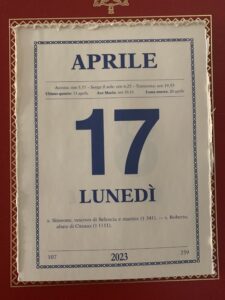
The sun rose at 0624 and set at 1956. The Ave Maria is at 2015.

Weather in Rome has been… unpleasant.  Very cool, breezy and off and on rainy.  So, you can’t plan easily.

Tomorrow should be nicer.  I hope to get out for a real leg stretch.

I’ve had a strong fatigue I’ve been fighting.  Spiritual?   Could be… Rome is… off.

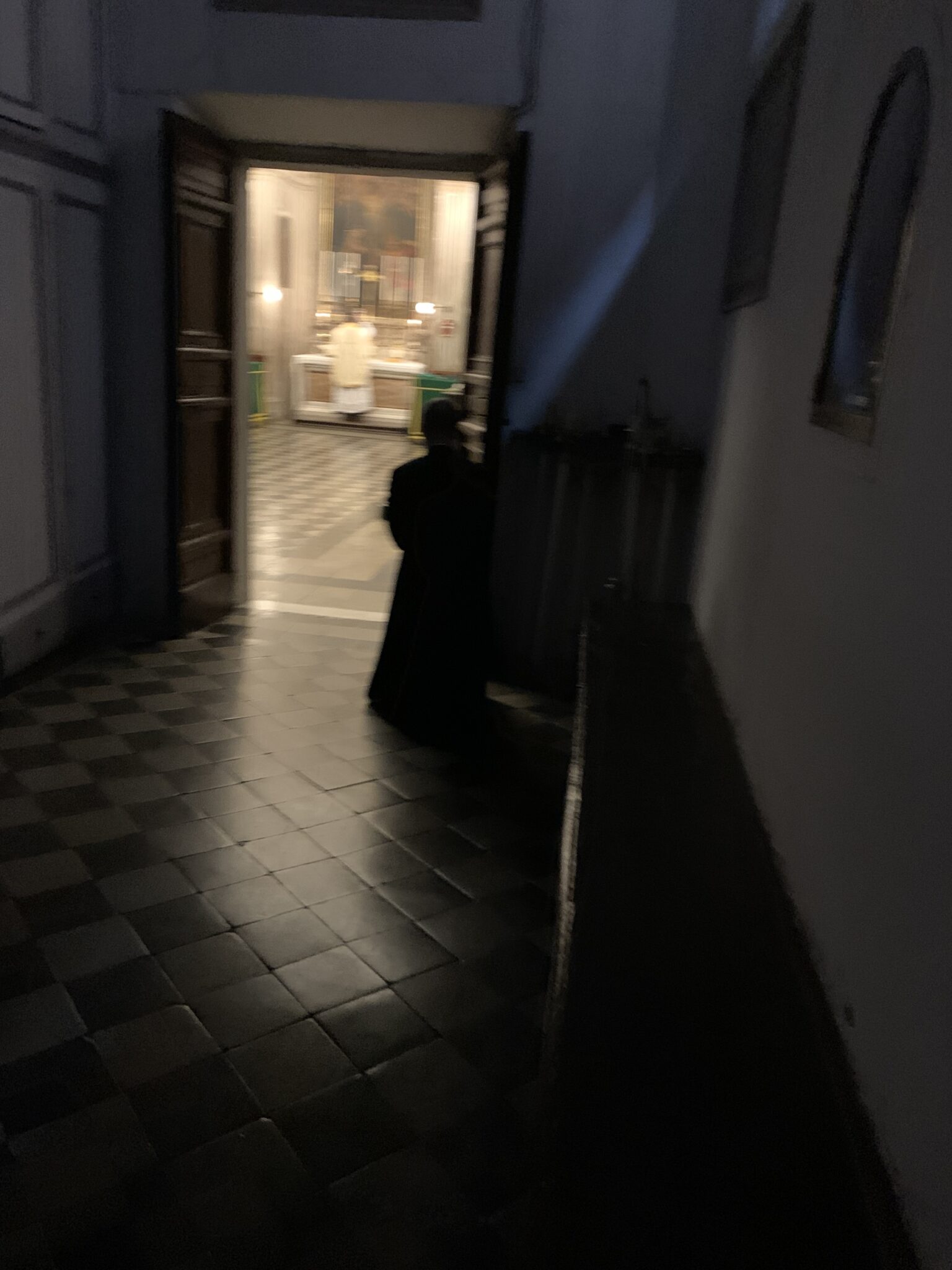
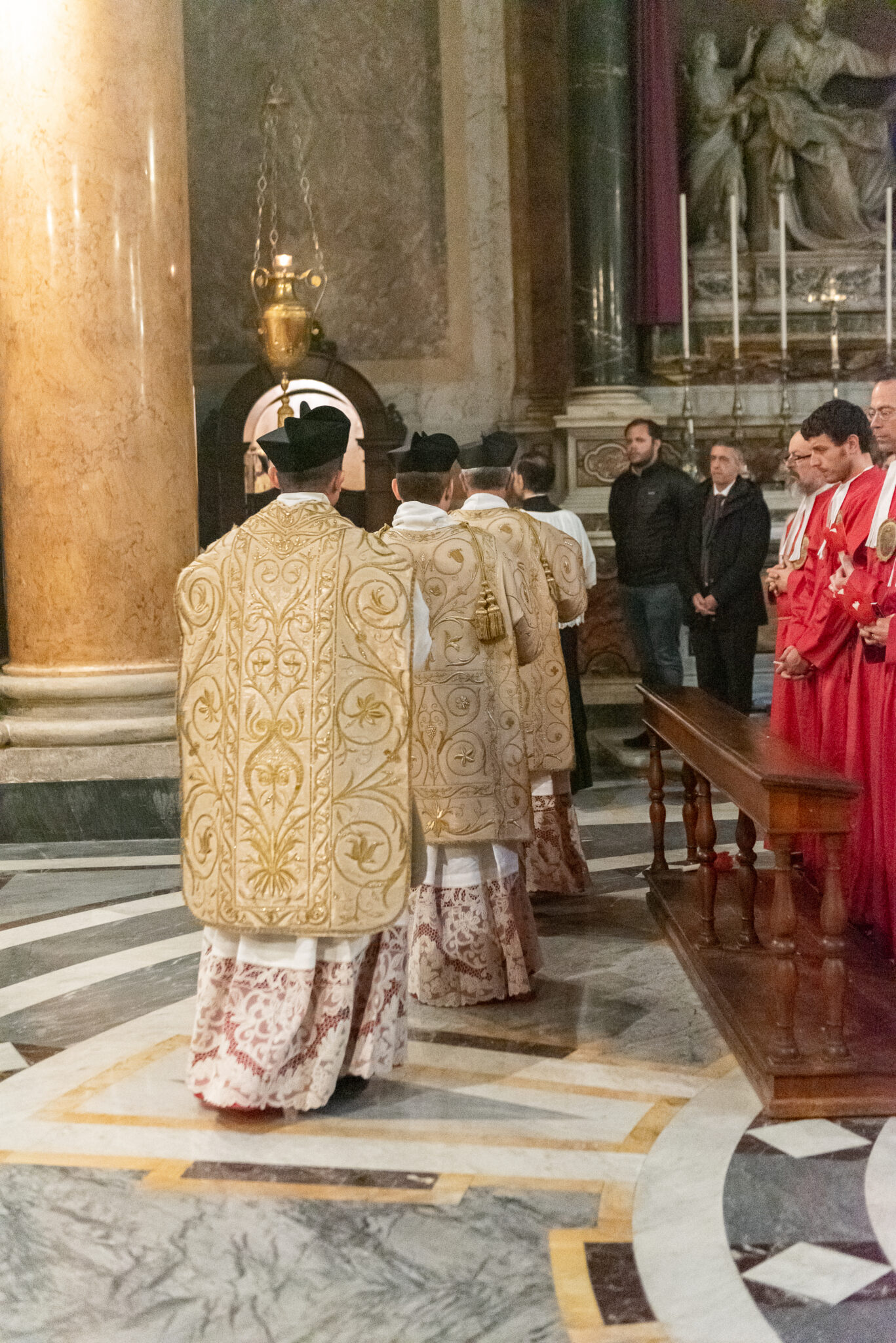
I’ve been going early in the morning to say Mass.  Coming back to the sacristy, a young priest was waiting while one of our brothers was at the consecration at the sacristy altar.

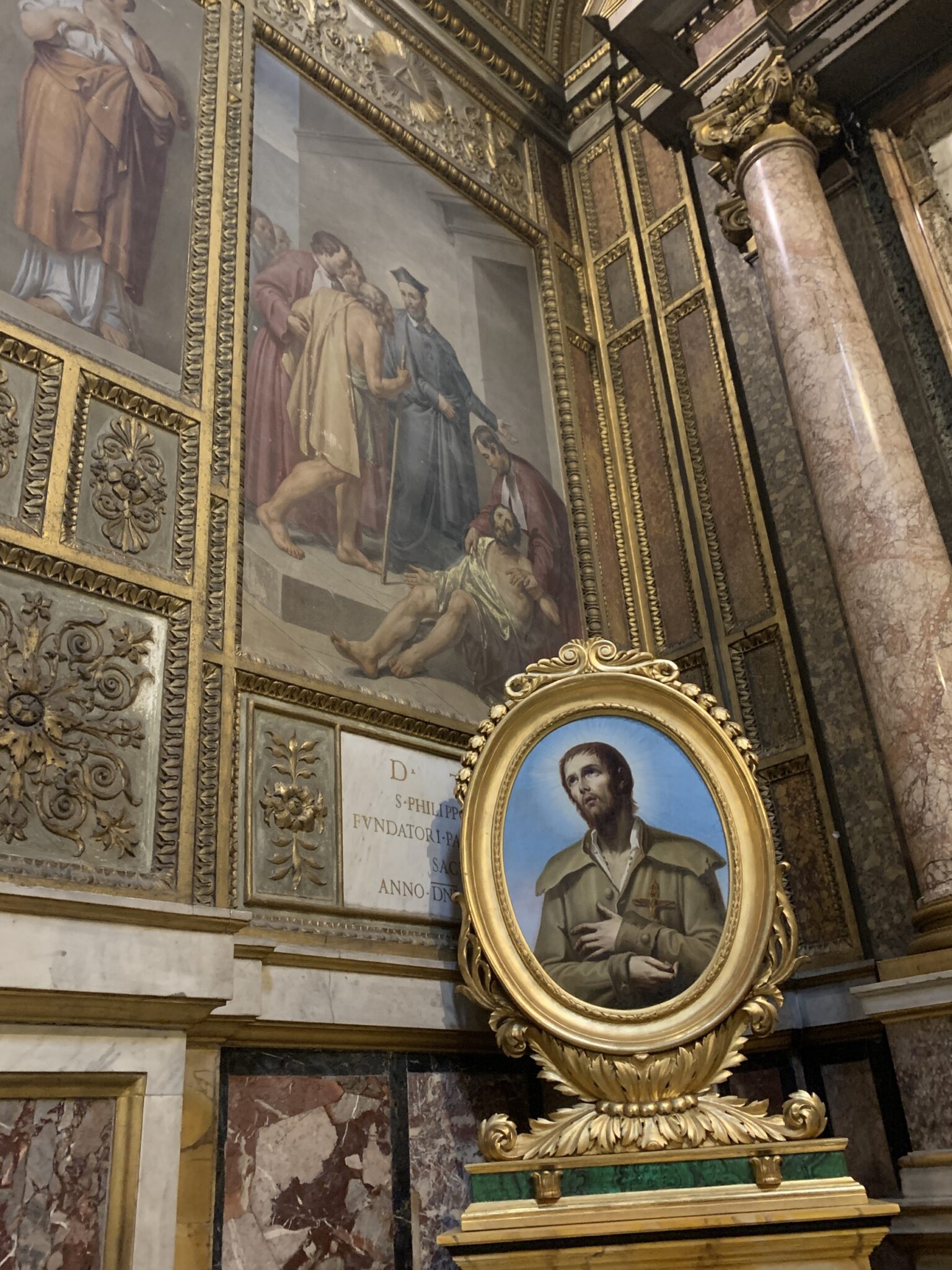
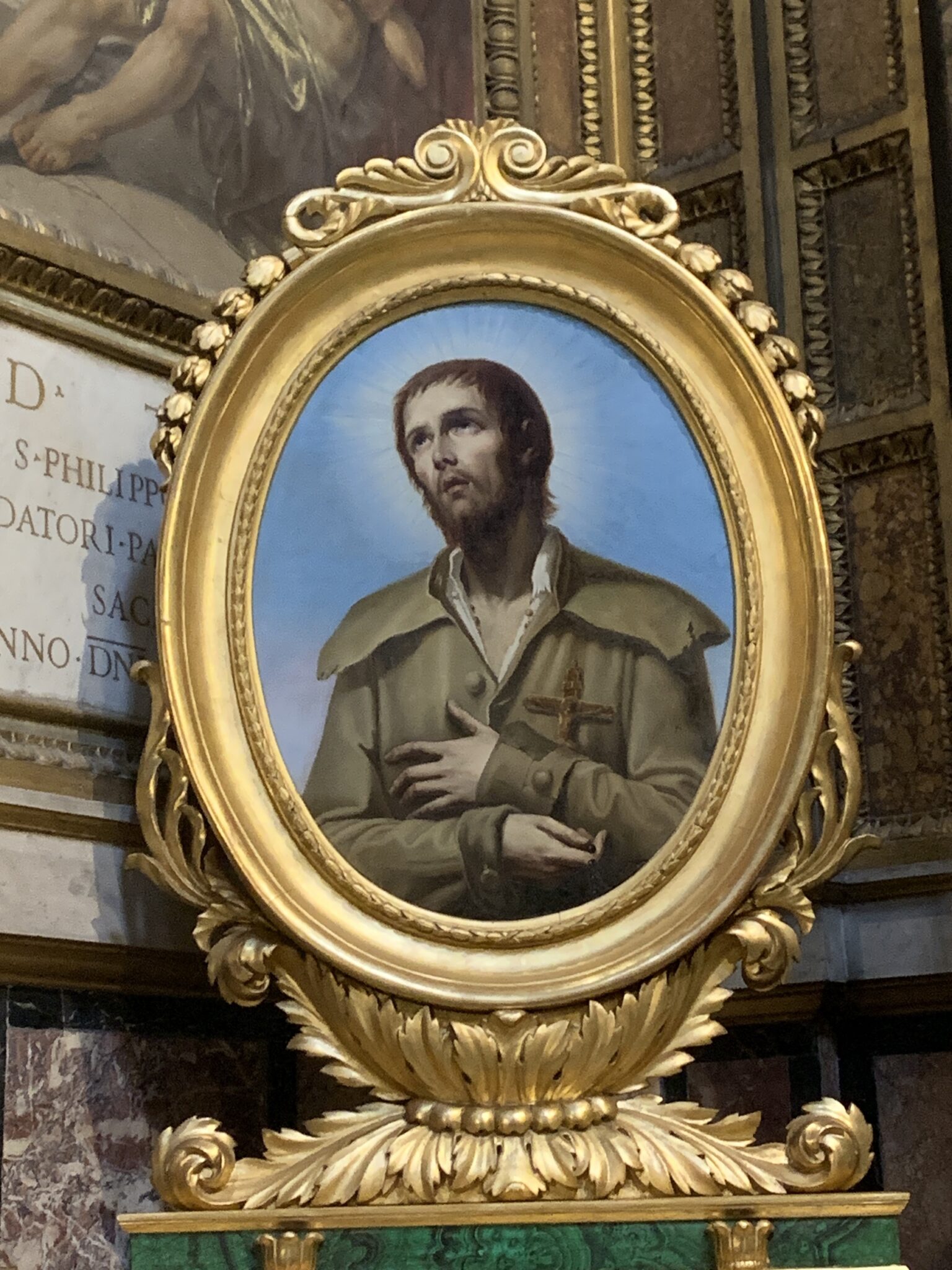
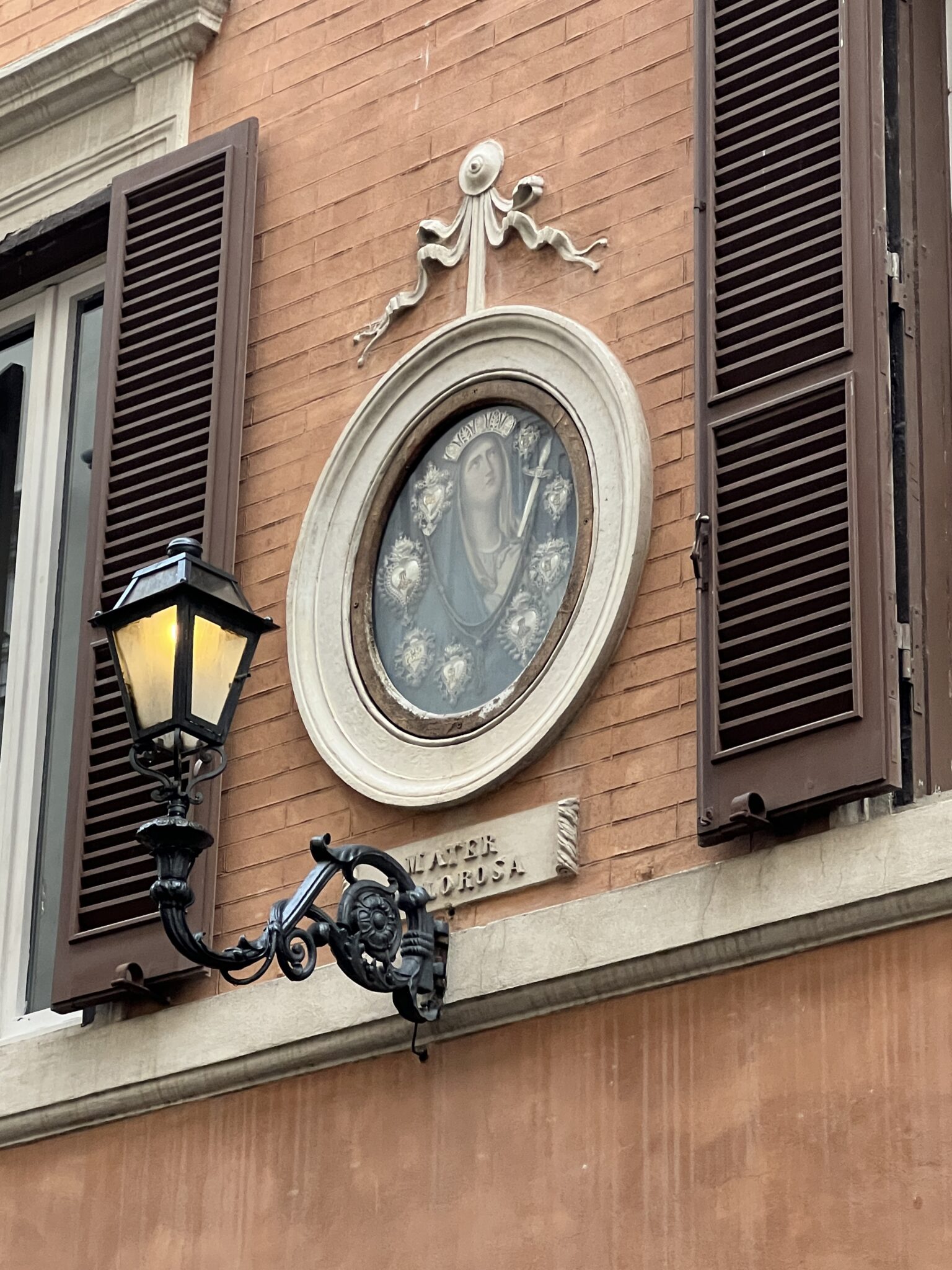
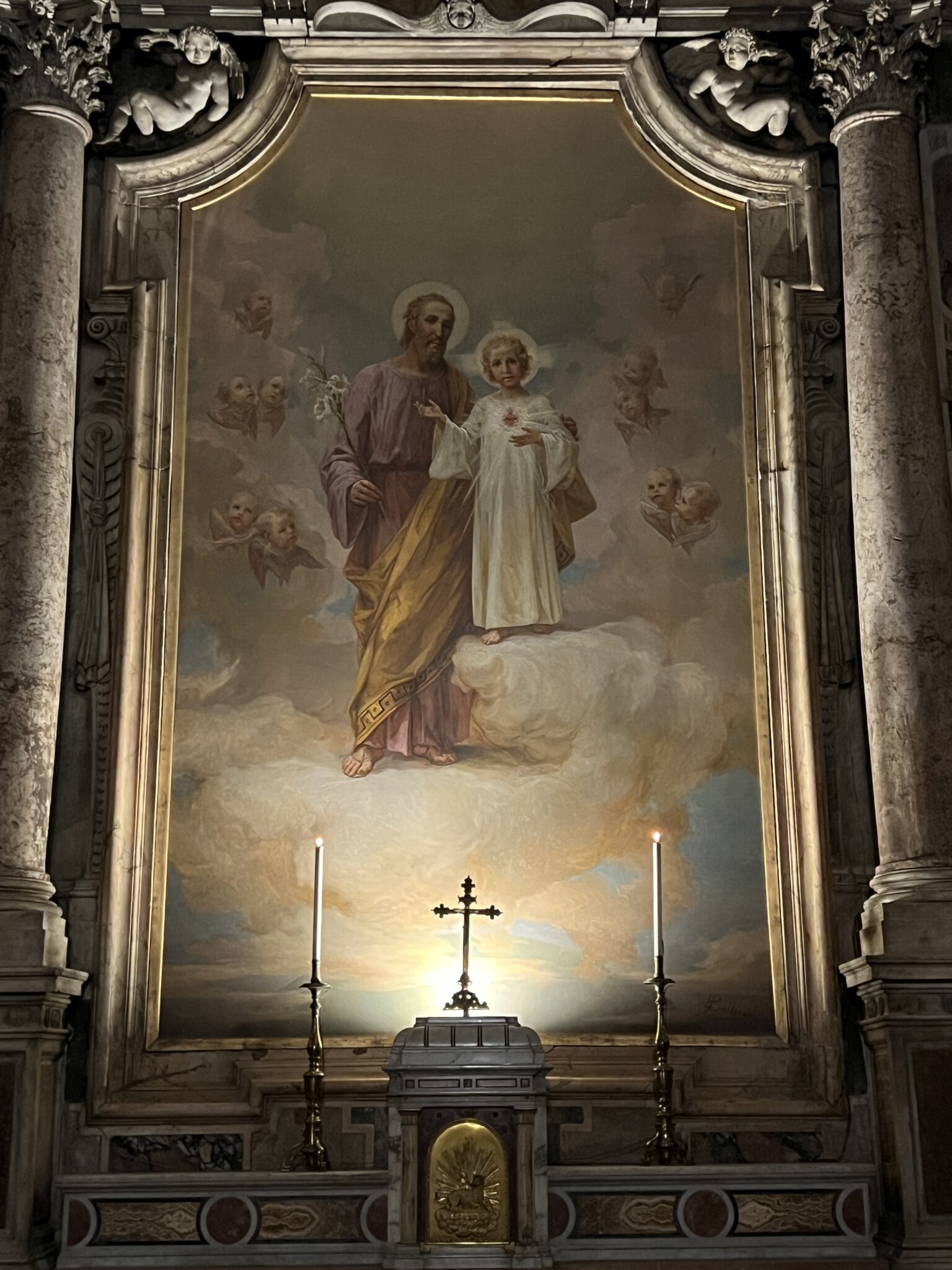
It seems like today I’ve run into this lovely saint everywhere.

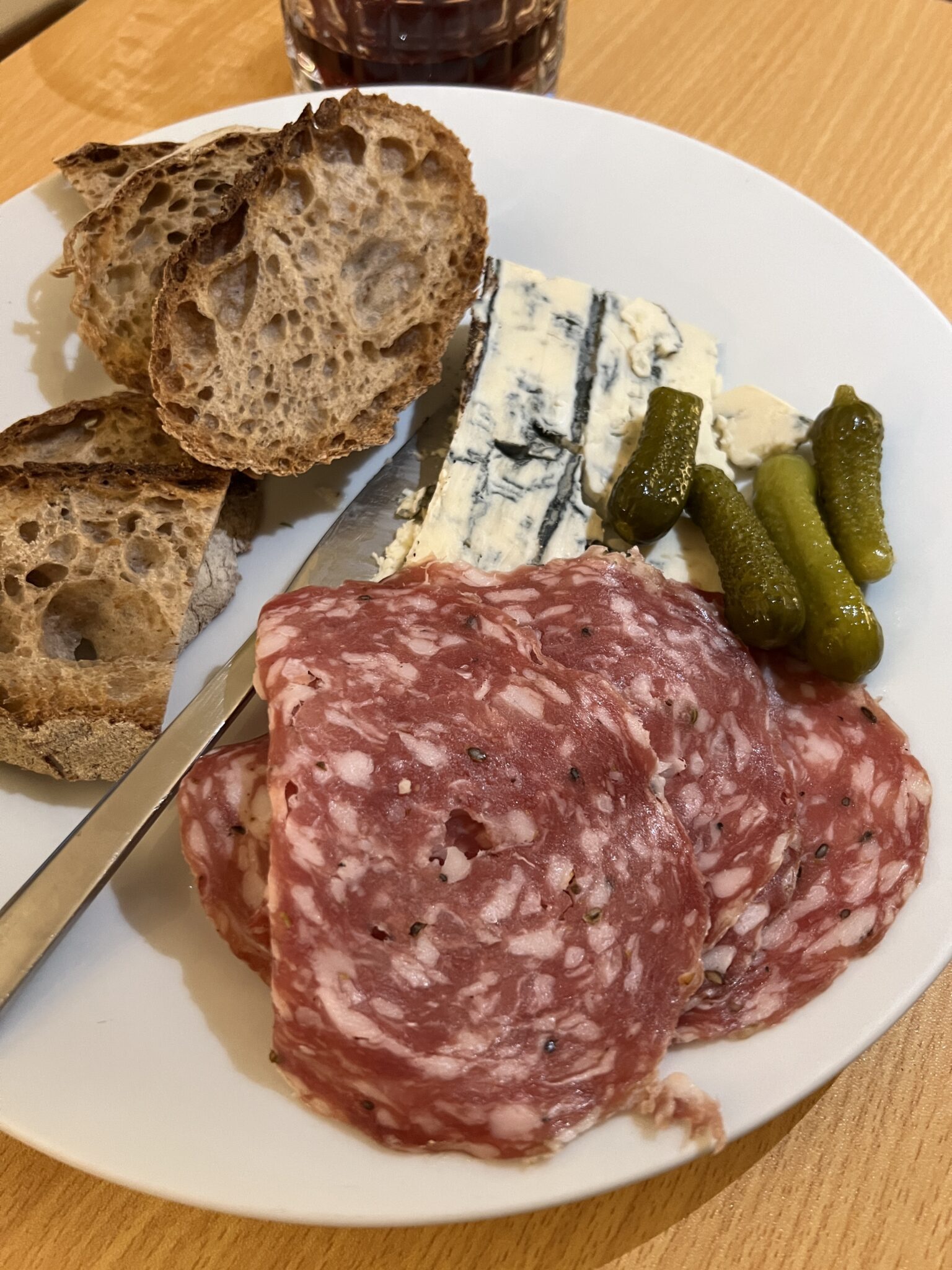
Light meal.  That’s finocchiona and gorgonzola picante.

I mentioned images with votives.

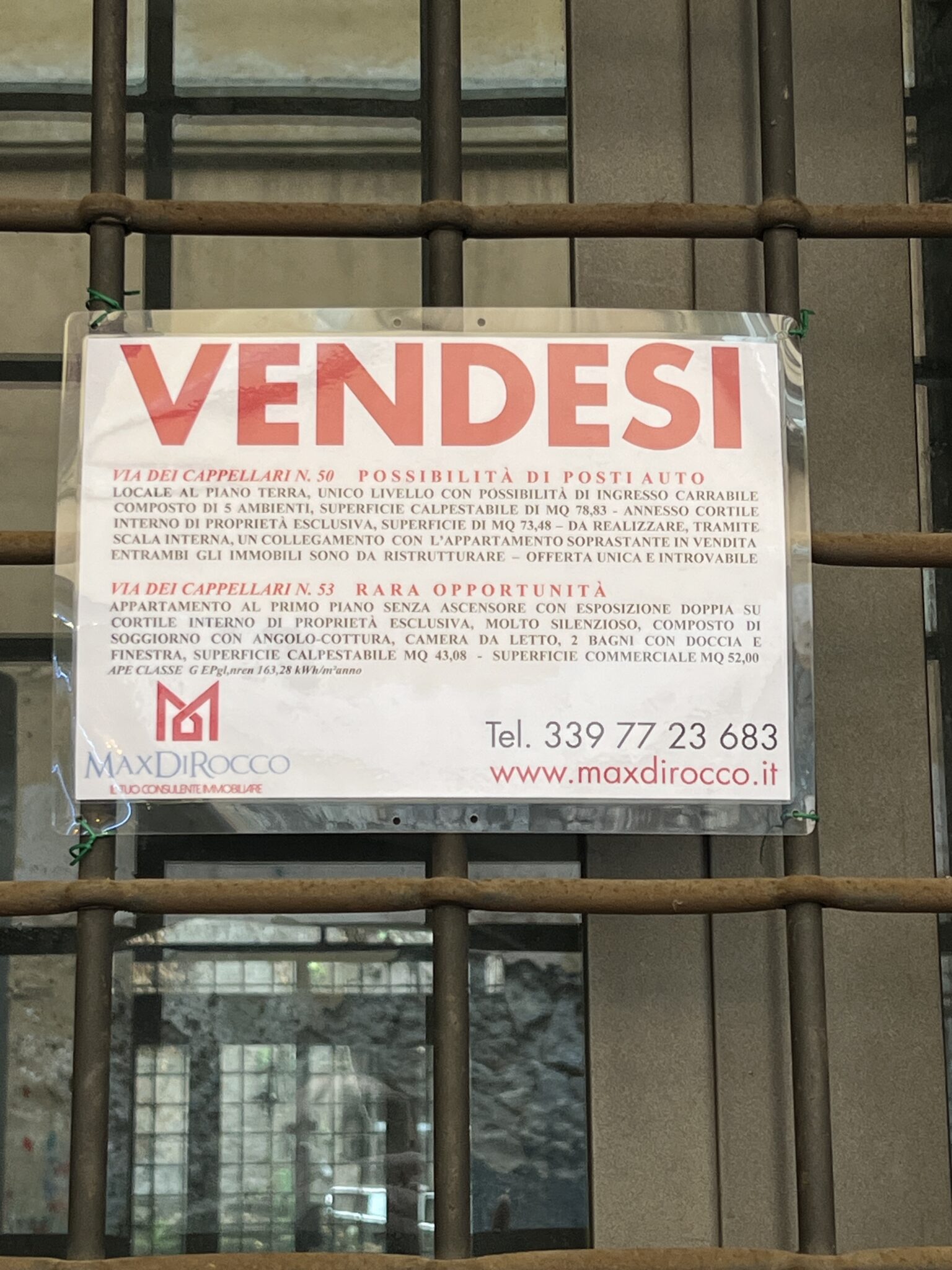
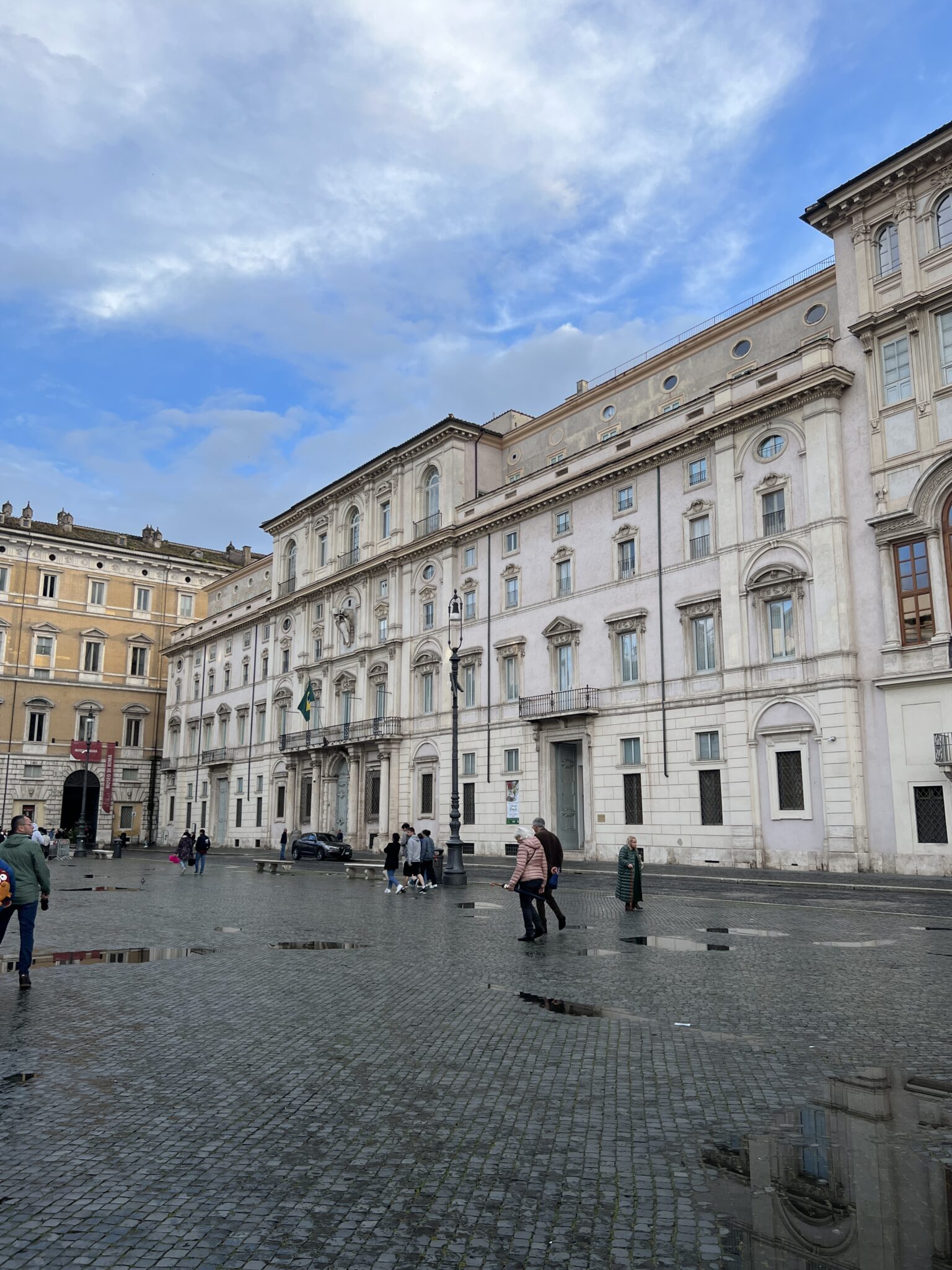
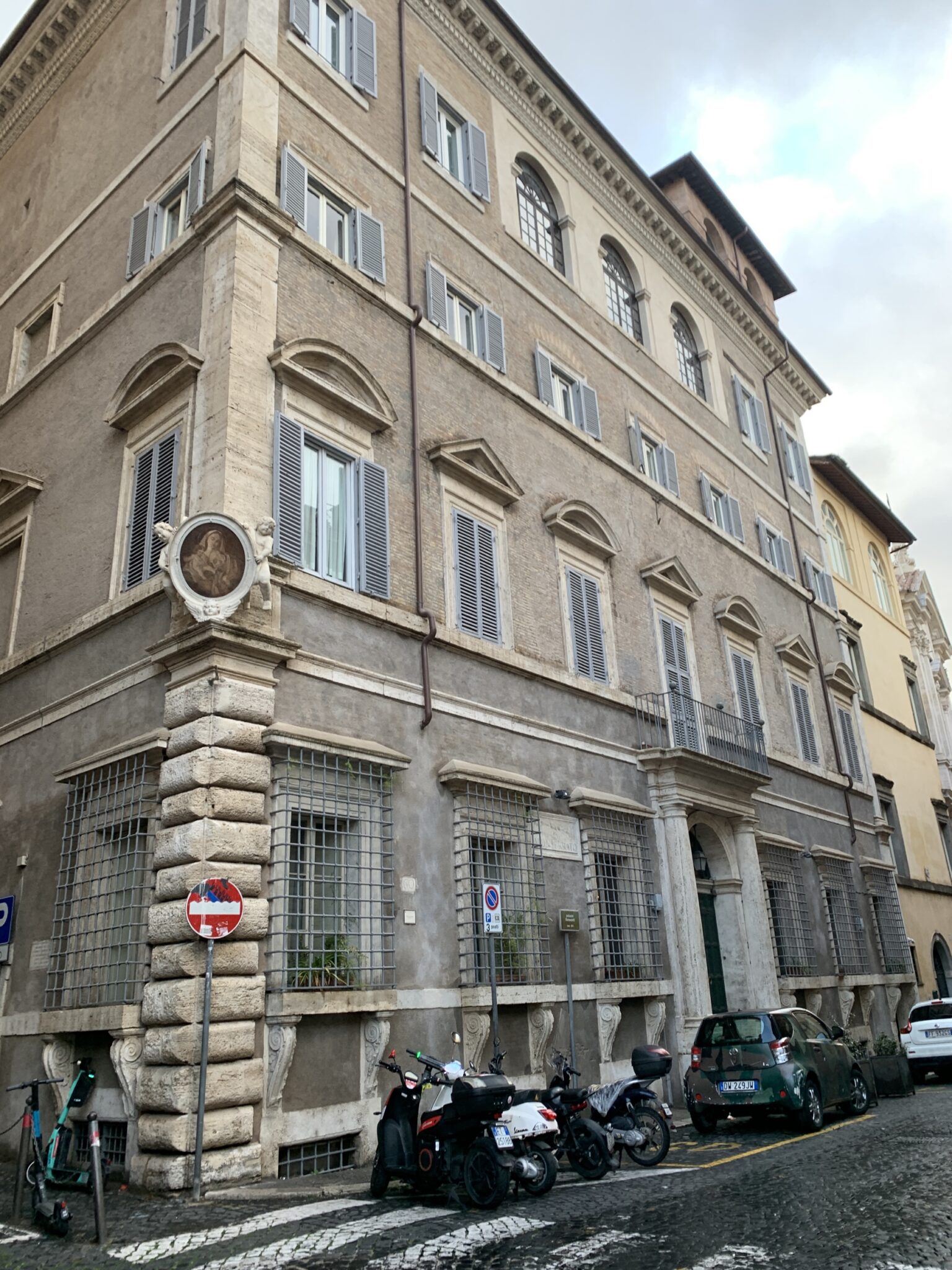
I’d like to buy this and, in the business section, open a chess cafe.  (Or not have a biz part at all.)  Good location.  Perfect.

This is for a friend of mine, MF.

St. Joseph, give me a hand with the Rome thing.  This is not just a whim now.

Meanwhile, today Ding with the black pieces used the French Defense and almost gave the commentators a heart attack.  The game seesawed and, at the end, when it looked like Ding had fought off Nepo’s vicious kingside attack, … he just froze.  He went into total brain freeze and paralysis.  Couldn’t move.  It was dramatic, shout at the screen stuff.   HERE.  So sad.  Anish Giri literally got up and walked off camera.

I’m a bit muted this evening frankly, after the roller coaster Game 7 and also my first foray into Robert Card. Sarah’s new book, which addresses the crisis in the Church in the priesthood.   Friends, make no mistake.  The Enemy hates priests with a savagery no human can truly grasp.  The Enemy knows that individual priests and the very concept of priesthood must be warped.  We are seeing that in our day, especially with the attack on the Traditional Latin Mass, which teaches priests more about being priests than most courses on priesthood could do.

From Card. Sarah:

This is the situation with the priesthood. Christ Jesus gave us a very beautiful, luminous, and clear icon of His priestly being: the Sacrament of Holy Orders is this icon of Jesus, the High Priest. But our compromises with the world have added layers of mediocre quality paint on the divine work of art. The work has lost its brilliance. It is therefore advisable to restore it, and to do that, we must strip away these additions so as to rediscover the original. Benedict XVI and I had intended to invite priests to this work of reform, of return to the form intended by God, in publishing From the Depths of Our Hearts. In this book, each of us had opened up paths toward a restoration of a fully sacerdotal way of life for priests. Some of its proposals were daring. Unfortunately, many people remembered only the most polemical and most political interpretations of those lines. Nevertheless, the book found an attentive, benevolent reader in the person of Pope Francis, who has unceasingly invited priests to renew their deepest being. In asking us to break with self-referentiality, the pope invites us to rediscover a priesthood that does not refer to itself but is an icon of Christ the Priest.  [Polite.]

How is this restoration to be carried out? How can the accumulated layers of paint and varnish be stripped off? In this book, I propose to you a simple method: Let the Church speak! Let Her saints and Her Doctors speak. Let us espouse their way of looking at things so as to renew our perspectives.

For Eternity.

US HERE – UK HERE

Please pray for cancelled priests.

Posted in Cancelled Priests, Priests and Priesthood, SESSIUNCULA |
7 Comments

VIDEO: Die Grosse Wunde – The Great Wound: The Church is in one of the greatest crises in history.

This is interesting…

Play video

Website: HERE

Posted in Hard-Identity Catholicism, The Coming Storm, The Drill, The future and our choices | Tagged
3 Comments

ROME 23/04 – Day 17: Babies, Beauty and Beer

Roma sun-up 0625
Roma sun-down 1955
Ave Maria 2015

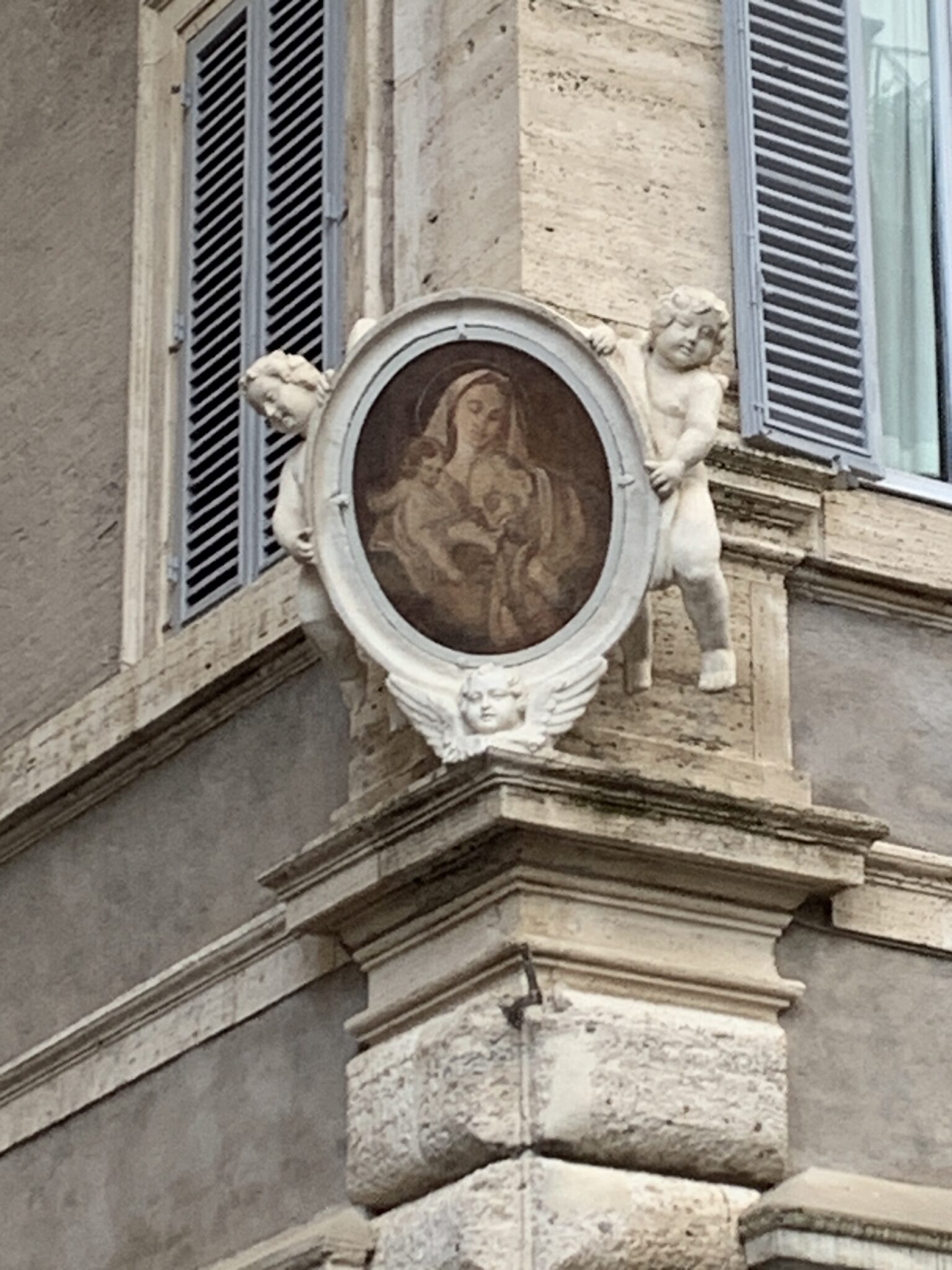
You have to enjoy the many images of Our Lady in Rome, every couple of streets, each little neighborhood had theirs.  And you often see votive offerings, silver hearts, have been affixed out of gratitude for a favor granted.

If you don’t ask for favors, you won’t get them.  If you don’t ask for miracles, you won’t get them.

Back in the day, people asked and asked and asked because they believed and believed and believed.

This particular image of Mary doesn’t have a votive offering, but St Pippo, co-patron of Rome is kissing Baby Jesus little toe, which is kinda the same thing donchya think?

I think Baby Jesus and the putti hanging onto the frame have the same barber.

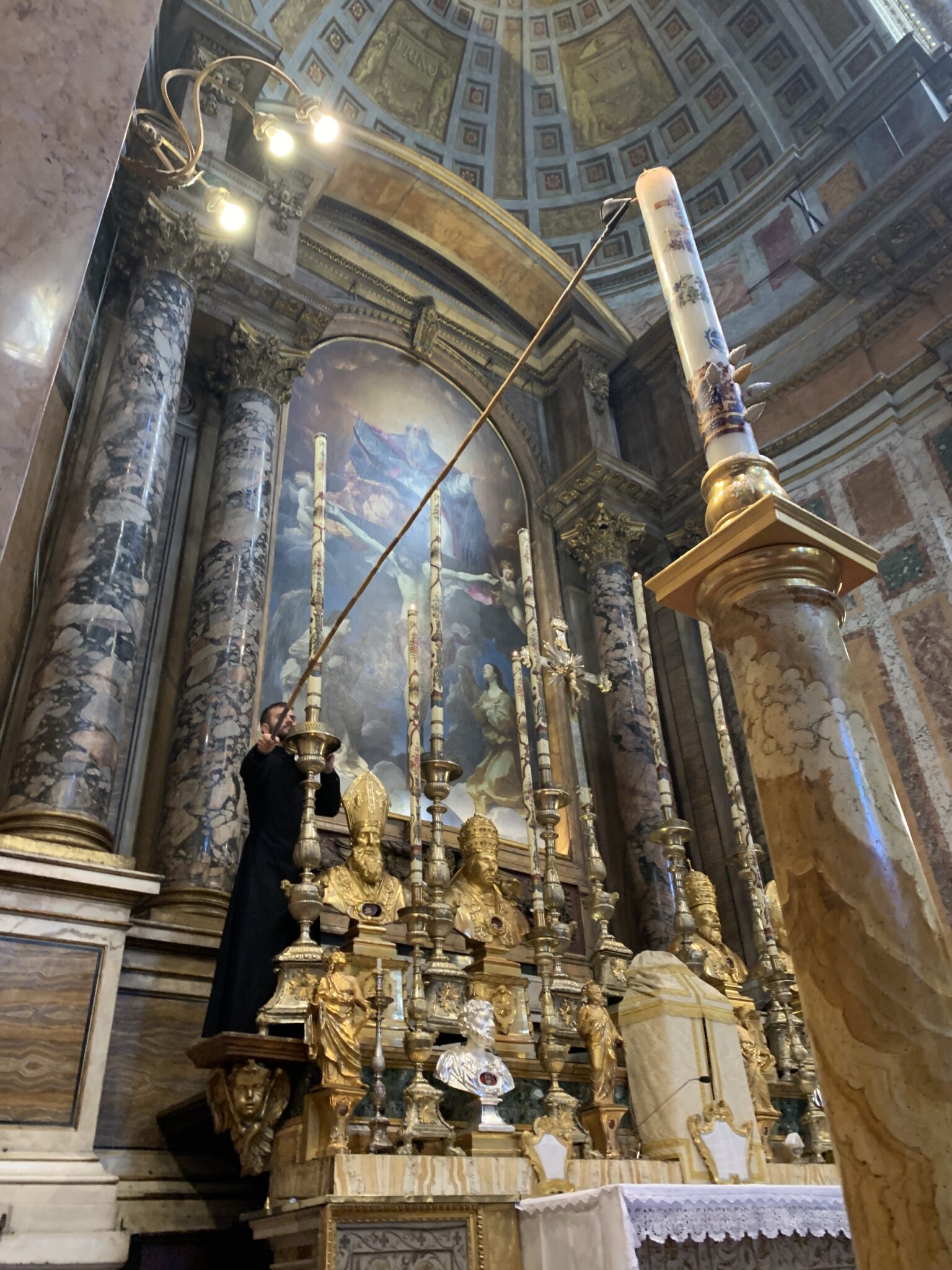
Here’s an action shot from yesterday.  The paschal candle is tall enough that it is hard to light and put out from below.  The enterprising sacristan found a different angle while putting out the “big six”.  Kudos.

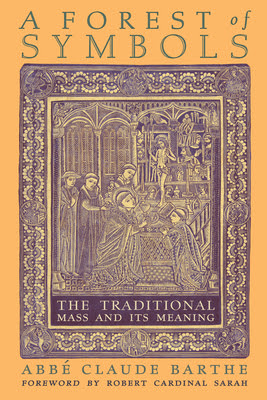
Meanwhile… I remind you of Fr. Claude Barthe’s book, now in English, A Forest of Symbols: The Traditional Mass and Its Meaning.  US HERE – UK HERE

Here is another little tease.   Always remember that Mass is not a “didactic moment”.  Even though there are moments that are “didactic”, they are not primarily so.  They are acts of sacrifice, glorification, praise and supplication.  Even the readings are sacrificial.  That is why in the Vetus Ordo the priest must read them even when they are sung by the sacred ministers.  Christ the High Priest, the Word, is raising Himself to the Father in the flowing sounds of human language, Word incarnated raised as a glorification, a petition to be heard, oblation by His Priesthood, a fleeting sacrifice.

With that in mind, here is Fr. Barthe:

First, at the altar, on his knees on the highest step of the altar on which he has placed the Gospel book, he asks God for a purification similar to that undergone by Isaiah in the Temple at his calling (Is 6:6–7): Munda cor meum ac labia mea. . . (Cleanse my heart and my lips, O God almighty, who didst cleanse the lips of the prophet Isaias with a live coal: vouchsafe, of thy gracious mercy, so to cleanse me, that I may worthily proclaim thy holy Gospel).  [This is the pattern!   We purify and then we bless.  We exorcise water before we bless it, etc.]
Then, in front of the celebrant, the deacon, holding the Gospel book against his breast, comes to ask the blessing of the celebrant (Pray, sir, a blessing. The Lord be in thy heart, and on thy lips . . . ). After the deacon has been blessed by the celebrant, the celebrant places his right hand on the Gospel book and presents it to the deacon to be kissed as an indication that Christ confers his power and his virtue on his apostles, giving them the gifts of his spirit that flow out from him, especially from his hand, the source of good works. Christ passes on to him in particular the gifts of languages, of speech, and of the voice, with the hand of the celebrant touching the purified mouth of the deacon and the purified mouth of the deacon kissing the consecrated hand of the celebrant. From then on, the Lord’s right hand passes on his Spirit, which alone can give an understanding of the mysteries, uncovering what is hidden within them, can give the grace necessary to talk of them, and can communicate the power to make them heard. This kiss is a kiss of respect, but it is even more designed to plumb the depths of the divine force of Jesus Christ’s holy humanity, and in particular the force of his humano-divine speech.

Meanwhile,…

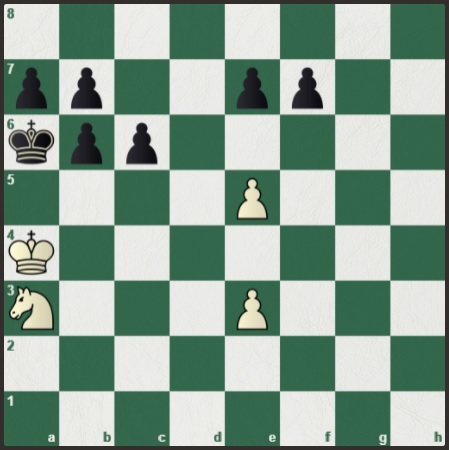
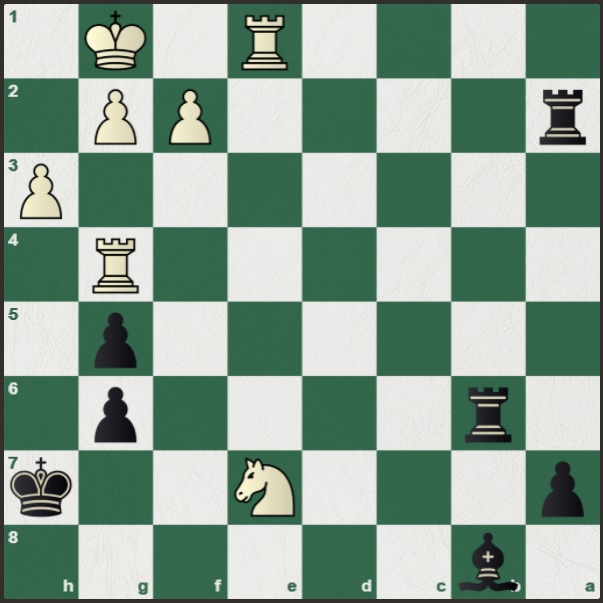
White to move.

NB: I’ll hold comments with solutions ’till the next day so there won’t be “spoilers” for others.

Your use of my Amazon affiliate link is a major part of my income. It helps to pay for insurance, groceries, everything. Please remember me when shopping online. Thanks in advance. US HERE – UK HERE

Game 6 between Ding and Nepo was really something.  Ding played the LONDON and Nepo played … not so well, all in all, and got into trouble.  But at this level you can get out of trouble if given a tiny advantage.  It was not to be for Nepo, however, because Ding Liren played a forcing mating net that was a thing of exquisite beauty.  It was breathtaking.

Here is the video of the coverage which I bookmarked at the point where Ding is closing in for the kill and the commentators are looking to find it before Ding plays it.  Anish had his good plan, but what Ding Liren does is amazing.   Give it a try with a little patience while the pressure builds up to Ding’s initially puzzling but super-crafty move.  As we join, Ding is having a think.   Note also Anish’s insightful comments about how different players calculate.

Play video

You would really enjoy this will a glass of beer from Norcia. Believe me. Some savory sausage and a sharp cheese. Great beer made by traditional Benedictines building their new monastery from the beer you then enjoy while reading Fr. Z’s blog and doing chess puzzles? Does it get better than that?

Posted in SESSIUNCULA |
13 Comments

New online course on “St. Edith Stein as Modern Witness”

The great folks at The Catholic Thing have been holding online courses.  For example, there were courses with Robert Royal on Dante’s Divine Comedy, on Augustine’s City of God and on Thomas More’s Utopia.

They are now going to have a course on St. Edith Stein.

This is pretty interesting.  She was a major philosopher in her day, a phenomenologist.   Her work influenced the young John Paul II which in turn influenced his papal Magisterium especially in regard to the human person.

It starts on 19 April and, once registered, you can access the archive.

For more information on this course try HERE.

Posted in Modern Martyrs, Saints: Stories & Symbols, The Campus Telephone Pole | Tagged
Leave a comment

St. Thomas and the beating, living, healing, Heart of Love.

Here is something a wrote some time ago, reflecting on the meeting of the Risen Lord and Thomas and the “hand” and “side” incident.

Here is something that I wrote a while back. Since today in the Vetus Ordo calendar is the Feast of St. Thomas the Apostle, I figured that it might be good to share for those who haven’t seen it.


[…]

Christ showed [the Apostles in the locked room] His hands and feet and side, to demonstrate that He had a real body and that it was also is His Body. He didn’t pick up some unwounded, perfect Body that He was now inhabiting. We are our bodies, as we are our rites. The fact that the wounds remained in His Body’s hands, feet and side provided continuity with His Body before and during His Passion. He isn’t a mere shade of the Lord. Nor has he exchanged Himself for an unwounded version. In this way Christ began to show them the traits of the risen Body, traits which we, too, will share in the Resurrection: clarity (reflecting God’s glory), impassibility (incapable of suffering), agility (ease and speed of movement), subtlety (unhindered by barriers).

[…]

We don’t know why Thomas wasn’t with the other ten Apostles in the room for that first appearance of the Lord. I like to imagine that it was his turn to get the “take out” for the rest of them.

Thomas, who had doubted, put his trust in the Lord at this point. In fact, he literally handed his trust to Him where the point of the lance had left its mark on the Lord’s glorious Risen Body, a wound from a Roman lance large enough to insert his hand. The Lord told Thomas to “thrust” (Greek bále) his hand “eis ten pleurán… into (His) side”. If we want to be picky, we might note that the Greek word “cheír”, insofar as our anatomy is concerned, can mean “hand”, but it can also mean “finger” or “hand and arm”, the later so much so that in some contexts additional words are added to denote “hand” as distinct from the arm (cf. Liddell-Scott-Jones, A Greek-English Lexicon aka LSJ – “χείρ , ἡ”).

This is significant for depictions in art, as in the famous painting by Caravaggio, wherein Thomas puts his finger into Christ’s side and peers into it, which smacks of the spirituality of St. Bonaventure who wrote about how Thomas the Apostle looked through the Lord’s visible wounds and saw His invisible wound of love. It also affects depictions of the crucifixion of the Lord and of His risen Body, with the holes of the nails in the hands. Some maintain that Christ would have been crucified with nails through the wrists so that the ulna and radius bones would sustain His Body’s weight rather than tearing through the flesh of His hands.

Christ tells Thomas to explore with his finger (dáktylos) the spike holes of His “hands/wrists”, which would be more or less the size of a large finger. However, he tells Thomas to use his hand for the wound in His side. The Greek suggests to me that the Lord instructed Thomas to push, thrust His hand into the wound channel left by the Roman lance, which had gone so far as to lacerate the Lord’s Sacred Heart.

We don’t have in the Gospel account of this stunning moment, to which John was eyewitness, a precise statement by John that Thomas physically did it. All it says is that Thomas responded, “My Lord and my God!” Christ responded with a “beatitude” (v. 29): “Jesus said to him, “Have you believed because you have seen me? Blessed are those who have not seen and yet believe.”

Was Thomas so overwhelmed that He could not touch the Lord in that way? All He could utter was that amazing witness to belief in the divinity of Christ? The clearest and most exultant of any in the Gospels?

Christ refers to Thomas seeing Him, but He did not say, “because you have touched me”. Nevertheless, it seems to me that if the Risen Christ tells you to do something, you do it. Furthermore, John immediately concludes this chapter with something so definitive that it feels like the end of the whole work (vv. 30-31):

Now Jesus did many other signs in the presence of the disciples, which are not written in this book; but these are written that you may believe that Jesus is the Christ, the Son of God, and that believing you may have life in his name.

There follows chapter 21 and the account of the reconciliation of Peter at the Sea of Galilee. We moderns count that as chapter 21. Remember, the Gospels were not written with chapters and verses and not even word breaks. Those were imposed centuries later. Yet, one has the sense that what happened between Christ and Thomas was so amazing that John penned something like a conclusion to his Gospel after Thomas’s cry of faith, arguably the climax of John’s account.

Given the various meanings of “hand” in Greek, and that word “thrust”, and the fact that the wound from the lance remained, therefore remained all the way to His Heart, perhaps Our Lord required Thomas not merely to touch His side but even to feel the breath, the ruach, in His torn lung. Did Thomas, while feeling the ruach on his wrist, touch with his hand the physical, risen, subtle, impassible, agile, blazing bright Heart of Jesus?

By the way, in art, statues and painting, the Apostles are usually depicted with the instruments of their martyrdom. St. Thomas is often depicted with a lance.

On this Sunday we emphasize the mercy of God and the institution of the Sacrament of Penance, perhaps the greatest encounter we have with incarnate Mercy, Holy Communion notwithstanding.

Christ told Thomas to do what He did before witnesses so that they too would understand about the traits of His risen Body and that it was truly His own. Knowing full well that we would one day read this, He inspired the disciple He most loved to write his Gospel account, an account that connects Thomas to the inspiration of the Spirit and the mercy of Christ’s Heart in a way that other Apostles didn’t experience on that first Easter evening appearance.

When we go to confession, we enter into Mercy in order to be breathed upon by the Spirit and to feel the beating, living, healing, Heart of Love.

Posted in Classic Posts, Linking Back, Liturgy Science Theatre 3000 |
3 Comments

Your Sunday Sermon Notes: Low Sunday, Divine Mercy Sunday, Quasimodo Sunday, Thomas Sunday, Sunday “in albis deponendis”

Too many people today are without good, strong preaching, to the detriment of all. Share the good stuff.

Was there a GOOD point made in the sermon you heard at your Mass of obligation for Low Sunday, 2nd of Easter?

Tell about attendance especially for the Traditional Latin Mass.  I hear that it is growing.  Of COURSE.

Any local changes or (hopefully good) news?

A couple thoughts about the 1st reading: HERE

Posted in SESSIUNCULA |
5 Comments

Emesis basin… Sickness bag… whatever you prefer. Just get something. VIDEO

Sorry about this, but it has to be distributed widely.

Posted in What are they REALLY saying?, You must be joking! | Tagged , ,
19 Comments

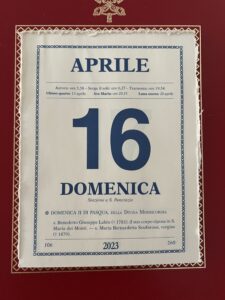
ROME 23/04 – Day 16: Papal Executioners

Sunrise 0627.  Sunset 1954. Ave Maria 2115.

Benedict Joseph Labre (+1783)
Bernadette Soubirous (+1879)

Today is called…

Low Sunday
Quasimodo Sunday
Thomas Sunday
Divine Mercy Sunday

etc.

Roman Station is at San Pancrazio

Welcome new registrants:

SBreslin
Mrs.

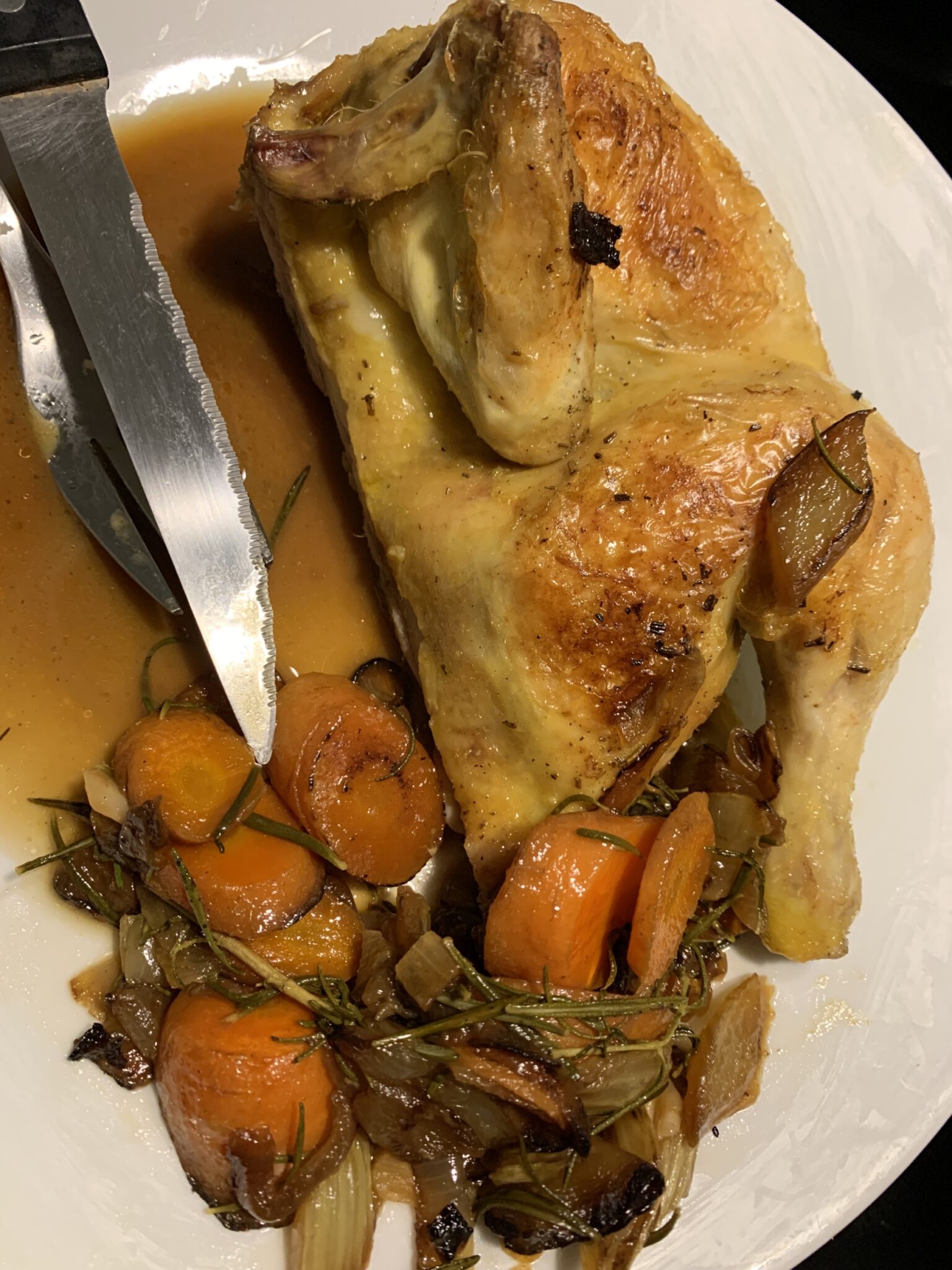
Last night I got some veg going and then put some color on a small spatchcocked chicken.

It was delightful.

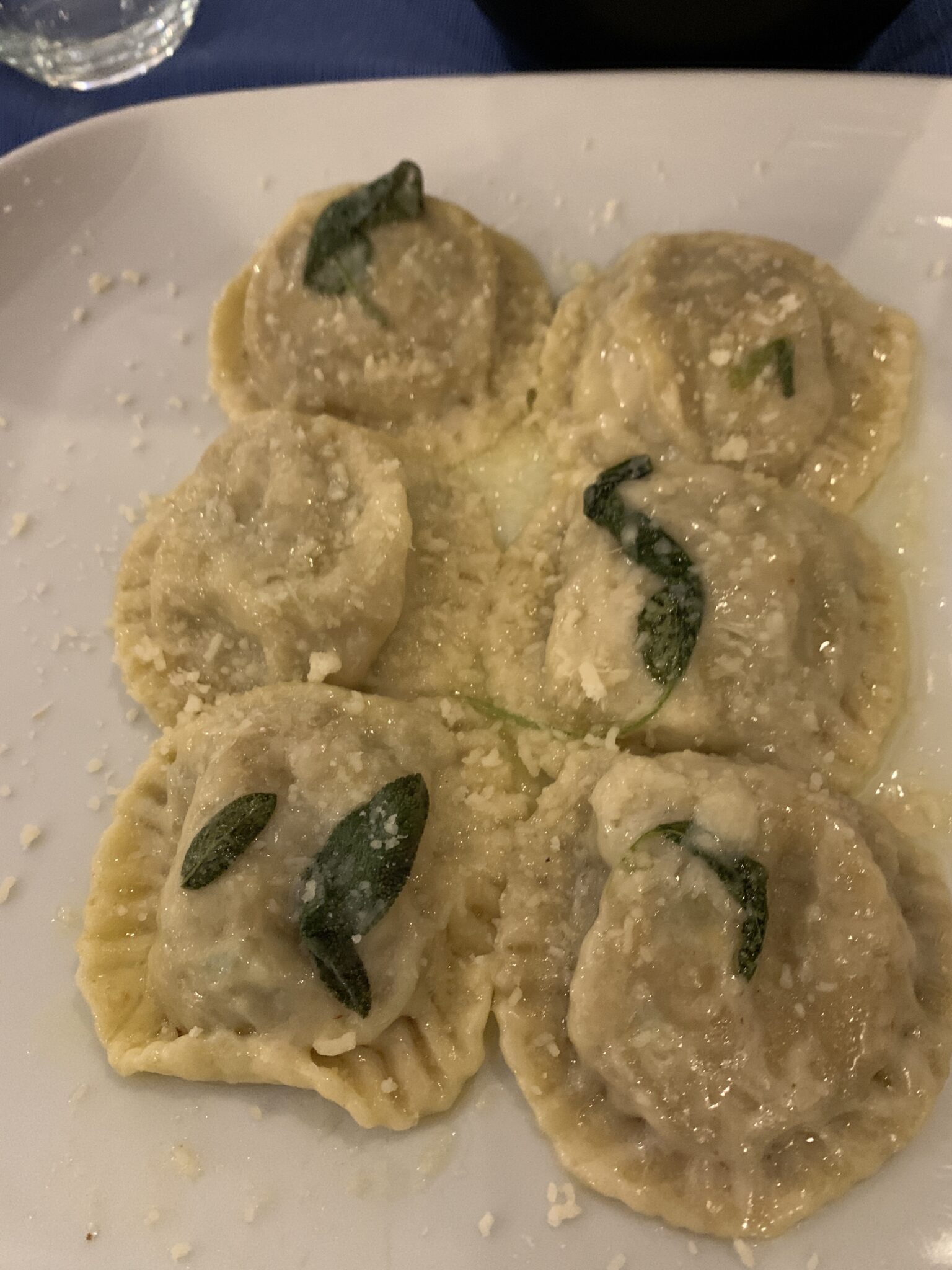
Since some of you are begging for more food pics, I was out for lunch with friends today.   There was one person in the restaurant whose presence was so odious that it was all that I could do to stay in my chair.

Anyway, these were stuff with sausage.

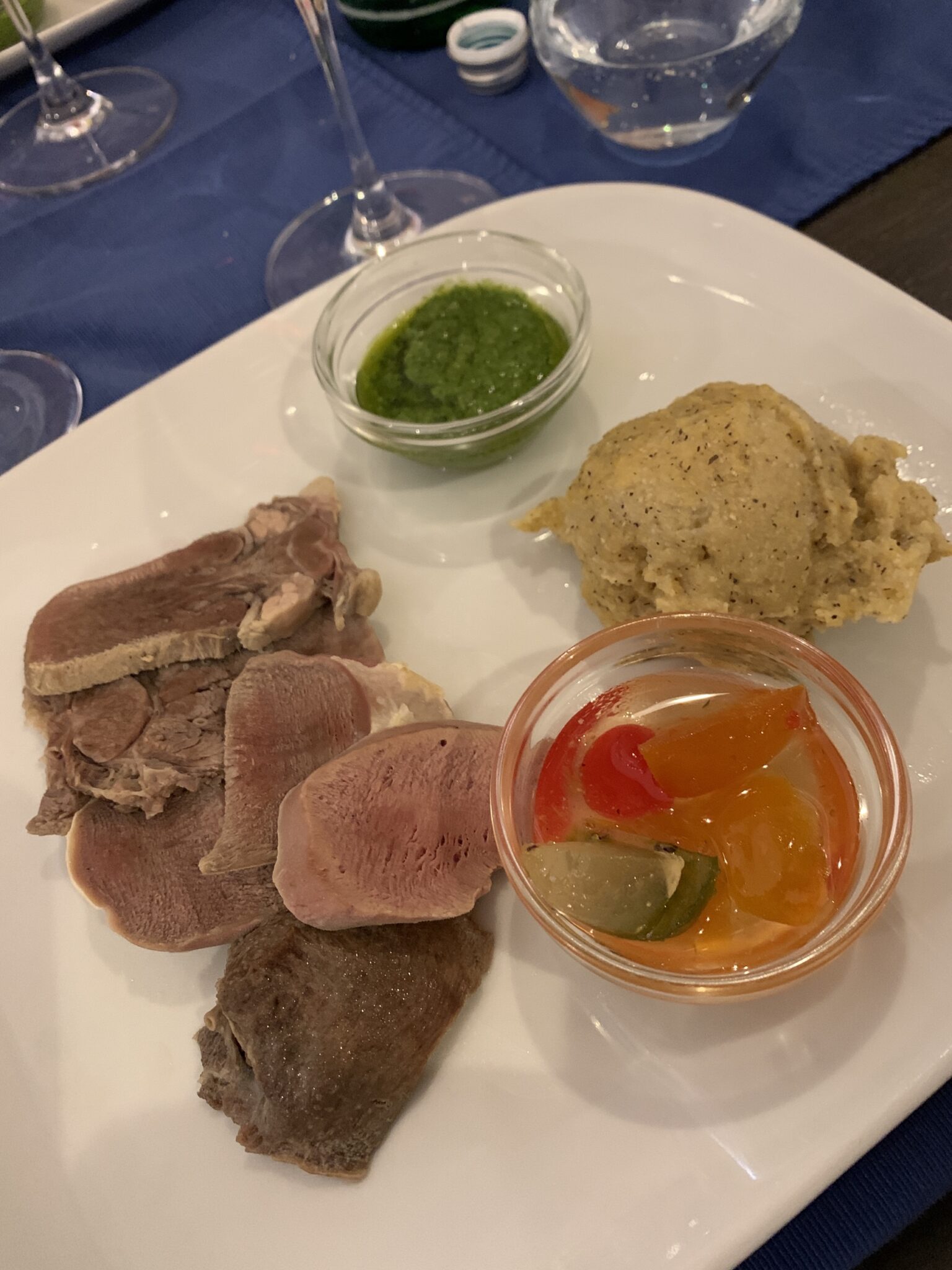
Second course, tongue and a green sauce with fruit mustard.

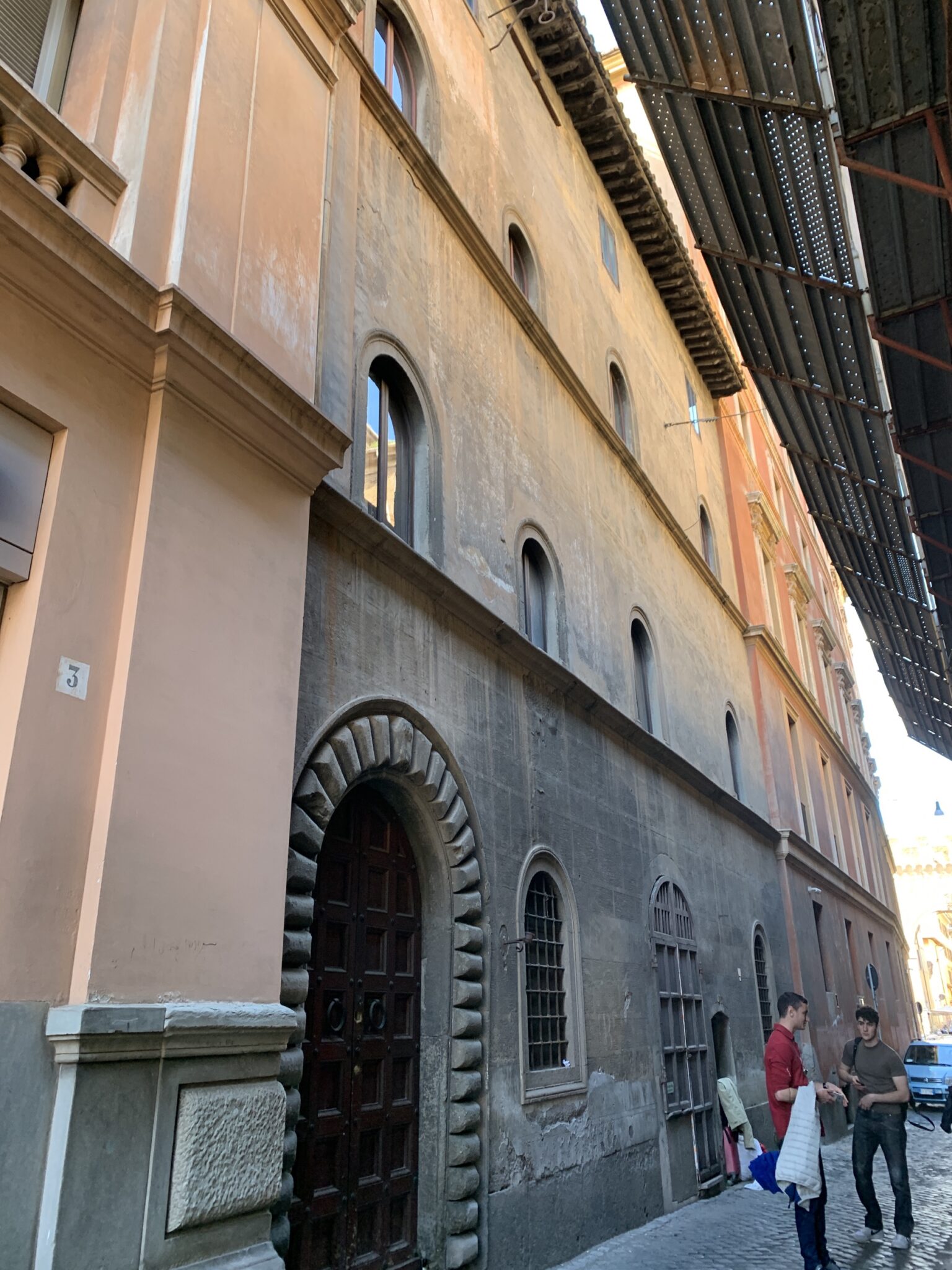
Close to the Vatican and next to the Pachamama church, is the venerated residence of the long-time Papal Executioner, Mastro Titta.

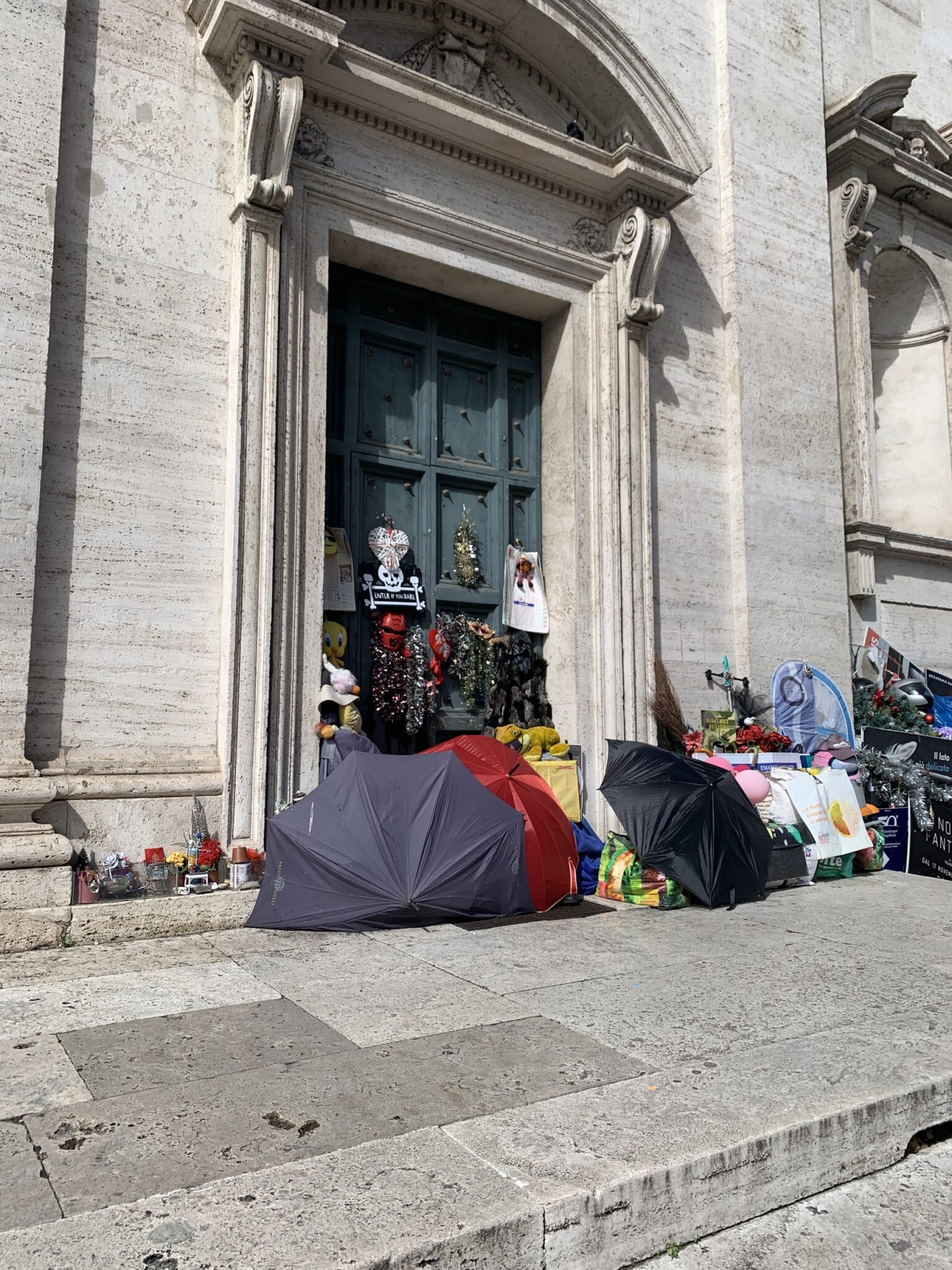
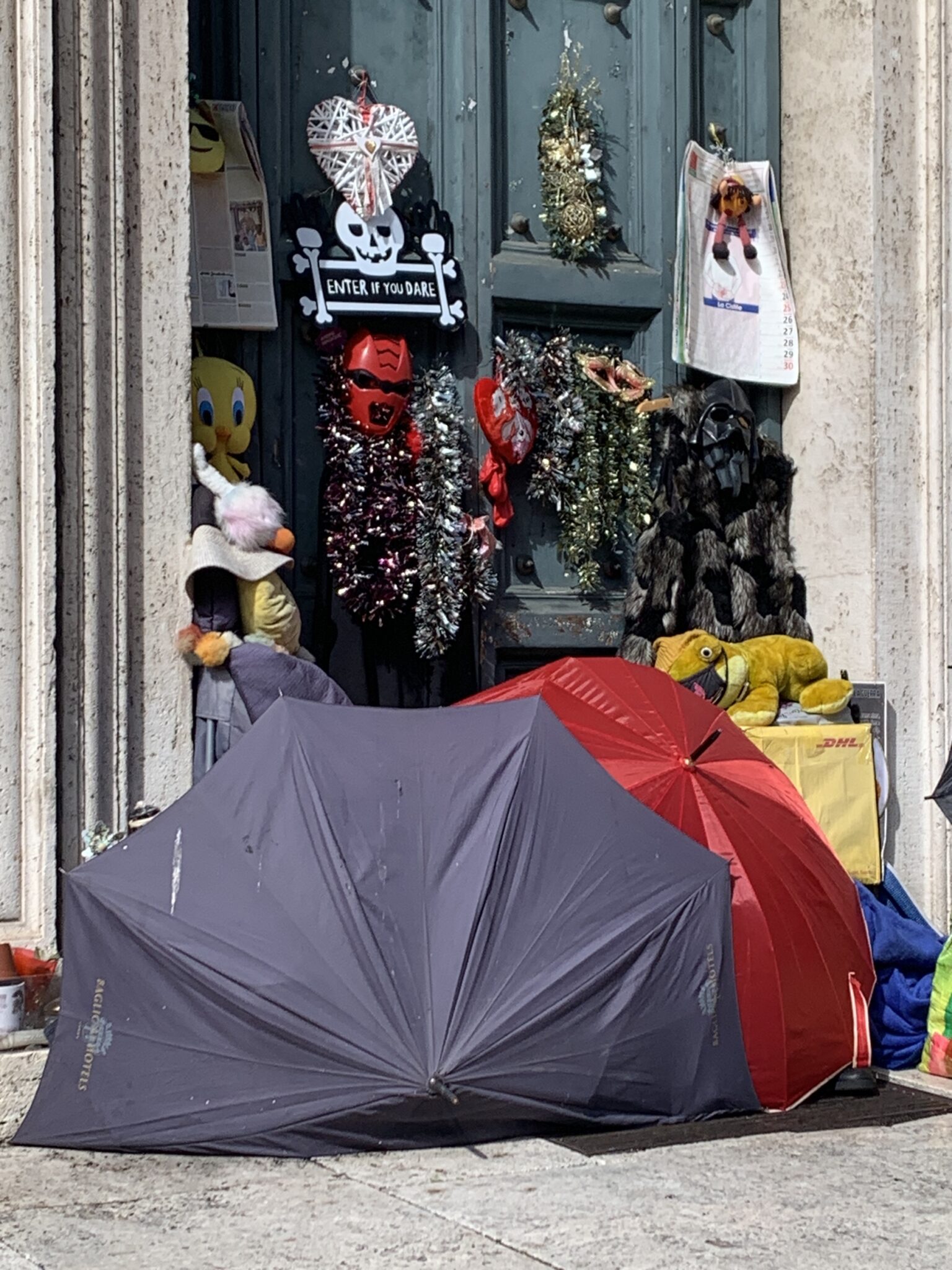
At the Pachamama church, in sight of the doors of San Pietro (whose dome is turning black), there are great piles of junk, seemingly “art”.   It’s junk, really,… but not without a purpose.   Look at this…  tell me what you see.

Remember… this is where they venerated a demonic idol.

I’m tired today.  I’m going to stay in tonight and catch up on the video of Game 6.

Can we have, today, a rest from a puzzle?  It’s work to post them.   I would appreciate a couple things.  Prayers, please.   There is something in Rome that both elevates and represses.  Also, please if you are going to shop online, remember me.  I need that boost.  Thanks in advance.

Oh yes, the odious person in the restaurant was the present day “papal executioner” … of the Traditional Latin Mass.   I was amused to see that the bottle he and his lunch companion has was entitled: Inferno.   So appropriate.

Not making this up.

Posted in SESSIUNCULA |
5 Comments

From “The Private Diary of Bishop F. Atticus McButterpants” – 23-04-15 – Confirmation season

April 15th, 2023

Dear Diary,

They’re already telling me I have to gear up for a bunch of confirmations in the Easter season. I haven’t done confirmations for a few years because of the damn pandemic. I gave all the priests permission or delegation or whatever for that. I sure as heck wasn’t going to get out there, catch Covid from a bunch of snot-nosed teens and then croak!  Bishop Byrne asked if I was chicken. He offered to help out during Covid but everyone said, “bad idea.” He’s unclear on the concept of “retirement.” Platinum parachute and all but he still wants to be in the game.

I did my part to stop the spread.  I got vaccinated and boosted, and then vaxed again and boosted again and then – honestly, I’ve lost track at this point – but I wasn’t about to take any chances. So I’m a little out of practice. It’s probably like falling off a bycycle.

The pressure’s on also because Jude kept running around Black Duck confirming people left and right all through the pandemic! True he weighs less than half of what I do, but he’s no spring chicken and the virus could have taken him down at any moment. Fr. Tommy said that when they offered the Tridentine confirmation thing people came from all over the country, hundreds of them.  What’s with that, anyway? What difference does it make?   Who knows how many had Covid?  Too risky.

Dear diary, again,

My new super high-tech supposedly “smart” fridge keeps playing “I’m forever blowing bubbles” and I can’t turn it off.  It’s making me nuts. Chester runs into the kitchen and starts howling every time.  If I can’t fix it I’ll have to chuck it. And I just can’t ask Sr. Randi or Fr. Tommy to do it.  Just can’t.  All that money down the drain. Second collection?

Posted in Diary of Bp. McButterpants | Tagged
8 Comments

ROME 23/04 – Day 15: Rain, rain, go away

Even as the sun rose at 0628 and will set at 1953, today the new Ave Maria cycle clicks over to 2015.

It is Saturday, the last day of the Octave of Easter, which ends at Vespers and the Roman Station is St. John Lateran, where last Saturday/Sunday the catechumens were baptized, becoming for this week “geniti infantes”.

This is the day when, at Mass, the Pope would distribute the “Agnus Dei”, a disk of wax mixed with sacred chrism with the impression of the Lamb of God.  (I’ve always wanted one.)   When giving one to a prelate, the Pope would put it into his miter, saying, “Stick that in your hat!”.   Well, maybe not.  I probably would.

Turning for a moment to Bl. Ildefonso, we find this about the last prayer of Mass, the Postcommunion, on this last day of the Octave.

In the Post-Communion the Church shows herself anxious that the new Christians, whilst laying aside their symbolical garments, should carefully guard in their hearts that faith taught them with so much care during the long period of instruction. The holy Eucharist is the sign and sustenance of this faith, the mysterium Fidei, excelling all other, which fed in the breasts of the martyrs that sacred fire that was urging them to endure all things and to confess boldly the Catholic faith.

“Quickened by the gift of our redemption, we beseech thee, 0 Lord, that by the help of these means to eternal salvation, true faith may ever prosper.”

Don’t ever take your Catholic Faith and identity for granted. We can swiftly lose supernatural charity, and more slowly hope. Faith is always the last to fade. But the world, the flesh and the Devil incessantly militate against us from within and without.  We have to guard our precious gifts in ourselves and in those whom we love, fostering them also in those whom we meet.

Make good Holy Communions.  GO TO CONFESSION!

This is Rome today.  Rainy Rome pretty much sucks, so I have no plans to go out except for Mass.

Instead can do some reading and writing and play some chess online.  I also have a couple of books I should work with.  I need to get more into the QGD.  And asl I write, it is pouring rain again.

Yesterday, I made myself a pretty good cheeseburger for supper with taleggio.   No bun, but really good bread did the trick with sharp mustard.   If anyone is puzzled, I eat in, cooking for myself, most of the time in Rome.  It is really expensive to eat out.  This is an advantage to having a kitchen: savings.

Let’s have another selection from the book I mentioned yesterday, Fr. Claude Barthe’s A Forest of Symbols: The Traditional Mass and Its Meaning US HERE – UK HERE

One of the moments at the altar that I find the most significant during the Canon at the “Súpplices te rogámus”. The priest bows low at the altar, kisses it, straightens up and makes the sign of the Cross over the Host, the Chalice and himself. To me, this sequence has always underscored the identity of the priest with the altar and with the Eucharistic species present upon it. The altar itself is a mode of Christ’s presence, as is the priest, who is alter (not altar) Christus. The kissing of the altar and the signs of the Cross show the unity of all these present elements. So, let’s see if Fr. Barthe has a different view:

The Supplices to rogamus (We most humbly beseech thee, almighty God, to command that these things be borne by the hands of thy holy angel to thine altar on high, in the sight of thy divine majesty, that as many of us as, at this altar, shall partake of and receive the most holy Body + and + Blood of thy Son may be filled with every heavenly blessing and grace) thus causes this part of the Canon to close (Per Dominum nostrum Jesum Christum. Amen) with the idea of oblation. This is the first ending of the Roman Canon. This prayer is, moreover, the real equivalent of the Eastern epiklesis: “Command that these things be borne by the hands of thy holy angel to thine altar on high: The liturgists speak of a communion epiklesis,” that is an invocation aimed at uniting the earthly altar and the heavenly altar, distinct from the Consecration epiklesis” of the Eastern liturgies, where God is asked to descend on the sacred elements by the power of his Spirit. According to Durandus, the priest in the thirteenth century used to rest his crossed hands on his breast and make a very deep bow.

There have been many discussions of the identity of the “Angel: Durandus wrote, “He is the Angel of Great Counsel, the Counsellor on whose advice the Father created and recreated the world: otherwise known as Christ-Wisdom, the Word incarnate.  But he adds that the altar on high in the presence of God is also the crucified Christ sitting in glory at the right hand of the Father. The Angel brings these “sacraments” to this altar, revealing his wounds, and interceding for us, who bring the sacraments to fulfilment on earth. Olier and Pierre Lebrun take a similar view. It is worth noting that the De Sacramentis refers to angels in the plural (per manus angelorum tuorum) rather than the singular, which would not contradict the idea of a “communion epiklesis,” but would prevent identification of the angels with Christ. St Thomas Aquinas, who thinks that the Angel can be compared to Christ, derives the following mystical etymology: the Mass, missa, takes its name from the fact that, through the Angel, the priest sends (mittit) his prayers to God, or again because Christ is the approved victim sent (missa) to us. All of which underlines that the meaning of the prayer Supplices to rogamus is at the heart of this oblation of the holy victim, which we know as the Canon, and is therefore also at the heart of the whole celebration.

Barthe doesn’t get into what I wrote about.  However, he does dig into the identity of the Angel.  My view is that the Angel in question here is Christ the High Priest Himself, simultaneously, at the earthly altar and upon the earthly altar while being at and on the altar beyond space and time in the heavenly liturgy, perpetually offering the same Sacrifice to the Father, thus enabling us the baptized, through the Sacrament of Orders and Eucharist, to renew it and partake of it here on hundreds of thousands of altars across the globe.

Here are a few more shots of the Vigil of Easter at the wonderful Ss. Trinità dei Pellegrini.

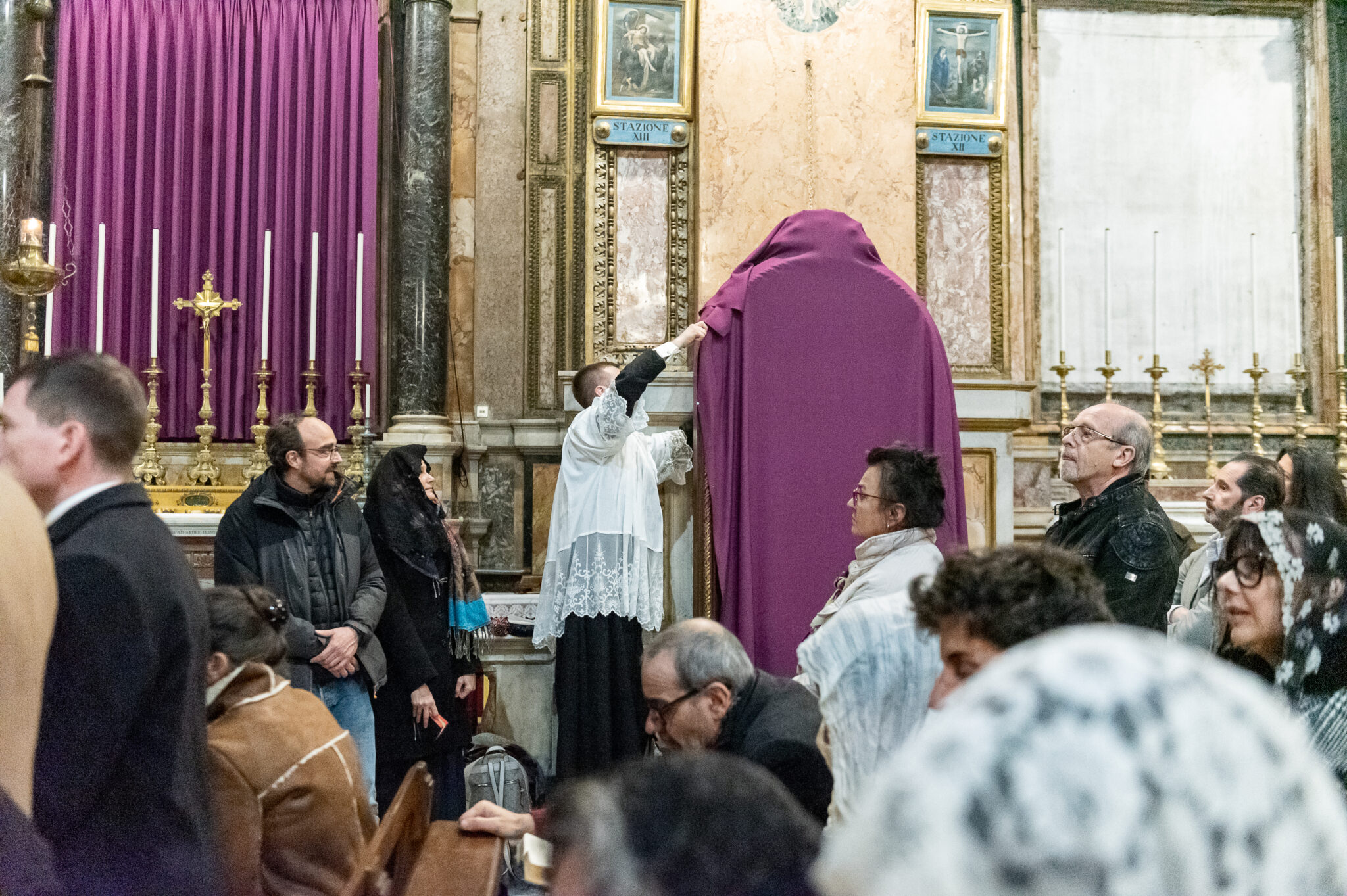
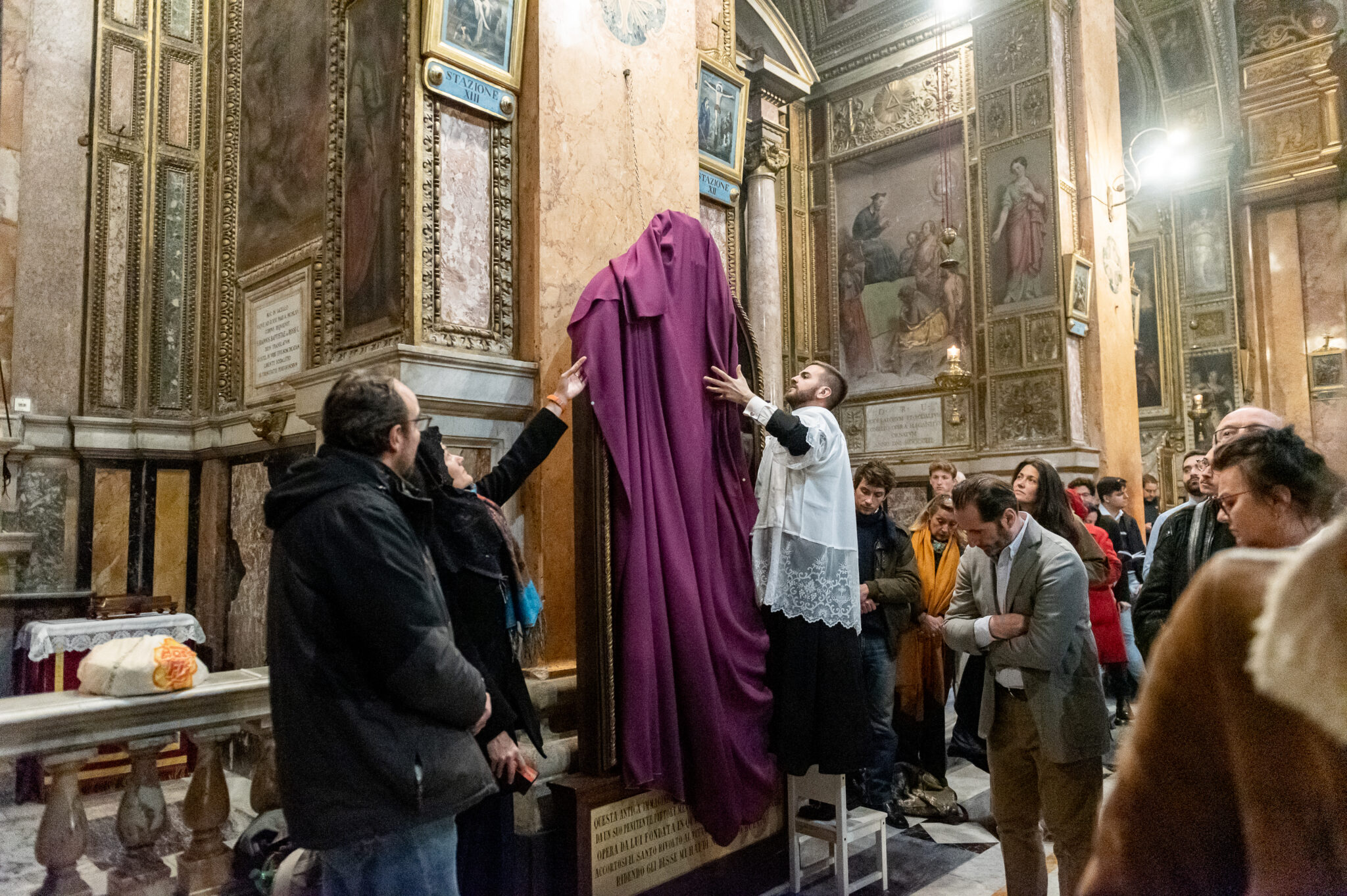
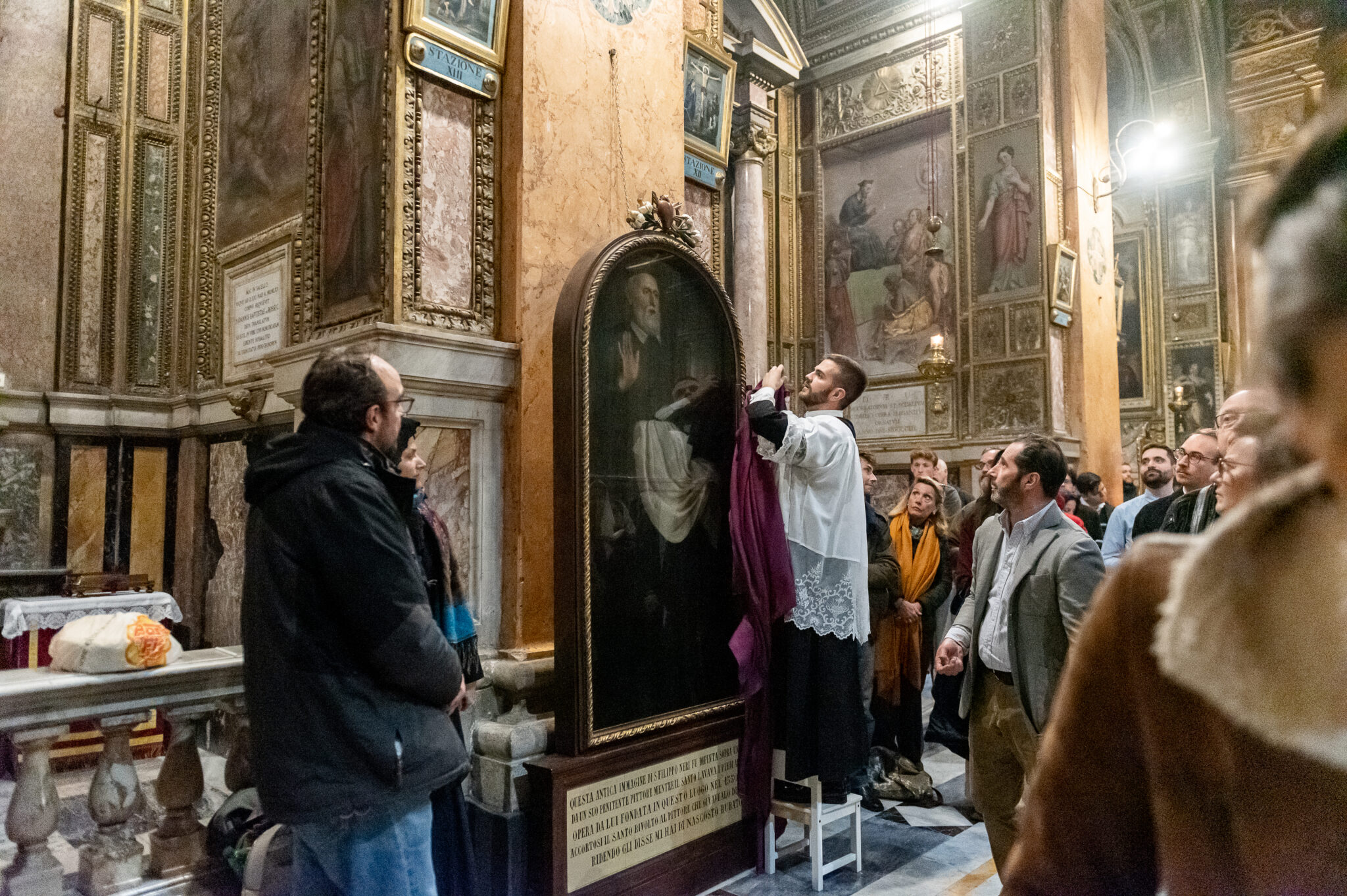
I like action shots.  The images are being unveiled.  This is a portrait of St. Philip done, if I am not mistaken, in his lifetime.

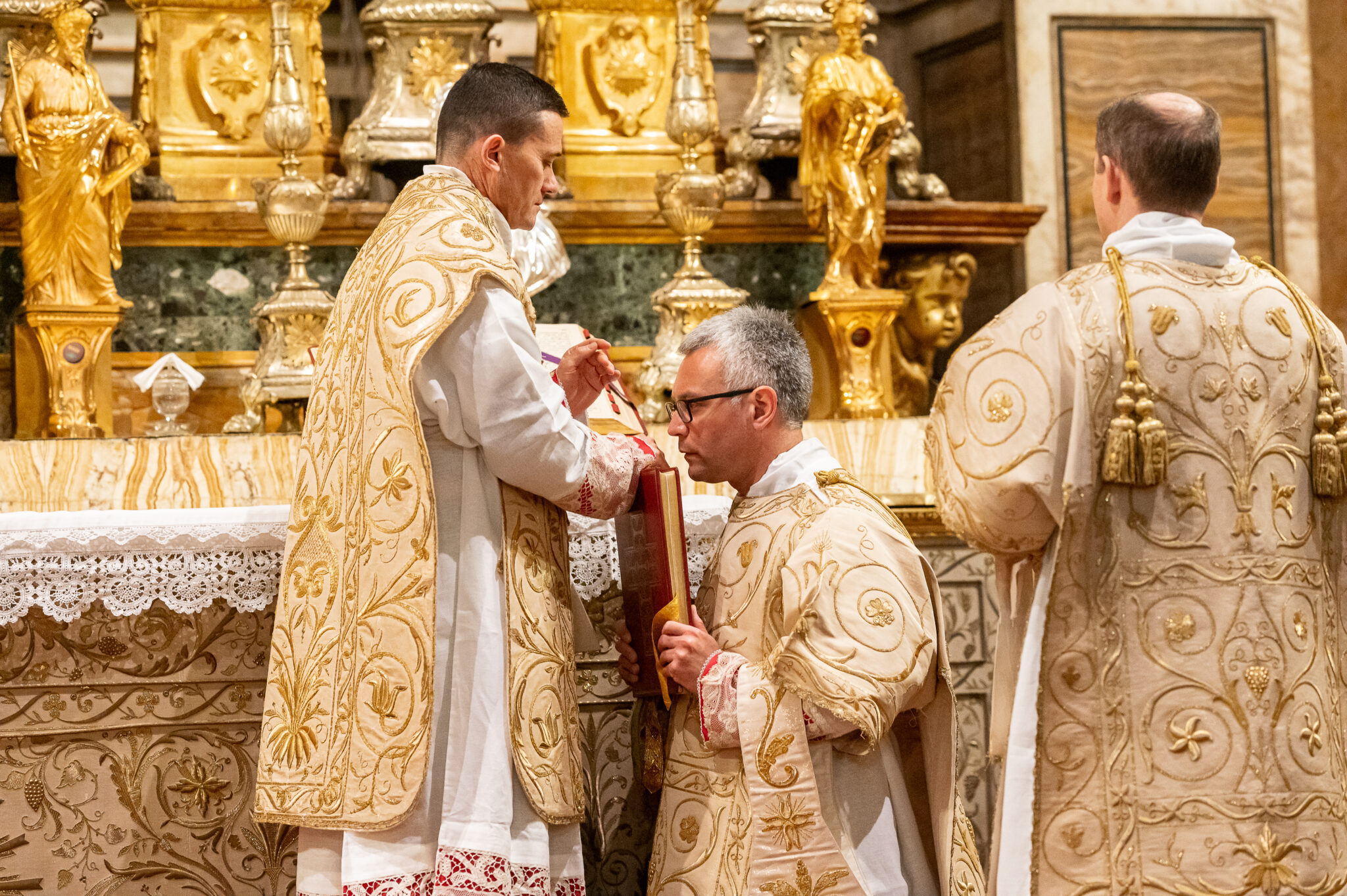
After the Epistle.

I was talking with the pastor about anything they might need at Ss. Trinità.  They need a nice white set for Solemn Mass and for when bishops celebrate at the faldstool.  Are we game for a project?  Shall I request estimates?

Our work here is done.

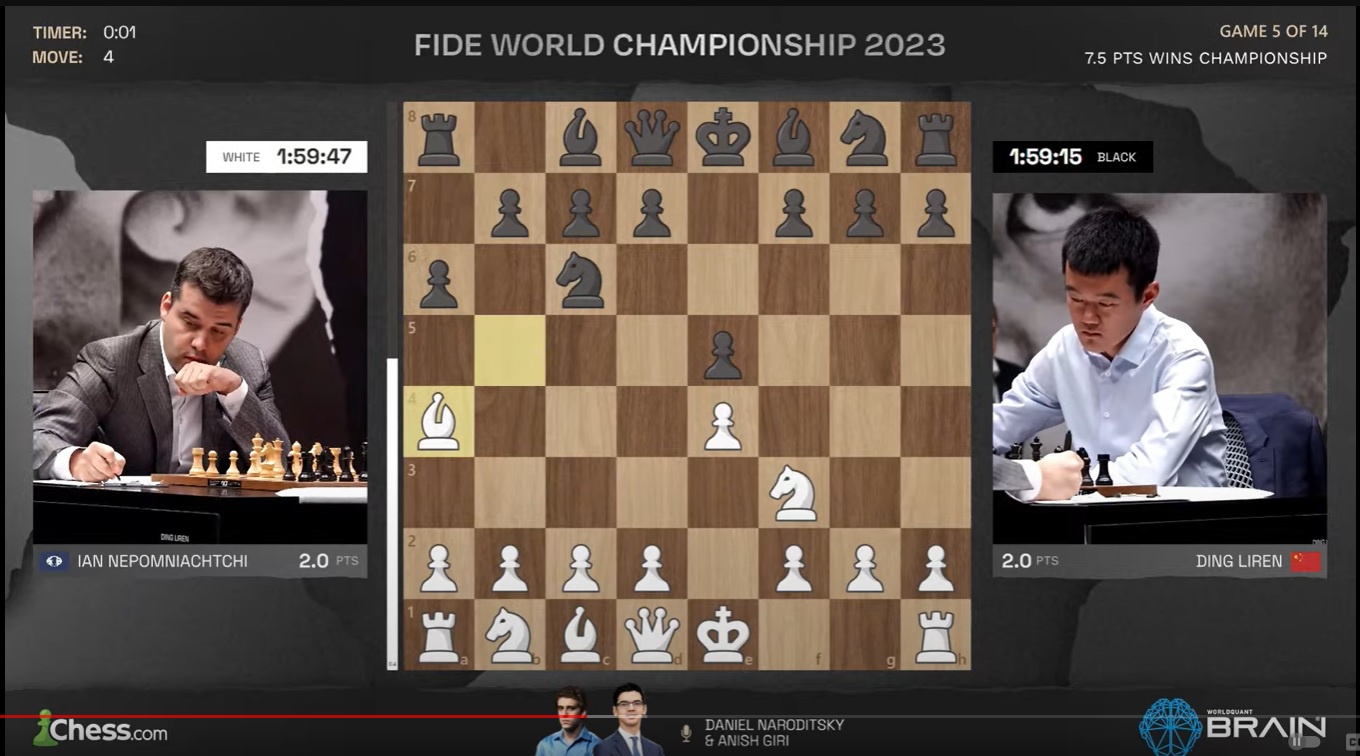
Meanwhile, today the World Championship reengages in Astana, Kazakhstan.  I wonder if Bp. Schneider is following it.  It’s Round 5.  Apart from the prestigious title, FIDE World Champion, there is a €2,000,000 prize fund. Ian Nepomniachtchi, who lost to Ding Liren a couple days ago after a massive blunder, plays with white today. The match is tied, 2-2.

Here’s a puzzle.

Black to move.

NB: I’ll hold comments with solutions ’till the next day so there won’t be “spoilers” for others.

Priestly chess players, drop me a line. HERE
Posted in SESSIUNCULA |
5 Comments