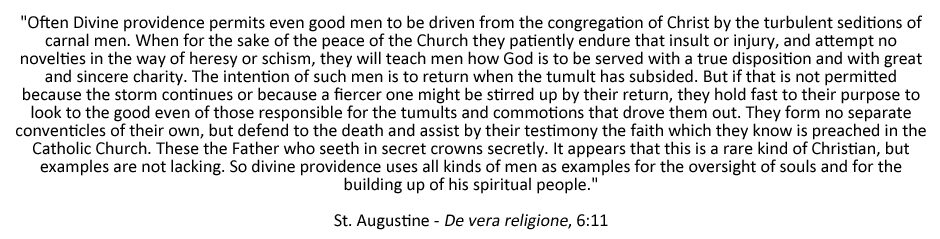
UPDATE – 30 Jan
Some new Christmas cards arrived! HERE
In the traditional Roman calendar, today is the Feast of St. Francis de Sales, Bishop and Doctor. He was a great warrior for the Church in the face of the Protestant Revolt.
According to the Louis de la Rivière in his Vie de saint François de Sales (1624 – p. 584), the doctor and bishop of Geneva, St. Francis de Sales (+1622) told friend and prodigy Jean Pierre Camus (+1652) Bishop of Belley:
“Soyez toujours le plus doux que vous pourrez, et souvenez-vous que l’on prends plus de mouches avec une cuillerée de miel qu’avec cent barils de vinaigre.
Always be as gentle as you can and remember that one catches more flies with a spoonful of honey than with a hundred barrels of vinegar.”
Honey and vinegar. They seem to go together.
Just for fun, here is a sample about hearts and honey and vinegar from Augustine as quoted by Pope Benedict XVI in his encyclical Spe Salvi:
“St Augustine…describes very beautifully the intimate relationship between prayer and hope. He defines prayer as an exercise of desire. Man was created for greatness – for God Himself; he was created to be filled by God. But his heart is too small for the greatness to which it is destined. It must be stretched…He then uses a very beautiful image to describe this process of enlargement and preparation of the human heart. “Suppose that God wishes to fill you with honey [a symbol of God’s tenderness and goodness]; but if you are full of vinegar, where will you put the honey?” The vessel, that is your heart, must first be enlarged and then cleansed, freed from the vinegar and its taste. This requires hard work and is painful, but in this way alone do we become suited to that for which we are destined. Even if Augustine speaks directly only of our capacity for God, it is nevertheless clear that through this effort by which we are freed from vinegar and the taste of vinegar, not only are we made free for God, but we also become open to others…When we pray properly we undergo a process of inner purification which opens us up to God and thus to our fellow human beings as well. (Spe Salvi 33)”.
Honey and vinegar!
And speaking of enlarging hearts, St. Philip Neri pray for us.
Some years ago I read a stunning, alarming, enlightening book:
Disinformation: Former Spy Chief Reveals Secret Strategies for Undermining Freedom, Attacking Religion, and Promoting Terrorism by Ronald Rychlak and Lt. Gen. Ion Mihai Pacepa.
Rychlak wrote books about the smearing of Pius XII (e.g., Hitler, the War, and the Pope). He is a law professor who teaches about evidence.
In this book, Disinformation, he teamed up with the guy who ran intelligence for Romanian despot and Soviet thug Nicolae Ceausescu. Ion Pacepa fled to the West – the highest Soviet ever – when he was asked to start killing people. He is an expert on the Soviet technique of framing, disinformation, creating false narratives and history. The book exposes the Communist background with seemingly-benign organizations and explains the treatment received by Cardinals Stepinak, Mindszenty, Slipyi and Wysznski and, of course, Pius XII.
There is a section on how KGB and Communist agents worked to make sure that the disinformation Broadway play, The Deputy, was staged to smear the anti-Communist, anti-Nazi Pius XII as a Nazi collaborator.
This book is an eye-opener. The involvement of the KGB and other Communist block intelligence agencies with one well-known name and publication and organization – Catholic too – after another is jaw-dropping. Their methods of infiltration and distortion of truth are astonishing. The influence has lasted down to our time.
You can see how the Left has worked for decades, and how the catholic Left has been influenced.
NB: Disinformation is not the same thing as misinformation. Disinformation is a remaking of evidence. Pacepa and Rychlak give the example:
Let us assume that the FSB (the new KGB) fabricated some documents supposedly proving that American military forces were under specific orders to target Islamic houses of worship in their bombing raids over Libya in 2011. If a report on those documents were published in an official Russian news outlet, that would be misinformation, and people in the West might rightly take it with a grain of salt and simply shrug it off as routine Moscow propaganda. If, on the other hand, that same material were made public in the Western media and attributed to some Western organization, that would be disinformation, and the story’s credibility would be substantially greater.
One technique of the wielders of disinformation was/is to create “facts” with a smidge of truth but which in truth pointed in another direction and then, methodically, promote those “facts” later on as “history” and “scholarship”. Then, suborn prominent organizations to disseminate the manufactured disinformation “facts” until they are the foundations of articles in the footnotes of journals and books. For example, you have probably heard of the complete lie of a play Broadway play The Deputy which portrayed Pius XII as a Nazi sympathizer. That planted the in the public imagination. Eventually, the lie would be built upon until we saw the publication of deeply evil and mendacious books about Pius XII by the likes of the execrable John Cornwell. Remember that?
Relentless disinformation becomes very hard to clarify because it becomes engrained in a large number of people.
And once you start using its and you see that it works…
Soviet leader and long-time KGB head Yuri Andropov, apparently a real aficionado of dezinformatsiya, put it this way: “[Dezinformatsiya is] like cocaine. If you sniff once or twice, it may not change your life. If you use it every day though, it will make you an addict—a different man.”
When the first attempts by Stalin and crew to bring down the Church failed, they turned on the disinformation machine:
According to [General Aleksandr ] Sakharovsky, [who in 1949 created Romania’s political police, the Securitate, and was now its chief Soviet adviser and its de facto boss] World War III was conceived to be a war without weapons—a war the Soviet bloc would win without firing a single bullet. It was a war of ideas. It was an intelligence war, waged with a powerful new weapon called dezinformatsiya. Its task was to spread credible derogatory information in such a way that the slander would convince others that the targets were truly evil. To ensure the credibility of the lies, two things were required. First, the fabrications had to appear to come from respected and reputable Western sources; and second, there had to be what Sakharovsky called “a kernel of truth” behind the allegations, so that at least some part of the story could be definitively verified—and to ensure that the calumny would never be put to rest. In addition, the originator had to do his best to ensure that the story got plenty of publicity, if necessary, by having agents or leftist sympathizers in the West publish articles putting the desired spin on the alleged information.
A few of weeks ago, at the first Consistory of Cardinals called by Leo XIV, there were to be four topics of conversation. They were whittled down to two. One of the topics set aside – probably the most important – was liturgy, which of course meant also the Traditional Latin Mass.
Enter: the Prefect of Divine Worship – in ideal times a usually reliable source. He distributed his own “essay” to all the Cardinals.
Let’s call it the “Roche Report”. HERE
The Roche Report portrays liturgical history as a process of continual reform. Stability is treated as inherently suspect. Hijacking the highly regarded Joseph Ratzinger to provide a “kernel of truth”, by defining tradition primarily as movement (“a living river”) that must keep flowing, The Roche Report disqualifies settled liturgical forms from enjoying lasting normative authority. What results is a functional analogue to permanent revolution. Reform is not ordered toward consolidation, reception, and repose. Reform is presented as an ongoing necessity intrinsic to fidelity to the “spirit” of the Council.
Those are my “”, because it is impossible to express that sort of reform as intrinsic fidelity to the letter of the Council.
Several commentators have lately remarked how embarrassingly inadequate The Roche Report is, and downright wrong in details – but not all details.
My point?
A few days ago, the ordinary of the “Windy City” published on their archdiocesan website a glowing op-ed of admiration for The Roche Report and its notion about how we need more “formation”.
So, Roche gives The Roche Report essay to the Cardinals. Now this Cardinal is citing it authoritatively in his publication.
Meanwhile:
The suppression of all the Eastern and Oriental rites will be a sad thing, but here we are. https://t.co/IOj0ifBtXk
— Fr. Brendon (@padrebrendon) January 26, 2026

Today’s Wordle: 5
Please remember me when shopping online and use my affiliate links. US HERE – WHY? This helps to pay for health insurance (massively hiked for this new year of surprises), utilities, groceries, etc.. At no extra cost, you provide help for which I am grateful.
This…
Pope Leo XIV received in private audience this morning Cardinal Gerhard Müller, prefect emeritus of the Dicastery for the Doctrine of the Faith. pic.twitter.com/vZqt30dydf
— Edward Pentin (@EdwardPentin) January 29, 2026
Meanwhile, there is a post at the UK’s Catholic Herald … “The Pope is not a Führer”: Cardinal Müller on ultramontanism
[…]
Cardinal Gerhard Ludwig Müller, prefect emeritus of the Congregation for the Doctrine of the Faith, described the veneration of the private and political opinions of the late Pope Francis as a “heresy” and said that criticising it was his “duty”. The German prelate insisted that Catholics should not fall into a heretical leaning spiritual posture known as “ultramontanism”, which exaggerates the role and doctrines surrounding the papacy, and said they should remain conscious of the historical context in which such attitudes emerged in the 19th century.
[…]
“It is my duty to criticise this cult of personality,” he said. “It has nothing to do with the Catholic Church… Some of his [Pope Francis’] friends spoke about a ‘new Church’. For me, this is a heresy. To speak of the ‘Church of Francis’.”
[…]
“It’s 106 miles to Chicago, we’ve got a full tank of gas, half a pack of cigarettes, and a copy of the Summa Theologiae.”
“Hit it.” https://t.co/I41E3dBzgD
— Edward Feser (@FeserEdward) January 28, 2026
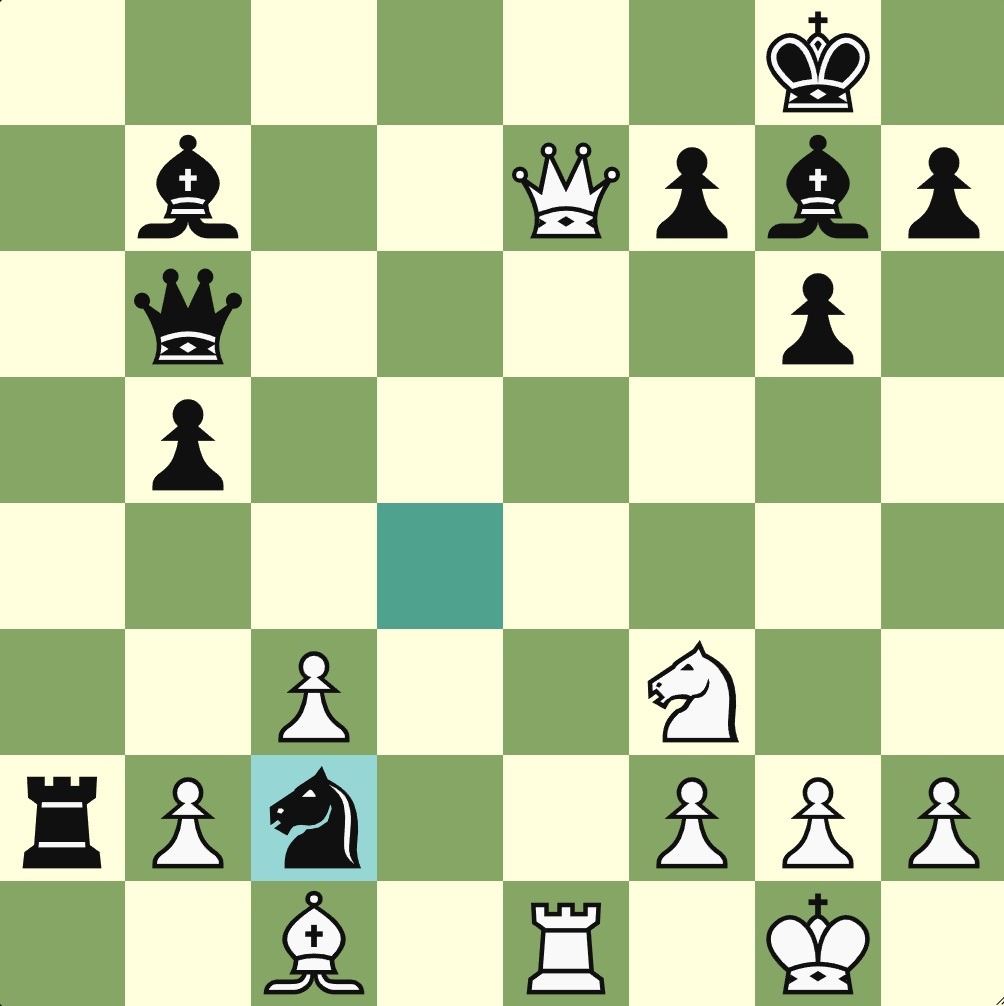
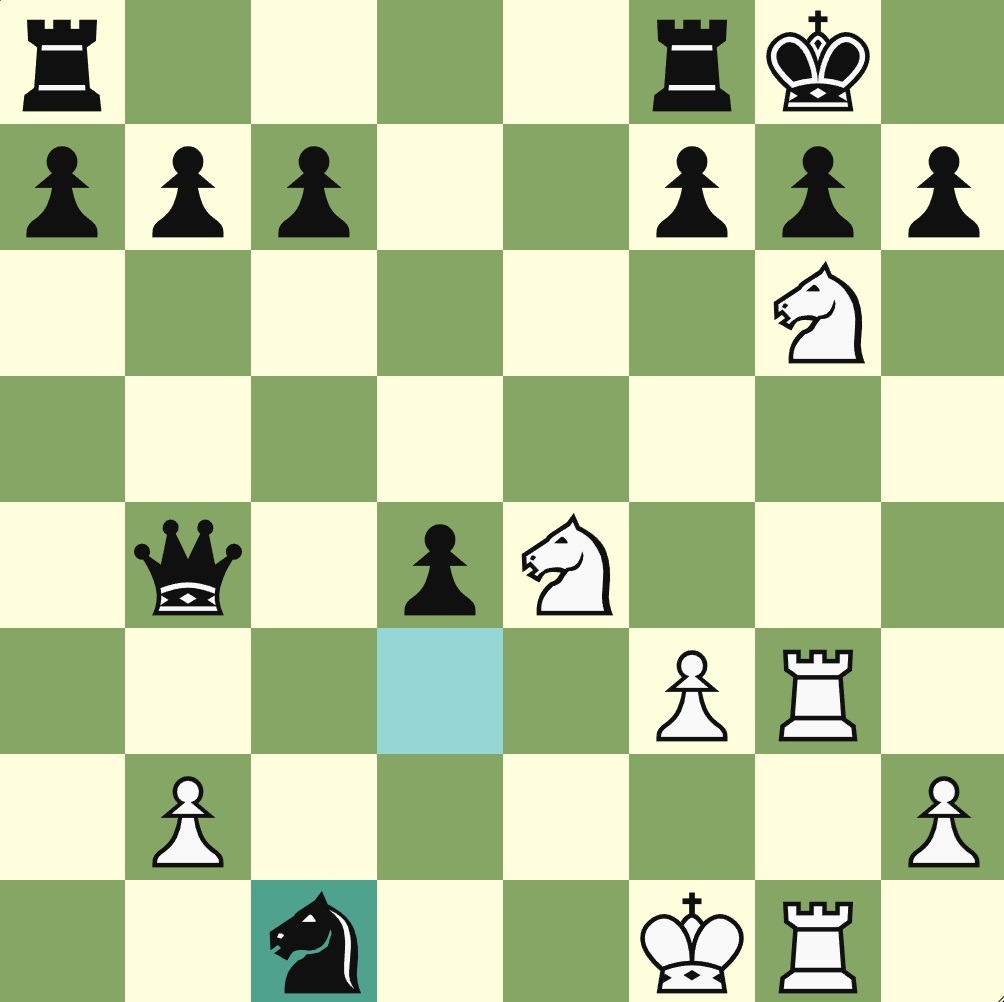
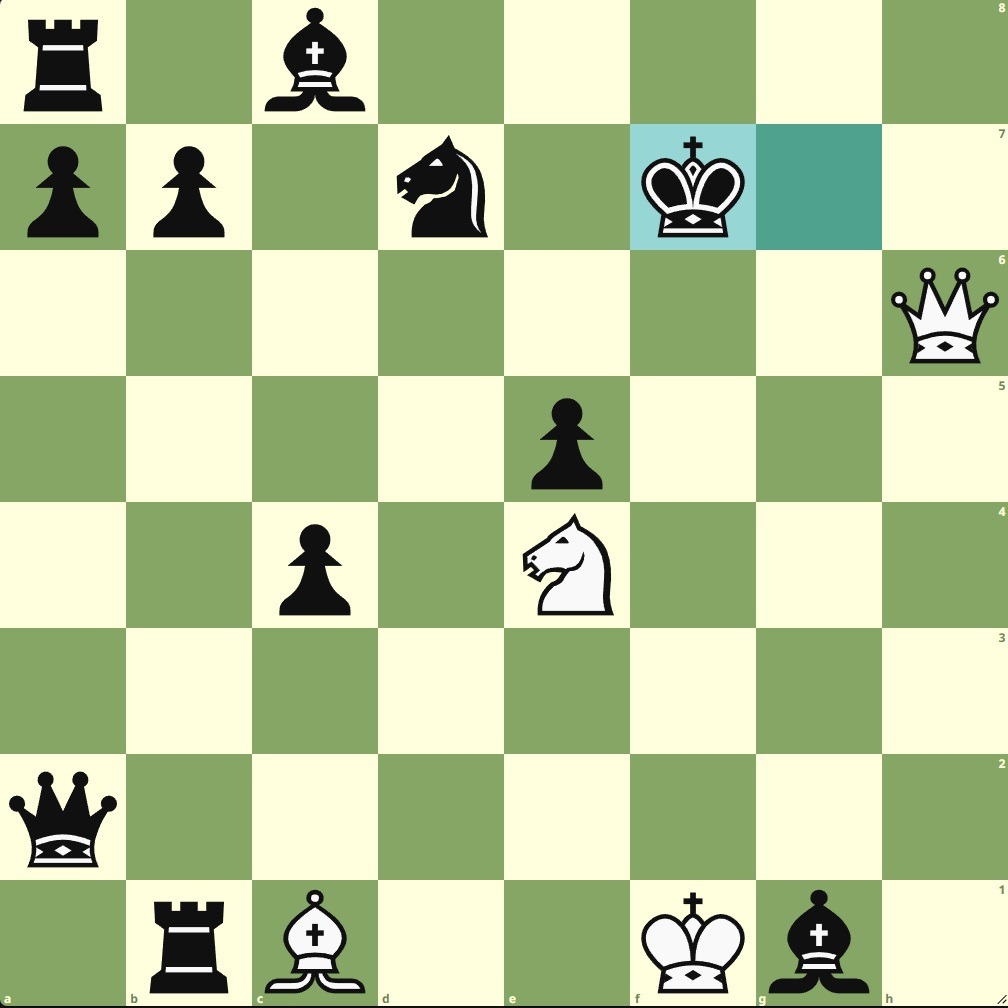
White to move and mate in 4. HERE

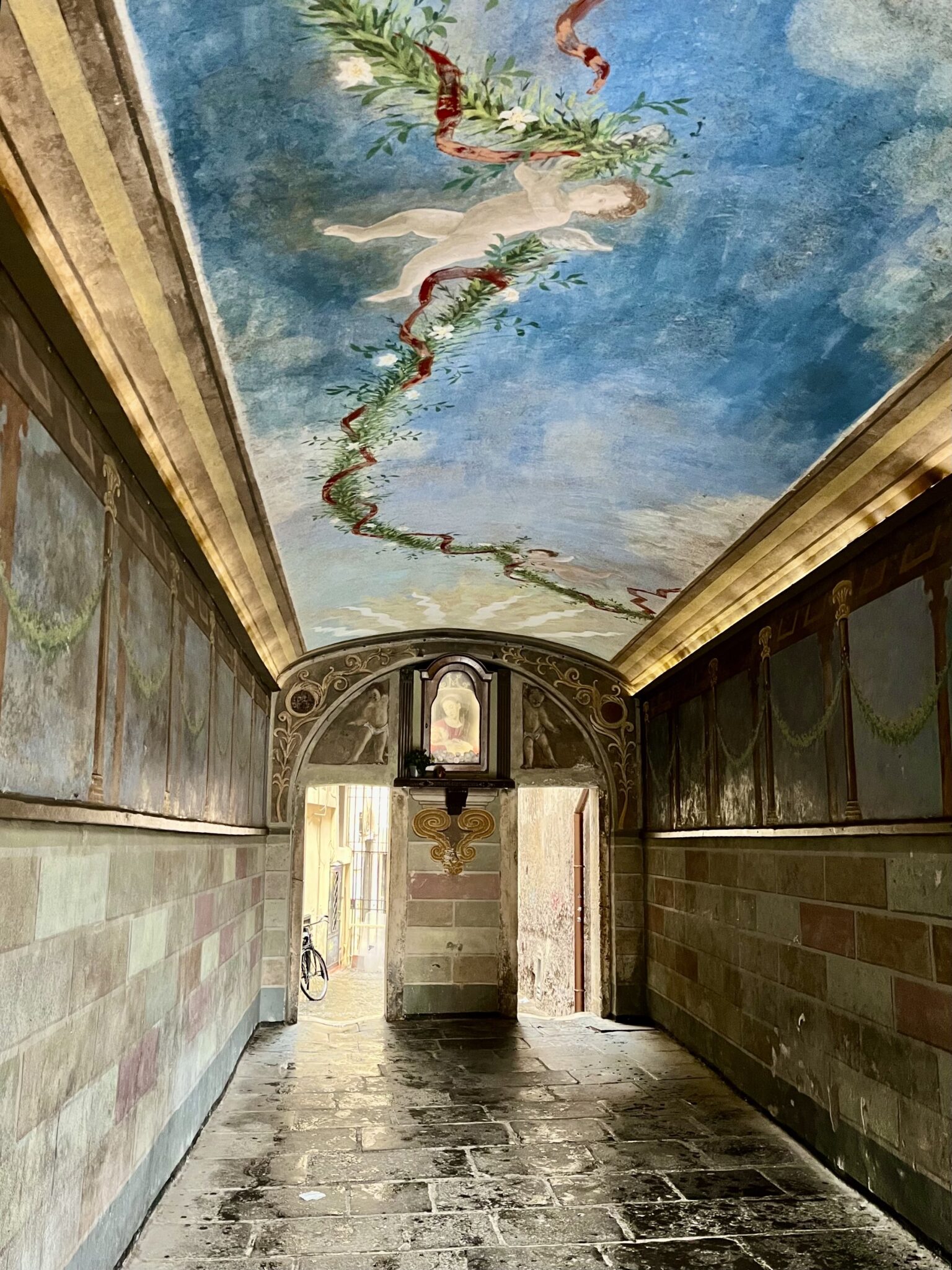
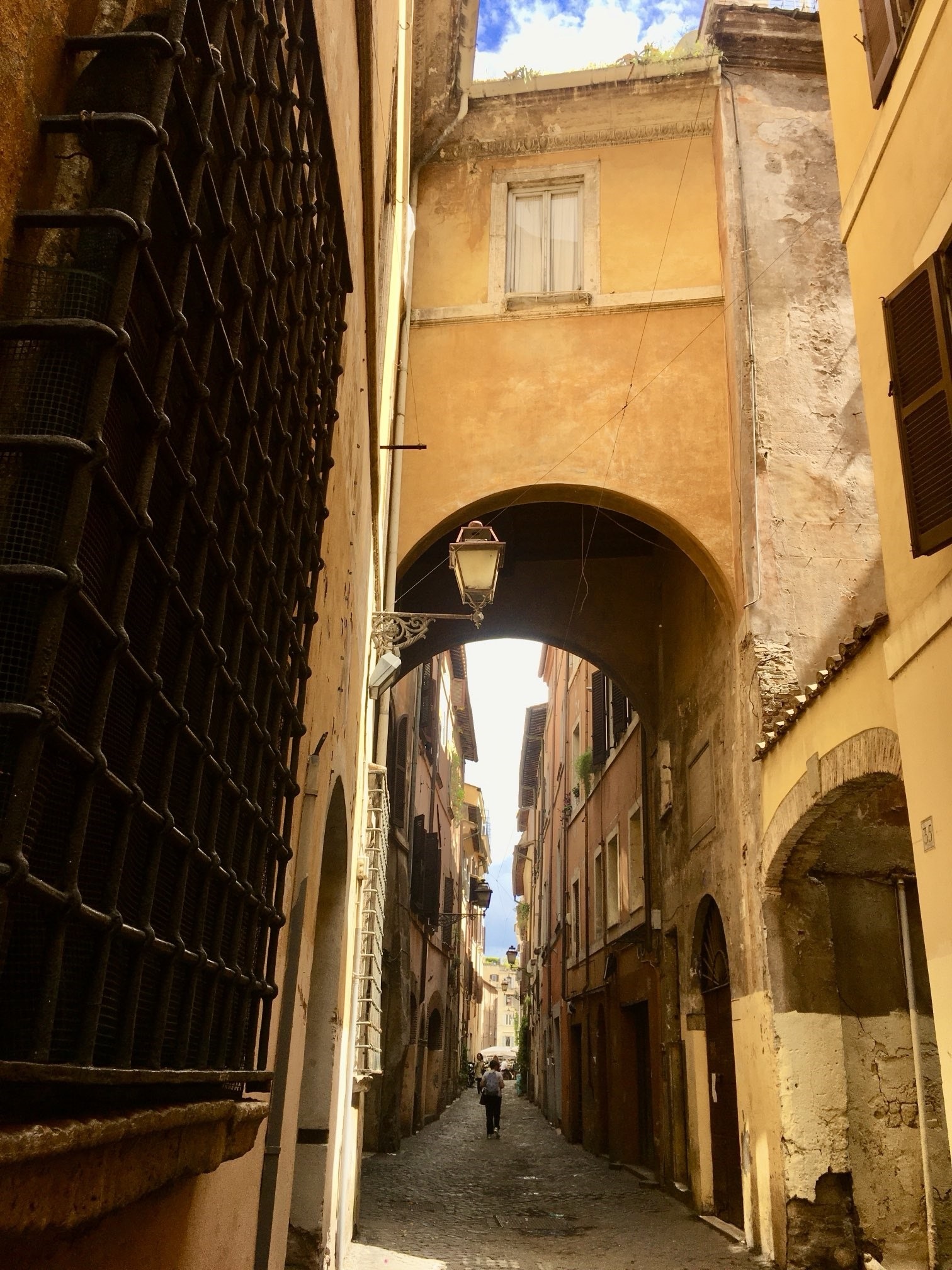
Interior of San Nicola in Carcere, in which Card. Burke is celebrant and I am the deacon… fitting, since I was ordained a deacon in this church.
Meanwhile…
Assim era a caligrafia de São Tomás de Aquino pic.twitter.com/4LZjHLFwo2
— Abrace a Tradição (@abracetradicao) January 27, 2026
And…
Too many “bishops see their priests as potential liabilities, lawsuits waiting to happen, and they treat their priests accordingly.”https://t.co/1kx30Uiqe9
— Fr. Thomas Kocik (@FrKocik) January 27, 2026
And…
For those who may have forgotten, National Catholic Reporter was condemned for heresy back in 1968 and told NOT to use the word “Catholic” in its name. This condemnation was reaffirmed in 2013 and remains in full force. pic.twitter.com/TtOYBc4vg8
— Lepanto Institute (@LepantoInst) January 28, 2026
Meanwhile…
White mates in 4. HERE

I was ordained a deacon in this church.
Please remember me when shopping online and use my affiliate links. US HERE – WHY? This helps to pay for health insurance (massively hiked for this new year of surprises), utilities, groceries, etc.. At no extra cost, you provide help for which I am grateful.
The suppression of all the Eastern and Oriental rites will be a sad thing, but here we are. https://t.co/IOj0ifBtXk
— Fr. Brendon (@padrebrendon) January 26, 2026
White to move an mate in 4.

NB: I’ll hold comments with solutions ’till the next day so there won’t be “spoilers” for others.
Fr. McTeigue is concerned that listening is replacing preaching. Listening has its place in the life of the Church, but when listening becomes the ultimate principle, one must ask: who, then, is teaching?
A friend recently his attention to a document of Pope Benedict XV’s Humani generis redemptionem, about the urgency of preaching. Vocabulary has shifted.
Back then: redemption, death, altar, Cross, obedience, eternal life, belief, conversion. This is preaching that confronts the absolute choice between life and death.
Yet today we are told instead to sit in circles, to dialogue, to wait for vague murmurings of the Spirit from people who have given little evidence of prayer or study.
We are told not to insist on doctrine and dogma, but simply to be “attractive,” as though Christ were merely one option among many competing for the attention of busy modern people.
Something is wrong.
At Crisis Magazine my good friend Msgr. Hans Feichtinger, who was a theologian for the CDF during the Ratzinger years, examined The Roche Report.
Liturgical Terrorism
At its core, liturgical tensions point to deeper issues in theology, the transmission of tradition, and limits of authority.
[…]
Laudably, the text is concise; unfortunately, some of it remains shallow, even insensitive. On the fundamental concepts of reform, progress, or tradition, the text speaks in terms that are quite vague, even bland. Thus, it uses more a rhetoric of (curial) power and persuasion than of theological judgment or genuine awareness of the opportunities and challenges which communities and people in the Church are facing today.
Even the alleged need for better formation and catechesis sounds paternalistic: “Let me explain it to you again.” Curial mansplaining? There are also hints of psychologizing, of diagnosing mental problems—in others, of course. [As I wrote HERE “In the former Soviet Union and in some sectors of the Church today, resistance to the official line coming down from The Whatever High Atop The Thing is tantamount to mental illness. The Soviets called it “sluggish schizophrenia”. You would be institutionalized. After all, the Soviet system was clearly the best possible and quite simply flawless. To resist it was a sign that you were mentally ill. Today, anyone who resists what is clearly the most incredible and miraculous Second Pentecost for the Church must be a dissident who, for the sake of unity, must be dealt with by being pastorally “un-personed”, to borrow a notion of Rawls.”] There is no willingness to look at group dynamics and other limitations affecting those who “elaborated” and/or now uphold the reform, at times not without intransigence.
The word “elaborated” is revealing. Yes, there were many reforms of liturgy throughout history, but Cardinal Roche shows no awareness of how unique the last one was. Appropriately, he calls it “general,” but to simply describe it as a process of organic development is untenable. [To say the least.]
[…]
Beyond what Cardinal Roche seems to imagine, the liturgical tradition is, in fact, alive in a process of organic growth. The mission of his dicastery is less to “elaborate” and actively “develop it” than to allow it (!) to grow and to develop: the grammatical subject in this sentence matters. What we need is not cloning but gardening. [Excellent.] Liturgical reform is not centrally organized paradigm-shifting but a slow, gradual, humanly often unpredictable process.
[…]
And here is a good point toward the conclusion. Directives, sheer positivism, from Rome isn’t going to fix anything. As Hans says, “Lex orandi is something greater”.
[…]
Recognizing that the issues at stake in our liturgical debates fall in the area of fundamental theology is crucial from doctrinal, pastoral, ecumenical, and evangelistic perspectives. In particular, when we refer to lex orandi, we must not reduce the meaning of this term to liturgical texts promulgated by competent authority. No synod or pope can just write a new or updated version. Lex orandi is something greater, and today it challenges both the followers of Lefebvre and the liturgical hierarchs in Rome.
[…]
In what way could the Lex Orandi challenge the followers of Lefebvre? That is left dangling. Since it follows the part about “write and new or updated version”, perhaps it implies that there has been necessary work done since the 1962 Missale Romanum, for example in the revision of and creation of some orations for feasts. For example, in my post about St. Polycarp, I wrote about the Collect for the Novus Ordo which is, in my view, by far superior to the boilerplate oration in the older book. However, that is not something which, if I understand correctly, “the followers of Lefebvre” would object to out of hand, namely, freshening up some orations here and there. I return to my observation: it’s dangling.
Feichtinger’s piece nails the problems of top down micromanaging.
I was amused that he seems to have taken a little shot at me, buried in the text. HA! He always was a secret “lib” (… not!).
The accomplished liturgist Alcuin Reid dissected The Roche Report for the UK’s Catholic Herald. His piece compliments Feichtinger’s
On futility in liturgical reform (and why seminars are not the answer)
The briefing paper of the Prefect of the Dicastery of Divine Worship, prepared for the Consistory of Cardinals and published last week, has drawn much criticism, and rightly. It is at best risible. Yet this is truly no laughing matter. Indeed, given its status, it necessitates serious critical analysis.
However, His Eminence did get one fact absolutely right when he wrote that “the application of the Reform suffered and continues to suffer from a lack of formation” (n. 8).
[…]
This is a good read.
In sum… The Roche Report is faulted by Reid as inadequate, though it correctly admits the reform “suffered and continues to suffer” from lack of formation. He cites Sacrosanctum Concilium 14 to argue that actuosa participatio depends first on clergy being imbued with the liturgy’s spirit and power. Without that foundation, reform collapses. Western Mass non-attendance is offered as evidence that the promised participatory “panacea” failed to fill pews. Seminars are rejected as insufficient. His strong point: formation is caught by living reverent rites. The remedy proposed is ars celebrandi, mutual enrichment, and renewed access to older rites.
Sounds like a good idea to me.
Reid recounts Ratzinger’s description of being swept up into sacred liturgy as boy, slowly but surely taking it in until it was in his marrow. Instead of formal seminars, it just happened over time. As Reid says eloquently:
[…]
This discovery introduced him to Christ Himself, alive and at work in His Church through her sacred rites. When we have entered into such a relationship, how can we possibly tire? This, then, is the spirit and power of the liturgy in which we must be formed: a spirit which makes demands of us, certainly, and which requires our conformity to established, sometimes seemingly antiquated, paths and practices; a spirit whose disciplines and language I must learn and to which I must humbly submit; [An important point, because when a priest learns the Vetus Ordo, he must submit to it, disappear into it, get himself out of the way, whereas in the Novus Ordo, he becomes the focus and driving force of the action which yields to his choices through myriad options.] yet a spirit whose paths lead to the joyful discovery and celebration of Christ alive and working in His Church, and which nourishes us at the very source of all that we need to persevere in our daily Christian life and mission; a spirit which gives us a foretaste of, and an appetite for, the eternal, and which shapes us and sustains us here on earth until we are called to share together in the unending joy of the heavenly liturgy. [actuosa participatio is chiefly learning to be actively receptive to what the main Actor (Christ) is offering through the Church’s liturgy and acts of Religion. It is formation for Heaven.]
This is a spirit more easily ‘caught’ than ‘taught’, by living it and not by being lectured about it, caught by hands joined in a way only used for prayer, by knees bent in adoration, by voices raised in the discipline of the Church’s chant, through the body bowed profoundly, by signs of the cross made, in ashes accepted on our foreheads, through water sprinkled on us, and in so many other ways.
[…]
There is nothing of this in The Roche Report. In fact, quite the opposite.
Today in the calendar of both the Novus Ordo and the Usus Antiquior it is the feast of St. John Chrysostom (+407).
Benedict XVI wrote a splendid little Apostolic Letter about St. John Chrysostom for 1600th anniversary of the death of the great Doctor of the Church. I wrote about it here.
Here’s one of my favorite quotes from the saint, so venerated in the East, as in the West.
This is from Homilies on the Statues 1,7:
Paul is not ashamed, and does not blush, after the many and great signs which he had displayed even by a simple word; yet, in writing to Timothy, to bid him take refuge in the healing virtue of wine drinking. Not that to drink wine is shameful. God forbid! For such precepts belong to heretics; […] For [Paul] does not simply say, “use a little wine;” but having said before, “drink no longer water,” he then brings forward his counsel as to the drinking of wine. And this expression “no longer” was a manifest proof, that till then he had drunk water, and on that account was become infirm.
But since our discourse has now turned to the subject of blasphemy, I desire to ask one favor of you all, in return for this my address, and speaking with you; which is, that you will correct on my behalf the blasphemers of this city [i.e., blaspheming against God by saying that wine is evil.]. And should you hear any one in the public thoroughfare, or in the midst of the forum, blaspheming God; go up to him and
rebuke him; and should it be necessary to inflict blows, spare not to do so. Smite him on the face; strike his mouth; sanctify your hand with the blow, and if any should accuse you, and drag you to the place of justice, follow them thither; and when the judge on the bench calls you to account, say boldly that the man blasphemed the King of angels! For if it be necessary to punish those who blaspheme an earthly king, much more so those who insult God. […]
So, there it is.
St. John has taught us today that, should anyone say we shouldn’t drink wine or that it is bad for us or wrong or evil, strike him on the mouth!
Let us know how it goes.
Happy feast of St. John Chrysostom!
May I suggest nice bottle of wine with supper tonight?
Meanwhile, ancient synodality.

St. John Chrysostom could be nicknamed the “Patron Saint Of Telling It Like It Is”.
Chrysostom (+407), known as the “golden-mouthed” for the excellence of his preaching, was Bishop of Constantinople. Trained in Antioch, he expounded Scripture in its literal sense and applied it directly to Christian life, using biblical precision. He denounced clerical luxury and indifference to the poor with uncompromising force. He provoked powerful enemies which led to repeated exiles. He died in banishment, leaving enduring homilies, a model of pastoral courage, and the Eucharistic liturgy that bears his name still celebrated in Eastern Churches.
This is what St. John has to say about Communion for politicians who would be regular, public supporters of – say – abortion or the trans stuff and all its various wicked cousins. I think we might be able to include in that collusion with fraud and the wholesale theft of public funds.

On the Institution of the Eucharist (my emphases):
I speak not only to the communicant, but also I say to the priest who ministers the Sacrament: Distribute this gift with much care. There is no small punishment for you, if being conscious of any wickedness in any man, you allow him to partake of the banquet of the table: ‘Shall I not now require his blood at your hand?’ (2 Sam. 4:11). If some public figure, or some wealthy person who is unworthy, presents himself to receive Holy Communion, forbid him. The authority that you have is greater than his.
Consider if your task were to guard a clean spring of water for a flock, and you saw a sheep approach with mire on its mouth–you would not allow it to stoop down and pollute the stream. You are now entrusted with a spring, not of water, but of blood and of spirit. If you see someone having sin in his heart (which is far more grievous than earth and mire), coming to receive the Eucharist, are you not concerned? Do you try to prevent him? What excuse can you have, if you do not?
God has honored you with the dignity of priesthood, that you might discern these things. This is not to say that you should go about clothed in a white and shining vestment; but this is your office; this, your safety; this your whole crown.
You ask how you should know which individual is unworthy to receive?
I am speaking here not of some unknown sinner, but of a notorious one. If someone who is not a disciple, through ignorance, comes to Communion, do not be afraid to forbid him. Fear God, not man. If you fear man, you will be scorned and laughed at even by him; but if you fear God, you will be an object of respect even to men. But if you cannot do it, bring that sinner to me, for I will not allow anyone to dare do these things. I would give up my life rather than give the Lord’s Blood to the unworthy.
“If, however, a sinful person receives Communion, and you did not know his character, you are not to blame, however. I say the things above concerning only those who sin openly. For if we amend these, God will speedily reveal to us the unknown also; but if we let these flagrant abuses continue, how can we expect Him to make manifest those that are hidden? I say these things, not to repel sinners or cut them off, but I say it in order that we may bring them to repentance, and bring them back, so that we may take care of them. For thus we shall both please God and lead many to receive worthily. And for our own diligence, and for our care for others, we will receive a great reward. May we attain that reward by the grace and love that God gives to man through Our Lord Jesus Christ, to whom be glory, world without end. Amen.”