WDTPRS – 28th Ordinary Sunday (N.O.): A seminar on grace!

The elegant Collect for the 28th Ordinary Sunday has been used for centuries on the 16th Sunday after Pentecost according to the traditional Roman calendar.  This is a lovely prayer to sing.

Tua nos, quaesumus, Domine, gratia semper et praeveniat et sequatur, ac bonis operibus iugiter praestet esse intentos.

The separation of tua and gratia in the first line is an example of the figure of speech called hyperbaton: unusual word order to produce a dramatic effect.  That et… et construction is snappy.

This prayer was in manuscripts of the Gregorian Sacramentary which results from the 10th c.   The prayer must have struck a chord with Thomas a Kempis in the 15th c., for he quotes it in the Imitation of Christ, Bk. III, 55: Liber internae consolationis.    It may also have been echoed earlier, in the a 12th c. Commentarium in Ruth e codice Genouefensi: Ex quo motandum est nec fortes stare nec posse debiles proficere, si non superna gratia et praeveniat et sequatur.

st-alphonsus-liguoriThe pair of verbs praeveniat…sequatur reminds me of a prayer I heard at my home parish every Tuesday night after the communal recitation of the Novena of Our Mother of Perpetual Help by St. Alphonsus Liguori (+1787).

In the Rituale Romanum for blessings of people who are sick:

“May the Lord Jesus Christ be with you that He may defend you, within you that He may sustain you, before you that He may lead you, behind you that He may protect you, above you that He may bless you. In the name of the Father, and of the Son, and of the Holy Spirit.”

Beautiful.  Gotta suppress that one!

As long as we are into the weeds, let’s really dig and root using especially our wondrous Lewis & Short Dictionary.

Intentus, -a, -um is from intendo, “to stretch out, extend” as well as “to turn one’s attention to, exert one’s self for”.

Our Collect has both semper (“always”) and iugiter (the adverbial form of iugis) meaning “always” in the sense of “continuously.”  A iugum is a “yoke”, like that which yokes animals together.  Iugum, or in English “juger”, was a Roman measure of land, probably because it was plowed by yoked oxen, and it is also the name of the constellation Libra, Latin for a “scale, balance”, which has a beam, a kind of yoke. The Roman measure of weight called the “pound” still today has abbreviation “lbs”.

The iugum was an infamous ancient symbol of defeat.  The Romans would force the vanquished to pass under a yoke to symbolize that they had been sub-jug-ated.  Our adverb iugiter means “always” in a continuous sense probably because of the concept of yoking things together, bridging them, one after another in an unending chain.  We hear this iugiter also in the famous prayer written by St. Thomas Aquinas (+1274) which is the Collect for Corpus Christi and is also used at Benediction of the Blessed Sacrament:

“O God, who bequeathed to us a memorial of Thy Passion under a wondrous sacrament, grant, we implore, that we may venerate the sacred mysteries of Thy Body and Blood, in such a way as to sense within us constantly (iugiter) the fruit of Thy redemption.”

LITERAL TRANSLATION:

We beg, O Lord, that Your grace may always both go before and follow after us, and hence continuously keep us intent upon good works.

OBSOLETE ICEL (1973):

Lord, our help and guide, make your love the foundation of our lives. May our love for you express itself in our eagerness to do good for others.

Look what we had to endure for so long.  What slop.

CURRENT ICEL (2011):

May your grace, O Lord, we pray, at all times go before us and follow after and make us always determined to carry out good works.

Let’s be super picky for a moment about the conjunctions.

That et…et is a classic “both…and” construction, joining praeveniat and sequatur. Here we see et…et…ac…   That ac (short for atque) sometimes informs us that what follows is of greater importance than what precedes it. If that is the case here, then our Collect presents a logical climax of ideas.  This is why I added a “hence” to my literal version.

Tua gratia, “your grace”, is the subject of all these verbs. 

We want God, by means of grace we do not merit, always to be both before and behind us.  We want His help so that we, fallen and weak, may be always attentive to the good works which, informed by faith and God’s grace, will help us to heaven and benefit our neighbor.

All our good initiatives come from God.  If we choose to embrace them and cooperate with Him, He guides them to completion.

Grace goes before.  Grace follows after.

Grace goes before.  God starts things.  Even those initial glimmerings of faith that come before full fledged acts of will based on knowledge come from God.  Like a gardener, he prepares the mind to have faith. This is prevenient grace, for it “goes before”.    Thus, “In every good work, it is not we who begin… but (God) first inspires us with faith and love of Him, through no preceding merit on our part.”  (cf. C. Orange II, can. 25)

That is for the beginnings of faith.  But after faith we can fall and lose sanctifying grace and the gifts and fruits.  That’s when God also “goes before” by offering us graces to convert, glimmers in our soul that bring us to repent and seek forgiveness.  He disposes us by prevenient grace to return to Him.  (Cf. C. Trent, Session 6, ch. 5: “a Dei per Dominum Christum Iesum praeveniente gratia … a going-before (predisposing) grace of God through the Lord Jesus Christ”).

God’s grace goes before.   God’s grace follows after.

Praeveniat… sequatur.

Our good works have merit for heaven because God inspires them, informs them, and completes them through us, His knowing, willing, and loving servants.

The deeds and their merits are ultimately God’s but, because we cooperate and because He loves us, they are also truly ours.

Augustine

As St. Augustine of Hippo (+430) wrote, God crowns His own merits in us (ep. 194.19 to Sixtus, later Pope Sixtus III).

They are truly His.  They are also truly ours and, because He makes His ours, ours are meritorious.

They are meritorious not by us, but by Him who goes before and after.

Sunday’s Collect reminds us how important our good works are for our salvation. They are all manifestations of God’s grace.

Just as we hope God will lavish His graces on us, so too we should be generous with our good works for others.

Posted in Patristiblogging, WDTPRS | Tagged
1 Comment

ROME 22/10 – Day 8: More about fish, forbidden games, and a new book

Sunset… sunset… 7:12… 18:42. The Ave Maria is at 1900. Today is the traditional Feast of St. Bridget. I’ll stop later to see if the nearby sisters keep the traditional day.

TOMORROW, however, is the Feast of. St. John Leonardi whose remains are at not too distant S.M. in Campitelli. There will be a procession this evening with his relics through the streets of that quarter. I hope to get there. Here is his enclosure from my last visit.

Tomorrow will also be the Feast of St. John Henry Newman.   It is possible to celebrate him with the TLM when not blocked by a heavier day (such as a Sunday, like tomorrow).  For you priests out there who may desire to do this in the future, here is my post about the LATIN Collect for St. John Henry Newman: HERE  Bookmark or copy now so you have it.

I made a bit of a stroll yesterday and the knee did well.   Over in the ghetto, the Jewish quarter, I was able to visit, just to keep the fishy theme going, St. Angelo in Pescheria.  This little church is sort of inside the Portico of Octavia, which was built by Augustus Caesar to replace the Portico of C. Caecilius Metellus Macedonicus, between 33 and 23 BC.

To right, you see the entrance of the Oratorio dei Pescivendoli, of the Fishmongers which was part of the Confraternity of the Blessed Sacrament.  The inscription reads: LOCUS ORATIONIS VENDITORUM PISCIUM.  Note the image of St. Andrew, who was, of course, a fisherman.


Inside St. Angelo in Pescheria.

The side altar with St. Andrew.


NB: Universitas Piscium Vendotorum Urbis.   Eventually it was suppressed in 1801.  Too bad.  I’d like to think that my fishmonger, near Campo de’ Fiori, was a member and participating in veneration of the Blessed Sacrament as part of his membership.

From this church Cola di Rienzo made his attempt at a coup.

On the Portico itself is this marvelous sign.  It strikes home to all players of games.

There was a list of prohibited games in Rome, generally involving dice and cards, and therefore susceptible to bloodshed.   Chess – waaaaaay back – once involved dice!  That’s why at the time St. Peter Damian railed against chess for clerics and it came to be forbidden.   It couldn’t last, of course.  Great saints played chess, St Francis de Sales… St. Theresa of Avila is the patroness of chess!  Several Popes were avid players, including Leo X and Leo XIII.  John Paul played a lot of chess, too.

Speaking of chess….  BLACK to move for a winning position.

Please remember me when shopping online. Thanks in advance.

US HERE – UK HERE

I’m starting to read… by Peter Kwasniewski (if it is Saturday, he must have another book out)…

The Once and Future Roman Rite: Returning to the Traditional Latin Liturgy after Seventy Years of Exile

More later.

Posted in SESSIUNCULA |
6 Comments

Wow… just… wow….

WOW. I am a bit at a loss for words, after reading this. It is dead on. I would only quibble with one small part, but even in that he has a point that ought to be considered.

There are so many things I would like to quote. Allow me to be a little self-referential. He describes almost exactly what I experienced in a US seminary:

Nope. I am going to have you go there and read it.

Bring your favorite quotes back here. (Try not to cut and paste the whole thing.)

Here’s one:

What they want is precisely to reignite the fires of that revolution and to reopen the debates over women’s ordination, contraception, intercommunion with Protestants, communion for the divorced and remarried, the legitimation of homosexual sex, cohabitation, and a greenlighting of the whole LGBTQ+IA++ world of sexual acronyms. And if you doubt this just look at Jimmy Martin’s dance card in Rome or the list of issues that the Germans, Belgians, Dutch, Australians, and Irish bishops have put forward. Cardinal Tobin just released the results of Newark’s “listening” sessions and, as I have written elsewhere, it seems as if the Holy Spirit thinks just like the ladies on The View. This is not new. We have seen it before. This is not our first ecclesial rodeo and we did not just fall off the ecclesial turnip truck yesterday. But we are being played for fools as if we do not see what is plainly in view and the sooner we start speaking frankly about all of this the better.

Posted in Fr. Z KUDOS, Synod, The Coming Storm, The Drill, The future and our choices | Tagged
37 Comments

Diebus Saltem Dominicis – 18th Sunday after Pentecost: Have we forgotten who we are?

I’m pretty much at the end of  Trent: What Happened at the Council by John O’Malley. [US HERE – UK HERE]   O’Malley cannot be thought to be a proper theologian, but he is a pretty good historian and a good writer.  His book is so informative that, when I finish, I might start over.  There is so much to the Council of Trent that I didn’t know about and much that mirrors our own times.   In any event, because of the truly ghastly state of clerical formation and abysmal preaching at the time, which factors fueled the Protestant Revolt, Trent decreed the following:

Archpriests, priests and those who in any manner whatsoever hold any parochial or other cure of souls in the churches shall, at least on Sundays and solemn feastdays, feed the people committed to them, either personally or, if they are lawfully hindered, by someone competent, with salutary words according to their own capacity and that of the people.

They must teach the people everything necessary that they need to know for their salvation by announcing to them – with briefness and clarity of discourse – the vices they must avoid and the virtues they must practice, so that they may escape everlasting punishment and obtain the glory of Heaven. [Council of Trent- Session V, Second Decree, § 2]

Priests and bishops today would do well to review the decrees of Trent.  They waft a lot of the happy gas being spewed into the Church that drugs so many into thinking that everyone is automatically saved by our good buddy Jesus, who is your BFF rather than the Just Judge and King of Fearful Majesty.   However, it is precise the goal of many bishops and those very high in the Church indeed to keep pumping in that soporific gas.  They want to obliterate anything before the 1960’s in favor of the effectively gnostic potions they have alchemically extracted from the Rock through the application of the “spirit” of Vatican II.

That rant apart, let’s consider the upcoming Gospel passage for the 18th Sunday after Pentecost in the Vetus Ordo, recalling with a chuckle the accusation that before Vatican II there wasn’t enough emphasis on Scripture.

I always like to provide some context.  We’ve seen something about the ecclesial lay of the land.  Let’s liturgically expand.

In the northern hemisphere, the shift is on from summer to autumn.  In the sequence of Sundays, Holy Church – which rose and expanded principally in the north – begins her own spiritually autumnal meditation in our liturgical prayer.  As daylight wanes with each check on the calendar, more and more we hear in our sacred worship the eschatological themes of the end of the world and the coming of the Just Judge.  For this reason, in the Novus Ordo – now “Novus Ordo Only” – the Epistle reading from St. Paul to the Corinthians, heard on the 18th Sunday after Pentecost, is read on the 1st Sunday of that most eschatological of church seasons Advent, albeit just in Year B.

Our context for Matthew 9.  Immediately in the previous chapter, Matthew 8:228 ff., Our Lord had just been east of the Sea of Galilee in Gentile territory, the country of the Gergasenes or Geresenes or Gadarenes where He worked the so-called Miracle of the Swine.  This miracle is not recounted in the Gospels of the Vetus Ordo, so it is worth a little space.

Matthew, Mark and Luke have parallel accounts of the Miracle of the Gadarene Swine with differing details.  Luke and Mark have one demoniac, naked, cutting himself, so strong he could break chains, whose demon is “Legion”.  At that time a Roman legion numbered, infantry and cavalry, almost 7000.  Luke has a curious feature.  The Lucan demoniac had been living in the cemetery and was naked.  But after Jesus exorcized him he is described as clothed.  St. Ambrose of Milan (+397) says of this detail that,

“Whoever has lost the covering of his nature and virtue is naked…. A man who has an evil spirit is a figure of the Gentile people, covered in vices, naked to error, vulnerable to sin” (Exp. Luc. VI,44).

Thus, the reclothing of the previously naked man is a return to the way humans ought to be, as Luke further describes him, “in his right mind”.  He begs Jesus to let him follow Him (Luke 8:38).

Although the demonically possessed are not automatically to be assumed to be in the state of mortal sin, we may take this reclothing symbolically to be a return to the state of grace after mortal sin.  The Lord didn’t just exorcize the man, He probably forgave His sins.  Forgiveness of sins and exorcism would also link this episode in Gentile territory in Matthew 8 with the very next chapter in Jewish territory.  Our Savior performed similar deeds in those two, disparate regions to show how He was bringing all the peoples together in His Person.  Think of two miraculous feedings of the multitudes, one in Gentile territory, the other in Jewish, recounted back to back in Matthew 14 and 15.

Meanwhile, Matthew 8 presents not one, but two demoniacs.  Ambrose comments,

“I think we should not idly disregard but seek the reason why the Evangelists seems to disagree about the number.  Although the number disagrees, the mystery agrees” (ibid.).

Ambrose, reading the Scriptures more deeply than just for bare facts, teaches us today how to look beyond the details for what they could suggest spiritually.  The great Fathers of the Church can teach us how to read Scripture so that it isn’t just a text to be deconstructed.

The exorcism and the subsequent possession of the herd of pigs, unclean animals for Jews (but this is Gentile territory), suggests that this isn’t just a concocted tale.  Something happened there that made a real impression.

Imagine the demonically frenzied sight, the demonically enraged porcine squealing of that forced suicide by downing. The swine “rushed violently” (Greek hormáo) into the thrashing waters. Onlookers would rightly deduce that Jesus had initiated this horrific scene.

It was so frightening for those Gentiles, that they begged Him to go away.

And so He went.

And so we finally arrive at this Sunday’s Gospel.

Jesus then crossed the Sea of Galilee westward and made His way to His hometown, Nazareth.  Four faith-filled men carrying a stretcher bearing man locked in paralysis arrived, maybe with others accompanying them, at the building where Jesus was.  While our Gospel passage is from Matthew 9, the parallel passages in Mark 2 and Luke 5 provide additional information, for example, there so a large crowd that there was no room left, “not even about the door”. They couldn’t get through the door to Jesus because of the press of onlookers. Mark relates that they went to the roof and pulled it apart to make a hole through which they lowered the paralytic’s pallet to where Jesus was within.

One assumes that people noticed that someone was tearing up the roof, the tiling (Greek keramos, Luke 5:19).  That would have caused a stir.   Normally, people don’t go around making holes in roofs.  In general, homeowners don’t like it when others pull the roof apart. They, reasonably, try to stop the destruction.  Hence, I am led to wonder if this event may have taken place in the Lord’s own house in Nazareth, which may have been small, because they were poor, and lacking room for a large crowd.  He and His mother didn’t protest the roof’s demolition because of what was going to occur.  Besides, it wouldn’t have been damage that a builder’s Son (“…ho tou téktonos uiós?” in Matt 13:55, asked about him precisely when in Nazareth again) couldn’t repair quickly with willing help, surely from the Faithful Four and Company.  There’s no evidence from Scripture for my conjectures, of course.

Matthew’s and Mark’s accounts both say that scribes (Greek singular grammateos – “lettered guy”, gramma are the Hebrew sacred writings) were present, Scripture scholars and interpreters of Mosaic law, also called nomikoi, “law guys, lawyers”. We saw them last week, too.   When practical questions came up about how to act under the law, these experts were consulted (when they weren’t already sticking their noses in) even by the priests and elders of the Sanhedrin.

In this dramatic setting, dust motes floating and debris from the roof perhaps still coming down, light streaming from above like in a Caravaggio painting, Our Lord read the thoughts and hearts of those present.  He knew that the people (Mark 2:3) who went to such lengths to get their friend to Him were men of faith (Matt 9:2).  In that moment, instead of healing the paralytic, which is surely what the Faithful Four had hoped, Jesus forgave their friend’s sins.

Then Christ read the thoughts and hearts of the scribes (v. 4).  Because only God can forgive sins, they thought, “Blasphemer!”.  Jesus had made Himself out to be God.  Ironically, they got it right but in the wrong way.  Our Lord challenged them with,

Which is easier, to say, ‘Your sins are forgiven,’ or to say, ‘Rise and walk’? But that you may know that the Son of man has authority on earth to forgive sins”—he then said to the paralytic—“Rise, take up your bed and go home.” (vv. 5-7 RSV).

The Lord wasn’t toying with these scribes.  The Lord’s miracles demonstrated His divine personhood and His power over evil.  Words alone wouldn’t impress the scribes.  After all, gratis asseritur, gratis negatur, what is asserted without proof can freely be rejected.  He healed the man’s body. The malady which required an obvious miracle was the result of Original Sin, and it’s resulting separation from God, which He had come to heal in every one of us.

As He had exorcised the man who had been living like a self-mutilating non-human in the place of un-life, a cemetery, He restored to walking normally a man prone and captive in sin.   Draw the conclusion.

In our Epistle for Sunday, we will hear in 1 Cor 1:9: “[S]o that you are not lacking in any spiritual gift, as you wait for the revealing [apokalypsis] of our Lord Jesus Christ”. This is an oblique way to talk about the Lord’s Second Coming.

I mentioned, above, that as we whirl from summer into autumn, the Church now presents end of the world themes.  For that paralytic in Nazareth, this encounter with the Lord through the help of the Faithful Four, this spiritual gift, was a Parousia, an Advent, an Apocalypse.  He received, with the agency of the faith of his friends, the immense spiritual gift of the revelation of the divine Lord and forgiveness of sins, together with the renewal of his physical body.

It all sounds rather like the sequence of our eventual judgement, possible purification in Purgatory, and resurrection of the flesh.

It is what happens in the confessional during our encounter with Jesus in the person of the alter Christus, the priest, the “other Christ”.  As we enter to find Jesus we are paralyzed in sin and acting in a less human way than we ought.  Then, suddenly, at the Savior’s command we are clothed in favor and we exit, risen in grace.  Ergo….

Lest I go on and on about going to confession, perhaps we can close with a couple of points.

First, like the Faithful Four we must ask for miracles.  If we don’t ask for them, we won’t receive them.  Why should there be fewer miracles now than before?   Have we forgotten who we are?

Secondly, please reflect on how the Faithful Four were so determined to get their ailing friend to the Lord that they tore up a roof.

It may be that you are the instrument by whom God wants to work in someone else a beautiful spiritual healing, a liberation perhaps from “demons” of the past, a rising to new freedom in grace.

Some people need to be carried to opportunities for their own mysterious, transforming encounter with Christ.   As a phrase sometimes attributed to St. Teresa of Avila puts it, “Christ has no hands and feet on earth but yours.”

Are you willing to expend time and effort to do that for someone who is spiritually sick or separated from the Church by their choices?   Someone who is not really himself?

Perhaps by inviting someone in spiritual peril to go with you to Mass or to confession or to some good scheduled talk at the parish, or even just to have coffee, will make an opening in a hard case and he will encounter grace.

Posted in Sermons |
6 Comments

Card. Müller: “we must resist” the hostile takeover of the Church

The other day I saw in a dreadful video something really alarming in regard to the Synodal (“walking together”) process.  The implication was that the Holy Spirit will change the Church and the Church’s doctrines because the Holy Spirit will listen to the process.

That’s bad.

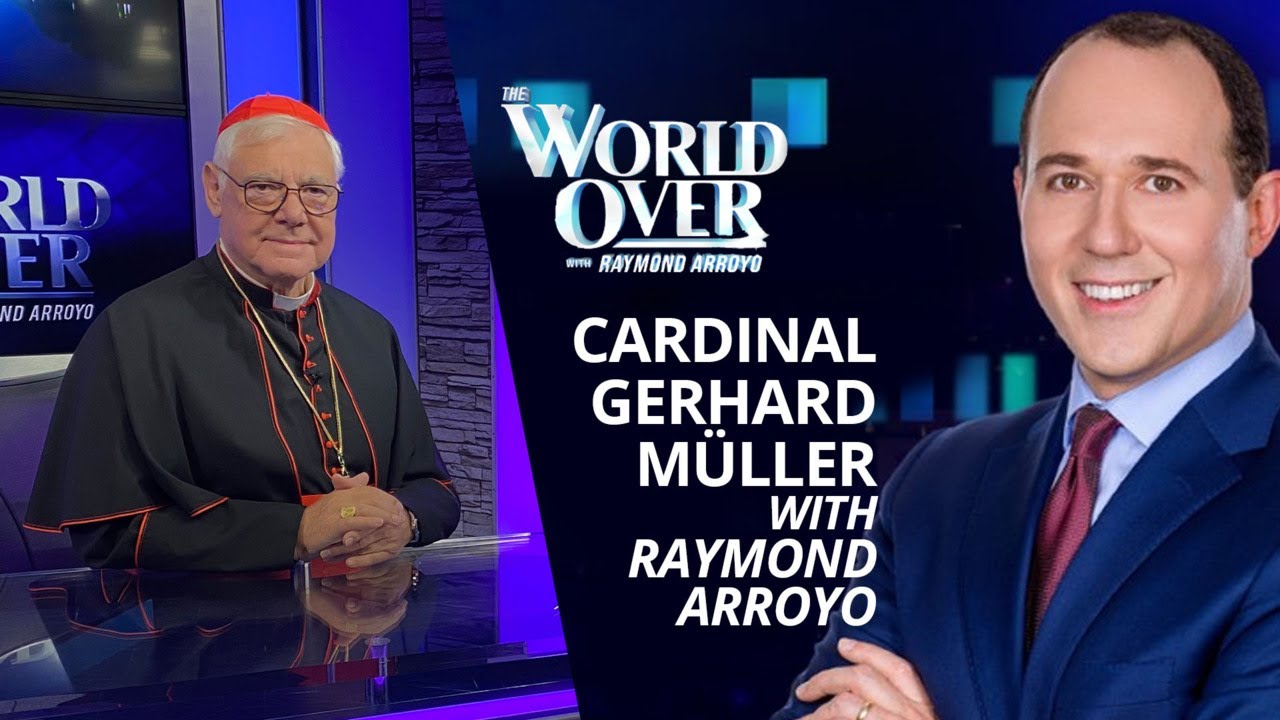
Have a listen to Card. Müller with Raymond Arroyo.  He is dead on target.

His comment about the head of the Synod (“walking together”) Card. Grech is spot on (after 6:05).   Someone ought to make a transcript of this interview.

YouTube thumbnailYouTube icon

Posted in Synod | Tagged ,
11 Comments

ROME 22/10 – Day 7: Fishy First Friday

Today, though it happened behind the buildings, the Roman sun arose on this First Friday at 07:11 and it will set with glorious light and color at 18:44.  The Ave Maria should be at 19:00.  It is the 451st anniversary of the Battle of Lepanto and, therefore, the Feast of Our Lady of the Most Holy Rosary.

Today I offered Holy Mass for the intention of my Roman Sojourn Donors.

It’s hard to convey the light factor in Rome on any evening, but especially in October, which must have something to do with angle of the sun, the color of the buildings, and factors like humidity or the amount of dust in the air.

These are just past the prime hour, but  I was in with my knee up.

After Mass today, Clement XIV (Ganganelli) of happiest memory smiles upon my breakfast of toasted pane di Lariano and Patum Piperium.  It is indeed delicious on hot toast.  I brought this from home, but I shall make some of my own while I’m here.

They were setting up in Campo de’ Fiori.  Not so many people see this part.

Today I bought some postcards for the first time in decades.  I have a plan for them, of course.  I’ll use Italian post, so who knows how long they will be en route.

Black to move and win material.

As I did this puzzle, the organist across the way was practicing.

click

Yesterday’s puzzle…  no one?

I created a search box for online shopping at wdtprs dot com slash shop dot htm

Enter anything and search.  This is what I use when I have to buy something.  I may as well use my own links!  You will get a window saying that “The information you’re about to submit is not secure”. Ignore that and “send anyway”.  That’s a good way to shop online and give me a hand.

UPDATE:

I did have a walk and the knee felt good.  I had a desire for a true Roman Friday meal from Er Filettaro… filetto di baccalà.

Here’s Roman Friday… note the bread with anchovy and butter.


Posted in SESSIUNCULA |
3 Comments

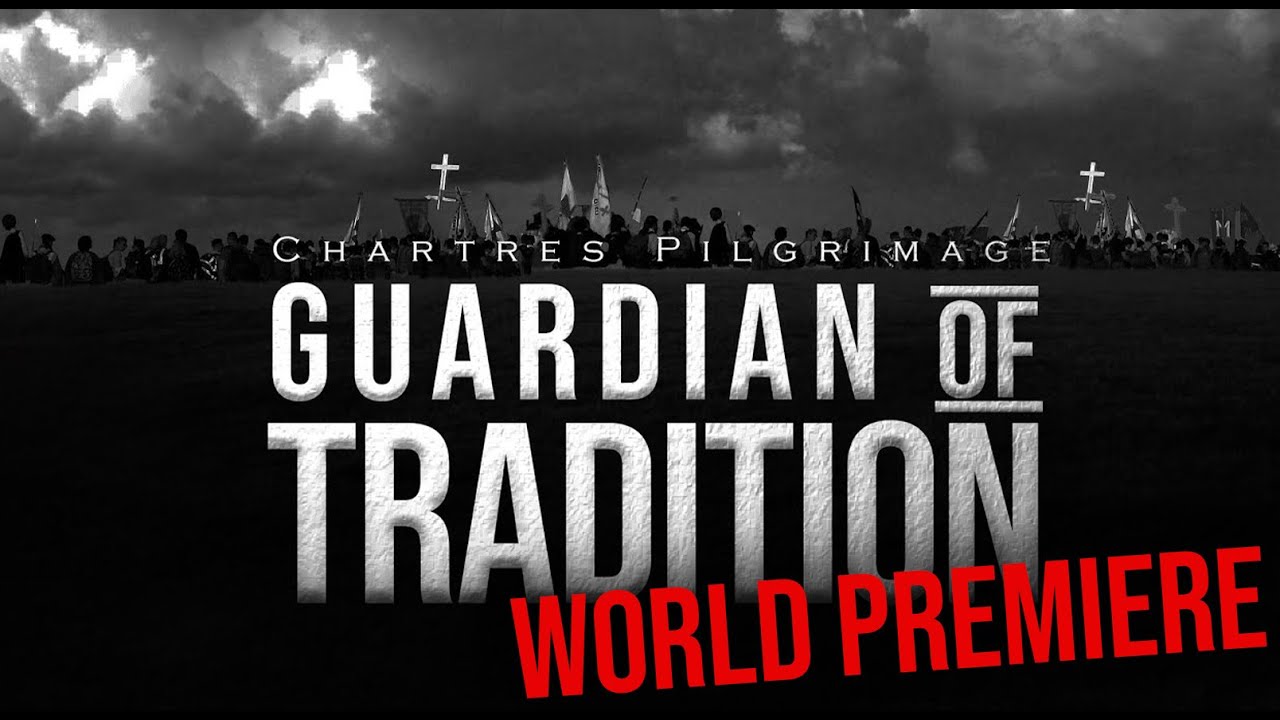
VIDEO about the Chartres Pilgrimage: Guardians of Tradition

For the second time today I choked up a little.

The first time was this morning during Mass.  The profundity of the moment, place, act smothered me and I could barely breathe.

Let not the partaking of Thy Body, O Lord, Jesus Christ, which I, though unworthy, presume to receive, turn to my judgment and condemnation; but let it, through Thy mercy, become a safeguard and remedy, both for soul and body; Who with God the Father, in the unity of the Holy Ghost, livest and reignest God, world without end. Amen.

There was of old a Mass formulary “for the gift of tears” that priests used to pray precisely for this grace. It is in the 1962 Missale as “Ad petendam compunctionem cordis – For asking compunction of heart”.  Today I was celebrating St. Bruno but sometimes you get ambushed.

The second time was a few minutes ago.  I had received a note in my mail box about the video that Michael Matt and the good folks at The Remnant created about the annual Chartres Pilgrimage at Pentecost.   There are beautiful images of beautiful people doing a beautiful thing: walking from Paris to the legendary cathedral some 90km, some 20 hours by foot.

YouTube thumbnailYouTube icon

The images themselves are enough to move you emotionally, even if you are a bit stony hearted as I am. However, what struck me so hard is the perfect cruelty of the powers that be who have set out to hurt these people under the pretext of an ecclesiology they claim to have gleaned from Vatican II. In fact, even if there were anything to the claim that there are ecclesiologies at variance with each other, that wouldn’t justify the wretched treatment of the people who desire the Vetus Ordo and what goes with it.

There is no justification for the way traditional Catholics, even those who can admittedly be hard to deal with, are being treated.

The video show so many of the faithful of various nations and ages coming together for the pilgrimage, precisely when there are those who would suppress them, drive them from churches or guilt them into a morally injurious acquiescence to abuse… it’s wrenching.

And it’s all for nothing. And it’s all for everything.

It’s for nothing, because their efforts to suppress Tradition are bound to fail.

It’s for everything, because what they are trying to suppress is the faith of our forebears.

Change the way people pray and you change what they believe and how they live. That’s plenty evidence in 2022.

It’s not going to work.

Meanwhile, if you are one of those backwardizing home-altar building restorationists, keep yourself clean and clear.   GO TO CONFESSION!

Posted in ¡Hagan lío!, Be The Maquis, Brick by Brick, GO TO CONFESSION, Hard-Identity Catholicism, Save The Liturgy - Save The World, Si vis pacem para bellum!, The future and our choices | Tagged ,
5 Comments

ROME 22/10 – Day 6: Of eyes and heads and ligaments

Up came the Roman sun this morning at 7:10 and down it will go at 18:46.  The days shorten in more than one way.   The Ave Maria should still ring at 17:00.  The Feast of St. Bruno graces the traditional calendar.

Qui pius, prudens, húmilis, pudícus,
Sóbriam duxit sine labe vitam,
Donec humános animávit auræ
Spíritus artus.

Again I am trying to give my MCL a bit of a rest. It’s not real bad, but I am not going to do much walking. This morning I was out, quite early before the sun; later I should go to the shops for something for supper.

A few shots from the last couple of days, since today I won’t collect many.

A lovely paper cone of freshly grated pecorino romano.

I’m about to use some for my lunch (all’amatriciana).

Oh… and the spaghetti with clams last night.

Otherwise…

The “head of St. John the Baptist” at S. Silvestro in capite.

Your use of my Amazon affiliate link is a major part of my income. It helps to pay for insurance, groceries, everything. Please remember me when shopping online. Thanks in advance.

US HERE – UK HERE

Black to move.  Time is everything.

Remember the monks at Le Barroux and their good wine from the centuries dormant papal vineyards, now revived.   Thanksgiving isn’t all that far away.  How about some of their wine for your meal?

Here’s a ringing of the Angelus at Ss. Trinità dei Pelegrini and also the sanctuary bell for the beginning of Mass.

Watch for more, later.  I hope…


Posted in SESSIUNCULA |
4 Comments

Not even the Council imagined what is going on today!

From Vatican News:

Cardinal Grech: Synodal process is mature fruit of Vatican II

As the Pontifical Lateran University begins the celebration of the 250th anniversary of its founding, Cardinal Mario Grech reflects on the Second Vatican Council and synodality.

Cardinal Mario Grech, the Secretary General of the Synod of Bishops, spoke Wednesday morning at the opening of the #250PUL with a Lectio Magistralis on the Second Vatican Council and synodality. For the Secretary General of the Synod, the current synodal process is a “mature fruit of Vatican II” and shows how “a correct reception of the Council’s ecclesiology [a kind of gnosticism, it seems] is activating such fruitful processes to open up scenarios that not even the Council had imagined and in which the action of the Spirit that guides the Church is made manifest”. [Ummm… what was that, again?  Not even the Council imagined this?  But it is something of the Council? ]
Dwelling then on the next steps of the ongoing synodal process, the cardinal explained why the Document for the Continental Stage will be sent to the local Churches, explaining at the same time the concept of “Restitution”. [I’d like an explanation of that, frankly.] “If the prophetic dimension resides in the People of God — the totality of the baptized (cf. LG 12) — and the first act of the Church is listening, then it is precisely to the People of God that the outcome of that listening must be returned. And since the People of God live in the Churches, the Document must be sent to the Churches.” [“Restitution”.  When terms like this get flashed around, I think about the Latin.  Restitutio… “a rebuilding”.  Or, and this is probably the meaning for the mandarins of the Synod (“walking together”), it is in juridical terms “the act of replacing, reinstating one condemned or proscribed in his former condition; the restoration of rights which have been forfeited by law” and “a recalling from exile”.  I suspect they see this as the “reinstating” of the right of El Pueblo that was so unfairly denied them before the Council’s restorative and transformative superseding of all the previous Councils and laws of the Church back to and including the Council of Jerusalem.  Trent, for example, and Vatican I conceived of the Church as a “perfect society”… ONLY. Those unenlightened laity-deniers were myopic.  They lacked a broader spirit-led vision of blue-skying together, while walking together.]

For the Secretary of the Synod, this important ecclesial act “is neither a concession nor a deference to those on the margins of a project; it is not a gesture of bon ton [HA!] to gain some sympathy or some cheap consensus; [The last thing ramming this consensus through will be is “cheap”.] not even a report — indeed, an account — to someone who claims the right to know. It is a purely synodal ecclesial act, reflecting in the circularity of the process, the ‘mutual interiority’ that exists between the particular Churches and the universal Church.” In short, for Cardinal Grech, sending the Document for the Continental Stage to the Churches is “a due act”.

Lastly, the Secretary-General concluded his speech with a wish that “the Church continues to live the synodal process in the logic of listening to God and to others, to the Spirit in others… [Unless they are attached to the Vetus Ordo, of course.]  If there is one disposition that the Council Fathers lived and handed down to the Church as a legacy, it is that of listening to one another to hear what the Spirit is saying to the Church”.  [Yeah… because listening to the Holy Spirit was something that started at Vatican II and no one ever did before.]

Posted in Pò sì jiù, Synod, The Drill, What are they REALLY saying? | Tagged
11 Comments

Synod (“walking together”) art work was a distorting sham, say the students who were supposedly the subjects

Remember that art that the Synod (“walking together”) process in Philly excreted, not to reflect the actual opinions of young people but to drive an agenda?

Well, it turns out that the art was intended not to reflect the actual opinions of young people but to drive an agenda.

A priest friend alerted me to this piece at CNA.  You should also read the whole thing there.  I cut stuff out.

Some excerpts.  My emphases and comments:

Artwork based on a listening session for Philadelphia-area Catholic university students drew global comment and criticism after it was shared on Vatican social media. Organizers are now taking seriously some students’ objections that the art mislabels their images and misrepresents their professed Catholic faith.

“We thought it was misrepresenting what we were standing for,” Sean Smith, a student who is an active member of the Catholic Newman Center at West Chester University in West Chester, Pennsylvania, told CNA Sept. 30. “The artist put us in the spot where it looks like we are saying the beliefs found in the artwork. None of that is any of the beliefs that we share.

Smith and several companions had attended a session of the Philadelphia Catholic Higher Education Synod, which drew about 400 participants from 11 Catholic colleges or universities and three non-Catholic universities’ Catholic centers. The synod’s final report included artwork that drew global attention after the Synod of Bishops on Sept. 24 shared cropped images on its social media accounts.

[…]

Further, the artwork realistically draws six young people sitting in folding chairs. They are labeled as “Muslim,” “first-year education student,” “physics major,” “CLC leader,” “grad student,” and “Queer.” Various opinions are written in cursive across the whole image.

[…]

“The art portrayed in the picture of the synod does not correctly represent us as practicing Catholics. The artist depicted four out of five of us with false identities seemingly to fit a more inclusive and skewed agenda,” he told CNA.

Furthermore, the woman next to Smith was drawn with her real-life features, except she was drawn as a person of color and labeled as a graduate student, when she is a white undergraduate student.

“The woman next to her was labeled as queer, but she is a heterosexual woman in agreement with Church teaching on sexuality,” Smith told CNA. “This image warps the truth.”  [Tisk tisk.  What is “truth” after all?  The image has its own truths which are transformative!  They reflected you as you ought to be and will be through the synodal, walking together, process, maybe not this year or next year… but eventually, when you are all vaxxed multiple times, rendered sterile to save the planet and have a vague memory that what happened in that big decorated building, now a night club, was something against the unity of the global community.]

[…]

O’Connell [a spokesperson for the local synod team] said that, in her understanding, the artist used an image from the cross-campus gathering to try to “communicate the broader demographic of the 400 students.” [Sooo… not reality, as it really was but how it ought to have been.  Something not true.]

“Our intention there was that art expands the conversation, it doesn’t contract the conversation. Art opens up space for multiple interpretations,” O’Connell, who is an associate professor of Christian ethics [?!?!?] at La Salle University in Philadelphia, said. “Hearing that there have been students who feel as though their very selves have been misrepresented is a cause for real concern. So we are definitely trying to address that.”  [One might be tempted to think that a profession of Christian ETHICS at a nominally “Catholic” school might have thought of that ahead of time.  But the artist was chosen, not out of the blue, but for a reason.  And one might ask… was the artist paid?]

O’Connell said the first synodal session is focused on listening.

[NOTA BENE]This isn’t about articulating truths, it’s about articulating what the hopes and the dreams of the people of God are,” she said. She hoped that art in the next stage of the synod is “something that can help us cultivate much-needed skills for communal discernment.” [Orwell could not have done better. Read between the lines and you find propaganda.]

“We don’t want that to cause harm to any student who showed up and had entered into a space of trust to risk telling us what was really on their hearts in terms of their wounds and their hopes,” she said. [After exposure of this effeminate venom-infused navel-gazing B as in B, S as in S, I’d be surprised if a single man showed up for future events.  I am torn between saying to the college men who might read this in Philly either 1) ignore this crap or 2) organize, get a whole phalanx of glad trads and take over the damn meetings.]

Smith, one of the students who says he was misrepresented, said he and his companions were “trying to represent truth” and wanted to say that the youth would like the clergy to “share that truth found in Scripture.”

There’s a lot of confusion in the Church regarding clergy and opposing views between progressive bishops and conservative bishops,” he said. “What I’m looking for is a unifying voice.[“When Jesus saw the crowds, he had compassion for them, because they were harassed and helpless, like sheep without a shepherd.”]

In Smith’s view, the discussion at the cross-campus synod gathering reflected cultural pressures, [Wait for it….] including the discussion on homosexuality. He said the event “started out talking about women deacons and more representation in the Church and in the clergy.”  [homosexuality and deaconettes… whaddya know?  Yeah, normal men really want to sit around and share their feeling about that garbage.]

Other artwork from the synod report included a picture of a “woman priest” that drew particular comment and criticism when it was shared by the global Synod of Bishops on social media, given that the Catholic Church has rejected as impossible the ordination of women as priests.

Synod organizers said they had commissioned the artwork from Becky McIntyre, a northwest Philadelphia artist and alumna of St. Joseph’s University, because she has commitments to the Church and has “a deep background in an understanding of the arts and human dignity and the common good.”  [Her site HERE. “I believe art ignites transformative justice and healing.” Operational word: transformative. Look at the bio and her other gigs.]

“We believe in the power of artistic expression to help people speak and hear truths, to build empathy and compassion, to build participation especially for voices that are often marginalized in our Church,” organizers told CNA in a Sept. 29 email.  [“Especially traditionally-minded Catholics who have been callously shoved to the periphery”, she added with a snicker.]

The primary goal of this “listening phase” of the synod was “to listen well to the students,” organizers said.

“Our report is consonant with Catholics across the country shared about women’s leadership and ordination,” they added, citing the U.S. Conference of Catholic Bishops’ own instruction that during the synodal process “one may agree or disagree with some of the perceptions heard and expressed, but we cannot assume they have no importance in lived reality.”  [So to hell with Church’s teachings.  This is Rawlsian exercise in forcing consensus by whatever means possible while cooing about process and safe spaces.]

Guidelines for the synodal process emphasize the need for people with different experiences and perceptions to “continue to meet and listen to one another” to help perceptions “become more realistic and less based on broader cultural or political narratives,” local organizers told CNA.  [Is that a freudian slip?  “to become more realistic [forget about the “ideals” that Catholic moral teaching offers] and less BASED…”? Please correct me if I am wrong but isn’t “based” right now the current opposite of “woke”?]

“We believe in building trust among students who named experiences of broken trust,” the local organizers said. [I’ll bet you are.]

Posted in B as in B. S as in S., Liberals, Pò sì jiù, Synod, The Drill, The future and our choices, What are they REALLY saying? | Tagged
7 Comments