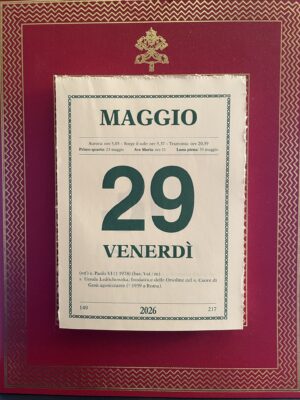
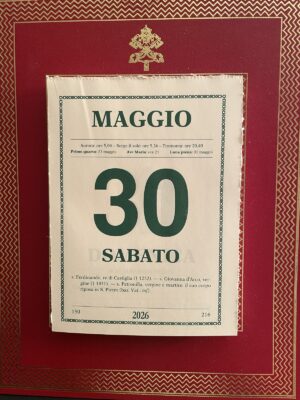
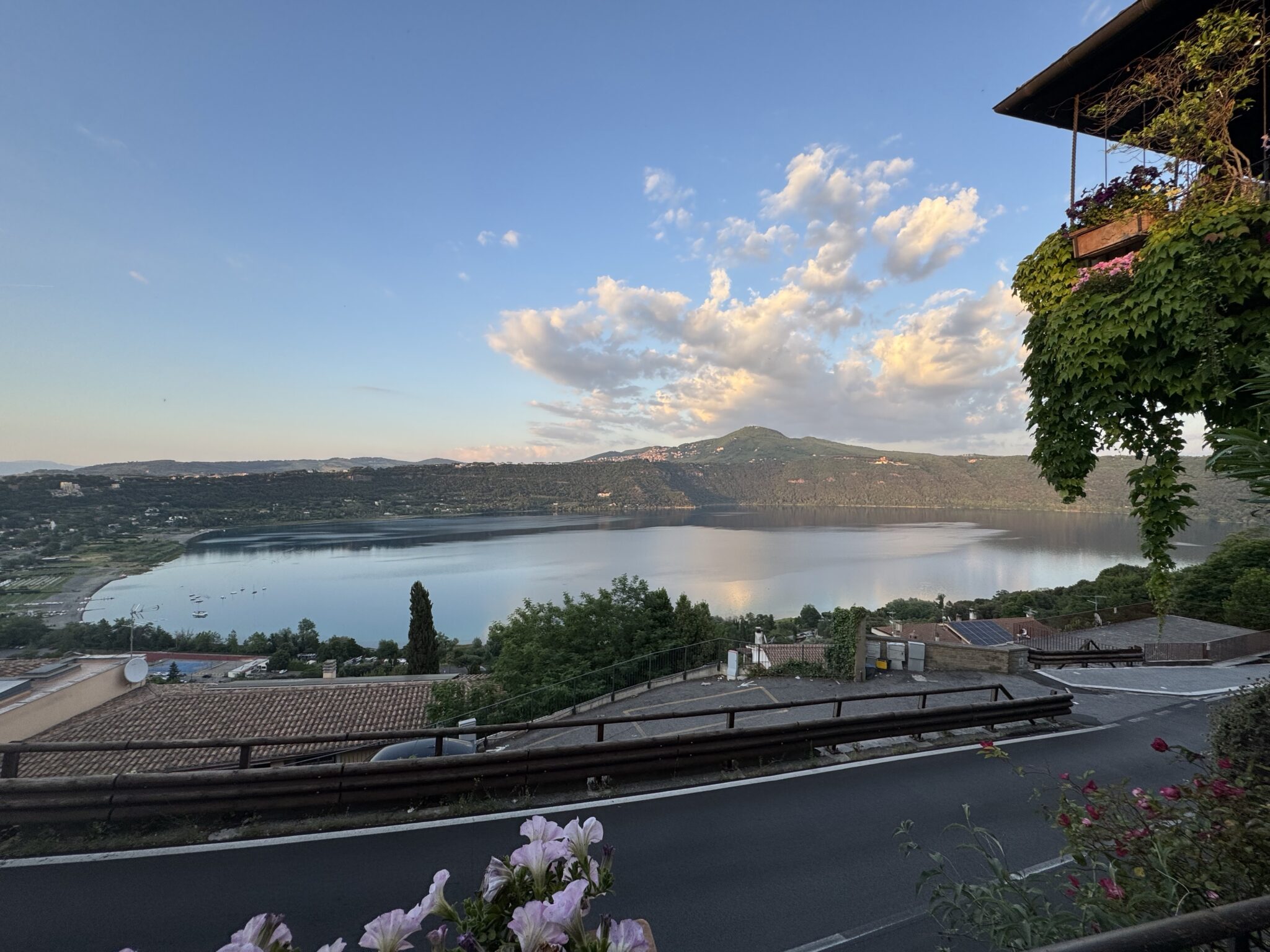
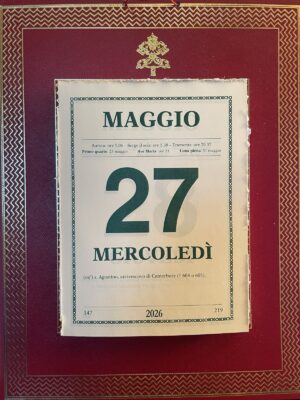
Daily Rome Shot 1525

Today’s Wordle: 4

Welcome registrant:

Mr.

Please remember me when shopping online and use my affiliate links.  US HEREWHY?  This helps to pay for health insurance, utilities, groceries, etc..  At no extra cost, you provide help for which I am grateful.

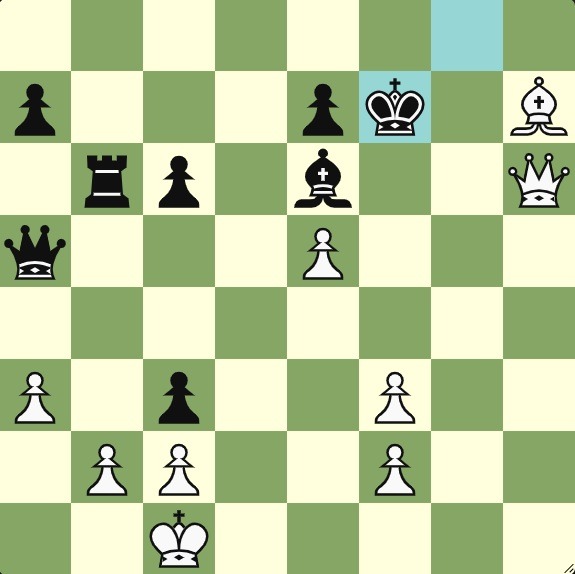
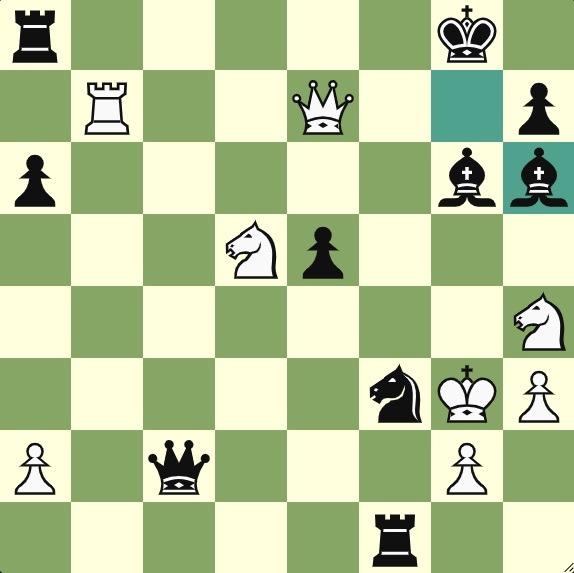
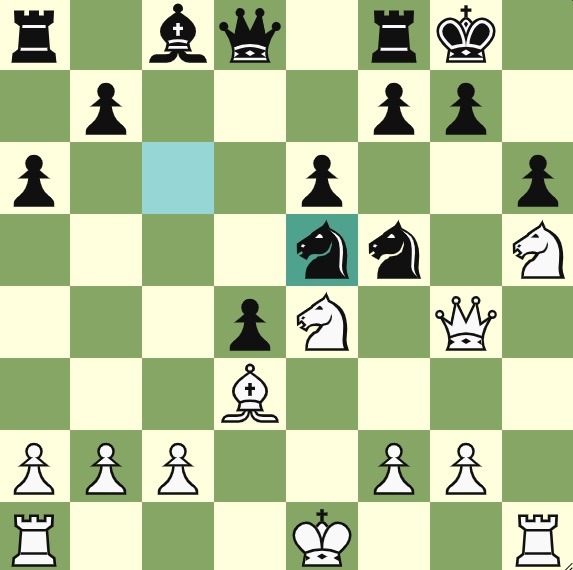
White to move and mate in 4

I must…

Posted in SESSIUNCULA |
3 Comments

Your Sunday Sermon Notes – Holy Family (TLM) & Baptism of the Lord (NO) 2026

Too many people today are without good, strong preaching, to the detriment of all. Share the good stuff.

Was there a GOOD point made in the sermon you heard at your Mass of obligation for this Sunday, Holy Family (TLM) & Baptism of the Lord (NO).

Tell us about attendance especially for the Traditional Latin Mass.

Any local changes or (hopefully good) news?

A taste of what I offered at 1 Peter 5 this week:

[…]

The group with whom Joseph and Mary traveled is called a ???o??? (synodía) a company “together on the road”. The word itself speaks of “walking together”. The irony is sharp. In fact, just as the “walking together” of Luke 2 lost Jesus, so it seems that the “walking together” of the last few years may have done the same.

In any event Jesus is not “walking together” at that moment. He sets aside ordinary human expectation in order to be found where He must be found. Only when He is “about His Father’s (business)” does He rejoin them. Quaerite primum regnum Dei (Mt 6:33) takes flesh here as a priority that disrupts even the holiest of human bonds.

Having sought Jesus in all the wrong places, Joseph and Mary find Jesus in the Temple, the central place of worship and sacrifice which was the microcosm of the universe for the Jews.  They found Him in the place of worship, not the markets and byways.  It is as if this moment, counted among both the Sorrows of Mary and Joyful Mysteries, is shouting at us today that our best path to Jesus is not in endless process but rather in sacred liturgical worship received from our loving forebears.  We are our rites.  When our pastors remember this, then we shall see what happens.

[…]


Posted in Sermons | Tagged
6 Comments

WDTPRS – Baptism of the Lord (Double Dipping)

baptism-of-christ-1483 Perugino

On the SIXTH of January, Epiphany, we prayed liturgically with the three mysteries of the Lord’s life revealing Him as divine: the adoration of Jesus by the Magi, the changing water to wine at Cana, and His baptism by John in the Jordan River.

In the reform after the Council, the mystery of the Lord’s Baptism (as revealing His divinity) celebrated at Epiphany was teased out, I suppose to put greater emphasis on the Lord’s baptism as a model for our own baptism.

The Novus Ordo Feast of the Baptism of the Lord (which closes the Christmas season in the Novus Ordo), is now placed on a Sunday. In the pre-Conciliar calendar it had, with some exceptions, a commemoration on 13 January… the octave day of Epiphany, which is appropriate.

John the Baptist helped us into our Advent preparation for Christmas by reminding us to straighten the paths of our lives for the coming of the Lord.  It is fitting that we meet the Baptist again at the end of the Christmas season.

John announced the coming of the Messiah and now he points us to the Messiah.  This was when the Baptist told his disciples to follow Jesus, saying “He must increase, I must decrease” (John 3:30).

In His baptism by John, Christ foreshadows what He would do later: He descends into the waters of the Jordan (death and the tomb) and rises out of them again (resurrection).

Christ had no need of John’s baptism.  Being perfect and sinless Jesus had nothing to repent.

Dodekaorton Baptism 1547_Dionysiou_Mt_AthosInstead, His submission to baptism shows all humanity the way to our salvation.

Christ’s baptism reveals how we must die and rise to our sins in the sacrament He instituted at the Jordan.   By receiving John’s baptism the Lord was solemnly revealed to be divine by the Father’s voice and the descent of the Holy Spirit, and He sanctified the waters for our baptisms.  He instituted the sacrament.

Baptism is the starting point of all saving and actual graces we receive as Christians.  Baptism confers on us an indelible character, almost like a branding mark of Christ’s Lordship in and over us.  This is the foundation of our spiritual lives.  Christ’s humility orients us in the right direction for our lives as baptized Christians.

He must increase, we must decrease.

We find two collects for today in the 2002 Missale Romanum.  The first is of new composition for the post-Conciliar Novus Ordo and the second is from the 1962MR on 13 January, the Commemoration of the Baptism of the Lord.

COLLECT (2002MR):

Omnipotens sempiterne Deus,
qui Christum, in Iordane flumine baptizatum,
Spiritu Sancto super eum descendente,
dilectum Filium tuum sollemniter declarasti,
concede filiis adoptionis tuae, ex aqua et Spiritu Sancto renatis,
ut in beneplacito tuo iugiter perseverent.

baptism_christApart from the obvious references to the events at the Jordan, there are echoes of Scripture here (cf. Is 42:1-4, 6-7; Is 61:1-2; Rom 8:15; Eph 1:3. 5-6). According to the illuminating Lewis & Short Dictionary the later Latin adverb sollemniter, from the adjective sollemnis, refers to all that which is performed according to the proper customs and forms usually in a ritual religious context.  Thus, it mostly means grand and “ceremoniously” but also in an ordinary way, so long as it is the “customary” way.  The form of the verb declarasti is again “syncopated” (declaravisti).  Spiritu…descendente is our old friend the ablative absolute and it takes its time from the perfect declarasti.   Iugiter, ultimately from iugum (a “yoke” for horses or cattle), means “continuously” as if one moment in time is being “yoked together” with the next, and so on.  The substantive beneplacitum is from the late, ecclesiastical verb beneplaceo (“to please”), found in the Latin Vulgate and in authors such as St. Ambrose of Milan (+397).

SLAVISHLY LITERAL TRANSLATION:
Almighty eternal God,
who as the Holy Spirit was descending upon Him,
solemnly declared Christ, baptized in the Jordan river,
to be Your beloved Son,
grant that the children of Your adopting, reborn from water and the Holy Spirit,
may continually persevere in your good pleasure.

CURRENT ICEL (2011):
Almighty ever-living God,
who when Christ had been baptized in the River Jordan,
and as the Holy Spirit descended upon him,
solemnly declared him your beloved Son,
grant that your children by adoption,
reborn of water and the Holy Spirit,
may always be well pleasing to you
.

The ICEL version isn’t too far off the mark today, probably because this rather chatty prayer pretty much tells a story and the syntax is fairly straight forward.

COLLECT 2 (2002MR):
Deus, cuius Unigenitus
in substantia nostrae carnis apparuit, praesta, quaesumus,
ut, per eum, quem similem nobis foris agnovimus,
intus reformari mereamur.

This prayer is far less wordy than the newly composed collect.  The language here is denser and more “theological”.   Note the contrast between two pairs of words.  First, the adverbs intus, “on the inside, within”, contrasted with foris, “from without” (this is literally, “outside the doors”, so it refers to what you see from the outside).  Next, the noun substantia, a theological word “substance”, that which we really are in and of ourselves apart, or “beneath” in a sense our outward appearances or “accidents”, contrasts with the adjective similis, “like, resembling, similar”.  There is another theological concept, “form”, contained within the passive infinitive reformari.  Human beings are composed of “matter” (our fleshly bodies) and “form” (our immortal, rational souls).  The sacraments have matter and form: for example, in baptism water (matter) and the Trinitarian words spoken while pouring the water (form), in the Eucharist bread and wine (matter) and the words of consecration by an ordained priest (form), in penance the confession of sins (matter) and the absolution from the priest (form).

SLAVISHLY LITERAL TRANSLATION:
O God, whose Only-begotten,
appeared in the substance of our flesh, grant, we beg,
that we may merit to be reshaped inwardly
through Him, whom we recognize is like us outwardly.

CURRENT ICEL (2011):
O God, whose Only Begotten Son
has appeared in our very flesh,
grant, we pray, that we may be inwardly transformed
through him whom we recognize as outwardly like us
.

Giotto_Scrovegni_BaptismThe Latin prayer’s meaning hinges on the effects of baptism. 

Through the words of the formula for baptism and the outward pouring of sensible, visible water, there is an invisible and inward effect of grace in the soul.

By baptism we are inwardly conformed or “shaped” so that we can be a proper temple of the Holy Spirit and recipient of graces as holy member of the Body of Christ, the Church.  By taking up not just part of but our complete human nature – body and soul – our “flesh” in shorthand, into an indestructible bond with His divinity, the Second Person became one like us in all things but sin.

Our baptism is the first step of being more and more reformed and shaped according to His image, a process which will continue for eternity in heaven.

In this life it is our task to make sure that our outward life, our words and actions, are fully consistent with and show forth clearly the inward reality of Christ in us.

This but one of the lessons we receive from Jesus’ humble submission to a baptism at the hands of John in the Jordan for which He had absolutely no need.

The main concept underlying the primary Collect, and this feast, would have to be our spiritual adoption and new status in the Holy Spirit as the children of God, brothers and sisters of Christ having the same heavenly Father.

In our baptism and by living the faith we profess we enjoy the indwelling of the Holy Spirit, indeed the indwelling of the Triune God (cf. John 14:23).

This indwelling begins with the humble reception of a “character” or “owner’s mark” on our souls, which although it is a sign of God’s Lordship over us actually sets us free from the bondage of sin.   He adopts us as His own making us sons and daughters, not slaves.  When the Holy Spirit dwells in us, we can address God with reverential awe intimately as “Abba” (Mark 14:36), rather than with the abject fear of a slave for a hard master.

God does more for us than freeing us from sin and making us His adopted children.

He also makes us co-heirs with His eternally Only-Begotten to a divine inheritance.

As co-heirs we can be admitted also to the joys of heaven which Christ, our brother in our humanity, has in perfect possession with His resurrection and ascension to the Father’s right hand (cf. Romans 8:34).

Once we were slaves of sin and the enemies of God (Romans 5:10-11).

Now we are sons and daughters with a (re)birthright to inherit.

Our humanity, in Christ, already enjoys this while all of humanity still awaits the fulfillment of this promise.

God now hears our prayers as He hears His confident children, not fearful strangers.


Posted in Christmas and Epiphany, WDTPRS |
4 Comments

WDTPRS: Orations of the TLM Feast of the Holy Family


We are in Epiphanytide. As you know, Epiphany is from a Greek term for “manifestation”. The Feast was especially important in the ancient Eastern Churches. Traditionally it celebrated especially three manifestations of the divinity of Christ, namely, the Adoration of the Magi (frankincense being a symbol of divinity), the Lord’s Baptism by John (the bridge between the Lord’s private life and His public ministry when the Father’s voice was heard), and the Wedding at Cana (His inaugural public miracle). In the Roman Church on Epiphany the antiphon for Vespers mentions these three mysteries, each introduced with “Hodie…today”:

We honor this holy day decorated with three miracles: today the star led the Magi to the manger; today at the marriage wine was made from water; today Christ deigned to be baptized by John in the Jordan that he might save us. Alleluia.

In the first part of the Season of Epiphany, these three miraculous events are teased out for their own liturgical reflection: On 6 January Epiphany, the Magi – at the octave, 13 January, the Lord’s Baptism – on the 2nd Sunday after Epiphany, the Wedding at Cana which in John 1 and 2 is “octave” of the Baptism.

In the Vetus Ordo for this Sunday we celebrate the Feast of the Holy Family. In the Novus Ordo, this Sunday would be the Feast of the Baptism of the Lord.

The 20th century the Czech-born liturgical writer Fr. Pius Parsch (+1954), a Canon Regular of Klosterneuburg Abbey in his multi-volume The Church’s Year of Grace, writes that the Feast of the Holy Family was intended to improve family life in the wake of World War One.   The 1570 editio princeps does not have the feast of the Holy Family.  I believe devotion to the Holy Family really took off in the 17th century, especially in French speaking regions.  Pope Leo XIII seems to have introduced the feast for Canada in 1893 and Benedict XV gave it to the whole Latin Church in 1921. Before that, this Sunday was associated with the Octave of Epiphany, which was rashly suppressed along the way. One thing that ties the older Mass formula with Holy Family in the Vetus Ordo is that they both have for the Gospel reading the episode in Luke 2:41-52 about the finding of the Lord in the Temple.

COLLECT (Holy Family – 1962MR):

Domine Iesu Christe, qui Mariae et Ioseph subditus, domesticam vitam ineffabilibus virtutibus consecrasti: fac nos, utriusque auxilio, Familiae sanctae tuae exemplis instrui; et consortium consequi sempiternum.

Subdo, which according to the thick Lewis & Short Dictionary is “to bring under, subject, subdue”, gives us subditus, a, um, “subject”.  Consortium comes from the preposition cum (“with”) and sors (“any thing used to determine chances”).  Sors is further applied to offices that are gained by the casting of lots and methods like drawing straws.  It means, then, “fate, destiny, chance, fortune, condition, share, part.”    It thus means also a “community of goods” and by extension “fellowship, participation, society.”

A consortium is a situation in which you have “cast your lot” with a group.  You share a common outcome or fate.  At the end of the Roman Canon we hear consortium when we pray to participate in the reward given to great martyrs.  Consequor is “to follow, follow up, press upon, go after, attend, accompany, pursue any person or thing.” It also means, “to follow a model, copy, an authority, example, opinion, etc.; to imitate, adopt, obey” and “to reach, overtake, obtain”.  Consequently, it follows, consequor means “to become like or equal to a person or thing in any property or quality, to attain, come up to, to equal.”

Exemplum is first and foremost “imitation, image, portrait; transcript, copy” and then it is in legal terms a case or cause to be imitated or followed in our behavior, a “precedent”.

LITERAL TRANSLATION:

O Lord Jesus Christ, who, while subject to Mary and Joseph, consecrated domestic life by unutterable virtues, cause us, by the help of them both, to be instructed in the examples of Your Holy Family, and to attain eternal fellowship.

Our prayers today taken all together present themes of imitation and instruction: exemplum… instruo… imitor… consequor.

SECRET (Holy Family – 1962MR):

Placationis hostiam offerimus tibi, Domine, suppliciter deprecantes: ut, per intercessionem Deiparae Virginis cum beato Ioseph, familias nostras in pace et gratia tua firmiter constituas.

This prayer was revised somewhat but largely retained in the Novus Ordo for the Feast of the Holy Family.  The newer version to my mind gives a bit more emphasis to St. Joseph.  However, this is not an ancient prayer as far as I can tell.

Placatio means “a pacifying, appeasing, propitiating” especially of the immortal gods.  In our prayer today we might choose a word like “atonement” or even “reconciliation.”  Deprecor is not just “to pray”, but “to pray earnestly.”  Firmiter is the adverb of firmus and can be “firmly, steadily, lastingly, powerfully.”  Because of the beseeching tone of the prayer and the concept of intervention, I will use the word “powerfully.”   When you, gentle reader, go through this vocabulary you might try substituting some of the alternative meanings to see how that will affect the prayer.  You will see why translating the liturgy is not an easy task and why we must pray for all involved.

LITERAL TRANSLATION:

We offer You this sacrifice of appeasement, O Lord, humbly in earnest prayer, so that, by the intercession of the Virgin Mother of God with blessed Joseph, you may establish our families powerfully in grace and peace.

We hear this prayer spoken by the priest, our mediator with God and alter Christus, at the moment our offerings (spiritual and material) are on the altar in anticipation of the divine act of transubstantiation.  All we are and all our hopes and desires should be united with the frail hosts, the still wine.  What we receive in return, particularly through making a good Holy Communion, allows us to fulfill our vocations in the world and transform it around us.  It is fitting that we should use the language of bowing, implicit in suppliciter (from supplex, formed from supplico (sub-plico – plico being “to fold; double up”).  We must use the physical posture of bowing down, folding ourselves face down before God, folding and bend our knees to beg Him to form and shape our families.  As the family in general goes, so goes society.  But what do we find in prosperous countries?  Legal abortion, growing legalization of euthanasia, same-sex marriages, high divorce rates, young women disposing of newborn infants in garbage cans, scientific experimentation on living human beings, the dreadful prospect of cloning.  The concept of the family is breaking to pieces.  It is good to pray that God might be appeased.

POSTCOMMUNIO (Holy Family – 1962MR):

Quos caelestibus reficis sacramentis, fac, Domine Iesu, sanctae Familiae tuae exempla iugiter imitari: ut, in hora mortis nostrae, occurrente gloriosa Virgine Matre tua cum beato Ioseph; per te in aeterna tabernacula recipi mereamur.

The Novus Ordo retains the first part of this prayer, though it is shifted to address God the Father, rather than the Son, and the last part eliminates the discomforting reference to death.

The verb occurro means “to run up to, run to meet”.  The word tabernaculum in ancient Roman religious language is a tent outside the City were the auspices were observed before holding a comitia. In the Old Testament book of Numbers a tabernaculum is the “meeting tent”.  In liturgical language it seems interchangeable with habitaculum or mansio.  I think we have an echo here of Luke 16:9: “And I say to you: Make unto you friends of the mammon of iniquity: that when you shall fail, they may receive you into everlasting dwellings (recipiant vos in aeterna tabernacula)” (Douay).

LITERAL TRANSLATION:

O Lord Jesus, cause those whom You are restoring by the heavenly sacraments to imitate the models of the Holy Family without ceasing, so that, in the hour of our death, as the glorious Virgin Mother rushes with blessed Joseph to meet us, we may merit to be received by You in the eternal dwelling place.

Today’s imitation vocabulary underscores that we are not without help in his life. We are part of a family, earthly and heavenly, already realized but not yet fulfilled. Christ chose to participate in a family when He began to save us and teach us who we are. Great work goes into the noble vocation of being a member of a family. We must imitate and practice the exempla offered us in the Holy Family, the lives of our extended heavenly family of saints, the good efforts of people around us. By imitation and practice we develop virtues. We build ourselves, with God’s help, into holy individuals and families, and thereby we begin to prepare eternal dwelling places. Those who have religiously oriented families know this. So do those who do not have families. Often they know this with the bitterness of loneliness. Perhaps you could extend your family bond around someone you know who has no one else.

Our proximity to Christmas and Epiphany urges us to consider the Divine Infant King’s little manger crib of rough wood.  The wood of the manger foreshadows the wood of His saving Cross.  His self-emptying was a sacrifice which made His saving Sacrifice possible.  He cast His lot with us.  As He was dying, Our Lord guided His Mother, a widow about to lose her only Child, to a new family bond with John, about to be orphaned in a spiritual sense by His Lord’s death.  Christ bound them together into a new family, a family of charity, a family of Blood, though not of blood: “And from that hour the disciple took her into his own home.” (John 19:27 RSV).

This is a Christian imperative. These are Christ’s saving exempla to be imitated.

Posted in SESSIUNCULA |
1 Comment

Daily Rome Shot 1524

Card. Burke prepares to vest for Pontifical Mass on Epiphany at The Parish™.

Wordle: Fail

Please remember me when shopping online and use my affiliate links.  US HEREWHY?  This helps to pay for health insurance, utilities, groceries, etc..  At no extra cost, you provide help for which I am grateful.

Some chessy news…

In the Tata Steel tournament in Calcutta, one of the most discussed moments yesterday arose in my guy Wesley’s So’s round 6 game against Praggnanandhaa. With a second remaining on the clock, Pragg stopped play because he could not immediately locate a queen to promote his pawn. Under the regulations, So was entitled to claim a win. Instead, Wesley offered a draw.  Afterward, So explained that his Pragg intended to promote but panicked when no queen was available – he reached for a rook even though there was a queen next to the clock – and stopped the clock to summon the arbiter. So added that he prefers to win games over the board rather than by technical claims. That decision, together with the way Wesley publicly gives praise to Christ when he wins, is why he remains my choice in these matches. He could have taken the full point. A gentleman and a sportsman, he offered a draw.

And, speaking of chess…

And a video about cats… which is what the internet is for… and ancient Rome, because after all men think of ancient Rome several dozen times a day.

Black to move and mate in 4.

NB: I’ll hold comments with solutions ’till the next day so there won’t be “spoilers” for others.

Posted in SESSIUNCULA |
8 Comments

NCReg: Minnesota Diocese Gives ‘Ad Orientem’ Worship a Shot

I’m a bit pressed for time today, but you should at least see this if you haven’t yet.

At NCReg

Minnesota Diocese Gives ‘Ad Orientem’ Worship a Shot

THERE’s a headline to make you put down your coffee and sit up straight.

[…]

Over the past year, Bishop Daniel Felton of the Diocese of Duluth has provided guidance for nine diocesan parishes to regularly celebrate Mass ad orientem on a trial basis after local pastors made the request.

And at least in some of the parishes, the results seem to be bearing fruit.

[…]

Since ad orientem is assumed in the rubrics, permission shouldn’t be needed… but… hey…

And this seems appropriate… HERE

Posted in Liturgy Science Theatre 3000, Save The Liturgy - Save The World, Turn Towards The Lord |
6 Comments

We are our rites… “In some way or another”, I guess.

From Ed Pentin at the National Catholic Register:

Liturgy Sidestepped at Pope Leo XIV’s First Consistory? [With my emphases and comments.]
Cardinals choose evangelization and synodality as key topics, disappointing those who expected the liturgy to be a central theme [’cause it’s only the “fons et culmen”, right?  No?  Am I wrong?] after recent restrictions on the traditional form of the Roman rite, but the Holy Father later insists the liturgy remains a “very concrete” issue that still needs to be addressed. [Some concrete is more concrete than others.]

ROME — Some cardinals and faithful who have a devotion to the traditional Roman rite have expressed concern that the liturgy appears to be sidelined in the extraordinary consistory currently underway at the Vatican after the cardinals voted to give priority to other issues on the agenda[What does that say about those cardinals?  One the other hand, given who those cardinals probably are, do we really want THEM involved in liturgical discussions?]

In his opening address to the consistory yesterday, Pope Leo XIV reaffirmed to the cardinal participants that they will have the opportunity to “engage in a communal reflection” on four themes already pre-announced to be on the meeting’s agenda. [2+2=…?…3?]

Those topics, he said, were Pope Francis’ 2013 apostolic exhortation Evangelii Gaudium “that is, the mission of the Church in today’s world,” Praedicate Evangelium, the late pope’s apostolic constitution reforming the Roman Curia; the Synod and synodality “as both an instrument and a style of cooperation” and the liturgy, “the source and summit of the Christian life.”

But Leo added that “due to time constraints, and in order to encourage a genuinely in-depth analysis, only two of them will be discussed specifically.”

The cardinals were then asked to make clear which two of the four they would want to be specifically debated and, according to Vatican spokesman Matteo Bruni, “a large majority” decided the topics would be “evangelization and the Church’s missionary activity drawn from rereading Evangelii Gaudium,” and “the Synod and synodality.”  [I just had a flash of an image of hundreds of Korean overly-decorated military unison applauding a pre-determined course.] The Pope later thanked the cardinals for making the choice, adding: “The other themes are not lost. There are very concrete, specific issues that we still need to address.”

Bruni told reporters at a press briefing Wednesday evening that the 170 cardinals taking part were divided into 20 groups, which were then divided into two blocks. Eleven groups consisted of cardinals in Rome including curial cardinals and those who have concluded their service and are no longer electors. The remaining 9 groups were cardinal electors of local churches (archbishops and bishops of dioceses), cardinal electors who are nuncios and cardinal electors who have concluded their service but remain electors due to being under the age of 80.

Bruni said that “for reasons of time,” the cardinal secretaries of the second block had the job of reporting back the decision of the cardinals. “They had three minutes to explain the work done within the groups and the reasons that led to the choice of the two themes.”  [three minutes… is this serious?]

The Holy Father had made clear in his opening address that it was his preference to hear back from the second block as he does not usually receive advice from those cardinals. “It is naturally easier for me to seek counsel from those who work in the Curia and live in Rome,” he said.

But the decision not to make the liturgy a key theme was disappointing to some cardinals and traditional faithful.

The liturgy has long been a particularly sensitive issue, and especially to traditional-minded Catholics following recent sweeping restrictions on the older form of the Latin rite during Pope Francis’ pontificate. These faithful experienced the restrictions not as a mere disciplinary change but as a judgment on their fidelity, spirituality and ecclesial belonging, which many have described as deeply wounding and divisive.

The popular Italian traditional website Messa in Latino, wrote Jan. 7 that it had contacted some anonymous but important cardinals who all said they were “discouraged and disappointed” about the relegation of the liturgy as a discussion topic.

In comments to the Register Jan. 8, the website’s editor Luigi Casalini asked: “To whom did the Pope delegate this choice, and according to what criteria were these cardinals of the nine local churches selected in order to remove — in effect — two topics?” He also wondered “why cardinals sensitive to the issue” appear to have “made no attempt to lobby” for the liturgy to be included as a core topic of discussion, “even before the consistory.”  [Because that sort of cardinal isn’t like the other sort of cardinal.  They don’t instinctively use the tactics of the left.]

The consistory, he added, “appears to be in perfect continuity with the Synods and the thought of Francis”[Hence] a reference to how recent synods were silent on the traditional liturgy.

Speaking to journalists Wednesday, Bruni tried to offer some reassurance. “The other two themes will still be addressed in some way, because mission does not exclude the liturgy,” he said. “On the contrary, in many ways it does not mean exclusion. It means that they will still be addressed within the others or in some other way.” [In other words, it isn’t going to be discussed.  This VatiSpeak is getting worse.]

He added: “As the Pope said and as he noted in both his opening and closing speeches [on Wednesday], the themes cannot be separated from each other, because in mission and evangelization there is liturgy.” [You need a microscope to spot it in modern notions of mission and evangelization… but I assure you, it’s in there!  In some way or another.]

Casalini said he was looking ahead to the two free discussions today to see “whether the topic of the liturgy will be taken up again.”  [I think I’ll go back to playing chess now.]


Posted in Liturgy Science Theatre 3000, Our Catholic Identity, Save The Liturgy - Save The World, What are they REALLY saying?, You must be joking! | Tagged
16 Comments

PODCAzT 186 – Voices of the Fathers 01 – The Scillitan Martyrs

I was recently going through some old books and found a slim volume entitled The Osterley Selection from the Latin Fathers, edited by Joseph Crehan of Heythrop College, was compiled chiefly for seminarians, especially late vocations, at Campion College, Osterley, a Jesuit formation house in the Archdiocese of Westminster that closed in 2004. The 1949 preface praises the great classical authors—Caesar, Cicero, Livy, Virgil—yet insists that Christian writing shows a different kind of beauty. Pagans, it says, wrote with studied grace; Christians with passionate conviction. The volume includes selections from Ambrose and Augustine, Tertullian, Vincent of Lérins, Jerome, and others.

It occurred to me that I might offer a podcast of the first reading and see how it goes.   Some of you get Patristic readings in the office of readings in the Liturgy of the Hours but do you hear them?  That’s another question.  There are 42 brief readings in the book by authors whom you will more than likely recognize.    I propose to read an English translation, make some comments and read the Latin.

Since the embedded player could be improved, here’s the link: HERE

Posted in Patristiblogging, PODCAzT, Voices of the Fathers | Tagged , ,
4 Comments

Daily Rome Shot 1523

Welcome Registrant:

eepiano

Please remember me when shopping online and use my affiliate links.  US HEREWHY?  This helps to pay for health insurance, utilities, groceries, etc..  At no extra cost, you provide help for which I am grateful.

And…

White to move and mate in 4. I found this hard.

NB: I’ll hold comments with solutions ’till the next day so there won’t be “spoilers” for others.

Posted in SESSIUNCULA |
4 Comments

WDTPRS – Epiphany Collect: transformed by the beauty of Your sublime glory

In the ancient Western Church and in the East, Epiphany was more important than the relative latecomer Christmas.  Epiphany is from the Greek word for a divine “manifestation” or “revelation”.  There are many “epiphanies” of God in the Scripture.  Think, for example, of the burning bush encountered by Moses.

The Latin Church’s antiphons for Vespers reflect the tradition that Epiphany was thought to be not only the day the Magi came to adore Christ, but also the same day years later when He changed water into wine at Cana, and also when He was baptized by St. John in the Jordan.  In each mysterious event, Jesus was revealed to be more than a mere man: He is man and God.

The Epiphany Collect was in the 1962 Missale Romanum and in ancient sacramentaries.

Deus, qui hodierna die Unigenitum tuum stella duce revelasti, concede propitius, ut qui iam te ex fide cognovimus, usque ad contemplandam speciem tuae celsitudinis perducamur.

Stella duce is an ablative absolute.  The adjective hodiernus means “of this day, today’s”.  In older Latin, celsitudo is “lofty carriage of the body”. In later Latin it is used like the title “Highness”.  In our liturgical context it is a divine attribute, God’s transcendent grandeur, glory.

SUPER LITERAL VERSION:

O God, who on this very day revealed your Only-begotten, a star as the guide, graciously grant, that we, who have already come to know You by faith, may be led all the way unto the beauty of Your glory to be contemplated.

OBSOLETE ICEL (1973):

Father, you revealed your Son to the nations by the guidance of a star. Lead us to your glory in heaven by the light of faith.

NEW CORRECTED ICEL (2011):

O God, who on this day revealed your Only Begotten Son to the nations by the guidance of a star, grant in your mercy, that we, who know you already by faith, may be brought to behold the beauty of your sublime glory.

In Latin prayers species (three syllables) often means “beauty”. It is also a technical, philosophical term about the way the human intellect apprehends things.  Species has to do with the relationship between the thing known and our knowing power.  A species transforms the mind of the one perceiving a thing.  The object we consider acts upon our power of knowing.  Simultaneously, the knowing power acts upon the object known.  Our knowing power’s active and passive aspects meet in the species and the object of our consideration is known directly, without intermediaries.  Easy.

This is what we are praying for, hoping for, living our earthly lives for: to see God face to face, directly and immediately.

In this life we know God only indirectly, by faith, our reason aided by the authority of revelation and by grace.  This is St. Paul’s “dark glass” (1 Cor 13:12) through which we peer toward Him in longing.

Christ is the visible image of the invisible God. He is the Father’s Beauty. He is Truth and Beauty and Glory itself.

St. Hilary of Poitiers (d 367) conceived God’s divine attribute of glory as a transforming power which divinizes us by our contact with it.  After Moses talked with God in the tent of the Ark, he wore a veil over his face, which became too bright to look at.  We pray today, literally, to be brought “all the way to the beauty of glory (species celsitudinis)” of God “which is to be contemplated”.  His beauty will act on us, increase our knowledge of Him and, therefore, our love for Him … for all eternity.   We will be, all the more, the images He intended.

Christ could be understood to be the species celsitudinis of this prayer. Contemplate His truth and beauty.  Christ is the true speaker and spoken truth of every prayer of every Mass.

If eternal Beauty transforms us, “divinizes” us, then beauty in this life changes us too.

The Christian life moves from credere to intueri, from believing to gazing, from assent to participation.

This movement is at the core of what St. Augustine of Hippo famously wrote about God as pulchritudo tam antiqua et tam nova, beauty ever ancient and ever new. For Augustine, beauty is truth perceived in its fullness. To see God’s beauty is to be reordered by love. Knowledge remains external unless it draws the soul into what it knows.

Likewise, St. Gregory of Nyssa describes the Christian journey as an unending ascent into divine glory. The vision of God never exhausts itself, because God is infinite. Each true vision enlarges desire and refines the soul. The Epiphany Collect echoes this dynamic.

Could a fostering of beauty in our churches help us reach people today in a way that arguments or other appeals may not?

Our liturgical worship of the Most High God must lead us to encounter beauty, truth, transcendent mystery.  Holy Mass requires the finest architecture, vestments, music – everything – we can summon from human genius, love and labor.  What we sing and say and do in church, and the church itself, ought to presage the liturgy of heaven, where the Church Triumphant enjoys already the Beatific Vision.

Liturgy should be “epiphany”, wherein we encounter transforming mystery.

We are our rites.

Let us celebrate every Mass in such a way that we become shoeless Moses before the burning bush which is never consumed.

Let Mass make us Magi with sight and mind fixed in longing upon the beautiful, true and yet speechless Word, in whom transcendent glory was both hidden and revealed.

Posted in Christmas and Epiphany, Liturgy Science Theatre 3000, Save The Liturgy - Save The World, WDTPRS | Tagged ,
1 Comment