Chilean priest’s episcopal consecration axed because of some comments

I suspect there’s more to this story than this story suggests.  Nevertheless, it is a sign of the dopiness of the times we are enduring, that a priest, soon-to-be bishop can be dismissed for something as insignificant as this.

From The Guardian:  (my emphases and comments)

Chile bishop resigns after suggesting there is a reason the Last Supper had no women

Carlos Eugenio Irarrazaval stands down, weeks after appointment by pope to clean up church’s public image

A Chilean auxiliary bishop appointed by Pope Francis less than a month ago has resigned, just weeks after he made controversial comments about the lack of women in attendance at the Last Supper.  [Hang on.  What’s the timing of this?  He was named to be  bishop, but, before he was consecrated he made comments about women.  But, were the comments made before or after his public nomination to be a bishop?]

Carlos Eugenio Irarrazaval was appointed by the pope in an effort to rebuild the church’s credibility following a pervasive sex abuse scandal that exposed hundreds of allegations now being investigated by Chilean criminal prosecutors.

The archdiocese of Santiago did not specify the reasons for Irarrazaval’s departure in its statement, but said the pope had accepted the bishop’s resignation “in favour of unity and for the good of the church”.

The bishop’s [NOT!] short tenure began with a television interview in May, in which he said there were no women seated at the table at the Last Supper and that “we have to respect that”.

“Jesus Christ made decisions and they were not ideological … and we want to be faithful to Jesus Christ,” he said in reference to the lack of women in attendance. [So far so good.]

He also said that perhaps women “like to be in the back room”.  [Is that really that terrible?  In Italy, I was often at gatherings where the men were over here and the women were over there.]

According to the Bible, the Last Supper was Jesus’ last meal with his disciples before his crucifixion, depicted in many famous works of art. [The Last Supper!  It’s FAMOUS!]

The comments sparked a backlash among women’s groups and critics of the church in Chile at a time when confidence in church leadership in the once staunchly Catholic nation has plummeted.

Pope Francis earlier this year accepted the resignation of Cardinal Ricardo Ezzati as archbishop of Santiago, the highest-ranking member of the Catholic church in Chile, after he was caught up in the country’s sex abuse scandal.

The church’s credibility has been harmed in much of the world by abuse scandals in countries including Ireland, Chile, Australia, France, the United States and Poland.

In Chile, prosecutors say they are investigating more than 150 cases of sexual abuse or cover-up involving more than 200 victims.

Irarrazaval will continue to serve the church as a pastor in Santiago, according to the Archdiocese of Santiago.

Irarrazaval could not be immediately reached for comment.

CNA has other information:

[…]

The decision for Irarrázaval to resign “was the fruit of dialogue and joint discernment, in which Pope Francis valued the spirit of faith and humility of the priest, in favor of the unity and good of the Church that is a pilgrim in Chile,” according to the statement.

Irarrázaval apologized to the Jewish community at the end of May after he made some controversial statements in an interview with CNN Chile May 23.

In the interview, the priest was asked about the role of women in the Church, to which he said: “we all have to ensure that they can do what they may want to do. Obviously, Jesus Christ marked out for us certain guidelines, and if we want to be the Church of Jesus Christ, we have to be faithful to Jesus Christ.”

“Jewish culture is a male dominated culture to this day,” he continued. “If you see a Jew walking down the street, the woman goes ten steps behind. But Jesus Christ breaks with that pattern. Jesus Christ converses with women, converses with the adulteress, with the Samaritan woman. Jesus Christ let women care for him.”

“It is true that at the Last Supper there was no woman seated at the table, and we also have to respect that. Jesus Christ made choices and he didn’t do it ideologically,” he said.

May 28 Irarrázaval expressed his apologies to the Jewish community during a meeting held at the archdiocesan offices with Jewish representatives.

[…]

So, women and Jews went after him, both.

Crux has more HERE.

So, I guess the moral of the story is that, n the present situation, Church leaders must say nothing that might be in the slightest way interesting enough to draw attention of special interest groups who are represented by the professionally offended.

Otherwise…. hey!  There’s another angle.   For you priests out there who might be tapped to be a bishop… and you want to say “No!” … but they won’t let you.    Accept with smiles and then say something you really mean in public!   They’ll be tearing your resignation letter out of your fingers so fast it’ll make smoking trail marks.

Posted in "How To..." - Practical Notes | Tagged
6 Comments

Canonist Ed Peters eviscerates bishops – one in particular – who won’t apply law

Right away go over to canonist Ed Peters’ place and read his vivisection of Card. Cupich.

It’s not just Cupich whom he has eviscerated.  It’s all the bishops who refuse to implement the Church’s Canon Law.   I believe bishops take oaths when they are consecrated and when they take an office.   Am I wrong?

Since he doesn’t have a combox, and he doesn’t mind reposting of text with attribution…

Cupich’s rationales for not taking canonical action against prominent pro-abortion Catholic politicos are as unconvincing as ever

No one thought that Chicago’s Blase Cdl. Cupich would follow Springfield’s Bp. Thomas Paprocki’s example in calling upon Catholic state legislators, who had supported Illinois’ express attack on the basic rights of pre-born babies, to refrain from holy Communion until they repented of their evil deed (Canon 916), further directing that his ministers withhold holy Communion from two specific legislators based on their protracted and public support of such measures (Canon 915), so no one was surprised when Cupich didn’t. But, if only ‘for the record’, some replies to Cupich’s rationales for not following Paprocki’s example are in order.

1. Cupich claims that “it would be counterproductive to impose sanctions”. This misrepresents a crucial point: withholding holy Communion under Canon 915 is not the application of canonicalsanction but rather the observance of a sacramental disciplinarynorm. Casting the operation of Canon 915 as a sanction (implying thereby proof of canonical crimes upon the observance of special penal procedures) is a straw-man frequently posed by prelates skirting the plain provisions of Eucharistic discipline.

2. Cupich claims that “sanctions [sic] … don’t change anybody’s minds”. This misrepresents the two-fold purpose of withholding holy Communion, namely to prevent the scandal to the faith community that arises from the administration of holy Communion to Catholics who obstinately persist in manifest grave sin (say, by their formally depriving innocent human beings of any protection under civil law) and to prevent sacrilege from being committed against the august Sacrament. ‘Changing people’s minds’ has nothing to do with either goal.

3. Cupich claims that, when confronted with prominent Catholics who formally and actively cooperate in depriving innocent human beings of their right to life, his “primary responsibility is to teach”. This misrepresents the fact that bishops have not one but three primary responsibilities, namely, to teach, to sanctify, and to govern the People of God (Canon 375, emphasis added). Preserving sacramental discipline in the Church entrusted to him is a crucial part of a bishop’s governing duty (Canon 392). A bishop cannot therefore point to his admittedly sound teaching in regard to the right to life as if that satisfies his duty of governing his Church in support of that teaching, any more than a father can excuse sitting by while members of his household act against the common good, by saying, “Well, I told them what was right and wrong.”

4. Cupich might (it is not clear from the CNA article) claim that Paprocki’s action was taken in response to legislators “who championed the law”, referring only to the awful bill passed in Illinois a couple weeks ago. But if this is Cupich’s claim it would be factually wrong, for Paprocki, in invoking Canon 915 against two named politicos, expressly underscored their repeated and prominent role in advancing pro-abortion state legislation over a period of time and in multiple ways. Paprocki did not act upon news of a single bad act (although he might have been justified in doing so on these facts).

5. Finally Cupich claims that “an elected official has to deal with the judgment seat of God” adding that God’s judgment will be “much more powerful” than any here on earth. In that regard Cupich is certainly correct. Elected officials will be answerable to God for their acts and omissions. As will bishops. And cardinals.

Posted in 1983 CIC can. 915, Canon Law, Emanations from Penumbras, Liberals, The Drill | Tagged , , ,
15 Comments

USCCB meets. They talk about the “nones”. Wherein Fr. Z rants.

How many times have I written it here?

Nothing we undertake as a Church, this plan or that project or this resolution to form a committee or action item, will succeed unless it flows from and returns to our sacred liturgical worship.

I watched the USCCB stream when they were talking about what to do to keep young people in the Church.

Guess what they didn’t talk about.

There’s a story at LifeSite which has reaction of young people about what has kept them in the Church: the TLM.

If we get our liturgical worship of God wrong, then everything else we do will fail.   We build on sand.  Put another way, familiar to long-time readers here, everything we undertake in the Church must begin with liturgical worship and must be brought back to liturgical worship.

If the virtue of justice governs what is due to human persons, since God is a qualitatively different Person a different virtue governs what we owe to God: religion.  The primary way in which we individually and collectively fulfill the virtue of religion is through our sacred liturgical worship.  If we screw up on the virtue of religion and our sacred worship, then all our other relationships will be out of harmony.  We have to get our worship right.  This is so intimate to who we are as Catholics that I constantly say: We Are Our Rites.

And because we have an individual and collective vocation not just within the Church (ad intra) but to the world around us (ad extra), we might say even “Save The Liturgy – Save The World”.

If we don’t know who we are, what we believe, how to act on it and have thin to no strong supports and sources in our sacred worship of God, then we will be ineffective across the board.

Why should the world pay any attention to us if we don’t know who we are?

Why should young people stay?

Not many reasons I can think of, given the state of worship and of preaching in the average suburban parish under the aging aegis of the 80’s formed clergy.  80’s and others.

We must MUST revitalize our worship of God and the way to do that is through the gift – the foresighted and farsighted gift that Benedict XVI gave us in when he implemented Summorum Pontificum.  And this is why that gift is so feared by those who think that we can do it on our own, who reduce the supernatural to the natural.

This is a huge issue, friends.  We need the TLM more and more and more in our parishes.

Again, we are our rites.  Change them and you change our identity and, hence, our impact in the world around us (as in “Save The Liturgy, Save The World“)… not to mention our path to salvation.

We Are Our Rites.

Posted in "How To..." - Practical Notes, Liturgy Science Theatre 3000, SUMMORUM PONTIFICUM, Wherein Fr. Z Rants | Tagged , , ,
25 Comments

New “Chernobyl” TV show and the End Times

I understand that there is a new series on HBO about the Chernobyl disaster.  I haven’t seen any of it yet.

During the summer after the April 1986 Chernobyl disaster I was in Rome for Fr. Reginald Foster’s intense Summer Latin Bootcamp (again).   I lived mostly in Trastevere during these summers, but I also spent time with Ukrainians on the Aventine.

The older men there, although they appreciated my bass voice at Divine Liturgy, were suspicious of outsiders (reasonably so… this was before the fall of the Soviet Bloc) and they were entirely freaked out in 1986 and worried about the end of the world.

One day I got one of them to tell why they were so nervous about the End Times.

“Chernobyl”, he responded.

“And…?”, quoth I.

“Chernobyl… in English mean ‘vooormvooood'”.

“Wormword”?

“Voormvood!  Like Bible.  “Voooormvoooood.”

I got it.

Ukrainian “chernobyl” stands for Artemisia vulgaris … wormwood, as in the Bible.

Wormword is a Hebrew metaphor for a curse, because of its bitterness.

But there’s also Revelation 8:10-11:

And the third angel sounded the trumpet, and a great star fell from heaven, burning as it were a torch, and it fell on the third part of the rivers, and upon the fountains of waters:
And the name of the star is called Wormwood. And the third part of the waters became wormwood; and many men died of the waters, because they were made bitter.

A great star… something hot… fell on the waters and people died.

Have a nice day!

Posted in ¡Hagan lío!, Semper Paratus, TEOTWAWKI, The Coming Storm, The future and our choices | Tagged ,
12 Comments

A “Catholic Signal Corps” – Thinking about a Catholic digital future and this blog

Semper paratus.

Here is an idea I have brought up in the past.

Since this blog is facing huge changes, of existential ramifications, I have pondered how much easier life could be for me and for others if there were a

Catholic Signal Corps“.

What do I mean?

Firstly, consider that big social media outlets are filtering, censoring, shadow banning content and users whose opinions are not “acceptable” to them.

Consider also that this is going to get worse as we continue to polarize.

Next, people who want to or who do use the interwebs for good, Catholic works usually don’t have the tech background to, say, be a server administrator or to unwedge problems as they arise… and they always arise.

Building up a free standing site and keeping it updated and running is not easy. Not just anyone can do it.  Believe me.  I have practical knowledge of the problem, not theoretical.

It it hard to find good tech help that is both capable and reliable.

I can’t say how many times I’ve reached out to find some help and, after deciding that this or that person might be okay, he turns out to be incapable of maintaining even basic communication.

In any event, a friend of mine who is solidly Catholic has in the past been seriously involved in tech development.  Some time ago, we discussed forming a reliable and capable group of tech savvy Catholics who could form a “corps” to help keep Catholic sites up and running.

Our conversation also ran to future needs, such as the creation of “distributed architecture technology” and a decentralized web, in the case that the powers-that-be decide that we shouldn’t have a voice in the public square.  As it stands, the people in control of the registry, DNS, can disappear anyone.

I have been wanting a tech person to maintain the back-end of this site for a long time. I haven’t found anyone reliable and capable in the same person. I think others might have the same issue.

Recently I gathered some names – or tried to – of people who understood WordPress… who really grasp it, not just who have tinkered with it.  I got some responses and I forwarded them to my aforementioned development savvy friend.  The idea is to form a small team who could be of help.

What if that were expanded and there could also be pay for belonging to the team: a Catholic Signal Corp?


¡Hagan lío!

Posted in ¡Hagan lío!, "How To..." - Practical Notes, Be The Maquis, Semper Paratus, Si vis pacem para bellum!, The Coming Storm, What Fr. Z is up to | Tagged
10 Comments

ASK FATHER: Traditional aspergillum or “whisk”?

From a reader…

QUAERITUR:

For years now our parish has used the equivalent of a small whisk broom instead of a more traditional aspergillum during the Easter season. The “whisk broom” seems to throw much more water and the priests and deacons seem to prefer this method of “sprinkling”.

It is hard to say what is more “traditional”, one of them there metal balls with holes on the end of a stick or a “whisk” which imitates a mass of hyssop branches.  After all, the chant of the Asperges, which the Vidi Aquam replaces in Easter, refers to the hyssop.

It all depends on how much Holy Water the priest intends to send downrange.

Some priests are snipers with an M40.  Others like SEALs with their Mk 14 Mod 0 Enhanced Battle Rifle. Others are like door gunners with their 7.63, six-barrelled M134 Minigun.

It’s a matter of preference and, of course, how well-equipped the armory… the sacristy is.

The late-great Bp. Morlino, the Extraordinary Ordinary, used a whisk-like contraption that probably delivered a pint per pitch.

Speaking of which, when the new Space Force is inaugurated, I’ll be ready both with aspergillum and with whatever else they set me up with. These certificates should go into my CV right away.

It was a trick getting these, I can tell you, given that the Space Shuttle doesn’t fly anymore.

Yes, another day, another weapon mastered.

In any event, when I figure it out, for my Asperges or Vidi Aquam it’ll be…

SOAK FROM ABOVE!

So…

GO TO CONFESSION!

Posted in "How To..." - Practical Notes, ASK FATHER Question Box, Liturgy Science Theatre 3000, Priests and Priesthood | Tagged , ,
8 Comments

BOOKS RECEIVED: Antonio Socci on why Benedict is still Pope and Sam Gregg on the Struggle for Western Civilization

Books are coming in like hail.  Many on a similar theme.

Here’s what I’ve been up to today, resulting in the melting of my brain.

Today I read through

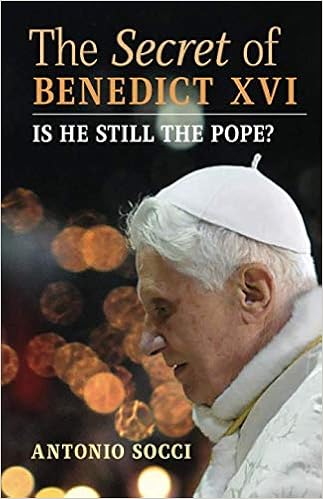
The Secret of Benedict XVI: Is He Still the Pope? by Antonio Socci.

The Italian subtitle is a little different: “He is still the Pope.”  A couple people, who ought to have known better, wrote to me as if I were an idiot, to explain that sometimes publishers change the titles when they are translated into new languages.  YES… I know.  I read books in 5 languages and I’ve been reading them for a while now.

US HERE – UK HERE

First, Socci describes the conditions in the world leading up to the resignation.  He goes into a lot of geopolitics, which may or may not interest a lot of you.  Effectively, there has always been a conflict between secular and sacred authority.  In recent years the conflict of these USA with Russia manifests a certain dimension that made Benedict’s reign less and less tenable after the Cold War and the death of JP2.  He comes back to that, briefly, at the end when he brings in the Third Secret of Fatima.   Socci also underscores the important turning point of the amazing Regensburg Address, so misunderstood by so many outside and inside the Church.  Anyway, there would be reasons to doubt the validity of the conclave that elected Francis because of the clear machinations of certain Cardinals pushing for a more secularized Church.  However, the main point Socci argues is essentially the case Archbp. Gänswein famously made in a speech during a book presentation.  Namely, Benedict didn’t really intend to resign the papacy in its totality: just the administration of the munus, not the munus itself.  Hence, there is a way in which he remains the legitimate Pope while not governing the Church.  He makes also an interesting spiritual argument also, based on the way that Christ was stripped of His clothing before being crucified.   Finally, Socci gets into the Third Secret and what that might mean based on his argument about Benedict still being Pope while Francis is out there poping.  He has some new, or at least relatively unknown, words of Jacinta about seeing the Pope in visions.

The book is heavily laden dense footnotes often having more text than the principle text.  I suppose Socci did that so that one could read the book rather continuously and to keep the volume relative slim.  You decide.

Next, I’ve delved into Samuel Gregg’s new work

Reason, Faith, and the Struggle for Western Civilization

US HERE – UK HERE I see that it is also available via Audible and Blackstone Audio.

This is a history of ideas kind of book.  Gregg explores what happens when faith and reason drift apart.  This is issue of existential importance for “the West”, especially in light of the fact that the West itself has been the source of ideas that have caused the separation of faith from reason.

Hence, Gregg’s first chapter is entitled “The Speech That Shook The World”.  It is about Pope Benedict’s famous – and aforementioned – Regensburg Address.

Read the Address HERE.    Audio in German HERE.

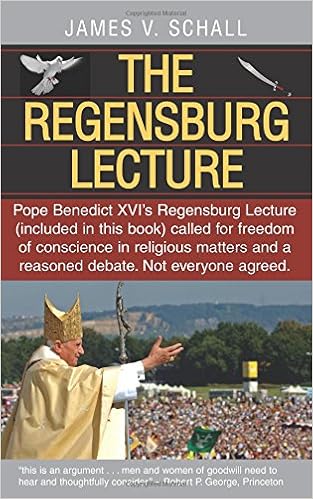
You also want to read about Benedict XVI’s amazing Regensburg Address with the help of James Schall.

US HERE – UK HERE


Finally, for today, I also received a copy of

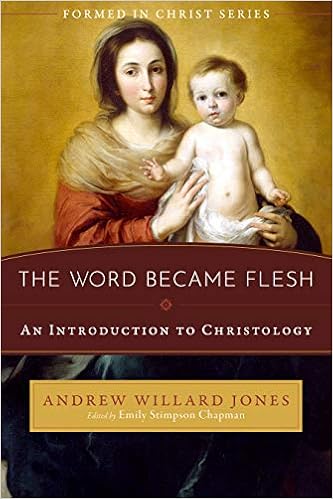
The Word Became Flesh: An Introduction to Christology (Formed in Christ Series)

US HERE – UK HERE

This is part of a series intended as High School texts.   However, given the state of things, I think this could easily be adapted also for parishes, or parish study groups.

Indeed, an “introduction to Christology” might be exactly what your parish priest needs.

I paged through this book.  It is well organized and the style is pitched low but not in a condescending way.  Anyone would be able to use this.  Each section has some assigned reading from Scripture and the CCC.  Each section has questions for both review and for discussion.  This is why it could form a good resource for a parish study group, even of adults.   I didn’t see anything that made me raise my eyebrow, even though some points are necessarily made a little thin, due to constraints of space and audience.  A good guide of a study group could expand.  For example, the reality of Hell is not downplayed in the least.  The issue of mortal sin and separation from God at death and judgement is underscored.  However, the why of and how sin separates us from God forever could be filled out by a good leader.

And so I circle back to the book at the top, Socci’s book about Benedict.   His first chapter dealt with Arianism, the major Christological question of the early Church which caused so many problems of unity and identity.  Those times can teach us about our times.  One could also say that most of our problems today flow from bad Christology.  Thus, a new book for younger people on Christology is welcome.

Posted in Benedict XVI, Francis, REVIEWS | Tagged , , , , , ,
27 Comments

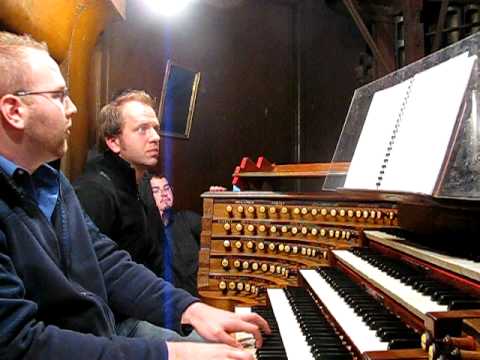
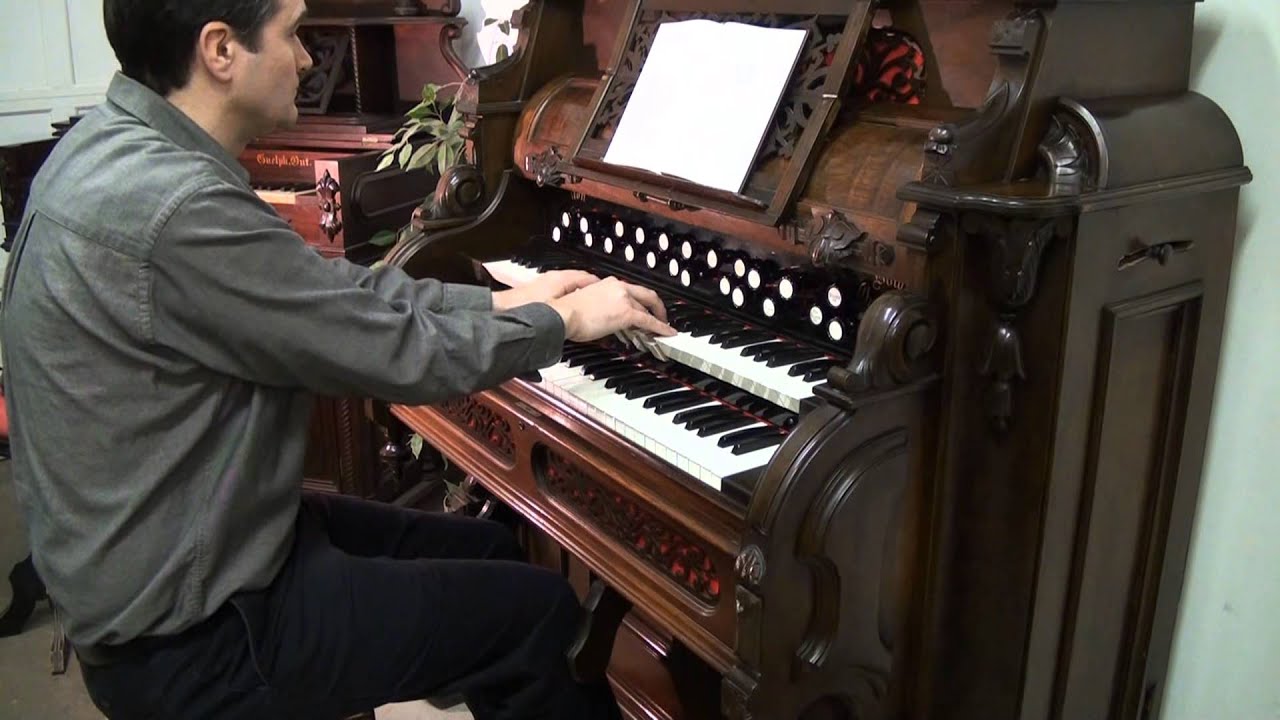
ASK FATHER: Pipe organs, being expensive, how about manually pumped reed organs?

From a reader…

QUAERITUR:

Pipe organs being too expensive for most parishes, and many electronic organs being used instead sound terrible and turn people off from the organ, what are your thoughts on bringing back reed (pump) organs to church?

I never really appreciated just what one was capable until I heard it played by competent people who knew how to get the most out of it.

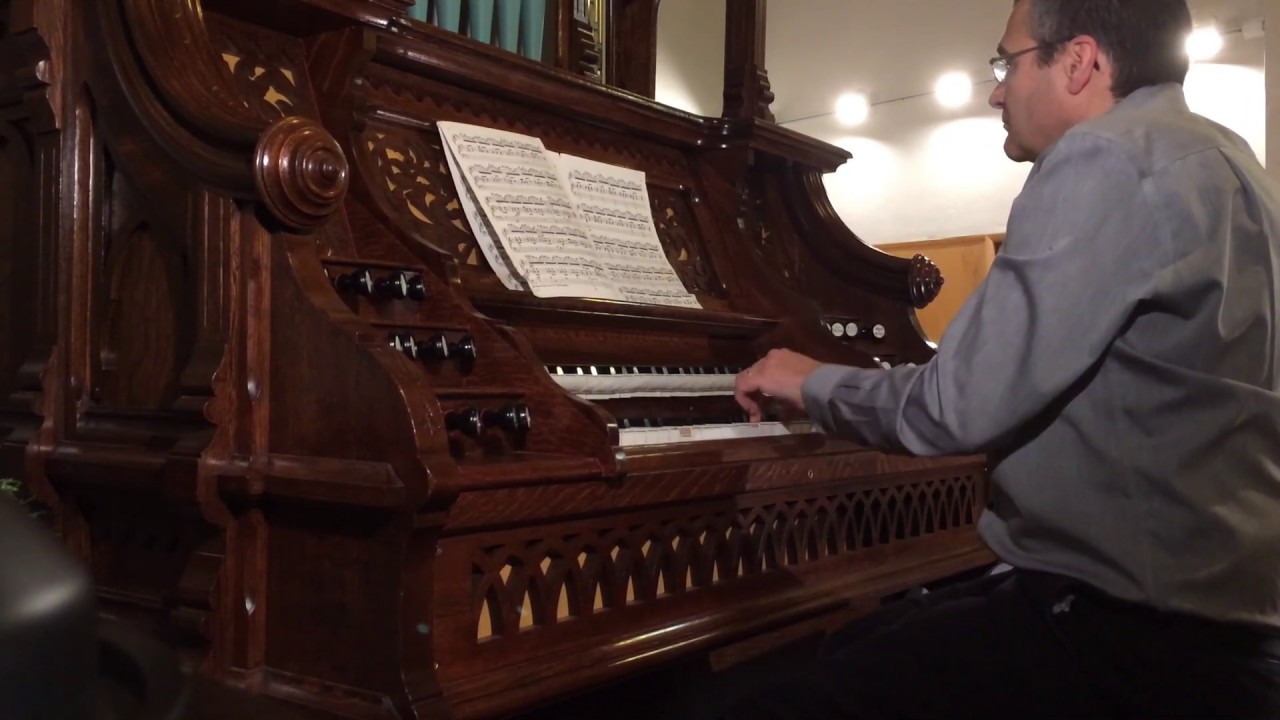
Take, for example, Widor’s Toccata played on this rather large pump organ that even has a peddle board: https://youtu.be/fsTG7NtNZCk
Or Bach’s Toccata and Fugue in D Minor: https://youtu.be/Bh0zigNPoec
Or for hymns, Hyfrydol: https://youtu.be/8_AZMtbainI

This was the standard instrument in many churches prior to Vatican II, and many of our beloved female saints who were musically competent played it during Mass.

You never know what sort of question will come up. Let’s sample…

YouTube thumbnailYouTube icon

My first impulse is to say, hey!, it’s hard enough to find organists to play any organ, much less a manually pumped reed organ. Have at!    And I’d be concerned about keeping it tuned in widely shifting seasons.  Even worse than a badly tuned instrument is an almost tuned instrument.

My second impulse is to say, hey!, that’s going to be handy after the massive CME creates a grid killing sequel to the Carrington Event. Hang on to that organ along with your horse tack and plow, ammo, and the transceivers stored in your Faraday cages.  The EMP will wipe out the other organs for sure.

My third impulse is to say, hey!, that’s pretty darn cool and, in lieu of a greater instrument, it sounds pretty darn good. I think it would sound even better used for music scaled a bit more for its capacity. Widor? Wow. He was the organist of Saint-Sulpice in Paris with its mighty Cavaillé-Coll. Gutsy!

By way of contrast.

YouTube thumbnailYouTube icon

Look. In the right space with a good fist at the manuals and an healthy helper at the bellows, it could be just the right thing.  Why not?  In a smaller church, why not?

That was fun. Thanks.

YouTube thumbnailYouTube icon

Posted in "How To..." - Practical Notes, ASK FATHER Question Box, Liturgy Science Theatre 3000, Semper Paratus, TEOTWAWKI | Tagged , ,
21 Comments

ASK FATHER: Alb for a boy’s pretend “Mass” set?

From a reader…

QUAERITUR:

I am making a set of vestments for my 9 year old son to use for pretend Mass over the summer. (I’ve been inspired by your posts regarding the travel vestments being made for your priest friend and plan to make my son’s double sided as well.)

My question is, can I buy a used altar server alb online and let him use it as his priestly alb? My main concern is that perhaps it was blessed and it would be wrong to use it at home for this purpose. I’ve found one that would be very cost effective and allow me to spend my time at the sewing machine concentrating on the more beautiful pieces. But I want to do the right thing.

I’m sure that Fr. Johnson will be pleased to know that his loss of vestments, and our project to have new one’s made has led to your project for your son.  Perhaps he, too, will be inspired to consider a vocation to the priesthood.

Can you use a server’s alb.

Yes.

Don’t worry about it having been blessed.  If you get something online, it is being sold and bought, which would in any case result in the loss of the blessing.  They aren’t going to be selling blessed things, anyway.   That comes after they are purchased.

However, since we are on the topic of blessing vestments for Mass, here is the text of a beautiful blessing for priestly vestments.  You can sense, in the texts, the grave and serious attitude that the Church had – and in places where traditional is fostered today still has – when it came to things intended for sacred purposes.

Almighty everlasting God, who decreed through Moses, your servant, that the vesture of high-priest, priest, and levite, used in fulfilling their ministry in your sight, should be worn to dignify and beautify the worship rendered to your holy name; mercifully heed our prayers, and be pleased, through our lowly ministry, to bless + these priestly vestments (this priestly vestment), bedewing them (it) with your grace, so that they (it) become hallowed and suitable for divine worship and the sacred mysteries. Let every bishop, priest, or deacon clothed in these sacred vestments (this sacred vestment) be strengthened and defended from all assault or temptation of wicked spirits; let them perform and celebrate your mysteries reverently and well; and let them always carry out their ministry in a devout and pleasing manner; through Christ our Lord.

This tells us something of the proper mindset of the one who approaches the sacred mysteries at the altar of the Lord.

Posted in "How To..." - Practical Notes, ASK FATHER Question Box, Priests and Priesthood | Tagged , , ,
Comments Off on ASK FATHER: Alb for a boy’s pretend “Mass” set?

ASK FATHER: Marital relations after a tubal ligation 22 years ago out of fear of pregnancy

From a reader…

QUAERITUR:

I am very uneasy in my conscience. Twenty-two years ago, after the birth of our fourth child (last 3 were high risk pregnancies that ended in C-sections), my wife felt she was too old (38) to risk another pregnancy. She went to our parish priest to ask about tubal ligation. He told her that he had no advice, that she should do whatever she felt in conscience would be best. She went ahead and had it.

Just last week it occurred to me that for the last 22 years all of our marital acts have been objectively sinful. I confessed this, but the priest said nothing about it. Am I right in my thinking? I am now in my seventies and my wife is in her sixties. If we continue to have relations, are we committing mortal sins?

Firstly, that priest, 22 years ago, did you a disservice.  In order to have committed a mortal sin, you have to had known that it was wrong and you have to have intended with full will to do it anyway.  The fact that you asked a priest suggests you suspected it was wrong.  But… the priest left you in midair.  Given the unhelpful response of the priest, the circumstances of your ages, the reality of the C-sections, and the emotional turmoil you were surely experiencing, I suspect that you didn’t incur the guilt of the act of the ligation, even though it was intended precisely to avoid pregnancy.

That’s in the past.  Moving on, because that’s what we now must do, you are not morally obliged to seek a reversal of the ligation.  Given that this is now the condition you are living in, you may in good conscience have relations.

Again, I note that the second priest you mentioned, when you confessed this, “said nothing about it”.   Again, that priest also left you hanging in midair.

Friend, be at ease about this.   Life is messy and the situation of the Church in the last few decades has been crazy.  It is greatly to your credit that you wondered and worried about these questions enough to consult.  I’m just sorry that you had to be in a conflict of conscience for any length of time because you didn’t get a straight answer from the priests you asked.  You might say a prayer for them asking God, if they are alive, to give them some backbone and clarity of thought. And if they are dead, mercy.

I wouldn’t mind a prayer for myself.

The moderation queue is ON and I probably won’t let comments go unless they are from priests or at least highly useful.

Posted in "How To..." - Practical Notes, ASK FATHER Question Box, One Man & One Woman | Tagged ,
2 Comments