A (single) amusing Consistory note

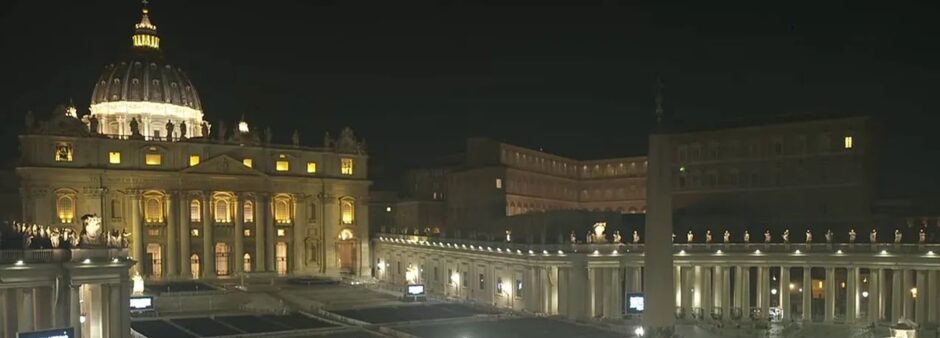
Pope Francis held a consistory to create five new Cardinals.  A media rep sent out an explanatory email including the following helpful note:

The new Cardinals, according to the order of creation, knelt before the Holy Father who imposed on them the scarlet zucchetto (skull cap) and the cardinal’s beretta, followed by the presentation of the ring.  The Pope also assigned to each Cardinal a church of Rome as a sign of participation in the pastoral care of the Pope in the diocese of Rome. This was followed by the exchange of peace between the Pope and the new Cardinals.

I so very much hope that the beretta which the Holy Father gave to the new Cardinals is this one:

beretta_red

This is a nice one, in an appropriate cardinalatial color.  It has that Japanese tsuka-maki wrap that one prefers for one’s katana.  This is (of course you recognize it immediately) an M9… with spiffy modifications.   However, since these are stormy times in the Church, a better choice could have been the PX4-Storm.

And could that “ring” refer to the “center ring”?

For more on the important topic of the liturgical beretta see HERE.

For more the BIRETTA and how to use it (“birettaquette”) see HERE.

And, everyone, don’t let your priest be this guy.

biretta beretta

No, no… that won’t do at all.  Wrong wrong wrong… this time it is “beretta”!  Sheesh.

Please help with our ongoing BIRETTAS FOR SEMINARIANS (and for priests) PROJECT.

>>HERE<<


Posted in Lighter fare | Tagged ,
12 Comments

Recommended online reading at “These Stone Walls”

Please run, don’t walk, to These Stone Walls, the blog of Fr. Gordon MacCrae, unjustly jailed and innocent of crimes against minors.

It’s a long read, and a lurid in many ways, but it reveals the slimy underside of the Accuse–a-Priest industry.

The results of the damage?

The damage was summed up in a single sentence by Canadian Catholic blogger, Michael Brandon, in an assessment of These Stone Walls:

“The Catholic Church has become the safest place in the world for young people and the most dangerous place in the world for Catholic priests.”

It seems that fraud is catching up with some of the frauds who made false accusations.   The question is: will there eventually be justice?

Among other things that MacCrae’s piece presents is the tale of “seismic fall” of SNAP and the monumental but profitable shakedown of a liar and the anti-Catholic MSM that propped him up.

About Fr. MacCrae:

[…]

On September 23, 1994, Father Gordon MacRae, a priest of the Diocese of Manchester, NH, was confined to a prison cell to begin a sentence of sixty seven years in the New Hampshire State Prison. At this writing, he is 64 years old. The crimes for which he is imprisoned for life were alleged to have occurred when he was between 25 and 30 years old. Brought with no evidence or corroboration whatsoever, the claims were accompanied by monetary demands which his diocese settled for hundreds of thousands of dollars despite evidence of fraud.

In 2013, Dorothy Rabinowitz, a Pulitzer Prize winning writer on The Wall Street Journal Editorial Board, published “The Trials of Father MacRae,” her third major installment in a series of articles recounting the perversion of justice by which Father MacRae was tried and convicted. It is a story, as described by the late Father Richard John Neuhaus in First Things magazine, of “a Church and a justice system that seem indifferent to justice.”

Father MacRae maintains his innocence of these claims, an assertion of truth for which he has paid a very high price. Had he accepted one of several well documented pre-trial “plea deals” offered by the State, he could have left prison after one year. For standing by the truth, Father MacRae now serves a draconian prison term more than sixty times the sentence that would have been imposed had he in fact been guilty or willing to pretend so. As Dorothy Rabinowitz observed in The Wall Street Journal:

“Those aware of the facts of this case find it hard to imagine that any court today would ignore the perversion of justice it represents.”

[…]

Posted in Mail from priests, Priests and Priesthood, Seminarians and Seminaries | Tagged , ,
3 Comments

Fr. Murray on 1 year after ‘Amoris laetitia’: The state of the question.

Juan Manuel de Rosas (17th Governor of Buenos Aires Province 1835 -1852)

Juan Manuel de Rosas (17th Governor of Buenos Aires Province 1835 -1852)

My friend Fr. Gerald Murray, frequent contributor at The Catholic Thing and quite simply the best clerical TV commentator around (EWTN has to kick its game up to deserve him).

Fr. Murray has offered comments about Amoris laetitia one year after its release.  HERE

Amoris Laetitia: Year One

[… what I cut was good, but I wanted to get into the marrow…]

[A status quaestionis…] What are we to make of Year One of the Amoris Laetitia era? We have had: papal silence on the dubia; papal approval of a draft statement by a group of Argentine bishops of the Rio de la Plata region that opens the door to the reception of Holy Communion by divorced and civilly remarried Catholics; affirmations by Cardinal Müller that Holy Communion cannot be given to those living in a state of adultery; the publication by the pope’s own newspaper, L’Osservatore Romano, of the statement by the Bishops of Malta that couples in invalid second marriages can receive Holy Communion if they at are at peace in their conscience with that decision; the reaffirmation by the Bishops of Poland that the teaching and discipline enunciated by St. John Paul II in Familiaris Consortio have not changed, and that only those civilly remarried couples who live as brother and sister may be admitted to Holy Communion; the Archbishop of Philadelphia saying the same thing; while the bishops of Belgium and Germany agree with the bishops of Malta and Rio del La Plata, Argentina.

This is the current unholy mess. As the four Cardinals lament: “And so it is happening – how painful it is to see this! – that what is sin in Poland is good in Germany, that what is prohibited in the Archdiocese of Philadelphia is permitted in Malta.”

There cannot be a divided truth about the indissoluble nature of marriage, or the nature of mortal sin or the nature of human freedom and responsibility for one’s freely chosen acts. The truth is one and must be defended from errors and misinterpretations.  [Some claim that while doctrine has not changed, discipline has.  However, is that a distinction without a difference?  Praxis is rooted in doctrine and reflects it.  They can’t be inconsistent and be, well, Catholic.]

Geographically different doctrine within the same Catholic Church is not simply bizarre. It is impossible. If such is found to be the case, then we are dealing with error in one place and true doctrine in another. It is not that hard to tell which is which.

In an explanatory note accompanying the dubia, the Cardinals prophetically identified what would be at stake if Amoris Laetitia did, by the express intent of Pope Francis, change the Church’s discipline concerning the non-admission to Holy Communion of those living in an adulterous union:

It would seem that admitting to communion those of the faithful who are separated or divorced from their rightful spouse and who have entered a new union in which they live with someone else as if they were husband and wife would mean [wait for it….] for the Church to teach by her practice[There is it!  I asked if that was a distinction without a difference.] one of the following affirmations about marriage, human sexuality, and the nature of the sacraments:

— A divorce does not dissolve the marriage bond, and the partners to the new union are not married. However, people who are not married can under certain circumstances legitimately engage in acts of sexual intimacy. [If we break down what the innovators and libs want, it really comes down to sex.  To accomplish their agenda in the Church, sex has to be separated from the ends of marriage.  Thus, they find strong allies from the homosexualist lobby.]

— A divorce dissolves the marriage bond. People who are not married cannot legitimately engage in sexual acts. The divorced and remarried are legitimate spouses and their sexual acts are lawful marital acts.

The logic here is airtight. [NB] If either of these alternatives is in fact what Amoris Laetitia intends, then it is Amoris Laetitia that needs to be revised. If Pope Francis did not intend either of these alternatives, then it is reasonable to ask him to clarify this as chaos and division spread, thus putting an end to the further growth of beliefs and practices contrary to the doctrine of the Faith.

The lay faithful ask to be confirmed in the Faith of the Church, and pastors of souls, especially parish priests, ask to be freed from what the Cardinals call in their second letter a “situation of confusion and disorientation.” These are holy desires. It cannot be in anyone’s true interest to leave matters where they now stand.

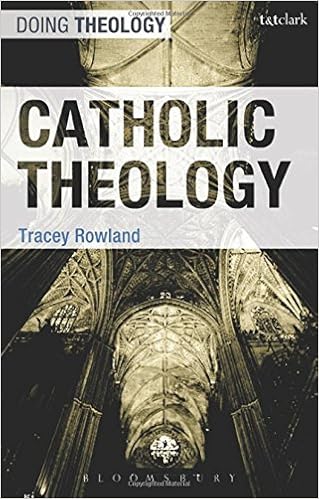
Fr. Murray’s analysis is sound.  At the same time, there is another “if… then” which is suggested by what Tracey Rowland wrote in her terrific recent book Catholic Theology.

I’ve posted this before, but repetita iuvant.  I’m convinced that Dr. Rowland is on to something.  In relation to what Fr. Murray offers, Rowland description of the Pope’s ‘People Theology’ and his favorite four principles suggests another “if… then” binomial.  Thus, Rowland:

… ‘People’s Theology’. One of the most extensive articles on this subject is Juan Carlos Scannone’s ‘El papa Francisco y la teologia del pueblo’ published in the journal Razón y Fe. 86 In this paper Scannone claims that not only is Pope Francis a practitioner of ‘People’s Theology’ but also that Francis extracted his favourite four principles – [1] time is greater than space, [2] unity prevails over conflict, [3] reality is more important than ideas, and [4] the whole is greater than the parts – from a letter of the nineteenth-century Argentinian dictator, Juan Manuel de Rosas (1793– 1877) sent to another Argentinian caudillo [a type of personalist leader wielding political power], Facundo Quiroga (1788– 1835), in 1834. These four principles, which are said to govern the decision-making processes 17_06_27_screenshot_EGof Pope Francis, have their own section in his Apostolic Exhortation Evangelii Gaudium [check out 217-237] and references to one or other of them can be found scattered throughout his other papal documents. Pope Francis calls them principles for ‘building a people’. A common thread running through each of these principles is the tendency to give priority to praxis over theory. [Read that again… priority of praxis over theory.  Remember my comments that, right now more than ever even in the 80’s and 90’s, “pastoral” is used as a weapon against “doctrine”, “intellect”, “academics”, even “magisterium”, and certainly “law”.] There is also a sense that conflict in itself is not a bad thing, that ‘unity will prevail’ somehow [Hegel] and that time will remove at least some of the protagonists in any conflict. The underlying metaphysics is quite strongly Hegelian, [yep] and the approach to praxis itself resembles what Lamb classified as ‘cultural-historical’ activity and is associated primarily with Luther and Kant rather than Marx. Professor Loris Zanatta of the University of Bologna has published an article entitled ‘Un papa peronista?’ in which he makes the claim that Pope Francis has used the word pueblo or people some 356 times in his papal speeches, that Pope Francis believes that poverty bestows upon people a moral superiority, and accordingly, that for Pope Francis, the ‘deposit of the faith’ is to be found preserved among the poor living in ‘inner city neighbourhoods’.  Such a reading situates Pope Francis squarely in the territory of Scannone’s ‘People’s Theology’.

Rowland, Tracey. Catholic Theology (Doing Theology) (Kindle Locations 4240-4257). Bloomsbury Publishing. Kindle Edition.

So, Fr. Murray is accurate in his presentation of his “if … then” propositions.

However, if Tracey Rowland is right, then it may be that Pope Francis is simply not interested in such reasoning.

Are the Four Cardinals (and a lot of other people) using one operating system and the Holy Father (and those around him – including a lot of people who want to instrumentalize the chaos for their own agenda within the Church) using another?  Their operating systems don’t talk to each other or network together easily.

More on those “Four Priniciples”.  I found this at Iglesia Descalza:

Already as Provincial of the Jesuits, Bergoglio stated, and then as Archbishop of Buenos Aires explained in more detail, government priorities leading to the common good12, namely: 1) the superiority of the whole over the parts (being more than a mere sum of the parts), 2) that of reality over ideas, 3) unity over conflict, 4) time over space. Reportedly, they are taken from the letter of Juan Manuel de Rosas (Governor of Buenos Aires) to Facundo Quiroga (Governor of La Rioja, Argentina) about the national organization, written from the Figueroa estate in San Antonio de Areco (December 20, 1834). Rosas doesn’t make these options explicit, although he takes them into account. Later — now as Pope — Francis introduced the last two priorities in the encyclical Lumen Fidei (55 and 57). Finally he develops and articulates them in Evangelii Gaudium 217-237, presenting them as a contribution based on Christian social thought “for building a people” (first, the peoples of the world, but also the People of God).

There is a lot more there, including analysis of each of the Four Principles.


Friends, if you want to understand more about Pope Francis, you should obtain this book as soon as possible.

 Catholic Theology.  

US HERE – UK HERE
Posted in Classic Posts, The Drill | Tagged , , , , , ,
29 Comments

BOOKS RECEIVED: A Catholic Defense of Capital Punishment

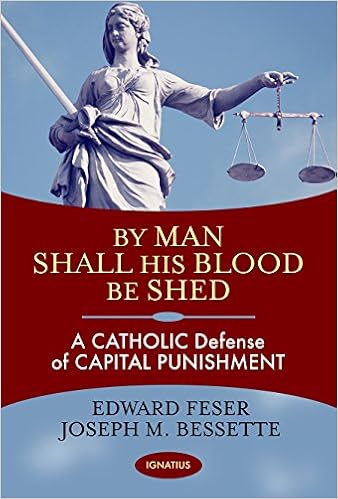
Anything written by Edward Feser is reliable and worth time.  He recently joined forces with Joseph M. Bessette to create a new book exploring Catholic teaching about the hotly discussed “death penalty”.

James V. Schall, S.J. says of this book: “At long last, we have a serious and intelligent look at all aspects of the death penalty — its causes, its justification, its consequences for the victim of the crime, the criminal himself, his family, and for civil society. … This book brilliantly sheds some much-needed realism in the fuzzy thinking in our society and often in the Church on this basic question of the consequences of our most heinous acts.”

Endorsing the book are also Fr. Kevin Flannery, SJ (brilliant), Prof. Edward Peters (meh… just kidding, Ed!), Prof. Robert Royal (brilliant), Prof. J. Budziszewski (brilliant), et al.

By Man Shall His Blood Be Shed: A Catholic Defense of Capital Punishment by Edward Feser and Joseph Bessette. Ignatius Press.

US HERE – UK HERE

This is a good book for the strong reader, student of Catholic moral and social teaching, seminarians and clerics.

Posted in REVIEWS, The Campus Telephone Pole, The Drill | Tagged , ,
37 Comments

ASK FATHER: “Quasi-parish” priests

roman-massFrom a reader comes a messy question, which a Guest Priest will answer…

QUAERITUR:

Our “Quasi-parish”, due to rotation of clergy, has a new priest. His first outward change was to get the candles off the floor in front of the altar.

Still no scheduled time for confessions, and he doesn’t wear a stole with his alb and chasuble either. Before full vestments were purchased with a hefty donation by a local man working in the US, our assigned priests wore only a stole over the alb–probably a lot more comfortable when midday temperatures were nudging the 100° mark. This holy man serves from a church established more than a century ago, celebrating Mass two or three times a day, seven days a week, among some 20 chapels in villages scattered across a mountainous territory of at least 250 square miles.5

With the end of the school year, it can be hoped that the bishop will again send one of the priests from the seminary to help during the summer, because babies keep being born, people still want to marry, and people still reach the end of their earthly sojourn, and a second priest can lighten the load.

Is the priest assigned to a “quasi-parish”, formerly a vicar forane of a vicariate, a “quasi-pastor”?

GUEST PRIEST RESPONSE: Fr. Tim Ferguson

No, unless the particular law provides otherwise (canon 516, 1), he is the proper parish priest (parochus – in American, pastor) of the quasi-parish.

Are you certain he’s not wearing the stole underneath his chasuble (as he should)? It would seem very odd for a “holy man” to neglect this important aspect of his sacred vesture for Mass. If there is an issue with heat, very lightweight fiddleback vestments are a better solution than foregoing the appropriate dress for Mass.

UPDATE

A reader writes:

CIC can. 516, 1 does NOT describe the priest entrusted with the care of a “quasi-parish” as a “parochus,” but rather as a “pastor.” Only a parish is entrusted to a “parochus” (see can. 515)

GUEST PRIEST CORRECTION: Fr. Tim Ferguson

I was erroneously reading back into the Latin. It is “pastori proprio” rather than parochus. I’m not sure quite how that changes things. He is certainly not a “quasi-pastor” although I see in the commentary that he was thusly named in the 1917 Code and our friend Coccopalmerio suggests that he be so-called. I suppose then, he is technically not obliged to the Missa pro populo.

Posted in "How To..." - Practical Notes, ASK FATHER Question Box, Canon Law, Liturgy Science Theatre 3000, Mail from priests | Tagged , ,
5 Comments

Official LATIN version of ‘Amoris laetitia’ promulgated in the Acta Apostolicae Sedis

17_06_27_AAS_AmorisAt the beginning of the sad and confusing controversy that has surrounded the Post-Synodal Apostolic Exhortation Amoris laetitia, with its objectively ambiguous statements that have pitted bishops’ conference against conference, diocese against diocese, parish against parish, family against family, I suggested that, since the true, official version of documents is to be found in the Acta Apostolica Sedis, the Exhortation could be tidied up and made clear. Latin, along with being the Church’s official language, is great for clarity.

Edit the document and fix it for the official Latin version, I opined.  BAMMO!  Controversy concluded, the Four Cardinals get their answers to their dubia, some of the chaos subsides, things settle down.

Alas… or rather Heu!

I see now that Amoris laetitia is finally out in the Acta in the April 2016 issue (no no… they’re not behind at all… no no, who says it’s the age of modern communications?).

>>HERE<<

“But Father! But Father!”, some of you eager church-shredding beavers are barking, “What about the wonderful ‘Footnote 351’, the most wonderfulest footnote ehvur in the history of all pastóreal footnotes?  We love ‘Footnote 351’ because it undermines the mean institutional ‘church’ and sings a new faith community into being born of the spirit of THE Council which YOU HATE!”

Yes, the Latin version has the infamous Footnote 351:

351 Quibusdam in casibus esse etiam potest subsidium Sacramentorum. Quapropter, « sacerdotibus memoramus confessionale esse non debere aulam tormenti, sed locum Dominicae misericordiae » (Adhort. Ap. Evangelii gaudium [24 Novembris 2013], 44: AAS 105 [2013], 1038). Dicimus pariter Eucharistiam « non esse praemium perfectorum, sed debilium munificum remedium et alimoniam » (ibid., 47: 1039).

What the vernacular unofficial (English) version said:

Alas, the LATIN was not the original language of composition… a fact which in the history of facts was never more obvious.

How many problems could be avoided were Latin still the language of composition?  Now, de facto, the official version in the Acta is a translation.  But, de iure, with its promulgation it is now the official version to which all other versions must adhere.

Every vernacular version is now out of date.

This is a problem for scholarship, of course.  The problem is that virtually everyone now refers to the vernacular versions that were issued at the time of the press conferences for documents.  Months later the LATIN is issued in the AAS and THAT becomes the official version!  Who goes back and double checks to see if there were changes? If the Latin provides a different nuance?

QUAERITUR: Was His Holiness the Pope waiting for the definitive Latin to be promulgated in the AAS before making his response to the Four Cardinals of the Five Dubia?  

If I were still in Rome and around the Press Office, I’d ask that question of the Papal Spokesman.

Posted in "How To..." - Practical Notes, The Coming Storm, The Drill | Tagged , , ,
18 Comments

@TuckerCarlson interviews pro-lifer @LilaGraceRose about Twitter double-standard BIAS toward Big Business Abortion Planned Parenthood

While the first minute will irritate you, really tune in for Tucker Carlson’s interview with pro-life leader Lila Rose about Twitter’s incredible double-standard.

Posted in Biased Media Coverage, Emanations from Penumbras | Tagged , , ,
2 Comments

Homosexual sex obsessed Jesuit v. Bp. Paprocki of Springfield, IL – ACTION ITEM!

action-item-buttonACTION ITEM at the end!

A little while ago, His Excellency Most Reverend Thomas John Paprocki, Bishop of Springfield in Illinois, issued a Decree “Regarding Same-Sex ‘Marriage’ and Related Pastoral Issues.”

This Decree reaffirmed Catholic teaching that a marriage is only possible “between one man and one woman.”

The Decree included the following directives:

  • No member of the clergy or representative of the Diocese should assist or participate in a same-sex marriage;
  • No Church property should be used to host same-sex marriage ceremonies or receptions;
  • Persons in a same-sex marriage should not present themselves for Holy Communion, nor should they be admitted to Holy Communion;
  • Those in a same-sex marriage can be restored to communion with the Church through the Sacrament of Reconciliation;
  • In danger of death, a person living in a same-sex marriage may receive Holy Communion “if he or she expresses repentance for his or her sins.”

You saw how Ed Peters handled one critic HERE.

Immediately, homosexual sex obsessed Jesuit James Martin blasted Bp. Paprocki HERE:

If bishops ban members of same-sex marriages from receiving a Catholic funeral, they also have to be consistent. They must also ban divorced and remarried Catholics who have not received annulments, women who has or man who fathers a child out of wedlock, members of straight couples who are living together before marriage, and anyone using birth control. For those are all against church teaching as well. Moreover, they must ban anyone who does not care for the poor, or care for the environment, and anyone who supports torture, for those are church teachings too. More basically, they must ban people who are not loving, not forgiving and not merciful, for these represent the teachings of Jesus, the most fundamental of all church teachings. To focus only on LGBT people, without a similar focus on the moral and sexual behavior of straight people is, in the words of the Catechism, a “sign of unjust discrimination” (2358).

This, friends, is the raving of a lunatic.

For a complete review of homosexual sex obsessed Jesuit James Martin v. Bp. Paprocki, try HERE, a blog by a Catholic man who suffered with same-sex affliction and is now striving to live a holy life.

URGENT: In his post he makes a great suggestion: drop Bp. Paprocki a supportive note! The diocese’s contact form and addresses:

>>HERE<<


Posted in ACTION ITEM!, Sin That Cries To Heaven | Tagged , ,
30 Comments

UPDATE: Challenge Coin – THEY’RE HERE!

UPDATED BELOW:

Originally Published on: Apr 7, 2017

I had mentioned a while back that I resolved to have a challenge coin made.  I figured I’d start with one for my 25th anniversary.  This is what we have come up with so far.  The graphics are from Zuhlio’s official album cover designer.  The stemma is from D Burkart.

ZUHLSDORF-COIN17ZUHLSDORF-COIN18

They will be polychrome on silver.  1.75″

So… that’s an update what what I’ve got so far. I’ve sent the images for estimates.

I’m not especially good at this sort of project, so it is a learning experience.

UPDATE 26 June 2017

After MANY delays, my challenge coins have finally arrived!  I had to nudge the company a few times, but they eventually came through.

The first, the obverse, is close to actual size.

17_06_26_coin_obverse_02

17_06_26_coin_reverse

These are numbered along the edge, so I can keep track of their destinations.

Now I will be able to fulfill my IOUs to NYPD cops and a longtime reader here… for starters.

Posted in ¡Hagan lío! | Tagged
28 Comments

ASK FATHER: Sunday obligation and sick child at home

From a reader…

QUAERITUR:

I have read that caring for the sick (i.e. children) lifts the Sunday Obligation to hear Holy Mass.

Does caring for a sick child lift it for the entire day, or would parents be required to go to Mass “in shifts”?

Thank you for all that you do in Our Lord’s Vineyard. Be assured of my family’s prayers.

As parents, your obligation to your children overrides just about everything else.   Of course you must, as we all must, love God even more than you love your spouse and children, but in terms of your vocation and its duties, taking care of your children is at the top of the heap.

If a child’s illness requires your presence at home, then you do not have the obligation to go to Mass on Sunday.

However, I like the fact that you brought up going “in shifts”, which I take means going alternately rather than in long, loose-fitting garments worn with or without a belt.

Sure!  If that is a viable solution, spouses, especially parents with lots of kids who might be at a difficult age to manage in church, can always go in shifts.  As a matter of fact, that might give parents a chance to pray at church.

While I understand that parents – often deprived of lots of facetime with their children during the week because of the restraints of jobs and so forth – like going to church all together as a family, it might be that the Shift Solution could also be helpful, not only for the individual parent, but also for fellow congregants who may not be as filled with joy at the antics of your little stupor mundi.

However, this is now verging toward The Third Rail™.

Posted in "How To..." - Practical Notes, ASK FATHER Question Box, Liturgy Science Theatre 3000, One Man & One Woman, Our Catholic Identity | Tagged
8 Comments