Erasing the Magisterium of a Pope. Wherein Fr. Z rants and suggests.

damnatio_memoriaeThere is a long standing political tool employed to eliminate opposition which is associated with the past, or a defeated regime.  You can see evidence of this tool all around Rome, in monuments both ancient and recent.  It is called damnatio memoriae… the condemnation of the memory (of someone).  In effect, the winners destroy even the memory of the losers by effacing and erasing their very names from public view… as if they never existed.  For the ancient Roman, this was a fate worse than death.  The Roman wanted to extend the gloria of his family, especially through public works which would bring honor to their names in perpetuity.  Think about the way Paul V put “BORGHESE” smack in the middle of the facade of St. Peter’s Basilica.  In any event, walking about in Rome you can see inscriptions wherein the names of the defeated were literally chiseled out or filled in, made illegible.

It has become evident over the last few years, that there is a major agenda item on the slate of those who are around Pope Francis. They are working on the systematic erosion, degradation, scratching out, erasure, the damnatio memoriae of the Magisterium of St. John Paul II.

John Paul, with his “theology of the body” reinforced the Church’s constant teaching about the inseparable connection of sexual acts and marriage.  Today, there are legions made of seemingly disparate groups who tirelessly work along side each other to pull sex and marriage apart.  If they can accomplish that “divorce”, then virtually anything in the Church can be restructured for their own temporal ends, whatever they may be – homosexual “marriage”, Communion for divorced and remarried self-identifying lesbian or questioning giraffes, etc.  It’s mostly about sex for the agents in the field, agents of the Enemy of the soul, that is.

After the 1980 Synod (“walking together”) of Bishops on the Family (sound familiar?), Pope John Paul II responded to a suggestion from the Synod and established the Pontifical Institute for Studies on Marriage and Family and the Pontifical Council for the Family. The establishment of the Institute was supposed to be announced by John Paul during his Wednesday General Audience on 13 May 1981. Does that date sound familiar? After John Paul recovered from the assassination attempt, with the help of Our Lady of Fatima, he formally established the institute on the Feast of the Holy Rosary on 7 October 1982, and entrusted it to Our Lady of Fatima. Thus, the institute was a monument to how Popes and Synods can work together (in a way that doesn’t involved rigging them to pre-determined outcomes) and how the Family and our Marian devotion intersect.

The first head of the Institute, situated at the Lateran University in Rome, was one Carlo Caffarra, later Archbp. Cardinal of Bologna and, more recently, one of the Four Cardinals of the Five Dubia. As a matter of fact, he probably wrote the dubia.

As an aside which isn’t an aside,  Card. Caffarra, in an interview in 2008, revealed that, when John Paul had asked him to found the Institute, he wrote a letter to Sr. Lucia dos Santos, the last living visionary of the Fatima apparitions.  Sr. Lucia wrote back to him and said that the final battle between Christ and Satan would be over marriage and the family.  She also said not to be afraid and that anyone who works for the sanctity of marriage and the family will always be opposed because this is the decisive issue.

So, the John Paul II Institute for Marriage and Family is to be renamed:

Institute of Studies on the Family.

Nota bene the absence of “John Paul II” and “Marriage”.

17_06_30_Institute_Family_screenshotAs of this writing, it still bears its proper name.  HERE

More on changes HERE

The Institute is also now caught up in the restructuring which is going on, so its leadership and, hence, direction will also change.

St. John Paul cannot be erased from the “album of the saints” in which he has been enrolled, but that doesn’t mean that, as many other saints have been, he won’t be forgotten.  As I write this, it is the feast of St. Pope Paul I (+767).  Do you think about him often?

Moreover, the saintly Pope John Paul would never have thought of his own gloria in establishing an institute for the family and marriage.  That doesn’t mean that others won’t try systematically to eliminate the influence of John Paul Magisterium for their own purposes.

I have from time to time suggested that you form “base communities” to combat the onslaught from within and without the Church on our Three C’s of Cult, Code and Creed.

Here’s a suggestion.  How about starting a reading group, in your parish or down at the local breakfast and coffee shop (where you might be more welcome in some cases).  Choose as your first item Pope John Paul II’s Post-synodal Apostolic Exhortation Familiaris corsortio, (The Role of Christian Family in Modern World) which he penned after the 1980 Synod (“walking together”).

You can get it online (for now). Or, for less than the price of the cup of coffee at the shop you choose, you can get a booklet.
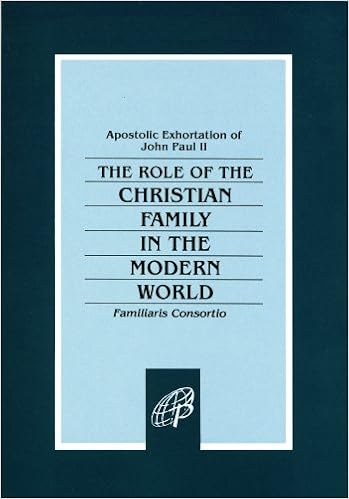
US HERE – UK HERE

Read it with others.  Read it with a pen in hand.

When you hear something that contradicts Familiaris ask questions.

How else do we learn?

Posted in One Man & One Woman, Our Catholic Identity, Semper Paratus, Synod, The Coming Storm, The Drill | Tagged , , , , ,
19 Comments

Will Pope Francis confirm Card. Müller for another term on 2 July 2017? UPDATE – NO.

17_02_01_Muller_Timone

UPDATE: I got another confirmation from a separate source that Card. Müller is, indeed, out as of Monday.

It will be interesting to see where he lands.

UPDATE:

What is scary are the names my spies and I are bandying about as the next Prefect, for there shall be a next Prefect.  With this move, surely the Pope already had someone in mind.

___

Corrispondenza Romana is suggesting that Gerhard Ludwig Card. Müller, Prefect of the Congregation for the Doctrine of the Faith, has been sacked (“licenziato”) by Pope Francis.   Cardinals serve at the pleasure of the Supreme Pontiff, whose extension they are when serving in the Roman Curia.

Card. Müller’s quinquennium (five year mandate) ends on 2 July.

We won’t know for sure until we know for sure. [UPDATE: Now we know, but we’ll know for sure on Monday.]

Meanwhile, some of my Roman spies are telling me the same.

So, again, fama volat. Caveat lector.

That said, we recall that His Holiness decided to leave Card. Burke in place for a long time at the Apostolic Signatura without an official reconfirmation of his mandate. That effectively undercut Card. Burke in his role without moving him. It is possible that the Pope will leave Card. Müller in place without reconfirmation of his mandate. If the Roman Pontiff wants to decentralize what Rome has been doing, that could be a way to urge that action item along in regard to the CDF.  Also, Card. Müller would need something to do.  He’s only 69.  I suspect that his brother bishops in Germany would not be especially pleased to see him amongst them as a diocesan bishop again.  There are fewer and fewer slots available in the Roman Curia these days.  There can only be so many patrons of orders of knights.  So, where would Pope Francis ask the Cardinal to serve next?

It will be interesting to see what happens.  We will know soon enough… maybe.


Posted in The Drill | Tagged , ,
24 Comments

ASK FATHER: Overhearing someone else’s confession and revealing what you heard

seal of confessionFrom a reader…

QUAERITUR:

I recently went to confession in one of those open style baroque confessionals. Afterwards, I found someone directly outside the confessional (where she would have heard what was said by both parties).

I confronted her about it, but she just waved me off and told me not to worry about it and claimed she “heard nothing”. I gave her the benefit of the doubt, but the next day after Mass someone said something to me that left me with a strong impression that some of what came up in my confession may have been revealed to an additional party. I’m not entirely certain, and won’t know for certain, but in the meantime this is bothering me. What do you recommend?

Priests should take care that confessionals are either properly sound-dampened or that the line for the penitents waiting is a goodly distance. We don’t want other people to hear what penitents or the confessors say. Similarly, priest confessors should instruct people to lower their voices. It is amazing how many people crank up the volume, even when they themselves are not hard of hearing.

This deals with the Seal or secret of the confessional. Priests, of course, are famously bound to keep the Seal and to reveal or use nothing of what they hear in sacramental confession and internal forum. The penalty for priests who break the Seal is rightly severe, including latae sententiae excommunication, the censure being reserved to the Holy See.  The priest can also be dismissed from the clerical state.

What if a lay person overhears a confession and then reveals the information?

In can. 983 §2 we read:

The interpreter, [e.g. translator] if there is one, and all others who in any way have knowledge of sins from confession are also obliged to observe secrecy.

That means that if you overhear something in a confession, you are – effectively like the priest confessor himself – bound to silence.

So, say Jody Bigears overhears a penitent and decides to share what she heard with Trudy Blabbermouth.  Is Jody excommunicated?  For a person to incur the censure of excommunication, a person has to know that the act/sin was a crime to begin with.  If Jody had no idea that revealing the contents of a confession overheard – even if a lay person – was wrong wrong wrong – she doesn’t automatically incur the censure.

This is another reason why priests should educate their flocks about many practical matters having to do with the Sacrament of Penance, including the Form and the Seal.   People need to be secure in knowing a) that they will be absolved with the proper Form so that they don’t have to wonder and b) that their confessions will be kept secret.  Period.

As far as recourse is concerned, there is very little that you can do.  Canonical recourse requires that you or someone acting for you gather proofs (e.g., testimony about the facts, if not audio and video recordings, etc.).  It is unlikely that anyone would submit to giving them.  I suppose that, if you want to pursue this, you could ask the people involved what happened and what they did.  It is hard to know how that will be received.

Meanwhile, I guess a little humiliation could be good for the soul.  Right?

Everyone reading here should keep in mind that this is a super rare situation which should never keep anyone from going to confession.

So…

GO TO CONFESSION!

If there is a problem with the sound dampening of the confessional or overhearing because people are too close, then you should quickly inform the priest so that he knows and can do something about it.  And if he won’t, then inform the bishop.

The moderation queue is ON.

Posted in "How To..." - Practical Notes, ASK FATHER Question Box, GO TO CONFESSION | Tagged , , , ,
21 Comments

Women religious: compare and contrast

Something at the SSPX website caught my eye.

Here is a photo from a story of the profession of vows of some sisters associated with the SSPX: “Two American Postulants Join the Consoling Sisters of the Sacred Heart in Italy”

Is it just me, or does that look pretty serious?

I wondered about the professions of women religious of groups that belong to the LCWR, but I couldn’t find photos.  I guess they don’t have many.  However, I did find photos some similar moments.

women_religious_LCWR_01

Not quite the same thing, is it.


This has me thinking.

The LCWR annual assembly is in August in Orlando.  Should I – once again – put in my request for media credentials?  The last time they were in Orlando, at that really nice hotel, the sisters learned from Sr. Ilia Delio that they are “stardust”.  HERE  Better a swanky Orlando hotel than Yasgur’s Farm any day! Right?

However, each time I apply, my hopes are dashed and I have to deal with bouts of rejection-incited depression.  Where’s the transparency?

Meanwhile,

Posted in Lighter fare, SSPX, Women Religious | Tagged , ,
27 Comments

“And you will hear of wars and rumors of wars.”

My kind of concelebration.

Concelebration.

Fama volat, it is said.  No aphorism is truer than this when it comes to Rome all the way back to Virgil, who coined it.

So, reminding everyone that we are in the realm of Rumor, I’ve been exchanging texts with Roman sources today about alarming possible developments in Rome.

Two rumors, one worse than the other, follow.

GloriaTV and Rorate have something Roberto de Mattei posted at Corrispondenza Romana about the possibility – contained in a working (not yet official) document – that the Congregation for Clergy will effectively impose concelebration on all priests living in Rome.  That is, Clergy – in a working document – will so strongly impose concelebration in clerical residences that they will in effect ban individual, private Masses by priests living in Rome.

This of course is a direct contradiction to the Code of Canon Law can. 902, which guarantees that priests can celebrate Mass individually and privately.  I think that concelebration should be safe, legal and rare.

I also hear that there is a Vatican sponsored conference going on right now until about 7 July in Rome on Clergy’s Ratio Fundamentalis (the document that contains guidelines for formation of seminarians for the priesthood).  The Pope mentioned the conference during his General Audience yesterday. One report from that conference – remember that we are in the realm of rumor – is that ordination to the transitional diaconate is to be moved to the end of the 4th year of theology.  At that point there is a break with the seminary.  In the next phase the deacon must be in a parish.  Moreover – and this is still rumorville – ordination to the priesthood can be conferred only after a kind of extended pastoral apprenticeship reviewed by laity, who tell the bishop whether the candidate is “mature”.  If this lay approval is not forthcoming the candidate is to be dismissed.  Of course that would result in the deacon asking to be “laicized”, right?  Think about it.

This sounds really protestant to me: he isn’t ordained to priesthood unless he gets a call.

Apparently there was strong push back against this really bad idea.

Think this through.  A deacon is in a parish, where he will remain in a kind of apprenticeship to be judged by the pastor and laity.  The most organized laity will control this process.  I come from Minnesota, where there is a caucus process in political seasons.  I know how this is done.  The most organized and determine faction will decide the man’s fate. Will the feminazis be heard in the discernment process?  You betchya.

What could possibly go wrong?

If these developments are true, the result will be the death both of clerical studies in Rome and of vocations to the priesthood in general in dioceses. Seminary programs will shrink and bump along until they wither out.  Licentiate programs will die off.  Moving diaconate till after the fourth year and then imposing time in a parish would interrupt a program of study.  It would be unlikely that a bishop would be able to send a man back to Rome to finish studies.  No man is going to put himself through this, in this present environment.

Gosh.  That’s sounds idea for the libs, doesn’t it.  They will finally get what they want.  Everyone is her own priest.  We’ll all be Lutherans who get to pick the “minister” that most resembles ourselves.

Mind you, a Ratio like this goes to conferences of bishops who then make their own adaptations.  It could be that much of this will be “adapted” out by your bishops.  One can only hope.  Nevertheless, this is alarming.

More on concelebration.

I am not opposed in principle to concelebration (which is a Novus Ordo thing, of course).  I will concelebrate occasionally, for example, at ordinations to the priesthood and on Holy Thursday, especially with the bishop.  Otherwise, I want to say my own Masses.  Concelebration is too prone to wandering minds, inattentiveness, sloppiness, abuses. I’ve seen horrid examples of this, including priests not saying anything at all during the consecration and bizzare handling of the Eucharist.  Can there be poorly celebrated private Masses?  Sure.  However, a man who is dedicated to saying Mass privately – because of devotion and because saying Mass is a good thing for him and for those for whom he offers it – is less likely to celebrate in a sloppy manner.

Moreover, it seems to me that a concelebrated Mass is one Mass, not many.  Why is that a good thing?  People can talk about priestly brotherhood and unity blah blah blah.  Why are fewer Masses good for anyone?   It seems to me that many Masses, properly and reverently celebrated, are good for the Church and for the world.  I wrote about this in an early manifesto on this blog, in 2007: Save The Liturgy Save The World:

Celebrate Mass well, participate properly – affect the whole world. Celebrate poorly – affect the whole world.

In each age since Christ’s Ascension, people have felt they were in the End Times. They were right. In any moment, when the conditions are right, the Lord could return.

Considering what is happening in the world now, I am pushed to think about the way Mass is being celebrated, even the number of Masses being celebrated. Once there were many communities of contemplatives, spending time before the Blessed Sacrament or in contemplation, in collective and in private prayer. There were many more Masses.

Many more people went to confession.

Who can know how they all lifted burdens from the world and turned large and small tides by their prayers to God for mercy and in reparation for sin?

In addition, the imposition of concelebration for all priests in clerical residences in Rome will also undercut the right of priests to use the 1962 Roman Missal in accord with Summorum Pontificum.  The use of the older, traditional Missale Romanum is on the rise among younger priests.  Many seminarians want it.  I’ll bet that scares the daylights out of some who are in power.

As one of my Roman correspondents put it:

This is scorched earth tactics.  They’re going Carthage on everything distinctively Catholic to make sure we don’t turn back the Hegelian flow of history again.

We are living in strange times, my friends.

Of course the moderation queue is ON.

Posted in Canon Law, Liturgy Science Theatre 3000, Mail from priests, Priests and Priesthood, Seminarians and Seminaries, The Coming Storm, The Drill, Wherein Fr. Z Rants | Tagged , , , ,
30 Comments

A Response to the Tornielli/Walford papolatrous attack on the Four ‘Dubia’ Cardinals

17_06_29_screenshot_magisterA few days ago Vatican Insider, at La Stampa, run by the ultimate Italian weather vane Andrea Tornielli, supplied a piece against the Four Cardinals of the Five Dubia (and against anyone who agrees that more clarity is needed) by one Thomas Walford.  Walford’s piece has the feeling of a collaborative effort in papolatry.  Of course it was published simultaneously in Italian and in English… because that happens all the time.  Right?

Today, Sandro Magister at Settimo Cielo supplied a piece which analyzes the Vatican Insider project.  It is published anonymously.  The reason for anonymity is that the writer is a cleric (I had a text this morning saying who it is), and in the present lib-dominated environment of mercy a cleric who writes like will be crushed like a bug.

A good question (itself a response to Walford) is in the piece’s title: “If it were so easy to resolve the dubia, then why hasn’t the Pope responded?”

In a nutshell, Walford proposed (inter alia) that virtually anything that the Pope says in his ordinary Magisterium, he says with the aid of the Holy Spirit, and that it must be accepted by the faithful.

Anonymous Cleric (my title for him) responds (my rapid translation – surely Magister’s own will soon be available):

B)  The arguments of the formal order refer to some affirmations of the Magisterium about the Petrine primacy and reach the conclusion that “Pope Francis – being the beneficiary of the charisma of the Holy Spirit, which helps him also in the ordinary Magisterium (as St. John Paul II taught) – legitimately made reception of holy Communion possible on the part of the divorced and remarried whose cases have been carefully considered.

I will try to respond to these arguments, beginning with the second series, on account of the fact that they are logically decisive: in fact, if all the acts of the Magisterium were always clear and perfect and enjoyed – for the mere fact that they were pronounced by the Pontiff – infallibility (without considering, for example, the tone of the document, the circumstances in which it was pronounced, the fact that a teaching could be relatively new or repeated, etc. etc.), or if every “flatus vocis” [mere, insignificant word] of the Roman Pontiff ought to be considered dogma and should require, always and in any case, the internal assent of the faithful, the question would be closed from the get-go.

In reality, the Magisterium of the Church certainly constitutes a unique body (containing that which the Church proposes to us for belief), of which, nevertheless, not all affirmations have the same value; in other words, not all the pronouncements – even if authentically proposed – require the same level of assent. The “dubia” of the Cardinals serve also to clarify what weight there can be in an answer in the course of the interview on an airplane and in a private letter to some bishops (indicated by Mr. Walford as if they were definitive interpretations), neither published in the Acta Apostolica Sedis. Certainly both were pronouncements of the Pope, but, as Lumen gentium 25 affirms, the level of adhesion must be deduced “from the character of the documents, from his frequent repetition of the same doctrine, or from his manner of speaking.”

Let’s ask ourselves, by way of an example: “Do the papal interviews on an airplane or do private letters of a Pontiff require – in and of themselves – the same level of assent as the teaching on contraception proposed by documents such as Casti connubi, Humanae vitae, Familiaris consortio, etc. or can one entertain some uncertainties in the face of the aforementioned interviews or letters”? The response to this is given by the Magisterium itself, beginning with the instruction Donum veritatis in 1990 “On the ecclesial vocation of the theologian”, which is also cited by Mr. Walford:

It can happen, however, that a theologian may, according to the case, raise questions regarding the timeliness, the form, or even the contents of magisterial interventions. Here the theologian will need, first of all, to assess accurately the authoritativeness of the interventions which becomes clear from the nature of the documents, the insistence with which a teaching is repeated, and the very way in which it is expressed. […]

In any case there should never be a diminishment of that fundamental openness loyally to accept the teaching of the Magisterium as is fitting for every believer by reason of the obedience of faith. The theologian will strive then to understand this teaching in its contents, arguments, and purposes. This will mean an intense and patient reflection on his part and a readiness, if need be, to revise his own opinions and examine the objections which his colleagues might offer him. If, despite a loyal effort on the theologian’s part, the difficulties persist, the theologian has the duty to make known to the Magisterial authorities the problems raised by the teaching in itself, in the arguments proposed to justify it, or even in the manner in which it is presented. He should do this in an evangelical spirit and with a profound desire to resolve the difficulties. His objections could then contribute to real progress and provide a stimulus to the Magisterium to propose the teaching of the Church in greater depth and with a clearer presentation of the arguments.

Moreover, Pope Francis, at §2 of Amoris laetitia, writes:

“The complexity of the issues that arose revealed the need for continued open discussion of a number of doctrinal, moral, spiritual, and pastoral questions. The thinking of pastors and theologians, if faithful to the Church, honest, realistic and creative, will help us to achieve greater clarity.”

[…]

That’s a taste.

The Anonymous Cleric, in effect, dismantles the collaborative attack mounted by Tornielli over the name of Mr. Walford.

Posted in The Drill | Tagged , , , ,
12 Comments

The latest SCOTUS decision affirming Religious Liberty – Trinity Lutheran v. Comer

At Crisis there is a masterful explanation of the most recent US Supreme Court decision which upheld (7-2) religious liberty.

On days like today, we need some GOOD news.

I won’t do anything with it here.  You should go there and read carefully, with your thinking cap on.

To read the SCOTUS opinions in the case, go HERE  and choose “Latest Slip Opinions”.  The PDF of the opinions HERE.

I often read SCOTUS opinions with pen in hand.

Posted in Religious Liberty, SCOTUS, The Coming Storm, The Drill, The future and our choices | Tagged , , ,
5 Comments

CWR: Interview with Bp. Paprocki about decree on regarding same-sex “marriage”and “related pastoral issues”

bishop_thomas_paprockiCatholic World Report has published an interview with Bp. Thomas Paprocki of Springfield in Illinois.  This is a followup to the vicious and undeserved criticism that the homosexualists have rained down on the bishop since he promulgated particular law for the diocese in his care.  Bp. Paprocki holds that anyone who has sexual relations outside of a valid marriage (heterosexual or homosexual), should not receive Holy Communion unless they repent, go to confession and amend their lives.  This is, of course, can. 916.  Included in this are the divorced and civilly remarried without an “annulment”.

As you can imagine, the fury of those who are devilishly working to detach sexual activity from marriage are outraged, and they are using their usual tactics.

Ed Peters handled one hapless critic HERE.  Jesuit homosexualist activist James Martin has reacted across social media with bad arguments.  Over at the National Sodomitic Reporter (aka Fishwrap) the usual suspect, the Wile E. Coyote of the catholic Left, Michael Sean Winters, is crying from his fainting couch for Paprocki’s removal. Watch for the Fishwrap to “Finn” Paprocki… if you will permit the neologism in the style of “Bork”.

Let’s see some bits from the interview:

On June 12, Bishop Thomas Paprocki of Springfield, Illinois issued a decree regarding same-sex “marriage” (SSM) and “related pastoral issues”.  In it, he reaffirmed traditional Catholic teaching that marriage can only be “a covenant between one man and one woman …” and promulgated diocesan norms relating to SSM.  Norms included that no member of the diocesan clergy or staff is allowed to participate in a SSM service in any way, nor is church property to be used for SSM services or receptions.  Persons in SSM relationships may not receive Holy Communion, and when in danger of death, persons in SSM relationships may not receive Holy Communion in the form of Viaticum unless they express repentance for their lifestyle.  [This is nothing different than what the Church has always taught.  The Sacrament of Anointing is a sacrament of the living, to be received in the state of grace.  The modern vandals are working to convince us that sinners are sinners.]

Additionally, persons in SSM relationships may not receive a Catholic funeral unless they offered some signs of repentance before their death, nor may they serve as lectors or extraordinary ministers of Holy Communion at Mass.  Children of parents in SSM relationships may receive the sacraments and attend Catholic schools; however, such parents should be aware that their children will be instructed in the fullness of Catholic teaching.

In a follow-up statement released June 23rd, Bishop Paprocki added that “the Church has not only the authority, but the serious obligation to affirm its authentic teaching on marriage and to preserve and foster the sacred value of the married state.”

[…]

CWR: Fr. James Martin, SJ, has complained (on his Facebook page) that this decree is “discrimination” against people with same-sex attraction because it does not include heterosexuals who commit sin or non-sexual sins. Additionally, relating to people in same-sex “marriages” receiving Holy Communion, he recently told The New York Times, “Pretty much everyone’s lifestyle is immoral.” How do you respond?

Bishop Paprocki: Father Martin gets a lot wrong in those remarks.  Everyone is a sinner, but not everyone is living an immoral lifestyle.  [To what low point have we arrived if that has to be explained to a priest.  No. Wait. He’s a Jesuit.  I take it back.] Since we are all sinners, we are all called to conversion and repentance.  He misses the key phrase in the decree that ecclesiastical funeral rites are to be denied to persons in same-sex “marriages” “unless they have given some signs of repentance be­fore their death.”  This is a direct quote from canon 1184 of the Code of Canon Law, which is intended as a call to repentance[Because such behavior is sinful and scandalous.] Jesus began his public ministry proclaiming the Gospel of God with these words: “This is the time of fulfillment.  The kingdom of God is at hand.  Repent, and believe in the gospel” (Mark 1:15).  Applying this biblical teaching to the specific issue of funeral rites, people who had lived openly in same-sex “marriage,” like other manifest sinners that give public scandal, can receive ecclesiastical funeral rites if they have given some signs of repentance before their death.

Father Martin’s comments do raise an important point with regard to other situations of grave sin and the reception of Holy Communion. [NB] He is right that the Church’s teaching does not apply only to people in same-sex “marriages.” According to canon 916, all those who are “conscious of grave sin” are not to receive Holy Communion without previous sacramental confession.  This is normally not a question of denying Holy Communion, but of people themselves refraining from Holy Communion if they are “conscious of grave sin.”  While no one can know one’s subjective sinfulness before God, the Church can and must teach about the objective realities of grave sin.  Speaking objectively, one can say, for example, that all those who have sexual relations outside of valid marriage, whether they are heterosexual or homosexual, should not receive Holy Communion unless they repent, go to confession and amend their lives.  This includes the divorced and remarried without an annulment, as is well known from all the recent media attention on that issue.

CWR: Francis DeBernardo, Executive Director of New Ways Ministry, said that the decree will drive people with same-sex attraction away from the Church.  How do you respond?

[…]

[NB] Bishop Paprocki: Gay activists have harassed my staff and me with obscene telephone calls, e-mail messages and letters using foul language and profanity, supposedly in the name of love and tolerance.  I am sorry that people around me have been subjected to such hateful and malicious language. [I’ll wager that there have been threats, too.]

CWR: Is there anything you’d like to see Catholics who support the decision do to help?

Bishop Paprocki: Please pray for the conversion of sinners.

Posted in Liberals, Sin That Cries To Heaven | Tagged , , , , , , ,
14 Comments

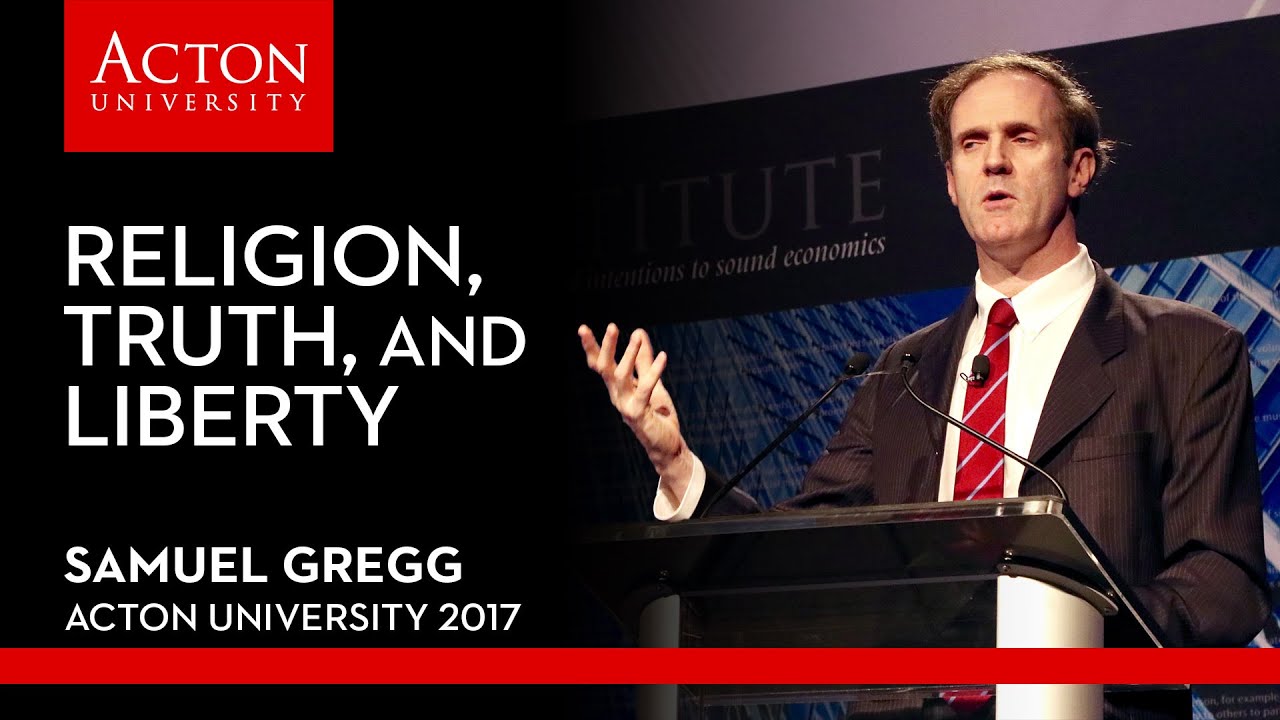
Great VIDEO @ActonInstitute – @DrSamuelGregg on threats faced by religious believers around the world

Here is a sample of the content of Acton University.

Description:

Samuel Gregg, Director of Research at the Acton Institute, delivers the opening plenary lecture of Acton University 2017 at DeVos Place in downtown Grand Rapids, Michigan. Gregg’s lecture focuses on the very real threats faced by religious believers around the world (and especially in developing nations), and the pressures that are increasing on religious liberty in western nations, which are often rooted in modern understandings of “tolerance.”

YouTube thumbnailYouTube icon

Posted in Modern Martyrs, The Coming Storm, The Drill, The Religion of Peace | Tagged , , ,
2 Comments

A (single) amusing Consistory note

Pope Francis held a consistory to create five new Cardinals.  A media rep sent out an explanatory email including the following helpful note:

The new Cardinals, according to the order of creation, knelt before the Holy Father who imposed on them the scarlet zucchetto (skull cap) and the cardinal’s beretta, followed by the presentation of the ring.  The Pope also assigned to each Cardinal a church of Rome as a sign of participation in the pastoral care of the Pope in the diocese of Rome. This was followed by the exchange of peace between the Pope and the new Cardinals.

I so very much hope that the beretta which the Holy Father gave to the new Cardinals is this one:

beretta_red

This is a nice one, in an appropriate cardinalatial color.  It has that Japanese tsuka-maki wrap that one prefers for one’s katana.  This is (of course you recognize it immediately) an M9… with spiffy modifications.   However, since these are stormy times in the Church, a better choice could have been the PX4-Storm.

And could that “ring” refer to the “center ring”?

For more on the important topic of the liturgical beretta see HERE.

For more the BIRETTA and how to use it (“birettaquette”) see HERE.

And, everyone, don’t let your priest be this guy.

biretta beretta

No, no… that won’t do at all.  Wrong wrong wrong… this time it is “beretta”!  Sheesh.

Please help with our ongoing BIRETTAS FOR SEMINARIANS (and for priests) PROJECT.

>>HERE<<


Posted in Lighter fare | Tagged ,
12 Comments