ASK FATHER: Is there an Archangel Uriel?

Michael

Michael

From a reader…

QUAERITUR:

My daughter asked me if I had heard of an Archangel Uriel. I believe only 3 are named in Scripture and we must be careful about a name that could be an evil spirit. Info online seems to indicate there is a Uriel.  Is he really an Archangel?

As you say yourself, from Scripture we know the names of three Archangels: Michael, Gabriel and Raphael.  There are other, apocryphal names of angels, but we are not to use them or invoke them.

That said, some Christians, Eastern Orthodox and Anglicans for example, invoke Uriel.  Ethiopian Christians, who accept as canonical the Book of Enoch (in which Uriel is mentioned) invoke Uriel.  The Catholic Church does not accept Enoch as canonical scripture.

Moreover, a council or synod (“walking together”) held in Rome in 745 with Pope St. Zachary, wanted to curb a growing over-emphasis in the veneration of angels.  Therefore, the synod reduced the officially recognized list of angels to Michael,Gabriel and Raphael, thus striking the names of others, found in apocryphal writings, such as Uriel.

So, it may be that Uriel is an Archangel.  I know that Michael, Gabriel and Raphael are because the Catholic Church invokes them.  We must be careful about all others.


Posted in ASK FATHER Question Box | Tagged ,
11 Comments

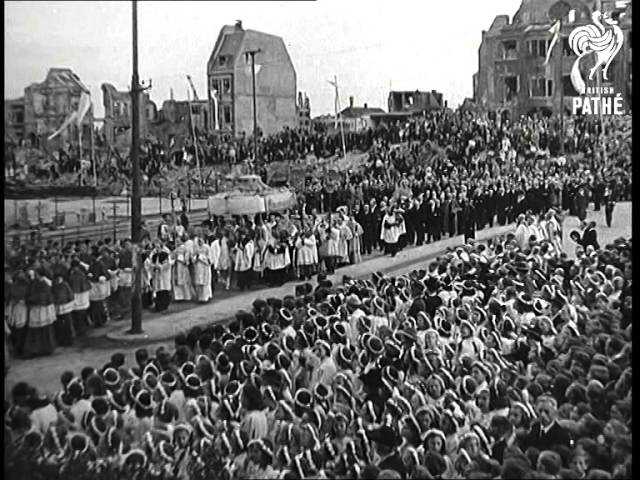
Corpus Christi in bombed out Cologne in 1947

No, no… everything is better now since the “reforms” of the liturgy and the way doctrine and law have been de-emphasized in the name of the spirit of Vatican II.  No.  Everything is so much better now… really… better.. it is…

YouTube thumbnailYouTube icon

That’s right… they’ve got nothing on us! What a vibrant and faithful Church we have now! The seminaries are full, convents are packed, confession lines are long. There are so many schools and hospitals being built. And try to count the wedding and baptisms! Well! I’m mean… wow… right?

Posted in Hard-Identity Catholicism | Tagged ,
14 Comments

URGENT PRAYER ALERT! The Four Cardinals of the Five Dubia ask an AUDIENCE

4 cardinals 5 dubiaFrom Edward Pentin at the faithful National Catholic Register (not to be confused with faithless Fishwrap):

Full Text of Dubia Cardinals’ [The Four Cardinals who submitted the Five Dubia] Letter Asking Pope for an Audience
The April 25 missive was hand-delivered to the Pope on May 6 but has received no response.

Edward Pentin

Here below is the full text of the letter, signed by Cardinal Carlo Caffarra on behalf of the four dubia cardinals, asking Pope Francis for an audience to discuss deep concerns over the Pope’s apostolic exhortation on the family, Amoris Laetitia (The Joy of Love).

The Holy Father has yet to acknowledge the cardinals’ written request. […]

“Most Holy Father,

It is with a certain trepidation that I address myself to Your Holiness, during these days of the Easter season. I do so on behalf of the Most Eminent Cardinals: Walter Brandmüller, Raymond L. Burke, Joachim Meisner, and myself.

We wish to begin by renewing our absolute dedication and our unconditional love for the Chair of Peter and for Your august person, in whom we recognize the Successor of Peter and the Vicar of Jesus: the “sweet Christ on earth,” as Saint Catherine of Siena was fond of saying. We do not share in the slightest the position of those who consider the See of Peter vacant, nor of those who want to attribute to others the indivisible responsibility of the Petrine munus. We are moved solely by the awareness of the grave responsibility arising from the munus of cardinals: to be advisers of the Successor of Peter in his sovereign ministry. And from the Sacrament of the Episcopate, which “has placed us as bishops to pasture the Church, which He has acquired with his blood” (Acts 20:28).

On September 19, 2016 we delivered to Your Holiness and to the Congregation for the Doctrine of the Faith five dubia, asking You to resolve uncertainties and to bring clarity on some points of the post-synodal Apostolic Exhortation, Amoris Laetitia.

Not having received any response from Your Holiness, we have reached the decision to ask You, respectfully and humbly, for an Audience, together if Your Holiness would like. We attach, as is the practice, an Audience Sheet in which we present the two points we wish to discuss with you.  [An Audience Sheet…]

Most Holy Father,

A year has now gone by since the publication of Amoris Laetitia. During this time, interpretations of some objectively ambiguous passages of the post-synodal Exhortation have publicly been given that are not divergent from, but contrary to, the permanent Magisterium of the Church. Despite the fact that the Prefect of the Doctrine of the Faith has repeatedly declared that the doctrine of the Church has not changed, numerous statements have appeared from individual Bishops, Cardinals, and even Episcopal Conferences, approving what the Magisterium of the Church has never approved. Not only access to the Holy Eucharist for those who objectively and publicly live in a situation of grave sin, and intend to remain in it, but also a conception of moral conscience contrary to the Tradition of the Church. And so it is happening — how painful it is to see this! — that what is sin in Poland is good in Germany, that what is prohibited in the archdiocese of Philadelphia is permitted in Malta. And so on. One is reminded of the bitter observation of B. Pascal: “Justice on this side of the Pyrenees, injustice on the other; justice on the left bank of the river, injustice on the right bank.”

Numerous competent lay faithful, who are deeply in love with the Church and staunchly loyal to the Apostolic See, have turned to their Pastors and to Your Holiness in order to be confirmed in the Holy Doctrine concerning the three sacraments of Marriage, Confession, and the Eucharist. And in these very days, in Rome, six lay faithful, from every Continent, have presented a very well-attended study seminar with the meaningful title: “Bringing clarity.

Faced with this grave situation, in which many Christian communities are being divided, we feel the weight of our responsibility, and our conscience impels us to ask humbly and respectfully for an Audience.

May Your Holiness remember us in Your prayers, as we pledge to remember You in ours. And we ask for the gift of Your Apostolic Blessing.

Carlo Card. Caffarra

Rome, April 25, 2017

Feast of Saint Mark the Evangelist

*

AUDIENCE SHEET [NB]

1. Request for clarification of the five points indicated by the dubia; reasons for this request.

2. Situation of confusion and disorientation, especially among pastors of souls, in primis parish priests.”

In primis, parish priests.

Pray, friends, pray.

PRAY.  Offer fasts and mortifications.  PRAY.

action-item-button

Posted in ¡Hagan lío! | Tagged , , ,
17 Comments

I’m cool about a certain popular devotion. Wherein Fr Z goes all ‘RAH!’

UPDATE: 22 June

I was alerted to nastygram at Path…eos by a, presumably young, lady whose name was unfamiliar to me – Rebecca Bratten Weiss. Rebecca took exception to what I posted, below, although I’m not convinced that she read it.  Or perhaps read it without reading into it what isn’t there.   Good luck to her.  I hope she gets over her anti-clericalism.  o{];¬)
Originally Published on: Jun 19, 2017

__

divine_mercyThe often inflammatory Maureen Mullarkey has written several posts about her discomfort with the Divine Mercy devotion and chaplet.

She makes the point that I would make: I LONG for Divine Mercy.  I would add that I long for it probably not knowing how much I truly need it and, were I to truly understand my need, I might quite simply die.  So, praying for it can’t be bad.  As a matter of fact, it is a sine qua non of my life.

That said: I can’t warm up to this devotion.  I’m a convert and I took to the Rosary as if I had said it all my life.  But this one… nope.  And I have asked myself why for years.

“But Father! But Father!”, some of you readers are asking along with the spittle-flecked nutty libs, “If you are Catholic you HAVE TO love this!  It’s just… the BEST!  I mean mercy is so… soooo…. Don’t you understand how wonderful it is?  It’s on EWTN!!! Do you really HATE VATICAN II?!? (‘YES! He DOES!’, shout the libs.)”

Sorry, I just can’t warm up to it.  And I prefer the Sunday after Easter to be Dominica in albis, just as it has always been.  Quasimodo Sunday.  Does that exclude “Divine Mercy” as a focus?  No, of course it doesn’t.  Don’t have a spittle-flecked nutty.

What is it that puts me off this devotion?  Perhaps it is that saccharin soul-annihilating chant with which the chaplet sung.  Please JUST KILL ME! Perhaps it is the dreadful art that goes with it. Alas, I can’t un-see it… with it’s pastels.  Perhaps it is the invasion of that dreadful art into sanctuaries, HUGE cheesy prints among the potted plants propped up near altars as if it were some equal fixture that I don’t care for.

And I even like some of that old fashioned, even sugary devotional art because – yes, it’s kinda corny – but it stems from true love.   I don’t mind the sweet stuff about Our Lady of Fatima or our Guardian Angels (though I picture them as something quite different).

To obtain mercy is there something lacking in the recitation of the Rosary?  Is there something missing in the devotion to the Sacred Heart?   They work for me, thank you very much.  They’ve worked for a loooong time.

Maureen has some choice quotes from her musings which, in part, give voice to some aspects of my lack of enthusiasm for the Divine Mercy chaplet (especially).  HERE and HERE and HERE

Namely…

  • As anecdotal evidence goes, there seem to be more Catholics uneasy with the Faustina engine—fueled as it is on syrup—than I had expected.
  • My essay said nothing about feminized priests. It mentioned only the painting of a feminized Jesus, cloaked in a gauzy haze and drained of virility.
  • Faustina’s visions conjure a feminized Jesus—a kitchen table Jesus drained of masculinity; one who feels, who talks about his feelings as a woman would. Worse, He Who spoke the universe into existence speaks to Faustina in the phrasings of a dime novel.
  • Ignatius of Loyola advised his followers to steer clear of women: “All familiarity with women was to be avoided, and not less with those who are spiritual, or wish to appear so.” The militant Ignatius, a “new soldier for Christ,” grasped something that we moderns in the West dislike admitting: A feminized Church is a weak institution. It puts soft devotions ahead of the Cross.
  • The words of Domenico Bartolucci (d. 2013), the last great Chapel Master of the Sistine Chapel Choir, resound more compellingly with each passing year:
    Gregorian chant was born in violent times, and it should be manly and strong, and not like the sweet and comforting adaptations of our own day. 
    What Cardinal Bartolucci said of chant and polyphony applies as well to our devotions. The Jesus of our devotional life should also be manly and strong. The grand nature of the Christian claim diminishes in any devotion—however popular—that depicts a plaintive Jesus who drops by with a fail-proof recipe for redemption. And who dramatizes his feelings the way a woman might.

Mind you, I have not made a detailed study of the writings of St. Faustina, but what I have read did not keep me reading eagerly.  I’m sure that there are some bits that are great and others that are not so great.

Perhaps the chaplet is more of a female thing than a male thing, I don’t know.  Maureen seems to think so, and, from what I gather from her tone, she doesn’t think that that’s good for the Church as a whole.   If I read her right, she thinks its popularity is a symptom of a feminized Church.

Is she right?

All I know is that I don’t care to use that particular devotion.  If other people want to, hey, great.   I know that men seem to like reciting the Rosary with other men.

And the “Combat Rosary” is sure a hit.

I wonder if my coolness is influenced by my old pastor and mentor the late and famed Msgr. Schuler.  Maybe he steered me away from this devotion.  He was right about the NeoCats and the Legion and several other things that have, over time, proven to be a bust.  Schuler didn’t have time for the Divine Mercy Chaplet.  The Rosary was good enough for him, as he would say.  I must say, if it was good enough for him, then it’s good enough for me.

“… then it’s good enough for me”, which reminds me of something.

We of the Church Militant could use a good march cadence, or better yet, a run to cadence chant.  Here’s an impromptu run to cadence chant for those of us sticking with the good old Rosary (the … stands for the gentle way that drill instructors have of suggesting, that, after they sing the verse, then, “If you don’t mind, would you please repeat it after me – if it isn’t too much trouble?”).  Imagine a drill instructor with a really good chant doing this…

DOUBLE TIMERAH!
HHHU!CATH’LIC!

Left right lay o…
A lo right a lay o…
A lefty right a lay o…
O YAH!…
OORAH!..
ROS’RY!…
Good for you…
Good for me…

Gimme that ol’ time Holy Ros’ry…
‘Cause it’s good enough for me.

It was good for Saint Dominic…
It was good for Louis de Montfort…
It was good for PADRE PIO…
And it’s good enough for ME!

REFRAIN: Gimme that ol’ time Holy Ros’ry…

It was good at the Battle of Vienna…
It was good at Muret…
It was good at Lepanto…
And it’s good enough for ME!

OORAH!…
O YAH!…
HOLY!…
ROS’RY!……

R!  [R!]- Roman prayers!…
O! [O!]- Out loud!…
S!  [S!] – Say it proud!…
A!  [A!] – Always clear!…
R!  [R!] – Recite it now!…
Y!  [Y!] – You should too!…

A left right left…
A lefty right a lay-eft…

OORAH!…
O YAH!….

The TEE.EL.EM.’s a rolling down the strip…
[Saint Ipsidipsy]’s gonna take a little trip…
Kneel down, face East, and bow your head…
Best thing you’ll ever do until your DEAD…
OORAH!…
O YAH!….
Cath’lic Cath’lic have you heard?…
We’re storming heaven ’til we get the word…
Up in the mornin’ in the drizzilin’ rain…
We’re saying the Rosary again and again….
TEE EL EM and Rosary to boot…
We’re squarin’ our pack and we’re loadin’ our shoot…
If I don’t do it like they do in Rome…
Then box me up and SEND ME HOME…
OORAH!…
O YAH!….

A lo right – a lo right a lay o…
Lo right – a lefty right a lo…
A  Lo right – a lo right a lay o…
Combat Rosary is ALL I KNOW…

OORAH!…
O YAH!…
HOLY!…
RO-SA-RY!…
COMBAT!…
RO-SA-RY!…

Every where we go-o…
People want to know-o…
How we pray-ay…
So, we tell them…
We’re the one’s with Rosaries you’ve heard so much about!…
We’re motivated, dedicated whenever we go out!…
People say we’re crazy for the Rosaries we use!…
We use Combat Rosaries so WHO THE HELL ARE YOU?…

Etc.

At least that’s how I hear it in my head.

I carry one of these super-strong Rosaries in my spare mag pouch! The Swiss Guards have them too!  For the story click HERE and HERE (esp. 18:00)

16_05_07_Combat_Rosary_ad

(It might be fun to do that run with the Swiss… I’m just sayin’ – ‘rah.)

Posted in "But Father! But Father!", Our Catholic Identity, Wherein Fr. Z Rants | Tagged
83 Comments

ASK FATHER: In confession, instead of Act of Contrition, Father asked questions

Artgate_Fondazione_Cariplo_-_Molteni_Giuseppe,_La_confessione 945From a reader…

QUAERITUR:

I went to confession at a nearby parish recently. This is the first time I’ve done confession with this particular priest. Obviously in a hurry to keep the confession line moving as quickly as possible, [bless him] the priest, rather than asking me say an Act of Contrition, asked me the following two questions:

Priest: Are you sorry for your sins?
Me: *caught off guard* Uh….yes.
Priest: Do you want to be a better man?
Me: …Yes
Priest: Then I absolve you of your sins in the name of the Father, Son, and Holy Spirit

While I’m sure the confession was valid given that he used the proper words of absolution (albiet he omitted most of the formula), is this an acceptable form of doing an Act of Contrition?

First, good for you for making use of the Sacrament of Penance.

Everyone… examine your consciences and GO TO CONFESSION!

Next, good for the priest for keeping things moving.  Just the other day I was hearing confessions during a Mass – LOTS of confessions.  The place I was usually has long lines and this was no exception.  I moved things along quickly and, happily, there were only a few less-than well-prepared ramblers.  People are really well-instructed at that parish.  However, by judiciously curtailing a few scrambled and agonized Acts of Contrition, and by starting the Form of Absolution as the pentitents confidently launched into their prayer, I was able to get in at least a half dozen more penitents before Holy Communion time for sure.  How frustrating it is for people to wait and wait and wait when the line is long and the clock is ticking.  Mind you, I make sure that everyone gets all their mortal sins out.  But I don’t chat.

FATHERS: For the love of God and penitent neighbor, save your sermons for the pulpit.

To the question: Is that an acceptable act of contrition?

Before a priest can give absolution, he should be morally certain that the penitent is sorrow for her sins and that she intends to amend her life.  If he is not morally certain, he can elicit clear statements from the penitent by means of a couple questions.  For example: “Are you truly sorry for your sins?”  It doesn’t have to be complicated.

Of course the classic Act of Contrition expresses sorrow for sin (contrition, based on love of God and/or attrition based on fear of punishment, less perfect than the former, but adequate) as well as a firm purpose of amendment.

EVERYONE: MEMORIZE a classic Act of Contriition!

It can also happen that once a penitent has stumbled once or twice over her Act of Contrition, the priest will simply put her out of her misery in trying to remember and ask a couple of questions, such as those which you were asked.

Also, a priest with two brain cells, empathy and some experience can tell when someone is sincerely penitent.

For my part, with those who stumble or who don’t know an Act, I will simply ask “Are you truly sorry for your sins?  Do you intend to amend your life (or “promise to stop doing those things” in the case of a little kid)?  Then I launch into the Form of Absolution (99% of the time in Latin).

Remember: The confessional isn’t The Rack.  When a person doesn’t know an Act of Contrition and you can tell that he is sorry for his sins, don’t torture himi by dragging some long Act out of them.  Two little questions and absolve.  It doesn’t have to be painful.

As far as omitting some or most of the Form of Absolution is concerned, consider the following.

Many priests will start the Form of Absolution before the penitent is entirely finished with his Act of Contrition because, by then, he has heard enough to be sure that the penitent is truly sorry and wants to amend his life.  Thus, sometimes all the penitent hears of the Form is the final, essential part.

If the priest says clearly and accurately the essential part of the Form, then the absolution is valid.

However, let’s stipulate that using the Form of Absolution, as published in official books, is a good thing.  Okay?  Sticking to the official Form is good because no priest on earth should ever want any penitent ever to wonder if he received absolution with the proper form.  This is SOOOO EASY!  Just Say The Black and Do The Red.  Right?

That said, I often use the older, traditional Form of Absolution rather than the new-fangled (and entirely valid) Form, especially when I am in the context of a traditional parish or Traditional Mass during which confessions are being heard.  Makes sense, right?

The older Form includes explicit words by which the priest, to the extent that he can and to the extent that it is needed, lifts any censure that the penitent might have occurred.  Therefore, it is important that the priest say the whole Form of Absolution (unless there is a really good reason not to).

The newer Form doesn’t have those aforementioned explicit words about censures.  Instead, the newer form gives a little homily which, though nice, doesn’t effect anything except, maybe… rarely… a good feeling or two.

Good feelings are great, okay?  But there is a striking difference between the mindset of the older and of the newer forms.

Here’s the newer form:

God, the Father of mercies, through the death and resurrection of his Son has reconciled the world to himself and sent the Holy Spirit among us for the forgiveness of sins; [mini-sermon ends here] through the ministry of the Church may God give you pardon and peace, and I absolve you from your sins in the name of the Father, and of the Son, + and of the Holy Spirit.

Nice, right?  And entirely valid.  First we tell a nice story and then we absolve the penitent.

Here’s the older form usually delivered in Latin:

May our Lord Jesus Christ absolve you; and by His authority I absolve you from every bond of excommunication (suspension – for clerics) and interdict, so far as my power allows and your needs require. Thereupon, I absolve you from your sins in the name of the Father, and of the Son, +and of the Holy Spirit. Amen.

Note the difference: Mini-Sermon v. Orderly Business

The mini-sermon in the newer form adds nothing to the validity of the absolution.  The stuff about censures and faculties in the older form does add something, insofar as the priest lifts anything that would prevent the person from receiving the absolution properly.

These days, NB, the Church says that in the newer form the censures are lifted with the absolution, so there is nothing to worry about that.

Different ways of seeing things: one quite orderly and explicit, the other is less concerned with all that stuff.

BUT WAIT! There’s more!

In the older, traditional form, after giving absolution the priest usually adds in the vernacular the following consoling prayer:

May the Passion of our Lord Jesus Christ, the merits of the Blessed Virgin Mary and all the saints, the good thou has done, and the ill thou has endured profit thee unto the remission of sin, increase in grace, and reward in eternity.  Amen.

Nice, huh?  So, I guess the older form isn’t cold and mean and only business like after all.

But back to the issue at hand.

Yes, sometimes the priest will elicit expressions of sorrow and amendment by questions.  That’s okay.

Yes, sometimes the priest will omit part of the Form and cut directly to the entirely valid and essential part of the Form.

Posted in "How To..." - Practical Notes, ASK FATHER Question Box, GO TO CONFESSION | Tagged , ,
17 Comments

UPDATED: A great Father’s Day note from a reader

UPDATE 19 June:

Today I have received notes from readers saying that they have spotted this Prayer For Vocations in a couple other places as well.  A comment in the combox, below, speaks of one of them. To wit:

[T]he Diocese of Fall River (MA), at the direction of Bishop da Cunha has specified that this prayer, along with the Leonine sequence, be prayed after each Sunday obligatory Mass before the recessional hymn…and there are prayer cards in the pews to help jog the memory.

The place where it was done, with great effect, at St. Agnes all those years was after the Gospel and before the announcements and sermon.  But, hey!  Once this prayer is prayed often by a full and kneeling church, I’m confident that it will obtain many graces and vocations.

And let it be prayed as is.

And the Leonine Prayers!  Do I hear an “Amen!”?

It is such an easy thing to implement.

___ Originally Published on: Jun 18 2017

Here a great message for Father’s Day.

Happy Father’s Day. Thank God for your spiritual fatherhood.

I’m writing to report good news. Some weeks ago, I shared with my pastor your most recent post about your home parish of St. Agnes’ regular recitation of Archbishop Brady’s Prayer for Vocations (HERE). He was receptive, having had just preached on vocations. He asked for my help with the endeavor, and I agreed, but then I didn’t hear any more and assumed nothing would materialize.

At this morning’s Mass, not only did Father express his desire for 24 hour Eucharistic Adoration in the parish, but he also lead us in the Prayer for Vocations and said we will pray it every Sunday. This is also significant because our parish has a high number of visitors from across the country who will now be exposed to the prayer.

Attached as proof is a picture of the prayer, which was printed and affixed to the inside cover of OCP’s Music Issue (making it the most useful part of the entire book). Hopefully I can assist with a more permanent, dignified solution.

Thank you again for your ministry. Family, friends and I made the trip from Estes Park to Littleton when you were preaching the 40 Hours devotion at Our Lady of Mt. Carmel in January. Unfortunately we weren’t able to meet; perhaps another time.

Here is the pic of the prayer.

17_06_18_prayer_pic

The original holy card, which I prize.

20131210-104023.jpg

20131210-104032.jpg

Posted in Just Too Cool, Priests and Priesthood | Tagged , ,
4 Comments

CH: “Cardinal Kasper chases the spectre of Luther”

Screen Shot 2017-06-19 at 11.21.38As you may know by now, the Catholic Herald is the UK’s best Catholic weekly.  This week in the print and online digital edition there is a review of a new book – released in time for this year’s LutherFest!   

I can’t fathom why some Catholics want to celebrate the rending to shreds of Christendom, but… hey.

Mind you, I am not recommending the book I am about to mention, written by Card. Kasper. I recommend the review.  I have another LutherFest book in mind for you, which I will mention at the bottom of the present.  Now the review with my patented treatment:

Cardinal Kasper chases the spectre of Luther.

Can Catholics reclaim the reformer? Why bother asks Fr Alexander Lucie-Smith

Martin Luther
An Ecumenical Perspective
By Walter Kasper
Paulist Press

This slim volume weighs in at a mere 43 pages, some of which are not completely covered in text, and consists of seven very brief chapters, all with notes. To read it is the work of about half an hour. So, it is more a pamphlet than a book, and crafted as an academic essay, given the copious references.
Any approach to Martin Luther is going to have to take account of two things. The first is the historical situation in which the reformer emerged, while the second is his theology, as it appeared then, and as it appears now; for the interpreted Luther of today is rather different to the Luther of the 16th century.
When it comes to the historical setting, Cardinal Walter Kasper talks rather grandly of “a transitional period of decline and new beginnings”, but he presents this with such broad brushstrokes that we learn little that is new, and want to say “yes, but” at the end of most sentences. [As with most of the Cardinal’s writings, I think.]
Kasper sees Luther as someone “greatly out of season” and tells us that “his agenda cannot simply be derived from the situation at that time”. This is pretty doubtful. How does Luther stand out as any different to Jan Hus or John Wycliffe? The answer, of course, is that Luther benefited greatly from the febrile political situation of his time, and the support of the German princes in particular, as well as from the invention of printing.
With a similar political wind behind them, Hus and Wycliffe might have made an equal impact. Kasper is loath to admit the pivotal role played by the princes, or to admit that Luther deliberately threw in his lot with them, rather than the radicals. He also completely ignores Luther’s rabid anti-Semitism, which surely marks him out as what he essentially was: a German nationalist of a particular type.
[QUAERITUR…] But what of Luther’s theology? The cardinal is eager to paint Luther as a reforming Catholic rather than a reformer, at least in the early part of his career, but this rather ignores the reception of Luther by Lutherans in subsequent ages.  [Indeed.  Tell a committed Lutheran that Luther remained Catholic and really wanted people to remain Catholic but in a reformed Church.]
Moreover, he sees Luther’s theology of the Church as something that arose thanks to the alliance with the princes, which Luther himself saw as only temporary. That may be the case, but, as with a work of literature, authorial intention is irrelevant.
The early Luther did not want to create schism, but to reform the Church from within. True enough, but the Lutheran confession we ended up with tells us something about the inevitability of historical development, and theological development too. It was no accident that Luther was identified as a heretic early on, and excommunicated. [I always venerate the tomb of Leo X when I visit Rome.] The Catholic Church was completely correct in identifying the trajectory of Lutheran thought.
Kasper might like to dwell on Luther as he might have been, [!] but history and theology consist in what has been, and what cannot be undone.
And what of the chances of ecumenism today, which is Kasper’s main theological interest? According to him, things have moved on with the advent of Pope Francis who “describes ecumenical unity no longer in terms of concentric circles around the Roman centre point, but rather in terms of a polyhedron, that is, a multi-surfaced shape that is not a puzzle constructed from many pieces, but rather is a whole entity.
If we think of it as a precious stone, it reflects the light which falls upon it in a wonderfully variegated way.” [“wonderfully”… I demure.]
That sounds all very nice, but what does it mean in practice? This strikes me as the sort of language and imagery that gives theology a name for obfuscation and obscurity. It is an image that has no correspondence with reality. For what is it an image of?

[NB] At no point in this short book does Kasper ever really give us any revealing insight into Luther or the future of ecumenism. He tells us that the 500th anniversary of the Reformation could be a new opportunity for both Catholics and Protestants. But nowhere does it emerge what this might mean beyond the realm of words and the opportunity to write volumes such as the present one.
In addition, the book has been translated from the original German with a literalness better reserved for Holy Writ. It is irritating and misleading to use the term “office” when what you mean is either orders or ministry. Language counts, as every theologian should know.
By no stretch of the imagination is this a good book, and one wonders if the publishers would have bothered with it if its author were not a Prince of the Church.

“By no stretch of the imagination is this a good book….”

Paulist Press could have been an additional hint.  Right?

A very good book, on the other hand, is a set of essays on Luther, recently published by the increasingly esteemed Angelico Press.

Luther and His Progeny: 500 Years of Protestantism and Its Consequences for Church, State, and Society

US HERE – UK HERE

IMG_1917

To give you a sense of the thrust of the book, the Introduction is entitled: “Half a Millennium of Total Depravity (1517-2017): A Critique of Luther’s Impact in the Year of His ‘Catholic’ Apotheosis”.  This is not an unqualified “RAH! RAH! FOR THE REFORMATION!”

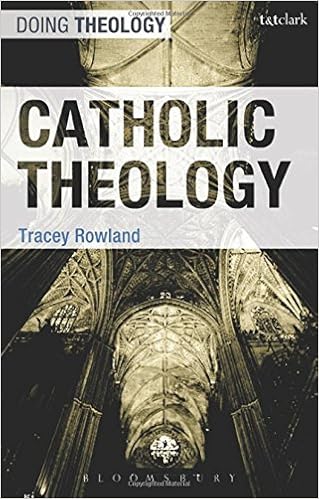
I wish that I had 30 copies of this, to give to the seminarians and deacons of the diocese in August.  Instead I chose Tracey Rowland’s terrific new book Catholic Theology.  

US HERE – UK HERE

The moderation queue is, of course, ON.

Posted in REVIEWS | Tagged ,
9 Comments

More concerning the alleged “commission” to reinterpret ‘Humanae vitae’

Humanae-VitaeAndrea Gagliarducci has a thought provoking offering for his weekly Vatican Monday.

He raises the question of who will defend the legacy, the magisterium of Pope John Paul II.

He writes about the Left, liberal sex-obsessed agenda: Humanae vitae and those issues that devolve once sexual activity is separated from procreation and marriage.

Remember: HV was Paul VI.  But John Paul II was the stalwart defender of HV.  Through attacks on the HV the whole of the magisterium of John Paul II was targeted.

Of course, before anyone burbles that we can’t reduce the magisterium of John Paul solely to sexual issues, let’s stipulate that we can’t reduce the magisterium of John Paul solely to sexual issues.  No one would do that unless they were attempting a ridiculous ploy to derail the discussion.

Nevertheless, elements hostile to HV are coming into prominence during this pontificate of Pope Francis, those who are willing to use this pontificate for their own ends.

The other day I said (HERE) that the alleged (according to Marco Tosatti and Roberto de Mattei) commission set up by Pope Francis to reinterpret HV, is not really a commission nor is it set up by Pope Francis.  I believe, with respect, that Tosatti and de Mattei got it wrong.

As I said before, this isn’t an official group, but that doesn’t mean it isn’t dangerous.

Via Gaglarducci,

[Msgr. Gilfredo Marengo – member of the alleged commission and instructor at the JPII Institute] denied any “imaginary reconstruction” concerning a commission to reinterpret Humanae Vitae. “Certainly,” he said “I don’t think the theme of a reconciliation of Humanae Vitae and Amoris Laetitia is part of the current agenda. I find it dangerous to invent responses to useless questions.” [Right now I don’t believe that, but… keep going…]

And also,

However, the group allegedly gathered around him is not a commission appointed by Pope Francis. It is mostly a study group, and it is likely they will come out with a paper on the issue. If this paper is published, it will have an impact. [As I said, it will be dangerous.]

According to Corrispondenza Romana, the study group involves Msgr. Pierangelo Sequeri. Another member of the group is Professor Philippe Cheneaux, a well-known authority on the history of the modern Church. Msgr. Angelo Maffeis, President of the Paul VI Institute in Brescia, is also working with the group.

It would not be a commission, then, but a research group. The final aim of this research would be to give a new perspective on Humanae Vitae, 50 years after its promulgation. Pope Francis is apparently not the initiator of the project. He was informed of it, however, and he encouraged it, according to the principle that has always distinguished his pontificate.

So, let’s be clear.  Something is afoot, but it isn’t wearing the shoes people think it wears.

When I say that it isn’t a commission, but it is dangerous, take a look at this insight in Andrea’s piece:

In the end, papal addresses in “light” documents – not encyclicals, but apostolic exhortations – are exploited in order to generate a “habit of thought” that can then take root[“habit of thought”] in the same way that the rationale of discernment has always been followed, since a confessor is hardly unable to understand when the sin is a voluntary one and when it is not, or when a sinner has repented and when he has not.

The Pope’s words are then employed in other publications, and their authors seek the Pope’s backing. This happened, for example, with the interpretation of Amoris Laetitia published by some Argentinian bishops: the Pope’s document was given a very progressive interpretation, but the bishops took cover behind a letter from the Pope that approved their rationale.

This is how the propaganda machine works. It is a complex mechanism, as it involves people outside of the Catholic Church. But they are good allies. No one speaks about those words of Pope Francis that condemn ideological colonization and gender theory while they also commend the natural family. Instead, Pope Francis’s less controversial themes are emphasized, such as the war on poverty and human trafficking. Pope Francis never takes a sharp position. He has always maintained that he wants to evangelize via attraction, and controversies are really not attractive.

But the agenda goes beyond this limited goal, and targets St. John Paul II’s thought – 27 years of a pontificate that marked an era in the appointment of bishops and the establishment of a Catholic culture. The final aim seems to be the nullification of St. John Paul II’s thought.

Andrea goes on to describe how the Lateran University’s John Paul II Institute on Marriage and Family will be enervated by fusing it together with the Lateran’s Institute “Redemptor Hominis” for “pastoral theology” (whatever that is).  As Andrea points out, “pastoral theology” is “a subject that has often been compartmentalized away from pastoral care, as if the latter needed no theological foundation.”

There is a huge war going on in the Church right now.  It has been going on for a long time, but it is heating up.  Those in the liberal ascendency are pitting “pastoral” against “intellectual” etc.  They instrumentalize less than clear statements of the Holy Father to further their agenda.

Another note to think about.  Remember that the bishops’ conference in Poland paid for the translation and the publication of The Five Cardinals Book™, Remaining in the Truth of Christ: Marriage and Communion in the Catholic Church (now in 10 languages).  This most important book (which I am told sound priests are using in their marriage preparation work) was sent to all the members of the 1st Synod (“walking together”) on the Family.  When the organizers of the Synod learned what was in those postmarked envelopes they confiscated them (thus breaking postal laws).

Early on the Polish bishops sniffed out what was in the air: the nullification of the magisterium of their beloved John Paul II.  Notice that they took a strong stance regarding chapter 8 of Amoris laetitia and, having concluded that AL doesn’t change the Church’s teaching, will not give Communion to the divorced and civilly remarried.  But step across the border into Germany and you have quite a different situation.

US HERE – UK HERE

This is an important book.

Don’t forget Edward Pentin’s  The Rigging of a Vatican Synod (aka The Smoking Gun Book™.) UK HERE. This is an e-book – not published in paper.  Don’t have a Kindle yet?  Get a Paperwhite HERE.  Kindle Fire HERE.  UK buy a Kindle HERE. You can also read online.


Posted in The Coming Storm, The Drill, The future and our choices | Tagged , , , ,
10 Comments

” We quickly turn the page, looking for novelty while unable to retain memories.”

The Holy Father decided to transfer the Mass of Corpus Christi and the Procession from the Lateran Basilica to St. Mary Major from Thursday – when it has always been celebrated – to Sunday.  I wasn’t consulted, but I think that that was not a particularly good decision: Rome needs the witness on a weekday.  I am sure that the Left is pleased with this new development and I doubt that this or the next Pope will get Thursday back again.  Alas.

That said, today His Holiness went to his cathedral church for Mass and the procession.  He has a new crozier.

The whole video is HERE.   The procession portion begins at about 1:17:15.  It is always interesting to see the various habits of confraternities, etc.  Try not to drown in syrup-music.

The aforementioned crozier.

Screen Shot 2017-06-18 at 22.46.54

Screen Shot 2017-06-18 at 22.51.09

Nope.  It doesn’t work for me.

I read that this watchyacallit is 170 cm long and weights 3,5 kg.  It was given to His Holiness by steelworkers in Genova, Italy, where he is scheduled to visit on 27 June.

Meanwhile, in his sermon the Pope said:

Remember.  Memory is important, because it allows us to dwell in love, to be mind-ful, never forgetting who it is who loves us and whom we are called to love in return.  Yet nowadays, this singular ability that the Lord has given us is considerably weakened.  Amid so much frantic activity, many people and events seem to pass in a whirl.  We quickly turn the page, looking for novelty while unable to retain memories.  Leaving our memories behind and living only for the moment, we risk remaining ever on the surface of things, constantly in flux, without going deeper, without the broader vision that reminds us who we are and where we are going.  In this way, our life grows fragmented, and dulled within.

Too true.  This is one of the reasons why we must reclaim and foster our heritage, our patrimony of sacred liturgical worship.

Also, I trust that the Holy Father’s knees or other joints are not giving him too much distress.  It seems that he didn’t choose to use the kneeler provided for him either at the Lateran or at St. Mary Major.

Screen Shot 2017-06-18 at 23.13.17 Screen Shot 2017-06-18 at 23.15.13

Beautiful altar at St. Mary’s.  Note the image of Our Lady, Salus Populi Romani in the background.

In the past, Benedict XVI was able to kneel.  Note how they drape the cope over the kneeler like the old talamo.

12_06_07_B16_CorpusDomini_01 12_06_07_B16_CorpusDomini_02

Screen Shot 2017-06-18 at 23.51.26

Eventually, John Paul would sit for at least part of the procession.

The video of today’s procession gives you quite a few great views of that area of Rome.

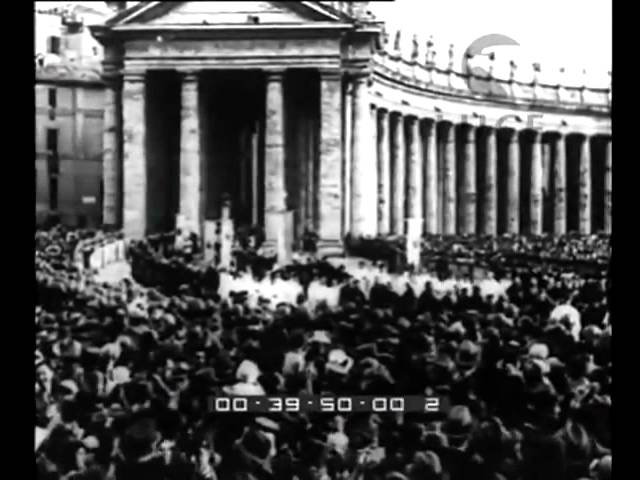
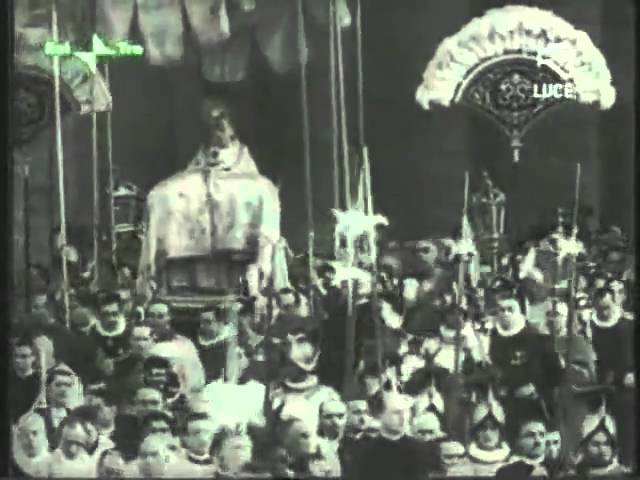
Speaking of the old talamo and Eucharistic processions and the importance of memory

YouTube thumbnailYouTube icon

YouTube thumbnailYouTube icon

The moderation queue is ON.

Posted in Liturgy Science Theatre 3000 | Tagged ,
12 Comments

The Church of England… whither? Fr. Z again offers his solution.

The late Fr Richard John Neuhaus once quipped that the purpose of the Anglican Communion was to make irony redundant.

From the Daily Mail:

Church of England chief backs ‘re-christenings’ after sex changes: Officials risk furious backlash by introducing ‘services of welcome’
Church of England suggests offering transgender Christians re-christenings
Move is believed to provoke a furious backlash among some traditionalists
Last year committee said rules that might stop people changing sex should be abolished

The Church of England yesterday suggested it will offer transgender Christians ‘re-christenings’ with their new names.
Vicars cannot [yet] re-baptise those who have changed sex but could use existing ‘services of welcome’ to announce a new name before God, the most senior official said.
The advice is likely to be endorsed next month by the Church’s parliament, the General Synod.
It will ease pressure on Archbishop of Canterbury Justin Welby from liberals who want to see the church’s conservative rules on sex and marriage swept away. But it is likely to provoke a furious backlash among some traditionalists. [Riiiight.]
The CofE’s most senior official, Synod Secretary General William Nye, said in a paper sent to Synod members: ‘It is a fundamental belief of the Church that baptism can only be received once. [For Now.]
‘There is therefore no possibility of the Synod approving a form of service for the re-baptism of transgendered persons in their new gender who have already been baptised.’ But he said the CofE can have no objection if they want to have an ‘Affirmation of Baptismal Faith’ service in a new name.

[…]

Yet. There is “no possibility of the Synod approving a form of service for the re-baptism”… yet.

It’s only a matter of time.

When your church – rather, ecclesial community – is locked into the State, it follows as the night the day that the ecclesial community’s doctrine and practice will eventually conform to the special groups who control and sway government, entertainment, etc. The Church of England…rather the Ecclesial Community of England is locked into the state as the religion of the state.

Why do I write “Ecclesia Community of England”?  More on that HERE

This sounds like it’s right up the alley of certain groups and certain Jesuits in the Catholic Church.

Hence it is time for me to call once again for the Anglicans at long last – at very long last – to issue their groundbreaking and courageous document

Romanorum coetibus!

A few years ago, the Pope of Christian Unity, Benedict XVI, gave us Anglicanorum coetibus by which former Anglicans are welcomed into the Catholic Church and they can retain their heritage.  Their ranks are growing and they are exercising a wonderful enrichment of the whole Roman Church.

Even more urgent today is the need for the Church of England to issue their own document Romanorum coetibus, by which they can welcoming into their “ecclesial community”, all the dissident Catholics who, rebelling against the Magisterium, desire to keep their most treasured customs.  There in the embrace of the Anglicans they can have their clay pot chalices and burlap banners, their ditties and rainbow stoles, free from the interferences of patriarchal oppression… or now fixed genders or sexes!  Under Romanorum coetibus these folks could maintain their cherished 60’s music progress to the ordination of women and openly – more openly pray to the earthmothergoddess… all without the spirit-repressing domination of masculine and gender particular Rome! When everything is a moving target, then by golly it’s the C of E for you.  What a great contribution those newly rechristened Anglicans could offer!

And pleeeeese take the Fishwrap with you?

Hey! Think of the great healing gesture it would be for certain Jesuits to join the C of E, especially after the C of E killed all of those old fashioned Jesuits… which it’s water under Lambeth Bridge, ain’t it, as Preserved Killick would put it.

I only want them to be happy.  After all, who am I to judge?

Posted in Liberals, O'Brian Tags, Preserved Killick, The Coming Storm, You must be joking! | Tagged , , ,
14 Comments