Same-sex marriages, and then polygamy, and then…

Same-sex approval in law will lead to all sorts of aberrations from nature.  Ultimately, I think the true goal is elimination of the age of consent.  Meanwhile, the erosion continues.

For example, from Fox411:

‘Sister Wives’ family cites gay marriage ruling in polygamy case

SALT LAKE CITY – A polygamous family says the landmark U.S. Supreme Court ruling legalizing same-sex marriage shows that laws restricting consensual adult relationships are outdated, even if certain unions are unpopular.

Kody Brown and his four wives argue in court documents that their reality TV show “Sister Wives” shows polygamous marriages can be as healthy as monogamous ones.

“The Browns were investigated and no crimes or harm was found in their plural family,” attorney Jonathan Turley wrote in court documents filed Wednesday in front of the 10th Circuit Court of Appeals. He has said the family is prepared to take the legal fight to the U.S. Supreme Court if necessary.

The Browns are defending a legal victory they won in 2013, when a federal judge struck down key parts of Utah’s law banning polygamy. Advocacy groups for polygamy and individual liberties called the ruling a significant decision that removed the threat of arrest for the state’s plural families.

Utah Attorney General Sean Reyes appealed, saying courts have long upheld laws banning polygamy because they prevent abuse of women and children.

Unlike same-sex marriage advocates, the Browns are not seeking full legal recognition of polygamous marriages. That portion of Utah’s bigamy law prohibiting multiple marriages license was left in place by U.S. District Judge Clark Waddoups when he decided that a provision of the state law forbidding cohabitation violated the family’s freedom of religion.

In most polygamous families, the man is legally married to one woman but only “spiritually married” to the others.

The teaching that polygamy brings exaltation in heaven is a legacy of the early Mormon church, but the mainstream Salt Lake City-based Church of Jesus Christ of Latter-day Saints abandoned the practice in 1890 and strictly prohibits it today.

The next step, I suppose, is to introduce some pets into the happy fold.

Posted in One Man & One Woman, The Coming Storm, The future and our choices | Tagged , ,
38 Comments

Huge petition askes Pope Francis for clarity about marriage

I saw this at Breitbart, in which your writer was cited. My emphases and comments:

POPE UNDER PRESSURE AS HALF A MILLION CATHOLICS URGE HIM TO REAFFIRM TRADITIONAL MARRIAGE [I’ll bet there are a lot more.]

More than 500,000 Catholics, including many senior clerics, have signed a petition calling on Pope Francis to reaffirm traditional teaching on marriage and the family after months of confusion over his supposed liberal stance on the issue. [Part of the problem arises from the fact that we often don’t know what the Pope is thinking.  Frankly, I don’t think he would try to change the meaning of marriage… apart from the fact that he really can’t, can he?]

The petition, which was started by U.S. conservative group TFP Student Action, calls on the Pope to “clarify the growing confusion among the faithful” at October’s Synod of Bishops and “implores” him to “prevent the very teaching of Jesus Christ from being watered down”. [The issue is confusion, surely.  The confusion is being created especially by Germans.  We shall see if the Holy Father tamps it down.]

The group accuses “dissident Catholic pressure groups” of attempting to subvert Church teaching on marriage, [yes… that is what they are doing] saying: “They are bombarding the Holy Father and the Synod Fathers right now with messages of revolt against traditional moral values as they clamor for “change, change, change” inside the Church.”

The petition has been signed by five Cardinals as well as numerous bishops and archbishops from across the world. Other major figures who signed the petition include former US senator Rick Santorum.

In October, bishops from around the world will meet in Rome to discuss the role of the family in the modern world and make recommendations to the Pope about how he should approach issues such as divorced and remarried Catholics.

Pope Francis has been noted for his statements that make him appear to support a liberal line on various social issues, most famously when he said “Who am I to judge?” when asked about a supposed gay lobby within the Vatican.

As Catholic blogger Father Z points out, however, nothing he said changed or violated Church teaching on the issue:

If they “accept the Lord”, and “have goodwill”… pretty clearly meaning, “if they are trying to live a good Christian life”, which involves continency and chastity, then I can’t point a finger at them and say they are evil, etc. “Who am I to judge?”, depends on what went before in the same sentence. It does not mean, “Anyone can do anything and we don’t have a right to make a moral judgement.”

Some liberal bishops have also suggested the Church should permit divorced and remarried Catholics to receive Holy Communion under certain circumstances, but such a move is likely to face strong opposition, especially from non-Western bishops. [At least from non-Germans!]

TFP Student Action director John Ritchie said: “After Ireland and the US Supreme Court both approved same-sex marriage, a strong reaffirmation of Church teaching could save the sacred institution of marriage. The Catholic Church is the centre of history. It is the moral compass of the world. As the Church goes, so goes the world.

The Synod is coming and already some people are experiencing Synod Fatigue.

We have to stay focused on the Synod, even though it is going to get pretty tedious, under the onslaught of articles and books that are coming.

Stay the course.

Posted in ACTION ITEM!, Francis, One Man & One Woman, Our Catholic Identity, Synod | Tagged , ,
14 Comments

How St. Augustine came to be in Hippo

St. Augustine was born and raised in the North African backwater of Thagaste, in what is today northern Algeria.  He studied in Carthage.  He worked and was baptized in Milan.  He returned to Thagaste.

How did he wind up in what became modern day Annaba, Hippo Regius?

Here with the help of the best biography of Augustine I have read, by Serge Lancel, is a description of how Augustine was made a priest of Hippo.

BACKGROUND: Augustine had been a Manichean, had gone to Milan for a position as imperial orator, had converted and, once baptized by Ambrose, returned – as mentioned above – to N. Africa. He started a monastic community in his home town of Thagaste.

Augustine began to recruit for his community, traveling and interviewing likely candidates. Augustine would avoid towns which had no bishops, for he feared being constrained to remain and to be consecrated.

Then Augustine traveled to Hippo to interview a fellow who had been in the Imperial secret service (an agens in rebus).  The rest is history.

In what follows, from Lancel’s Augustine,  (pp. 150 ff) (emphasis mine).

Passing through Hippo to meet a friend who wanted to talk to him about his monastic vocation, [an agent in rebus!] Augustine had had to prolong his stay, as we have seen, because of the man’s wavering. There he attended church and took part in the services without keeping on the alert, since the bishopric was duly provided with a bishop. But he, Valerius, was old; Greek by birth, he was a mediocre speaker in Latin and knew no Punic at all, though it was a good thing to know at least a few words to use with the rustic faithful, who spoke the remnants of Carthage’s ancient language, very much bastardized, as a kind of patois. In a text from this era, Augustine records a detail about his bishop which is very significant in this respect: in a conversation between peasants Valerius had heard the word salus – or at least something near it – and had asked one of them who also knew Latin what the word meant; he had answered ‘three’ (tria), and Valerius had gone into ecstasies over the remarkable meeting, between one language and the other, of “salvation” and the Trinity!

AugustineMoreover, the Christian community headed by Valerius was not in a good position at this time. The Manichaeans prospered at Hippo, under the leadership of a “priest” named Fortunatus, whom Augustine had known previously at Carthage when they had been co-religionists in the sect, and whose clever proselytism had won followers among the town’s citizens as well as in the little foreign colony. At the same time, the community itself was divided: the Donatists there were in a strong position, and their bishop, Faustinus, was able to indulge in a gesture as serious and symbolic as forbidding bakers to cook bread for the Catholic minority. Valerius clearly lacked the stature to stand up to them, even less to put the situation right. Was Augustine unaware of this state of affairs? The faithful of Hippo, for their part, were only too conscious of it, and when the old bishop declared in his sermon that he needed a priest who was capable of helping him, there was a unanimous shout from the congregation. Immediately recognized, surrounded, dragged into the apse to the bishop in his chair, Augustine was ordained priest forthwith.

He had not been able physically to oppose this enforced ordination. He burst into tears and, Possidius recorded later, some of the congregation mistook the meaning of his tears, seeing them as chagrin for entering the clergy through the back door, instead of acceding directly to the episcopacy! Assuredly, those tears had quite a different significance; as Possidius also says, setting down what Augustine later confided to his friends, looking ahead to his almost inevitable elevation to the position of bishop, “he had the premonition of the multiplicity and immensity of the perils that the guidance and government of a church would bring to bear on his life.” Here again, even though Hippo was not Milan, the image that came to his mind, symbolic of such a heavy burden, was that of Ambrose, whom he had seen to terribly busy, faced with such important responsibilities. But there was still something else at the root of the knot of anguish which had formed in his heart; such a rude change of destiny implied a farewell to what had been his considered aspiration, since Milan and Cassiciacum in 386, of which the deificari in otio, of course, in his letter to Nebridius told of his strong spiritual need, a life of the spirit and of prayer in a monastic setting, which did not rule out serving others but did not put it in institutional terms. In the evening of his life, making an appraisal of it in a sermon to those people to whom he had devoted his life, the bishop says: “I had said farewell to all worldly hopes, and what I might have been I no longer wished to be; but by no means did I seek to be what I am.” On that day early in 391, with a few fine books already behind him, but with an immense work in gestation in his head, he knew that henceforward days would no longer suffice, and that night vigils would have to be added to daily work: in die laborans et in nocte lucubrans, as Possidius would write.

Augustine already had a pretty sound theological training, and ran no risk of finding himself actually in the situation Ambrose had experienced, of having to learn while teaching, but he was aware that Valerius had appealed to him particularly for the ministry of preaching. And for that first time in his life, someone who know how to speak before the high and mighty of this world, address a cultivated public, correspond with people who were more or less his peers, now had to envisage speaking before the lowly of Hippo, before fisherman (piscatores) who were also sinners (peccatores), for whom Christ had come more than for philosophers and the erudite, and whom he had to reach with their own words. He had already been reproached for the difficulty of understanding certain of his works; besides complementing his scriptural reading, he needed to learn to speak in simple terms – ad usum populi – of things as complicated as the soul, God or the Trinity. Only just ordained, he asked for leave, for both study and meditation.

The letter he addressed to his bishop was preserved. Nothing, he says first, is more satisfying than the office of bishop,priest and even deacon, but nothing is more srethced than to perform it for the vainglory of the social status that accompanies it. And nothing is more difficult than to do it when fully conscious of the lofty mission entrusted to a bishop, priest or deacon. He continues:

I was ordained when I was thinking of giving myself time to get to know the divine Scriptures, and I had made my arrangements so as to benefit from the otium necessary for his negotium. And, to tell the truth, I did not yet know what I lacked for this task, which now torments and crushes me … Perhaps your Holiness will object: “I would like to know what is missing in your education.” My reply is that the things I don’t know are so many that I could more easily enumerate those that I know than those I would like to know. I would dare to say that I know and hold with firm faith what concerns my own salvation; but how could I make use of this knowledge for the salvation of others, “seeking not what is useful to me but what is useful too the greater number for their salvation” (cf. 1 Cor. 10.23)? and perhaps, or rather without any doubt, there are counsels written in the holy books which, by knowing and meditating upon them, the man of God may improve his service in ecclesiastical matters and even, in the hands of sinners, either live without failing his conscience, or die, but without losing the only life that is worth Christian hearts sighing for, in humility and meekness. But how could that be obtained except as the Lord himself says: “by asking, seeking, knocking at the door” (cf. Matt.7.7; Luke 11.9)? That is to say, by means of prayers, reading and tears. It is with this aim that I wanted to ask my brothers to obtain from your very earnest and venerable Charity a little time, just until Easter, which I now desire and hereby request.

Augustine obtained a few weeks’ liberty from Valerius. Perhaps not quite until Easter, which fell that year on 6 April, for there is at least one sermon delivered by the new priest included in the series of “quadragesimal” catechesis sermons, to bear witness that his priest ministry began at Hippo as early as March 391. Where did he go for his brief additional spell of training? Probably Thagaste, at his home, or rather in the “monastery” he would leave to Alypius. For he would have had to settle his affairs, before organizing his life and that of his future companions at Hippo in the real monastery for which Valerius had offered him the material wherewithal. The bishop had in fact given him a house with a garden near the cathedral church. At the cost of accepting the priesthood, and having to give up a great deal, Augustine had attained the goal to which he had aspired for a good few years. We shall have occasion to return to both the concrete realities and the developments and regulatory arrangements of the monastic life he would live at Hippo for nearly forty years.

Posted in Saints: Stories & Symbols | Tagged , , ,
3 Comments

QUAERITUR: What’s the best translation of St. Augustine’s “The Confessions”?

From a reader:

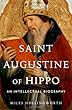
What I call: The biography of Augustine Pope Benedict would have wanted to write.

Thank you for the recommendation on the biography [of St. Augustine by Hollingworth]; I have purchased it at Amazon through your site. Can you recommend a good translation of the “Confessions” and/or “The City of God”? Kindle is best, hard copy if necessary for a readable modern translation that is faithful to the original.

That is a good question.  The Confessions is usually the only work most people are exposed to when it comes to the Doctor of Grace.

The best translation –  for most people –  is probably by Dame Maria Boulding, OSB, who was at Stanbrook Abbey.  She captures the aspect of prayer in The Confessions without, for the most part, sacrificing accuracy of translation in the process. The Confessions is, of course, an extended prayer.

You can quibble about some of her choices, of course.  All translations limp.  For example, Augustine says in Book X that he was “loved and feared” (amari et timeri – 10.36.59) by his people.  (Get it Your Excellencies? Fathers?) She choose to say “loved and esteemed” (or something woolly like that), which does not get at what Augustine really said.

By the way, I wrote about that “amari et timeriHERE. I even have a mini PODCAzT with the Latin.

Boulding’s is better – for most people – than Pine-Coffin‘s.  (I am not making up his name.) His translation is good but it is in a style of English many people are no longer used to.  Pinecoffin, however, hits it out of the park sometimes.  For example, when Augustine is talking about his profligate youth in Carthage, P. renders “amans vias meas et non tuas, amans fugitivam libertatem” (3.3.5) as “I loved my own way, not yours, but it was a truant’s freedom that I loved”.  Not precise but dead on.  “A truant’s freedom”.  Wonderful.

Chadwick‘s… no thanks.

Boulding’s translation is also quite affordable.  The paperback is only $9 and the Kindle version is only $8.  UK Link HERE.


Posted in REVIEWS, Saints: Stories & Symbols |
12 Comments

The Bones of St. Augustine

Yesterday, I posted about the bones of St. Monnica, the mother of St. Augustine of Hippo.  Today we move to the mortal remains of her sainted son.

Augustine died on 28 August 430.

Sometime before the early 8th century, Augustine’s remains were translated from N. Africa to Sardinia for fear of desecration. It is possible that St. Fulgentius of Ruspe took Augustine’s body to Sardinia. Fulgentius had run afoul of the Arian Vandal overlords in N. Africa and was driven out.  If you want to know more about St. Fulgentius, I have a PODCAzT about him.

During the 8th century Augustine’s remains were in danger again, but this time by another gang of vandals called Arabs, who were swarming all over the Mediterranean as pirates and brigands.

Sometime between 710 and 730 King Liutprand of the Lombards translated Augustine a second time. On some 11 October, Luitprand had him interred in Pavia in the church of San Pietro in Ciel d’Oro.

It is thought that Liutprand had to pay a huge ransom the bones from some Muslim thug. (Hard to believe, I know.)

With the passage of time people simply forgot where the saints bones actually physically were in the church.

Eventually, the church itself came to be controlled by two different Augustinian groups, the Canons Regular and the Hermits. Let’s just say their relations were strained and leave it at that. Then somethingBenedict XIII happened that set off the war between them.

In 1695 a group of workman were excavating under the altar in the crypt of the church. They found a marble box containing human bones. The box apparently had some charcoal markings spelling the part of the word “Augustine”, though those markings disappeared. Great chaos ensued.

The memory of just where the relics of Augustine were placed in the church had been lost through the passing of the years. Finding them again set off a rather unedifying battle for their control between the Augustinian Hermits and the Canons Regular.

Ultimately, Rome had to step in to resolve things. That’s what Popes do.

Pope Benedict XIII, a Dominican who changed his numbering from XIV to XIII so as to avoid counting an anti-pope, got involved personally. He was very interested in saints and canonized the huge number of 18!  At least that was a huge number before the pontificate of John Paul II.

This was also at the time when the future Pope Benedict XIV, Propsero Lambertini, published his fourth and final volume On the beatification of the servants of God and of the canonization of the blessed. Pope Lambertini would give us the legislation for the canonical processes of canonizations that has lasted with some few changes to today.

In any event, Benedict XIII sent a letter to the Bishop of Pavia telling him to get their act together and figure out the questions of authenticity and control.

Additional studies were made under someone appointed by Benedict and by 19 September of 1729 things were wrapped up.

Processions were held, solemn proclamations made about the authenticity of the relics, a great Te Deum was sung and there was a fireworks display, and anyone who decided to disagree and start the bickering again would be excommunicated.   The good ol’ days.

The next year under Pope Clement XII the Cardinal Secretary of State (and a patron of the Canons Regular) commissioned the carving of the large main altar with its reliefs, completed in 1738, and which you can see today in the church where Augustine’s tomb is even now.

So, when you travel to northern Italy, be sure to stop in the interesting city of Pavia (Pav-EE-a), south of Milan.   There you will find the bones of the mighty North African Doctor of the Church, St. Augustine of Hippo.

Posted in Saints: Stories & Symbols | Tagged
Comments Off on The Bones of St. Augustine

St. Monnica avoided alcoholism

From Serge Lancel’s Augustine, one of the best biographies I know of the great Bishop of Hippo (p. 8 ff – emphases mine):

Before devoting himself entirely to Mother Church, as he approached the age of forty, Augustine had had a concubine for about fifteen years, fo whom he had beem very fond and who had given him a son; then, at the same time as a fleeting engagement, a second short-lived liaison.  But only one woman really counted in his life, and that was his natural mother, Monica.

As we may guess from reading a few pages of Book XI of the Confessions, Patricius had taken a wife in Thagaste from a milieu close to his own.  He had married Monica, as his would describe it in a phrase borrowed from Virgil, “in the fullness of her nubility”, which means that he had not married a child, a practice that was in any case more rare then in Agrica that in Rome itself.  The couple had three children, in what order we do not know: a girl, who remains anonymous to us, but who, once widowed, would later become the superior of a community of nuns, and two boys, Augustine and Navigius, whom we shall find with his brother in Italy, at Cassiciacum, then at Ostia at their dying mother’s bedside.  …

So Monica had been born into a Christian family and was, as we would say today, a practicing believer.  The religious practices of Christians at that time, in North Africa, sometimes included aspects that would be surprising to us, such as the custom of taking offerings of food to the tombs of martyrs, for agapes that only too often degenerated into orgies; an obvious survival of the pagan festival of the Parentalia.  Of course, Monica did not indulge in those excesses.  If the baskets she brought to the cemetery contained, besides gruel and bread, a pitcher of unadulterated wine, when the time came to share libations with other faithful, she herself would take only a tiny amount, diluted with water, sipped from a goblet in front of every tomb visited.  Was this sobriety a memory of some experience in her early youth?  Augustine tells this story which he says he heard from the lady hersself.  Raised in temperance by an old serving-woman who enjoyed the complete trust of Monica’s parents, she had fallen into a bad habit.  Well-behaved girl that she was, she was sent to the cellar to fetch wine from the cask, but before using the goblet she had brought to fill the carafe she would just wet her lips with the wine, not because she liked it, says Augustine, but out of childish mischief.  But gradually she had acquired a taste for it, to the point where she was drinking entire goblets of it with great gusto.  Fortunately she had cured herself of this incipient liking for drink in a burst of pride: the maidservant who accompanied her to the cellar, having fallen out one day with her young mistresss, insultingly called he a “little wine bibber”.  Stung to the quick, Monica had immediately stopped her habit.

Posted in Saints: Stories & Symbols | Tagged , , ,
3 Comments

St. Monnica: “put my body anywhere”

Here is an oldie post, appropriate for the day:

Today in newer, Ordinary Form calendar of the Holy Roman Church is the feast of St. Monica, the mother of St. Augustine of Hippo.  In the traditional calendar her feast was back in May.

Her name, which is Punic in origin, is also properly spelled Monnica.

This is the chapel in the church of St. Augustine in Rome where the mortal remains of St. Monica (+387), the mother of Augustine of Hippo now rest.

To the right is a shot of the chapel on the day some years ago when the bones of her son, St. Augustine, were brought from their resting place in Pavia (near Milan) to Rome.

How did St. Monica’s tomb wind up here? 

Here is an excerpt from an article I wrote for Inside the Vatican (December 2004) on the above mentioned event.  I used the alternate (and more accurate Punic) spelling of the saint’s name – “Monnica” (emphasis not in the original):

Most visitors to the Eternal City find it puzzling and wondrous that Monnica’s remains would be in Rome and even more so that Augustine’s should be in northern Italy, or that we have them at all.  How did this come to pass?  Monnica died at age 56 of a malarial fever at Ostia, Rome’s port city, not far from where modern Rome’s port, DaVinci airport, is situated.

After Augustine’s baptism in 386 by Milan’s bishop St. Ambrose (+ AD 397), Monnica and Augustine together with his brother Navigius, Adeodatus the future bishop’s son by his concubine of many years whom Monnica had forced Augustine to put aside, and friends Nebridius, Alypius and the former Imperial secret service agent (agens in rebus) Evodius were all waiting at Ostia to return home to Africa by ship.  They were stuck there for some time because the port was blockaded during a period of civil strife.

As she lay dying near Rome, Monnica told Augustine (conf. 9): “Lay this body anywhere, let not the care for it trouble you at all. This only I ask, that you will remember me at the Lord’s altar, wherever you be.”  She was buried there in Ostia.  In the 6th century she was moved to a little church named for St. Aurea, an early martyr of the city, and there she remained until 1430 when her remains were translated by Pope Martin V to the Roman Basilica of St. Augustine built in 1420 by the famous Guillaume Card. D’Estouteville of Rouen, then Camerlengo under Pope Sixtus IV.  As fate or God’s directing have would have it, in December 1945, some children were digging a hole in the courtyard of the little church of St. Aurea next to the ruins of ancient Ostia.  They wanted to put up a basketball hoop, probably having been taught the exciting new game – so different from soccer – by American GIs.  While digging they discovered the broken marble epitaph which had marked Monnica’s ancient grave.  Scholars were able to authenticate the inscription, the text of which had been preserved in a medieval manuscript.  The epitaph had been composed during Augustine’s lifetime by no less then a former Consul of AD 408 and resident at Ostia, Anicius Auchenius Bassus, perhaps Augustine’s host during their sojourn.

It is possible that Anicius Bassus placed the epitaph there after 410 which saw the ravages of Alaric the Visigoth and the sacking of Rome and its environs.  One can almost feel behind these traces of ancient evidence Augustine’s plea to his old friend sent by letter from the port of Hippo Regius over the waves to Ostia.

Hearing of the devastation to the area, far more shocking to the ancients than the events of 11 September were for us, did Augustine, now a renowned bishop, ask his old friend to tend the grave of the mother whom he had so loved and who in her time had wept for her son’s sins and rejoiced in his conversion?

Looking for a great book on Augustine?  Try this!

Meanwhile, in here is my relic of St. Monica.

May she pray for us, for widows and for parents of children who have drifted from the Church.

Be sure to pray for the departed.  Pray for them!  Don’t just remember them.  Don’t just think well of them.  Don’t just, as the case may be, resent or be angry at them.  Pray for them!  Prayer for the dead is a spiritual work of mercy.

Finally, I want to remind you of a new book on Augustine

REVIEW: The book on Augustine which Pope Benedict would have wanted to write.

I had a note that when I originally posted this, the publishers at Oxford had to have a meeting to figure out what to do because your purchases outstripped their supplies.

Posted in Saints: Stories & Symbols | Tagged ,
2 Comments

Interesting Statistics about Pope Francis’ General Audiences

small numbers at audience

Shortly after the election of Pope Francis, the Wednesday General Audience and the Sunday Angelus made the area around San Pietro a complete madhouse.  I would usually be at the Augustinianum at those times for study or for lunch with a friend and I experienced it myself.

Then, over the next couple years, I noticed that it was easier and easier to get around near San Pietro at those times.  Fewer people were coming.

For the 100th general audience of Pope Francis’ pontificate, the Prefecture of the Papal Household released the average attendance of audiences from 51,6K in 2013 to 14,8K in 2015.  HERE


From Sandro Magister:

In occasione della centesima udienza generale [On the occasion of the 100th general audience] del pontificato di papa Francesco, mercoledì 26 agosto, la prefettura della casa pontificia ha comunicato che a questi cento appuntamenti hanno preso parte in totale 3.147.600 persone, così distribuite anno dopo anno:

– 1.548.500 i presenti alle 30 udienze del 2013,
– 1.199.000 i presenti alle 43 udienze del 2014,
– 400.100 i presenti alle 27 udienze del 2015.

Questo significa che anno dopo anno la media dei presenti a ciascuna udienza è stata la seguente: [the average at each audience]

– 51.617 persone nel 2013,
– 27.883 persone nel 2014,
– 14.818 persone nel 2015.

Quindi ogni nuovo anno con la metà di presenze dell’anno precedente. [Each year, half the number of the year before.]

Nè le vacche magre sembrano scongiurate, visto che alla centesima udienza di mercoledì scorso è stato comunicato che sono accorsi solo “in più di diecimila”.  [at the 100th there were “more than 10K”]

La foto sopra è stata scattata durante l’udienza generale di mercoledì 11 febbraio 2015, che era anche la festa della Madonna di Lourdes e la giornata del malato, con l’afflusso di delegazioni dell’Unitalsi.  [Photo at the audience of 11 Feb 2015, Day of the Sick.]


Benedict’s audiences exceeded those of John Paul II at times.

The square is emptier and emptier.

And it’s not because of the general secularization.

Romans aren’t going either, so it isn’t the economic slump.

Posted in Francis, The Drill, What are they REALLY saying? | Tagged
23 Comments

Pope John Paul – The Pope People Forget To Remember

Today is/was the anniversary of the election of Pope John Paul I, Papa Luciani.

He is the Pope people forget to remember.

Pray for him, who was Vicar of Christ for so few days. May God reward him.

19780923PossessodellaCathedraRomana_JPI


Posted in Our Catholic Identity | Tagged
5 Comments

ASK FATHER: What documents are needed for us to marry?

From a senior reader…

QUAERITUR:

My fiancee (age82) and I (age 76) are both widowed and lifelong Catholics. We know what documents we need, but what other church requirements must we go through before marriage.

You should have your baptism certificates, which will indicate other sacraments you received, including your marriages.  You will also need death certificates for your late spouses.

However, the first step you need to take is to go to your parish priest. He can get everything going for you. He will guide you through the steps.

My grandmother married again in her late 70’s. She too snagged a younger man. I think he was 75.

Congratulations.

Posted in "How To..." - Practical Notes, ASK FATHER Question Box, One Man & One Woman, Our Catholic Identity | Tagged ,
8 Comments