BOOK RECEIVED: Why Humanae Vitae Is Still Right!

I received a copy of the new and timely book edited by Janet Smith.  It is, right now, available for pre-order at what I assume is a reduced price.

This is a collection of essays.

Why Humanae Vitae Is Still Right

US HERE – UK HERE

Here are the TOC pages.

There are some strong contributors herein.

However, there is a serious omission: there is no index.  That makes the book less useful as a resource.

Humanae vitae is under attack.  This is a welcome contribution.

Posted in REVIEWS | Tagged ,
4 Comments

What the TMSM is doing with your donations

I want to let you know what our 501(c)(3) organization the Tridentine Mass Society of the Diocese of Madison does with your tax deductible donations.

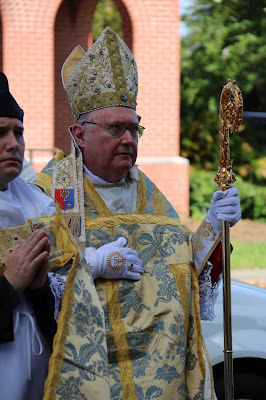
A couple weeks ago, three new priests were ordained by the Extraordinary Ordinary for the Diocese of Madison.*  The diocese used the TMSM’s vestments for the Mass.  We were able to clothe the deacons and the priests in matching vestments.

Here is a still from the video that was made.

By the way, because the cathedral burned down some years ago, the TMSM built a throne for the bishop’s use. Then we found out about a old portable throne canopy at a parish of the diocese that can be disassembled quickly and moved. We’ve used it at parishes for Pontifical Masses. For throne examples see HERE and HERE and HERE.  Anyway, you can see that bishop is now using a throne with canopy for ordinations.  Our work here is… just started.

What else have we done lately.  We made the processional canopy to match the white Pontifical Mass set, with coat of arms of the diocese.

Just the other day I received a new set in green for Solemn Masses. I asked for extra fabric and trim so that we can make a matching tabernacle veil.

I look forward to getting this set into action.

I have underway a project for a new black set and I want another white set for Solemn Masses, so that we don’t wear the Pontifical set unevenly.  And we still have the BLUE coming!  I haven’t forgotten.  We have to prioritize.  Also, I want to obtain all the necessary pontificalia hardware so that a bishop could just walk in and we could outfit him with crozier, bugia, lavabo set, ring, miters (precious, gold, simple), etc.  It would be good to have everything in a single case that we could even take on the road.  We want to be of help wherever we can be.

Please send donations to our TMSM!  We are doing good things here, with – I believe – a far reaching impact, especially through our frequent opportunities for Pontifical Masses with the Extraordinary Ordinary.  You make these influences possible.

You can click HERE for our site, where you will find a donation button.  Otherwise, mail a check, money order, sacks of silver, bearer bonds, gold bars to:

Tridentine Mass Society of Madison
733 Struck St.
P.O. Box 44603
Madison, WI 53744-4603

*Two of the new priests said the TLM for their 1st Mass. We have great photos HERE.

Posted in "How To..." - Practical Notes | Tagged ,
Comments Off on What the TMSM is doing with your donations

Who is behind that “Lovely, drippy, syrupy TLM and vocation video” and how are they being treated?

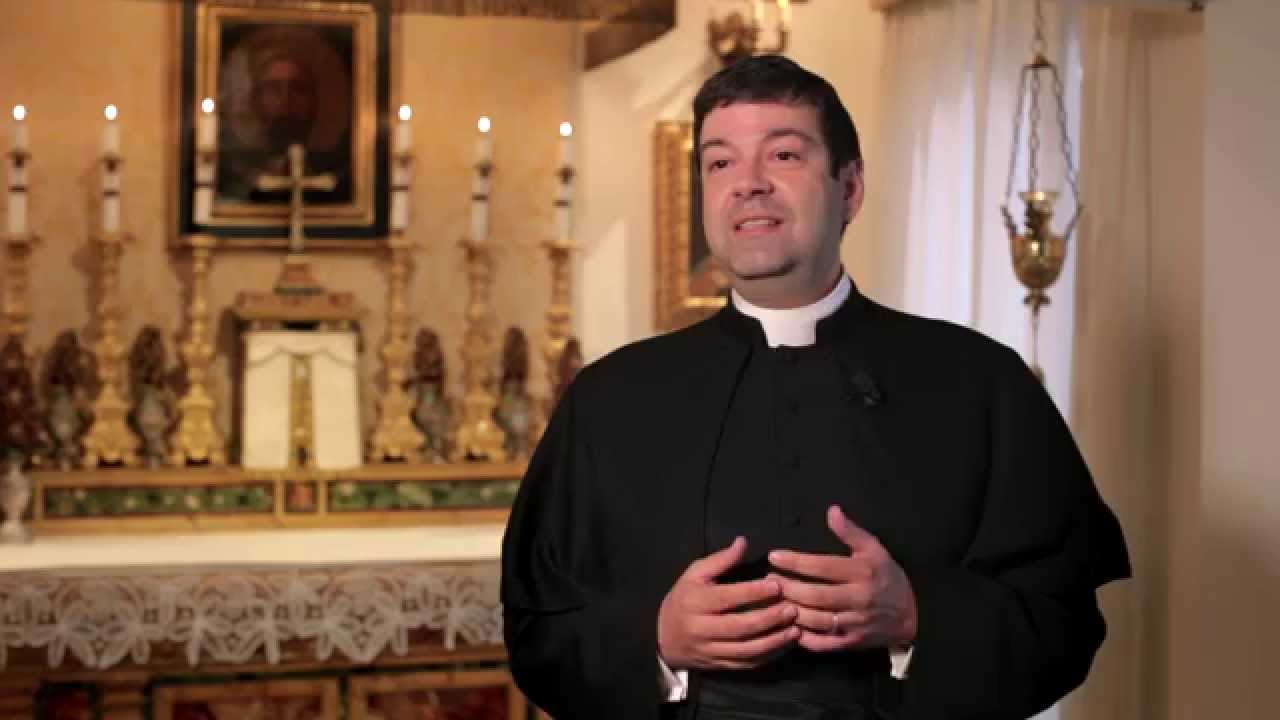
Yesterday I posted about a lovely video made in Italy, which clearly and in a positive light presents traditional liturgy of the Roman Rite and the priestly vocation.   Because it was so well done, I did a little digging around about this group, identified in the credits, who helped in the making of the film. They are the Fraternità Sacerdotale Familia Christi … Priestly Fraternity of the Family of Christ.

They were founded in Rome and were welcomed into the Diocese of Ferrara by the now Bishop Luigi Negri. Here is a video about their founder (Italian)

YouTube thumbnailYouTube icon

The church in the video is entrusted to this group, Santa Maria in Vado. There was a great
Eucharistic miracle there.

It seems that this group welcomed in refugees from the astonishingly persecuted Franciscan Friars of the Immaculate, which didn’t please liberals.  HERE

There is a press release about the Fraternity from the Archdiocese of Ferrara-Comacchio of 14 May 2018.

The new Archbishop, appointed by Pope Francis, took away the Fraternity’s parish and, having consolidated it with others, gave it to diocesan priests. Meanwhile, the Archbishop is reviewing their Constitution, “especially discernment of vocations, formation, community life and spiritual life”.

Hence, the group’s fate hangs in the balance.

I found a video wherein a young woman who wants to save the Fraternity asked the Archbishop  about the group. He isn’t too pleased. She also asks questions of the Vicar General. He isn’t too pleased, either. I must admit that that sort of approach would be pretty off-putting. Nevertheless….

Here is a video of one of the group’s Masses. They have some good music going on there. It looks  like the triduum.

Obviously there are many facets to these stories which we don’t know.

However, now you know a little more about the group that helped make the video.

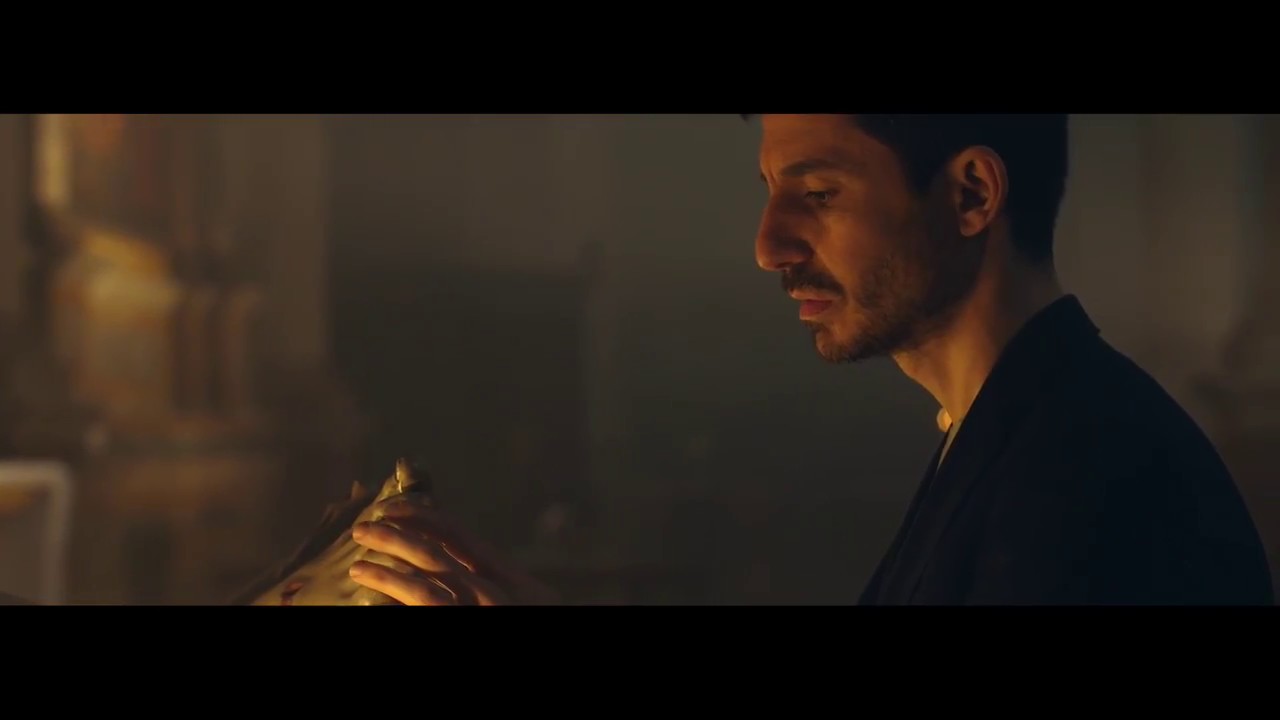
I find it really interesting that the makers of the video – serious director and composer – Alessandro Porzio and Roberto Bonaventura – undertook this obviously supportive project.   They put these guys on the map.  Now the wider world knows about them and what they are trying to in Ferrara.

They’ve been hagan-ing some lío there and someone doesn’t like it.

The makers, Bonaventura and Porzio, are clearly practicing Catholics.  They collaborate a lot.  Bonventura’s YouTube channel is TrinitArt, which appears in the video in question.  I suspect that Bonaventura may be from Emilia-Romagna, the region where Ferrara is found.  He has a striking video with a beautiful song about Romagna.  He must know that Fraternity in some way.  I’m just guessing.  He also made some spectacular videos about the south.  His video about Matera is amazing.


Posted in "How To..." - Practical Notes, Priests and Priesthood, The Drill | Tagged ,
Comments Off on Who is behind that “Lovely, drippy, syrupy TLM and vocation video” and how are they being treated?

ACTION ITEM! Pray for Fr. Morris, victim of the homosexualist agenda

It is the duty of every Catholic to make reparation for sins, for one’s own and for the sins of others. We were clearly asked by Our Lady of Fatima to make reparation for offenses against her Immaculate Heart. She said, by the way, that if we don’t we face cataclysms.

Do you suppose that men sticking their sexual organs into each other and acting in publicly scandalous ways might be the sort of offense and sin for which we ought to make reparation? So you suppose that women lasciviously groping each other and flaunting their lust in public might be offensive to Mary’s Immaculate Heart? To Our Lord’s Sacred Heart?

In Scotland, a Catholic university chaplain, Fr. Mark Morris, at Glasgow’s Caledonian University, dared to trust our Lord and His Mother.

BBC says Fr. Morris held a service in “reparation for the gross offence to God which is Pride Glasgow”.

Even though the Catechism of the Catholic Church teaches authoritatively that homosexual acts are sins that cry to heaven, the Archbishop of Glasgow, Philip Tartaglia, removed Fr. Morris from his post.

Moreover, Fr. Morris supports the TLM. Joseph Shaw of the Latin Mass Society tweeted that Morris has attended their events. HERE

Keep in mind that, for the homosexualists, parading around in the streets is only the beginning.  Ultimately, they aim at the lowering of the age of consent and forcing you to parade around in the streets at the end of one of their rhinestone studded leashes under the gaze of the tricoteuses.

I wouldn’t be in the least surprised to learn that the Glaswegian Archbishop forced Morris into psychological evaluation. That’s, I hear, what more and more bishops are doing these days… pour encourager les autres.

You can send a supportive message to Fr. Morris

HERE.

Posted in "How To..." - Practical Notes, ACTION ITEM!, Sin That Cries To Heaven | Tagged ,
15 Comments

Are we still trustworthy?

And now a short excursion into common sense.

“I am of the opinion, to be sure, that the old rite should be granted much more generously to all those who desire it. It’s impossible to see what could be dangerous or unacceptable about that. A community is calling its very being into question when it suddenly declares that what until now was its holiest and highest possession is strictly forbidden and when it makes the longing for it seem downright indecent. Can such a community be trusted any more about anything else?”

Joseph Ratzinger in Salt of the Earth: The Church at the End of the Millennium- An Interview With Peter Seewald

US HERE – UK HERE

That said…

A quote just popped into my head from Il Gattopardo. US HERE – UK HERE Perhaps my brain is fired up from garfolato?

Noi fummo i Gattopardi, i Leoni; quelli che ci sostituiranno saranno gli sciacalletti, le iene; e tutti quanti Gattopardi, sciacalli e pecore, continueremo a crederci il sale della terra.

We were the Leopards, the Lions; those who will take our places will be little jackals, hyenas; and every one of us Leopards, jackals, and sheep, will continue to think we are the salt of the earth.

It was the reference to “salt of the earth” that set me off, not that this quote fits perfectly with the one above.  It still gives me a chance to let of some steam.

What a mix of the mediocre we have in the Church today, with the occasional lights in the cave we’ve sealed ourselves into by the abandonment of tradition.  We destroyed our Catholic education and identity through compromise with secular aims of the academy and by the enervation of our liturgical worship.

Sticking to Il Gattopardo, that magnificent book, I’ll add this, which in a way crystalizes what I have been trying to get at over the years, what I’ve been trying to do… without – quod Deus avertat – becoming a “garibaldino”:

Se vogliamo che tutto rimanga come è, bisogna che tutto cambi.  Mi sono spiegato?

If we want everything to remain as it is, then everything must change.  Get it?

YouTube thumbnailYouTube icon

Tradition holds us in a tension.  Speaking of movies, sometimes I use the image of the African Queen.  Bogart and Hepburn have to fix that propeller shaft so that they can go faster than the current.  The prop connects them with where they were, the past, so that they can steer the boat around the rocks, the future’s challenges.

Panta rhei.

And since my mind is now fully adrift and slipping like a Heraclitean cloud-puffball into the stream, I’ll only add that “ὁδὸς ἄνω κάτω μία καὶ ὡυτή”.

Mr Eliot would agree.

UPDATE 19 July:

Peter Kwasniewski also agrees. He has a good post which uses this same quote HERE.

Posted in Hard-Identity Catholicism, Our Catholic Identity, Si vis pacem para bellum!, SUMMORUM PONTIFICUM, The Coming Storm, The future and our choices | Tagged , , ,
11 Comments

Lovely, drippy, syrupy TLM and vocation video. Then Fr. Z rants about crying.

Pope Francis said something along the lines that certain realities can be seen only through eyes that have been cleansed by tears.

At the Italian site Messa in Latino, I saw a little video, beautifully produced, focused very much on the affective dimension of the experience of Holy Mass in the traditional form of the Roman Rite.

It also underscores visually and viscerally what I am constantly banging on about: the knock on effect of the TLM on priests and on people in the pews.

YouTube thumbnailYouTube icon

Some may be tempted to say that it is “sentimental”.

A thoughtful person, however, would reflect that the affective compliments the intellective.

There’s nothing wrong with some “sentiment”.

There’s also nothing wrong with our older, traditional prayers dripping with what today we might regard as “flowery” or “syrupy” language. There’s nothing wrong with “flowery” language in prayers. We don’t have to be terse and jejune all the time. That’s not how we are made.

On that note, you should know that there was and is in thing Catholic thing of ours a tradition of praying for the gift, the grace, of tears. In the Missale Romanum there are prayers for the gift of tears.

What comes first? Understanding and then belief? Belief and then understanding? Nisi credideritis non intelligetis… You will not understand unless you first will have believed.

What comes first? The tears and then the understanding?

Why do we bother to pray the Sorrowful Mysteries?

Again, Pope Francis once talked about the gift of tears to the priests of Rome in 2014.

Tell me: Do you weep? Or have we lost our tears? I remember that in the old Missals, those of another age, there is a most beautiful prayer to ask the gift of tears. The prayer began like this: “Lord, who commanded Moses to strike the rock so that water might gush forth, strike the stone of my heart so that tears…”: the prayer went more or less like this. It was very beautiful. But, how many of us weep before the suffering of a child, before the breakup of a family, before so many people who do not find the path?… The weeping of a priest…. Do you weep? Or in this presbyterate have we lost all tears?

Do you weep for your people? Tell me, do you offer intercessory prayer before the Tabernacle?

In about 412 Augustine wrote about prayer in a famous letter to Proba, a weathy Roman widow of the important gens Anicia. She had fled with her family and some pious women to North Africa after the Sack of Rome to found a religious community. She had asked him about how to pray. The bishop, who had a great deal to do in his busy life, took time to exchange letters to her and we, incredibly, have them. She was, after all, one of the wealthiest women anywhere and, more importantly, she had picked up some Pelagianism along the way. Among the deep advice of this long letter, Augustine wrote:

To use much speaking in prayer is to employ a superfluity of words in asking a necessary thing; but to prolong prayer is to have the heart throbbing with continued pious emotion towards Him to whom we pray. For in most cases prayer consists more in groaning than in speaking, in tears rather than in words. But He sets our tears in His sight, and our sighing is not hidden from Him who made all things by the word, and does not need human words. (ep. 130.10.20)

Without additional rambling, here are the prayers “Ad petendam compunctionem cordis .. In order to beg for compunction of the heart” from the 1962 Missale Romanum (in earlier editions Pro petitione lacrimarum) together with my close conversion into the vernacular of this blog.  These orations can be added to the other orations of another Mass formulary.  Some younger readers here might not know what “compunction” is.  In Latin we have a compound of cum+pungo – “puncture severely, sting”.   English “compunction” is just that: a strong sense of unease due to regret or hesitation about some act.  In Latin it is stronger.  It has the effect of, “piercing with remorse, the sting of conscience”.

I might just play a bit with the metaphrasing:

Collect

Omnipotens et mitissime Deus, qui sitienti populo fontem viventis aquae de petra produxisti: educ de cordis nostri duritia lacrimas compunctionis; ut peccata nostra plangere valeamus, remissionemque eorum, te miserante, mereamur accipere. Per Dominum nostrum.

Almighty and most gentle God, who for Thy thirsting people drew living water from forth a rock, from forth our stony hearts do Thou now draw tears of compunction, that we may be able to beweep our sins, and we may merit while Thou dost show us mercy to receive their forgiveness.

First, I like that chiasmus with the de and verbs.  Off the top of my head, I wonder if there isn’t an exitus – conversio – reditus pattern underlying that use of produco and educo on either side of the flex.  Remember: everything is from God. The very sense of sorrow is prevenient.  The very prayer being sung in this moment is God’s first and only truly ours when we raise it back on high as an offering.

Secret

Hanc oblationem, quaesumus, Domine Deus, quam tuae maiestati pro peccatis nostris offerimus, propitius respice: et produc de oculis nostris lacrimarum flumina, quibus debita flammarum incendia valeamus extinguere. Per Dominum nostrum.

Look favorably, we beseech Thee, Lord God, upon the offering which for the sake of our sins we offer to Thy majesty: and from out our eyes draw a river of tears, by which we might manage to quench the ragings of the flames that they deserve.

A master of emotions and of Latin constructed these prayers.  Take note of the synchesis in lacrimarum flumina… flammarum incendia.   There are other “gift of tears” forumularies through our history, such as those found in the ancient Gregorian Sacramentary.  These, however, are lovely.

Postcommunion

Gratiam Spiritus Sancti, Domine Deus, cordibus nostris clementer infunde: quae nos gemitibus lacrimarum efficiat maculas nostrorum diluere peccatorum: atque optatae nobis, te largiente, indulgentiae praestet effectum. Per Dominum nostrum… in unitate eiusdem Spritus.

Into our hearts, Oooh Lord, Oooh God, pour gently the Holy Spirit’s grace: which will cause us to cleanse with sighs the stains of our sins and, so long as Thou dost bequeath it, fulfill for us the effect of forgiveness.

I know what you are thinking.  That gemitibus made me do it.

There are tears of sorrow, of mourning, and of joy which all flow from the same source.

Okay.. back to work and…

GO TO CONFESSION!

Posted in "How To..." - Practical Notes, Cri de Coeur, GO TO CONFESSION, Liturgy Science Theatre 3000, Priests and Priesthood, Seminarians and Seminaries, Si vis pacem para bellum!, Turn Towards The Lord, Wherein Fr. Z Rants | Tagged
26 Comments

The image of the badge of the Vendée came to mind today

The other day, I saw a stage of the Tour de France that was in the Vendée.

Today is the anniversary of the martyrdom of the Carmelites of Compiègne.

I’ve been watching the lunatic frenzy and eruptions of malice from the Left over any word that Pres. Trump utters or doesn’t utter.

Lately some have suggested military coups, free income for people in Chicago, mouthpieces seemingly for the Holy See are undermining Humanae vitae, the Seal is being attacked in Australian, Communion for those in mortal sin is being promoted and forget can. 915 and can. 916 even as Card. Coco wants protection of the environment put into the Code of Canon Law as an obligation of the faithful, homoeroticism is found even first Masses in money-enslaved Germany, priest friends are talking about the increase in demonic activity and calls for help from exorcists, etc.

As I watched the idiocy from the political left tonight on the news – remember, they are stupid, but they are not stupid, if you know what I mean – the image of the badge of the Vendée came to mind. Earlier in the day, I thought about the possibility of being put up against the wall in the future.

Posted in SESSIUNCULA | Tagged ,
19 Comments

Fr. Z’s Kitchen: Garofolato!

Summer notwithstanding, I have had a hankering for something Roman that I haven’t had for a while.

Garofolato.

In Italian, chiodi … “nails” are cloves… but indifferent cloves.  They could be cloves of garlic (which are spicchi).  However chiodi di garofano are cloves of, well, cloves.   Be aware that garofano can have to do with dianthus, or carnation, and thus the symbolic “pink” of paintings and, also, cloves.  There is etymological give and take between the words.  But if you talk about chiodi di garofano, you mean the spice, because as the flowers from the Syzygium aromaticum dry out, they look like little nails.

Again in Italian, if you are going to “clove” something, you wind up with a “garofolato”.

So, what I made was garofolato di manzo, beef.  It can done with veal and ox.  Since the essence of the humble Roman fare is to make the very best of the humblest ingredients, even the quinto quarto, I opted for the classic cut of beef for the garofolato, the girello, which is the eye of round (in these USA, but in the UK I think it is the silver side).

Off to the store I went to obtain a roast of eye of round.  No luck.  They only had little pieces.  So I entered into a dialogue with the guy at the meat counter and set an appointment to pick up my eye of round the next day.  Meanwhile, I got everything else together.

I also started texting with The Great Roman.

I could sense that he came out of his chair when I said that, summer notwithstanding, I was going to make garofolato.   “My granny made garofolato to die for,” quoth he. “Here’s the recipe closest to what granny did.”  HERE

With recipes like this, it is probably better to get the theory of the dish, understand its inner logic and outcome, rather than go by precise measurements.   I gleaned that this is a classic in umido preparation.  I had to have that girello and it had to be pilottato, it had to be larded (where’s that larding needle again?).  I needed what the Romans call persa or maggiorana, marjoram.  I needed red wine from the area: I opted for Montepulciano.  I needed to truss the roast, hence string.  The usual would be necessary, including onion, carrot, celery, and cloves.

I set myself to the task to make this wintry Sunday dish during a summer week.  Why? Because I wanted to.  As well, I betook myself back to the Roma and the castelli, thinking about the rhythm of rising, Mass, slow food with slow patience, and slow meals.  Would that the Great Roman and family were here for the fare, or I were there.

I had some lard, but the wrong kind: too soft.  I did use some in the casserole for browning.  I opted for bacon for the larding.   Keep it cold, if you want my advice.  Salt pork might have been easier to work with.  I didn’t have any.

Searching the back of the drawer revealed the needle.  With this type of larding needle you grab the lard with its little jaws and then draw it through.  Tricky.  I have put a different type on my wishlist, into which you insert the lard and then, having pushed it through, you withdraw the needle, leaving the lard behind. I need one of those.  I had one once, but it is long gone.

Larding meat, along with barding, or putting a layer of fat around the meat, helps to prevent it from drying out or getting tough in the process.  Eye of round is really lean, so larding helps a lot.

So I larded and then I also studded the meat with garlic and cloves and marjoram, as suggested in the prosaic recipe.

Some medical instruments are handy in the kitchen.

I was going to truss as if my life depended on it, but the warning on the string changed my mind.

Browning time.   All sides.  Because I used bacon, I backed off on the salt.

Out comes the meat and in go the veg.

It would have been irresponsible not to test the wine.

Tomato and cloves.  I used more clove than suggested in the prosaic recipe, because, frankly, spices are insipid here.

Marjoram.

Time to check and to turn.

After a few hours…

I extracted the roast and set it to cool.  Too often food is served to quickly and too hot.  Meat always needs a little time to settle down.  Also, food that is too hot shocks your taste buds.  Time to make the other thing Romans might eat with this: broccoletti.  We don’t have exactly the same thing here, but it’s pretty close.  This is done in a smoking hot pan with olive oil and garlic and red hot pepper and a tiny splash of water at the very end to finish the job.

Garofolato di manzo con broccoletti ripassati in padella with Montepulciano d’Abruzzo.

If you are wondering, it was fork tender.  I could have been bolder with the marjoram, so I added it as a garnish.

After, a little cheese and more wine.  Coffee and an amazzacafe.

This is made with variations all over Italy.  With cloves it is particularly Roman.  Farther north they make stracotto and brasato.

The avanzi or left-overs will make great sandwiches and, along the large quantity of sauce I produced a fantastic way to prepare fettucine all’uovo.  I’ll freeze some, too.  If I have some time, perhaps I’ll make the fettuccine from scratch.  I haven’t done that for a while.

For those of you who want to work your panties into a twist about eating “fancy food”, this is also called “pot roast”.  It’s just good pot roast, rather than the jejune, flat, anemic, wearisome, spiritless stuff that most people who get the undies bunched by these posts are used to.  What thanks do we show to God by taking good ingredients and making bad food out of them, stale, flat and unprofitable?

Good food doesn’t have to be costly.  You just have to know, as our forebears did, what to do with humble, on hand ingredients.    Eye of round is certainly not your most costly cut.  The rest is, well, simple stuff.  There’s nothing fancy about bacon, carrot, etc.  I had to buy marjoram, which in happier years I would have walked to the garden to pluck.  I bought the wine…  as one does, right?   The tomatoes were a gift from my wish list (THANKS!).

So, another recipe under my belt.  When winter comes, I’ll be able to prepare it with even greater ease and effect.
Posted in "How To..." - Practical Notes, Fr. Z's Kitchen | Tagged , ,
6 Comments

ASK FATHER: Cremains in funeral Mass, Traditional Requiem

From a reader…

QUAERITUR:

Thank you for all that you do and say, on this blog and beyond. Here is my question:

Since cremation is permitted, what would be the ritual for cremains if the funeral mass were an EF Requiem?

To my mind, there is something strange about one of those jars or boxes on a little table.  It doesn’t feel … right.  Granted there are special circumstances.

Years ago I met a clever priest who purchased a coffin for the parish precisely so that the “cremains” could be placed inside, covered properly with the pall, etc.   The rite goes on as normal.

I suppose the rite would just go as normal for a box on a table, too.

Perhaps a coffin, or a temporary catafalque, will serve?

Posted in "How To..." - Practical Notes, ASK FATHER Question Box, Four Last Things, Liturgy Science Theatre 3000 | Tagged ,
13 Comments

Pontifical Mass in Lake Charles. A brief and yet optimistic rant from Fr. Z.

I saw a great entry at NLM about a Pontifical Mass in Louisiana.  There are good photos. Check it out.

His Excellency Glen Provost, Bishop of Lake Charles celebrated a Pontifical Mass in their cathedral.

Writing about it, Greg DiPippo aptly adds (me emphases and comments):

Anyone who has ever served this rite of Mass knows that it is especially hard work, something which requires a good amount of organizing and rehearsal to do properly; the reward for such work is, of course, a ceremony which truly impresses upon one, forcibly and unmistakably, the power and majesty of what the Holy Sacrifice of the Mass truly is. We can all take encouragement once again from the fact that none of the people who are making the effort and commitment to put this together are old enough to be doing so from any sense of “nostalgia”; what we see here is a true and sincere love for the richness of our Catholic liturgical tradition.

Do I hear an “Amen!”?

And they had to work around that free standing altar, too.

Many kudos to the Bishop and to the priests and servers.

I would like to think that, perhaps, just maybe, there is a chance that the work we have been doing in Madison, and the fine example set by the Extraordinary Ordinary Bp. Morlino has been an influence on priests, groups of lay people who get organized, and even on Bishops.   Just maybe?   Perhaps priests and lay people out there have looked at the photos here and at the TMSM site and have thought, “Okay.  WE can do that!”  And they get to work.

It seems to me that – recently – more bishops are willing to celebrate the Traditional Roman Rite than even a few years ago.

In any event, I know that we are all mutually encouraging each other in this effort of ours to promote beautiful and transformative sacred liturgical worship.

We are all helping each other.

UPDATE 18 July:

I have some good news from France…

A priest friend is training up in the TLM the new rector of a seminary.  He also wrote about the bishop of a French diocese who says the TLM regularly.   I don’t want to add names or just post his text, unless he wants me to.  However, let’s just say that his news was very good.

Posted in "How To..." - Practical Notes, Fr. Z KUDOS, Liturgy Science Theatre 3000, Si vis pacem para bellum!, SUMMORUM PONTIFICUM | Tagged ,
11 Comments