ASK FATHER: Mom baptized my child in the bathtub

From a reader…

QUAERITUR:

My five year old nephew, who wasn’t formally baptized as an infant (ie: with his parents’ permission, in a church, by a priest, etc). My mom baptized him in the bathtub (and didn’t tell anyone except me) and he’s been learning the Catholic faith, learning his prayers, he loves praying the Rosary, sits through Mass wonderfully and pays attention to what’s going on. He’s very intelligent, and despite only being 5 (and just turning 5 at that), I’m pretty sure he has the use of reason (he seems to know very well the difference between right and wrong, good and bad, etc).

Anyways, he has asked to be baptized and my mom spoke to the priest and told him that she baptized him in the bathtub. The priest told her that since it wasn’t an emergency, that baptism didn’t count [FAIL!] (not sure what he meant by “doesn’t count”, but I’m pretty sure my mom knows how to baptize validly, albeit illicitly). My understanding is that he would have to be baptized conditionally as opposed to baptized as if nothing had happened beforehand. What happens then if baptism is repeated? Is this something I need to worry about?

You should be able to sort this out fairly quickly.  Here’s what I would do.

To start, get your mother together with the priest and ascertain if your mother knows how to baptize.   Find out what she did.

Then you have three options.  First, if she didn’t baptize properly, then baptize the child absolutely.   Second, if she is squishy on the details and leaves you wondering about what she did, then baptize the child conditionally.  Third, if she baptized properly, then consider having the priest, using the traditional rite, “supply” the ceremonies that were omitted.  HERE

It was always the case that when baptism was administered in the case of necessity, or in the reception into the Church of adults or children, or in some situation like you described, the other ceremonies of the rite are to be supplied later by a priest.

Also, make sure that the fact of the baptism, etc., is recorded properly in the parish register.

Posted in "How To..." - Practical Notes, ASK FATHER Question Box, Liturgy Science Theatre 3000 | Tagged ,
20 Comments

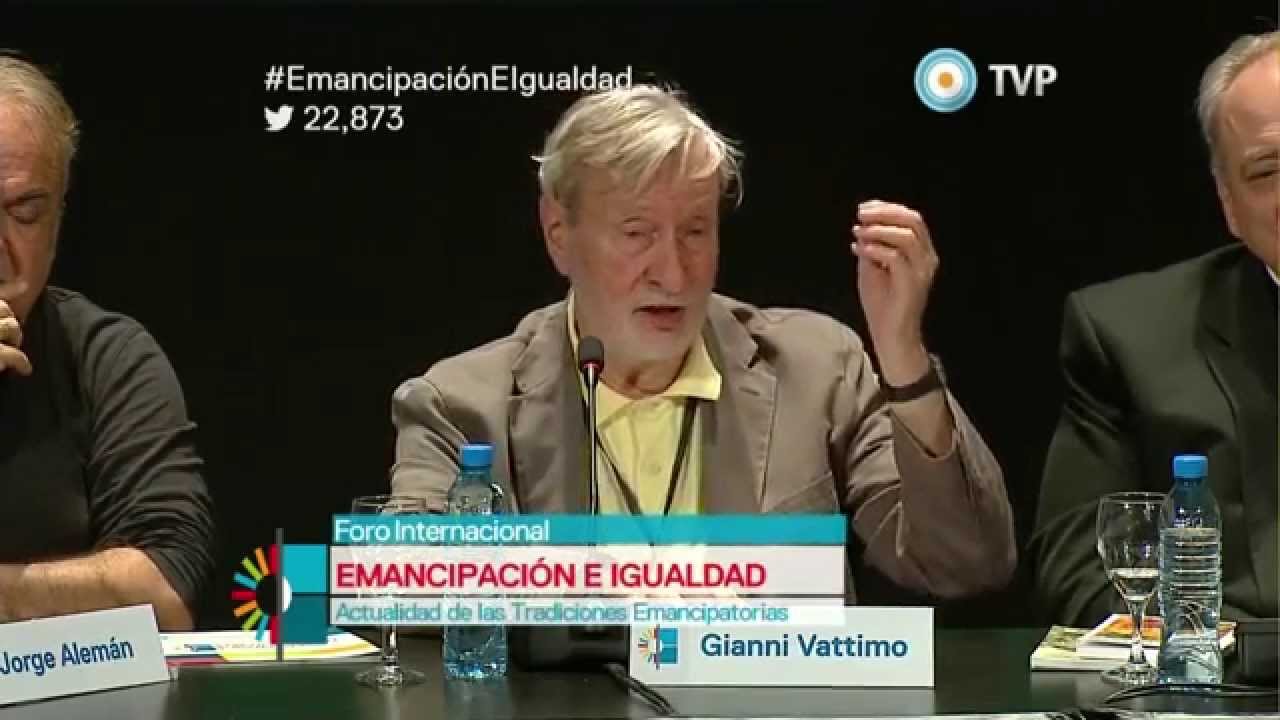
INTERESTING UPDATE – Pope Francis phones Gianni Vattimo, philosopher of “weak thought”

UPDATE 11 July:

I received a fascinating email from a priest:

In [Vattimo’s] book Credo di credere (his spiritual autobiography (reads like someone re-wrote Augustine’s Confessions after a healthy dose of laudanum), Vattimo writes that he prays the 1961 Breviarium Romanum every day and, when he bothers to go, he attends Holy Mass in the Extraordinary Form.

Even better – he doesn’t take Holy Communion because he knows that his lifestyle prevents it.

How interesting the world in which we live – bishops want everyone to receive Communion while a secular, Communist, nihilist philosopher knows that his lifestyle excludes his reception of the Blessed Sacrament!

Originally Published on: Jul 9, 2018

I saw the strangest story at La Stampa.

From Italian:

Pope Francis phones Gianni Vattimo, philosopher of “weak thought”

The Italian scholar sends a copy of his last book to Francis who calls to thank him.  A a short and pleasing conversation about the Church and philosophy: “With this Pope I am not ashamed to call myself Catholic”.

Perhaps someone will translate the whole thing.

This seems so very strange to me.  It leaves me a little confused, frankly.   I’ve written about this guy back in 2013.  HERE  Vattimo, if memory serves, is openly homosexual.  He had his … partner… euthanized in Holland.   Vattimo, who is pretty much against any truth claim and set against just about every moral teaching of the Church, has also spoken of Pope Francis.

I’ve gotten a couple notes asking me what this is all about.  I don’t know.  However, after a little digging around, I found once again a fascinating post that connected Vattimo with Pope Francis, as well as Bishop Marcelo Sánchez Sorondo, of the Pontifical Academy of Social Sciences.  Have a look at THIS.

Sorondo applauded with obvious satisfaction, as the radical left, gay, Italian philosopher, Gianni Vattimo on 13 March 2015 Teatro Cervantes in Buenos Aires in front of all the prominent left radical figures, to form a new Communist International, which he dubbed the “Papal International” because was supposed to be led by Pope Francis. Vattimo said at the time:

“Pope Francis is the only one who is capable of a political, cultural and religious revolution to lead against the superior power of money in the Civil War, which is already raging in the world, and is disguised as ‘the fight against terrorism’ , but in reality is the class struggle of the 21st century against the large number of the critics of capitalism.”

You will recall that Sorondo was the one who said that Catholic social teaching is exemplified in Communist China. HERE

Vattimo has thought about the Pope quite a bit, it seems.  I wonder if any of this is connected to what I mused about back in 2014.  HERE  Alejandro Bermudez wrote about influences on Pope Francis’ thought.  It is worth a review.

Here is the video.  Conference also with Leonardo Boff.  If you have Italian and/or Spanish, you will be pretty much horrified by this fellow.  Take note at 15:00-51:00.

YouTube thumbnailYouTube icon

Pope as point of reference for an international Communism at 24:00.
Mentions ¡Hagan lío! at 49:45.

One wonders if there is a connection between “weak thought” and “weak theology”.  HERE

UPDATE 10 July:

Popes meet with and reach out to all sorts of people. I recall that, early in his pontificate, Pope Benedict reached out to loony Hans Küng and to the brilliant but jaded Oriana Fallaci. I can’t shake the sense, however, that the motives for doing so may have been different from those of Pope Francis in reaching out to Vattimo and some of those others and that the conversations were rather different. Then again, they are very different men, that Pope and this Pope, aren’t they.

Posted in ¡Hagan lío!, The Drill | Tagged
9 Comments

SSPX ELECTS NEW SUPERIOR GENERAL – UPDATED

UPDATE 12 July:

An interview with the new SSPX Superior.

UPDATE 11 July:

Turncoat Tornielli at Inside Vatican has put a negative spin on this election, concluding that an “agreement is farther off”. How he gets to that conclusion is anyone’s guess. I suspect that it is his wishful thinking. “Sun sets on the line of dialogue with Rome”. Oooo! Dramatic.

Tornielli quotes from the old interview that Pagliarani gave:

I can only repeat what was explained clearly by my superiors from the start: the canonical situation in which the Society presently finds itself is the result of its resistance to the errors that infest the Church; consequently the possibility of the Society arriving at a regular canonical situation does not depend on us but on the hierarchy’s acceptance of the contribution that Tradition can make to the restoration of the Church.

If we do not arrive at some canonical regularization, that simply means that the hierarchy is not yet sufficiently convinced of the urgent need for that contribution. In that case we will have to wait a few more years, hoping for an increase in that awareness, which could occur along with and parallel to the acceleration in the process of the Church’s self-destruction.

That was some years ago.  Yet today we see the “process of the Church’s self-destruction” may be accelerating.  Motus in fine velocior, after all.

Tornielli pointed out that De Gallareta, elected as an assistant, is intransigent. On the other hand, Fr. Christian Bouchacourt knew Card. Bergoglio from his time in Argentina: Bergoglio had helped the SSPX in Argentina with their legal status.

Who know what will happen now? Nobody. People had expected that Pope Benedict might be the one to reconcile the SSPX, because of his understanding of Tradition. That didn’t happen. Then an unliturgically-minded seeming anti-traditional Pope is elected and the SSPX is suddenly allowed to receive sacramental confessions and to witness marriages.

So, now there is a new leadership in the SSPX.

Who can predict what will happen? Nobody.

However, given the past turns and surprises, maybe this is the team that will finally succeed.

___ Originally Published on: Jul 11, 2018 @ 12:32

This is interesting.  From what I had been reading, Bp. Fellay was the favorite for re-election.  Things went another direction.

I wonder what this means for rapprochement with Rome.

Communiqué of the General House of the Society of Saint Pius X
July 11, 2018
By fsspx.news

Election of the Superior General
On July 11, 2018, Father Davide Pagliarani was elected Superior General, for a mandate of 12 years, by the 4th General Chapter of the Society of Saint Pius X.
The new Superior General is 47 years old and is of Italian nationality. He received the sacrament of Holy Orders from the hands of Bishop Bernard Fellay in 1996. He exercised his apostolate in Rimini (Italy), then in Singapore, before being appointed Superior of the District of Italy. Since 2012, he was Rector of Our Lady Co-Redemptrix Seminary of La Reja (Argentina).
After accepting his office, the elected pronounced the Profession of Faith and took the Anti-Modernist Oath at the seminary church. Then, each of the members present came before him to promise their respect and obedience, before singing the Te Deum in thanksgiving.
The 41 capitulants will proceed tomorrow with the election of the two Assistants General, for the same mandate of 12 years. The Chapter will continue until July 21st at the Seminary of St. Pius X of Ecône (Switzerland)
Ecône, July 11, 2018
(Source : FSSPX – FSSPX.News – 07/11/2018)

There is an 2011 interview (in English) with Fr Pagliarani HERE.  A lot has changed since then, including a change of Popes.

“But Father! But Father!”, I can hear some of you over-wrought readers yowling in frustration.  “What is this Oath?  What does it say? Does it HATE VATICAN II?!?”

Glad you asked!  My emphases and comments.

THE OATH AGAINST MODERNISM

Given by His Holiness St. Pius X September 1, 1910.

To be sworn to by all clergy, pastors, confessors, preachers, religious superiors, and professors in philosophical-theological seminaries.

I . . . . firmly embrace and accept each and every definition that has been set forth and declared by the unerring teaching authority of the Church, especially those principal truths which are directly opposed to the errors of this day[Consider the context of the late 19th and early 20th centuries.  This could still apply today.] And first of all, I profess that God, the origin and end of all things, can be known with certainty by the natural light of reason from the created world (see Rom. 1:90), that is, from the visible works of creation, as a cause from its effects, and that, therefore, his existence can also be demonstrated: Secondly, I accept and acknowledge the external proofs of revelation, that is, divine acts and especially miracles and prophecies as the surest signs of the divine origin of the Christian religion and I hold that these same proofs are well adapted to the understanding of all eras and all men, even of this timeThirdly, I believe with equally firm faith that the Church, the guardian and teacher of the revealed word, was personally instituted by the real and historical Christ when he lived among us, and that the Church was built upon Peter, the prince of the apostolic hierarchy, and his successors for the duration of time. Fourthly, I sincerely hold that the doctrine of faith was handed down to us from the apostles through the orthodox Fathers in exactly the same meaning and always in the same purport. Therefore, I entirely reject the heretical’ misrepresentation that dogmas evolve and change from one meaning to another different from the one which the Church held previously[This would be hard for some people to understand today.  There is a difference between development of doctrine and change of doctrine.] I also condemn every error according to which, in place of the divine deposit which has been given to the spouse of Christ to be carefully guarded by her, there is put a philosophical figment or product of a human conscience that has gradually been developed by human effort and will continue to develop indefinitely. Fifthly, I hold with certainty and sincerely confess that faith is not a blind sentiment of religion welling up from the depths of the subconscious under the impulse of the heart and the motion of a will trained to morality; but faith is a genuine assent of the intellect to truth received by hearing from an external source. By this assent, because of the authority of the supremely truthful God, we believe to be true that which has been revealed and attested to by a personal God, our creator and lord.

Furthermore, with due reverence, I submit and adhere with my whole heart to the condemnations, declarations, and all the prescripts contained in the encyclical Pascendiand in the decree Lamentabili[remember the historical context.] especially those concerning what is known as the history of dogmas. I also reject the error of those who say that the faith held by the Church can contradict history, and that Catholic dogmas, in the sense in which they are now understood, are irreconcilable with a more realistic view of the origins of the Christian religion[This would knock a few people out of their present offices.] I also condemn and reject the opinion of those who say that a well-educated Christian assumes a dual personality-that of a believer and at the same time of a historianas if it were permissible for a historian to hold things that contradict the faith of the believer, or to establish premises which, provided there be no direct denial of dogmas, would lead to the conclusion that dogmas are either false or doubtful. Likewise, I reject that method of judging and interpreting Sacred Scripture which, departing from the tradition of the Church, the analogy of faith, and the norms of the Apostolic See, embraces the misrepresentations of the rationalists and with no prudence or restraint adopts textual criticism as the one and supreme norm. Furthermore, I reject the opinion of those who hold that a professor lecturing or writing on a historico-theological subject should first put aside any preconceived opinion about the supernatural origin of Catholic tradition or about the divine promise of help to preserve all revealed truth forever; and that they should then interpret the writings of each of the Fathers solely by scientific principles, excluding all sacred authority, and with the same liberty of judgment that is common in the investigation of all ordinary historical documents.

Finally, I declare that I am completely opposed to the error of the modernists who hold that there is nothing divine in sacred tradition; or what is far worse, say that there is, but in a pantheistic sense, with the result that there would remain nothing but this plain simple fact-one to be put on a par with the ordinary facts of history-the fact, namely, that a group of men by their own labor, skill, and talent have continued through subsequent ages a school begun by Christ and his apostles. I firmly hold, then, and shall hold to my dying breath the belief of the Fathers in the charism of truth, which certainly is, was, and always will be in the succession of the episcopacy from the apostles. The purpose of this is, then, not that dogma may be tailored according to what seems better and more suited to the culture of each age; rather, that the absolute and immutable truth preached by the apostles from the beginning may never be believed to be different, may never be understood in any other way.

I promise that I shall keep all these articles faithfully, entirely, and sincerely, and guard them inviolate, in no way deviating from them in teaching or in any way in word or in writing. Thus I promise, this I swear, so help me God. . .

UPDATE:

Election of the General Assistants
Just as the day was coming to an end, the new Superior General of the Society of Saint Pius X, Father Davide Pagliarani, and the 40 other capitulants have decided to proceed to the election of the two General Assistants.

The 1st Assistant elected is Bishop Alfonso Gallareta, auxiliary bishop of the Society, of Spanish nationality. Aged 61, he was ordained priest in 1980 at Buenos Aires, Argentina, where he lived for a certain time. In the past he has held the roles of Rector of Our Lady Co-Redemptrix Seminary at La Reja, Argentina, and superior of the Autonomous House of Spain and Portugal. He was 2nd Assistant of the Society from 2002 to 2006. Until now, he resided in Geneva, Switzerland.

The 2nd Assistant elected is Father Christian Bouchacourt, of French nationality. Aged 59, he was ordained priest in 1986 by Archbishop Lefebvre. For a long time he was stationed in Paris, especially at Saint-Nicolas du Chardonnet, before becoming District Superior of South America and then, in 2014, District Superior of France.

Now that these elections have taken place, the General Chapter will be able to address the numerous questions which have been proposed for discussion, until July 21st 2018.

Ecône, the 11th of July 2018

Posted in SSPX | Tagged ,
21 Comments

Ex ore infantium perfecisti laudem

Last Sunday at the end of the TLM at St. Mary’s in Pine Bluff, we were all joined in the singing of the Salve Regina by very young congregants.


Posted in SESSIUNCULA | Tagged
7 Comments

ASK FATHER: Should a priest have a day off?

From a reader…

QUAERITUR:

I have worked for the Catholic church for over 30 years in various capacities. I taught Religion and worked as a Parish Secretary, as I do now. I have worked for some pretty fabulous “Old School” priests who did not seem to mind that were in the confessional 5- 6 days a week, providing the Sacrament of Penance or that on some days they might say 2 or 3 Masses and maybe more on Holy Days or when needed to say a funeral Mass or wedding Mass. They offered Baptism every Sunday in the parish. Now I see the younger generation of priests always making sure that they have their days off each week…which I do not begrudge them, but if they are called on to maybe meet with a struggling family, then they will take a half day somewhere else. I don’t understand today’s call to vocation! ! In addition to my call to be a wife and mother – from which one does not get a day off. I am on duty to be a wife and mother all the time. What has changed that todays’ priest sees his vocation as a apart-time job? It bothers me greatly.

Wow.  Lot’s of issues here.

Before anything else, I wonder how many people who are against time off for priests also tithe.   Just an initial thought.

That said, yes, there are some priests who should do more priest stuff.  There are also priests who have taken on too much and who burn out.

The individual situation of each priest must be considered.

Priests are not assembled from spare parts, or cut out of homogeneous dough with a shaped cutter.   They have different talents, backgrounds, capabilities.   Some are super high energy and really smart.  Some are not very smart and are more lethargic.  Some were formed by really great priests and seminaries, others not so much.  Some have come to the priesthood later in life, some earlier.

Priests are also men of their age and environment.  They, too, are influenced by society around them.

Priests are human beings.  To be at their best, they too should by allowed their interests and their rest.  We want our priests to be at their best, right?  Right? I am making an assumption that you wish the best for priests.

Priesthood is primarily oriented to sacrifice.  They are ontologically alter Christus (who occasionally went apart from people).  They are not mainly administrators or office sitters.

Priesthood is an ontological, not utilitarian reality.    And yet people want to “use” priests.

That’s both fair and not fair.

Priests are ordained so that people can have teaching, governance and, above all, sanctification.    People are right to expect these things from priests.  Hence, a priest’s main activities should be people oriented.  However, priests are also ordained for themselves, because God wants them to be priests for the sake of their own souls.  Back in the 5th c. Augustine of Hippo wrote about his struggle to find otium in negotio, “time free from busy work in the midst of daily tasks”.  He didn’t want “time off”, but rather time for deeper things, such as refreshing meditation on Scripture, etc.  There’s a tension present in all of our lives.

If people treat priests as if they were any other service providing professional, like their dentist, then they probably shouldn’t gripe if the priest has a day off.

If people treat priests as if they are, spiritually, ontologically, “Father”, then one will have different expectations.

Moreover, Father will begin also to have different expectations of himself.

Should priests be allowed a day off?  Should priests be allowed to retire at 65?

It seems to me that Catholic life, including how priests live, how they interact with other priests and lay people, is an immensely complex Gesamtkunstwerk.  And the Enemy is also working relentlessly to interfere in this totality.

Finally, this made me think of an old chestnut, chain letter:

The Perfect Priest

The results of a computerized survey indicate the perfect priest preaches exactly fifteen minutes. He condemns sins but never upsets anyone. He works from 8:00 AM until midnight and is also a janitor. He makes $50 a week, wears good clothes, buys good books, drives a good car, and gives about $50 weekly to the poor. He is 28 years old and has preached 30 years. He has a burning desire to work with teenagers and spends all of his time with senior citizens.

The perfect priest smiles all the time with a straight face because he has a sense of humor that keeps him seriously dedicated to his work. He makes 15 calls daily on parish families, shut-ins and the hospitalized, and is always in his office when needed.

If your priest does not measure up, simply send this letter to six other churches that are tired of their priest, too. Then bundle up your priest and send him to the church on the top of the list. In one week, you will receive 1,643 priests and one of them will be perfect. Have faith in this procedure.

One parish broke the chain and got its old priest back in less than three weeks.

By the way… it might be a good idea, when you find yourself thinking about a priest – either positively or negatively – to stop yourself and PRAY for him.

Do you pray for priests?  Do you pray for your particular priests?

Posted in "How To..." - Practical Notes, ASK FATHER Question Box, Priests and Priesthood |
51 Comments

ASK FATHER: Traditional Latin Mass in a Protestant church?

From a reader…

QUAERITUR:

Dear Fr. Z,
In my locality, there is great hostility towards the traditional Latin Mass — so much so that the pastor would not allow a Mass to be celebrated inside the Catholic parish church. Unfortunately, the bishop is similarly inclined, and recourse to him has proved fruitless. However, some local Protestant pastors are very friendly and are willing to let us use their churches for the occasional celebration of a Latin Mass. Is this allowed or is there any rule against it? Would it be better to have the Mass in a living room or a hotel conference room?
Thank you for your help.

Canon 932 stipulates that Holy Mass should be offered in a sacred place, “unless in a particular case necessity requires otherwise, in such a case the celebration must be done in a decent place.”

I think that a Protestant church is a “decent place”.  As a matter of fact, in Chicago, the Institute of Christ the King was offered space by their Presbyterian neighbors during the reconstruction of their church. HERE

If them, why not you?

The Instruction, Redemptionis Sacramentum, in paragraph 108, clarifies, “The diocesan Bishop shall be the judge for his diocese concerning this necessity, on a case-by-case basis.”

A priest offering the Holy Sacrifice hidden by a hedgerow, or in a dining room with the shades drawn in a place and at a time where the practice of traditional Catholicism is banned, would still be licit.

Having Mass in a hotel or at a Protestant church is not optimal.  But the hostility of one’s pastors, especially in light of John Paul’s call in Ecclesia Dei adflicta and Benedict’s juridical admonition in Summorum Pontificum might necessitate taking action, especially if you are being ignored or worse.

Keep in mind, however, that priests are vulnerable to incredible abuse by their bishops.

I’ve been hearing more and more of cases of conservative priests being sent away for “evaluation” and “treatment”, sometimes over many months of forced drugs and “therapy”.  “Pour encourager les autres“, no doubt.  Don’t push your priests into doing something that you know is going to ruin your long-term prospects and remove him from being a spiritual benefit to you.  This is, after all, the age of accompaniment and mercy.

UPDATE:

A reader asked:

Regarding your recent post answering whether a Catholic Mass could be held in a Protestant Church if necessary*, I seem to remember a much older post being somewhat indignant that a Protestant service was held in a Catholic Church. While I could easily be mis-remembering, I am still curious what the difference between these two types of event would be.

You are probably referring to my thoughts about Protestant churches hosting wacko wymyn ordinations.

These are entirely different situations.

There is nothing wrong with a protestant church giving a group access to their church to do something legitimate.

There is everything wrong when what is done is completely nuts.   As a matter of fact, that’s a way of giving the entire Catholic Church the finger.


Posted in SESSIUNCULA | Tagged
10 Comments

Madame Defarge (@MichaelSWinters) is upset that people don’t find the Terror – applied to real people today – very funny.

At Fishwrap, the Madame Defarge of the catholic Left, and their official Tricoteuse, has temporarily left his knitting spot near the guillotine and returned to the Fainting Couch to swoon in the wake of negative reactions to his thought-revealing imagery.

I wrote about that in this: Tricoteuse of the New catholic Red Guard: @MichaelSWinters (aka Madame Defarge)

Michael Sean Winters identified himself with the ghoulish Madame Defarge from Dickens’ A Tale of Two Cities.  He described himself in the future as mercilessly knitting by the guillotine as he watched the heads of those “in the Republican political and legal establishment who have not stood up to Trump” being cut off.

His exact words:

 To my friends in the Republican political and legal establishment who have not stood up to Trump: When the revolution comes, you are on your own, and I will be clamoring not for mercy but for a seat next to the guillotine, where I can do my knitting.

Did you get that?  Trump supporters should be treated without mercy.   Lifesite noticed.  So did Skojec.

Now Madame D whines that he was misunderstood.

Less welcome than Walsh’s article was this post by Fr. John Zuhlsdorf and this article at LifeSiteNews. Both, and a slew of unspeakably nasty emails, were upset with an admittedly bracing literary device I used, invoking the image of Madame DeFarge in A Tale of Two Cities. I was surprised because there is one issue on which I tend to agree with conservatives more than liberals, namely, the repugnance of anti-free speech attitudes and enforcement of politically correct language. I suggest Fr. Z and his friends go to a local, secular, liberal arts campus, find a “safe zone” and have a meeting of the Conservative Snowflake Society.

You mean like this “safe space” for conservatives?

You see, again, Winters is saying that conservatives should be brutalized.

Or perhaps he meant that we could join the NRA!

First, he accused me of something I didn’t do.  “Free speech” is a red herring.   No one is saying that Winters should not be able to have his say (even though he thinks that converts should not be allowed to voice their opinions).  I did not suggest that, even though Winters writes that people who disagree with him ought to lose their jobs (as he did about Chad Pecknold – HERE), he should not be able to write.

When free speech leads you toward inciting violence, that’s another matter.   He invoked something truly horrifying, and truly anti-Catholic.

His rhetorical fantasy suggests that he would have me killed.  I want conversion, not his unemployment … or execution.

This is what libs really think, however.  They want brutal, physical force used on their opponents.

Take the case of what Rep. Maxine Waters did recently, in telling supporters to harass anyone who works for Pres. Trump.   Consider doing that within a year of Rep. Scalise and others being shot – by a lib – at their baseball practice.

Winters and Waters are side by side with their knitting bags on that revolutionary scaffold.

Next, had someone on the conservative side of the spectrum used imagery from the Terror and the merciless cheering of the hacking off of heads, without losing a beat Winters and his venomous band of knitters would have howled in protest.

Do you for a second think that they would have said, “Oh, golly, I guess they have their free speech rights and we shouldn’t be so sensitive!”?

I can hear the objections.  “You can’t possibly think that Winters really thinks there should be a guillotine or that people who support Trump should lose their heads.  C’mon, Fr. Z!  Get real!  That’s just, you know, free speech!  That’s just kiddin’ around!”

Take also the case of that super hilarious comedienne, Kathy Griffin, who not long ago made a complete ass of herself with a mock-up of Pres. Trump’s severed head.

Winters and Waters and Griffith.

I wonder if she knits too.

Madame Defarge is now upset that people don’t find the Terror – applied to real people today – very funny.

But… but… he got harsh email!   Read sometime what Winters writes about other people.  HERE

Of course he isn’t at all responsible for garnering that negative reaction.  Not at all.  He only said that when the “revolution” comes, he will mercilessly watch people’s heads being chopped off while he knits.

During the Reign of Terror (1793-94), the revolution’s henchmen suppressed the Church, nationalized her property, and exiled or killed 30,000 priests and and religious. Thousands died at the very guillotine which Winters so appreciates.

Next, he surely will – as is consistent with the policies of the Fishwrap and with the trajectory of the Reign of Terror – call for a new Revolutionary Calendar and celebrations of the goddess Reason in the guise of a naked prostitute on the altars of our churches.  Make that a trans naked prostitute.

The image of the Terror is from Winters.  He owns it.


Posted in SESSIUNCULA | Tagged , ,
18 Comments

A little bright spot for your day, a discrete packet of energy for your mind.

I listen to Great Courses on Audible. It helps to keep my brain working. Right now I am nearing the end of Einstein’s Relativity and the Quantum Revolution: Modern Physics for Non-Scientists. (US HERE – UK HERE) In that context, I also had reason this morning to peruse the must-own book by A.G. Sertillanges, OP,  The Intellectual Life: Its Spirit, Conditions, Methods (US HERE – UK HERE).

I found this in Sertillagnes (p. 116), which dove-tailed with my relativity endeavor:

The intellectual position of Thomism is so well chosen, so removed from all the extremes where abysses of error yawn, so central as regards the heights, that one is logically led up to it from every point of knowledge, and from it one radiates along continuous paths, in every direction of thought and experience.

That was a little bright spot for my day, a discrete packet of energy for my mind.

Posted in Just Too Cool | Tagged
6 Comments

Fr. Perrone: The greatest weapon within the grasp of every Catholic is the keeping of a well-ordered soul

How many times have I written here that, if you are upset with what you see going on in the Church, then “GO TO CONFESSION!”?

I just read a sermon from this last Sunday by Fr. Eduard Perrone of the marvelous Assumption Grotto parish in Detroit.

Let me start with something he concludes with:

I believe that the traditional Mass has all the elements needed for making saintly people: repairing and nourishing the soul.  We are fortunate here to be able to draw from this great source of grace what’s needed in this very upsetting time.  God wills our sanctification, and the Mass, if it is anything profitable to us (as it surely is to God’s exterior glory), it is the outpouring of the transforming grace needed to form holy men and holy women.

Circling backwards, Fr. Perrone says:

While there has never been a time in the Church when both the good and bad have not had to co-exist, yet we seem to be heavily burdened today with so much evil, confusion, scandal, sacrilege, and ignorance as to be discouraging. But what is really happening is that the good and bad crops are both maturing. It must be getting nearer the harvest time — for there has indeed been appointed such a time when all must come to a conclusion.

Fr. Perrone is a fine preacher.  Please look at the whole thing.

Posted in Four Last Things, GO TO CONFESSION, Mail from priests | Tagged ,
9 Comments

“We have to learn how to be Roman priests again.” Wherein Fr. Z rants.

My morning coffee with homemade scone and my side-wise viewing of the Stage 4 of the Tour was enriched by the reading of Fr. Hunwicke’s Mutual Enrichment. He, also in stages, has been commenting on aspects of the Roman Canon (aka 1st Eucharistic Prayer).

In Part 3, Fr. H made a point that is close to my thought about the collision of East and West in our attempts at liturgical revitalization of our Catholic identity. My position is to let East be East and West be West.

Our Catholic identity was devastated after the Council, particularly due to a loss of the sense of the transcendent in our worship and our church buildings. In well-intentioned attempts to undo of the damage, some have thought to appropriate elements of Eastern Christianity, which did not undergo such a dramatic loss of the transcendent. They started to “byzantinize” our Latin churches.

No. We have our own Latin traditions which ought to be recovered. Our Rites can accomplish the same, if they are restored and used. We have our own music, rites, architecture, art. I sincerely admire and enjoy the Eastern Divine Liturgy. For a couple of summers in Rome I lived with Ukrainians and sang with them on a daily basis. I, however, am a Roman and Latin priest. I have my own tradition and identity.

Back to Fr. H and Part 3. He wrote:

[I] would expect an Oriental Christian to feel most at home with the Eastern approach. There is a sense in which I would even agree with the idea that Diversity is essential to Catholicity! What I do wish to highlight is, quite simply, that they are different. And that they can’t just be taken into the kitchen and shoved into the blender and mixed up. One of the very few things I object to very strongly about Orthodoxy is that it sanctions ‘Western Rites’ in which an Oriental Epiclesis has been violently shoved into the Roman Canon. I would complain with no less vigour if some daft Latinising imperialist tried to mangle or eviscerate an Eastern Anaphora. Each of our rites has its own integrity, its own logic, its own grammar. Neither should be bullied into conformity with the other. To do so … I would go so far as to call it sacrilege.

At this point, I will add that I use only the Roman Canon when I happen to say the Novus Ordo.  Only.  I won’t use another Eucharistic Prayer.

Also, at this point, I will remind the readership that in the past I have said that Benedict XVI’s great gift to the Church, Summorum Pontificum, was a juridical approach to a long-standing problem that provided a foundation for a long-term theological goal.

Papa Ratzinger did not solve the historical and theological question of whether or not the Novus Ordo is really in continuity or in discontinuity with the previous iteration of the Roman Rite.

I contend that those questions remain to be studied and weighed.  That said…

Now, moving to Part 4, we find:

If you go to a Novus Ordo Mass, the spine of the Altar Book will make a claim that it is the “Roman Missal”. But is it? Does it … I quote a British Television commercial … do what it says on the tin? [NB]I do not think that anybody who has carefully thought these things through could answer Yes. Fr Joseph Gelineau, described by Bugnini himself as “one of the great masters of the international liturgical world”, a liturgical radical who wholeheartedly applauded what happened after Vatican II, did not make that claim. He wrote “We must say it plainly: the Roman rite as we knew it exists no more. It has gone.” He did not share the ignorant view sometimes put forward, that the post-Conciliar ‘reform’ was analogous to the edition of the Roman Missal published by the orders of S Pius V … (“If it was alright,” people say to us, “for Pius V to bring out his own Missal, why couldn’t B Paul VI do the same?”) You will all have heard and read that sort of thing; but you won’t have heard it from Gelineau. Gelineau was not ‘one of us’, but he was neither ignorant or stupid. He wrote “We must not weep over ruins or dream of a historical reconstruction …. we must open new ways to the sources of life, or we shall be condemned as Jesus condemned the Pharisees. But it would not be right to identify this liturgical renewal with the reform of rites decided on by Vatican II. This reform goes back much further, and forward beyond the conciliar prescriptions”.  [Consider that the Council Fathers gave only a few mandates about the reforms and then hedged them in with cautions about innovations and the true need of the Church.  These mandates were dramatically, callously, systematically violated with the result that, later, Joseph Ratzinger would observe that the “reformed” rites were artificially constructed and suddenly imposed, thus violating the organic growth of worship over time.]

[…]

At the opposite end of the academic spectrum from Gelineau, Fr Aidan Nichols points out that [And here is the link to the stuff about Eastern liturgy with which this post began…] “the Rite of Paul VI contains more features of Oriental provenance than the Roman Rite has ever known historically, and notably in the new anaphoras, for these are central to the definition of any eucharistic style”. (He goes on to suggest how the Novus Ordo could be used, and that it could be renamed as the ritus communis). A very distinguished Anglican liturgical scholar, Dr G G Willis, wrote that “Rome has invented in its recent rites a hybrid form … The Roman rite has hitherto kept out the epiclesis, as being inconsistent with its theory of consecration, and the introduction of Oriental elements (seen also in the acclamations of the people, which the new Roman revisions have introduced) would be better eschewed”. Another mighty Anglican scholar, the late Fr Michael Moreton, was very firm and resolute about the need for the exclusive use of the Roman Canon. So should we Latins all be. The chaps that know, know. [Qui habet aures audiendi audiat!]

The Novus Ordo rite as commonly presented is not the Roman rite. [NB: Fr H inserts a note asserting, of course, the unquestioned validity of the rite, as do I.]  I would grant it to be arguable that if one used only its First Eucharistic Prayer, the Roman Canon, what one celebrated might still … just about … yes, I know there were outrageous tamperings with the Verba Domini … be fairly called the Roman rite, without infringing the Trade Descriptions Act too badly. But not a Mass celebrated using one of the new, Orientalised, epicletified, Eucharistic Prayers. And the pseudo-Hippolytan ultra-short Prayer is the one in almost universal and invariable use throughout the ‘mainstream Church’ … despite the hopes expressed in the GIRM that the Roman Canon be used on Sundays and Festivals. Accordingly, the Roman rite proprie dictus, it has to be admitted, has now almost entirely died out in most of the Latin Church, except in such places as Oratories and Ordinariates and the FSSP and Christ the King parishes. And, of course, the SSPX.  [And if that is the case – and I think that it is – then what are the implications for our identity as Catholics of the Latin Church, Roman Catholics?  More on this below.]

It seems to me a cause worth taking seriously, to restore the Roman Rite to use by using exclusively the Roman Canon. The GIRM itself has pointed to this by saying, in each edition it has been through, that “This Prayer may be always used” (Editio tertia para 365 semper adhiberi potest); a comment it makes about none of the other anaphoras.

Fr. H goes on with a few other concrete suggestions that are well worthy of your time, especially if you are priests or bishops.

Let me circle back to that issue of the Roman Rite having died out in most of the Latin Church.

I remind the readership, especially those readers who are diocesan bishops, that the Code of Canon Law, can. 249, requires – it doesn’t suggest or recommend or propose, but requires – that seminarians be “very well skilled” in the Latin language:

Can. 249 — Institutionis sacerdotalis Ratione provideatur ut alumni non tantum accurate linguam patriam edoceantur, sed etiam linguam latinam bene calleant necnon congruam habeant cognitionem alienarum linguarum, quarum scientia ad eorum formationem aut ad ministerium pastorale exercendum necessaria vel utilis videatur.

How is this translated on the Vatican website?

Can. 249 The program of priestly formation is to provide that students not only are carefully taught their native language but also understand Latin well [FAIL!] and have a suitable understanding of those foreign languages which seem necessary or useful for their formation or for the exercise of pastoral ministry.

Calleo is “to be practiced, to be wise by experience, to be skillful, versed in” or “to know by experience or practice, to know, have the knowledge of, understand”.  Sure, “understand” can translate calleant, but in this context that is the weakest of our choices.  We get the word “callused” from calleo.  We develop calluses when we do something repeatedly.

So, calleo is already “well versed/skilled”. Then bene calleant is “let them be very well versed/skilled”.

Review also Sacrosanctum Concilium 36 and Optatam totius 13, just to point to documents of Vatican II. … unless you “HATE VATICAN II!”, as the libs throw about.

Latin is necessary.

Its benefits are so numerous that they shouldn’t have to be enumerated.

And yet here we are, faced with a clergy of the LATIN Church who are nearly totally ignorant of Latin!

QUAERITUR:

I ask you, Reverend and Most Reverend gentlemen, what does it mean for our Catholic identity if our clergy don’t know the language – and therefore what goes with the language – of their Rite and their Church?

Do you think that that’s a problem?

I do. I think that that vast gap is an opening through which the winds of the world’s ways and the smoke of Satan howl and, eventually, toss priests about on the deck of Peter’s barque with nary a lifeline in sight.

“But Father! But Father!”, some of these priests and bishops will respond, “We have so many more pressing problems to address!”

Is that so?

Our Catholic identity is THE pressing problem.   

Our identity has been severely enervated over the last half dozen decades.  Let’s do something about this, starting with elementary and high schools!  Let’s do something about this starting in homeschooling!

We have to recover these lost tools or we will, very soon, begin to pay even more massively than we do now for the wounds to our identity.

Consider how the demographics of the Church are being reported.  There are now more people who identity as former-Catholics than as Catholics, and the majority of the later barely go to church.  What will that mean for, inter alia, vocations?

Oh… and by the way… when rectors or others stand up during ordinations to attest before God that the men to be ordained for the Latin Church have been properly trained…. is that true if they have no Latin?  No, it is not.

So what are they stating before God and the Church?

In order to revitalize our Catholic identity, we have to revitalize our sacred liturgical worship.   Everything starts there and returns there.   

Our worship, especially in the Eucharistic liturgy around which all other rites orbit, is our source and our goal, our fons et culmen.

We are our rites.

No other activity, pastoral or not, rivals the importance of our sacred liturgical worship.  No other activity, pastoral of not, will succeed if it doesn’t begin in and return to worship of God.

What we do or don’t do, what we lose or what we recover, has long-term impact on our identity and, therefore, on our vocations.

This is why it is so important for priests and bishops to prioritize liturgical renewal.

To do that we have to go beyond just “better” celebrations of the Novus Ordo (which, though valid, is compromised).  Yes, “better” is also needed.  But, what we also need, urgently, is the side-by-side use of our traditional Roman Rite, conducted in a stable manner, without tinkering, for a goodly long period of years.

What popped into my mind is a scene in the movie Seabicuit, in which the crafty trainer figures out why this amazing horse is not performing well. In the movie line, the horse had been treated very badly as a colt, thus limiting his potential.

YouTube thumbnailYouTube icon

Analogies limp, but that clip might give you a sense of what I am talking about.

It seems to me that, these days, priests are so beat up that it’s hard to tell what we are supposed to do.  I can’t help feeling they’ve got us so screwed up running in a circle that we’ve forgotten what we were born to do. We have to learn how to be Roman priests again.

How do you do that?

That requires the Roman Rite in its fullness.

We are our Rites.

Click for a Daily Prayer for Priests

Posted in "How To..." - Practical Notes, Hard-Identity Catholicism, Priests and Priesthood, SUMMORUM PONTIFICUM, The future and our choices, Wherein Fr. Z Rants | Tagged , , ,
21 Comments