ASK FATHER: Extraordinary Form “Dialogue” Masses

From a reader…

QUAERITUR:

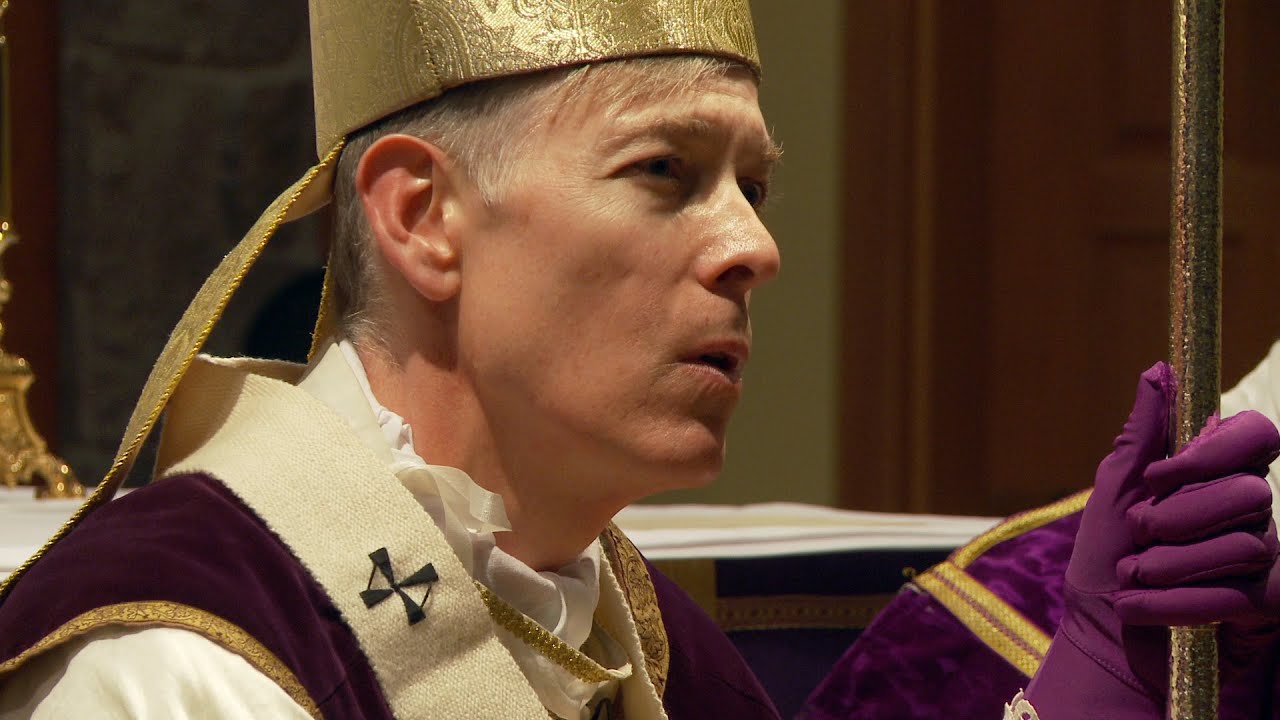
Your post of Archbishop Sample’s remarks and the subsequent discussion in the remarks section rekindled an interest I have in the liturgical reforms instituted by Pope Pius XII, specifically encouragement of the dialogue Mass when Low Mass is celebrated. I remember there was a lot of discussion about this in the early ’60 while the Council was in session. I’d be curious to know how prevalent this practice is in communities that celebrate the Extraordinary Form.

First, let’s review.  In a nutshell here are the degrees permitted.

The parts that could be said or sung by the congregation were of two kinds: the parts to be sung at High Mass (Pontifical, Solemn, Sung), and the parts which are responses of the ministers or the server at Low Mass.  The 1958 document Musica sacra divides dialogue Masses into four degrees of outward, vocal expression.  In a nutshell,

  1. The congregation makes the shorter responses such as the Amen, Deo gratias, Et cum spiritu tuo along with the servers.
  2. Same as above but adding all the responses of the servers, including the prayers at the foot of the altar, Second Confiteor where used, etc..
  3. Same as above adding the Ordinary (e.g. Kyrie, Gloria, Credo, etc.) together with the priest and/or choir.
  4. Same as above adding even the Propers (Introit, etc.) with the priest and/or choir.

Certain texts of the Mass are reserved to the priest, and should never be said aloud by the faithful.  Period.

Of course there is the tricky dynamic of congregations comprised of those who want to respond while others do not. Sometimes the priest (wrongly, in my view) wants no responses but the congregation does.

Each community should find their way in this regard, always under the prudent and well-informed suggestions of the priest.

As far as how prevalent “dialogue” versus “silent” Masses are, I am not sure.  Most of the places were I have been (quite a few) there is “dialogue”.  People respond both speaking and singing.

Maybe some of you can chime in?

I’ll turn the moderation queue and let some comments pile up before releasing them.  That way you can all jump in without jumping on, if you get me.

Meanwhile, let’s have a poll.  If I did this right, you can choose two answers.

About Extraordinary Form "dialogue" Mass. ROUND 2

View Results

Posted in "How To..." - Practical Notes, ASK FATHER Question Box, Liturgy Science Theatre 3000 | Tagged ,
70 Comments

ASK FATHER: Can confessions be heard during Mass in the Extraordinary Form?

From a reader:

Is it appropriate for a priest to be hearing confessions while Extraordinary Form Mass has started? My priest seemed to think it was never done in the “old” days as he called it.

Yes, confessions were often heard during Mass in the “old” days.  It was fairly widespread where there were more than one priest available in a parish or at a chapel.

As a matter of fact, this last Sunday we had confessions during my Sunday Mass.  A priest was available and generously gave of his time and heard quite a few confessions for about 45 minutes.   Of course the people who attend the EF are generally pretty good at making their confessions.  They confess sins in both kind and number and they don’t ramble.

But I digress.

It is entirely appropriate that confessions be heard during Mass.

In Redemptionis Sacramentum 76 we read:

Furthermore, according to a most ancient tradition of the Roman Church, it is not permissible to unite the Sacrament of Penance to the Mass in such a way that they become a single liturgical celebration. This does not exclude, however, that Priests other than those celebrating or concelebrating the Mass might hear the confessions of the faithful who so desire, even in the same place where Mass is being celebrated, in order to meet the needs of those faithful. This should nevertheless be done in an appropriate manner.

Cf. Pope John Paul II, Apostolic Letter (Motu Proprio), Misericordia Dei, 7 April 2002, n. 2: AAS 94 (2002) p. 455; Cf. Congregation for Divine Worship and the Discipline of the Sacraments, Response to Dubium: Notitiae 37 (2001) pp. 259-260.

Posted in "How To..." - Practical Notes, ASK FATHER Question Box, GO TO CONFESSION, Liturgy Science Theatre 3000 | Tagged , , , ,
23 Comments

English translation problem on Vatican website of key paragraph of an important document

15_03_23_DH2_screenshotFrom a reader…

QUAERITUR:

I was reading an article on the SSPX website on Religious Liberty last night. In it, they quoted Dignitatis Humanæ of the Second Vatican Council. Interestingly, the part the SSPX would particularly object to is missing on the Vatican’s website!

Here is the quote the Society gave:

“This right essentially means that all human beings must be immune from all coercion, both by individuals and by social groups and by any human authority whatsoever, so that in religious matters no one is forced to act against his conscience or prevented from acting, within just limits, according to his conscience, in private as well as in public, alone or together with others.”

And here is the Vatican’s English version of DH 2.

“This freedom means that all men are to be immune from coercion on the part of individuals or of social groups and of any human power, in such wise that no one is to be forced to act in a manner contrary to his own beliefs, whether privately or publicly, whether alone or in association with others, within due limits.”

Interestingly, the German translation of DH 2 includes the highlighted bits:

“Diese Freiheit besteht darin, daß alle Menschen frei sein müssen von jedem Zwang sowohl von seiten Einzelner wie gesellschaftlicher Gruppen, wie jeglicher menschlichen Gewalt, so daß in religiösen Dingen niemand gezwungen wird, gegen sein Gewissen zu handeln, noch daran gehindert wird, privat und öffentlich, als einzelner oder in Verbindung mit anderen – innerhalb der gebührenden Grenzen – nach seinem Gewissen zu handeln.”

I assume this is yet another case of the Vatican’s website not living up to standards one would expect, but it is a very curious omission, is it not? After all, the words are intermingled in the sentence and not a separate paragraph, so one would think their omission would be conscious.

Yes, that is curious indeed.  It seems that the problem is in the rendering, or non rendering, of Latin neque impediatur.

Here is the Latin:

2. Haec Vaticana Synodus declarat personam humanam ius habere ad libertatem religiosam. Huiusmodi libertas in eo consistit, quod omnes homines debent immunes esse a coercitione ex parte sive singulorum sive coetuum socialium et cuiusvis potestatis humanae, et ita quidem ut in re religiosa neque aliquis cogatur ad agendum contra suam conscientiam neque impediatur, quominus iuxta suam conscientiam agat privatim et publice, vel solus vel aliis consociatus, intra debitos limites. Insuper declarat ius ad libertatem religiosam esse revera fundatum in ipsa dignitate personae humanae, qualis et verbo Dei revelato et ipsa ratione cognoscitur (2). Hoc ius personae humanae ad libertatem religiosam in iuridica societatis ordinatione ita est agnoscendum, ut ius civile evadat.

Here is the Italian:

2. Questo Concilio Vaticano dichiara che la persona umana ha il diritto alla libertà religiosa. Il contenuto di una tale libertà è che gli esseri umani devono essere immuni dalla coercizione da parte dei singoli individui, di gruppi sociali e di qualsivoglia potere umano, così che in materia religiosa nessuno sia forzato ad agire contro la sua coscienza né sia impedito, entro debiti limiti, di agire in conformità ad essa: privatamente o pubblicamente, in forma individuale o associata. Inoltre dichiara che il diritto alla libertà religiosa si fonda realmente sulla stessa dignità della persona umana quale l’hanno fatta conoscere la parola di Dio rivelata e la stessa ragione (2). Questo diritto della persona umana alla libertà religiosa deve essere riconosciuto e sancito come diritto civile nell’ordinamento giuridico della società.

Curious indeed.

Posted in Religious Liberty, The Drill, Vatican II | Tagged , , , ,
27 Comments

Great news!

I received some great news today. The Benedictine monks in Norcia, Italy have finished recording some 30 tracks for a forthcoming music CD of Gregorian Chant.

The target time for release is early June 2015.

I will post links as soon as they are ready.

Posted in The Campus Telephone Pole | Tagged , ,
6 Comments

POLL: Covering images for 1st Passion Sunday, 5th Sunday of Lent

ChurchFrom this Sunday, traditionally called 1st Sunday of the Passion, it is customary to veil images in churches.

What is going on where you are?

This is a fine old tradition.  It has to do with deprivation of the senses and the liturgical dying of the Church in preparation for the Lord’s tomb and resurrection.

We are our rites.

For this 1st Sunday of the Passion (5th Sunday of Lent) I saw in church that:

View Results

Posted in Liturgy Science Theatre 3000, Our Catholic Identity, POLLS | Tagged ,
55 Comments

My View For Awhile: Home again home again…

It’s time for the return trip, to be home for Sunday.

The sign I was sitting under.

As I wait for the first leg of the journey, I reflect on the joys of traveling by air. My stay in the members lounge is at least better than hanging out at the gate. For example, I settled into the “QUIET AREA”. You know the drill: one of those areas with a sign with an image of a phone overlaid with the circle and bar through it that says in CAPS: QUIET AREA. This quiet zone (QZone) was invaded by a woman with children with loud gaming systems. When this was pointed out to her by someone, her response was to point to the sign and say “I’m not using my cellphone!” They, too, were sitting directly under one of these signs.

So I moved.

Now I am being treated to the fairly loud belches of an older fellow in a pastel sweater and matching socks. But … when he got a call on his mobile, he got up and moved away even though we are not in the QZone.

Anyway, it has been a good trip.  I all too briefly visited my mother for her 80th birthday and then gave a talk to a Newman Center group on “Modernism 2.o”.  I am still furious that the Dodgers moved to Arizona or I probably would have tried to take in a Spring Training game.

UPDATE: Now the QZoners are carrying on a loud conversation with a couple some yards away.   The irony is that the QZ sign is directly over her chair.  That said, it is time to head to the gate.   

UPDATE

On board.  So far no one has started to trim her toe nails or spit her tobacco juice into a beer can.

I have seen, however, some covert “vaping”.  I suspect that that is not allowed flights now.  But that’s a safe bet.

It is “vaping” with one p, right?  A whole new phenomenon.

UPDATE

Apparently our vehicle doesn’t have any fuel.  And so we are waiting.  It seems too many flights were scheduled in too short a period.

Still, I have heard that it’s good to have fuel, so waiting is probably okay.

I also built in an adequate layover in my itinerary.  Even though airlines pad their departure and arrival times, so as to have a higher on-time percentage, less and less often do I choose tight connections.  The only extra hour or so off total length is just not worth the close calls.

UPDATE

Okay they are hooked up and giving us fuel. Meanwhile, speaking of vaping, vapor is pouring in with cold AC air creating dripping condensation on the cabin interior.  It’s humid here.  Not exactly the firing up of the Apollo XIII CM but… when you are bored you start to make stranger leaps.

UPDATE

Next leg.  There is some sort of shapeless groovy techno-Euro pop being pumped in over the speakers.  I’ve already heard a couple people mumble about it as they make their way to the seats.

I think this music isn’t actually performed by anyone.

This is what we had to listen to.  I held my phone up to the cabin speaker.

Posted in On the road, What Fr. Z is up to |
29 Comments

ASK FATHER: Can’t get baptism certificate. Can we still get married?

traditional marriage certificateFrom a reader…

QUAERITUR:

My fiance was baptised (as well as communion and confirmed) in a catholic church in Sicily and is unable to obtain his baptism certificate. What do we do in this situation? Can we still get married in the Church?

A recently-issued copy of the baptismal record is required for a Catholic marriage for a couple reasons.

First, and most importantly, it establishes the fact that the person in question is indeed a baptized Catholic.

Secondly, it demonstrates that the person is presumably free to marry. Had the person been married in the Catholic Church, notice of the wedding should/would have been sent to the parish of baptism. The fact of the marriage would have been recorded in the parish registers and, therefore, on the baptismal certificate.  That’s why certificates have to have been issued fairly recently.

Thirdly, it provides information where this notice should be sent once the wedding is complete.

Baptismal records are sometimes difficult to get. Language barriers, destruction of buildings and record books, war, lack of knowledge of where one was baptized … all of these and other reasons, not to mention lazy priests, hinder attempts.

If a record is impossible to obtain, there are a couple possible solutions.

Someone who was actually at the baptism can provide testimony. If the one baptized was an adult, he could attest to his own baptism. Photographs, notices, family letters can sometimes be used to prove the fact of baptism. In some cases, proof of First Holy Communion or a confirmation certificate can be used.

There would be an explanation of why a certificate was not obtained. Just because the baptism took place overseas is not a good reason. ALL Catholic parishes, through the entire world, are required to keep these records.  There would also need to be testimony taken from people who knew the person during his marriageable years, who could attest that the person had not been previously married.

In a worst-case scenario, if there is absolutely no objective proof forthcoming that the person had been baptized, and no witnesses who can attest to this, the person could be conditionally baptized. This is a last-resort option, since we really should do everything we can to avoid giving conditional sacraments.

This is also a reason why marriages at SSPX chapels and completely independent and fringe chapels are so problematic.  There are questions not only of validity but also of record keeping.

Posted in "How To..." - Practical Notes, ASK FATHER Question Box, SSPX | Tagged , ,
26 Comments

ASK FATHER: TLM form for Communion during Novus Ordo

MassCommunionFrom a reader…

QUAERITUR:

I go to both the older and newer forms of the Roman Rite at my parish church and receive Holy Communion kneeling / on the tongue at the new form.

Instead of saying “?Body of Christ” when I go up to receive, Father gives Says ” Corpus Dómini nostri Jesu Christi custódiat ánimam tuam in vitam ætérnam. Amen” JUST FOR ME!

Is this a liturgical abuse? (albeit from the best of intentions) found it odd but haven’t spoken to him about it because I’m not sure.

I’m torn.

On the one hand, this is how a “mutual enrichment” of the two Forms of the Roman Rite will eventually come about.

On the other hand, and especially at this time, I think we need to hold pretty close to the “Say the Black, Do the Red.”

Using the older distribution form in the newer form of Mass is, objective, not in keeping with the rubrics of the newer form, wherein the distribution form is spelled out pretty clearly. From that point of view it is a violation of the rubrics. Is it a liturgical abuse? Yes, and no. No one, not even a priest, has the right to change the texts. And yet, it isn’t as if the priest is making up his own form for distribution. He is using a time honored form that is presently used in the Extraordinary Form.

How serious is this as an abuse?  Not very.  And if this is a one off, that is, he has done this for one person and isn’t doing it for everyone at every Mass, I think it can be set aside.

Were I this priest’s bishop, and this were reported to me as an abuse, I would punish him by suggesting that he use blended Scotch instead of a single malt for one week.

UPDATE:

I had a couple emails about the reverse: using the simple, Novus Ordo form, “Corpus Christi” during a TLM or, worse, the vernacular “The Body of Christ”.

It is slightly wrong for to use the older form during the newer Mass.  It is much more wrong to use the newer form during the older Mass.

Not only are the sensibilities of those who attend regularly the TLM more finely attuned, but the very nature of the rites call for this more exacting formula of distribution.  For one thing, the form is intimately tied to the form the priest says for his own Communion.  That is not the case in the Novus Ordo, where the forms are entirely different.  No solidarity there.

I have no time for the lame excuse whined up by priests that the older form for distribution is toooo haaaard.  B as in B.  S as in S.  Just. Learn. It.

Remember, according to Universae Ecclesiae 24 and 28, in the TLM we don’t have altar girls, we don’t have Communion in the hand, and we priests must stick to the older, full formula for distribution of Communion rather than use the innovation, the simple Novus Ordo form.

Posted in "How To..." - Practical Notes, ASK FATHER Question Box, Liturgy Science Theatre 3000 |
16 Comments

ASK FATHER: Can someone excommunicated go to Mass?

From a reader…

QUAERITUR:

The Catholic Encyclopedia entry on excommunication (from 1908) says an excommunicated person can’t participate in any liturgies, i.e. he can’t even be present. The CIC only says he can’t minister or administer the sacraments. Is the CE out of date or is the CIC not giving all applicable law?

The old Catholic Encyclopedia, while a good source to start with for certain things, is out of date.

According to the law currently in force, an excommunicated person is not excluded from attending Holy Mass. In fact she is obliged to attend Mass on Sundays and Holy Days just like everyone else.

She may not, however, receive Holy Communion.  And depending on the reason for the excommunication and the faculties of the confessor, she may not receive sacramental absolution until the censure is lifted… except in danger of death.

We no longer have the category of excommunicate who is also vitandus, to be avoided, shunned.  That was rarely imposed and was done away with in the 1983 Code.  There was also, once, a tolerandus category I believe.  I can’t help of thinking of Card. Kasper’s odd solution for the divorced and civilly remarried, to be seen as “tolerated but not accepted” insofar as Communion is concerned.  How odd.

A handy resource is Dr. Peter’s book HERE

Posted in "How To..." - Practical Notes, ASK FATHER Question Box, Liturgy Science Theatre 3000 | Tagged ,
21 Comments

Archbp. Sample on a “house divided”. Tune in, trads and liberals alike!

I direct the attention of the whole readership to a video of a sermon of my old friend His Excellency Most Reverend Alexander Sample, Archbishop of Portland.

He is celebrating a Pontifical Mass at the Throne.  He preaches about the unity of the Church, about a “house divided”.

Every single one of you who desire the Extraordinary Form (and those who hate it) ought to listen carefully to the Archbishop’s message.

I echo with him… imagine what we could accomplish were we to set aside some of our minor differences and work together in a more unified way.

YouTube thumbnailYouTube icon

Posted in "How To..." - Practical Notes, Liturgy Science Theatre 3000, New Evangelization, SUMMORUM PONTIFICUM, The Coming Storm | Tagged , ,
50 Comments