KC, MO: anti-Catholic atrocity scheduled before Week of Prayer for Christian Unity

When anti-Catholic atrocities take place, Catholic bishops should act.

I read in the Kansas City Star (a McClatchy paper), that some “Lutherans” are going to host a sacrilegious, fake catholic “ordination” of a woman by the usual wymyn suspects.  HERE  It is to take place at an ELCA associated Lutheran church on 3 January, 2015 at 2 pm.

It is hard to get worked up about what these disturbed wymym are doing, if considered in and of itself.  They are so far beyond the fringe that Hubble has a hard time seeing them.

What is far more bothersome is that this ecumenical atrocity is to take place in a church that calls itself “Lutheran”.  From the website of St. Mark Hope and Peace Church near downtown KC, we learn about the “pastor”… “pastrix”….

Pastor Donna Simon is a Midwesterner by birth (and temperament), though she has spent much of her life on the West Coast.  She is a graduate of San Francisco State University (English Literature) and Pacific Lutheran Theological Seminary in Berkeley, California.

Pastor Donna was called into the ministry from a volunteer position as church youth director at Messiah Lutheran Church, Redwood City, California.  While attending seminary, she came out as a lesbian.  Because the Evangelical Lutheran Church in America did not allow the ordination of openly gay and lesbian candidates, she joined the roster of Lutheran Lesbian and Gay Ministries, now known as Extraordinary Lutheran Ministries.

In 2000, Abiding Peace Lutheran Church extended a call to Simon.  She was ordained on October 28, 2000.  The ELCA changed its policy in 2009, and Pastor Donna joined the ELCA roster on October 28, 2010.

We know that the ELCA won’t take any responsibility for anything that anyone does.  However, they are still associated with this KC church and that “pastor”.

They don’t get a pass.  This is something that should make faithful Catholics see red.

It all works one way, right?  Protestants think they can tell Catholics what to do or think about our sacraments?

On the eve of the Octave for Prayer for Christian Unity, they stick their “F-YOU” finger in our faces, by hosting this farce and sacrilege.

Here’s the bottom line.  Antics like this should have consequences for ecumenical dialogue.

The women’s ordination thing is silliness.  It is a circus.

A Protestant church is going to host the circus.  By doing so , the will give the Catholic Church the finger.

There should be consequences.

We either take ecumenism seriously or we don’t. If we do – and I believe we must –  we have to react strongly when ecumenical ideals are so grossly violated by Protestants who invite or permit these “women priest” ceremonies in their churches.

walker rs 12-0914 045f

Soon-to-be-excommunicated Georgia Walker (standing)

The most sacred rites of the Catholic Church are Holy Mass and ordination to Holy Orders.

They intend to trample the rites that we Catholics hold as sacred.

These silly Catholic women-priest supporters are committing sacrilege in simulating Mass and Orders.  That’s a given.  But they are so bizarre that they make little difference.

What does make a difference, however, is that the Protestants who host them intentionally assist in a mockery of our Holy Mass and a mockery of our priesthood.

For a long time progressivist Catholics were staging Jewish sedar meals in their churches.  Some Jews were angered by this.  We got the message from the Jews and stopped doing what was offensive to them, even though we meant no offense by doing so.

By allowing this group of fakers into their churches, Protestants accept the premise that what those women play at is actually a Catholic ordination and a Mass.

How dare PROTESTANTS decide what a Catholic Mass is?

They might speciously respond, “Gee, we mean no disrespect. We are just giving space to this group”.  NO.   We do not accept that.  What they are doing is aiding a protest against the Catholic Church.

There is no way around this.

But “Pastor Donna” at the church is committed to the “F-YOU” Finger approach.  In the Star article we read:

Donna Simon, pastor at St. Mark, has no patience for the view that women cannot be priests.

The logic for male (only) ordination is spurious,” she said. “Nowhere in the Bible does it say you may not ordain women. But because Jesus only called men, the church has leaned into this tradition that you can only call men. It hasn’t leaned into a tradition that you can only call Jewish men because all the men that Jesus called were Jewish. They just picked that one thing.”

Protestants who give these fakers aid are either on their side, and thus support their claim that what they are doing really is an ordination and Mass, or in claiming not to be taking sides they are still giving support to an anti-Catholic protest.

Bishops have to take action when offensive, anti-Catholic things like this take place.

Upon hearing the news that this ceremony is going to take place (or has taken place), the local Catholic bishop must call the pastor of that Protestant parish and say, “I’m the Catholic Bishop.  Do not allow this sacrilege to be committed in your church. You wouldn’t do this for a group of dissident Jews wanting to ordain rabbis, but we are Catholics so you don’t care what offense you give us.  Until an apology is issued, don’t look for us to dialogue with you again.”

Then that Catholic bishop should call the head of the denomination and convey the same message.

Then that Catholic Bishop should send an informative note to the USCCB’s ecumenical office and to the CDF and to the Pontifical Council for Promoting Christian Unity to let them know the facts of the sacrileges that took place and who helped them.

Then that Catholic bishop should call the press and give them his view about the offense the Protestants gave and the damage they inflicted on ecumenical dialogue.  Of course, in the case of the Kansas City Star, which has the knives out for Bp. Finn, I suppose he won’t get too far.

True ecumenism does not consist in lying down and letting some other church ecclesial communion kick you and define what Mass is for you, or say who can be ordained, or stick their “F-You” finger in your face by hosting these sacrilegious fakers.

Posted in ACTION ITEM!, Liberals, Our Catholic Identity, The Drill, The Last Acceptable Prejudice, Wherein Fr. Z Rants, You must be joking! | Tagged , , , , , , , , ,
28 Comments

WDTPRS: Holy Family – children first learn who God is by knowing their parents

holy-family-murilloThis coming Sunday in the post-Conciliar, Novus Ordo, Ordinary Form calendar, is the Feast of the Holy Family.   In the traditional Roman calendar, Holy Family will be on 11 January.

The place God Incarnate chose to begin manifesting His sacrificial love, which reached its culmination on the Cross, was the family home.

Together with Mary and His earthly father Joseph, Christ began to reveal something of the unity of love within the most perfect of communions, the Holy Trinity.

It is fitting to celebrate the Holy Family as part of the Christmas cycle. We contemplate the coming of the Lord in imitation of that final, perfect communion with God to be enjoyed only by the blessed in heaven.

The family is a paradigm of all other human relationships. Food for thought during the presidential campaign process and also as we scrabble for solutions to so many growing social ills.

The Holy Family teaches us, still in this world but moving inexorably toward our judgment and final goal, how to live together in this present state of “already, but not yet”.

COLLECT (2002MR):

Deus, qui praeclara nobis sanctae Familiae
dignatus es exempla praebere,
concede propitius,
ut domesticis virtutibus caritatisque vinculis illam sectantes,
in laetitia domus tuae praemiis fruamur aeternis.

This is a new composition for the Novus Ordo.  It could have a precedent in the Ambrosian Rite.

OBSOLETE ICEL (1973):

Father, help us to live as the holy family,
united in respect and love.
Bring us to the joy and peace of your eternal home.

According to the fine Lewis & Short Dictionary the noun exemplum, which we have seen before, means, “a sample for imitation, instruction, proof, a pattern, model, original, example….” For the ancient Fathers of the Church, exemplum – a technical tern from rhetoriccould mean many things: man as God’s image, Christ as a Teacher, and the content of prophecy, etc. In Greek and Roman rhetoric and philosophy, which so deeply influenced the Fathers, exemplum had auctoritas, “authority”, which means among other things the persuasive force of an argument. When we hear this prayer with Patristic ears, exemplum is not merely an “example” to be followed: it indicates a past event as a reason for hope and an incitement to the spiritual life that leads to being raised up after the perfect exemplum, the Risen Christ.

The deponent verb sector (you know the word “sect”) is, “to follow continuously or eagerly… to strive after.” The playwright Publius Terentius Afer (Terence + 158 BC) uses it for followers of a philosopher (Eunuchus 2.2.31). These disciples would take their name from their philosophical master just as we “Christians” have taken ours.

In the ancient Church there was a gossamer thin distinction between religion and philosophy. Christ, the teacher offers His disciples perfect exempla. He is the verus philosophus. He is Wisdom and Truth. Our Faith is vera philosophia.

That illam goes back, necessarily to familia (singular feminine), not to exempla (neuter plural).

Praeclarus, a, um, the adjective (paired with exempla) signifies basically, “very bright, very clear” and then by extension, “very beautiful (physically or morally), magnificent, honorable, splendid, noble, remarkable, distinguished, excellent, famous, celebrated.” Praeclara …exempla is so packed with information that it is really impossible to render it into English completely without a long excursus, like, “authoritative models for imitation very beautiful in instructive clarity”. Also, the combination of praebere exempla is very common in the writings of the Fathers often for “offering examples for imitation” of virtues or good works.

This prayer is laden with philosophical vocabulary revolving around instruction of and conformity of life to wisdom through virtues.

The term domestica virtus, is used by ancient authors of philosophical works (e.g., Cicero (+43 BC) and Seneca (+AD 65)) and thereafter by the doctor of the Church St. Ambrose of Milan (+397) in his own works on virginity and on virtues and duties.

This word pairing brings to mind the Second Vatican Council’s description of the family as the “domestic Church”, presented again in the Catechism of the Catholic Church 1656 citing Lumen gentium 11:

In our own time, in a world often alien and even hostile to faith, believing families are of primary importance as centers of living radiant faith. For this reason the Second Vatican Council, using an ancient expression, calls the family the domestic Church (Ecclesia domestica). It is in the bosom of the family that parents are “by word and example…the first heralds of the faith with regard to their children. They should encourage them in the vocation which is proper to each child, fostering with special care any religious vocation.”

LITERAL VERSION:

O God, who deigned to provide us
with the very beautiful models of the Holy Family,
grant propitiously
that we who are eagerly imitating them in domestic virtues and the bonds of charity,
may enjoy eternal rewards in the joy of Your house.

CURRENT ICEL (2011):

O God, who were pleased to give us
the shining example of the Holy Family,
graciously grant that we may imitate them
in practicing the virtues of family life and in the bonds of charity,
and so, in the joy of your house,
delight one day in eternal rewards
.

Father asks God to enable us through grace, building in us the supernatural virtues of faith, hope and especially charity, to imitate the clear examples (praeclara exempla) of Jesus, Mary and Joseph in the communion of their earthly household. We are to build communion among ourselves, on their authoritative model, which in turn exemplifies the communion of the Church and of the Persons of the Trinity.

Thereafter, our examples, our own families, serve as the building block of a society oriented to God, the “city of God”, not the “city of man”.

The reward for doing this faithfully is participation in the heavenly household of God the Father in the new family of the Church triumphant.

Holy FamilyWhat the Holy Family offers us is a real exemplum, authoritative model, of freedom.

This is not the false freedom of self-interested satisfaction of appetites, or the freedom to “choose” divorced from consideration of objective truths.

This is freedom within, not from the bonds of charity.

The more we are implicated or “bound up” in the love of God, giving Him our freedom, the freer we truly are.

Vinculum literally means “that with which any thing is bound”, a “fetter”, like a chain. Here it describes effect of real charity, vincula caritatis, the kind of sacrificial love based on obedience to God’s will that the Holy Family had for one another and Christ showed forth perfectly while fixed and bound to the Cross.

The “bonds of charity” require sacrifices and the abandoning, or better, transformation of selfish desires.

The bonds of the family, and any authentic relationship based on something other than mutual use of each other, seem to modern eyes often to restrict personal freedom. But this is not the case. God’s love and God-like love, charity, makes us freer than we could ever hope to be without it.

The bonds of love and virtues of the Holy Family are foreshadows of the harmony of heaven which we are eagerly striving after.

The family, nourished in the faith and sacraments of the Church, is an image of the Holy Family, itself an image of the communion of persons of the Church in heaven and of the Persons of the Trinity.

This Collect points to the importance of the “domestic Church.” The family is the first “church” children know.

Parents are the first examples of God children experience. Your children first learn who God is by experiencing you.

Can anyone wonder why the forces of hell are bending relentless attacks upon the family and the virtues which must be practiced in the home?

Through the media, especially cinema, TV, and the internet, there pour into our homes a constant assault on virtue.  And it is precisely virtue (not diversity, not tolerance, not inclusivity, not politically correct sensitivity, not freedom of choice unfettered from charity) that makes possible a family and therefore a society.

This prayer is a contradiction of worldly ways and an affirmation of the God’s true image in us.

Posted in Liturgy Science Theatre 3000, One Man & One Woman, Our Catholic Identity, WDTPRS | Tagged , , , , ,
4 Comments

ASK FATHER: Who can be elected Pope?

From a reader…

QUAERITUR:

Can a male catholic who has not been ordained to the priesthood become Pope?

Yes.

The prerequisites are that he be

1) male, because he must become Bishop of Rome, and it is impossible for females to be given or for them to receive the Sacrament of Orders.
2) sui compos, because he must understand the question he is asked at his election and then express his consent.

Most authors think that he has to be baptized, though it seems possible that he has to at least be willing to be baptized (otherwise he could not also be ordained). Also, some author think that he cannot be a manifest heretic or schismatic, which seems reasonable, but not all writers think that’s a deal-breaker.

He doesn’t have to be smart or, it seems, wise, holy, kind, any of those things which we would prefer.

It has been hundreds of years since a non-Cardinal was elected. However, when and if such a thing would happen, were the man who was elected (probably brought into the conclave) to assent, he would have to be ordained immediately. The election of a non-bishop would be valid, but he wouldn’t be Roman Pontiff in the full sense until the moment he became a bishop.

Posted in "How To..." - Practical Notes, ASK FATHER Question Box |
19 Comments

“The sobs of that appalling infancy cleanse me, those tears wash away my sins.”

From my old Patristic Rosary Project:

Nativity DuccioWe continue our Patristic Rosary Project today with the:

3rd Joyful Mystery: The Nativity

Christ came into the world in “the fullness of time” (Gal 4:4). His First Coming was foreseen from all eternity and His Nativity was prepared from the beginning of the history of our salvation. The manner of His birth is significant. St. Leo I, “the Great” (+461; whose Christmas sermons deserve entries apart!) wrote in a letter:

His God in that “all things were made through Him and nothing was made without Him.” (John 1:3) He is human in that He was “made from woman, made under the law”. The nativity of His flesh shows His human nature. The virgin birth is an indicator of His divine nature. [ep. to Flavian 4]

Commenting on Luke 2:5, Gaius Marius Victorinus (+IV c.), a teacher of St. Jerome, wrote:

As there is a fullness in things, so there is in time. For each thing has its fullness in a full and copious perfection that abounds in everything. Christ is the fullness of things. The fullness of times is the consummation of freedom. So that His fullness may be whole and perfect Christ collects His members who are scattered, and in this way His fullness is achieved. So in the same way the fullness of times was achieved when all had become ripe for faith and sins had increased to the utmost, so that a remedy was necessarily sought in the judgment of all things. Hence Christ came when the fullness of time was completed. [Epistle to the Galatians 2.4.3-4]

Using the same concept of Christ coming even in the fullness of man’s sins, St. Cyril of Alexandria (+444; ever the good Neoplatonist) states, in a Eucharistic fashion:

He found humanity reduced to the level of the beasts. Therefore He is placed like feed in a manger, that we, having left behind our carnal desires, might rise up to that degree of intelligence which befits human nature. Whereas we were brutish in soul, by now approaching the manger, yes, his table, we find no longer feed, but the bread from heaven, which is the body of life. [Commentary on Luke, s. 1]

St. Jerome, who spent so much of his time at Bethlehem, wrote:

He found no room in the Holy of Holies that shone with gold, precious stones, pure silk and silver. He is not born in the midst of gold and riches, but in the midst of dung, in a stable where our sins were filthier than the dung. He is born on a dunghill in order to lift up those who come from it: “From the dunghill he lifts up the poor.” (Ps 113:7 (112:7 LXX). [On the Nativity of the Lord]

One wonders if Jerome, perhaps still stinging from his being passed over in the splendors of Rome, didn’t spend a great deal of time reflecting on poverty and riches.

St. Ambrose of Milan (+397), the nobly-born and sophisticated bishop of enormously powerful Milan, whom Jerome disliked intensely, makes an observation about Christ’s humility and in a bright paen speaks of the forgiveness of those same black sins Jerome and Cyril went on about. This is simply gorgeous:

He was a baby and a child, so that you may be a perfect man. He was wrapped in saddling cloths so that you be freed from the snares of death. He was in a manger so that you may be in the altar. He was on earth that you may be in the stars. He had no other place in the inn so that you may have many mansions in the heavens. “He, being rich, became poor for your sakes that through His poverty you might be rich”. (2 Cor 8:9) Therefore His poverty is our inheritance, and the Lord’s weakness is our virture. He chose to lack for Himself that He may abound for all. The sobs of that appalling infancy cleanse me, those tears wash away my sins. Therefore, Lord Jesus, I owe more to your sufferings because I was redeemed than I do to works for which I was created…. You see that He is in swaddling clothes. You do not see that He is in heaven. You hear the cries of an infant, but you do not hear the lowing of an ox recognizing its Master, for the ox knows his Owner and the donkey his Master’s crib. [Exposition of the Gospel of Luke 2.41-42]


ox and ass 01The eloquent Ambrose, not always original in his sources, is picking up imagery of the ox and ass, so commonly recognized by us as part of all our nativity scenes. It probably developed from a reference to Balaam’s ass in Scripture to which prophetic angel came (cf. Numbers 22). In the apocryphal and heterodox Proto-Gospel of James we also find the ox and ass.

St. Francis of Assisi (+1226), whose feast we celebrate on 4 October, Francis was truly devoted to the Blessed Virgin. In a year we can’t determine he composed a salutation to Mary which he recited every day:

Hail Lady, Holy Queen, Holy Mary Theotokos, who are the Virgin made church · and the one chosen by the Most Holy Father of Heaven, whom He consecrated with His Most Holy Beloved Son and with the Holy Spirit, the Paraclete; · in whom there was and is all fullness of grace and every good. · Hail His Palace; Hail His Tabernacle; Hail His Home. · Hail His Vestment; Hail His Handmaid; Hail His Mother · and hail all you holy virtues, which through the grace and illumination of the Holy Spirit are infused into the hearts of the faithful, so that from those unfaithful you make them faithful to God.

Francis-Assisi_Creche-NativityAll that Mary was and came to be, she is in light of her Son, the Word made flesh, flesh from Mary. Francis was a great lover of the mystery of the Incarnation and Nativity. In 1223 in a cave near the tiny Italian hill town of Greccio, Francis “reenacted” the Nativity scene, bringing in a manger and straw and an ox and ass. There was a procession in the night of the Christmas Vigil with and Mass was celebrated. Francis had a vision of the infant Jesus and he held Him in his arms. At. my home parish of St. Agnes in St. Paul (MN) at midnight Mass there is a procession to the crib and one of the altar boys, dressed in a Franciscan habit, places the Christ Child in the manger. I am sure you have your own wonderful customs. I guess it doesn’t surprise me that secularists hate Christmas and Nativity scenes so much. Christmas calls for humility and simplicity, yielding and generosity.

What an amazing thing it is to consider how the eternal Word, through whom all things were made, was made so very small. Interestingly, it was also in 1223 that Francis had put together the ninth chapter of Rule in which he concerns himself with the verbum abbreviatum. His brothers were to speak with brief words because the Lord Himself became a verbum abbreviatum. How consistent this is with the adage attributed (wrongly) to Francis that we should always be preaching the Gospel, and sometimes even use words.

nativity 01So much of our Christian life should be rooted in simplicity. Jerome again, Doctor Cantankerus as patristiblogger Mike dubbed him, makes a wonderful point aimed at us who spend our time in lofty books:

The Lord is born on earth, and He does not even have a cell in which to be born, for there was no room for Him in the inn. The entire human race had a place, and the Lord about to born on earth had none. He found no room among men. He found no room in Plato, none in Aristotle, but in a manger, among beasts of burden and brute animals, and among the simple too, and the innocent. For that reason the Lord says in the Gospel, “The foxes have dens, and the birds of the air have nests, but the Son of Man has nowhere to lay His head.” (Luke 9:58). [Homilies on the Gospels 1.6]


All of us, especially clergy who might glance at this page, can also take away this, from the quill of Origen (+c. 254) a thought about the meaning of the angel (incredible) being going to the shepherds to announce the Good News:

Listen, shepherds of the churches! Listen, God’s shepherds! His angle always comes down from heaven and proclaims to you, “Today a Savior is born for you, who is Christ the Lord.” For unless that Shepherd comes, the shepherds of the churches will be unable to guard the flock well. Their custody is weak, unless Christ pastures and guards along with them. We read in the apostle: “We are coworkers with God”. (1 Cor 3:9) A good shepherd, who imitates the good Shepherd, is a coworker with God and Christ. He is a good shepherd precisely because he has the best Shepherd with him, pasturing His sheep along with him. [Homilies on the Gospel of Luke 12.2]

A last thought from Ambrose as we think about this 3rd Joyful Mystery:

He is brought forth from the womb but flashes from heaven. He lies in an earthly inn but is alive with heavenly light. [Exposition of the Gospel of Luke 2.42-43]

Barocci Nativity

Posted in Linking Back, Patristiblogging | Tagged , ,
1 Comment

Fanon of Christmas Past

Exactly two years ago, His Holiness Pope Benedict XVI celebrated the First Holy Mass of Christmas and he wore the fanon, hated by liberals and the ungodly HERE.

20121224-161448.jpg

20121224-161456.jpg

20121224-161505.jpg

I turned on the Mass from St. Peter’s Basilica for a little bit.  It was an object lesson in how not to sing Gregorian chant.  Excruciating.  The pace of this would put a funeral face one just about anyone.  It’s great that they have some Gregorian chant, it being the sacred music that Second Vatican Council elevated above all others, but… at least sing it right.  How hard is this?


Posted in Benedict XVI | Tagged , ,
20 Comments

How to make your parish more self-centered!

A reader alerted me to this.  Pop over to National Catholic Register for a peek at an old (2011) satirical piece by Tim Drake about…

14 Steps to a More Self-Centered Church

[…]

14. Community Center
Rather than describing your parish as a Church, adopt the practice of naming yourself simply a “community” (e.g. Holy Spirit Community). Evangelical Christians anxious to disassociate themselves from anything too closely resembling any kind of traditional Church—and bearing such names as Hosanna, The Vine, The Door, The River, Joy Center, or Tree of Life, will especially welcome this change.

13. Move the Music to the Front
Make music the focal point of Mass. Place the musicians as close to front and center as possible. Eschew the choir in place of a band. Situate a drum set right within the sanctuary, and specifically implement this step in conjunction with Step #1 for full impact. Make the music as banal and silly, and self-centered as possible. Applause—for songs meant for God—is mandatory.

[…]

Read the rest there.

14 more reasons for why we need Summorum Pontificum!

Posted in Liberals, Lighter fare, Liturgy Science Theatre 3000 | Tagged
11 Comments

ASK FATHER: Signs of reverence for priests

From a reader…

QUAERITUR:

I was hoping to hear your insight into traditions that seem lost! Will you please share your thoughts regarding bowing for clergy, kissing the hands of priests and referring to priests directly as Your Reverence?

We live in an age that touts an egalitarian ethos, as if it were some sort of virtue… if the very notion of virtue applies anymore. Especially in North America, “casual” is the thematic word both for the dress code and for the prevailing attitude. Gone are the days when ladies in hats and gloves would ride the trolleys downtown for shopping, men went to ball games wearing ties, and friends would address each other as “Mr. Smith” and “Mr. Mukopadhyay.”

For the most part, those who insist on titles are automatically labelled as cold, or distant, rigid, or authoritarian (Medical doctors, military personnel and politicians seem to be an exception). Many of our traditions of respect have been lost, and who knows how or when – or in what form they will return.

We have lost decorum.  With the loss of decorum comes loss of self-respect and understanding of the dignity of others.  We devolve into what Benedict XVI has warned about through his entire career, “auto-sufficiency”.

It’s tragic that we’ve lost the concept of formality, propriety, what is apt in our culture. But to turn the sock inside out, ironically this loss of decorum also does damage to our expression and attitude of casualness, informality and intimacy.  :If everyone calls each other by first name – names being important – how do we let someone in to our inner circle by, after some time of knowing him, saying, “Please, call me Bob”? That’s signals a new relationship.  Many languages signal relations by pronouns and verb endings.  German even has verbs to describe addressing people with familiar Du, or formal Sie.

It’s simply dreadful for priests, regardless of how they feel about the matter, to dismiss or denigrate the attempts of the faithful to show reverence toward them. It’s not about us, it’s about Christ.

Some people, rightly, see priests are representatives of Jesus Christ (and priests should constantly remember that). When they kiss our hands, or call us “Father, Reverend,” or suchlike – they’re showing their respect for Christ. I once heard of a bishop who chipped the tooth of an elderly nun who was attempting to kiss his ring. He yanked his hand away from the dear sister with such force that she was required to see a dentist. For shame.

The titles, and the garb and the decorum is not about us.

Of course it is possible to be over the top in expressions of respect, “Your Reverence”, constantly repeated, isn’t necessary.  Once or twice, fine… every other sentence, … perhaps not.  Please, don’t.

That said, it is also bad form for priests to insist on some sign of reverence.  So many people today are casual in their attitudes not out of disrespect, but because they simply have never been taught anything else. If someone were to call me by my first name, I might gently correct them and say, “It’s Father Zuhlsdorf, thank you.”  Of course some do this, use just a baptismal name, as a pointed insult.  In that case, the one whom they are insulting is really not the priest, but Our Lord and His Holy Church.  I also am not a fan of “Father John… or Monsignor John…”.  That’s a bizarre hybrid.

We can reassert some formality and respect in our culture by showing it.  For example, teachers could address their students by their titles and surnames rather than their first names. Oddly, they seem to be the same teachers that have less difficulty with discipline than some of the “call-me-Mike” variety.  Priests can show decorum in the way they dress and in the forms of address they use.

And let’s bring back hats, gentlemen.


Posted in "How To..." - Practical Notes, ASK FATHER Question Box, Priests and Priesthood | Tagged , , , , , ,
59 Comments

ASK FATHER: What am I supposed to do during Mass?

From a reader…

QUAERITUR:

At the TLM I understand that I, as a layperson, gain the graces simply by being present, but what am I supposed to do during it? I’ve heard that people used to pray the rosary silently. I sometimes follow along in the missal but should I be reading what the priest is saying silently or should I be praying with what the choir is singing? For instance would I meditate on contrition during the Kyrie instead of reading what the priest is saying while the Kyrie is being sung? What are some ideas? What did the common folk of the past do?

How can the laity participate in the Holy Mass? How did they used to? How can they best do so?

Excellent questions. The fact that you are asking these questions is a sign of desire to grow in holiness. The first promptings of the Holy Spirit usually excite in us the desire to pray. Secondly, we get inspired to try and pray with the Church. Thirdly, we get inspired to try and pray well.

There’s no set way prescribed for the laity to participate in the Holy Mass.

The Church is gracious in recognizing that we are all individuals. We have our own temperaments, interests, and devotions. As individuals our moods and abilities will vary dramatically.  Our needs change from day to day, year to year, season of life….

The Roman Rite is not linear. There are different things going on at the same time. For Catholics, this is not confusing cacophony, but rather soothing symphony. When listening to a symphony, you can pay close attention to the oboe one time, the strings the next time, the kettledrum a third time. Or you can let the whole sound wash over and enjoy the harmonies. There’s no “right” way of listening to a symphony.

This applies to Holy Mass.

When Hearing Mass, you can attentively pray along with the choir.  You can, make your responses to the priest’s greetings and promptings to pray, for example, at the congregations Domine, non sum dignus Or you can pray along with the priest… silently, of course, during his own prayers. You can use the rosary to meditate on the Lord’s life, Our Lady’s intercession, and the graces showered upon us. Perhaps meditate on other aspects of our Faith.  You might express your sorrow for sins you’ve committed, pray for the needs of your family and friends, or use the time to simply give thanks to the Blessed Trinity.

Holy Mass is the highest prayer God has given the Church to offer to Him. It stands to reason that the closer your prayers are to the prayers of the Holy Mass, the more efficacious they will be.  There are wonderful old missals and prayerbooks that can help to keep your mind and heart focused on the action of the Mass, on Christ’s action in the Mass. Don’t ever worry that there’s some special “formula” of prayer during Mass that’s absolutely optimal.

Sometimes it’s enough just to “be” at Mass.

Follow the promptings of the Holy Spirit. If anything seems off, or difficult, or unusual, consult your confessor next time you go.

And don’t forget a prayer for the priest who is reading Mass.

Posted in "How To..." - Practical Notes, ASK FATHER Question Box, Liturgy Science Theatre 3000, Our Catholic Identity |
35 Comments

Pope Francis greets Curia for Christmas, and rips them to shreds

14_12_22_Francis_Curia_01Each year it is customary for the Roman Pontiff to meet and greet members of the Roman Curia just before Christmas. The Pope gives an address. Often that address is a kind of “State of the Union”, describing things that occurred and prospect for the future. In 2005 Benedict XVI famously used the occasion to deliver one of the most important addresses of many modern pontificates. He spoke of the proper interpretive principles to apply to the Second Vatican Council.

Today Pope Francis also addressed the Curia. I just finished watching the video. It seemed to me, frankly, to be more like a Lenten retreat delivered to Jesuit novices than a Christmas greeting to seasoned churchman, his closest collaborators in his Petrine Ministry.

Francis went through a long list of sins during his prolonged examination of their consciences for them.

The list of the Curia’s spiritual sins? Here they are, as compressed by AP:

Pope Francis listed 15 “ailments” of the Vatican Curia during his annual Christmas greetings to the cardinals, bishops, and priests who run the central administration of the 1.2-billion strong Catholic Church. Here’s the list.

1) Feeling immortal, immune or indispensable. “A Curia that doesn’t criticize itself, that doesn’t update itself, that doesn’t seek to improve itself is a sick body.”
2) Working too hard. “Rest for those who have done their work is necessary, good and should be taken seriously.”
3) Becoming spiritually and mentally hardened. “It’s dangerous to lose that human sensibility that lets you cry with those who are crying, and celebrate those who are joyful.”
4) Planning too much. “Preparing things well is necessary, but don’t fall into the temptation of trying to close or direct the freedom of the Holy Spirit, which is bigger and more generous than any human plan.”
5) Working without coordination, like an orchestra that produces noise. “When the foot tells the hand, ‘I don’t need you’ or the hand tells the head, ‘I’m in charge.’”
6) Having ‘spiritual Alzheimer’s.’ “We see it in the people who have forgotten their encounter with the Lord … in those who depend completely on their here and now, on their passions, whims and manias, in those who build walls around themselves and become enslaved to the idols that they have built with their own hands.”
7) Being rivals or boastful. “When one’s appearance, the color of one’s vestments or honorific titles become the primary objective of life.”
8) Suffering from ‘existential schizophrenia.’ “It’s the sickness of those who live a double life, fruit of hypocrisy that is typical of mediocre and progressive spiritual emptiness that academic degrees cannot fill. It’s a sickness that often affects those who, abandoning pastoral service, limit themselves to bureaucratic work, losing contact with reality and concrete people.”
9) Committing the ‘terrorism of gossip.’ “It’s the sickness of cowardly people who, not having the courage to speak directly, talk behind people’s backs.”
10) Glorifying one’s bosses. “It’s the sickness of those who court their superiors, hoping for their benevolence. They are victims of careerism and opportunism, they honor people who aren’t God.”
11) Being indifferent to others. “When, out of jealousy or cunning, one finds joy in seeing another fall rather than helping him up and encouraging him.”
12) Having a ‘funereal face.’ “In reality, theatrical severity and sterile pessimism are often symptoms of fear and insecurity. The apostle must be polite, serene, enthusiastic and happy and transmit joy wherever he goes.”
13) Wanting more. “When the apostle tries to fill an existential emptiness in his heart by accumulating material goods, not because he needs them but because he’ll feel more secure.”
14) Forming ‘closed circles’ that seek to be stronger than the whole. “This sickness always starts with good intentions but as time goes by, it enslaves its members by becoming a cancer that threatens the harmony of the body and causes so much bad — scandals — especially to our younger brothers.”
15) Seeking worldly profit and showing off. “It’s the sickness of those who insatiably try to multiply their powers and to do so are capable of calumny, defamation and discrediting others, even in newspapers and magazines, naturally to show themselves as being more capable than others.”

Sort of, “Merry Christmas, you vain, hypocritical, funeral faces!”

Mind you, these are just the bullet points. Every point was explained, with citations, in the address of over 3100 words, which took about 32 minutes. There are 20 footnotes. HERE

The Holy Father then went around the room to greet all the Cardinals present.

Veteran Vatican watcher John Allen reported:

“I have to say, I didn’t feel great walking out of that room today,” one senior Vatican official said, who had been in the Vatican’s Sala Clementina for the speech and who spoke on the condition he not be identified.

“I understand that the pope wants us to live up to our ideals, but you wonder sometimes if he has anything positive to say about us at all,” the official said, who’s been in Vatican service for more than two decades.

For the record, this was an official who describes himself as an “enthusiast” over the direction being set by Pope Francis.

The body language on Monday among the cardinals and archbishops who make up the Vatican’s power structure suggest that reaction wasn’t isolated. There were few smiles as the pope spoke and only mild applause; since Francis delivered the address in Italian, it wasn’t because his audience didn’t understand.

Having watched the video, I too thought that the reception of the speech and, afterward, of the Pope himself as he went around the room, was muted and even tense.

One can only guess what fruits this examination of conscience will produce.  Time will tell.

On the other hand, Pope Francis also met with the workers and collaborators of the Vatican City State and addressed them. HERE  The meeting was held in the Paul VI audience hall.  It had a decidedly different feeling, although he told them that he had just addressed the heads of the curial offices.  He told all the workers to look at that text, to examine their consciences and to GO TO CONFESSION.

Francis used again the image of the Curia as a body that needs care, indeed, which is sick and needs remedies.  He then gave them, too, a list of 10 things that he wanted them all to “take care of… curare”.   Some of them were basic, and common sense items that lay people need to attend to.  It was the sort of thing that one might hope to hear in a parish pulpit.

Then, at the end, he said (to the workers, not the curial heads):

Non voglio finire queste parole di augurio senza chiedervi perdono per le mancanze, mie e dei collaboratori, e anche per alcuni scandali, che fanno tanto male. Perdonatemi.

I don’t want to conclude these words of greeting without asking pardon of you for shortcomings, mine and those of my collaborators, and also for some scandals, which do great harm.  Forgive me.

The moderation queue is ON.

I’ll probably save up a lot of comments for release at the same time, so that each of you are posting individual thoughts, rather than feeding on each other.

Posted in Francis, GO TO CONFESSION | Tagged , , ,
74 Comments

Just Too Cool: Polyphonic sacred music earlier than previously thought!

earliestknow polyphonyIt stands to reason, in a way.

This is for your Just Too Cool file.

Form phys.org:

Earliest known piece of polyphonic music discovered

New research has uncovered the earliest known practical piece of polyphonic music, an example of the principles that laid the foundations of European musical tradition.
The earliest known practical example of polyphonic music – a piece of choral music written for more than one part – has been found in a British Library manuscript in London.
The inscription is believed to date back to the start of the 10th century and is the setting of a short chant dedicated to Boniface, patron Saint of Germany. It is the earliest practical example of a piece of polyphonic music – the term given to music that combines more than one independent melody – ever discovered.
Written using an early form of notation that predates the invention of the stave, it was inked into the space at the end of a manuscript of the Life of Bishop Maternianus of Reims.
The piece was discovered by Giovanni Varelli, a PhD student from St John’s College, University of Cambridge, while he was working on an internship at the British Library. He discovered the manuscript by chance, and was struck by the unusual form of the notation. Varelli specialises in early musical notation, and realised that it consisted of two vocal parts, each complementing the other.
Polyphony defined most European music up until the 20th century, but it is not clear exactly when it emerged. Treatises which lay out the theoretical basis for music with two independent vocal parts survive from the early Middle Ages, but until now the earliest known examples of a practical piece written specifically for more than one voice came from a collection known as The Winchester Troper, which dates back to the year 1000.
Varelli’s research suggests that the author of the newly-found piece – a short “antiphon” with a second voice providing a vocal accompaniment – was written around the year 900.
As well as its age, the piece is also significant because it deviates from the convention laid out in treatises at the time. This suggests that even at this embryonic stage, composers were experimenting with form and breaking the rules of polyphony almost at the same time as they were being written.
“What’s interesting here is that we are looking at the birth of polyphonic music and we are not seeing what we expected,” Varelli said.

[…]

Read the rest there.

Included is some modern notation.

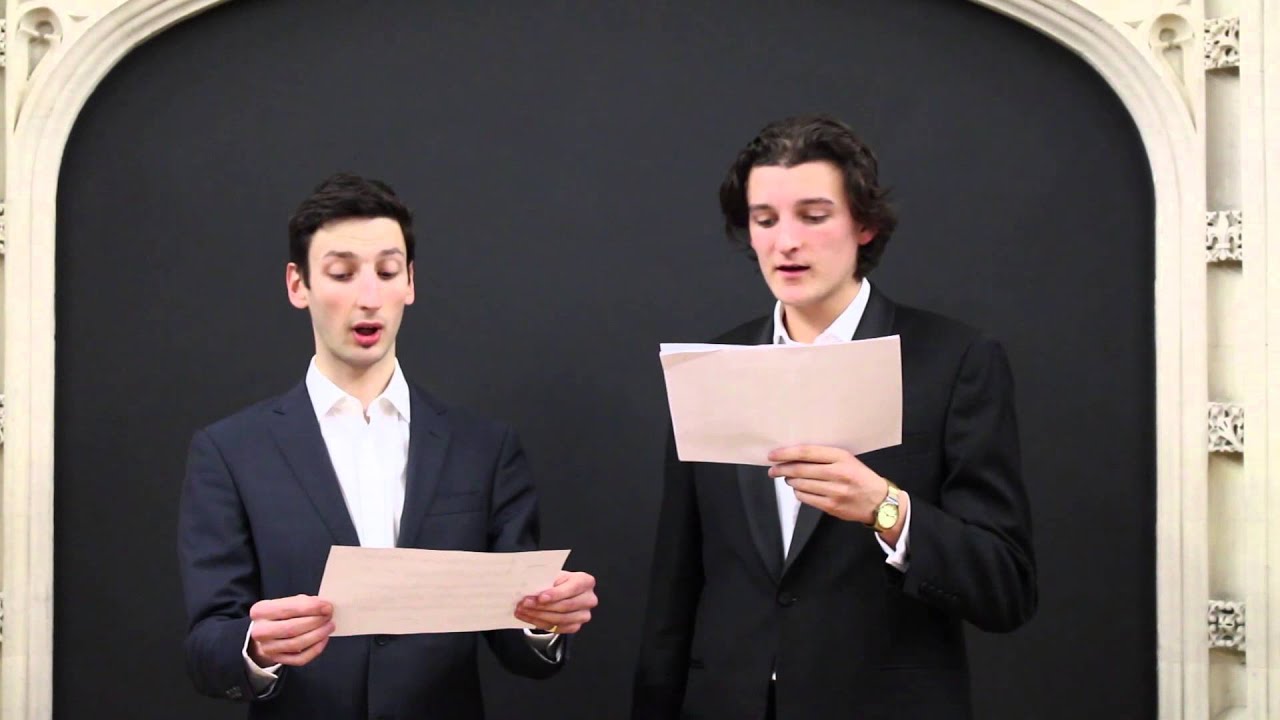
Here is a video of the piece being sung.

YouTube thumbnailYouTube icon

Not exactly the “My Little Pony” stuff we hear in most churches now.

I don’t know about you, but when I hear early polyphony, such as that of Léonin and Pérotin and other ars antiqua writers I find it eerily moving. These people were steeped, positively drowning, in transcendence. That’s what gives their music a kind of hair-raising quality.

More…

YouTube thumbnailYouTube icon

YouTube thumbnailYouTube icon

Posted in Hard-Identity Catholicism, Just Too Cool, Liturgy Science Theatre 3000 | Tagged , ,
13 Comments