Do you have GOOD news to share with the readership?
Let us know.
(PS I may be offline for a bit and your comments will wait in the queue. Pour them in! I’ll get to them anon.)
Do you have GOOD news to share with the readership?
Let us know.
(PS I may be offline for a bit and your comments will wait in the queue. Pour them in! I’ll get to them anon.)
On a related note, see the end.
From the appropriately named Crisis:
Can the Church Recover Its Fighting Spirit?
WILLIAM KILPATRICKThe Islamic world is waging—and winning—a war on Judeo-Christian civilization.
With 1.3 billion Catholics worldwide, the Catholic Church is potentially one of the most powerful centers of resistance to Islam. It certainly has been in the past. Unfortunately, that’s not the case today. What are those 1.3 billion Catholics doing in regard to the struggle with Islam? Well, essentially, very little. Many of them are just standing on the sidelines.
Why is that? The chief reason is that Catholics are receiving little guidance about Islam from their leaders. And what little information they receive is misleading. The hierarchy is still sticking with the message that Islam is a religion of peace which has recently been given a bad name by a tiny handful of terrorists who misunderstand the beneficent nature of their faith.
Meanwhile, while Catholic leaders have been pedaling this rosy picture of Islam, 90,000 Christians were murdered for their faith in 2016. Between 2005 and 2015, 900,000 Christians were martyred. In most cases the executioners were Muslims.
That tiny handful of extremists must be extremely busy. Either that, or the extremist ideology is actually widespread and the bishops have been woefully mistaken in their assumptions about Islam. As Islam gobbles up more and more of the geographical and cultural landscape, the latter possibility seems most likely. The Catholic leadership has been dead wrong about Islam and, as a result, a lot of Christians who were put off their guard by clerical reassurances, are dead, period.
[…]
The attacks are from Islam, but also from many other fronts, such as relativism, post-Truth loons, demonic gender ideology, etc. And they are within the walls.
What can we do?
First, know your Catholic Faith! If you don’t know it, you can’t share it or live it in adverse circumstances.
Second, pray to saints who’ve been there. I like Ss. Nunilo and Alodia.
Third, ask constantly for protection of St. Michael and the other angels. Invoke them in your family, parish, community.
Stay informed.
Here are a couple of books:
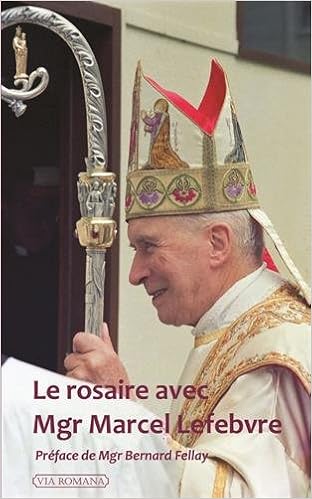
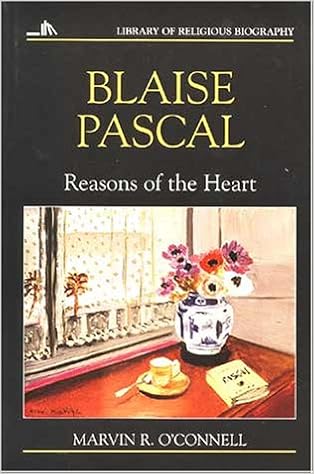
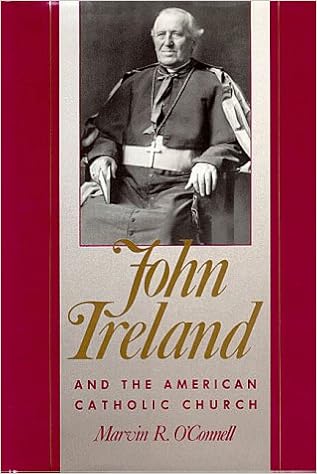
Also, get these books and get them also for your family and friends.
Defeating Jihad: The Winnable War by Sebastian Gorka.
Do you know the word “dawa”? More on this HERE.
And get a Kindle! US HERE – UK HERE
I also recommend The Grand Jihad by Andrew McCarthy. He explains how and why the liberal left coddles and cooperates with Islam in the destruction of Western culture.
UPDATE:
I also found something at LifeSite by the author Michael O’Brien (think Fr. Elijah, Voyage to Alpha Centuri, etc.
The Church: called to be a bulwark against the coming Apostasy
Why have so many Christians proved to be so vulnerable to, even eager for, the pathological narratives of our time? Why, in short, do we tell lies to ourselves? We deceive ourselves because there are abundant rewards for doing so, while simultaneously the inner tensions inherent in the moral struggle of the human condition are eased, left behind, as if we were discarding an outmoded legend. Daily, we gulp plausible lies, a web of falsehoods coupled to flattery, to emotional and physical pleasures, and constantly reinforced by a new world culture largely contrived by the entertainment and communications media, by the corruption of education, by morally compromised politics, and most reprehensible of all, by ambiguous theology and spurious spiritualities. [Do I hear an “Amen”?]
In his second letter to Timothy, St. Paul exhorts the shepherds of the flock of the Lord to preach the word of God with determination, in season and out of season, to “convince, rebuke, and exhort,” to be unfailing in persistence and in teaching. “For the time is coming when people will not endure sound doctrine, but having itching ears they will accumulate for themselves teachers to suit their own likings, and will turn away from listening to the truth and wander into myths” (2 Tim 4: 3-4).
If the current studies of faith and practice in the Western world are accurate, it appears that more than 80% of Catholics no longer believe in the Real Presence of Christ in the Eucharist and the need for Confession, nor in other fundamental doctrines of the Faith.
[…]
Reflect.
What does this mean for you in your state in life?
What changes have to be made?
On Tuesday 28 November in Madison, the Extraordinary Ordinary confirmed using the traditional Roman Rite. There were quite a few confirmands. We had people from Kansas, Minnesota, Maryland and North Carolina along with folks from area.
We started with a Solemn Mass, a Votive of the Holy Spirit.


After which His Excellency came in and confirmed.


He was in good humor after. It is a cheering moment, to tell the truth. How wonderful and encouraging it is to see all these good people receive the great sacrament of Confirmation.


I just read at CWR a fascinating piece about a newly revealed letter of the last seer of Fatime, Sr. Lucia, to Pope Paul VI predicting dire things for the Church.
It is in interview with the author Kevin Symonds who has a new book called: On the Third Part of the Secret of Fatima – US HERE – UK HERE

Now CWR article:
The Third Secret of Fatima and the “Hermeneutic of Conspiracy”
“I am convinced that we are entering into a new phase of Fatima’s history,” says the author of a new book on the controversial Third Secret of Fatima.
Kevin J. Symonds (kevinsymonds.com) is the author of the recently published On the Third Part of the Secret of Fatima (En Route Books and Media, 2017), which offers a scholarly challenge to those who claim the existence of a yet-unrevealed text of the third part of the secret of Fatima, given to Sr. Lucia de Jesus dos Santos by the Blessed Virgin Mary in 1917. In response to the publication of his book, Symonds was invited by Angelus Press to debate Fatima controversialist Christopher Ferrara at the traditionalist publisher’s annual conference in October.
In the following interview with CWR’s Matthew Cullinan Hoffman, Symonds discusses his research on key issues of controversy in the debate over the text of the Third Secret, and his recent debate with Ferrara. He also reveals the existence of a heretofore unknown letter from Sr. Lucia to Pope Paul VI regarding a “diabolical revolt” against the Church that seems to refer to themes from both the second and third parts of the secret.
[…]
Symonds: In June, I visited the Sr. Lucia museum in Coimbra, which is overseen by the Carmelites of Coimbra, Sr. Lucia’s convent. On display was the first page of an unpublished and undated letter of Sr. Lucia to Pope Paul VI. She wrote him a beautiful, encouraging letter that was similar to one that St. Pio [of Pietrelcina] wrote to the Holy Father in September 1968.
In her letter, Sr. Lucia spoke about a “diabolical revolt” that was being “promoted by the powers of darkness” with “errors” being made against God, his Church, her doctrines and dogmas. She said the Church was going through an “agony in Gethsemane” and that there was a “worldwide disorientation that is martyring the Church.” She wrote to encourage Paul VI as the Vicar of Christ on earth and to tell him of her and others’ steadfastness to him, to Christ and his Church, in the midst of the revolt. Perhaps I am biased, having studied the third part of the secret, but I was struck by how similar Sr. Lucia’s discourse appeared to the second and third parts.
[…]
There’s a lot more.
There’s also a roundup at LifeSite.
First, a reminder that a few weeks ago, after a rocky software update for the blog I had to recertify 17K user accounts manually which somehow were put into “pending” mode. In that process you you were sent an email (to the address you registered with) with a new password. Some didn’t find that email. Hence, some of you lost access to the combox here.
If you have had a hard time posting comments, drop me a line and I’ll get you a new password. PLEASE INCLUDE YOUR USERNAME!
When I reset passwords they are very strong and scary looking. For example:
dB!ujI)VmknMgtVYOhhL#ICT
You can change them in your profile.
Second, since the renovation, an important plugin I used to control the knuckleheaded stuff that sometimes arrives in the combox stopped working. Hence, I have – until a new solution presents itself – switched on combox moderation for ALL POSTS. Every comment of every user now will go through the queue. I am sorry to have to do this.
Next, only registered users can comment. Please register. NB: Don’t neglect the field where I ask for “biographical information”. No one will see it. It doesn’t have to be long… just something that no bot or spammer would fill in, like your confirmation name, name of your parish… I rather enjoy the longer descriptions, however.
Moreover, if this blog is helpful to you, please consider subscribing to make a monthly donation. This keeps the blog going. No income, no blog. I regularly pray for benefactors here, and say Masses for your intention.
Say a prayer when you use the blog, please. Perhaps the “Internet Prayer”.
And maybe add one for me. This blog is always under attack from spammers and nefarious ne’erdowells.
This is sad. This fellow really needs prayers.
First….
Today at the UK’s best Catholic weekly, the Catholic Herald, we find a piece about
Study: young Catholics divided between traditionalists and modernists
Some want to ‘draw the Church back’ while others want it to follow social trends, a report says [In other news, water is still wet.]
There are two groups of young Catholics: those who want to “draw the Church back” to a previous era, and those who think the Church should conform to social trends, according to a report from the bishops of England and Wales.
The bishops surveyed around 3,000 young Catholic Britons ahead of next October’s synod of bishops, whose theme is “Youth, Faith and Vocational Discernment”. [Now the surveys from various parts of the world will be sent to Rome, where they will be found in conform to a pre-determined agenda.]
Describing the two main groups, the report said the first is “a small but vocal group who want to draw the Church back into an era which they have been told was far better than it is today”. [Notice the language. “back” … NO! Consider what a reasonable person does when she finds that, instead of heading to the store, she instead went in the other direction. Does she simply keep going in the wrong direction? No, she retraces her steps and get’s back to the proper course. One doesn’t go “back” for the sake of going “back”. That’s just nostalgia. That’s not what young people have. They don’t have “nostalgia”. They want a future. Look at the numbers of people who self-identity as Catholics, at the numbers of priests and religious, and what the trends are. If we keep heading in the wrong direction, those numbers are going to get real ugly, real fast.]
The other group, which the report describes as “much larger, though less evident”, [Note the language again. “less evident”…. why? Because they… don’t go to church?] adheres to the “predominant narratives in society, wanting the Church to follow suit”.
“The first group asks for clarity, the second for authenticity,” the report claims. [We do not accept the premise that the one is somehow opposed to the other.]
“If we’re brave enough not to dismiss either of them, it’s possible to hear their yearning for a compelling narrative of how to live as Christians both faithfully and authentically.” [Okay. They got to a good place. “not to dismiss either of them“…]
[…]
That’s enough to get the sense. Read the rest there.
Speaking of acrimony… the Catholic Herald tweeted its story:
Study: young Catholics divided between traditionalists and modernists https://t.co/RKWZIpUKB9
— Catholic Herald (@CatholicHerald) November 28, 2017
Here is how Beans responded.
Study: young Catholics divided between good guys and bad guys https://t.co/EJjabHZwe2
— Massimo Faggioli (@MassimoFaggioli) November 28, 2017
Traditionalists are “bad”.
This is a perfect example of the catholic Left, the same sorts who made disparaging remarks about converts last summer. HERE and HERE and HERE and HERE
It’s not only that they hate the ideas that traditional people in the Church hold.
They hate the people, who hold them. They hate the people.
Recently, I posted
I just read a piece by Fr. Mark Pilon at The Catholic Thing about the vocations crisis. He compares the small numbers of ordinations in large dioceses in metro areas such as New York City and Los Angeles, with the relatively large numbers in small dioceses such as Wichita. He tries to get a handle on what the differences are.
Inter alia, he wrote (my emphases and comments):
At the same time, it’s highly questionable just how truly committed to Catholic education most of the schools are in large archdioceses and even in smaller dioceses. How many of these local churches effectively oversee the hiring of faculty to assure that the Catholic educators are themselves practicing and faithful Catholics? Students being educated in a school where there is a pro forma, watered-down religion curriculum, and who are also well aware that some or many of their other teachers either disagree with Church teaching or don’t practice their faith at all, are surely less likely to be the kind of committed Catholics from whom vocations will emerge. So, the study might just look at how many dioceses are insisting that to teach in a Catholic school, the faculty member must be a faithful Catholic who actually practices the faith. [And what to say about their families?]
Another datum from these two small dioceses is that they have had a succession of bishops who themselves were firmly committed to building a strong and affordable Catholic education system and who were personally involved to one degree or another in the vocation program itself. Of course, that involvement is easier in smaller dioceses, [I’m not so sure that’s true. Priorities must be set.] but given the small number of candidates today in large archdioceses, certainly some involvement will be more possible today than in previous times. The first bishop of my own diocese, Thomas Welsh, was very much involved in strengthening the religious curriculum of the schools he inherited, and he was very directly involved in the vocations program. He had been the rector of the major seminary in Philadelphia and understood well the needs of young men studying for the priesthood – including some regular personal contact and support from their bishop. That’s one reason why the Arlington Diocese does not have a priest shortage.
Read the rest there.
The crisis of priestly vocations is largely artificial. It has, in some cases, been manufactured.
Tradition is the counter-measure to the crisis. It works where it is tried.
Also, we need to pray explicitly for vocations and keep the sound of that prayer ringing constantly in the ears of parents and their sons. Again, I propose that every parish adopt the following prayer, to be prayed while kneeling by the entire congregation at every Sunday Mass immediately after the Gospel.
Use it exactly as it is. Do not change a word, except to substitute “diocese” for “archdiocese”.
LEADER: Please kneel for our prayer for vocations. Let us ask God to give worthy priests, brothers and sisters to His Holy Church.
ALL: O God, we earnestly beseech Thee to bless this (arch)diocese with many priests, brothers and sisters, who will gladly spend their entire lives to serve Thy Church and to make Thee known and loved.
LEADER: Bless our families. Bless our children.
ALL: Choose from our homes those who are needed for Thy work.
LEADER: Mary, Queen of the Clergy!
ALL: Pray for us. Pray for our priests and religious. Obtain for us many more.
It works.
A friend back home – whom I miss rather a lot – sent me one of the original holy cards, which I prize.
I also recommend that you get copies of this as gifts for your priests and for seminarians.
If you don’t know what this IMPORTANT project is all about, go HERE.
Meanwhile, I have received a thank you note from a seminarian recipient of one of your birettas.

I just thought you would like to know.

Portable altars by St. Joseph’s Apprentice are wonderful. They are great gifts to priests.
From a reader…
QUAERITUR:
According to Canon 932 s1: The eucharistic celebration is to be carried out in a sacred place unless in a particular case necessity requires otherwise; in such a case the celebration must be done in a decent place.
What constitutes “necessity” in this case? Would planning an “outdoor Mass” in the summer for a picnic qualify as “necessity”?
GUEST RESPONSE: Fr. Tim Ferguson
Our interlocutor correctly cites the Code of Canon Law, Mass may be celebrated outside of a sacred space in cases of necessity. The Instruction, Redemptionis Sacramentum, in paragraph 108, helpfully clarifies, “The diocesan Bishop shall be the judge for his diocese concerning this necessity, on a case-by-case basis.”
This instruction, thereby, abolishes the ambiguity wherein the priest who celebrates is the one who determines that necessity, at least for public celebrations of the Holy Mass.
Celebrating the Holy Mass outdoors for cases of necessity – for example, with a group who are camping in a remote area, or on the instance of a pilgrimage where no church building would sufficiently – would still be a possibility, but the diocesan Bishop should be consulted. Celebrating Mass outdoors, because it’s a nice day and we want to sing that cool fourth verse of “Gather Us In” about not being in dark and confining buildings… that would seem to be right out.
A priest offering the Holy Sacrifice hidden by a hedgerow, or in a dining room with the shades drawn in a place and at a time where the practice of Catholicism is banned, would still be licit.
UPDATE:
And then there are the “mega Masses”, like those held in the piazza in front of St. Peter’s Basilica (aka a parking lot).
Sigh.
At APOD I saw this amazing video and I can’t but share it.
Explanation: Where do hurricanes go? To better understand dangerous storms, NASA compiled data from several satellites into a supercomputer simulation of this past year’s hurricane season. Specifically, the featured video shows how smoke (white), sea salt (blue), and dust (brown) tracked from 2017 August through October across the northern half of Earth’s Western Hemisphere. These aerosols usefully trace sometimes invisible winds. In the midst of the many mesmerizing flows, hurricanes can be seen swirling across the Atlantic Ocean on the right. Some of these hurricanes lashed islands and coastal regions in North America before dissipating in the northern Atlantic. Studying this year’s weather patterns may bolster more accurate storm forecasts as soon as next year.