 More example of coordination from the new catholic Red Guards.
First, a tweet from Massimo “Beans” Faggioli reveals teamwork.
Biggest Beans retweeted Robert Mickens, who was peddling his piece today at liberal La Croix International. What hilarious about it is that he thinks that Benedict XVI should try to get people not to resist Pope Francis. Why is that hilarious? Mickens once was fired from the ultra-liberal Bitter Pill (aka The Tablet) because he calls him “The Rat” and publicly wished that Benedict would die. HERE Hypocritical, much?
Remember, these are cadres of the new catholic Red Guards. They are pointing out Enemies of the People for harassment and targeting, ultimately with the view of destroying their careers.
Some of Mickens, with whom Beans associates himself:
[…]
Pope Francis is a facing a raucous and, at times, vicious opposition from certain groups of Catholics. The increasing hostility they are showing towards the Bishop of Rome is probably without parallel in the modern history of the Roman Church. [Riiight. Because libs didn’t resist Paul VI’s Humanae vitae or just about everything JP2 and B16 did. Nope. They were a quiet as little mice.]
Now there is actually good news, as well as bad news to all of this.
The good news is that, as best one can tell, those who are rowing against the current helmsman of the Barque of Peter are part of a very tiny, if noisy, minority.
The bad news is that they are mostly found among the Church’s ordained workforce – men who serve as priests and bishops.
[…]
It is impossible to state the exact numbers. However, we can identify certain discernible traits and trends. [Remember what the new catholic Red Guards are doing. They are targeting undesirables for attack.] For example, opposition to Francis is emanating most energetically from the English-speaking world, certain parts of Europe and in areas of Africa where the pope’s critics tend to be younger (under the age of 50), doctrinally rigid and liturgically “retrodox” members of the clergy.
[Watch the vocabulary.] People in the anti-Francis camp also show tendencies toward a very narrow understanding of the application of Canon Law, a slavish devotion to liturgical rubricism and an outdated Euro-centric view of the world that is rooted in classical Greco-Roman philosophical systems. [Hmmm…. so, Mickens would substitute categories of matter and form, substance and accident with…. what?]
It would be troubling enough if the opponents of the pope were only members of the clergy. However, that is not the case.
There are also small groups of the baptized faithful that are also highly critical and even disparaging of him. They demonstrate similar characteristics of the rebellious clergy. They, too, tend to be younger, fundamentalists when it comes to church teaching and promoters of a pre-Vatican II liturgy and ecclesiology. [If you are Catholic you understand that there is one ecclesiology. But that’s not Mickens.]
[…]
Massimo Faggioli [The Italian word for tuning in to a radio station is “sintonizzare”, you are attuned, on the same wavelength.] recently described those who are angrily opposing the pope and his moves to renew the Church as the “Catholic cyber militia”.
[…]
[Remember… these Red Guards are pointing out the targets to attack.] Most of the opposition to Pope Francis is coming from Catholics who are devoted to celebrating the Tridentine Mass. And many of them are from fringe groups that Benedict, first as a cardinal and then as pope, moved persistently to bring into the mainstream of the Church. [Not so fringe anymore, especially in places like France. And in these USA, the SSPX has grown so much they have built an enormous new seminary.]
His most monumental act was to issue a papal “motu proprio” in 2007 to normalize the pre-Vatican II liturgy. [“Normalize”. And yet here he is, on the attack.] He said part of the reason he did so was to bring about “an interior reconciliation at the heart of the Church”. Francis has shown no attachment to the Old Mass, but he has done nothing to restrict it.
Members of these reconciled groups of Tridentine Mass enthusiasts, however, have betrayed Benedict’s intention to “regain reconciliation and unity” in a divided Church. And, instead, by their attacks on the current pope, they have intensified the divisions. [Let me just ask. Have liberals with power done anything at all to take to heart and implement Summorum Pontificum? Could that play any part in the division? Mickens is simply being purposely obtuse, to deceive.]
[…]
What can be done to put an end to this?
Just a few days after Benedict announced his resignation from the papacy in mid-February 2013, he told the clergy of Rome that he would “withdraw” to be “hidden from the world” and “secluded in prayer”.
But during these more than four years since he slipped into retirement, he has not been completely hidden or secluded. [Watch this!] Benedict routinely sees visitors at his residence in the Vatican Gardens. And many of them are priests, bishops, and laity – including journalists and writers – who have been prominent critics of Pope Francis. [So… Benedict is being… watched? The names of his visitors recorded?]
The former pope has also sent about a dozen or so written messages (that we know of) [Ooooo!] to various religious gatherings and individuals. He’s given a book-length interview, provided a eulogy for the funeral of one of the cardinals that opposed Francis’ document on marriage (Amoris Laetitia) and has even written an introduction and an afterword for at least two books.
He has every right to do so since no one has imposed silence upon him or prohibited from receiving visitors.
[…]
He goes on about how Benedict should speak up against the people Mickens doesn’t like.
Mickens was pitted 1000% against Benedict when Benedict was Pope. Now?
Another example of coordination from the new catholic Red Guards.
A key to understanding this rubbish is that Mickens has true animus for people who don’t see things his way. He slyly, like Beans did before, tries to pit Benedict XVI against the critics of Francis.
I only wonder: How soon after Benedict speaks up, does Mickens want him to die? This time.
On the same day that the La Croix hit piece comes out, so too something is excreted by The Guardian.
The war against Pope Francis
His modesty and humility have made him a popular figure around the world. But inside the church, his reforms have infuriated conservatives and sparked a revolt. By Andrew Brown
Pope Francis is one of the most hated men in the world today. Those who hate him most are not atheists, or protestants, or Muslims, but some of his own followers. Outside the church he is hugely popular as a figure of almost ostentatious modesty and humility. [This is about right.] From the moment that Cardinal Jorge Bergoglio became pope in 2013, his gestures caught the world’s imagination: the new pope drove a Fiat, carried his own bags and settled his own bills in hotels; he asked, of gay people, “Who am I to judge?” [Not entirely accurate. However, there are lots of nearly accurate things in this piece.] and washed the feet of Muslim women refugees.
But within the church, Francis has provoked a ferocious backlash from conservatives who fear that this spirit will divide the church, and could even shatter it. [It seems to me that fear of dividing the Church is not a bad thing. But, no matter. This is just bad writing.] This summer, one prominent English priest said to me: “We can’t wait for him to die. [Could it have been Mickens? Oh, no. It was a priest, it seems.] It’s unprintable what we say in private. Whenever two priests meet, they talk about how awful Bergoglio is … he’s like Caligula: if he had a horse, he’d make him cardinal.” Of course, after 10 minutes of fluent complaint, he added: “You mustn’t print any of this, or I’ll be sacked.” [THAT’S EXACTLY RIGHT. And that’s why, ladies and gents, the new catholic Red Guards are now sloganeering up and down the internet, pumping their Little Red Books in the air and pointing at the Enemies of the Pueblo.]
This mixture of hatred and fear is common among the pope’s adversaries. Francis, the first non-European pope in modern times, and the first ever Jesuit pope, was elected as an outsider to the Vatican establishment, and expected to make enemies. [Hmmm. This suggests that those who oppose the Pope, oppose him because he doesn’t belong to the “establishment”. Is that what you get? Again, it is hard to tell, because he’s all over the place.] But no one foresaw just how many he would make. From his swift renunciation of the pomp of the Vatican, which served notice to the church’s 3,000-strong civil service that he meant to be its master, to his support for migrants, his attacks on global capitalism and, most of all, his moves to re-examine the church’s teachings about sex, he has scandalised reactionaries and conservatives. To judge by the voting figures at the last worldwide meeting of bishops, almost a quarter of the college of Cardinals – the most senior clergy in the church – believe that the pope is flirting with heresy. [If true, and I’m not sure about how he get’s that figure, that would be a cause for concern. No?]
[…]
In 2013, shortly after his election, while he was still surfing a wave of almost universal acclaim for the boldness and simplicity of his gestures – he had moved into a couple of sparsely furnished rooms in the Vatican grounds, rather than the sumptuous state apartments used by his predecessors [Here’s another myth. The pope’s apartments in the Apostolic Palace were not “sumptuous”.] – Francis purged a small religious order devoted to the practice of the Latin Mass. [There’s that word again.]
The Franciscan Friars of the Immaculate, a group with about 600 members (men and women), had been placed under investigation by a commission in June 2012, under Pope Benedict. They were accused of combining increasingly extreme rightwing politics with a devotion to the Latin Mass. [Remember this. “Extreme rightwing politics” and “devotion to the Latin Mass”. THAT is going to be a method of attack we will see more and more of in the future. It’s the Latin that they hate the most… no, sorry… it’s the people who want Latin that they hate the most, but they will tar them with the brush of secular politics. And because they are all Leftists, they will use the political tactics of the Left to destroy coreligionists.] (This mixture, often seen alongside declarations of hatred of “liberalism”, had also been spreading through online outlets in the US and the UK, such as the Daily Telegraph’s Holy Smoke blog, edited by Damian Thompson.) [See? Bit by bit they are making their game and the players more apparent.]
[…]
They even have a photo of Card. Burke with the caption:
Cardinal Raymond Burke (centre), one of Pope Francis’s most prominent enemies. Photograph: Franco Origlia/Getty Images
Read the rest there. It’s really long. And the writer goes to extraordinary lengths.
Mark my words, friends. They are on the march against the Four Olds!
¡Hagan lío!
Pò sì jiù!


 The New



 More example of coordination from the new
  He goes on about how Benedict should speak up against the people Mickens doesn’t like.

 In the Anglican tradition – I’m not sure if the Ordinariates pick this up – today King Alfred the Great is commemorated, on the anniversary of his death. He was a pivotal figure in the history of England, and a scholar who, among other things, translated the Consolation of Philosophy by Boethius.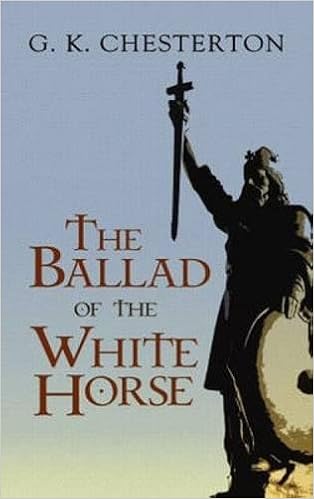
 From the spasmodic reactions of hysterical homosexualists and their abettors, you would think that the chancery personnel in the Diocese of Madison were clubbing babies… no, that wouldn’t be so bad…. baby seals … no, gay baby seals and eating their beating hearts … while cranking up sinful air conditioning…. in October… in Wisconsin.
 nex001 on “…the young are more to be pitied, since they know not of what they have been deprived.”: ““Let the little children come to me.””






























