“People reject the Church because she speaks against the sins they love” – St. Augustine…. NOT! Wherein Fr. Z corrects and then rants.

I ran across this quotation which the writer attributed to St. Augustine of Hippo (+430):

“People reject the Church because she speaks against the sins they love”

While this is true, Augustine did not say or write that in any of his extant works.  It does, however, distill the essence of something else he did say in a sermon:

Hoc autem fit dum amant peccata sua, et oderunt praecepta Dei. Sermo enim Dei adversarius tuus est, si tu amicus sis iniquitatis tuae.  … This happens because they love their sins and hate the commandments of God. For the word of God is your adversary if you are a friend to your own iniquity.

This is from the Enarrationes in Psalmos 35, 1.

The wording “People reject the Church because she speaks against the sins they love” captures Augustine’s thought, but should be labeled a paraphrase, especially since Augustine says “sermo Dei …  the word of God,” rather than “Ecclesia … the Church.”

Let’s extend this principle in a natural way.

For a Catholic, the sacred liturgy is the preeminent locus of encounter with both the Ecclesia and the sermo Dei.

In her sacred liturgical worship, especially in her tried by test over millennia worship, Holy Church appears most fully as herself, confessing the faith, proclaiming Scripture, offering sacrifice, administering the sacraments, and rendering to God the worship that is His due according to the virtue of Religion.

In the liturgy, the Word of God confronts man sacramentally, doctrinally, morally, and bodily. This encounter with mystery in the Word requires kneeling, silence, obedience, repentance, and adoration. It tells man that God is God and that he is not.

This explains the peculiar vehemence with which some attack the traditional sacred rites.

Their objection may concern aesthetics, history, or pastoral practice. Their claims may be rooted in assertions without foundations but imposed by bullying and power.

Hatred, however, is something stronger.

When a person cannot merely dislike the older liturgy but must mock it, suppress it, or denounce those who love it, Augustine’s diagnosis becomes uncomfortably pertinent. The rite may be touching a wound he refuses to have healed.

This might be what is on display at RNS in a piece by the infamous Jesuit Thomas Reese: Why I hate the old Latin Mass: A confession

I may write more about that embarrassing slop in another post if I get a few more important things done first. It is irritating to waste daylight on him.

Returning to the point, the traditional liturgy does not flatter modern man. It speaks constantly of sin, judgment, sacrifice, propitiation, penance, and the need for grace. In other words, it tells you how to attain the eschatological joy which the Novus Ordo emphasizes.

Whoever has made peace with a cherished sin will naturally experience such worship as an adversary.

Hatred of sacred tradition may therefore be less a liturgical judgment than a moral symptom.

The man who clings to his sin believes that he is judging the TLM.

The TLM, quietly and relentlessly, is judging him.

From his feat and hatred of the rites, there grows as a consequence a fear and hatred of the people who desire those traditional rites.

Posted in Liturgy Science Theatre 3000, Patristiblogging, Save The Liturgy - Save The World, Wherein Fr. Z Rants |
4 Comments

A four letter word

Diane Montagna posted on her Substack (I have one now also) a piece by distinguished liturgist Fr. Alcuin Reid who commented on Leo XIV’s General Audience on Wednesday 26 August. It was the last address about Sacrosanctum Concilium.

Leo said some odd things which have not gone unnoticed by either “side” of our contemporary liturgy challenges.

Here is the down low on what Fr Reid offered.  First, a panoptic view.  After, a look at the four letter word.

Fr. Reid criticizes a recent general audience address of Pope Leo XIV on Sacrosanctum Concilium, arguing that its claim that the post-Conciliar liturgical reform is “firmly rooted in the living tradition of the Church” is asserted rather than demonstrated. Gratis asseritur, gratis negatur, right?  But depending on who you are, that principle cannot be invoked, because… reasons!   Although a general audience is neither binding nor infallible, Reid fears that the statement will be weaponized to foreclose legitimate historical and theological questions about whether the reform fulfilled the Council’s requirement that innovations be genuinely necessary and grow organically from existing forms.  Hint: They didn’t (e.g., changes to the offertory prayers).

Reid identifies several weaknesses in the address. The Council called for an instauratio, or renewal, rather than a “streamlining” of the liturgy.  Yes, in the English translation from the Vatican, the word for Italian “rendere più lineare” is “streamline”. Historically, which does not whitewash everything that happened before 1962, the Roman Magisterium generally received, regulated, and extended organic developments. It did not periodically reconstruct the rites through centralized committees. The liturgy is also presented too narrowly as a vehicle of instruction and dialogue. Its primary character is cultic and sacramental. It is the Church’s worship, the privileged participation in Christ’s saving action, and, according to Sacrosanctum Concilium 10, the “fons et culmen…source and summit” of ecclesial life.

The address’s treatment of active participation is similarly inadequate. Liturgical words and gestures do more than facilitate a religious experience. They constitute the sacred rites through which the divine encounter is mediated. Traditional elements such as Latin, Gregorian chant, incense, and eastward prayer have acquired a privileged place through centuries of ecclesial use. The Council did not demand their abolition.  The Council demanded that they be retained.  That’s not what happened.

Reid also warns against sharply separating immutable divine elements from disposable human additions. Citing Cardinal Ratzinger, he argues that reducing the liturgy to the minimum matter and form necessary for validity treats everything else as arbitrarily changeable and severs the sacraments from their living ritual form.

He concludes that the address risks becoming ammunition in the “liturgy wars,” contrary to Pope Leo’s calls for unity and legitimate diversity. Reid urges the Pope to follow Benedict XVI’s more generous policy of making room for everything permitted by the faith, thereby fostering liturgical peace rather than renewed polarization.

One of the important points raised by Reid is Leo’s use, while reading what was prepared for him no doubt in the Dicastery under Roche (enemy of things traditional), of the word “thus”.  A small, but consequential word.  Here is Reid with my emphases:

And in his general audience today the Holy Father — intentionally or not — has certainly rallied the troops of those on the Vatican II fundamentalist side of the war (who cling to the reformed rites more rigidly than any so-called ‘traditionalist’ ever known).

He did so in the simple line: “the liturgical reform promoted by the Second Vatican Council is thus firmly rooted in the living tradition of the Church.” His “thus” implies a deduction and a decision that the demands of Sacrosanctum Concilium n. 23 that “there must be no innovations unless the good of the Church genuinely and certainly requires them; and [NB!] care must be taken that any new forms adopted should in some way grow organically from forms already existing” were respected. And if they were, there would be no problem — there would be no grounds for talk about a “reform of the reform” or of a need to continue to celebrate the unreformed rites.

The problem is, however, that whoever in the Dicastery of Divine Worship most probably put these words in the mouth of the Holy Father has had him utter the greatest liturgical non-sequitur of the past sixty or so years. So too, whilst the “thus” is clearly believed by the drafter, it does not follow from the evidence produced in the text. An undergraduate in any reputable faculty would have such work returned to him as unsatisfactory.

Do you see what that “thus” does?   

It legitimizes all of the innovations in the Novus Ordo that obviously did NOT develop organically from existing forms … as if they did.   

Again, the changes to the priest’s prayers at the offertory provides just one example.  The Novus Ordo Offertory prayers were modeled on Jewish Berakoth (blessing) prayers.

Vetus Ordo

Accept, O holy Father, almighty and eternal God, this unspotted host, which I, Thy unworthy servant, offer unto Thee, my living and true God, for my innumerable sins, offenses, and negligences, and for all here present: as also for all faithful Christians, both living and dead, that it may avail both me and them for salvation unto life everlasting. Amen.   …  O God, who, in creating human nature, didst wonderfully dignify it, and still more wonderfully restore it, grant that, by the Mystery of this water and wine, we may be made partakers of His divine nature, who vouchsafed to be made partaker of our human nature, even Jesus Christ our Lord, Thy Son, who with Thee, liveth and reigneth in the unity of the Holy Ghost, God: world without end. Amen.

Novus Ordo

Blessed are you, Lord, God of all creation. Through your goodness we have this bread to offer, which earth has given and human hands have made. It will become for us the bread of life. …  Blessed are you, Lord, God of all creation. Through your goodness we have this wine to offer, fruit of the vine and work of human hands. It will become our spiritual drink.

The Novus Ordo prayers obviously grew out of the existing TLM offertory prayers, right?  It is clear.  Thus, they reflect the conciliar mandate that changes must grow organically from existing forms.  Right?  RIGHT?!?

You might have your own four letter contribution at this point.

You see what they do, of course.  That side will always… always… demand that you deny the concrete evidence, what your senses, including common sense, tell you, and accept whatever they assert as the new, current truth.


Posted in Leo XIV, Liturgy Science Theatre 3000, Save The Liturgy - Save The World, The Drill | Tagged
11 Comments

PODCAST – Voices of the Fathers 03 – Should Christians Go To The Public Games?

26 August 2026  – What I’m trying to do is described HERE (hint: rebuilding)


Originally Published on: Feb 4, 2026

I was recently going through some old books and found a slim volume entitled The Osterley Selection from the Latin Fathers, edited by Joseph Crehan of Heythrop College, was compiled chiefly for seminarians, especially late vocations, at Campion College, Osterley, a Jesuit formation house in the Archdiocese of Westminster that closed in 2004. The 1949 preface praises the great classical authors—Caesar, Cicero, Livy, Virgil—yet insists that Christian writing shows a different kind of beauty. Pagans, it says, wrote with studied grace; Christians with passionate conviction. The volume includes selections from Ambrose and Augustine, Tertullian, Vincent of Lérins, Jerome, and others.

Some of you get Patristic readings in the office of readings in the Liturgy of the Hours but do you hear them?  That’s another question.  There are 42 brief readings in the book by authors whom you will more than likely recognize.    I propose to read an English translation, make some comments and read the Latin.

Today we hear from the ancient Latin language wild child Quintus Septimius Florens Tertullianus of Carthage (c. 160–c. 220) a.k.a. Tertullian.

Tertullian (c. 155–after 220) was one of the earliest and most formidable Christian writers in Latin. Born in Roman Carthage and trained in rhetoric and law, he converted to Christianity as an adult and quickly distinguished himself by his incisive intellect and combative prose. Tertullian was a prolific apologist, theologian, and moralist, addressing persecution, heresy, discipline, and Christian identity within a pagan society. His works shaped the vocabulary of Western theology, especially in articulating Trinitarian and Christological concepts. Fiercely rigorous in moral matters, he later aligned himself with the Montanist movement, which emphasized prophecy and strict asceticism. Despite this controversial turn, Tertullian’s influence on Latin Christianity remains foundational.

Eric Osborn aptly characterizes Tertullian as “the first great Latin theologian, whose thought is driven by argument and controversy rather than by any desire for system”. Doctrine, for Tertullian, is hammered out in conflict with error and compromise.

Since the embedded player could be improved, here’s the link: HERE

The last Voices Of The Fathers about the Martyrdom of St. Cyprian is HERE

Posted in PODCAzT, Voices of the Fathers | Tagged , , ,
7 Comments

Daily Rome Shot 1689: Oaf For A Year!

I’m now getting involved with Substack, which I don’t understand very well.  I’ll cross post for awhile.  First post HERE

Back in the day….

Knowledge of Latin…

I am reminded of the priest, the pastor of Saints Cyril and Methodius Church in Sheboygan, Wisconsin, who opined HERE that people who desire the TLM (which according to him in his deep wisdom “does not have the same status or dignity as the Mass of Paul VI” – one of the stupidest things ever to have been penned) “have not matured sufficiently in the faith to accept the Mass approved after the Second Vatican Council.” He continues that use of the 1962 Missal was that “the grace of God may help these participants overcome their dependence on the old Latin Mass and enter into communion with the rest of the Church by celebrating Mass in the vernacular.”

Sometimes, I’ll use the label “Oaf For A Day!” This one is now “Oaf For Year!”

However, the ICK celebrates the TLM at this oaf’s parish.

I wonder his people imagine that Fr. Oaf thinks of them. He communicated that they are “immature” (read: stupid) and that the are not in communion with the Church.

Behold, the Good Shepherd.

Remember: It’s not just the traditional rites that they fear and dislike, they fear and dislike the people who want them. It’s about the people.

I wonder how strong Fr. Oaf’s Latin is.   As strong as one of the Hardy Boys?  I doubt it.  He went to CTU in Chicago.

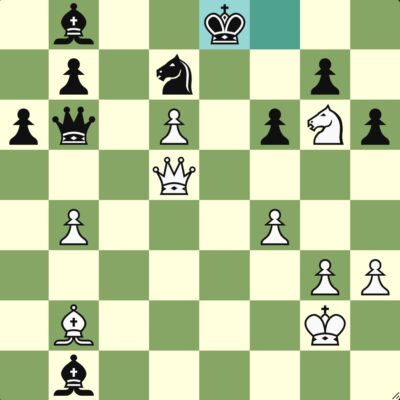
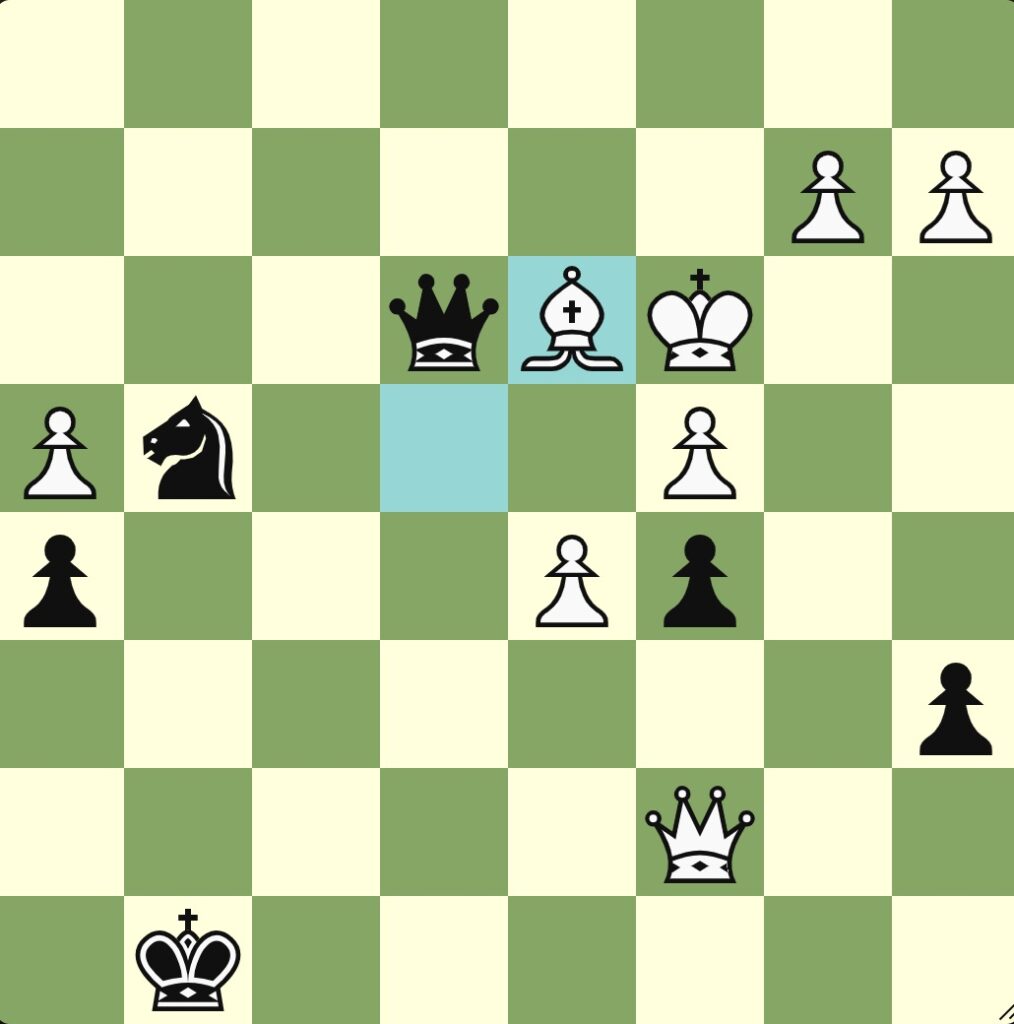
Black to move and mate in 4.

NB: I’ll hold comments with solutions ’till the next day so there won’t be “spoilers” for others.

Posted in SESSIUNCULA | Tagged
17 Comments

Daily Rome Shot 1688: Let’s use the word for these people… evil

Please remember me when shopping online and use my affiliate links.  US HERE – WHY?  This helps to pay for health insurance, utilities, groceries, and now also my late mother’s place.  At no extra cost, you provide help for which I am grateful.  

Motus ad lusorem cum militibus nigris pertinent. Scaccus mattus quattuor in motis veniat.

NB: Detineam explicationes in crastinum, ne vestrae interrumpantur deliberationes.

And… tough luck, pal.

If you would like to be on my private email list for the live stream of Mass, let me know.  Tell me about yourself!

VERY cool videos online from various places.

And…

YouTube thumbnailYouTube icon

Posted in SESSIUNCULA |
2 Comments

PODCAST – Voices of the Fathers 02 – The Martyrdom of St. Cyprian

25 August 2026  – What I’m trying to do is described HERE (hint: rebuilding)


Originally Published on: Jan 19, 2026

I was recently going through some old books and found a slim volume entitled The Osterley Selection from the Latin Fathers, edited by Joseph Crehan of Heythrop College, was compiled chiefly for seminarians, especially late vocations, at Campion College, Osterley, a Jesuit formation house in the Archdiocese of Westminster that closed in 2004. The 1949 preface praises the great classical authors—Caesar, Cicero, Livy, Virgil—yet insists that Christian writing shows a different kind of beauty. Pagans, it says, wrote with studied grace; Christians with passionate conviction. The volume includes selections from Ambrose and Augustine, Tertullian, Vincent of Lérins, Jerome, and others.

Today we hear from the Acts of the Martyrdom of St. Cyprian of Carthage

St. Cyprian was bishop of Carthage from 248 to 258. He had survived the persecution of Decius by going on the run until the death of that emperor in 251. When after some years’ respite a new persecution broke out in 257, under Valerian, he was arrested and sent into exile. The year following, he was brought back to Carthage and tried on September 14th, 258. The scene of his martyrdom was, as we are told by the deacon Pontius in his We of Cyprian, a valley surrounded by wooded hills on the estate of Sextus. Some of the spectators climbed trees when they found that the size of the crowd or the distance kept them from a good view.

St. Cyprian of Carthage stands as one of the most lucid episcopal witnesses of the third century, a man whose theology was forged in persecution and whose blood sealed his teaching.  In Cyprian, doctrine, discipline, and martyrdom converge in a single, luminous testimony.  J. N. D. Kelly, on Cyprian’s authority and legacy:

“No Latin Father before Augustine exercised so decisive an influence on Western ecclesiology as Cyprian.”


The last Voices Of The Fathers about The Scillitan Martyrs is HERE

Some old podcasts are preserved on APPLE HERE

Posted in Patristiblogging, PODCAzT, Voices of the Fathers | Tagged , , ,
1 Comment

“These, Reverend Father, are no mere words, nor lifeless thoughts, but they are arrows shot from the strong bow of God Himself…”.

From a letter of St. John of Avila to a priest about due preparation for saying Mass:

For this purpose, I know of nothing better than to meditate on the fact that our Lord, with Whom we are to treat, is both God and man, and to think over the reasons for which He comes down upon the altar. Surely such a stroke of love* should be enough to awaken anyone from the slumber of indifference.

Let such a one reflect upon this Mystery and say to himself: ” It is God Almighty Who will come down upon the altar at the words of Consecration: I shall hold Him in my hands, and converse with Him, and receive Him into my breast.” If only we remember this, and if, by the help of God’s Holy Spirit, it penetrate our soul, it will suffice, and more than suffice, to enable us, frail mortals as we are, to perform this sacred duty as we ought.

Who can help being inflamed by love on thinking that he is about to receive the Infinite Goodness within his bosom? Who would not tremble with reverential fear in that Presence, before which the powers of heaven are awed? Who would not resolve never to offend Him, but to praise and serve Him evermore? Is it possible for anyone not to be confounded and overwhelmed with grief at having sinned against that great Lord Whom he bears in his hands? Can the Christian fail to trust such a pledge, or can he want for strength to walk the way of penance through the desert of this world, nourished by such food?

In short, such considerations, by God’s help, entirely change and possess the soul, and draw it out of itself,—at one time, by feelings of reverence, at another, by love, and yet again, by the strong emotion caused by the realization of Christ’s presence. Although these thoughts do not inevitably produce this result, yet unless the heart hardens itself into stone against their influence, they strongly conduce to it. Let your mind then dwell on such reflections, listen to the cry: ” Behold, the Bridegroom cometh,”( Matt 15:6), your God cometh! Retire into the secrecy of your own heart, and open it to receive what is wont to come from so powerful a Light. Beseech this same Lord that, as He has deigned to place Himself within your hands, He will give you the further grace to esteem, and venerate, and love Him as you should. Beg Him fervently not to permit you to be in the presence of His Majesty but with reverence, and fear, and love. Endeavour constantly to have a fitting sense of our Lord’s presence, even should you contemplate no other part of this Mystery. ….

You must, however, pay fitting attention to the Liturgy, while accustoming yourself at the same time to keep your mind fixed on God’s presence. O great God, what should not be your feelings when you hold in your hands Him Who elected our Lady and enriched her with celestial graces to fit her to minister to the God made man! Compare her hands, her arms, her eyes, with your own! The very thought should cover you with confusion. What stringent obligations do such benefits lay upon you! What care must you not take to keep yourself wholly for Him Who honors you in such a way as to place Himself in your hands, and comes into them when you pronounce the words of Consecration!

These, Reverend Father, are no mere words, nor lifeless thoughts, but they are arrows shot from the strong bow of God Himself, which pierce and wholly transform the heart, so that when Mass is over, the mind ponders on our Lord’s words:

“Scitis quid fecerim vobis? … Know you what I have done to you?” (John 13:12).


*At the mention of the Blessed Sacrament, St. John of Avila would often weep and exclaim, “O great stroke of love! O great stroke of love!” 

Posted in "How To..." - Practical Notes, Mail from priests, Priests and Priesthood, Seminarians and Seminaries | Tagged
Leave a comment

PODCAzT – Voices of the Fathers 01 – The Scillitan Martyrs

NOTA BENE: I’m in a process of rebuilding.  All my podcasts… gone… from 2007 onward.  I have the original recordings, or most of them.  But all the links, embeds are dead.   I’ve had some notes from you readers that you can’t find things that I recorded.  So, I’m asking my Guardian Angel to help me with patience.  This is extremely painful for me.

I’ll start by reposting the few Voices of the Fathers that I’ve already made.  Then I’ll make a new one of those and get on to a News of the Church episode.  Since they are rather ephemeral, I won’t repost those.

I’m sorry.

I need someone who really understands well the various podcasting platforms.

Some old podcasts are preserved on APPLE HERE


Originally posted on: Jan 7, 2026

I was recently going through some old books and found a slim volume entitled The Osterley Selection from the Latin Fathers, edited by Joseph Crehan of Heythrop College, was compiled chiefly for seminarians, especially late vocations, at Campion College, Osterley, a Jesuit formation house in the Archdiocese of Westminster that closed in 2004. The 1949 preface praises the great classical authors—Caesar, Cicero, Livy, Virgil—yet insists that Christian writing shows a different kind of beauty. Pagans, it says, wrote with studied grace; Christians with passionate conviction. The volume includes selections from Ambrose and Augustine, Tertullian, Vincent of Lérins, Jerome, and others.

It occurred to me that I might offer a podcast of the first reading and see how it goes.   Some of you get Patristic readings in the office of readings in the Liturgy of the Hours but do you hear them?  That’s another question.  There are 42 brief readings in the book by authors whom you will more than likely recognize.    I propose to read an English translation, make some comments and read the Latin.


Posted in Patristiblogging, PODCAzT, Voices of the Fathers | Tagged , , ,
4 Comments

Daily Rome Shot 1687: Space jellyfish alert!

Please remember me when shopping online and use my affiliate links.  US HERE – WHY?  This helps to pay for health insurance, utilities, groceries, and now also my late mother’s place.  At no extra cost, you provide help for which I am grateful.  

ALERT!

Look! Up in the sky!

White to move and mate in 4.

NB: I’ll hold comments with solutions ’till the next day so there won’t be “spoilers” for others.

Posted in Look! Up in the sky! |
4 Comments

Rediscovering Listening and Service: Toward a Definition of “Synodality” (aka “walking together”)

For a while now, a growing number of smart people have been asking for a definition of “synodality” (aka “walking together”), which is a complete innovation and seems to be an endless process whereby predetermined outcomes are managed and attained… on paper, at least.  Wondering about synodality are

Cardinal Raymond Leo Burke
Cardinal Rainer Maria Woelki, Archbishop of Cologne
A group of unnamed bishops participating in the 2024 Synod
The International Theological Commission: “synodality is a ‘linguistic novelty which needs careful theological clarification’”.

Etc.

During his recent trip to San Marino and Rimini, Leo XIV met with members of Communion and Liberation. HERE He tiptoed up to a definition of “synodality”.  Let’s call it for future reference the “Rimini Definition” (RD).

As he moved toward his “definition” he quoted an address by Francis in 2024 to Participants in the Jubilee of the Synodal Teams and Participatory Bodies. He offered this curious observation about “listening”, that is, “We need to continue to discover how valuable it is,…”.

So, one might ask, is listening something to be “discovered”? Indeed it seems that we lost “listening” and it has been reclaimed. Leo:

In recent years, we have rediscovered the synodal and missionary dimension of being the Church, which calls us, first and foremost, to learn to listen to one another.

Rediscovered? It is consummated, I guess. So, we are now a “listening Church”? I thought we were a teaching and witnessing Church (cf. Christ in Matthew 28:16-20 and The Great Commission).  But then I’ve not been been invited to “walk together” in the synodal process.  Oh well.

Leo went on…

This is a journey that also calls for the renewal of every association and ecclesial movement. I invite you, both within the Communion and Liberation Movement and within the particular Churches to which each of you belongs, to undertake this experience of walking together [See? He says it too!]. It involves each person listening, allowing himself or herself to be transformed by the faith of others, [What if they are poorly forned?] and together, discerning new insights, taking further steps and responding courageously in obedience to the Holy Spirit. [Here it comes…] Synodality is not the name of a process, but the very nature of a people who, through friendship and encounter with others, come to recognize that they belong to God alone. In this way, authority is transformed into service, one that honors differences and fosters their harmony.

“Honors differences”… unless they involved celebrating the Mass that the Latin Church had for millennium.

Let’s see that again…

Synodality is not the name of a process, but the very nature of a people who, through friendship and encounter with others, come to recognize that they belong to God alone. In this way, authority is transformed into service, one that honors differences and fosters their harmony.

One might be forgiven for wondering if Leo hasn’t been apprised of those who have been asking for a definition.

However, I am not sure this cleared up anything.  For example, Leo said “God” not “Christ”.

Also, what is “nature of a people”.   “Natura populi”?  “Essentia populi“?

Let’s take a step back.

Robert Prevost is an Augustinian.  What does Augustine offer for this topic?

In the political and theological thought of St. Augustine, populus (a people) is defined in The City of God as a multitude of rational beings united by a common agreement as to the objects of their love.

A true populus is bound together not merely by laws, but by what its members collectively value and love.  This definition allows Augustine to contrast the earthly community (civitas terrena bound by the love of temporal things) with the heavenly community (civitas Dei bound by the love of God).  The “king” of the former is the devil and the “king” of the later is “Christ” (not a vague “God”).  Augustine uses populus specifically to denote a unified, conscious polity rather than a random crowd (turba) or a mere ethnic group (gens).  This concept is explored in texts like The Populus of Augustine and Jerome by Jeremy DuQuesnay Adams  and HERE.   One can consult also Gerard O’Daly Augustine’s City of God and, especially, R. Dodaro, Christ and the Just Society in the Thought of Augustine.

Note also the notion of synodal listen transforming “authority” into “service”.  Gosh, no one in the history of the Church has connected “authority” and “service”.  No… wait…

  • Mark 10:42–45; Matthew 20:25–28: Christ contrasts apostolic authority with pagan domination: “Whosoever will be chief among you, shall be the servant of all.” The model is Christ himself, who came “to minister, and to give his life a redemption for many.”
  • Luke 22:24–27: During the dispute about precedence, Jesus says, “He that is the leader, as he that serveth.” He does not abolish leadership; he defines its Christian manner.
  • John 13:1–17: Jesus, whom the disciples rightly call “Master and Lord,” washes their feet. His service proceeds from his authority and reveals how that authority must be exercised: “I have given you an example.”
  • John 21:15–17: Peter’s pastoral commission is expressed as service: “Feed my lambs … feed my sheep.” His authority over Christ’s flock is a responsibility grounded in love for Christ.
  • Acts 6:1–6: The Apostles exercise authority by appointing seven men for the diakonia, or service, of the community. Different ministries serve the same ecclesial body.
  • Acts 20:28–35: Paul instructs the Ephesian presbyters to guard the flock over which the Holy Ghost has made them overseers. He recalls his own labor and Christ’s saying: “It is a more blessed thing to give, rather than to receive.”
  • 1 Corinthians 3:5–9; 4:1: Paul calls apostolic ministers “servants” through whom the faithful believed and “the ministers of Christ, and the dispensers of the mysteries of God.”
  • 2 Corinthians 4:5: “We preach not ourselves, but Jesus Christ our Lord; and ourselves your servants through Jesus.” Apostolic authority serves Christ by serving his people.
  • 1 Peter 5:1–4: Presbyters must “feed the flock of God,” neither domineering nor seeking profit, but becoming examples to the flock under Christ, “the prince of pastors.”

Thus the New Testament does not say that authority must be transformed into service. Authority instituted by Christ is already ordered toward service. What must sometimes be transformed is the sinful manner in which authority is exercised.

The Church Fathers has something to say about authority as service.

St. Augustine of Hippo: “For you I am a bishop; with you I am a Christian. The former is the name of an office received; the latter is the name of grace. The former is danger; the latter is salvation.” (s. 340).  And “Let it therefore be the office of love to feed the flock of the Lord.” (io eu 123, 5 – Sit amoris officium pascere dominicum gregem.  Pastoral government is an officium amoris, an office or duty of love. Authority remains while love determines its purpose and manner.  St. John Chrysostom “For with us also a ruler is then most a ruler, when he is the servant of all.” (On Matthew 65, 4).  St. Gregory the Great: “The highest place is well governed when he who presides rules over vices rather than over his brethren.” (Reg 2, 6: Tunc autem bene regitur summa, cum is qui praeest vitiis potius quam fratribus dominatur).

More recently: St. John Paul II: “The authority of Jesus Christ as head coincides then with his service, with his gift, with his total, humble and loving dedication on behalf of the Church.” (Pastores dabo vobis, 21) Benedict XVI: “The Church is called and commits herself to exercise this kind of authority which is service and exercises it not in her own name, but in the name of Jesus Christ.” (General Audience, 26 May 2010).

So, it seems that there has already been a strong connection of “authority” and “service” before the synodal process of “rediscovery”.   Aren’t Popes historically – from the time of Gregory the Great (+604), the “servus servorum Dei… servant of the servants of God“?  Leave aside that Francis reduced it, at least in the Annuario Pontificio, to a historical title along with Vicar of Christ (!), emphasizing above all others “Bishop of Rome”.  Leo/Prevost has not restored it, but rather has kept the “historic title” distinction in the Annuario.  However, he has used it multiple times in the titles of documents, for example, in the erection or suppression of dioceses: “LEO EPISCOPUS – SERVUS SERVORUM DEI – AD PERPETUAM REI MEMORIAM”.  A millennial formula.

Back to the Rimini Definition.

There is an annoying pattern in scholarly writing in certain titles which use the phrase, “X Blah Blah and Y Blah Blah: Toward a Definition of Blah Blah”.

Leo might be reacting to calls for a definition of “synodality” and he is working his way “toward” one.

This formulation Leo provided during his talk to CL in Rimini is nice, but, salvo meliore iudicio, theologically inadequate as a definition of synodality.

First, saying that synodality is “the very nature of a people” confuses the Church’s nature with one proposed manner of expressing it. The Church’s nature arises from her divine constitution by Christ with the inbreathing of the Holy Spirit as the Mystical Body of Christ, the People of God, and the sacrament of salvation. Synodality might – with better paramets – describe one aspect of her communal life, but it cannot be identified with her nature.

Second, no one disputes that “friendship and encounter with others” are valuable Christian dispositions.  However, they do not explain what makes a gathering either “ecclesial” or “synodal”.  Secular associations also cultivate friendship, encounter and, often difference in harmony. The Rimini Definition omits baptism, profession of the apostolic faith, sacramental communion, the Eucharist, episcopal governance, and obedience to the revealed deposit.  I admit that in a short talk, one can’t include everything.  However, those points don’t take long at least to mention and, I think, they have been considered essential (in the past at least) in ecclesiology.

Third, people do not merely “come to recognize that they belong to God alone.” Through baptism they actually belong to Christ and are incorporated into His visible Church.

Fourth, authority is not “transformed into service.” In the Church, authority is already constituted by Christ as service: “The Son of man also came not to be served but to serve” (Mark 10:45). Its exercise may require purification, but its nature cannot be transformed by a synodal process. Nor does service eliminate hierarchy, jurisdiction, or the bishop’s personal responsibility to teach, sanctify, and govern.  However, from what synodality has so far advanced, it is precisely the hierarchy that is being eroded by the confused mingling of lay people in the synodal process.  It is as if they are trying to rewrite Lumen gentium.

Finally, “honors differences and fosters their harmony” lacks a criterion for judging differences. Some differences are legitimate expressions of Catholic unity.  One might mention the desire for Traditional sacred worship. Others contradict revealed truth or moral law.  One might mention the relentless advancement of the sodomy agenda without correction from authority … in service to the truth and the good of souls.  Harmony cannot be the supreme criterion. Communion in truth must govern the discernment of which differences the Church can accommodate.

Moreover, when agendas do clash, sometimes the fight is, in charity, necessary.

It is one thing to criticize the Rimini Definition.  It is another to attempt a more satisfactory formulation.

How about:

Synodality is the ecclesiastical process of walking together without defining the destination, listening to everyone without identifying who is right, and multiplying consultations until responsibility for the eventual decision becomes impossible to locate and then doing what was predetermined regardless of the time of listening.

Okay… that’s a bit snarky.

Snark doesn’t mean that it’s wrong.

Trying again for something more serious, leaving aside (aka abandoning the concept of the “Synod of Bishops“):

Synodality is (read: ought to be) the occasional and limited participation of the baptized in the Church’s consideration of concrete issues, under the guidance of their legitimate pastors, through prayer, consultation, discernment, in fidelity to Scripture, and in continuity with Tradition and the Deposit of Faith.

There.  I fixed it.


Posted in SESSIUNCULA |
19 Comments