From a reader…

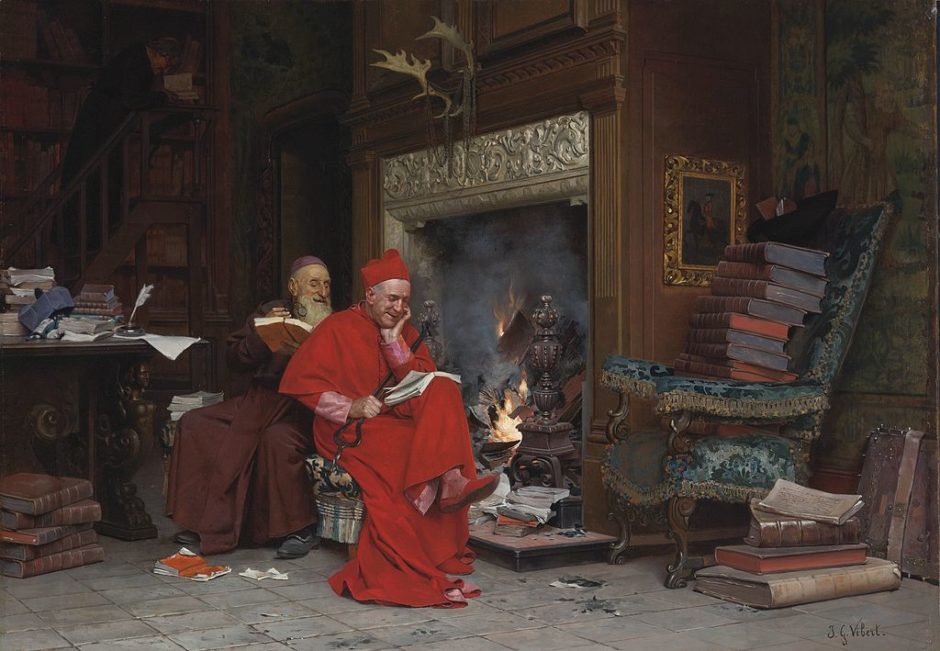
The newly ordained are celebrating their First Masses.
I had a note about the First Mass of a new young priest in San Francisco.
Congratulations to Fr. Alvin Yu. Here he is at Sts. Peter and Paul Church, where he grew up. More HERE

Preparation for the Mass was a joint effort of Saints Peter and Paul and St. Margaret Mary in Oakland, with assistance from St. Patrick’s Seminary, and San Francisco’s Star of the Sea and St. Monica’s Churches. The Mass was videotaped and photographed by Jay Balza, of the Traditional Latin Mass Society of San Francisco. More of the photos may be seen on his Facebook page.
Nice vestments!
This is pretty bad. Let’s call it Reason #9577 for Summorum Pontificum.
This is the ordination of a man of Tamil origin in the Diocese of Rodez, in France.
One must ask how it was that they thought that some of these choices were good choices. From the beginning, when the ever so serious bishop is waving that coconut, or whatever the hell it is, around, I got the creeps. The creeps were not helped by the chant by the woman that followed, I think after the “Eucharistic Prayer”. I don’t know what she is singing, but I’ll bet you it has nothing to do with the Roman Rite.
About the singing. I don’t mind the style so much, although I wonder if the idiom is pagan. I remember during the beatification Mass of Mother Teresa, when old Marini was in charge and was running inculturated-amok, a priest from India next to me (in the press corps area on the braccio) got angry. He explained that the melody and gestures they were using in their liturgical dance rubbish had un-Christian connotations. Music and styles have connotations. They change only very slowly. Inculturation is tricky. We must always give logical priority to what the Church has to give to the world.
A screenshot. Note the spot.
This screams for a caption.

I am reminded of my very first day of seminary (aka The Pit, aka The 7th Circle of Hell).
In our first team-taught “Liturgy Colloquium” class they had us stand in a circle, gave us tulip bulbs (“John, receive the tulip bulb of life!”… “Thanks… Jim.”), asked us to name them – I am not making this up – and then had us march out as the “team” chanted a kind of mantra to Mother Earth and the Bringer of Light. This class was led by a priest who would eventually leave the priesthood after shaking up with woman on the faculty, after which they lived on her VA benefits from her MIA Vietnam vet husband. This same priest, the vice-rector, would eventually throw me out of seminary when he took over after the rector’s heart attack. A couple days before we had had a rather acrimonious dispute in class when he explicitly denied the doctrine of transubstantiation.
That’s what this style of “ritual” or whatever the hell it was reminded me of.
I think I named mine “Bob”, or something exceptionally meaninful like that.
Was there a good point made in the sermon you heard during the Holy Mass in fulfillment your of Sunday Obligation? Let us know.
 Pope Francis gave an interview to the 93 year old atheist Eugenio Scalfari who, when he was young, was a Fascist and then later a Socialist and, in previous interviews with the Pope didn’t take notes or make recordings.
In La Repubblica:
Last Thursday I received a phone call from Pope Francis. It was about noon and I was at the paper with my phone rang and a voice greeted me: it was His Holiness. I recognized him immediately. “Could you come over today? At 4?” I’ll be there for sure.
I dashed home and at 3:44 I was in the little sitting room at Santa Marta [Isn’t this riveting?]. The Pope came in a minute later. We embraced and then, seated facing each other, we started to swap idea, feelings, analyses of what is going on in the Church and then in the world.
Pope Francis told me that he was very worried about the summit meeting of the G20. “I’m afraid that there will be very dangerous alliances between Powers that have distorted visions of the world: America and Russia, China and North Korea, Russia and Assad in the war in Syria.” What is the danger of these alliances, Holiness? “The danger regarding immigration. We, you know this well, have as the principle problem and, unfortunately growing in the today’s world, that of poverty, of the weak, of the excluded, of whom emigrants are members. On the other hand there are countries where the majority of the poor don’t come from migratory streams but from social calamities of that country; others, instead, have little local poverty but they fear the invasion of migrants. That’s why the G20 worries me.” [So, America has a “distorted vision of the world”.]
Do you think, Holiness, that in global society as that in which we live the mobility of peoples is on the upswing, poor or not poor as they may be? “Let’s not fool ourselves: poor peoples have an attraction the continents and countries of old wealth. Above all Europe. I, too, have often thought about this problem and I have arrived at the conclusion that, not only for but also for this reason, Europe must assume as soon as possible a federal government and a federal parliament, not from individual confederated countries. You yourself have raised this topic many times, and have even spoken of it in the European parliament. It’s true, I’ve raised this many times.” And you received great applause and even standing ovations. “Yes, that’s so, but unfortunately that doesn’t mean much. They will do that if they figure out the truth: either Europe becomes a federal community or it won’t count for anything in the world.”
[…]
The rest … well.
Interesting. I think that the Pope wants a kind of “United States of Europe” to counter balance both the constitutional federal republic which are the United States of America and also the Russian Federation.
I wonder how that would work.
Pope Benedict, before his election, wrote quite a bit about the meaning, the soul of Europe. He was deeply preoccupied with the loss of its identity. First Things has a piece about Europe from Benedict XVI. After a deep historical analysis… here’s a taste. However, read the whole thing. Benedict has his own description of America which differs somewhat from that of his successor.
[….]
At the hour of its greatest success, Europe seems hollow, as if it were internally paralyzed by a failure of its circulatory system that is endangering its life, subjecting it to transplants that erase its identity. At the same time as its sustaining spiritual forces have collapsed, a growing decline in its ethnicity is also taking place. [Concise. This was written in 2006, before the present problems of immigration really picked up, but not before Europe began to turn into “Eurabia”.]
Europe is infected by a strange lack of desire for the future. Children, our future, are perceived as a threat to the present, as though they were taking something away from our lives. Children are seen—at least by some people—as a liability rather than as a source of hope. [Zero sum game.] Here it is obligatory to compare today’s situation with the decline of the Roman Empire. In its final days, Rome still functioned as a great historical framework, but in practice its vital energy had been depleted. [Interesting. Pope Francis, it is said, has a kind of “manifest destiny” view of Latin America. I had posted, back in 2014, about a long conversation I had with South American journalist Alejandro Bermudez of CNA. The concept of “peripheries”, is important to Francis. Thus,…
Bermudez spoke of the influence on Francis of thinkers such as the Uruguayan writer-theologian Alberto Methol Ferré, the Russian-American sociologist Pitirim Sorokin, and the pivotal Spanish-language poet Rubén Darío. To condense wildly, it seems that Francis may breathe in a school of thought that sees a kind of “manifest destiny” for Latin America. When cultures develop a interior decay, which they always do, revitalization of the cultures comes from “peripheries”. For the larger Church, experiencing an interior decay, a periphery is Latin America. Latin America, unlike any other continent, is unified in language (by far dominated by Spanish with related Portughese) and is/was unified in religion, Catholicism (though there is bad erosion). With these unifying factors, Latin America has a critical role to play. Also, if you are paying attention, Francis seems to use the word “periphery” a lot. This not quite the same thing as “margin”.
Back to Benedict on Europe.]
Which brings us to the problems of the present. There are two opposing diagnoses of the possible future of Europe. On the one hand, there is the thesis of […]
[…]
Amid the major upheavals of our day, is there a European identity that has a future and to which we can commit whole-heartedly?
A first element is the unconditionality with which human rights and human dignity should be presented as values that take precedence over any state jurisdiction. […] [Interesting in light of the controversy over the baby in England.]
[…]
A second element that characterizes European identity is marriage and the family. [Interesting in light of the 100th anniversary of the apparitions of Our Lady of Fatima, who said that the final battle with Satan is over the family and marriage.] Monogamous marriage—both as a fundamental structure for the relation between men and women and as the nucleus for the formation of the state community—was forged in the biblical faith. It gave its special physiognomy and its special humanity to Europe, both in the West and in the East, precisely because the form of fidelity and the sacrifice that it entails must always be regained through great efforts and suffering. [Therefore the Devil will attack marriage, especially by trying to separate the sexual act from procreation. That is why the homosexualists are so valuable to the Enemy.]
Europe would no longer be Europe if this fundamental nucleus of its social edifice were to vanish or be changed in an essential way. We all know how much marriage and the family are in jeopardy. Their integrity has been undermined by the easier forms of divorce at the same time as there has been a spread in the practice of cohabitation between men and women without the legal form of marriage. Paradoxically, homosexuals are now demanding that their unions be granted a legal form that is more or less equivalent to marriage. Such a development would fall outside the whole moral history of humanity that, whatever the diverse legal forms, has never lost sight of the fact that marriage is essentially the special communion of man and woman, which opens itself to children and thus to family.
The question this raises is not of discrimination but of what constitutes the human person as a man or as a woman, and which union should receive a legal form. If the union between man and woman has strayed further and further from legal forms, and if homosexual unions are perceived more and more as enjoying the same standing as marriage, then we are truly facing a dissolution of the image of humankind bearing consequences that can only be extremely grave. [Since 2006 the Enemy has made great strides.]
The last element of the European identity is religion. I do not wish to enter into the complex discussion of recent years, but to highlight one issue that is fundamental to all cultures: respect for that which another group holds sacred, especially respect for the sacred in the highest sense, for God, which one can reasonably expect to find even among those who are not willing to believe in God. When this respect is violated in a society, something essential is lost. In European society today, thank goodness, anyone who dishonors the faith of Israel, its image of God, or its great figures must pay a fine. The same holds true for anyone who dishonors the Koran and the convictions of Islam. But when it comes to Jesus Christ and that which is sacred to Christians, freedom of speech becomes the supreme good. [The last acceptable prejudice.]
This case illustrates a peculiar Western self-hatred that is nothing short of pathological. It is commendable that the West is trying to be more open, to be more understanding of the values of outsiders, but it has lost all capacity for self-love. All that it sees in its own history is the despicable and the destructive; it is no longer able to perceive what is great and pure. What Europe needs is a new self-acceptance, a self-acceptance that is critical and humble, if it truly wishes to survive. [Thus, Benedict in 2006. He didn’t call for a “federation” of Europe. He wanted Europe to recover its Christian soul.]
Multiculturalism, which is so passionately promoted, can sometimes amount to an abandonment and denial, a flight from one’s own things. Multiculturalism teaches us to approach the sacred things of others with respect, but we can do this only if we ourselves are not estranged from the sacred, from God. With regard to others, it is our duty to cultivate within ourselves respect for the sacred and to show the face of the revealed God—the God who has compassion for the poor and the weak, for widows and orphans, for the foreigner; the God who is so human that he himself became man, a man who suffered, and who by his suffering with us gave dignity and hope to our pain.
Unless we embrace our own heritage of the sacred, we will not only deny the identity of Europe. We will also fail in providing a service to others to which they are entitled. To the other cultures of the world, there is something deeply alien about the absolute secularism that is developing in the West. They are convinced that a world without God has no future. Multiculturalism itself thus demands that we return once again to ourselves.
We do not know what the future of Europe will be. Here we must agree with Toynbee, that the fate of a society always depends on its creative minorities. [“CREATIVE MINORITIES”] Christian believers should look upon themselves as just such a creative minority, helping Europe to reclaim what is best in its heritage and thereby to place itself at the service of all humankind.
The moderation queue is ON.

Columnist for Fishwrap? Reader of online column at Fishwrap? Either way it probably involves the Fishwrap.
Do you pray before using the Internet? It might be a good idea. Aside from the dangers for custody of the eyes and from reading horrible soul-annihilating things at Fishwrap (et alibi), there are matters of time expenditure and prideful personal exchanges, not to mention mistreatment of others.
We pray before we eat (taking things in). We pray before we study (taking things in). Internet use?
Years ago I wrote a prayer that is pretty well known now. I have quite a few language versions of it posted (I’m always looking for more, along with native speaker recordings).
I just looked at the page and took a moment to review the extremely amusing Roman dialect version along with its recording by The Great Roman™. It’s a hoot. (Yes, prayers can be fun.) There is also Klingon, but I am told that the Klingon is not very good. So far the Klingon “expert” (if there are such critters) hasn’t offered anything better. I’m open.
Here are the two “originals”.
 LISTEN
Oratio ante colligationem in interrete:
Omnipotens aeterne Deus, qui secundum imaginem Tuam nos plasmasti et omnia bona, vera, et pulchra, praesertim in divina persona Unigeniti Filii Tui Domini nostri Iesu Christi, quaerere iussisti, praesta, quaesumus, ut, per intercessionem Sancti Isidori, Episcopi et Doctoris, in peregrinationibus per interrete, et manus oculosque ad quae Tibi sunt placita intendamus et omnes quos convenimus cum caritate ac patientia accipiamus. Per Christum Dominum nostrum. Amen.
ENGLISH
LISTEN
A prayer before logging onto the internet:
Almighty and eternal God, who created us in Thine image and bade us to seek after all that is good, true and beautiful, especially in the divine person of Thine Only-begotten Son, our Lord Jesus Christ, grant, we beseech Thee, that, through the intercession of Saint Isidore, Bishop and Doctor, during our journeys through the internet we will direct our hands and eyes only to that which is pleasing to Thee and treat with charity and patience all those souls whom we encounter. Through Christ our Lord. Amen.
And don’t forget….
Podcast: Play in new window | Download
Subscribe: RSS
 ¡Hagan lío!
I had a nice note from a reader who met a seminarian recipient of one of your birettas.
Here at Fr. Z’s Samizdat, for now I’ll anonymize this “In The Wild” pic. It is just better that way, given the times we live it.

And another… I know this seminarian is defended by his bishop, so there’s no problem.

These men send thank you notes and they promise to pray for the donors.
YOU, dear readers, have supplied over 100 birettas to seminarians. Kudos. Some thank you notes from seminarians with spiffy new birettas HERE and HERE.
Last night after the Pontifical Mass I was chatting with seminarians and learned to my horror that a few of them have their names on the BIRETTA PROJECT LIST and that they have – O the pathos! – been waiting for some love. For pity’s sake – HELP THEM!
What is this project and how does this work?
We want to get as many clerics to use birettas (and all that goes with them – fidelity to doctrine, reverent ars celebrandi, good life choices, solid priestly identity, etc.) as possible.
You remain anonymous to each other.
Seminarians and potential donors…
Contact John in church goods at Leaflet Missal in St. Paul – 651-209-1951 Ext-331.
DO NOT WRITE TO ME TO ASK FOR A BIRETTA! (If a seminarian doesn’t get that straight then… how are your grades?!?)
CONTACT TO JOHN AT LEAFLET.
If John is away, leave a voicemail with your phone number and he will call you back ASAP.
John keeps track of the names of the seminarians and their hat sizes. My involvement would only get in the way of the process. Don’t write to me.
Let’s encourage these men.
Call John and buy a biretta for a seminarian. It’s as easy as that.
There is also a SATURNO FOR CLERICS Project. Ask John about that, too!
UPDATE:
Feedback from a reader…
In a recent post, you respond to a question about the distress that is caused by the latest homosexual scandal in the Vatican. You pointed out that the enemy will attack, “in particular,” those who have influence over others. Among the list is the father of a family. Well, I’m one of those, and your comment hit the mark. I went to confession almost immediately after reading your article. As I’m responsible for souls, I need to make sure I can pass muster myself. I’m grateful for the push. Please keep on pushing.
My work here is done… just started.
____
From a reader…
QUAERITUR:
Father, since converting through RCIA and beginning work within my parish, I read your blog twice a day for insights into the struggles within the Church today. You regularly give insight into the the conflicts surrounding curial politics, the shakeup at the CDF, AL, the St. Gallen group, and the Lavender Mafia. But, like Sherlock Holmes’ dog that didn’t bark, this horrible incident in the CDF apartments is becoming a deafening silence. Please give us some perspective: what does it say about the CDF, the curia, and Vatican leadership that this sort of abomination was taking place within their headquarters? How can we trust what comes out of Rome?
Alas. It’s enough to make a grown man cry. Truly.
These days I get a lot of questions like this in my email and it is hard to know how to respond.
Let’s get real about this.
The Enemy, Satan and the fallen angels of Hell, hate the Church in way that we mere humans cannot fathom. Their purpose is to diminish in any way they can the love that God will be shown in the End, when Christ will take all things to Himself and submit them to the Father so that God will be all in all. Each time a soul fails at death and is excluded from the Beatific Vision (and let’s not kid ourselves that that doesn’t happen), the Enemy exalts with the cry, “That’s one more that You won’t have!”
To accomplish their hellish purpose, the Enemy will attack everyone, of course. But the Enemy will attack in a particular way those whose influence extends over many souls. Take down an individual, okay. Take down a father of a family, better. Take down a parish priest or bishop, even better. Take down officials in the Church’s HQ so that massive scandal can be broadcast by the MSM… a damned ‘good’ day’s work.
The Enemy will attack the Church in every way through her weak link: people.
The Enemy is like a roaring lion, roaming about seeking whom he might devour.
Tu autem, Domine, miserere nobis! But Thou, O Lord, have mercy upon us!
That’s my cry, too, for I too am a sinner in need of forgiveness, conversion and grace.
Let’s be clear about another thing. Just because the apartment in which the deviant sex orgy and drug stuff took place is in the same building as the offices of the Congregation for the Doctrine of the Faith (CDF), that doesn’t mean that the CDF was in any way involved. I worked in that same building for years, in a different office. There are a few residential apartments in that building that have nothing to do with the CDF. People with clout (or people who have people with clout behind them – so to speak) have enough pull to get an apartment there. But, those are not “CDF apartments”, in the sense that the CDF controls them so closely that the CDF can be implicated in what goes on in them. In my time working in that building, there were in these apartments retired cardinals and long-time, Curia officials, none of whom worked for the CDF. Those are not “CDF apartments”.

CLICK FOR LARGER
That said, keep in mind that the building in which the CDF is located and the residence where the Pope lives (Santa Marta) are really close to each other. Enemy demons can attach themselves to places and objects and infest them due to sins that are committed in them and with them. They stick to those places like vile, hell-leeches and claim the right to be there because of those sins until their hold is broken through exorcism. If I were Pope, I would weekly send exorcists around the curial offices to clean house. If I were a bishop, I would weekly send priests around blessing the work spaces of the chancery and sprinkling holy water and even blessed salt. Pastors of souls should do that for their rectories. Fathers of families should ask the priest to bless their homes. Hell and demons are real, friends. And they really hate you. Fight back. Use sacramentals. Even more powerful than sacramentals are sacraments. So, given the great opportunity to wreak havoc on a spiritual level, would horrible homosexual sins (demons can be “specialists”) inside the precincts of Vatican City, literally a stone’s throw from where the Vicar of Christ lives and works and eats and sleeps, not be just the thing for the Enemy? You bet it would be.
Demonic infestation of the same building where doctrine is overseen for the whole Church and abuse cases are dealt with. The same building in which you find the offices of the Commission which oversees the use of the Traditional Roman Rite. Coincidence?
About all the rest of the stuff you mentioned and more… I could give a list, but you know what they are… these also are manifestations of the ongoing mission of Hell to take souls away from God.
This is about Hell and souls, Heaven and souls… souls… souls.
We can get down in the dumps about what is going on or we can rise up and fight back.
I want to keep as many of you out of Hell as I can and enjoy the glory of Heaven with you when our time comes.
For now, however, we are in The Fight Of Our Lives.
So, you read about awful things in the Church and heresy and stupidity from her duly appointed pastors? Fine. If the Church is being attacked with such fury, and from the inside, that means that the Church is exactly what we need to belong to! Paradoxically, the corruption we see and the infidelity we read of are proofs of the Church’s divine origin. And since Christ founded the Church, that’s the Church I want to be in, flaws, wickedness and all.
Next, battle isn’t pretty. Just as a soldier in the state of grace who does his duty knows that even in battle he is in the “safest” place he can be, so too we know that we members of the Church in the state of grace are in the safest place we could be, even though corruption and infidelity and disgusting things are going on at every level. Since the Church is of divine origin, there is no place else we should ever want to be. We can be sad sometimes at the results of the battle. We can be afraid sometimes in the midst of the battle. But let us not waiver in our trust in Christ’s promises. Heaven is our reward, not worldly security, even in the Church. The Lord is my strength and shield and my trusting heart exalts in Him and with song I’ll give Him thanks even for the terrible battle that it falls to me to fight as His priest.
Moreover, Rome is only Rome. The “Vatican” is only the Vatican. Curial structures are not of divine origin. Christ promised nothing to the Roman Curia. He made no guarantees that the Faith would be preserved in the Curia. “Put not your trust in princes: In the children of men, in whom there is no salvation.”
Stick to the true and the proven. Stick to traditional sources for the review of the content of your Catholic Faith. Remember too that the content of your Faith is not just stuff to be read and memorized, but is also a Person with whom you have a relationship. Stick to Christ. Use the sacraments well. Review your own state in life and, having determined your duties and obligations, carry them out faithfully and with singularity of purpose. Examine your conscience and…
GO TO CONFESSION!
ACTION ITEM
Were every reader here, today, to examine his or her conscience and then GO TO CONFESSION!, offering up prayers of reparation for sins committed by faithless priests and bishops, faithless catholics who twist souls through their media outlets (Fishwrap, America, Commonweal, The Tablet, etc.), imagine the blow that would give to the Enemy.
Were every reader here, today, to take up the call of the Mother of God and do what she asked in praying the Rosary and making acts of reparation, imagine what a ripple effect that would have.
You are NOT few in number, dear readers. YOUR acts of reparation would be NOT a few. You can have an impact.
Were you to make an act of reparation and pray for forgiveness and conversion each time you read a story about the faithless agents of Hell who twist papal documents to contradict the Church’s true teachings, who are caught in the commission of evil acts, who distort minds and hearts through their horrid reporting or opinion pieces at certain internet sources… imagine the impact.
You might also pick a particularly annoying priest or bishop or media person who is clearly in trouble and dedicate some of your prayers for him.
Remember my prayer before using the internet. HERE Remember also my prayer for the conversion or destruction of the Fishwrap. HERE Remember The Bux Protocol™. HERE
Remember the Act of Reparation taught by the Angel of of Peace at Fatima:
Most Holy Trinity, Father, Son and Holy Ghost, I adore You profoundly and I offer You the most precious Body, Blood, Soul and Divinity of Jesus Christ, present in all the tabernacles of the world, in reparation for the outrages, sacrileges and indifferences by which He Himself is offended. And by the infinite merits of His Most Sacred Heart and the Immaculate Heart of Mary, I beg of You the conversion of poor sinners.
We are not helpless in this battle, friends. We have mighty spiritual weapons, made strong and good by Christ.
FIGHT!
Do I hear an “Amen!”?
 The sacraments have both matter (the physical stuff) and form (the words pronounced). In the case of the Eucharist the matter is twofold: bread and wine. The bread must be from wheat and, in the Latin Church, unleavened. The wine must be from grapes and there must have been fermentation. For the Eucharist to be confected (for transsubstantiation to take place) the matter must be valid matter for the sacrament. For Mass to take place both bread and wine must be changed to the Body and the Blood of Christ, two elements or species which both, after their change, are the Body and Blood, Soul and Divinity of Christ. Both species must be consumed by the priest for their to be Mass, the unbloody renewal of the bloody Sacrifice of Calvary.
Hence, the use of the proper matter is at the heart of who we are.
From time to time we hear about people playing fast and loose with the matter for the Eucharist.
NOTA BENE: This is important for those who have GLUTEN issues.
Let’s remember what Redemptionis Sacramentum says at the end about reporting abuses (see below).
This comes from the Congregation for Divine Worship and Discipline of the Sacraments. Robert Card. Sarah is the Prefect. My emphases and comments.
CONGREGATION FOR DIVINE WORSHIP AND THE DISCIPLINE OF THE SACRAMENTS
Prot. N. 320/17
Circular letter to Bishops on the bread and wine for the Eucharist
At the request of the Holy Father, Pope Francis, the Congregation for Divine Worship and the Discipline of the Sacraments is writing to Diocesan Bishops (and to those who are their equivalents in law) to remind them that it falls to them above all to duly provide for all that is required for the celebration of the Lord’s Supper (cf. Lk 22: 8,13). It is for the Bishop as principal dispenser of the mysteries of God, moderator, promoter and guardian of the liturgical life in the Church entrusted to his care (Cf. CIC can. 835 § 1), to watch over the quality of the bread and wine to be used at the Eucharist and also those who prepare these materials. [When bishops are referred to as “moderator” of worship in their dioceses, this is the sort of thing that they are supposed to do: ensure that things are done according to the books and correct abuses.] In order to be of assistance we recall the existing regulations and offer some practical suggestions.
Until recently it was certain religious communities who took care of baking the bread and making the wine for the celebration of the Eucharist. Today, however, these materials are also sold in supermarkets and other stores and even [!] over the internet. [Yes, even the internet. I have always found it maddendingly amusing that these folks haven’t quite figured this out yet. When I worked there my motto was, “Yesterday’s technology tomorrow!” But I digress.] In order to remove any doubt about the validity of the matter for the Eucharist, this Dicastery suggests that Ordinaries should give guidance in this regard by, for example, guaranteeing the Eucharistic matter through special certification.
The Ordinary is bound [required, obliged] to remind priests, especially parish priests and rectors of churches, of their responsibility to verify those who provide the bread and wine for the celebration and the worthiness of the material. It is also for the Ordinary to provide information to the producers of the bread and wine for the Eucharist and to remind them of the absolute respect that is due to the norms. [Why would this be “especially parish priests and rectors”? Probably because the larger number of people attend Masses in those places (rather than convent or school chapels. Also – and this is important – they receive many more Mass intentions with stipends. If invalid matter is used, Mass isn’t said. If Mass isn’t said, then they have received stipends for something they did not do.]
The norms about the Eucharistic matter are given in can. 924 of the CIC and in numbers 319 – 323 of the Institutio generalis Missalis Romani [i.e., GIRM] and have already been explained in the Instruction Redemptionis Sacramentum issued by this Congregation (25 March 2004):
“The bread used in the celebration of the Most Holy Eucharistic Sacrifice must be unleavened, purely of wheat, and recently made so that there is no danger of decomposition. It follows therefore that bread made from another substance, even if it is grain, or if it is mixed with another substance different from wheat to such an extent that it would not commonly be considered wheat bread, does not constitute valid matter for confecting the Sacrifice and the Eucharistic Sacrament. It is a grave abuse to introduce other substances, such as fruit or sugar or honey, into the bread for confecting the Eucharist. Hosts should obviously be made by those who are not only distinguished by their integrity, but also skilled in making them and furnished with suitable tools” (n. 48).
“The wine that is used in the most sacred celebration of the Eucharistic Sacrifice must be natural, from the fruit of the grape, pure and incorrupt, not mixed with other substances. […] Great care should be taken so that the wine intended for the celebration of the Eucharist is well conserved and has not soured. It is altogether forbidden to use wine of doubtful authenticity or provenance, for the Church requires certainty regarding the conditions necessary for the validity of the sacraments. Nor are other drinks of any kind to be admitted for any reason, as they do not constitute valid matter” (n. 50). [I have written on the issue of fortified wines (such as sherry, port, marsala and vermouth) for Mass HERE.]
In its Circular Letter to the Presidents of the Episcopal Conferences regarding legitimate variations in the use of bread with a small quantity of gluten and the use of mustum as Eucharistic matter (24 July 2003, Prot. N. 89/78 – 17498), the Congregation for the Doctrine of the Faith published the norms for the celebration of the Eucharist by persons who, for varying and grave reasons, cannot consume bread made in the usual manner nor wine fermented in the normal manner:
[NB] “Hosts that are completely gluten-free are invalid matter for the celebration of the Eucharist. Low-gluten hosts (partially gluten-free) are valid matter, provided they contain a sufficient amount of gluten to obtain the confection of bread without the addition of foreign materials and without the use of procedures that would alter the nature of bread” (A. 1-2). [Low-gluten does not mean no-gluten. There must be some gluten, even if very little.]
[NB] “Mustum, which is grape juice that is either fresh or preserved by methods that suspend its fermentation without altering its nature (for example, freezing), is valid matter for the celebration of the Eucharist” (A. 3). [That means that mere grape juice is invalid. There must have been some fermentation.]
“The Ordinary is competent to give permission for an individual priest or layperson to use low-gluten hosts or mustum for the celebration of the Eucharist. Permission can be granted habitually, for as long as the situation continues which occasioned the granting of permission” (C. 1). [“Ordinary” can, in this case, probably also mean the Vicar General of a diocese. Note the point about “permission”. PERMISSION. It may be that a diocesan bishop has issued legislation about this for his diocese. Priests should check this.]
The same Congregation also decided that Eucharistic matter made with genetically modified organisms [GMO] can be considered valid matter (cf. Letter to the Prefect of the Congregation for Divine Worship and the Discipline of the Sacraments, 9 December 2013, Prot. N. 89/78 – 44897).
Those who make bread and produce wine for use in the Mass must be aware that their work is directed towards the Eucharistic Sacrifice and that this demands their honesty, responsibility and competence.
In order to facilitate the observance of the general norms Ordinaries can usefully reach agreement at the level of the Episcopal Conference by establishing concrete regulations. Given the complexity of situations and circumstances, such as a decrease in respect for the sacred, it may be useful to mandate a competent authority to have oversight in actually guaranteeing the genuineness of the Eucharistic matter by producers as well as those responsible for its distribution and sale.
It is suggested, for example, that an Episcopal Conference could mandate one or more Religious Congregations or another body capable of carrying out the necessary checks on production, conservation and sale of the Eucharistic bread and wine in a given country and for other countries to which they are exported. It is recommended that the bread and wine to be used in the Eucharist be treated accordingly in the places where they are sold.
From the offices of the Congregation for Divine Worship and the Discipline of the Sacraments, 15 June 2017, Solemnity of the Most Holy Body and Blood of Christ.
Robert Card. Sarah, Prefect
Arthur Roche, Archbishop Secretary
Back to Redemptionis Sacramentum:
6. Complaints Regarding Abuses in Liturgical Matters
[183.] In an altogether particular manner, let everyone do all that is in their power to ensure that the Most Holy Sacrament of the Eucharist will be protected from any and every irreverence or distortion and that all abuses be thoroughly corrected. This is a most serious duty incumbent upon each and every one, and all are bound to carry it out without any favouritism.
[184.] Any Catholic, whether Priest or Deacon or lay member of Christ’s faithful, has the right to lodge a complaint regarding a liturgical abuse to the diocesan Bishop or the competent Ordinary equivalent to him in law, or to the Apostolic See on account of the primacy of the Roman Pontiff. It is fitting, however, insofar as possible, that the report or complaint be submitted first to the diocesan Bishop. This is naturally to be done in truth and charity.
From a reader…
QUAERITUR:
Is it licit for a child who has received the sacraments of baptism and first communion in the Western Rite to receive the sacrament of confirmation from an Eastern Rite priest?
Canon 696 of the Code of the Canons of the Eastern Churches establishes that Confirmation (properly called Chrismation) is validly administered by an Eastern Catholic priest to any member of the Christian faithful, including Latin Catholics.
However, it says also that an Eastern priest chrismates (confirms) a Latin Catholic only if they are his subjects (as might happen in a place where the Eastern Church is predominant and there is not a Latin hierarchy established), or if he licitly baptizes them (for example, if the person is in danger of death), and “always with due regard for the agreements entered between the Churches sui iuris in this matter.”
Unless those conditions apply, confirmation of a Latin Catholic by an Eastern Catholic priest would be valid, but it would be illicit unless those conditions apply, or unless there’s something specific in the agreements entered into between the Latin Church and whichever one of the 23 Eastern Churches to which you are referring.
Hence, if you are contemplating such a thing, I warmly recommend that you check with your local diocese to seek clarity about your situation.

Coat of Arms by D Burkart
 Fr. John Zuhlsdorf on ASK FATHER: Priest says the consecration of the chalice over the host: “Darby: 1) Yes 2) No”
 on ASK FATHER: Priest says the consecration of the chalice over the host: “It’s been so many years at this point that my memory is fuzzy, but I do remember once being at…” on From “The Private Diary of Bishop F. Atticus McButterpants” – 26-06-15 – Ordination?: “Thank you, Fr. Z, I haven’t laughed like this in a while.”
 on ASK FATHER: Priest says the consecration of the chalice over the host: “Father, 1. Am I correct in saying that the sacrifice of the mass was not effected since only the wine…”
 on What sets Federated Core apart is its privacy model.: “moon1234: While perhaps your Fortune 500 company needs O365 to manage all your sites, there is a cost to that…”
 on From “The Private Diary of Bishop F. Atticus McButterpants” – 26-06-15 – Ordination?: “Fr Z, you really should write a novel based on these characters. I would be happy to buy and read…” on ASK FATHER: Priest says the consecration of the chalice over the host: “While I am outraged at genuine liturgical abuse, having seen a couple of seriously egregious examples that went so far…”
 on ASK FATHER: Priest says the consecration of the chalice over the host: “This reminds me of what happened when Pope Benedict XVI celebrated Mass at the Sistine Chapel for the Feast of…”
A Daily Prayer for Priests










They find you a pro-life agent in your area who commits to giving a portion of the fee to a pro-life group!

PLEASE subscribe via PayPal if it is useful. Zelle and Wise are better, but PayPal is convenient.
A monthly subscription donation means I have steady income I can plan on. I put you my list of benefactors for whom I pray and for whom I often say Holy Mass.
In view of the rapidly changing challenges I now face, I would like to add more $10/month subscribers. Will you please help?
For a one time donation...



Help Monks in Wyoming (coffee – UPDATED LINK) and Norcia (beer) and the wonderful "Soap Sisters" of Summit, NJ!


Please follow me on Twitter!










Visits tracked by Statcounter
since Sat., 25 Nov. 2006:

