10th Anniversary of Summorum Pontificum – NEW SONG!

José Gallegos y Arnosa faithful at massThe celebration continues!  I hope that you have wonderful plans for the evening.

The official Parodohymnodist, Fr. Ferguson, has come through for us again.

He penned one for the very day itself 07/07/07.

He penned one for the 5th Anniversary 07/07/12.

He penned one for the 10th Annversary 07/07/17.

See some oldies HERE.

Enjoy!  Perhaps sing along.

WRITER’S NOTE: It’s a more sober time, so a bit of a more sober melody. Set to “I dreamed a dream” from the Claude-Michel Schönberg musical “Les Miserables”

There was a time when Mass seemed bland,
The music wasn’t reverential,
The homilies seemed largely canned,
And often were self-referential,
Then it all was changed…

I dreamed a dream in time gone by
That chanting would be all Gregorian,
No more guitars, or tambourines,
No nuns in outfits Terpsichorean

Then I was young, but hope seemed far
From ever reaching its fulfillment,
When Latin happened it was rare,
I barely knew just what the thrill meant.

Then the Pope wrote a decree,
He wrote it motu proprio-o,
Set the ancient missal free,
For all time and everywhere….

Suddenly the night was starry,
Frustrations gone, now I could vent them,
“Introibo ad altare!”
Father said ad orientem.

I still dream my treasured dream,
A thousand maniples a’ shining,
Biretta on each priestly head,
The NCR, distraught and whining.

I had a dream the Church would be,
So different in this generation
And though we’ve had a twist or three,
I still cling to the dream I dreamed….

Posted in Lighter fare, Liturgy Science Theatre 3000, Parody Songs | Tagged ,
8 Comments

Reflections on Summorum Pontificum with hard words and truths

17_07_07_sacred_and_great_mousepad_01_JPGAt NRO there is a good piece, a reflection on the 10th Anniversary of Summorum Pontificum.  Let’s see it with my usual treatment.   He starts out talking about how the late William Buckley had invited him to attend a TLM in the time just before the Motu Proprio was promulgated.

Pope Benedict’s Great Restoration

MICHAEL BRENDAN DOUGHERTY

[…]

It is so difficult to explain to young Catholics the fugitive feeling of attending a Traditional Latin Mass before the seventh day of the seventh month of the seventh year in this millennium. I had been doing so for just five years. Latin Mass communities were detested by bishops and cardinals, most of whom believed it was their life’s mission to modernize a defective Church. It also marked one out for scorn from most who considered themselves conservative Catholics. They called us disobedient schismatics. We often deplored them in return for the personality cult they built around the papacy of John Paul II. (In truth, our side of this dispute did and still does have cranks in its ranks.) [There is stark honesty herein.]

These years shaped in me a deep distrust of ecclesiastical persons in the Church. I made a study of periods of apostasy in the Church and kept reminding myself of the words of St. John Chrysostom that “the road to hell is paved with the skulls of bishops.” [He didn’t write that, but it is now a rather striking commonplace.] The child-abuse scandal didn’t surprise traditionalists. In some ways, we thought it proved our point about the depth of corruption in the Church. [Hang on… here comes something hard…] It was obvious to Traditionalists that, in many dioceses, it was better for a priest to rape children or carry on an active sex life with other adults than to say the Latin Mass for people like us, “the crazies.” [Ouch.  But there is a lot of truth to this.  For years I’ve seen this attitude towards those who desire our tradition.] I learned, in my heart, a notion Thomas Aquinas expressed in Scholastic doctrine: that the blessed in heaven must enjoy the torment of the wicked in hell.

Loyalty to the liturgical books of 1962 was slightly more common among political conservatives than among others. It was a trait shared by Buckley and Patrick Buchanan, and also by libertarian Thomas Woods and Gladden Pappin, who writes for American Affairs. Nor was it just political scribblers who found themselves attracted to “the TLM.” The new rite of the Mass was almost instinctively detested by real literary giants, who saw it as a banal substitute for a ritual whose words and forms had been shaped by the great ages of faith.


[… a couple examples cut out, and there’s a great line…]

The opponents of the old Mass are still well-represented in the Church, especially in the universities that retain the name “Catholic” yet never reflect on how their schools turn out so many disillusioned men and women. They still rage at the old Mass, and at Pope Benedict for what he did to re-legitimize it.

These so-called theologians remind one of the French intellectual Alain Badiou, in that they insist that all legitimate intellectual exercise must be carried out in fidelity to some great “Event.” For Badiou, the event was Communist revolution, and Mao the only true intellectual. For these so-called theologians, the “Event” was the Second Vatican Council — the Council itself, not the texts it produced, which are of secondary importance. This Event created a new church, in need of a new intellectual party of adepts. But their methods are sloppier and shallower than Badiou’s. These theologians greet every novel utterance of a pope or a Church document as a new revelation that “develops” previous Church teaching. In their parlance, development means the opposite of what it did to John Henry Newman. He meant further articulation; they mean “obviate or overturn.” Their words, like the liturgy they prefer, are a self-referential clamor. [Auferre, trucidare, rapere, falsis nominibus imperium; atque, ubi solitudinem faciunt, pacem appellant.]

I am not a particularly devout man. I am inconstant and have numerous vices, which are easy to name. I attend the old Mass, in part, because it respects me as a sinner. [Good point.  Anyone who truly believes that the Church is not a museum for saints, but a hospital for the wounded will see how the older form respects them.] And ten years on, I can only thank Pope Benedict for giving legal sanction to this august rite that unites me again with my coreligionists, [Across borders and centuries.] from scribblers like Buckley and inconstant men like Waugh to all the saints and angels; this Mass where before the awful moment at which the bell is rung and the the sacrifice of Calvary breaks through into the present, all clamor disappears into silence.

Pope Benedict gave the Church a great gift.

Summorum Pontificum is the centerpiece of Benedict XVI’s “Marshall Plan” (my image) for the Church.  It is one of our greatest tools for a true revitalization of the Church and Catholic identity.

Some of you younger readers might not know what the “Marshall Plan” was. After World War II these United States rebuilt war-ravaged Europe for humanitarian reasons, but also to help create trading partners and a prosperous bulwark against Communism.

After Vatican II, many spheres of the Church were devastated, ravaged by internal dissent, a loss of continuity with our tradition, and from erosion by the secularism and relativism of the prevailing modern world.

We need a Marshall Plan for the Church in the modern world.  Certainly what we have been doing up to this point isn’t producing fantastic results across the board.  That’s because we don’t seem to know who we are anymore.

Joseph Card. Ratzinger had been concerned for years about the loss of Christian identity, which is at the heart of Western Civilization. Later, as Benedict XVI, he gave us a great tool by which we could reinvigorate our Catholic identity and, so, resist the negative influences of secularism and relativism.

I think that Benedict intended Summorum Pontificum to play a key part in a long-term strategy to rebuilt our Catholic identity, to correct our way of reading … well… just about everything over the last half century or so, and to establish a strong defense against the dictatorship of relativism.

Only with a solid identity can we, as Catholics, have something positive and healthy to offer to the world at large, a clear voice offering important contributions in the public square.  Look, for example, at the clarity and courage of the Little Sisters of the Poor against the evil machinations of the Obama Administration.  They have a clear identity and they are steadfast.  As a result they provide an inspiring example and they keep certain values before the public eye.

Our identity as Catholics is inextricably bound together with the way we pray as a Church.

To give shape and strength to our Catholic identity in these difficult times, we need an authentic liturgical renewal, a renewal that reintegrates us with our tradition, brings us into continuity with the deep roots of our Catholic Christian experience of two millennia.

Contrary to the notions of most progressivists, “the Catholic thing” did not begin in the 1960s.

There can be no authentic change for a better future without continuity with our past.

Liturgy is the tip of the spear.

Benedict XVI pointed us toward a healthier vision of the Church’s doctrine, history, public worship and our very identity as Catholics.

Consider a parallel.  Reading the Fathers of the Church can help us, collectively, correct the way we have been reading Scripture, so much and too long under the domination of an over-played historical-critical method.  So too, the Extraordinary Form helps us learn how to worship God as a Church, which is not fragmented into tiny shards, and to reorient ourselves away from ourselves.

No positive initiative that we undertake in the Church will succeed unless it is rooted in and oriented by a revitalized sacred liturgical worship of God.  Everything comes from worship and everything goes back to worship in a dynamic, ongoing commercium.

Start your local movement for the implementation of Summorum Pontificum NOW.

More hard words and truth:

I don’t think we have a lot of time to waste.

¡Hagan lío!
Posted in Hard-Identity Catholicism, Liturgy Science Theatre 3000, Si vis pacem para bellum!, SUMMORUM PONTIFICUM | Tagged ,
13 Comments

ASK FATHER: Bishops who forbid priests from saying Traditional Latin Mass

mass TLMFrom a reader…

QUAERITUR:

I recently received a question concerning the Traditional Latin Mass. I was asked what can a priest do if his bishop stops him from celebrating the Traditional Latin Mass because he dislikes the TLM or disagrees with Summorum Pontificum.

Is there a document that legally protects him and allows him to petition the Holy See?

Today seems an appropriate day for this question.

Yes, there is a document which protects such a priest: Summorum Pontificum.

Read it in conjunction with the 1983 Code of Canon Law.

A Latin Church diocesan bishop cannot override papal legislation intended for the whole Latin Church.  If he tries, a priest can have recourse – with the help of canon lawyer or not – to the Pontifical Commission “Ecclesia Dei” (sending proofs, copies of documentation, etc.).

His Excellency
Most Rev. Guido POZZO
Secretary of the
Pontifical Commission “Ecclesia Dei
Palazzo del Sant’Uffizio
00120 VATICAN CITY

A priest so treated must decide whether or not this is a hill that he would like to die on.  Keep in mind that a bishop can crucify a priest in a thousand creative ways.

That said, it could be The Good Fight that Father needs to fight.  We have to stand up to oppressors for the sake of a good cause.  And this is a good cause.

Use of the older form, the Traditional Latin Mass is a good thing for the priest himself. Even if he said it only in private, it would have a knock-on effect with all the people whom the priest serves.  Use of the older Mass shapes the priest.  Participation in the traditional Mass by congregations with such a priest has an even bigger knock-on effect.

Summorum Pontificum was a truly amazing, effective and timely gift to the whole Church.

Thank you Pope Benedict XVI.

Oh… and another thing….

In cases such as these, in addition – or in lieu of – recourse to the Holy See one could possibly have recourse to The Bux Protocol™.

Posted in Canon Law, Liturgy Science Theatre 3000, Mail from priests, Priests and Priesthood, SUMMORUM PONTIFICUM | Tagged ,
10 Comments

Words from the Last Testament of Joachim Card. Meisner

It seems there is a video going about of Card. Woelki reading from the will of the late Joachim Card. Meisner (most recently known as one of the Four Cardinals of the Five Dubia).

Like everyone, I do not know the hour or the day of my death, nor the way or where I will die. Therefore I’d like to write down one last word to you all that will be read at an appropriate moment. It is really a last word for you in this world to Jesus Christ. Lord Jesus Christ, you are the Word through which everything is created. I thank you that you wanted me and that I was therefore created. Your Word accompanied me through life and led me through the world and around people when in need. Therefore I became a priest and then a bishop. Moulded and ordained by your stigmata. The most remarkable thing about my life is that you redeemed me through your Cross and deemed me worthy of your sufferings. Through your love for the world, your heart, your hands, your feet were punctured. Out of love for mankind you touched me with your Cross. You let me be your priest and your bishop. Therefore, especially in death, I want to praise the Cross of our Lord, Jesus Christ which brought joy into the world. In the Divine Office I witness and profess with our priests emphatically: Christ, divine Lord, you are loved only by those who have the power to love. Christ, you are my hope, my peace, my joy, my whole life. Christ, my soul draws towards you Christ, to you I pray. Christ, I hold myself close to you. With all the strength of my soul, I love you, Lord, alone, I seek you, I follow you. In this joy, I tried to serve you all in the Archdiocese of Cologne. Our Bishopric town of Cologne bears the honorary title Sancta Colonia Dei Gratia Romanae Ecclesiae Fidelis Filia – Holy Cologne, by the grace of God, the Roman Church’s faithful daughter. I tried conform to this expression in my episcopal service. Christ gave the Petrine office to the Church in order to give an orientation and support to the many people in the different times. That is my last request to you all for your salvation. Stay with our Holy Father. He is the Peter of today. Follow his guidance. Listen to his word. Peter wants nothing for himself, but everything for the Lord and for his brothers and sisters. You all know the course of my life followed three societal systems – the 12 years of Hitler, 24 year reign of communism and now over 20 years of democratic freedom. In all three epochs, the service of the pope has given me orientation, encouragement and assistance. Remain always with the Pope and you will never lose Christ. I do not desire the grace which the Apostle John received, nor the forgiveness with which you pardoned Peter. I only desire the words which you said to the robber on the Cross: “Today you will be with me in Paradise.”

Cologne, 25 March 2011

Joachim Cardinal Meisner, Archbishop of Cologne

HERE

Meditate daily on the Four Last Things.

GO TO CONFESSION!

Posted in Four Last Things, GO TO CONFESSION | Tagged
16 Comments

10th Anniversary of Summorum Pontificum: oldie tunes revisited

10 years ago, the official Parodohymnodist of this blog, inspired by the issuance of Benedict XVIs Motu Proprio Summorum Pontificum, penned and sent a celebratory tune.

COMPOSER’S NOTE

I ruminated a bit  … and came to the realization that, while “La Donna e Mobile” might be readily appreciated and understood by those with an interest in the motu proprio, there’s also a need to reach out to those who might not be so appreciative and who, in general, tend to have different musical tastes. So, reaching back to the halcyon days of folk music and came up with a version of the Pete Seeger classic (made famous by the Byrds in 1965) :

Go to the altar (turn, turn, turn)
look to the East now, (turn, turn, turn)
there’s a time for every Mass now, if it’s valid.
The time for banjos and dancing is gone,
dust off the censer, and toss out the bong.
No need for hugging, we all get along
let’s keep our focus together, on Jesus.

Page through the Missal (turn, turn, turn)
remember the rubrics (turn, turn, turn)
there’s a time and a purpose for those words there Pure,
humble rev’rence is what we now lack,
just do the red words and say those in black.
When we say High Mass, there’s no need for crack,
just let your deacon and subdeacon guide you.

Now weed your library, (turn, turn, turn)
use some discernment (turn, turn, turn)
it is time now to brush up on your Latin.
Farewell to Vosko, McBrien, Hans Keung,
deep down you knew that they just peddled deung,
the 60’s are old and the Church is still young
what still subsists is a thing of great beauty.

5 years ago, the same Parodohymnodist, wrote another offering.

COMPOSER’S NOTE: To the Beatles’ “Maxwell’s Silver Hammer” – unfortunately, to fit the tune, you have to put the emphasis on the last syllable of “Summorum”, but it works.

Father Elgin Prist, an accomplished Latinist,
Offered Mass alone,
Using a decree his old bishop wrote,
Long ago…

Bishop John McClees, brand new to the diocese,
Plotted on his throne
How to make Father Prist use the
Novus Ordo-o-o

But as he inks his sig-a-net ring
to seal his new decree…

Down comes Summorum Pontificum
On that July dawn
Bang! Bang! With a motu proprio,
obstacles were gone!

Priests in Timbuktu, dusted off their Fortescue,
Liturgists were stunned,
Shaking like a nun with a
Tambourine,
e-e-ene.

“Mass is more profound, when the altar’s turned around,”
cries the NCR,
readers pop their Geritol,
and bemoan
o-o-oan

But Benedict’s got his Marshall Plan,
to reform the reform,

Here comes Summorum pontificum
on that July dawn,
Bang! Bang! With a motu proprio,
Obstacles are gone!

It’s spectacular, better than vernacular,
The Mass of ’62!
Offered now wherever a priest wants to,
Oo, oo, oo

Sweet polyphony, streaming from the balcony
While we pray as one,
not distracted by a guitarist’s
Solo-o o

Extraordinary, indeed!
God bless Pope Benedict!

Thanks for Summorum Pontificum
Now we’re five years on.
Bang! Bang! With a motu proprio,
Obstacles were gone!

Posted in Benedict XVI, Lighter fare, Liturgy Science Theatre 3000, Parody Songs, SUMMORUM PONTIFICUM | Tagged ,
4 Comments

10th Anniversary of release of Summorum Pontificum! So…. TIE ONE ON!

I’m tying one on for the 10th anniversary of the release of the text of Summorum Pontificum (aka The Emancipation Proclamation).

Last week the Extraordinary Ordinary ordained three young men for the Holy Priesthood to serve in the Diocese of Madison.  The TMSM was happy to provide some of the vestments.

Of note were the use of Roman vestments and – in particular – maniples all around, by the ordaining bishop and by the newly ordained priests.

17_06_30_ordination_01

I post this as a special tribute to the desire of His Holiness Pope Benedict XVI, expressed in his game-changing Motu Proprio Summorum Pontificum – that there should be a “mutual enrichment” of the two “forms” (let’s just call them “rites” and have done).

There is nothing wrong with the use of the maniple in the Novus Ordo.  If a set has the maniple, Fathers, put it on.  And say the proper prayer when putting it on:

Merear, Domine, portare manipulum fletus et doloris; ut cum exsultatione recipiam mercedem laboris.

May I be made meritorious, O Lord, to bear a maniple of weeping and sorrow, so that I might receive with exaltation labor’s reward.

MANIPLES, Gentlemen!

maniple tie one on

UPDATE:

I received this note from a reader…

I will note that the CDW Compendium on the Eucharist includes the vesting prayer for the maniple (without any note such as “only used in the Extraordinary form”).

The English edition of this text, PUBLISHED BY THE USCCB, includes a translation of this prayer:  HERE

Posted in "How To..." - Practical Notes, Benedict XVI, Liturgy Science Theatre 3000, SUMMORUM PONTIFICUM | Tagged , , , ,
14 Comments

Reader Feedback and Challenge Coin Update

17_06_26_coin_obverse_02_det-200Today I took a bunch of envelopes containing “challenge coins” to the post office.  These were tokens of gratitude to some benefactors.

Some coins are intended for benefactors, while others will go to friends, to priests who have their own challenge coins or who are going to make them (a few priests have written me about this already), and to military and LEOs out there who might want to exchange.  (CPT G and AC – I have yours).

I am now furnished with proper envelopes, cards, and the correct postage.  I’ll have to drop them personally at the PO with the comment “non-machineable”.  They are just a touch to wide.  But that won’t slow them down, so long as the proper notation is made.  You learn something new every day.

One person who will receive a challenge coin as a token of gratitude wrote this recently in response to a thank you note:

You’re working for all of us out here everyday.  Your blog is a source of information and inspiration that fills many a gap left by others in the Catholic Church.  I sense your trips to Rome recharge your batteries.  What you may not realize is that they recharge ours as well.  I think it’s because in Rome one can immerse oneself in the Catholic culture that so often is lacking in many of our parishes as well as in our society (next time you’re at the Met, take a moment to look at all the bewildered faces walking through the 600’s).  Your blog, btw, has inspired me to familiarize CCD kids with the Greek alphabet and the Greek monograms of Jesus and Christ, and what the heck A & O on those candles stand for.  The Latin INRI they get for dessert.  These fourth graders eat it up.  They even try to write their names in Greek.  Kids that age are sponges – how much are our curriculums missing by not teaching our ancient culture to them – it’s all about the environment and other such pap these days.  So keep it up, dear Father  Z.  You have no idea how many lives your blog has touched and changed – not just for us, your readers, but through us the many others who will never know you personally but will nonetheless be graced by the work that you do.

Thanks for that.  It helps.

It is true that the trips help me to recharge and keep my mind from melting down (especially as I watch what is going on in the Church today – you should see my email and texts).  To use an analogy, sometimes when he gets beaten up rather badly, Superman has to get a dose of light from your planet’s yellow sun in order to recharge his battery and get back to work fighting for truth, justice and the American way.

This isn’t quite me going to Rome, but… hey… you get the drift.

YouTube thumbnailYouTube icon

And so, the Man of Steel now has to plunge down into the depths in order to rid the world of the “artificially created” work of fiends that threatens the safety of the planet. That’s sort of like a day around here, right?

And ain’t it the truth about kids and language?  When I was very small, I remember the first time I was conscious of hearing something in a different language.  I was so intrigued that I went up and down the neighborhood asking people if they knew how to count to 10 in some tongue.  That was my first “trip” into other cultures, as it were.

In any event, I remember benefactors in my prayers and celebrate Masses for your intentions.  This includes those of you who contribute to TMSM projects and who send items via my wish lists.

¡Hagan lío!

Meanwhile, I had to share this too. When I picked up that Superman video (above) I also found this, which is sort of how I feel when I get good feedback from readers.

YouTube thumbnailYouTube icon

May I add that this is also how I feel when one of you tells me that you went to confession after a long time because I keep nagging you.

So…

GO TO CONFESSION!

Posted in ¡Hagan lío! |
Comments Off on Reader Feedback and Challenge Coin Update

ASK FATHER: Can a priest with little Latin say Mass validly?

missale-romanum-altar-missalFrom a reader…

QUAERITUR:

My Latin is not great will an ordinary form mass I celebrate in Latin be valid?

Sure, Father, it would be valid.

Language is a tricky thing.  There are almost always gaps in our comprehension of texts, even in our own, native language.  Moreover, with Holy Mass we are dealing with mysteries, which by definition are hard.

One of ways that narrow-minded bishops hostile to tradition attempted to block the implementation of Summorum Pontificum issued 10 years ago tomorrow! – was to try to impose a Latin language test on priests or they wouldn’t be permitted to use the 1962 Missale Romanum.  Benedict XVI’s Motu Proprio said that priests have to be idoneus which means “suitable” for celebration of Mass.  Tradition-hostile bishops took that to mean “expert in Latin” or such-like.  Of course those bishops, who probably couldn’t have passed the test themselves, didn’t impose tests on priests who said Mass in Spanish.

As an aside, let’s start testing to see if priests really understand what they are saying in the Novus Ordo.  Let’s see if they really know the few clear rubrics there are, according to the 2000 GIRM.  Let’s quiz priests about the content of the prayers and the underlying concepts.  Let’s see if every priest from overseas really understands the English or can if he pronounce it clearly before he is allowed to say Mass in public.  Let’s ask these bishops if they insist with the rectors of seminaries that their seminarians are properly trained in Latin according to can. 249.

Additionally, as it was clarified, idoneus or “suitable” doesn’t require expertise.  Rather, it establishes a minimum rather than a maximum requirement.  The late Card. Egan, a canonist who was not particularly friendly to tradition, clarified that idoneus meant that he had faculties, wasn’t impeded for some reason, and was able to pronounce the words properly.  As far as the Latin language is concerned, idoneus doesn’t mean that you have to be able to compose odes in the style of Horace.

In short, Father, yes, you can celebrate the Novus Ordo, Ordinary Form Mass in Latin and celebrate validly, even if your Latin isn’t very good.

Your patron saint in working on the Latin will be St. John Vianney, whose Latin was so bad that he almost wasn’t ordained.

Keep working on it!  There are good resources available.  Do not give up.  This is the language of your Rite.

We are our rites.

Posted in "How To..." - Practical Notes, ASK FATHER Question Box, Latin, Liturgy Science Theatre 3000, Priests and Priesthood, Seminarians and Seminaries, SUMMORUM PONTIFICUM | Tagged , ,
15 Comments

ASK FATHER: Won’t go to Mass celebrated by a married priest

Priest VictimFrom a reader…

QUAERITUR:

What advice can one give to a person who will not go to Mass celebrated by married priest?

GUEST PRIEST RESPONSE: Fr. Tim Ferguson

There is nothing in canon law or theology that prevents people from being silly.

Presumably this silly man, who is refusing the ministrations of a validly ordained priest is fulfilling his obligations elsewhere.

Some folks might not like a priest who is left-handed, or one who is red-headed, or one who wears sandals, or one who has a beard, or one who – with the appropriate and necessary dispensation – has a wife.

It’s all silly, but it can be very hard to argue with silly people.

All things being equal, people are free to choose among the priests available for the sacraments and rites of our Holy Mother Church. Of course, denying the Church has the right to dispense from purely ecclesiastical law is an entirely different thing. That comes dangerously close to heresy.

Posted in "How To..." - Practical Notes, ASK FATHER Question Box | Tagged
52 Comments

The war on John Paul II’s Magisterium: Veritatis splendor

From Sandro Magister.

Müller Out. But the Real Attack Is Against “Veritatis Splendor”

On Sunday, July 2, the very day on which Pope Francis removed Cardinal Gerhard L. Müller as prefect of the congregation for the doctrine of the faith, from all the Catholic churches of the Roman rite [not “all”] at the beginning of Mass the following prayer went up to God, called the “collect” in the [Novus Ordo] missal:

“Deus, qui, per adoptionem gratiæ, lucis nos esse filios voluisti, præsta, quæsumus, ut errorum non involvamur tenebris, sed in splendore veritatis semper maneamus conspicui. Per Dominum nostrum….”

In the official English translation:

“O God, who through the grace of adoption chose us to be children of light, grant, we pray, that we may not be wrapped in the darkness of error but always be seen to stand in the bright light [splendor] of truth. Through our Lord…”

Fate – or divine providence? – would therefore have it that the expulsion of Cardinal Müller should be accompanied by the choral liturgical invocation that the “splendor of truth” may continue to illuminate the Church.

“The splendor of truth” is precisely the title of the most important doctrinal encyclical of John Paul II, published in 1993 [HERE]:

It is an encyclical “on some fundamental questions of the Church’s moral teaching”: precisely the questions that have now returned to being an object of conflict, with extensive and influential sectors of the Church maintaining that it is time to leave behind – especially after the publication of “Amoris Laetitia” – some of the main principles of “Veritatis Splendor.”

It should be enough to observe that no fewer than four of the five “dubia” submitted in September of last year to Pope Francis by cardinals Walter Brandmüller, Raymond L. Burke, Carlo Caffarra, and Joachim Meisner [who just died as of the date of this writing – RIP] hinge precisely on the consistency, or lack thereof, between “Amoris Laetitia” and “Veritatis Splendor.” And these “dubia” still remain completely open, in part because of Pope Francis’s refusal to take them into consideration and to meet with the four cardinals.

But what were the genesis and objective of “Veritatis Splendor”? To answer this question there is one exceptional witness: Joseph Ratzinger.

As Müller’s predecessor at the helm of the congregation for the doctrine of the faith, he contributed in a substantial way to the writing of that encyclical.

But even after his resignation as pope, he continues to judge “Veritatis Splendor” as being of “unchanged relevance,” to be “studied and assimilated” even today.

In 2014, in a thoughtful chapter for a book in honor of John Paul II, Ratzinger pointed to none other than “Veritatis Splendor” as the most important and relevant of that pope’s fourteen encyclicals.

A chapter that deserves a second reading, with an eye to what is happening in the Church today, under the reign of his successor Francis.

Here is the passage dedicated by the “pope emeritus” to that encyclical.

*

ON “VERITATIS SPLENDOR”

The encyclical on moral problems “Veritatis Splendor” took many years to ripen and remains of unchanged relevance.

The constitution of Vatican II on the Church in the contemporary world, contrary to the tendency of moral theology at the time to focus on the natural law, wanted Catholic moral doctrine on the figure of Jesus and his message to have a biblical foundation.

This was attempted by fits and starts for only a brief period. Then the opinion took hold that the Bible does not have any morality of its own to proclaim, but refers to moral models valid for their time and place. Morality is a question of reason, it was said, not of faith.

So on the one hand morality understood in terms of natural law disappeared, but its Christian conception was not affirmed in its place. And since neither a metaphysical nor a Christological foundation could be recognized for morality, recourse was had to pragmatic solutions: to a morality based on the principle of seeking the greater good, in which there is no longer anything truly evil or truly good, but only that which, from the point of view of efficacy, is better or worse.

The great task that John Paul II took on in this encyclical was that of rediscovering a metaphysical foundation in anthropology, as also a Christian concretization in the new image of man in Sacred Scripture.

[NB] Studying and assimilating this encyclical remains a great and important duty.

*

Seeing what is happening today in the Catholic Church, even at its highest levels, all the reasons that motivated the encyclical “Veritatis Splendor” are present once again, with equal if not greater dramatic force.

And they are also making more relevant than ever the prayer to remain “in the splendor of truth” that went up last Sunday from all the churches.

The other day I posted HERE

Erasing the Magisterium of a Pope. Wherein Fr. Z rants and suggests.

In that post I wrote something that could be applied also to Veritatis splendor:

I have from time to time suggested that you form “base communities” to combat the onslaught from within and without the Church on our Three C’s of Cult, Code and Creed.

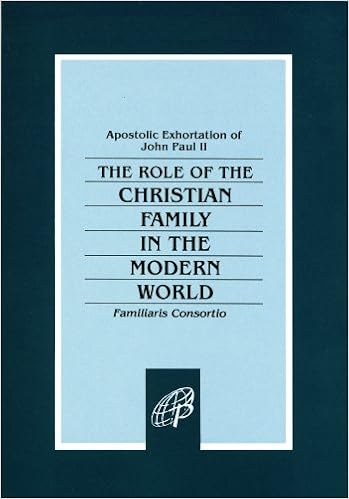
Here’s a suggestion.  How about starting a reading group, in your parish or down at the local breakfast and coffee shop (where you might be more welcome in some cases).  Choose as your first item Pope John Paul II’s Post-synodal Apostolic Exhortation Familiaris corsortio, (The Role of Christian Family in Modern World) which he penned after the 1980 Synod (“walking together”).

You can get it online (for now). Or, for less than the price of the cup of coffee at the shop you choose, you can get a booklet.

US HERE – UK HERE

Read it with others.  Read it with a pen in hand.

When you hear something that contradicts Familiaris consortio ask questions.

How else do we learn?

Veritatis splendor!

US HERE – UK HERE

Posted in "How To..." - Practical Notes, The Coming Storm, The Drill, The future and our choices | Tagged
15 Comments