One of my perennial tropes is that generations of Catholics have been robbed. They have been cheated out of their patrimony. They have been defrauded of their inheritance. When the libs “reformed” the Church’s liturgical worship with little regard for the few true mandates of the Council Fathers, they both slammed the treasury doors shut and hide the key and then brought edifice down to hide its existence from sight.
They thought that they got away with it.
Here is something of interest from the UK’s best Catholic weekly, The Catholic Herald (for which I have for years written a weekly column… print edition only) with my emphases and comments.
The kids are old rite
by Matthew SchmitzYoung Catholics feel they have been denied their inheritance. Where do they go from here?
Last week, in a speech to Italian liturgists, Pope Francis appeared to set in stone the liturgical changes that came at the time of Vatican II. “After this magisterium, after this long journey,” he said, “we can affirm with certainty and with magisterial authority that the liturgical reform is irreversible.” Liberal commentators celebrated his comments as a blow to the “the re-emergence of a certain neo-clericalism with its formalism” and rejoiced that the “restorationist movement in liturgy is being reversed”.
Liberals have reason to be glad: Francis has shown that he is sympathetic to their desire for a liturgy that feels more like a communal meal than an ancient sacrifice. [Hence, the nadir we have reached in some places where Communion is reduced to “they put the white thing in my hand and then we sing a song”.] But does Francis’s declaration mean that after millennia of development liturgical evolution has arrived at a final state and now must stop? [I don’t think that is what Francis meant. What he meant isn’t entirely clear to me, but I don’t think that’s it. Sure, however, his ghostwriter (at least) was showing his animus for any sort of “mutual enrichment” of the Novus Ordo by traditional forms. That suggests who really wrote it. HINT: He can’t stand Benedict XVI.]
In a word, no. One might as well magisterially declare that spilt milk can’t be put back in the carton, or dogmatically define that Humpty Dumpty can’t be reassembled, [or forbid the tide to rise] as proclaim that liturgical reform cannot be reversed. It is like proudly stating that one cannot undo a grave mistake. The observation is incontestable, even if shame would be preferable to boasts. The question is not whether we can undo past blunders, but rather how to clean up the mess. [Before you can correct something, you have to see that there is a problem.]
Francis’ remarks are yet another sign of his anxiety over the traditional direction in which young Catholics are carrying the Church. We have seen this before, in the stories he tells about young priests who shout at strangers and play dress-up, unlike the wise, old, compassionate (and liberal) monsignori. Francis has played variations of John Lennon’s Imagine: “We are grandparents called to dream and give our dream to today’s youth: they need it.” [Okay. I’m getting the impression that the writer is not a huge fan of Pope Francis.] Maybe so, but the youth do not seem to want it.
As any young progressive or old traditionalist will tell you, age does not dictate whether one prefers dogma or liberty, ritual or casualness. Yet across much of the Catholic world, young traditionalists are competing against old progressives. [Competing? Really? I wonder if young trads know that they are competing with old libs? The libs know that this is now a race against the clock, against the Biological Solution and that they are losing. Thus, they fury.] Ironies abound, as youths who revere the venerable face off against elders who chase the up-to-date, and progressives who fear the future battle with traditionalists who loathe their immediate forebears. [Again, I wonder about that “loathe”. Loathe? That’s more the stuff of libs. I think that traddies tend to loathe what the libs have done, especially in robbing us of our patrimony. Libs, however, don’t just loathe what traditionalists want, they loathe the people who want Tradition. I think that’s the major different. Sure the combox at some more traditional site can get a little sharp. I try to tamp all that down. But any sharpness on the more conservative side is nothing compared to the sheer nastiness and anger of the combox at, say, Fishwrap.]
Anyone who doubts the reality of the conflict should visit a monastery or convent, where young monastics will almost invariably be more traditional than their elders. In France, in 20 years’ time a majority of priests will celebrate exclusively the traditional Latin mass. Wherever one looks, the kids are old rite. [Some years ago a friend of mine opined that he thought that, over time, the Novus Ordo would pretty much die out and that the Traditional Form would be again the dominant form. I pooh-poohed that at the time. Now I am not so sure.]
Few have spoken as eloquently about the changes the Church is undergoing as Fr René Dinklo, provincial of the Dutch Dominicans, and the only member of his order from Generation X. One of Fr Dinklo’s earliest memories is of a confessional filled with the drums used by the youth choir. By the time he joined the order in the early 1990s, the Dutch Dominicans had discarded their traditional prayers and come to believe that the order would be transformed into an assembly of laymen. He had reason to think he would be the last priest in a province that had lasted for 500 years.
Then the province began to get vocations. The young Dutch Dominicans were eager to reconstitute the forms of life and prayer their elders had dismantled. “We are on the brink of far-reaching changes,” Fr Dinklo observed in an address last year. “In this situation tensions between generations may arise.” The younger men want to wear the habit and “re-discover a number of religious practices, rituals, forms of singing and prayer from the tradition which the older generation has set aside”. In order to avoid generational conflict, these young men are being established in a new house. [Is this what has happened the Eastern Province of the Dominicans in these USA? The London Oratory? I was talking with a priest friend last night and the topic of dying communities of women religious came up. It was suggested that a group of young women should organize and then one by one join some order that is nearly extinct and take them over as inexorably as the rising tide.]
In a 2010 address, Archbishop Augustine DiNoia described the experiences of these young traditionalists. “My sense is that these twenty- and thirty-somethings have been radicalised by their experience … in a way that we were not.” After “God-knows-what kinds of personal and social experiences”, they have come to know “moral chaos, personally and socially, and they want no part of it”. A sense of narrow escape guides their vocations. “It is as if they had gone to the edge of an abyss and pulled back.”
DiNoia’s generation sought to unite the Church and the world, [Gaudium et spes, luctus et angor…] but the young priests believe the two are finally opposed. “It may be hard for us to comprehend, but these young people do not share the cultural optimism that many of us learned to take for granted in the post-conciliar period.” [This is a good point: false optimism. I could be that, back in the halcyon 60’s there was an overly optimistic view of a) mankind (which made them lean towards anthropocentrism) and b) the world. Of course the three eternal enemies of man are the world, the flesh and the Devil. Have you heard much about these over the last 50 years or so?] They lament the “Church’s own internal secularisation”, particularly “the disenchantment of the liturgy”. This explains their enthusiasm for the 1962 missal. [By “disenchantment” he probably is referring to the way that nearly every sign that points to the transcendent were systematically and brutally stripped from our liturgical worship of God by those modernist immanentists… okay, tautology, I know.]
DiNoia is anxious for the priests of his generation. Despite their talk of being open to the future, “I am not certain that we … are entirely ready for the kind of radical rejection of the ambient culture on the one hand, and, on the other, the radical commitment to the Dominican-Catholic alternative way of life that we recognise in the young men.” [And that is not just in the Dominicans. It is also found in the diocesan presbyterates, for sure. There is a generational gap. And it must be truly threatening to some of these older guys. Many of them sense in the younger generation’s desire for tradition an implicit attack on their own persons, a criticism of their whole life’s work. They were conditioned in those halcyon days of change and revolution to the point that they and their goals have forms a kind of mythic icon. The sight of a biretta, a black chasuble, ad orientem triggers a violent flashback.]
Many young Catholics feel that they have been denied an inheritance that was rightly theirs. [“Say the magic woid, win a hunnad dahlahs.”] They have had to reassemble piecemeal something that should have been handed to them intact. [RIGHT! And does that irritate me! Think about how much money has been squandered because they, worse than the VANDALS ever did, rampaged through our churches trashing what the People of God paid for with their hard-earned offering. As the head of the TMSM I am constantly reduced to begging you all for money so that we can have the vestments necessary for the celebration of Holy Mass in the Roman Rites paradigmatic form: the Pontifical Solemn Mass. Think of the cost there was to tear out those altars. Think now of the cost require to try to make wreckovated churches look like churches again. WHAT A WASTE. If that doesn’t make you angry, then you need a new… a new…. angry thing.] An English academic recently told me of his attempt to obtain a copy of the Dictionnaire de théologie catholique, a reference book that went from impeccable authority to liber prohibitus at the time of the Council. He contacted a Belgian who helped declining religious houses dispose of their libraries. This Belgian found a Franciscan community that was willing to sell its set – but at the last moment took a different course. The monks decided to burn the books, “to prevent them getting into the hands of traditionalists”. [When I was in seminary one bastard of a priest – vice-rector who left the priesthood after my second year – told us seminarians to haul all the old vestments to the dumpster… chalices, altar stones, etc. They were duly taken to the dumpster… and not dumped. But you get my drift. But imagine burning something like the classic Dictionnaire for that reason.]
[…]
That’s enough. You get the main point.
My Spidey Sense is tingling.
I sense that there is a big storm just over the horizon. We had better clear the decks, reef the topsails, batten down the hatches and prepare to run before the wind.
¡Hagan lío!
 Some of my friends in our SMS exchanges will at times long for the big meteor to put us out of our misery.

 First, we need an exclusively masculine sanctuary.
 We need many more celebrations of Holy Mass in the traditional Roman Rite side by side with the Novus Ordo. Happily, younger priests and seminarians really want to use the traditional Roman Rite. This will create a tremendous knock on effect through their revitalized ars celebrandi. The spreading use of the traditional forms – along with the strong priestly identity advocated by the writer above – will be like the introduction of clotting agents, transfusions of blood, mending of nerves, application of antibiotics, better diet and supplements, and supportive therapy. The effect will surely be beneficial.
 There is to be an interesting liturgical conference in W. Peabody, Mass, in September. Priests and seminarians should pay particular attention.


 ear to a panel that meets in Rome a couple times a year to look into the historical and theological questions about deaconesses (aka female deacons, deaconettes). The panel doesn’t have the task or competence to make recommendations to the Pope on the topic, but rather to drill into some of the thorny issues. And they are both thorny and fraught with obscurity. In any event, Zagano, who generally says that her main interest to promote only the ordination of deaconettes, let her deeper agenda show through in a talk at Yale as reported by the Catholic Herald: the ordination of women as priests. Here is what she said, with my emphases:

 Lastly, be sure to go back to the UK’s best catholic weekly and read this delightful piece about an amazing woman.
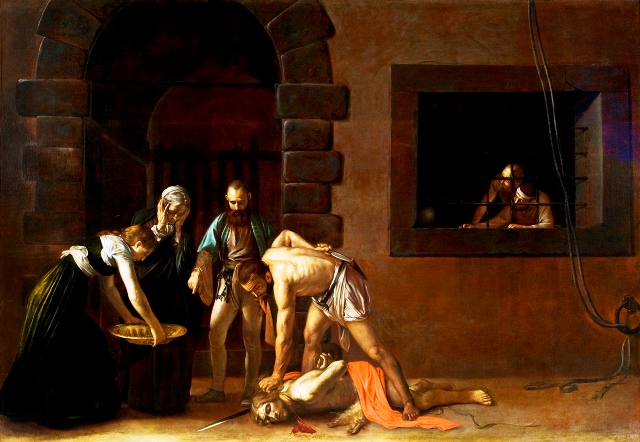
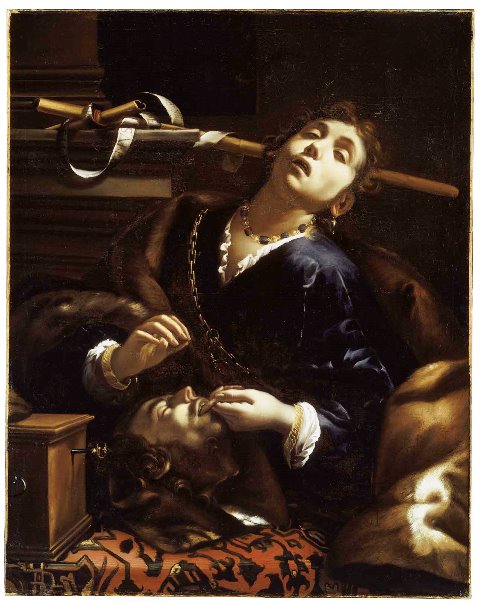
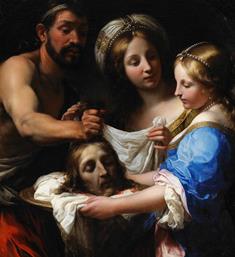 We celebrate liturgically the births of Our Lord (25 December), His Blessed Mother (8 September) and the prophet who was more than a prophet, the greatest man ever born of a woman (Matthew 11:9-11; Luke 7:28), St John the Baptist (+24 June 28-29). On 29 August we celebrate the Beheading of St John, murdered by a feckless politician, the pusillanimous Tetrarch Herod. John was imprisoned because he denounced Herod’s illicit, sinful “marriage”. Herod then had John killed because, blinded by lust for his niece, he was too craven to back down from a rash offer he blurted in his lechery.
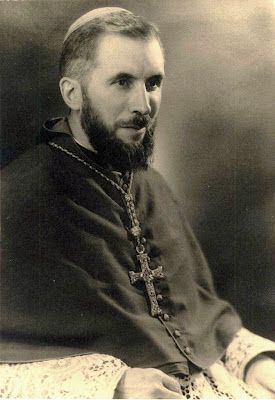 I think that some day many more people will know about the life and work of the late French Archbp. Marcel Lefebvre. He, a Holy Ghost Father, was a great missionary in Africa whose influence is still strongly felt there. He was also a bishop at the Second Vatican Council, about which he writes in his memoirs.
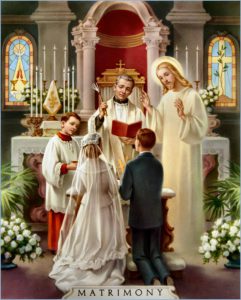 From a reader:


 Suburbanbanshee on ROME 26/10-11 – Day 35: Penultimate: “The illumination is a fun one. It literally shows Christ the Pharmacist, which is not a title you read every…”