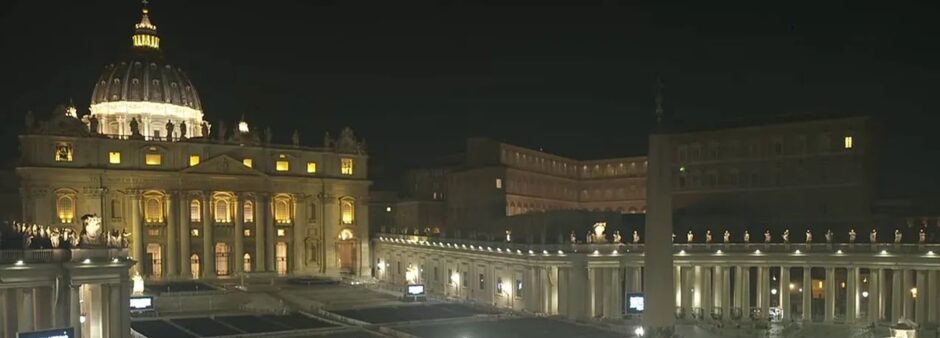
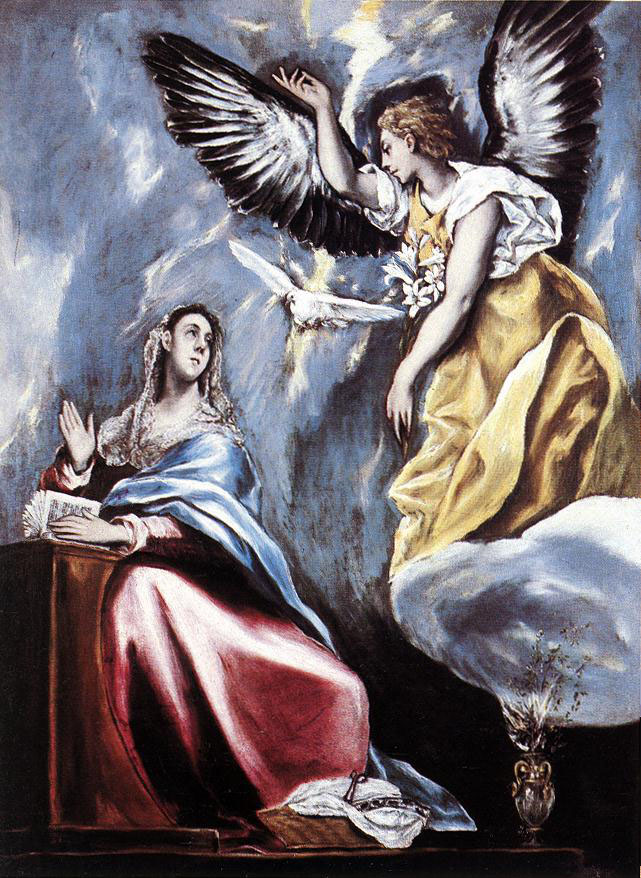
 This is the eve of Feast of the Incarnation.
On 25 March we celebrate that moment when our Lord elevated our humanity by taking our human nature into an indestructible bond with His Divinity.
In the Incarnation God opened for us the path to “divinization”, His sharing of something of His own divine glory with us in the eternal happiness of heaven.
In the sin of our First Parents, offending God and loosing so many of our gifts, the whole human race sinned. We are guilty of the sin as well, because the whole race is guilty. In justice a human being had to correct the offense, but such a correction was entirely impossible for a mere mortal human. Such a correction required the intervention of one who was both man and God.
Here are the Collects for this beautiful Feast of the Annunciation, Lady Day, from both the older, traditional, extraordinary form of the Roman Rite and the newer, post-Conciliar, ordinary form.
You might discuss their differences, their respective strengths.
COLLECT (1962MR):
Deus, qui de beatae Mariae Virginis utero Verbum tuum, Angelo nuntiante, carnem suscipere voluisti: praesta supplicibus tuis; ut, qui vere eam Genetricem Dei credimus, eius apud te intercessionibus adiuvemur.
LITERAL VERSION:
O God, who desired Your Word to take flesh from the womb of the blessed Virgin Mary the angel announcing it: grant to your supplicants; that we who believe truly in the Mother of God, may be helped in Your sight by her intercessions.
COLLECT (2002MR):
Deus, qui Verbum tuum in utero Virginis Mariae veritatem carnis humanae suscipere voluisti, concede, quaesumus, ut, qui Redemptorem nostrum Deum et hominem confitemur, ipsius etiam divinae naturae mereamur esse consortes.
LITERAL VERSION:
O God, who wanted Your Word to take up the truth of human flesh in the womb of the Virgin Mary, grant, we beseech, that we, who confess our Redeemer to be God and man, may also merit to be the sharers of His divine nature.
This is of new composition, though there is a reference here to Letter 123 Ad Eudociam Augustam – “De monachis Palaestinis” of St. Pope Leo I, “the Great” (+461).
“Fides enim catholica sicut damnat Nestorum, qui in uno domino nostro Iesu Christo duas ausus est praedicare personas, ita damnat etiam Eutychen cum Dioscoro, qui ab unigenito Deo Verbo negant in utero Virginis matris veritatem carnis humanae susceptam.”
By His Incarnation, the Word made man, Jesus the Lord and Savior, not only began to save us from our sins in His earthly ministry, but began also the mysterious revelation of man more fully to himself (cf. GS 22).
Part of the Lord’s mission was also to teach man more fully who He is in the beauty of His own Person. However, He did not begin to do this only from the beginning of His public ministry. He began this from the very moment of the Incarnation.
Remember: From the instant of His conception, the Word made flesh begins to teach man more fully who man is.
Light from Light sheds light on the dignity of man, God’s image, from the instant of conception, from man’s humblest beginning.
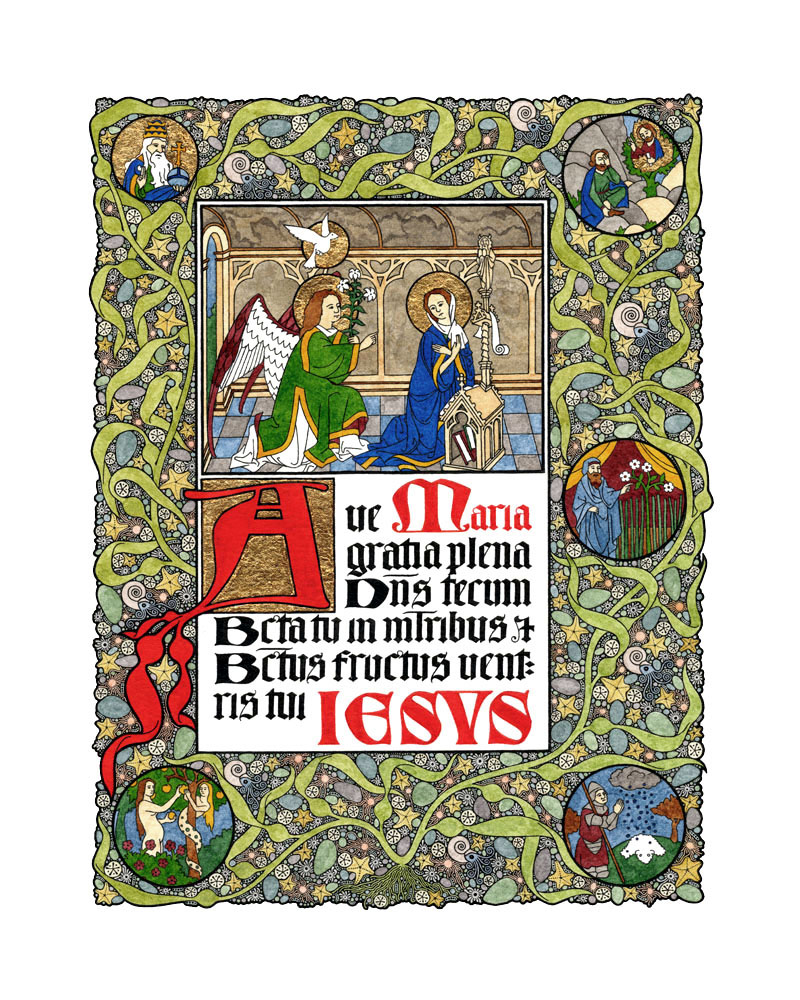
A few years ago, the artist Daniel Mitsui made a beautiful Annunciation. Click it to visit his site. HERE and the image itself.
And for our edification, listen to the monks at Le Barroux singing at 1st Vespers of this wonderful feast!































FIAT
There can be no peace
If not of good will
There can be no race
For those who stand still.
Only she
Full of grace
Could share in the miracle
Without disgrace.
To magnify
Her soul prepared
By God, her spirit
Never ensnared.
“Blessed art thou…”
Gabriel hailed —
And at that moment
The enemy railed.
For he remembered
The garden free
‘Tween him and the woman
Enmity.
But who the woman?
God did not tell —
Then Mary’s “Fiat”
Shook the depths of Hell.
And Satan screamed
Turned on a wing
To offer some peace
And will good to a King.
Peace for Herod
And much good willed —
“My RIGHT if even
Some Innocents killed.”
Say a prayer for religious liberty tomorrow, as the Supreme Court will be hearing oral arguments on the corporate challenge to the HHS mandate (the Hobby Lobby case).
Angelus ad virginem subintrans in conclave. Virginis formidinem demulcens inquit “Ave.” Ave regina virginum, coeli terraeque dominum concipies et paries intacta salutem hominum. Tu porta coeli facta medela criminum.
One of my favorite hymns!
Don’t forget to genuflect, it’s only twice a year!
Heavenly.
Isn’t the conception of Jesus (the moment of His incarnation) the most significant event to occur in creation? So why no feast? I don’t get it.
It is my son’s birthday today. He turns 18 in a few hours and has just returned from a vocations trip to the holy land with students of St. Agnes School in St. Paul, Minnesota with our beloved new pastor. My children said the Angelus in honor of our Blessed Mother this morning. Please pray for my son’s discernment.
KateD, yes – this is certainly one of the most significant events to occur. And therefore it IS a feast: the Solemnity of the Annunciation of the Lord. The Gloria is used at Mass, and when it falls on a Friday abstinence is not required.
Forgive me, I meant to say, not a major feast.
I loved bringing up the Golden Legend, written in 1275 by the Archbishop of Genoa, Jacobus de Voragine, when this day came along each year. One year the Annunciation landed on our school’s Mass day and my students besieged the pastor before Mass began and he only had a vague recollection of it. The pastor put me on the spot and I was asked to tell everyone a little about it.
Exactly nine months to the day before the Feast of the Nativity, we celebrate the Annunciation.
Also on this day:
Adam, the first man, was created and fell into original sin;
Cain slew Abel;
Melchisedech made the offering to God of bread and wine, in the presence of Abraham;
Abraham offered up Isaac his son;
St. John Baptist was beheaded;
St. Peter was set free from prison;
St. James the Greater was beheaded by Herod; and
Our Lord Jesus Christ was crucified.
Stressing that it was a legend and these events were obviously many years apart, it captured students’ imaginations and easily became part of the lesson plan up through Easter. We would talk about each biblical event separately, the different calendars, etc.
KateD, a Solemnity is the highest class of feast. If you’re wondering why it isn’t a holy day of obligation (all of which are Solemnities), I believe Pope St Pius X reduced the number because he felt it was too burdensome.
“Et Verbum caro factum est
et habitavit in nobis: et
vidimus gloriam eius,
gloriam quasi unigeniti a
Patre plenum gratiae
et veritatis.”
And to go along with Kate D’s point: I have never understood why this (greatest of all in many ways) Solemnity is not a Holy Day of Obligation.
Bob B. says: Stressing that it was a legend and these events were obviously many years apart, it captured students’ imaginations and easily became part of the lesson plan up through Easter.
Don’t know why it has to be a legend. The modernists want to claim that it is a legend, the product of our religious yearnings, but our God is a God of order and perfection. Not one single thing exists outside of His plan and loving providence, in which there are no gaps or deficiencies that He needs us to supply for. It is all meant to communicate His love to us, and to lead us to Himself.
While we’re at it, let’s also consider the coincidence of the Annunciation, Good Friday and the vernal equinox, held to take place on March 25th according to the Julian Calendar. This was to show that the winter of satan’s reign was ended, and the Kingdom of God, with its light and warmth and abundance of life, was begun. The Summer Solstice, when daylight begins to decrease, coincides with the Nativity of John the Baptist; the Winter Solstice, when daylight begins to increase, coincides with the Nativity of Christ, to underscore the Baptist’s saying that he must decrease, while Christ increased. As far as the Autumnal Equinox is concerned, my own entirely personal opinion is that, since this falls during the time for harvest, it stands for the harvest of souls at the end of time, when the wheat is gathered into the Master’s barn, and the tares are bundled up and burned.
@Miss Anita Moore, O.P. says: “Don’t know why it has to be a legend.”
I would tell my classes virtually the same thing as you’ve written as we moved through the following days. The “legend” part of the story is such because it hasn’t been officially proclaimed as fact, but it doesn’t mean that I don’t believe it. (There are other things that haven’t been made “official,” such as: I think that Jesus and Pilate probably spoke Greek to each other. No where does it say it, but it (to me) it’s a logical supposition.)