Question for readers: free texting from iPhone to iPhone anywhere

iPhone users: please educate me.

I have been told that if you have an iPhone running 5.0 or higher, you can text to any other iPhone, anywhere in the world, for free.  Apparently, you must use the app iMessage.

Anyone?  What’s up with this?  Have you gotten into this?

With my numerous contacts out there, this could be very useful and save me some money.


Posted in "How To..." - Practical Notes | Tagged ,
27 Comments

INDIA: 600 million people without power for 2nd day

Are you ready?  Have you made any preparations for a power outage, short or long term?

People think disasters won’t happen to them… until they do.

From FNC:

Half of India without power after grids fail for second day

NEW DELHI – India’s energy crisis spread over half the country Tuesday when both its eastern and northern electricity grids collapsed, leaving 600 million people without power in one of the world’s biggest-ever blackouts.

The power failure has raised serious concerns about India’s outdated infrastructure and the government’s inability to meet an insatiable appetite for energy as the country aspires to become a regional economic superpower.

The outage in the eastern grid came just a day after India’s northern power grid collapsed for several hours. Indian officials managed to restore power several hours later, but at 1:05 p.m. Tuesday the northern grid collapsed again, said Shailendre Dubey, an official at the Uttar Pradesh Power Corp. in India’s largest state. About the same time, the eastern grid failed as well, said S.K. Mohanty, a power official in the eastern state of Orissa. The two grids serve about half India’s population.

Traffic lights went out across New Delhi. The city’s Metro rail system, which serves about 1.8 million people a day, immediately shut down for the second day in a row. Police said they managed to evacuate Delhi’s busy Barakhamba Road station in under half an hour before closing the shutters.

S.K. Jain, 54, said he was on his way to file his income tax return when the Metro closed and now would almost certainly miss the deadline.

The new power failure affected people across 13 states — more than the entire population of the European Union. They raised concerns about India’s outdated infrastructure and its insatiable appetite for energy that the government has been unable to meet.

India’s demand for electricity has soared along with its economy in recent years, but utilities have been unable to meet the growing needs. India’s Central Electricity Authority reported power deficits of more than 8 percent in recent months.

The power deficit was worsened by a weak monsoon that lowered hydroelectric generation and kept temperatures higher, further increasing electricity usage as people seek to cool off.

But any connection to the grid remains a luxury for many. One-third of India’s households do not even have electricity to power a light bulb, according to last year’s census.

Posted in Global Killer Asteroid Questions, I'm just askin'..., TEOTWAWKI, The future and our choices | Tagged ,
18 Comments

QUAERITUR: How to make myself known to the parish priest without being too forward?

From a reader:

What is the proper/traditional etiquette for newcomers, particularly those registered in a parish, when it comes to formal introductions to the priest, (specifically British customs if you know them)? I was taught it is rude and improper to introduce oneself to someone, especially in higher standing. Instead, one should wait for the person to introduce himself to the person, or the newcomer is to be introduced to the person by someone who is already acquainted with them.

I presumed this to be true with clergy, and it is how I became introduced and known to the bishop. I have never been formally introduced to my parish priest, nor have I taken it upon myself to be so forward as to introduce myself. Now it’s going on to two years, and I will soon need a reference letter for scholarships from him to confirm my good standing as a Catholic and being active in the parish.

At this point can I presume he knows who I am from indirect means?

First, allow me to thank you for your attention to etiquette and your respect for your parish priest.  We have, as a culture, become far too informal.

Off the top of my head,

… you could ask a friend at the parish, who has been a member for a while, to introduce you.

You could also drop Father a brief note of introduction if you don’t want to “waylay” him after Mass sometime.  You could use the occasion of complimenting him for some good sermon, assure him of your prayers, and add a note about who you are for his opportune knowledge.

Moreover, since the parish priest has the “care of souls” and you are a “soul” for whom he has “care”, perhaps you are being a little too careful.  The parish priest should, if he is worth his salt, want to know the people who frequent his parish.

Thus, it seems to me that you might count on both his goodness and his office as shepherd and make yourself known to him either with the brief note I described or by finding him after Mass.

Again, I thank you for your respect for the person of the priest as well as your attention to decorum.


Posted in "How To..." - Practical Notes, ASK FATHER Question Box, Our Catholic Identity, Priests and Priesthood | Tagged , , , ,
44 Comments

Signs of revival

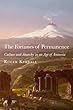
At the site of Catholic World Report there is and interview with author Roger Kimball about his new book, The Fortunes of Permanence: Culture and Anarchy in an Age of Amnesia (UK link HERE). Within the interview you will find this gem:

Catholic World Report: You point out in several places that there are signs in our country of religious revival and true interest in orthodoxy. What are some of those signs? Who or what are the main enemies of that revival and interest?

Kimball: To confine myself to just one example, I think the new interest in the Tridentine Mass among Catholics is one such sign. For several years, my wife and I were privileged to attend Mass with Bill Buckley in a small chapel in Stamford. The priest traveled half an hour most Sundays to say Latin Mass in the old rite for four or five of us. When Bill started doing that, the Tridentine Mass was vanishingly rare, almost a verboten exercise. It has made a big come back and is evidence, I think, of a serious religious renewal in our culture. Of course, there are plenty of countervailing evidences, but I think the appetite for that majestic rite is a cheering phenomenon.

I also enjoyed his discussion of the book The Dangerous Book for Boys (UK link HERE.)

Summorum Pontificum was a great gift to the whole Church.

As the Biological Solution continues its relentless work, and as young priests emerge without the baggage of the aging-hippies, the older, traditional form of Holy Mass in the Roman Rite will slowly exerts its “gravitational pull” also on the way the Ordinary Form is celebrated.  Priests who learn for the first time, or who re-learn, the Extraordinary Form gain new insights into who they are as priests and who they are as priests at the altar of sacrifice.  Priesthood cannot be separated from sacrifice.  The older form helps priests to reconnect all the disjointed signals.  In the course of things, their ars celebrandi will change also in the Ordinary Form, which must have a knock-on effect for their congregants.

The New Evangelization must begin with a revitalization of our liturgical worship.

Posted in Brick by Brick, New Evangelization, Our Catholic Identity, Priests and Priesthood, SUMMORUM PONTIFICUM, The future and our choices | Tagged , , , ,
7 Comments

QUAERITUR: Sitting instead of kneeling during the Consecration.

From a reader:

First, thank you for your internet ministry and your tireless promotion of the liturgical use of Latin.

My parish is being renovated and Mass is temporarily being celebrated in a nearby university chapel. Since the chapel is non-denominational, it lacks kneelers. While my parish typically kneels during the consecration, the congregation has taken to sitting after the Sanctus while in the university chapel.

I recall hearing that the only licit postures for the congregation during the Eucharistic prayer are standing or, where permitted, kneeling. However, I also recall reading that the GIRM stresses the importance of uniformity of posture during the Mass. In light of these two considerations, what should one do when an entire congregation assumes an incorrect posture during the Mass?

Let’s be clear. Kneeling for the consecration is not permitted.

It is required.

It is the universal law in the Latin Church that the faithful kneel for the consecration. GIRM 43 says that we kneel the epiclesis to the “Mysterium Fidei“.

However, there is particular law in the USA. The practice in the USA is to kneel from after the Sanctus until the end of the Doxology, that is, during the entire Eucharistic Prayer:

In the dioceses of the United States of America, they should kneel beginning after the singing or recitation of the Sanctus until after the Amen of the Eucharistic Prayer, except when prevented on occasion by reasons of health, lack of space, the large number of people present, or some other good reason. Those who do not kneel ought to make a profound bow when the priest genuflects after the consecration. The faithful kneel after the Agnus Dei unless the Diocesan Bishop determines otherwise. (GIRM 43.3)

Any local variation, such as standing or sitting for the consecration, would require permission from Rome granted in a document.

However, a person can excuse herself from kneeling if, for reasons of health, lack of space, the large number of people present, or some other good reason, she cannot kneel. Common sense applies.

About the no kneelers issue. I recall the story of an American Cardinal Archbishop visiting the seminary within his territory. In the “renovation” of the chapel the kneelers had been removed. When the Cardinal expressed his desire that the seminarians kneel, the rector pointed to the fact that there were no kneelers and there was no longer any money to put them in. The Cardinal responded: “Who said anything about using kneelers?”

Again, if it is physically too hard to kneel, people are excused. Most people can kneel on the floor for a while.

Posted in "How To..." - Practical Notes, ASK FATHER Question Box, Liturgy Science Theatre 3000, Our Catholic Identity | Tagged , , ,
52 Comments

QUAERITUR: Does kneeling for Communion show a “spirit of disobedience”?

From a reader:

Our new pastor recently published a letter in the bulletin [I’ve cut that out in order to “anonymize” this.] in which he uses the GIRM [General Instruction on the Roman Missal] to argue that those who genuflect before or kneel while receiving Holy Communion do so incorrectly or, at least implicitly, in a spirit of disobedience. He seems to emphasize “avoiding private inclinations” while ignoring “the traditional practice of the Roman Rite”, and he also seems to overemphasize the idea of being in Communion with each other to the detriment of being in Communion with Christ. His pushy attitude really does not sit well with me. But this instance does raise the question: Is the GIRM defective to some degree, or is this just a poor interpretation of it? As for me, this just makes me more obstinate in my desire to be that stubborn, ‘disobedient’ guy who kneels for Communion.

His citation (in the letter to which I did not link) of GIRM 160 is to point, but I think the norm is descriptive rather than prescriptive.

The norm is that Holy Communion is received standing, but Holy Communion will not be denied to those who kneel.  Father describes his opinion about why we should all receive Holy Communion in exactly the same way (Jawohl!).

Think of it this way.  Let’s say that I have a preference for green vestments that are a robust forest green. As a matter of fact, I think all priests should wear vestments of that shade of green rather than the other 50 shades of green.  Furthermore, I don’t think they should even want to wear apple, chartreuse, or lime green.  They should conform to my will.  My hypothetical opinion on forest green is, however, just my opinion. It is not the law. The law requires “green”.

“But Father! But Father!”, some of you may be saying, “Are there norms for receiving Communion?”

For reception of Holy Communion, the law requires that the faithful be in a state of grace, free from any canonical penalty, and not persisting in manifest grave sin (see Canon 915).

Perhaps it would be better for parish priests to be first and foremost vigilant about observing those norms before they start imposing their personal preference about uniformity of posture.

Posted in "But Father! But Father!", "How To..." - Practical Notes, 1983 CIC can. 915, ASK FATHER Question Box, Benedict XVI, Liturgy Science Theatre 3000, Our Catholic Identity, The Drill | Tagged , , , ,
55 Comments

Hugh Hewitt at the Napa Institute: Of Catholics and Chick-fil-A

Talk radio guy and “friend and ally of Rome” Hugh Hewitt has a piece in The Examiner.

Here in the heart of America’s wine industry, the Napa Institute brings together a few hundred Catholics in the company of many of the faith’s senior prelates and a raft of the country’s Catholic public intellectuals. [To give you an idea of what sort of prelates, the Bp. Morlino of Madison is there this year. The Extraordinary Form is on the Mass schedule as well.  Why have I not been to this?] The beautiful Meritage Resort is full, and the winery tours and golf are wedged in between various seminars, keynote addresses and a Mass schedule designed to please even the most rigorous monk or nun — and there are quite a few religious in attendance.

The conference theme of “The Next America” has the attendees looking far forward on topics of religious freedom, Catholic higher education and Catholic evangelization, but the presidential campaign is the buzz of the cigar and wine gatherings that begin late and go later. The Aspen Institute may have better mountain views, but the Roman Catholics know their viticulture and their Cohiba from their Romeo y Julieta.

And their politics. It is in the blood.

The mainstream media have pushed the absurd “Mitt Romney had a bad day in London” theme in a typical over-the-top-we-must-save-the-president frenzy, but to zero impact on these voters, who are supremely indifferent to gaffes as news. Not even the real political news — “You didn’t build that!” — or the real news of a sputtering economy and dreadful 1.5 percent GDP growth or the massacre in Aurora, Colo., make for much conversation on the patio and in the hallways.

Chick-fil-A, by contrast, does. Who knew that the Democrats’ war on a chain restaurant would move quickly through the new media into the awareness of most Americans on the center-right, mostly skipping the clueless mainstream media?

[…]

Incredibly, the mainstream media are finding it hard to get a comment out of President Obama on Chick-fil-A, so busy are they trying to turn Mitt Romney’s “disconcerting” statement into a major campaign story, even as the president’s “You didn’t build that!” metastacizes into the soundbite that ate the president’s re-election. Romney is off to Israel and Poland and his lead in the Rasmussen tracking poll is growing despite the best efforts of the Manhattan-Beltway media elite to block for Obama with a two-day assist from Fleet Street. The reason Romney has the momentum is that the country’s voters are very good at discerning meaningful moments and data from manufactured ones, even if the elite media Bigfoots are not.

The economy’s lifelessness; the “You didn’t build that!” exclamation; and now the attack on a job creator and force behind 1,600 restaurants, employing who knows how many thousands of people, for what is in essence a thought crime against the Left — these are real issues that have defined the president’s summer. It’s not just engaged Catholics and their church leadership, but wide swaths of previously indifferent voters are waking up to the lethal combination of the president’s incompetence and his supporters’ maximalist ideology. [Ah that unbeatable combo of ignorance and arrogance.]

Examiner Columnist Hugh Hewitt is a law professor at

Chapman University Law School and a nationally syndicated radio talk show host who blogs daily at HughHewitt.com.

WDTPRS kudos.

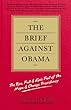
And check out Mr. Hewitt’s recent book The Brief Against Obama: The Rise, Fall & Epic Fail of the Hope & Change Presidency.


Posted in Biased Media Coverage, Fr. Z KUDOS, Just Too Cool, New Evangelization, One Man & One Woman, Our Catholic Identity, Religious Liberty, The future and our choices, The Last Acceptable Prejudice | Tagged , , , , , , , ,
36 Comments

QUAERITUR: Sign of peace is an “undignified and self-serving sacrilege”? WDTPRS POLL

From a reader:

I recently read an opinion that giving the sign of peace at mass is irreverent.

To quote her, ” Hand-holding is not only not in the rubrics of the Mass, it is a horrifically distracting, undignified and self-serving sacrilege that is actually PROHIBITED.”

I do remember a time at mass when we did not offer the sign of peace and more recently holding hands during Our Father.

Could you please clear this up for me?

I note that “hand holding” is mentioned, above, rather than “hand shaking”.  Hand holding is typically done where it is done at the time of the Our Father.  But the question is about the “sign of peace”, the pax.  Shaking hands in a brief and sober fashion is not hand holding.

In Redemptionis Sacramentum we read:

[72.] It is appropriate “that each one give the sign of peace only to those who are nearest and in a sober manner”. “The Priest may give the sign of peace to the ministers but always remains within the sanctuary, so as not to disturb the celebration. He does likewise if for a just reason he wishes to extend the sign of peace to some few of the faithful”. “As regards the sign to be exchanged, the manner is to be established by the Conference of Bishops in accordance with the dispositions and customs of the people”, and their acts are subject to the recognitio of the Apostolic See.

Thus, I suppose it depends on what people do during the sign of peace, or more technically, the “pax… peace”.  When I was in Hong Kong years ago I saw people bow to each other.  In the USA and Italy have have seen all dignity and reverence thrown to the winds.

Since in the Ordinary Form the congregational sign of peace is an option left entirely to the discretion of the priest celebrant, until we accomplish a restoration of liturgical decorum my preference would be to opt out of the congregational sign of peace.

That said, the congregational sign of peace is permitted.  As a matter of fact, it is an ancient Christian gesture, rooted in Scripture and the earliest liturgical practice.  It is well attested and its meaning is explained by Fathers of the Church such as St. Augustine.

The manner of giving the sign of peace is usually culturally conditioned.   However, there is a traditional sign of peace, or kiss of peace, the pax, in the Roman Church.  It would be nice for Catholics to use it, instead of the foolishness that is often exemplified.

But to claim that a simple hand-shake “is a horrifically distracting, undignified and self-serving sacrilege that is actually prohibited” may be an over-statement.

Meanwhile, let’s have a poll.

Choose your best answer and then – if you are registered here – leave a comment in the combox.

The "sign of peace" during Mass in the Ordinary Form...

View Results

Posted in "How To..." - Practical Notes, ASK FATHER Question Box, Liturgy Science Theatre 3000, POLLS | Tagged , , ,
109 Comments

D. Springfield, MA – 5 Aug: 1st Solemn TLM since… well… since the ’60’s.

For your Brick by Brick file this is from a reader:

On Sunday, August 5, at 10:30 am, a Solemn High Mass in the Extraordinary Form will be held at Our Lady of Czestochowa Church, 84 K Street, Turners Falls, Montague, Massachusetts. Fr. Robert Fromageot, FSSP, will be the celebrant. Seminarians from Our Lady of Guadalupe Seminary in Denton, Nebraska, will serve at the altar.

Parish altar boys will be torchbearers. The schola will be made up of Fraternity seminarians, led by FSSP chant instructor Nicholas Lemme of Rapid City, South Dakota, and the parish music director, Henry Gaida, will be organist. The Rosary will be recited in Latin before the Mass.

This is the first Solemn High Mass in the Diocese of Springfield since the Ordinary Form was promulgated. There is currently no regularly scheduled EF Mass in the diocese.

It is great that the Fraternity of St. Peter, which is in union with the Roman Pontiff, can provide this useful service.

Let the New Evangelization be boosted one Solemn Mass, one diocese at a time.

Posted in "How To..." - Practical Notes, Brick by Brick, Just Too Cool, Liturgy Science Theatre 3000, New Evangelization, Priests and Priesthood, SSPX, SUMMORUM PONTIFICUM, The future and our choices | Tagged , , ,
20 Comments

Anglican Ordinariates and the Extraordinary Form

At the blog The Anglo-Catholic I read:

When I [that blogger] met him in Orlando some months ago, Monsignor Steenson [head of the US Ordinariate] held nothing back in the expression of his enmity towards Catholic Traditionalism and the so-called Extraordinary Form of the Roman Rite.  He said the Ordinariate should have nothing to do with those people (a paraphrase, but an accurate assessment of his attitude which was made quite clear).  He even suggested that, simply because I had an affinity for the TLM that I should consider myself “out of communion” with the local Ordinary, Bishop Noonan of Orlando. [?!?]  Quite taken aback, I assured the Anglican Ordinary that I was quite Catholic, despite my intense dislike (and often horror) of the institutionalized liturgical abuses found in Latin Rite parishes almost everywhere (and unfortunately in my home diocese) and my attachment to Catholic Tradition.

I am sure that clarifications will be forthcoming.

And Benedict XVI remains the Pope of Christian Unity.

Posted in Benedict XVI, Liturgy Science Theatre 3000, Our Catholic Identity, Priests and Priesthood, Throwing a Nutty | Tagged , , , , ,
49 Comments