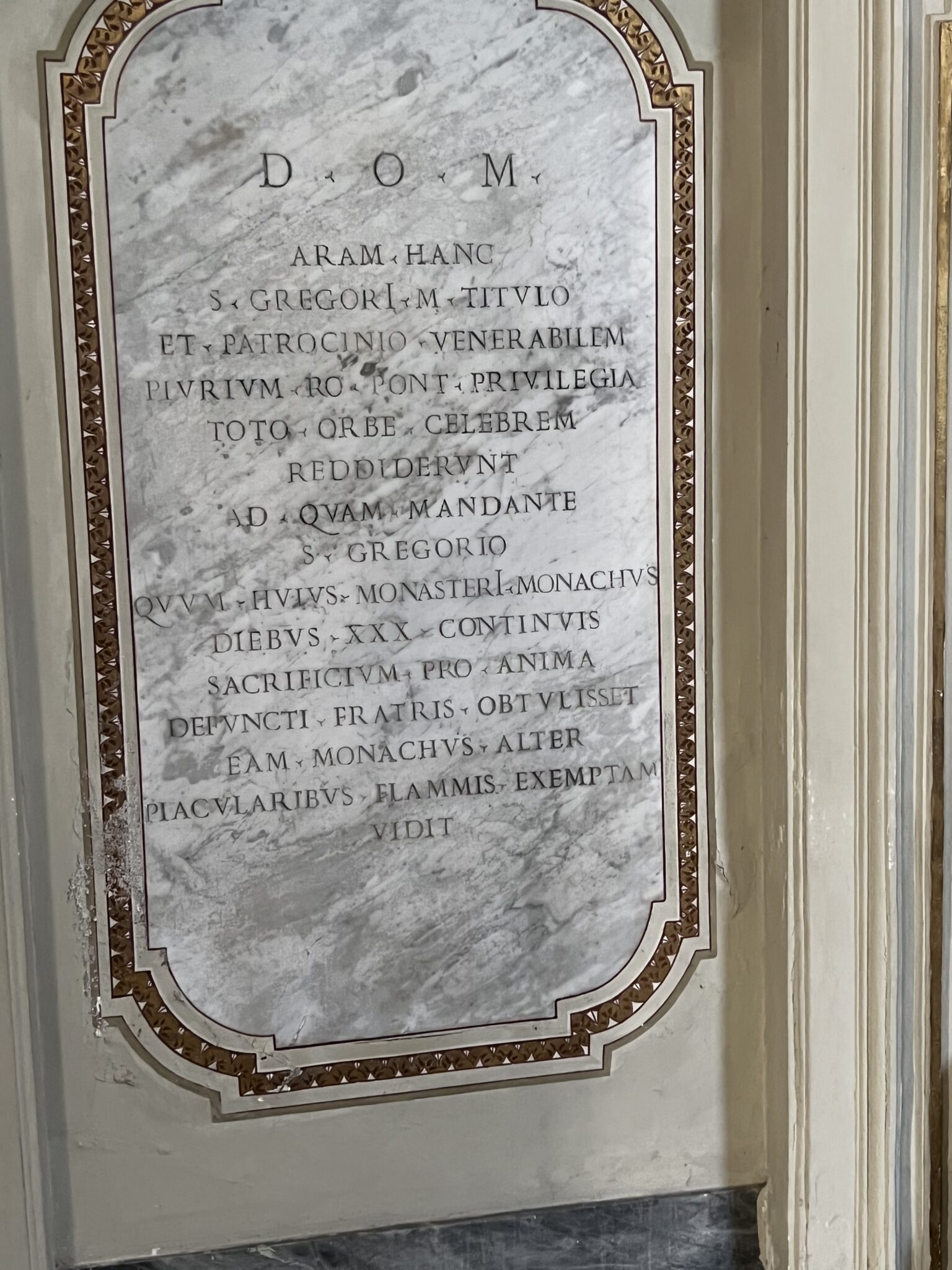
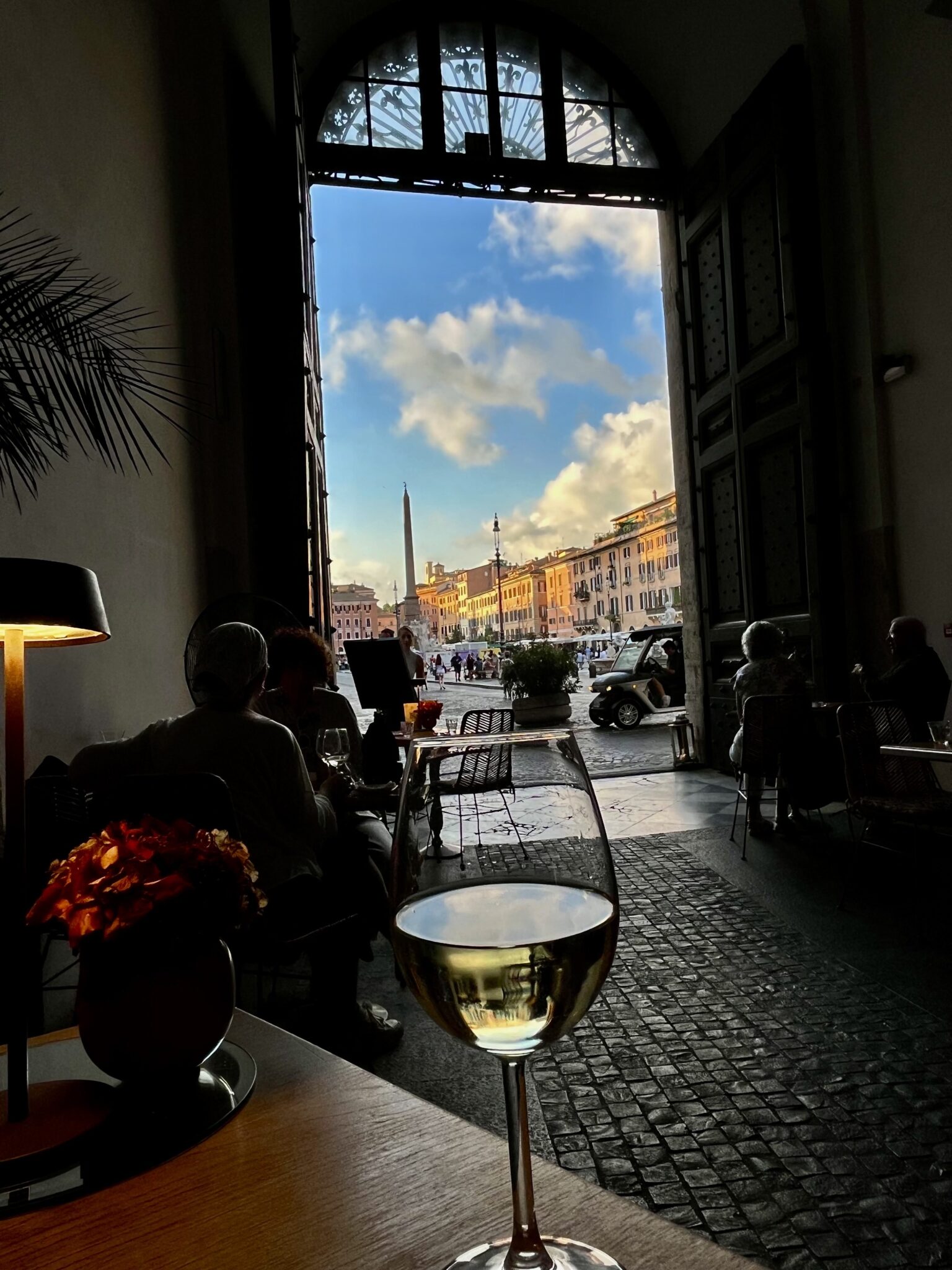
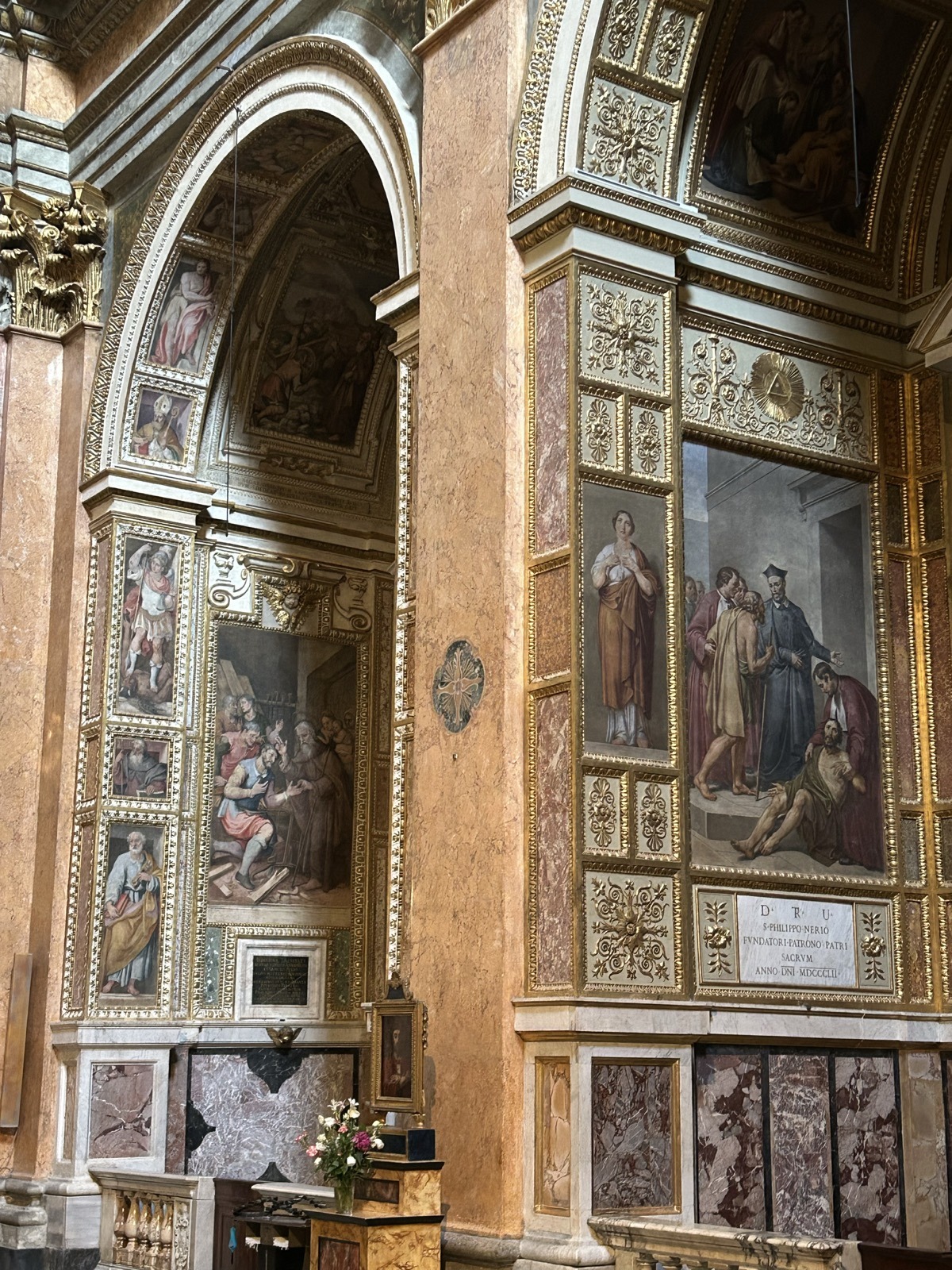
Daily Rome Shot 1653: Pius X’s caption call

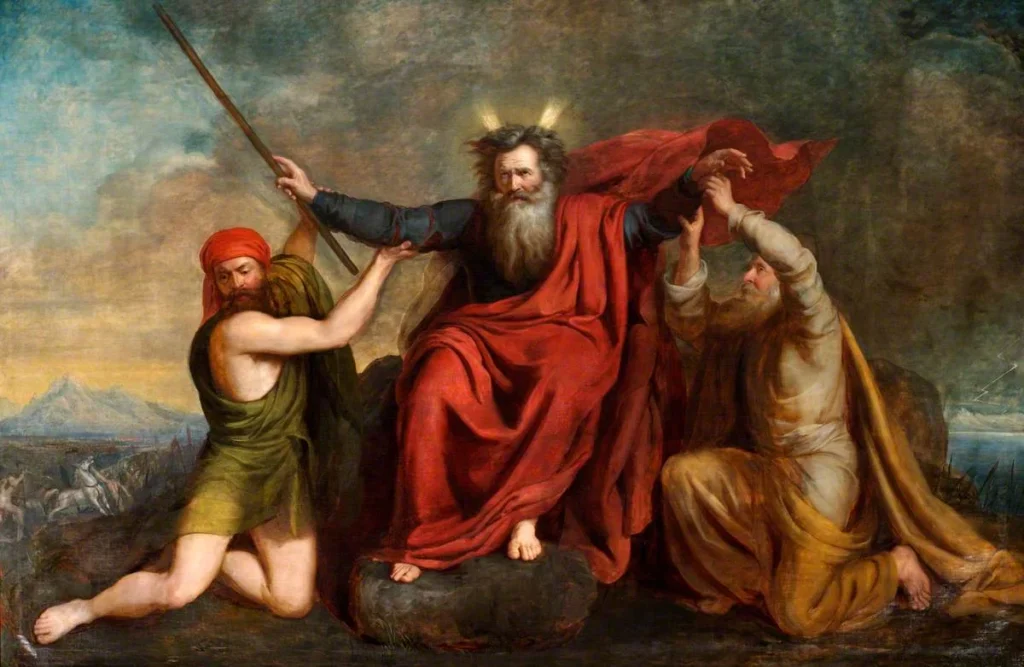
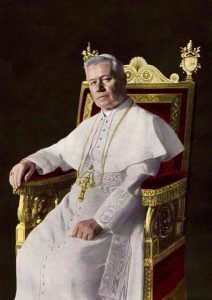
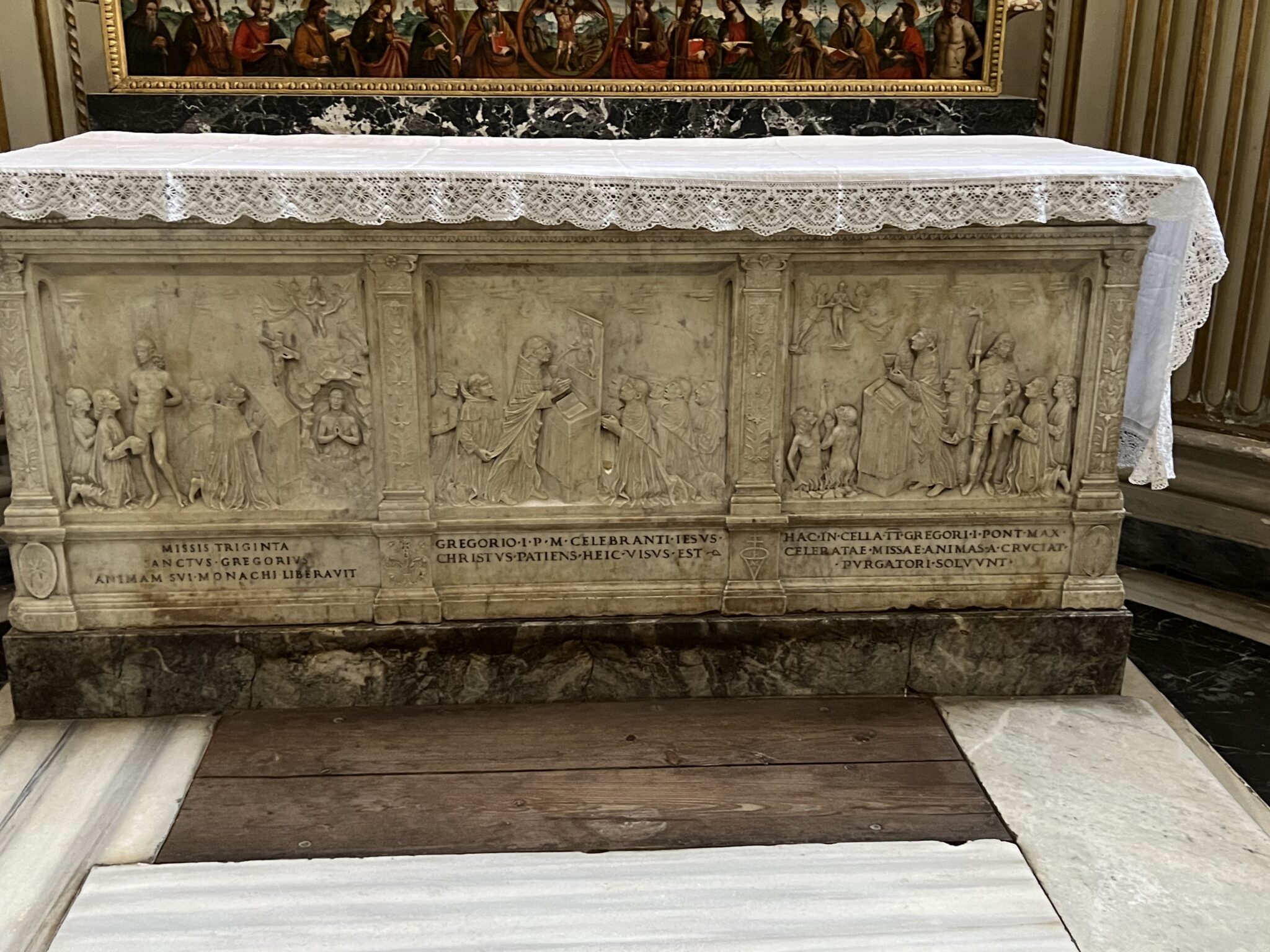
Caption call.

Welcome registrants:

Brendan Doyle
cburkhart09
mmromani@******.com
Rujo43

SSPX bishops excommunicated.  Meanwhile…

And… Will we see more of this? Someone start making a list!

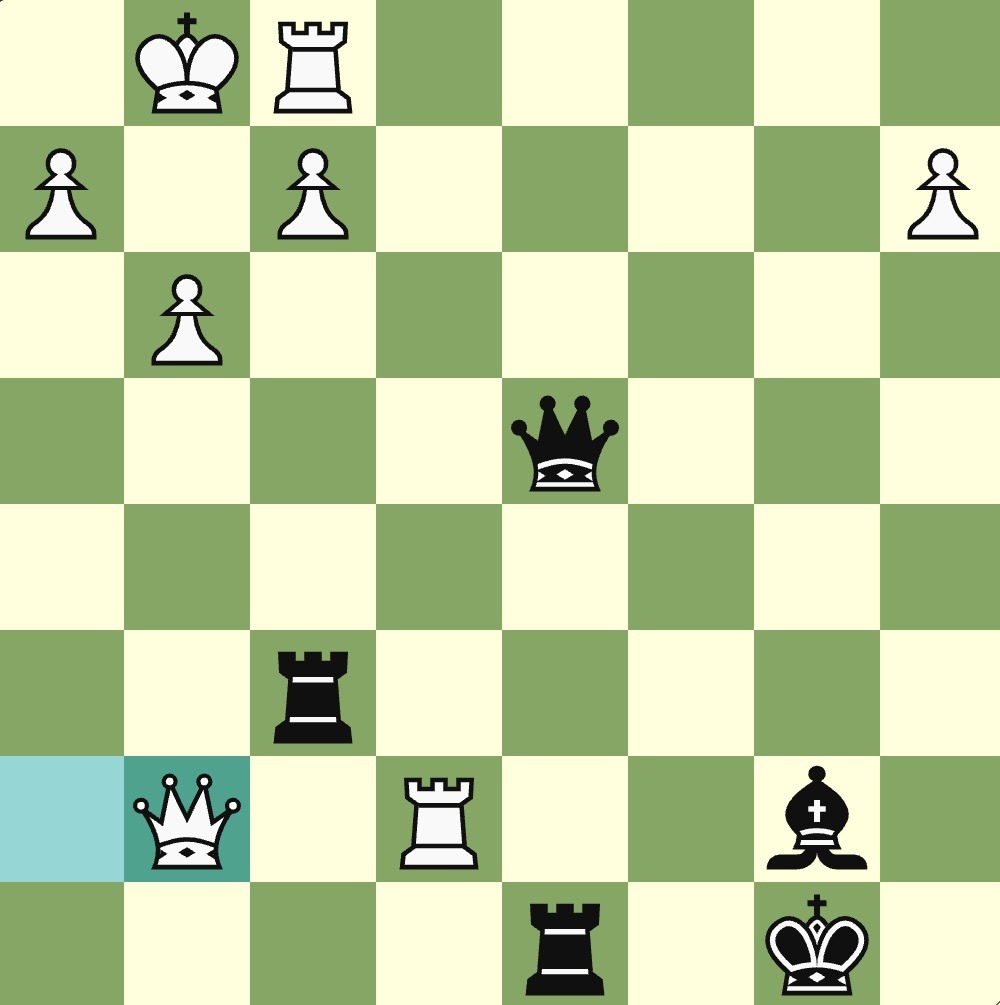
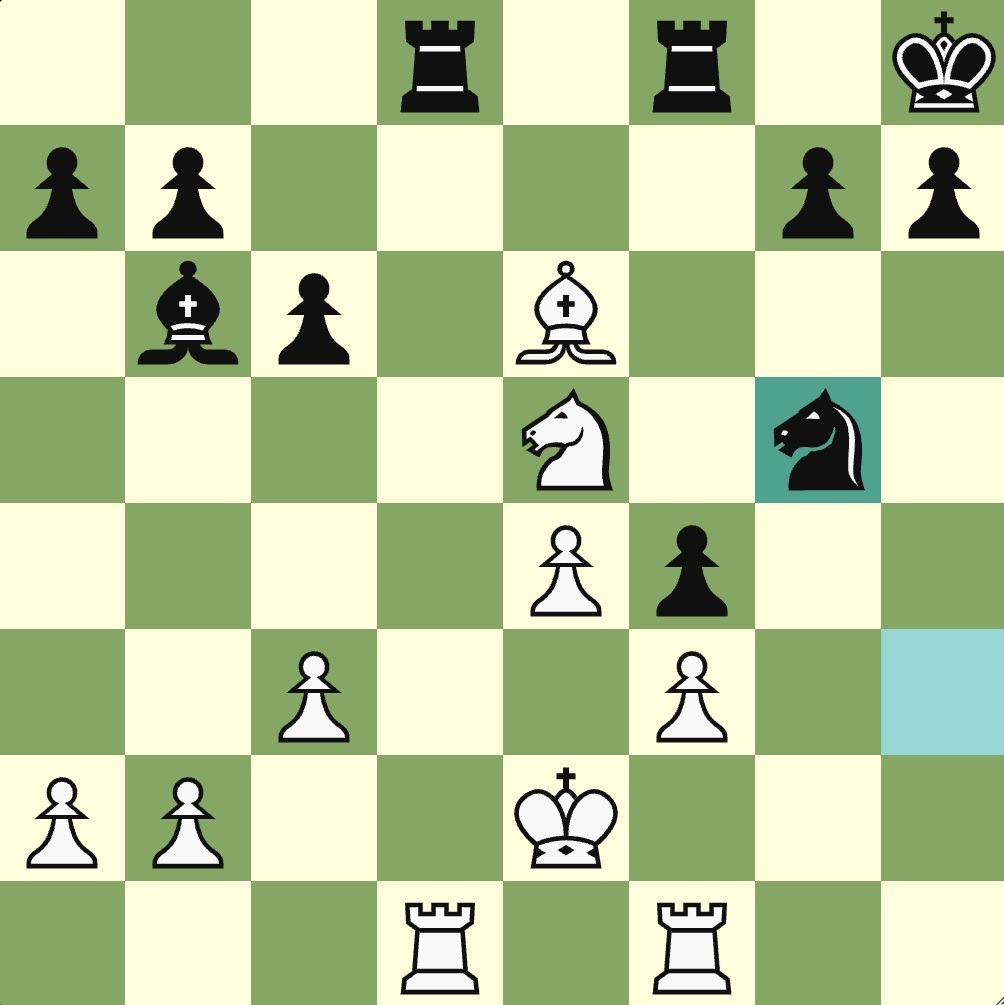
Black to move.  Mate in 4.

NB: I’ll excommunicate comments with solutions ’till the next day so there won’t be “spoilers” for others.

Posted in SESSIUNCULA |
4 Comments

What constitutes “formal adherence” to schism? It is NOT merely attending Masses. There’s more to it.

The Explanatory Note from the DDF today references the Pontifical Council for Legislative Texts’s Explanatory Note on the excommunication for schism incurred by adherents of the movement of Bishop Marcel Lefebvre of 24 August 1996. The DDF says they adopted this as their own. Hence, when the DDF talks about adherence to schism, we can refer to the Pontifical Council’s document for guidance. What does it say about “formal adherence”.  My emphases

5. As stated in Motu Proprio n. 5 c), latae sententiae excommunication for schism concerns 1 those who “formally adhere” to the said schismatic movement. Although the question regarding the exact scope of the notion of “formal adherence to the schism” should be referred to the competent Congregation for the Doctrine of the Faith, it seems to this Pontifical Council that such adherence must imply two complementary elements:

a) one of an internal nature, consisting in freely and consciously sharing the substance of the schism, that is, in opting in such a way for the followers of Lefebvre that this option is placed above obedience to the Pope (at the root of this attitude there will usually be positions contrary to the Magisterium of the Church);

b) another of an external nature, consisting in the externalization of that option, the most evident sign of which will be the exclusive participation in the Lefebvrian “ecclesial” acts, without taking part in the acts of the Catholic Church (this is, however, a non-univocal sign, since there is [NB] the possibility that some faithful may take part in the liturgical functions of Lefebvre’s followers without sharing their schismatic spirit).

Therefore, if a person is simply going to SSPX Masses because – for example – the local bishop has callously snuffed them out locally, without necessarily agreeing with the positions of the SSPX about (*whatever*), then he doesn’t not formally adhere to schism and does not incur an excommunication latae sententiae.

As the Explanatory Note of the Council continues:

7. In the case of the other faithful, however, it is obvious that occasional participation in liturgical acts or activities of the Lefebvrian movement—undertaken without adopting the movement’s attitude of doctrinal and disciplinary disunity—is not sufficient to constitute formal adherence to the movement. In pastoral practice, judging their situation may prove more difficult. Account must be taken, above all, of the person’s intention and the manifestation of that interior disposition in outward actions. Consequently, the various situations must be judged on a case-by-case basis within the competent fora (external and internal).

Given the way law is interpreted in the Church, I would conclude not only “occasional” but also “exclusive”.

Say Joe Badofdonuts is going only to the SSPX chapel on Sunday mornings for Mass, but he also attends his territorial parish for confession and other services.  His participation at the SSPX chapel on Sunday is not exclusive.

Furthermore, I agree with Ed Peters: that category – latae sententiae – should be abolished.

Posted in "How To..." - Practical Notes, 1983 CIC can. 915, SSPX | Tagged ,
14 Comments

2nd Joyful Mystery: The Visitation (Traditional observance 2 July)

In the traditional calendar, the Feast of the Visitation, 2 July, came at the end of the long-suppressed Octave of John the Baptist.  In the Novus Ordo it now falls on 31 May, between the Annunciation and the Birth of John the Baptist.

Here is something that I wrote years ago for the Patristic Rosary Project.

___

We continue our Patristic Rosary Project today with:

2nd Joyful Mystery: The Visitation

Commenting on Luke 1:39-45, the when Mary journeys to visit her cousin Elizabeth, St. Augustine of Hippo (+430) speaks of the infant John, to be known as the Baptist, leaping in the womb at the sound of Mary’s voice:

We see instances of leaping not only in children but even in animals, although certainly not for any faith or religion of rational recognition of someone coming.  But this case stands out as utterly uncommon and new, because it tool place in the womb, and at the coming of her who was to bring forth the Savior of mankind.  Therefore this leaping, this greeting, so to speak, offered to the mother of the Lord is miraculous.  It is to be reckoned among the great signs.  It was not effected by human means by the infant, but by divine means in the infant, as miracles are usually wrought. [ep 187.23]

God wrought something in John at that moment.  What happened?  We can look to the Greek writer Origen (+ c.254) for his view:

Elizabeth, who was filled with the Holy Spirit at that moment, received the Spirit on account of her son.  The mother did not inherit the Holy Spirit first.  First John, still enclosed in her womb, received the Holy Spirit.  Then she too, after her son was sanctified, was filled with the Holy Spirit.  You will be able to believe this if you also learn something similar about the Savior.  (In a certain number of manuscripts, we have discovered that blessed Mary is said to prophesy.  We are not aware of the fact that, according to other copies of the Gospel, Elizabeth speaks these words of prophecy.)  Mary also was filled with the Holy Spirit hen she began to carry the Savior in her womb.  As soon as she received the Holy Spirit, who was the creator of the Lord’s Body, and the Son of God began to exist in her womb, she too was filled with the Holy Spirit.  [Homilies on the Gospel of Luke 7.3]

The concept of being “filled with the Holy Spirit” is interesting.  Perhaps some of you have heard of the glosses on this phrase which compare the Blessed Virgin, John the Baptist, and St. Stephen.  All were said to be filled with the Holy Spirit.  Mary was prevented from ever having any stain of original sin.  John was said to have been forgiven the guilt of original sin before his birth, which is the moment he leapt in the womb at the coming of the Lord.  Stephen, the Protodeacon, was also “filled with the Holy Spirit”, but after his birth.  In any event, the always creative and interesting Origen speaks of John’s sanctification in the womb at the coming of Mary who was bearing the Son of God.

Each of us must prepare to bear Christ and be filled with the Holy Spirit.  St. Ambrose, the bishop of Milan (+397) said:

You see that Mary did not doubt, but believed and therefore obtained the fruit of faith.  “Blessed … are you who have believed.”  But you also are blessed who have heard and believed.  For a soul that has believed has both conceived and bears the Word of God and declares His works.  Let the soul of Mary be in each of you, so that it magnifies the Lord.  Let the spirit of Mary be in each of you, so that it rejoices in God.  She is the one mother of Christ according to the flesh, yet Christ is the Fruit of all according to faith.  Every soul receives the Word of God, provided that, undefiled and unstained by vices, it guards its purity with inviolate modesty.  [Exposition of the Gospel of Luke 2.26]

Our baptism should remind us every day that we are deeply woven into the fabric of the Church, a Church which in many ways can said to stretch back into the depths of our great “Family History”  as God’s People.  In a comment on the Magnificat, which Mary pronounced during her mysterious Visitation, Venerable Bede (+735) says:

When blessed Mary was making mention of the memory of the fathers, she properly represented them by naming Abraham in particular.  Although many of the fathers and holy ones mystically brought forward testimony of the Lord’s incarnation, it was to Abraham that the hidden mysteries of this same Lord’s incarnation and of our redemption were first clearly predicted.  Also, to him it was specifically said, “And in you all the tribes of the earth witll be blessed.” (Gen 12:3)  None of the faithful doubts that this pertains to the Lord and Savior, who in order to give us an everlasting blessing deigned to come to us from the stock of Abraham.  However, “the seed of Abraham” does not refer only to those chosen ones who were brought forth physically from Abraham’s lineage, but also to us…. Having been gathered together to Christ from the nations, we are connected by the fellowship of faith to the fathers, from whom we are far separated by the origin of our fleshly bloodline.  We too are the seed and children of Abraham since we are reborn by the sacraments of our Redeemer, who assumed his flesh from the race of Abraham.  [Homilies on the Gospels 1.4]

Did you catch that great phrase?  “Mary was making mention of the memory of the fathers…”  Perhaps we can see how the Blessed Virgin is a good model for all patristicists and, of course, patristibloggers!

Posted in Linking Back, Our Solitary Boast |
5 Comments

The 6 SSPX Bishops excommunicated. Priests are in schism. Marriages invalid. Absolutions invalid. Lay faithful warned against schism and excommunication.

I am very sad today.

Vatican website DECREE and NOTE


DECREE (my emphases)

Despite the warnings addressed to the Superior General of the Priestly Fraternity of Saint Pius X, Bishop Alfonso de Galarreta, having committed an act of a schismatic nature by the episcopal consecration of four priests without pontifical mandate and against the will of the Supreme Pontiff, has incurred ipso facto the penalties foreseen by Canon 1387 and Canon 1364 § 1 of the 2021 Code of Canon Law.

I therefore declare, with all juridical effects, that both the aforementioned Bishop Alfonso de Galarreta and Pascal Schreiber, Michael Goldade, Michel Poinsinet de Sivry, and Marc Hanappier have incurred ipso facto the excommunication latae sententiae reserved to the Apostolic See.

I further declare that Bishop Bernard Fellay, having participated directly in the liturgical celebration as a co-consecrator, thereby publicly adhering to the schismatic act, incurred the excommunication latae sententiae provided for by Canon 1364 § 1 of the 2021 Code of Canon Law.

Clerics and lay faithful are warned not to adhere to the schism of the Priestly Fraternity of Saint Pius X, because they would thereby incur ipso facto the penalty of excommunication latae sententiae.

From the Palace of the Dicastery, 2 July 2026

Víctor M. Card. Fernández
Prefect

John J. Kennedy
Arcivescovo tit. di Ossero
Segretario per la Sezione Disciplinare

Mons. Armando Matteo
Segretario per la Sezione Dottrinale


DICASTERY FOR THE DOCTRINE OF THE FAITH

Prot. No. 99/2009

EXPLANATORY NOTE

From the time of Saint Paul VI up to the most recent discussions held at this Dicastery, numerous attempts to bring the adherents of the movement begun by Msgr. Marcel Lefebvre back into full communion with the Catholic Church have been in vain. This situation has been further aggravated by recent episcopal consecrations performed without a pontifical mandate, against the will of the Holy Father, and in open violation of canon law. Therefore, this Dicastery, in the faithful exercise of the functions entrusted to it, deems it necessary to point out that this act constitutes the crime of schism, with canonical consequences for the sacred ministers and lay faithful involved. Indeed, as was already declared in 1988, “such disobedience, which implies a practical rejection of the Roman Primacy, constitutes a schismatic act” (cf. John Paul II, Apostolic Letter Ecclesia Dei, 3).

In this regard, henceforth:

1. Sacred ministers belonging to the Priestly Fraternity of Saint Pius X are in a state of schism and must therefore be considered schismatics (cf. Ecclesia Dei, 5 c; Pontifical Council for Legislative Texts, Explanatory Note on the excommunication for schism incurred by adherents of the movement of Bishop Marcel Lefebvre, 24 August 1996, 5–6), thereby incurring the excommunication provided for by law (can. 1364 § 1 CIC).

2. Regarding the lay faithful, those who formally adhere to the Priestly Fraternity of Saint Pius X under the conditions established in the 1996 Explanatory Note by the Pontifical Council for Legislative Texts (cf. ibid., 7), which remains in force and which is adopted by this Dicastery, are to be considered schismatics and excommunicated.

3. Finally, the holy People of God are warned that the sacred ministers of the Priestly Fraternity of Saint Pius X administer the sacraments illicitly, and that the sacrament of penance administered by them and the marriages at which they officiate are invalid.

The Church, as a caring mother, will welcome with sincere affection and deep solicitude all those who desire to return to full communion. Apostolic Nuncios will establish procedures that Ordinaries may utilize in various cases.

Finally, all the faithful are urged to remain steadfast in communion with the Roman Pontiff, with the Bishops in communion with him, and with the whole Church (cf. Lumen Gentium, 22; can. 751 CIC), and to refrain from participating in celebrations and activities promoted by the aforementioned Priestly Fraternity of Saint Pius X.

From the Palace of the Dicastery, 2 July 2026

Víctor M. Card. Fernández
Prefect

Msgr. Armando Matteo
Secretary for the Doctrinal Section

John J. Kennedy
Titular Archbishop of Ossero
Secretary for the Disciplinary Section

Posted in SESSIUNCULA |
39 Comments

SSPX Superior Fr. Pagliarani’s homily for the 1 July 2026 consecration of bishops

Fr. Davide Pagliarani, the Superior of the SSPX, preached in French for about 37 minutes at the consecration of new bishops.  The English translation is some 2100+ words.   The English voice-over in THIS video is a bit loose.  The English translation is HERE.

HOWEVER… as I listened, Pagliarani also spoke about the Most Precious Blood of the Lord.  That part doesn’t result in the linked transcript.  I found a way to tease it out and I will include it, as is, after this precis of the released version.

I’ve been saying in conversations that the SSPX and Rome (the tight circle now around Leo) are talking past each other, as if they were speaking difference languages.  This is something that Pagliarani underscores.

A major theme is the inseparability of faith and Church.

Here is a summary for your convenience.

Pagliarani leads off saying the episcopal consecrations at Écône as a solemn, historic, and divisive event, but one whose meaning must be understood primarily as a manifestation of faith. He begins by thanking those who prepared the ceremony and those who traveled as pilgrims, then immediately frames the day’s central question: what do these consecrations mean? His answer is that they are not chiefly political, organizational, or sociological. They are an act ordered to preserving, living, and transmitting the Catholic faith as the Church has always taught it.

The speaker rejects the charge that one must choose between preserving the integral faith and remaining in the Church. He calls this a false dilemma. For Pagliarani, membership in the Church is founded above all on the integral profession of the faith of the Church. Therefore, he argues, fidelity to Tradition is not separation from the Church, but the very means of remaining within her. He insists that the Society does not seek a parallel Church, a factional identity, or a mere traditionalist sensibility. Its purpose is continuity with the faith, priesthood, Mass, sacraments, and doctrine handed down through twenty centuries.

Pagliarani also addresses accusations of disobedience or hostility toward the Pope. He insists that the Pope is loved and honored as Vicar of Christ, but argues that this love requires resisting situations in which the papal office appears, in his view, humiliated by being placed on the same level as false religions. He describes the conflict as one of language: the Society speaks “the language of faith” and Tradition, while the contemporary ecclesial establishment speaks the language of inclusion, listening, dialogue, and accompaniment. Pagliarani does not entirely reject accompaniment, but insists that it must follow the transmission of truth. The correct order, he says, is faith first, then Christian life, then accompaniment.

Pagliarani defends the consecrations as exceptional means proportionate to an exceptional need. He calls them a prudential provision for the future rather than provocation, challenge, or declaration of war. The reason for consecrating four bishops is described plainly: to secure the future, since the present bishops will not live forever and it would be irresponsible to wait until emergency conditions become irreversible. The act is therefore a foresight in service of the Church.

Pagliarani then turns to the new bishops. They are warned that they are receiving both an immense grace and a heavy cross. They are exhorted not to seek honor, power, or personal interest, but to disappear so that Christ may be known. Their office is defined in traditional episcopal terms: to preserve and transmit doctrine, sanctify souls, pray, sacrifice, and unite truth with charity. Pagliarani stresses that a bishop does not exist to manage an organization, cultivate publicity, or administer projects, but to lead souls to Heaven. At judgment, he says, what will matter is whether they preserved the faith, transmitted grace, and sanctified souls.

In addressing the faithful, Pagliarani speaks of their sacrifices, families, prayers, support for seminaries, and perseverance are praised as essential to the survival of this work. They are urged to remain simple, Catholic, humble, peaceful, and charitable. He warns them against controversy for its own sake, bitterness, resentment, and loss of hope. Even amid ecclesial crisis, he urges serenity because Christ has already conquered sin, death, and the world.

Pagliarani closes by presenting the consecrations not as an endpoint, but as a beginning. The future task is to continue forming priests, preaching, sanctifying souls, building Christian families, and handing on the faith whole and entire. His final appeal is Marian: the Blessed Virgin is invoked to preserve the Church, protect the Holy Father, strengthen the new bishops, sustain priests, and obtain perseverance in fidelity until death.

That was the sermon overall, but without the following:

On the feast of today, the feast of the Most Precious Blood, Our Lord very providentially expresses and summarizes perfectly the significance of these consecrations. He permits us to bring everything down to one point, to summarize everything in the Precious Blood of Our Lord.

He who does not know this Blood, who does not adore it and love it, does not know Our Lord and does not know the Redemption. And he who does not know Our Lord knows nothing and has understood nothing.

The Precious Blood is the unique remedy, the only remedy, the first and the last remedy for all the evils that afflict humanity. Why? Because all these evils come from sin. And the remedy for sin is the Precious Blood.

Everything evil comes from sin, and from one sin in particular. It is always the same kind of sin, from the very beginning until now: the exaltation of man. It is pride.

We are soaked in this today. This exaltation of man is everywhere: man as a wonder, man as seemingly perfect, man as seemingly possessing infinite power. In fact, all of this only pushes him toward pride. Ultimately, it pushes him toward contempt for God and toward apostasy, a silent apostasy. It comes from that.

And the more we exalt man, the more we become unbalanced, the more we become fanatics. We become far from God, and far from the true perfection of man. This is a disaster.

Man, full of all his rights, full of himself, becomes incapable of turning toward God, incapable of recognizing that he is wounded by sin. He needs redemption. He needs Our Lord. He needs His Precious Blood. That is the greatest evil of today, and of all history. It is the source of all the other evils, this disease, this excessive idea of man.

We have to recognize that. It penetrates very deeply. Unfortunately, even in the Church, this disease makes one blind. It blinds souls. It is not this that will bring souls back to God.

And so, by these consecrations, we want to do something. We want to continue to preach the Precious Blood of Our Lord Jesus Christ. We want to continue, in a certain way, to spread and pour out this Blood upon souls.

It is in His Blood that Our Lord founds His Church, the new and eternal covenant, and there is only one. Whoever thinks that there are two or three covenants no longer believes in the infinite and unique power of the Blood of Our Lord.

And in speaking of the power, the value, and the dignity of the Precious Blood of Our Lord, we cannot forget where it comes from. It was formed, brought forth, and furnished by the most pure blood of Our Lady.

It was Our Lady who gave to the Word His humanity. It was in her most pure and immaculate blood that the humanity of Our Lord was formed, and that the Blood of Our Lord was formed. And it is she who offers it with Our Lord for us.

It is she who first saw the Blood flow from Our Lord’s wounds on the Cross. It is she who collects it at the foot of the Cross, who keeps it, and who still presents it at the altar. It is she who, at Mass, spreads these graces to souls.

She has understood the power and the dignity of this Blood.

What a mystery. What a mystery, this association of Our Lady with her divine Son, always at His side.

You can see how all our faith, all our religion, all our love, turns around Our Lord, because everything turns around this Blood.

Posted in SSPX |
13 Comments

A study in contrasts

Yesterday there was an episcopal consecration… in Laredo, Texas.

Today there was also an episcopal consecration in Ecône, Switzerland.

They were alike in some ways.  There were quite different in others.

You might have a look at both and consider the similarities and the differences.

Here is the video of the episcopal consecration in Ecône, Switzerland.

YouTube thumbnailYouTube icon

Here is the video of the episcopal consecration in Laredo, Texas.

YouTube thumbnailYouTube icon

A helpful person sent me a photo of what was sung at the Communion time in Laredo. In the video this is at about 2:43:00.   Right click for larger.

Posted in Liturgy Science Theatre 3000 |
11 Comments

ASK FATHER: Female heads of dicasteries

From a reader…

QUAERITUR:

Father,
Thank you ALWAYS for your vocation and your continued guidance of so many souls. I am deeply grateful!
I am trying to wrap my head around the recent installment of two women (one lay and one religious) as heads of Dicasteries. This follows on Pope Francis’ installment of Sister Nathalie Becquart as undersecretary of the Synod (and incidentally the first woman voting member). How do we approach and understand this as NOT a rupture and not an innovation? Are these dicasteries separate enough from the teaching authority of the Magisterium that it doesn’t matter?

One needs to know what a “dicastery” is.

Before 2022, keep in mind that all squares are rectangles but not all rectangles are squares.

A dicastery is the broader term: a department or major organ of the Roman Curia.

Until 2022 a congregation was, one particular kind of dicastery. Under Pastor Bonus in 1988, “dicasteries” included the Secretariat of State, Congregations, Tribunals, Councils, and Offices. So, in the older system, the Congregation for the Doctrine of the Faith was a dicastery, but the Roman Rota was also a dicastery of a different type.   They had a hierarchy.  The congregations had juridical sections.  They were headed by bishops, usually also cardinals.  The members were Cardinals and bishops.

Since 2002 Praedicate Evangelium the official terminology has changed. The Roman Curia is now described as being composed of the Secretariat of State, the Dicasteries, and other Institutions, “all juridically equal among themselves.” The old “Congregation for the Doctrine of the Faith,” for example, is now the Dicastery for the Doctrine of the Faith.  It was once “La Suprema”.  Now its “La ‘Meh'”.

In the old system, congregations tended to have stronger executive and disciplinary competence, while councils were often more pastoral, promotional, or consultative.

As far as the Synod is concerned, there is a female (ergo non-ordained) under-secretary.

So what?  Big deal.

Does the office of the Synod have any jurisdiction or legislative power, exercise of both requiring sacred orders?

No, not in the ordinary sense. The present office is the General Secretariat of the Synod, and its ordinary role is administrative, coordinative, consultative, and preparatory. It is “a permanent institution at the service of the Synod of Bishops” and is “directly subject to the Roman Pontiff.” Its stated competence is the preparation and implementation of Synod Assemblies, plus other questions the Pope may entrust to it.  Can. 343 says that the Synod of Bishops discusses questions and expresses its wishes, but does not resolve them or issue decrees, unless the Roman Pontiff grants it deliberative power; even then, the Pope must ratify the decisions. The General Secretariat does not possess ordinary legislative power as a Curial office. Praedicate Evangelium states generally that a Curial institution “cannot issue laws or general decrees having the force of law” or derogate from universal law, except in individual and particular cases with papal approval in forma specifica.

Hence, is consultative. The legislative authority remains with the Roman Pontiff, or with those who possess legislative power according to law. The Synod office does not legislate on its own.

So a woman is in the leadership of the Synod, and as a voting member.  So what?  So what is, how does a non-ordained person of either sex have a the ability to VOTE in a Synod of BISHOPS.

Also, a religious sister was appointed as the Dicastery for the Prefect of the Dicastery for Integral Human Development.

Does the Dicastery for the Prefect of the Dicastery for Integral Human Development have any legislative power or jurisdiction?

The Dicastery for Promoting Integral Human Development has no ordinary legislative power.

Its proper field is chiefly promotional, pastoral, coordinative, and consultative: human dignity, human rights, health, justice and peace, economy and work, care for creation, migration, humanitarian emergencies, and the study and dissemination of Catholic social doctrine. It supports particular Churches and episcopal conferences rather than governing them as a superior ordinary.

The Dicastery is competent regarding Caritas Internationalis and the International Catholic Migration Commission, according to their statutes, and it exercises responsibilities reserved to the Holy See in establishing and supervising certain international charitable associations and funds.

So this Dicastery cannot make universal or general Church law. It can act administratively within the competence assigned to it by papal law, statutes, or special mandate, regarding matters and institutions expressly entrusted to it. It does not have general jurisdiction over diocesan bishops, episcopal conferences, or the faithful in the way a diocesan bishop governs his diocese or the Pope governs the universal Church.

Hence, you can pull any person off the street to be the head of this office.  He/she would not have governance in this dicastery that could require the sacred orders required for governance.  They can “administrate” entities that aren’t operated under the aegis of orders, even if their heads are clerics, as is usually the case with Caritas (a Cardinal).

Other “dicasteries” such as Doctrine of the Faith, Bishops, Clergy, Worship, etc., are an entirely different matter from these … Mickey Mouse Club chapters.

You might ask, “What about Sr Brambilla’s dicastery, the Dicastery (formerly Congregation) for Institutes of Consecrated Life and Societies of Apostolic Life. Does she exercise legislative and disciplinary power?”

I don’t think she does.  The tell-tale fact is that there is a Pro-Prefect who is a Cardinal and an Archbishop, Card. Ángel Fernández Artime, S.D.B. I believe that he countersigns anything that is an exercise of jurisdiction and is not merely administrative. If I am wrong, I would like to be corrected.

BTW… Congregations (of those in sacred orders) were a superior concept, contrary to the view of the Church as an evolving NGO.

Female (non-ordained) heads of dicasteries.

Innovation?  Of course.

Rupture?   Of course.

Such are the times we are in.

I wrote this three hours before the SSPX begins the consecration of bishops without papal mandate on the basis that the Church is in a state of emergency.

Just sayin’.

Posted in ASK FATHER Question Box, SESSIUNCULA |
1 Comment

Leo wrote to the SSPX. The SSPX wrote back. Fr. Pagliarani’s response.

Leo XIV wrote an impassioned letter to the SSPX. I posted it HERE. Leo wrote with a plea not to go forward. He hinted at dialogue.   NB: I turned off comments here and posted this as an update also with Leo’s letter to the SSPX, which seemed appropriate.  Discussion can continue there.


Letter from the Superior General in Response to His Holiness Pope Leo XIV

The Superior General
To His Holiness
Pope Leo XIV

Ecône, 30 June 2026

Most Holy Father,

Thank you very much for the letter that Your Holiness so kindly addressed to me.

I have been deeply touched by Your paternal solicitude.

For a long time, I had hoped to have the opportunity of meeting You in person, in order to express to You directly our sincere desire to serve the Church. Unfortunately, that opportunity has not presented itself.

I ask only that You consider the sincerity of this intention, which is in no way feigned. Paradoxically, in the present circumstances, we believe it to be our very duty to do everything possible to mend Christ’s seamless garment, torn by forces and pressures incompatible with a truly Catholic spirit. I ask only that You consider the authenticity of this intention before making a decision concerning the Society of Saint Pius X. It is not yet too late.

Far be it from us to separate ourselves from the Roman Church. We desire, on the contrary, to serve her by means that are extraordinary, as one would assist a mother in distress who requires particular help, even if such help is not understood by everyone. Yet I am certain that the Holy Father could understand it.

The Holy See has shown itself capable of understanding very complex situations and of allowing time for discernment.

May I therefore filially ask Your Holiness to take the time necessary for that discernment.

If my own words are not sufficient, I would ask You to reflect upon two very simple facts. First, in 1988 the Society was already declared schismatic, for reasons and in circumstances entirely analogous to those of today. Yet, after so many years, we are speaking together as a father and his son. Your Holiness is paternally urging me to avoid a schism which, theoretically, has already taken place. Does not Your very attitude—whose paternal concern I deeply appreciate—constitute proof that the Society is neither schismatic nor hostile to the Church?

Secondly, some years ago, the Holy See entrusted two bishops of the Church with the task of engaging in dialogue with the Society of Saint Pius X: Bishop Vitus Huonder, then Bishop of Chur, now deceased, and Bishop Athanasius Schneider, Auxiliary Bishop of Astana. Both, after taking the necessary time for discernment, recognised the profoundly Catholic spirit of the Society and bore public witness to it.

Above all, however, I venture to address Your Holiness in the name of the thousands of souls who have rediscovered the Catholic faith and the practice of religion through the apostolate of the Society. This is a fact of which Your predecessors themselves took note. These souls have but one desire: to attain salvation through this instrument which Divine Providence has placed at their disposal. They have suffered, and they are sincere. I am confident that Your paternal heart as universal Shepherd will be moved by this very particular situation. One day, all the difficulties between the Holy See and the Society will be resolved. A gesture of understanding on Your part, far from harming unity, could only manifest before the world and before all Christians Your concern for unity and Your goodness as a father.

I leave all this to Your consideration. I renew my prayers for Your Holiness.

For a long time, even before Your election, I have been praying to Saint Rita for the present situation. I saw in the election of an Augustinian Pope a sign of hope. I am certain that the Saint will intercede. It is never too late.

Please give us Your blessing.

I take this opportunity to remain, with the deepest devotion in Our Lord,

Don Davide Pagliarani

Posted in Leo XIV, SSPX | Tagged
Comments Off on Leo wrote to the SSPX. The SSPX wrote back. Fr. Pagliarani’s response.

Daily Rome Shot 1653: Procession with the chains of St. Paul

Yesterday there was a procession at St. Paul’s outside the walls with the chain that held St. Paul in his captivity.

The reliquary was borne by members of the Archconfraternity of the Most Holy Trinity of the Pilgrims and Convalescents, which St. Philip Neri founded at The Parish™.  They were specifically requested to participate.  Their reputation grows.

Please remember me when shopping online and use my affiliate links.  US HEREWHY?  This helps to pay for health insurance, utilities, groceries, and now also my late mother’s place.  At no extra cost, you provide help for which I am grateful.  


A few days ago, I posted a Mom’s Stuff Page. You readers know a LOT about a LOT. Hence, I want to tap your knowledge. And if you see something you want, let me know. Since then, two people have reached out interested to purchase something in the photos. I’ll post more photos soon. I’ll have to move nimbly with this process and I really have no idea what I am doing. I’ve gotten some good advice, however. The last piece of hard news was that the inspector said the roof needs to be replaced on my mom’s house. Please keep me in your prayers and please say a prayer for my late mother as well, 11th hour convert, mother of a priest.

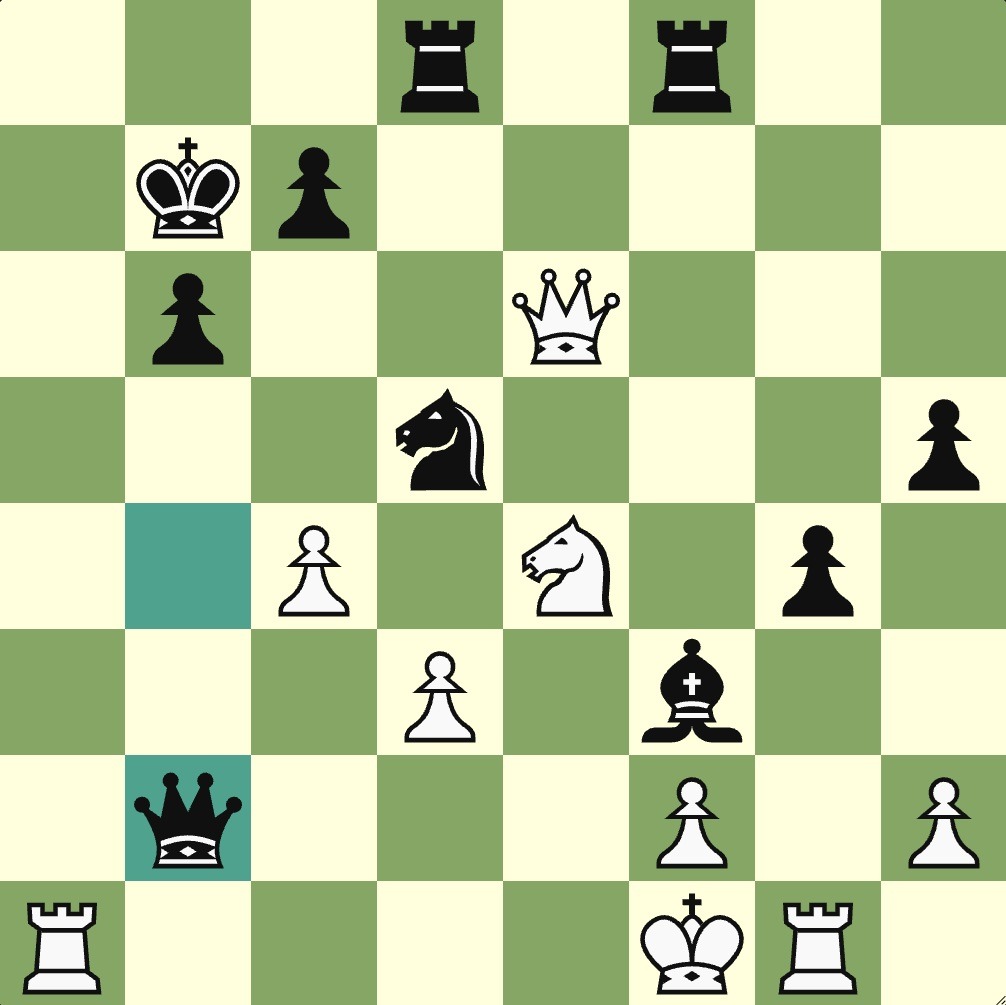
Black to move. Mate in … ?

NB: I’ll hold comments with solutions ’till the next day so there won’t be “spoilers” for others.

Posted in SESSIUNCULA |
6 Comments

Prayer for the SSPX and Leo

On this last day of the month dedicated to the Sacred Heart of Our Lord, day before the Feast of the Most Precious Blood, I offer this petition to the Most Holy Trinity.

Mindful that the SSPX church in Paris, Saint Nicholas du Chardonnet is the seat of Our Lady Queen of the Clergy, I ask Our Lady to place her protective mantle over her sons, Leo and all the priestly members of the SSPX.

I ask our Lord, with His High-Priestly Heart wide open, to pour down His Most Precious Blood on Leo and the priests of the Fraternity.

May Christ’s Precious Blood and our Lady’s mantle purge and repel every demonic influence, any and all spirits of discord and pride.

Let the work of the Holy Spirit soften what is hard and move what is stubborn in their hearts and minds.

May the Holy Apostle Martyrs, Sts. Peter and Paul, Vicar of Christ and the Apostle of the Gentiles, petition from the Almighty the gift of abundant courage for both Leo and the Fraternity in this critical moment, courage to be generous, courage to postpone.

I raise this prayer with confidence to the Most Holy Trinity, God Three and One in the Most Holy Name of Jesus.

God the Father, have mercy on us.
God the Son, have mercy on us.
God the Holy Spirit, mercy on us.
Mary, Queen of the Clergy, pray for us.
Sts. Peter and Paul, pray for us.

Posted in SSPX, Urgent Prayer Requests |
12 Comments