AUDIO: Stations of the Cross – NEW VERSION – Bl. John Henry Newman

Please use the sharing buttons!  Thanks!

I have had two versions of the Via Crucis, or Stations of the Cross available in audio files, one by St. Alphonsus Liguori and the other by Pope Benedict in 2005.  For these click HERE.

I now add a third.

Here are the Stations of the Cross by Bl. John Henry Newman.

For you, with my compliments.  Please pray for me.

Posted in Four Last Things, Our Catholic Identity, PRAYERCAzT: What Does The (Latin) Prayer Really Sound L, Saints: Stories & Symbols | Tagged , , , , , ,
3 Comments

What’s up with sacred music in Rome? Nothing good, it seems.

Sandro Magister has a piece today about what is going with sacred music in Rome, more specifically via the Sistine Chapel Choir and the Pontifical Institute for Sacred Music.

In a word: disaster.

Here is the first part:

Not Sacred Music, but Sounds of Attack
After the choir of the Sistine Chapel, the conservatory of the Holy See is also about to be conquered by those responsible for the musical disarray of recent decades. To silence from the pope

by Sandro Magister

ROME, March 30, 2012 – The last bastion in Rome of the grand liturgical music of the Latin Church, built on the pillars of Gregorian chant and the polyphony of Pierluigi da Palestrina, is in danger of collapsing at any moment.

This bastion is the Pontifical Institute of Sacred Music, the musical conservatory of the Holy See, instituted by Pius X a century ago to set the right course for sacred music in the churches all over the world.

It is headed by Monsignor Valentino Miserachs Grau, 69, Catalan, who is also the director of the Cappella Liberiana, the choir of the papal basilica of Saint Mary Major. His predecessor and mentor there was Domenico Bartlucci, the most illustrious composer and interpreter of liturgical music that the Roman Church has had in the past century, the former director of the pontifical choir of the Sistine Chapel, from which he was brutally ejected in 1996, made a cardinal by Benedict XVI in 2010.

There is a profound similarity of outlook, in matters of liturgical music, between pope Joseph Ratzinger and the current leadership of the PIMS. But as already took place in 2010 with the change of the director of the choir of the Sistine Chapel, for the renewal of the presidency of the Pontifical Institute of Sacred Music everything is about to be decided – not by the PIMS, but against it – without the personal involvement of the pope.

The reasons for this dissociation of Benedict XVI – willingly on his part, to the rejoicing of many – from practical decisions in a matter so agreeable to him, and maintained by him to be so essential to the mission of the Church, still remain undeciphered.

The fact is that this dissociation of the pope gives the green light in the Church, even at the highest levels, to men and to musical trends that are as far as can be from that “spirit of the liturgy” which informs his entire vision as theologian and pastor.

The case of the Sistine Chapel choir is emblematic. The appointment of the current director, Monsignor Massimo Palombella, took place behind the closed doors of the Vatican secretariat of state, surely among those least competent in the matter. And it has done nothing to restore the choir that accompanies the pontifical liturgies from the disrepair into which it has fallen.

It is not enough, in fact, that the selection of composers and songs is today more in line with the desires of the pope. No less important are the quality of the performances and the vision that inspires them.

Further below on this page is a critical review with the byline of an outstanding musicologist and musician, Alessandro Taverna. His judgments on the choir of the Sistine Chapel directed by Palombella are, naturally, debatable. But when, for example, he points out that by the end of an a cappella piece “the singers [had] dropped a good three steps,” he is presenting a fact, not an opinion.

So then, for the position of head of the Pontifical Institute of Sacred Music, an outcome even more fraught with misfortune is approaching.

The name that the secretariat of state is about to have approved by Benedict XVI is that of Vincenzo De Gregorio, the current musical consultant of the liturgical office of the Italian episcopal conference.

Who is De Gregorio? But before that, how has this quasi-appointment come about?

[…]

Take note of the roles of Card. Bertone (SDB) and Card. Ravasi.   Also, read down to the bottom where there is a comparison of the Sistina and the Choir from Westminster.

Posted in Liturgy Science Theatre 3000, The future and our choices | Tagged , , , , , , , ,
26 Comments

30 March: USA: Day of prayer and fasting for Religious Liberty

From the Catholic Sentinel:

US bishops set March 30 as day of prayer, fasting for religious liberty
Catholic News Service

WASHINGTON — The U.S. bishops have urged Catholics and “all people of faith” across the nation to observe March 30 as a day of prayer and fasting for religious freedom and conscience protection.

The bishops announced the daylong observance in a statement titled “United for Religious Freedom” that was approved March 14 by the U.S. Conference of Catholic Bishops’ Administrative Committee.

They asked Catholics and others to join them in “prayer and penance for our leaders and for the complete protection of our first freedom — religious liberty — which is not only protected in the laws and customs of our great nation, but rooted in the teachings of our great tradition.”

The bishops said that among current threats to religious liberty is the U.S. Department of Health and Human Services mandate that forces employers, including religious ones, to provide coverage of contraception/sterilization in their health plans.

Prayer resources have been posted on the USCCB website, HERE.

Also, “Prayer for Religious Liberty” prayer cards are available as a downloadable PDF file. The cards are available in English and Spanish, and feature three different images: Mary as the Immaculate Conception, patroness of the U.S.; Our Lady of Guadalupe, patroness of the Americas and the unborn; and St. Thomas More, the patron saint of the legal profession who was martyred for standing up for his religious beliefs.

[…]

There’s more.

Posted in Brick by Brick, Our Catholic Identity, Religious Liberty, The Campus Telephone Pole, The future and our choices, The Last Acceptable Prejudice | Tagged , , , , ,
17 Comments

“Sinite parvulos venire ad me!”, or, A picture is worth a thousands words.

In the last couple weeks I have had posts about boys playing “Mass”, one had a great video, one had a photo I took of a photo at the funeral of a 60-year priest.  Yesterday I posted in a review of the movie Courageous about the importance of fathers in the family, for boys usually emulate their fathers better traits when they are around.

Here is a photo sent by a reader, which I offer for your amusement and your edification:

Pray for vocations to the priesthood.

Posted in "How To..." - Practical Notes, Brick by Brick, Just Too Cool, Mail from priests, New Evangelization, Our Catholic Identity, Priests and Priesthood, The future and our choices | Tagged , , , , ,
10 Comments

Federal judge rules as unconstitutional Catholic pro-life provisions in Trafficking Victims Prevention Act

From CNA:

Pro-life provisions in US bishops’ grant ruled unconstitutional
By Kevin J. Jones

Washington D.C., Mar 28, 2012 / 04:08 am (CNA/EWTN News).- A federal judge sparked criticism after he ruled unconstitutional the government’s accommodation of pro-life beliefs in an anti-human trafficking contract with the U.S. bishops.

“The bishops are disappointed and probably will appeal. This is another assault on the free exercise clause of the First Amendment,” Sr. Mary Ann Walsh, spokeswoman for the U.S. bishops’ conference, told CNA March 27.

The bishops’ contract proposal for a major five-year grant was approved in 2006 under the Trafficking Victims Prevention Act. The proposal contained language ensuring that its victim services are not used to “refer or fund activities that would be contrary to our moral convictions and religious beliefs.”

It stated that subcontractors could not provide or refer for abortion services or contraceptive materials for its clients.

On March 23 U.S. District Court Judge Richard G. Stearns said that the government violated the Establishment Clause of the First Amendment “insofar as they delegated authority to a religious organization to impose religiously based restrictions on the expenditure of taxpayer funds, and thereby impliedly endorsed the religious beliefs of the USCCB and the Catholic Church.”

The District of Massachusetts judge said the case is not about government forcing a religious institution to act contrary to its fundamental beliefs, but about “the limits of the government’s ability to delegate to a religious institution the right to use taxpayer money to impose its beliefs on others (who may or may not share them).”

The American Civil Liberties Union and the ACLU of Massachusetts had challenged the funding, which totaled $19 million and served over 2,700 trafficking victims.

Brigitte Amiri, senior staff attorney with the ACLU Reproductive Freedom Project, praised the decision.

[…]

Read the rest there.

Posted in Dogs and Fleas, Our Catholic Identity, The future and our choices, The Last Acceptable Prejudice | Tagged , ,
31 Comments

WDTPRS Friday 5th Week of Lent: “My days are swifter than a weaver’s shuttle”

In the pre-Conciliar Missale Romanum this prayer was the Collect of the 23rd Sunday after Pentecost.

COLLECT
Absolve, quaesumus,
Domine, tuorum delicta populorum,
ut a peccatorum nexibus,
quae pro nostra fragilitate contraximus,
tua benignitate liberemur.

In the ancient Veronese Sacramentary our prayer was found in the month of September, also a fasting time, but it was a bit different: Absolue, domine, quaesumus, tuorum delicta populorum, et quod mortalitatis contrahit fragilitate purifica; ut cuncta pericula mentis et corporis te propellente declinans, tua consolatione subsistat, tua graita promissae redemptionis perficiatur hereditas.

A nexus, from necto (“to bind, tie, fasten; to join, bind, or fasten together, connect”), is “a tying or binding together, a fastening, joining, an interlacing, entwining, clasping” and thence, “a personal obligation, an addiction or voluntary assignment of the person for debt, slavery for debt”. Nexus is used to indicate also “a legal obligation of any kind”. It is not uncommon to find somewhere near nexus the word absolvo, which is “to loosen from, to make loose, set free, detach, untie”. In juridical language it means “to absolve from a charge, to acquit, declare innocent”.

This is so cool… here is a truly fascinating bit about nexus from the mighty Lewis & Short Dictionary: “to bring a work to a close, to complete, finish (without denoting intrinsic excellence, like perficere; the fig. is prob. derived from detaching a finished web from the loom“.

Contraho in this context is “to bring about, carry into effect, accomplish, execute, get, contract, occasion, cause, produce, make”. Blaise/Dumas indicates that contraho means “to commit sin”.

LITERAL ATTEMPT:
Unloose, O Lord, we implore,
the transgressions of Your peoples,
so that in Your kindness we may be freed
from the bonds of the sins
which we committed on account of our weakness.

Sin is a web which we both weave and then get caught in.  You know the old saying from Sir Walter Scott: “O what a tangled web we weave when first we practice to deceive.”  All sins are deceptions and the Enemy is the father of lies.

When our First Parents committed the Original Sin, they contracted (contraho) the guilt and effects for the whole human race. At that point our race was bound, tangled up by justice. To be “justified” again, and to be unbound from our guilt and set to right with God, reparation had to be made. Therefore, the New Adam was bound by His tormentors, and bound to the Cross. His soul was unbound from His Body and died, and in the binding and unbinding, we were unbound from our sins.

OBSOLETE ICEL:
Lord,
grant us your forgiveness
and set us free from our enslavement to sin.

You decide.

CURRENT ICEL:
Pardon the offenses of your peoples, we pray, O Lord,
and in your goodness set us free
from the bonds of the sins
we have committed in our weakness
.

The new, corrected translation isn’t perfect, but it sure is better.

I hear, woven into the vocabulary, the image of a loom.

I have in mind the passage from the Book of Job:

“My days are swifter than a weaver’s shuttle, and come to their end without hope. Remember that my life is a breath; my eye will never again see good.”

Our days are indeed like a shuttle.  But in Christ we are never without hope.  Christ is our hope.

Some years ago in Italy I met a women who wove cloth with a large loom. In her practiced hands, the shuttle lashed swiftly back and forth, back and forth, back and forth, while the loom packed the threads together. The cloth “grew” as it was woven, slowly, but surely. The shuttle snapped back and forth with increasing speed as she found her rhythm and settled into it.

Take a look at this short video of a loom in action.  The clack you hear is the shuttle flying back and forth between the interlocking webs.  You can just see the shuttle if you watch.

[wp_youtube]hb8ZRyNs38U[/wp_youtube]

So too are the days and the years of our lives.  And as we get “better” at living with age, that shuttle goes faster and faster.

Clack… clack… clack… clack… clack… clack… clack… clack… clack… clack… clack… clack… clack… clack… clack… clack…

– snip.

My Jesus, mercy.

Posted in WDTPRS | Tagged , , , , ,
10 Comments

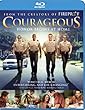
REVIEW: Courageous

I just watched the movie Courageous, about some men who decide they will make a special commitment to be better men and good fathers.

The context is Georgia and the milieu is decidedly Baptist, though one of the main characters is Catholic.  If you allow the movie those starting points you can readily transfer nearly every bit of this into a Catholic context as well.

It strikes me that this would be exactly the sort of movie that sophisticated critics or critic-wannabees would sneer at but which, once the sneering was concluded, they would want to watch again.  Liberal males will envy the men in it and liberal women will secretly wish they knew one of these guys instead of the “SNAGs”* with which they surround themselves.

The acting in Courageous is a bit uneven, as there are quite a few non-actor volunteers involved.

There are some good moments involving loss and grief and moral challenges, ethical dilemmas.

I would like in particular to recommend this movie to seminarians and priests.  We too need a message like this every bit as much as fathers of families.

As a matter of fact, at the point after the four friends collectively make their commitment to manhood and fatherhood, the preacher they have with them makes a little speech which could be one of the best admonitions you could ever hear from a bishop to the men he will ordain:

“I also have a warning for each of you.  Now that you know what you are to do, and have committed to do it before God and these witnesses, you are doubly accountable.  Let me also assure you, that you may have confidence in this resolution and your resolve now, because as you stand here there’s no challenge, no controversy, and no conflict.  But I can assure you that challenges will arise, conflicts will arise, and controversy will arise. It is at that moment that, in order to live our this resolution, you will need courage… courage… courage.”

This is what we need from our fathers in the family and in the Faith.

Holy Church has spiritual fathers.  By Holy Orders they are both priest and victim, the one who offers sacrifice and the one who is sacrificed.  Holy Church teaches that the family home is the “domestic church”, and so there must be within the home that figure who also embodies one who sacrifices and is sacrificed.  That person is the father.  And every manner fatherhood has been and will be attacked by the father of lies so as to drag society down so that lost souls may be harvested for eternal separation from the Eternal Father.

The song at the end of the film sums up the principle point:

[wp_youtube]cTYSirKUiVw[/wp_youtube]

The trailer is HERE.

We’ve got to get men back into society and we start by getting them back into families.

As I said above, there are uneven spots in the movie and some moments veer sharply and nearly irretrievably into the corny.  But once you give yourself over to the premise of the movie, you will probably want to own it and give it as gifts.

It’s sincere, and it nails the the issues squarely.  Give it a try.

USA BlueRay+DVD HERE.  Just DVD HERE.
UK DVD HERE.   I think this will “translate” well because it deals with something that is simply human.  This might be needed even more in the UK than in the USA.

*“sensitive new age guys”

Posted in "How To..." - Practical Notes, Brick by Brick, Dogs and Fleas, Priests and Priesthood, REVIEWS, The future and our choices | Tagged , , , , , , , , , , ,
14 Comments

Bp. Morlino on the mission of lay people in the public HHS mandate battle. Wherein Fr Z rants.

Some music to accompany my preliminary rant.   Read while listening.

[wp_youtube]TVjDP0vlem4[/wp_youtube]

I have seen sharp criticisms launched by lay people against bishops whom they accuse of being weak in the public debate about Pres. Obama’s attacks on the religious liberty of the Catholic Church and indeed on the 1st Amendment rights of all Americans.

I respond saying that bishops were issued big-boy underwear when they were consecrated.  Criticisms and the inability to please everyone come with the hat and the stick.  It has ever been so.

I have in my mind’s eye episodes in the ancient Church when people rioted in the streets when they were unhappy with bishops.  For example, by 406 around Hippo things were pretty bad.  Donatist thugs called circumcellions had staked out the diocese and were ambushing clergy on the road, beating them with clubs and blinding them with lye.  In 428 when people found out that some of Augustine’s monks owned property they nearly rioted in the streets until Augustine conducted an investigation.  And, a bit earlier, there was the lethal interlude of Diocletian.

Thus, I am inclined to think that bishops have it easy today.  They aren’t being set upon with clubs… yet.  Even the kerfuffle between Card. Wuerl and the irate Mr. Neumayr is t-ball compared to the hardball innings bishops played in the 3rd and 4th centuries.  It’s big-boy underwear time for both of them too, by the way.  But I digress.

Let’s keep something clear.  My role as a priest, and the bishops’ role as bishops, is to form and support the laity for their proper role in the public square.  It is the role of lay people to shape the world around them according to their vocations.   I (or, even more, the bishops) will teach, give you the sacraments, and support you.  The work of the public square is really your work, lay people, not mine.  Remember that when you think bishops aren’t being strong enough in the public square.  We clerics know that you lay people often face in your daily lives challenges that would make many of us roll up in a ball and hide under the covers.  On the other hand, the Enemy of your soul hates priests and bishops with surpassing malice. We live every day knowing that we go to our judgment with Holy Orders upon our souls and to those to whom God has given much, more will be expected.  As Augustine said, “I am a bishop for you, but I am a Christian with you.” Neither portion of God’s poor little servants should fall into the trap of thinking that the other has anything easy in life.

If you are p.o.’d that a bishop isn’t jumping around with his hair on fire in front of the White House, waving his arms, and telling you whom to vote for, then maybe you should be doing that according to what Holy Church has taught you and in keeping with your vocation.  And if the priests and bishops in your life have not been stellar in their roles of teaching (read = they are human, they are sinners, they are … x, y, z….), then put on your own big-boy underwear and get to work anyway.  Things will improve.  Priests and bishops will find their way to the spines they need, or in some cases abandoned.  And they will do it faster if you are with them rather than against them.  Believe me: carping at priests doesn’t generally make them do things either faster or better.  I know this by experiential knowledge and not merely by theoretical.  Help them out by prayers and encouragement and example.

There is only so much the bishops can accomplish in the public square on their own: the rest is your job.  Don’t shirk your role even if you think bishops and priests are being lazy or craven.  Stand up and get to work right now, even if you are disappointed that bishops aren’t beaming lasers out of their eyes or issuing decrees of excommunication while they levitate to the strains of Verdi’s Dies Irae.

Thus endeth my rant.

To my point…

In the newspaper of the Diocese of Madison, His Excellency Most Rev. Robert Morlino, whom we have seen here before, made some comments about religious liberty and conscience.

He starts out by mentioning the rally for religious liberty at the capitol of Wisconsin (in Madison).  He goes on to remind the reader the political sphere, the public square, concerns the mission of the laity.  Note his distinction about liturgical roles!  Kudos for that.

Bp. Morlino makes some other very good points in his piece, but I will focus on his discussion of the mission of lay people.

Religious freedom, freedom of conscience
Bishop’s Column
Thursday, Mar. 29, 201

[…]

That is the true role that the Church was trying to enliven in the laity through Vatican II — faithful people witnessing actively to today’s world, bringing the Church into the world of today (as opposed to the idea that the main way one can be an “active” Catholic is by performing different liturgical roles). [Do I hear an “Amen!”?]

The women, men, and children gathered in Madison last week were undertaking the lay mission of the Church, which is to witness to the sanctifying presence of God in the world and I’d encourage all of us to remember our call to that mission in our everyday lives, and as we look to the future of our nation.

[…]

Each of you has a mission — it is the lay mission of your Catholic faith — to think and speak clearly, remembering that faith and reason work together, and that faith and reason are on our side. But we have to be able to explain how faith and reason are on our side. This is something about which we need to read more, we need to think about more, and most importantly we need to pray about more.

[…]

So, let’s do what we need to do in terms of making clear that this regulation that takes away our freedom of conscience cannot and will not stand. Let’s do it in a way which is very charitable, which is very reasonable, and which carries with it a smile, because where there is no charity, we cannot expect the Resurrection power of Jesus Christ to be unleashed.

Let’s make sure we are charitable, but let’s make sure we are clear and we are heard. Sometimes we can be tempted wrongly to think that charity and reasonableness are excuses for acting like wimps.

We have to speak out clearly, charitably, reasonably, unmistakably, unambiguously, about freedom of conscience and freedom of religion. Let’s do all of that actively today, so that we can enjoy the glory of Easter tomorrow!

Thank you for taking the time to read this. Praised be Jesus Christ!

We are in this together, friends.


Posted in "How To..." - Practical Notes, Dogs and Fleas, New Evangelization, Our Catholic Identity, Religious Liberty, The Drill, The future and our choices, The Last Acceptable Prejudice, Wherein Fr. Z Rants | Tagged , , , , , , , , , , ,
38 Comments

Vespers, with a twist

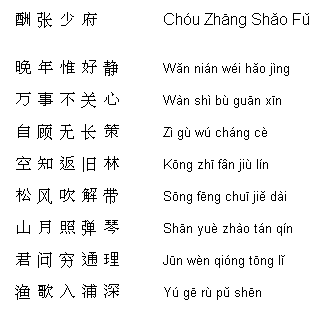
Via the estimable Laudator comes this nice Chinese poem, which touches on themes of fishing, quiet, moonlight, common to many of the verses of the Tang dynasty scholars.

Wang Wei (699-759), To Subprefect Chang (tr. Irving Y. Lo):

In late years, I love only the stillness,
The world’s affairs no longer trouble my heart.
Looking at myself: no far-reaching plans;
All I know: to return to familiar woods—
The pine winds blow and loosen my sash;
The mountain moon shines upon me playing the lute.
You ask for reasons for failure or success—
Fisherman’s song enters the riverbanks deep.

A translation was set to music:

[wp_youtube]5ukGxdGyeLw[/wp_youtube]

That said, here is vespers with no frills from the Breviarium Romanum. You can follow HERE. Use the settings for “all” and “Rubrics 1960”.

Posted in Poetry | Tagged , , , , ,
4 Comments

QUAERITUR: Stations of the Cross during Exposition of the Blessed Sacrament

From a reader:

In recent days, I have heard it said a couple of times that praying the Stations of the Cross (in common) during Exposition of the Blessed Sacrament is not allowed. Is that true? Where is such a directive given? Thanks.

The USCCB’s Committee on Divine Worship has an non-authoritative opinion piece about this in which the writer argues that Exposition is a liturgical worship of Christ while Stations is a devotion focused on the Lord’s Passion. She writes, “As commendable as such a devotion may be, it can never fulfill the purpose of eucharistic adoration, that is to draw us more deeply into the mystery of Christ’s presence in the Holy Eucharist. Therefore, neither the Stations of the Cross nor any other devotion should be prayed during exposition of the Eucharist.”

Not as bad as the Fishwrap’s Richard McBrien who ridicules Eucharistic adoration as “a doctrinal, theological, and spiritual step backward”.

The USCCB piece a clearly a personal opinion piece by some nameless person. Note that the last paragraph begins with the pronoun “I”, as in “I would strongly encourage…”.

I do not see any reason why, in a communal observance of the Stations of the Cross, or Via Crucis, the priest or deacon leading them turning to the Blessed Sacrament each time he moves to each Station and each time he says “We adore Thee, O Christ…”.

In any event, I haven’t found any authoritative document which states in a clear way that Stations may not be prayed in the presence of the Blessed Sacrament exposed. When Stations is ended, there could be Benediction.

Is there some other document out there?

I am sure we could argue one way or another about this, but I think the argument against smacks of the same thinking by which people are assumed to be so thick that they will, in the presence of, say, more than one crucifix or more than one altar, or more than one statue of Mary, be struck by mental paralysis like Buridan’s Ass and maybe even fall to the floor racked by sobs of confusion.

On the other hand, in my experience, people who are used to Exposition and used to the Stations seem to be able to put it all together and grasp – mirabile dictu – that the Jesus they adore on the altar under the appearance of bread in the monstrance, is the same Jesus who suffered and died for them, the story of which Passion being related all around them during the Stations.

If there is some definitive document from the Congregation for Divine Worship on this, I would like to be corrected.  Otherwise, I think we are free to do this, whether we want to or not.


Posted in ASK FATHER Question Box, Liturgy Science Theatre 3000 | Tagged , , , , ,
24 Comments