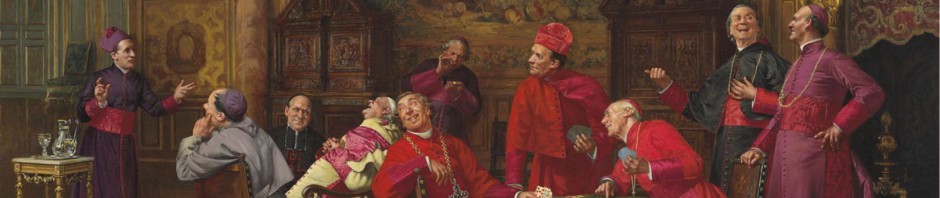
“The work of the devil will infiltrate even into the Church in such a way that…”

I don’t often post about apparitions of Our Blessed Mother, though I pay diligent attention to those which are approved by the Holy See and some attention to those which have the approval of local bishops.

With that in mind, here is a message from Our Blessed Mother at Akita in Japan to Sr. Agnes Sasagawa back in the 1970’s. A reader alluded to this message in a comment under another entry.

My emphases.

October 13, 1973

“My dear daughter, listen well to what I have to say to you. You will inform your superior.”

After a short silence:

“As I told you, if men do not repent and better themselves, the Father will inflict a terrible punishment on all humanity. It will be a punishment greater than the deluge, such as one will never seen before. Fire will fall from the sky and will wipe out a great part of humanity, the good as well as the bad, sparing neither priests nor faithful. The survivors will find themselves so desolate that they will envy the dead. The only arms which will remain for you will be the Rosary and the Sign left by My Son. Each day recite the prayers of the Rosary. With the Rosary, pray for the Pope, the bishops and priests.”

“The work of the devil will infiltrate even into the Church in such a way that one will see cardinals opposing cardinals, bishops against bishops. The priests who venerate me will be scorned and opposed by their confreres…churches and altars sacked; the Church will be full of those who accept compromises and the demon will press many priests and consecrated souls to leave the service of the Lord.

The demon will be especially implacable against souls consecrated to God. The thought of the loss of so many souls is the cause of my sadness. If sins increase in number and gravity, there will be no longer pardon for them”

“With courage, speak to your superior. He will know how to encourage each one of you to pray and to accomplish works of reparation.”

“It is Bishop Ito, who directs your community.”

And She smiled and then said:

“You have still something to ask? Today is the last time that I will speak to you in living voice. From now on you will obey the one sent to you and your superior.”

“Pray very much the prayers of the Rosary. I alone am able still to save you from the calamities which approach. Those who place their confidence in me will be saved.”


Posted in Dogs and Fleas, Four Last Things, GO TO CONFESSION, New Evangelization, Our Catholic Identity, The future and our choices | Tagged , , ,
67 Comments

What does “manifest sin” mean when talking Communion and can. 915?

Please use the sharing buttons!  Thanks!

can. 915I received a question from a reader this morning:

Without any regard for c. 915, which is the morally correct thing for a priest to do: give the Holy Eucharist to some he knows – who in fact has admitted to the priest right before Mass – that they are committing sacrilege by receiving Holy Communion and obey a policy laid down by his ordinary saying that he must not deny anyone Holy Communion, or deny them Holy Communion and disobey the policy of his ordinary?

It depends on how well known the person’s actions/thoughts/declarations are. Can. 915 says that a person must be persevering in manifest grave sin, that is to say, it must be manifest (apparent, disclosed, public, evident, unmistakable, observable, visible, ascertainable) that a person is doing gravely sinful things.

By coincidence, today the Canonical Defender, Prof. Peters has, on his exceptional blog In The Light Of The Law (go spike his stats), a manifestly useful post about the concept of “manifest”.  My emphases, slight reformating, and comments.

A brief thought on the phrase ‘manifest sin’ in Canon 915
March 17, 2012

As I look through the continuing blogosphere commentary on the lesbian/Communion case, I see many people confusing the concept of “manifest sin” in Canon 915 with the notion of, I dunno, something like “manifestly sinful”. Those two phrases mean different things*, I suggest, and Canon 915 speaks only in terms of the former, not the latter.

In 2008 I published a CLSA advisory opinion on Canon 915 and two years later posted it on my Canon 915 resource page. I paraphrase part of that opinion for use today:

Manifest. The additional requirement that gravely sinful behavior be manifest prior to withholding the Eucharist helps distinguish Canon 915, which operates in realm of public order, from Canon 916, which informs one’s personal responsibility to receive the Eucharist worthily.  [Get that?  Can. 915 – public, can. 916 – private.]

Reception of Communion at Mass is a public action in service to rendering liturgical worship to God; it is not the place for the proclamation of another’s private behavior. [Which is why when you come up to Fr. Z for Communion wearing, I dunno, a “rainbow sash” on a day when a pro-homosexuality groups say they are going to churches wearing rainbow sashes, Fr. Z will deny you Communion.  It is a manifest, public gesture during the public distribution of Communion.]

However sinful it might be, conduct that is not already widely known in the community is not manifest [NB:] as canon law understands that term in this context. In something of a parallel to Canon 1340 § 2 (which prohibits imposing public penances for occult transgressions) and Canon 1330 (which prohibits any penalties in cases where no one has perceived the offense) the public withholding of the Eucharist for little known sins, even though they might well be grave, is not permitted under canon law.  [Get that?]

Some folks seem to get the canonical distinction between public and private conduct but think the Church is being too lenient in dealing with grave-but-as-yet-private sin. They’re free to make that case, though I think the Church’s wisdom is more than canon-law deep here. Anyway, though they disagree with the law, they understand it, so my job is done in their regard. + + +

* Example: I keep saying that a would-be Communion recipient’s brief disclosure to a minister a few minutes before Mass that she has a female “lover” does not suffice to verify, among other things, that the sin apparently being admitted to is canonically manifest in the community; others say, c’mon, lesbian sexual activity is manifestly sinful. See? [See?] I’m talking about what Canon 915 actually says, while they are talking about what they think Canon 915 says.

Thank you, Dr. Peters, for the manifestly useful distinctions.

Qui bene distinguit, bene docet.

Go buy can. 915 stuff now!  Click HERE.

Posted in "How To..." - Practical Notes, 1983 CIC can. 915, The Drill | Tagged , , , ,
123 Comments

Phil Lawler on “The betrayal of Father Guarnizo”

Phil Lawler on CWN has a piece worthy of your attention today.

Here are some excerpts:

The betrayal of Father Guarnizo
By Phil Lawler

[…]

Bishop Knestout’s letter was entirely sympathetic to Johnson, entirely unsympathetic to Father Guarnizo. There was no hint that under some circumstances the priest might have been right to refuse Communion, and no hint that Johnson had been wrong to provoke the refusal. The message was a betrayal in two ways:

First, it is not clear whether Father Guarnizo was right to deny Barbara Johnson the Eucharist. But it is quite clear, and has been from the outset, that Barbara Johnson was wrong to present herself for Communion. […]

Second, the vicar general’s public statement did something very similar to what it accused Father Guarnizo of doing. […] A priest cannot lightly refuse Communion to someone he deems a sinner, because—among other things—by doing so he creates a scandal, exposing that “sinner” to public humiliation. Yet the archdiocese exposed Father Guarnizo to public humiliation.

And why did the archdiocese leave this poor priest dangling? Because he violated a policy of the archdiocese—a policy that may be in conflict with the law of the universal Church? At worst Father Guarnizo was guilty of a minor infraction against a local policy, not a serious transgression against God’s law. The archdiocesan policy weighed against refusing the Eucharist even when that action was justified (in fact obligatory), and the first statement from Bishop Knestout spoke only of the archdiocesan policy without making reference to the more serious questions about God’s law. So the faithful had every reason to worry that a good priest might be wrongly disciplined. And the subsequent statement from Bishop Knestout, claiming that Father Guarnizo had been removed from ministry for reasons unrelated to the Eucharistic incident, strained the credulity of the most loyal Catholics. We still do not have all the facts. But faithful Catholics cannot be blamed for harboring strong suspicions.

[…]

The betrayal of Father Guarnizo sends a chilling message to every priest in Washington: that if he is zealous in defending the Eucharist, he cannot count on support from the archdiocese. Since other radical activists will no doubt follow Barbara Johnson’s example, we can expect another test case soon. Let’s hope and pray that the next time, the archdiocese will show at least as much solicitude for the Eucharist (not to mention the accused priest) as for the critics of the Church.

Posted in 1983 CIC can. 915, Goat Rodeos, One Man & One Woman, Priests and Priesthood, The Drill, The future and our choices, The Last Acceptable Prejudice | Tagged , , ,
48 Comments

Today is the feast of a wonderful saint

From the Martyrologium Romanum

7. Olomucii in Moravia, sancti Ioannis Sarkander, presbyteri et martyris, qui parochus Holesovienses, cum arcana confessionum tradere renuisset, rotae supplicio datus est et adhus spirans in carcerem deictus post mensem obiit.

Posted in Saints: Stories & Symbols | Tagged ,
5 Comments

WDTPRS POLL: iPads and You

In an otherwise dreadful tech day for me, I have had a bright spot.

The UPS Gal swooped in her brown truck with a gift from a reader from my amazon wishlist: the DVD/BRAY of the movie The Way (thanks to RG and thanks to MZ for Moneyball – about the game God loves best) which came recently).

While here the UPS Gal received an SMS on her fancy gizmo reminding her to be sure to get signatures from customers.

“Why?”, quoth I.

“Not for everything. I’m delivering the new iPads today and we can’t just leave them at the door.”

So!  New iPads!

I have the very lowest form of the very first iPad.  For the longest time I didn’t know what to do with it.  Then I starting figuring out how it could be useful to me.  I use it all the time now!  With my iPad I can also access all my Kindle Books.  Handy.

Here is a WDTPRS POLL.

Pick your best answer and leave a comment.

What about the new iPad?

View Results

Posted in Lighter fare, POLLS | Tagged ,
39 Comments

QUAERITUR: The scheduling of Good Friday and Holy Thursday in the Extraordinary Form

NEW "LEX ORANDI" STUFF AVAILABLE

I will let you liturgical experts and interested dabblers provide this good reader with some help.

I may be missing something, but I can’t see much of a problem.  You readers might see differently.

From a reader:

A question for you and your readers, which is bound to arise as more and more places offer the Triduum in the EF. Our local clergy here have so far welcomed the idea of a celebration of the entire Triduum in the extraordinary form, in addition to the parish’s celebration in the ordinary form. Amazing! Who would have thought it possible a few years ago?

One practical difficulty we have run into is a conflict between different books as regards the permissible range of times for the Holy Thursday and Good Friday liturgies — a question, naturally, that has to be solved if there will be two of each. The discrepancy can be seen in comparing the Sacred Congregation of Rites General Decree from November 16, 1955 (printed as an appendix in Fr. McManus’s The Rites of Holy Week, 1956) and the fine print in the Liber Hebdomadae Sanctae Cantus Gregoriani (PCP reprint, 2011, of a book that appears to be a Desclee publication of around 1956).

Holy Thursday
SCR General Decree: “On Holy Thursday … the Mass of the Lord’s Supper must be celebrated in the evening, at the most suitable hour; not, however, before 5 nor after 8 p.m.”
Liber Hebdomadae Sanctae: “The Mass must be celebrated at a convenient time in the evening, but not before 4 p.m. or after 9 p.m.”

Good Friday
SCR Decree: “On Good Friday, the solemn liturgical service is celebrated in the afternoon, and indeed about 3 p.m.; but if a pastoral reason urges this, a later hour may be chosen — not, however, beyond 6 p.m.”
Liber Hebdomadae Sanctae: “The solemn Liturgy is celebrated in the afternoon, about 3 p.m.; however, for pastoral reasons, it may begin earlier, from mid-day onwards, or at a latest hour, but not after 9 o’clock.”

There is no discrepancy as regards the Paschal Vigil.

The SCR decree, which appears to give more restrictive times, is the later law.  It is more authoritative than some book.

If this is truly an issue, stick to the more restrictive times: 5-8 for Holy Thursday, “about” 3 – 6 for Good Friday.

If there is real doubt, you are free to submit the question to the Pont. Comm. Ecclesia Dei.  As long as the doubt remains unanswered, you are free to utilize the more expansive time frames.

Posted in "How To..." - Practical Notes, Liturgy Science Theatre 3000, SUMMORUM PONTIFICUM, Universae Ecclesiae | Tagged , , , ,
10 Comments

CDF to have spiffy new website. (Looks sorta like the old one.)

When I worked in the Vatican I had a mantra: “Yesterday’s technology tomorrow!”  We updated our equipment every 75 years, whether it needed it or not.

I am happy to see recent developments.  For example, Vatican Radio and CTV have a greater video/audio player which works!  Their sites are still a chaotic mess, but – hey! – whoever said that being a Catholic was easy?

I am also glad to see that the Congregation for the Doctrine of the Faith has a new site.  Year ago, under Card. Castrillon as Prefect, the Cong. for Clergy started doing its own internet thing apart from the Holy See’s regular paradigm, bless them.  The CDF can now have a more prominent web presence.  It is about time, by the, that the CDF become again La Suprema.

From the Holy See Press Office with my emphases:

UPDATING AND REORGANIZATION OF THE WEBPAGE

OF THE CONGREGATION FOR THE DOCTRINE OF THE FAITH

Documents of the Congregation for the Doctrine of the Faith which have the express approbation of the Holy Father participate in his ordinary Magisterium as the Successor of Peter (cf. Instruction Donum veritatis on the ecclesial vocation of the theologian: 24 May 1990, n. 18). For this reason, attentive reception of these texts is important for all members of the faithful and in particular for those who are engaged in theological and pastoral work in the name of the Church.

Wider distribution of the teaching of the Congregation for the Doctrine of the Faith is necessary in today’s world. The documents of the Congregation which have been published from the time of the Second Vatican Council were printed in the volume, CONGREGATIO PRO DOCTRINA FIDEI, Documenta inde a Concilio Vaticano Secundo expleto edita (1966-2005): LEV, Vatican City, 2006. These texts treat significant questions for the life and mission of the Church and give important doctrinal responses to the challenges of our times.

In order to facilitate online consultation of its documents, the Congregation for the Doctrine of the Faith has created a new domain (www.doctrinafidei.va) in addition to the already existing access from the official site of the Holy See (www.vatican.va).

The major documents of the Congregation are available in eight languages: Latin, French, English, Italian, Portuguese, Spanish, German and Polish. Certain documents are also available in Hungarian, Slovak, Czech, and Dutch. The work of adding other translations continues. At the present, each document is available in its original language as well as in some translations.

The documents are organized in two ways on the website. There is a general list of all the texts organized chronologically, and three subgroups of these texts, divided into doctrinal, disciplinary and sacramental documents.

In addition, the website also presents information on the Congregation’s series “Documenti e Studi” which are individual printed volumes presenting a major document of the Congregation together with commentaries by noted theologians. There is also a description of the volumes containing the proceedings of various symposia organized by the Congregation in recent years. Finally, the website includes various speeches and other contributions by the Cardinal Prefects.

The Congregation for the Doctrine of the Faith is convinced that the enhanced availability of these documents will be of significant value in communicating the teaching of the Church to people throughout the world.

Check it out!

Click here.

I hope it won’t be the same ol’ same ol’.


Posted in Brick by Brick | Tagged , ,
6 Comments

Of penance and preparation and pilgrimage

We are headed into a time of true spiritual warfare.  The signs of this are thick in the air about us now.

We would do well to get ourselves ready.  We need good examinations of conscience, good confessions, good Communions – always GOOD Communions.  We might also do well to unite ourselves to larger groups in specific tasks.  One reader here in another thread suggested a daily Rosary until Divine Mercy Sunday for the reconciliation of the SSPX.  That’s just one idea, but it is a good one, since the potential division of those many good people from the Church is one of those signs I am talking about, especially when the Church is under grave attacks from secular forces.

We need good spiritual reading, and some silence each day.  We should introduce small mortifications if we haven’t already.

My I also suggest trying to cultivate a habit of saying during the day (along with your Angelus, etc.) and quite often little phrases such as “My Jesus, mercy!”?

I am talking about basics, right?  Things we should be doing anyway?  Prayers before meals?  Examining our consciences daily?  Mortifications?  Turning our minds to God and calling on help from His holy saints?  Asking our Guardian Angel for help?  Works of mercy?  Catholics should do all these things.  I suppose what I am driving at, beyond just doing them, is to do them with an increasing sense of gratitude for God’s gifts and a rededication of our hearts to His.

As I have mentioned more than once, the concept of the pilgrimage, in particular the Camino of Santiago de Compostella, has been growing in my mind.

Another Catholic practice for doing penance for past sins or also readying oneself for a major change in life is a pilgrimage.  Arriving at a Holy Shrine and praying there can be a grace-filled turning point, but so is the actual journey to get there.

We of the Church Militant are warrior pilgrims on the march to our heavenly Fatherland.  In making a pilgrimage we manifest outwardly something of that interior identity we have as baptized members of the Lord’s Mystical Body here on earth.

Perhaps you could think about a trip to a nearby Shrine, if not that of Santiago or the other great pilgrimage places.  There are any number of “National Shrines” around our respective countries.  For example, in my neck of the woods there is the National Shrine of St. Paul, the Cathedral of St. Paul in St. Paul, Minnesota.  Near Detroit is the Shrine of the Little Flower.  In Washington DC is the Shrine of the Immaculate Conception. In NY state there is a Shrine of the North American Martyrs.  In England there is a Shrine of Our Lady of Walsingham.  In Quebec there is St. Anne de Beaupre.  Once you start paying attention, you find shrines everywhere.

Just a few rambling thoughts, for what they are worth.

Posted in "How To..." - Practical Notes, Four Last Things, GO TO CONFESSION, New Evangelization, Our Catholic Identity, Saints: Stories & Symbols, The future and our choices | Tagged , , , , , , ,
30 Comments

Interesting Glen Beck video

Several people sent me a video of Glen Beck talking about “The Vatican”.

He is a bit out of his depth in how he speaks about the workings of the Church and higher levels of leadership, but he gets around to the kulturkampf (my word, not his) going on and the Obama Administration.

The video is worth 10 minutes of your time.

He talks about the Obama Administration’s attacks on the Catholic Church and brings in another wrinkle about the State Department that was not on my radar.

A few quotes from the video:

“I believe the Vatican is actively engage in a very different kind of battle…They are in a spiritual battle…They are gearing up for a spiritual battle unlike anything we have ever seen.”

“Catholics. You have to be… you have to understand. Read Ephesians 6.  You have to put on your spiritual armor.  You are not battling man.  You are not. You are battling evil.  This is Obama’s way of saying back off and play ball our way.”

He ends with the phrase that I believe several Evangelical ministers have now said,

“We are all Catholics now.  Tie yourself to something. Strengthen your pastor, priest, rabbi.  Strengthen your those in the Catholic Church.  Strengthen your priest.  If your priest is not telling you these things, ask him why.   If he doesn’t have a good answer, ask the bishop.  If he doesn’t have a good answer, go to another parish until you find a priest that will. There is a split in our churches.  And you will see it in the Catholics.  You must not remain neutral.”

Given the demographics of Beck’s audience, this was pretty interesting.

Something is brewing, for sure.

Posted in Dogs and Fleas, Four Last Things, Our Catholic Identity, Religious Liberty |
33 Comments

Holy See Statement about SSPX and avoiding “ecclesial rupture of painful and incalculable consequences”

I thought something was coming!

This is from the Holy See Press Office:

COMMUNIQUE CONCERNING THE SOCIETY OF ST. PIUS X

Vatican City, 16 March 2012 (VIS) – Given below is the text of a communique relating to the Society of St. Pius X, released this morning by the Holy See Press Office.

“During the meeting of 14 September 2011 between Cardinal William Levada, prefect of the Congregation for the Doctrine of the Faith and president of the Pontifical Commission ‘Ecclesia Dei’, and Bishop Bernard Fellay, superior general of the Society of St. Pius X, the latter was presented with a Doctrinal Preamble, accompanied by a Preliminary Note, as a fundamental basis for achieving full reconciliation with the Apostolic See. This defined certain doctrinal principles and criteria for the interpretation Catholic doctrine, which are necessary to ensure faithfulness to the Church Magisterium and ‘sentire cum Ecclesia’.

“The response of the Society of St. Pius X to the aforesaid Doctrinal Preamble, which arrived in January 2012, was examined by the Congregation for the Doctrine of the Faith before being submitted to the Holy Father for his judgement. Pursuant to the decision made by Pope Benedict XVI, Bishop Fellay was, in a letter delivered today, informed of the evaluation of his response. The letter states that the position he expressed is not sufficient to overcome the doctrinal problems which lie at the foundation of the rift between the Holy See and the Society of St. Pius X.

“At the end of today’s meeting, moved by concern to avoid an ecclesial rupture of painful and incalculable consequences, the superior general of the Society of St. Pius X was invited to clarify his position in order to be able to heal the existing rift, as is the desire of Pope Benedict XVI”.

So, it has come now to the point where the CDF and, we must take it, Benedict XVI are talking to them about formal schism, in Vaticanese, “ecclesial rupture of painful and incalculable consequences”.

Posted in Our Catholic Identity, Pope of Christian Unity, Priests and Priesthood, Religious Liberty, The Drill, The future and our choices | Tagged , , , , ,
77 Comments
























