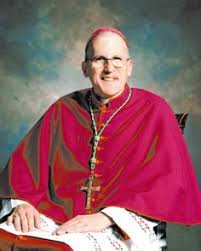
Rose vestments for sale

I really don’t want to turn this blog into a college campus telephone pole, but this is an attempt at a good deed.

A priest who is in need wrote to say that he wants to sell an "Iberian" style set of rose vestments.

He sent some photos.  They are not the best, but here are a couple.

He has all the pieces, including stole, burse and maniple.

If you are interested, drop me a line and I will forward your e-mail.  He is asking $800.  You can work it out with him.  Put IBERIAN VESTMENTS in the subject line so I don’t delete your mail as junk.

Posted in Mail from priests |
Comments Off on Rose vestments for sale

Return of sparrows and finches

New comers to the feeder.

First, our cardinal is shedding his winter plumage and acquiring his colors again.

There are many pairs of doves.

The birds must be migrating back to the area.  I have not seen the House Finch since the fall.

And the sparrows are returning as well.

They are literally draining every feeder I have in a single day now.

I suspect they are both recovering from migration and also getting ready for nesting.

Yesterday I was out to get more feed.  Feel free to help.

This stuff is more than "tuppence a bag"!

Posted in My View |
13 Comments

WDTPRS: Thursday 1st Week of Lent – Post communionem (2002MR)

We continue our project of looking at the Post communions of Lent:

Thursday – 1st Week of Lent

Keep in mind that we are also in the context of Ember Week, though that is not a Novus Ordo phenomenon.

This prayer was in the 1962 Missale Romanum on Saturday of Ember Week in Advent.  It is an ancient prayer, as you might have guessed.  It is in the Liber Sacramentorum Romanae Ecclesiae and various manuscripts, such as the Liber Sac. Augustodunensis, Engolismensis and Gellonensis.

POST COMMUNIONEM:
Quaesumus, Domine, Deus noster,
ut sacrosancta mysteria,
quae pro reparationis nostrae munimine contulisti,
et praesens nobis remedium esse facias et futurum.

A munimen is a "a defence, fortification, rampart, enclosure".   My mind is playing with a connect between the words munimen and reparatio, "a restoration, renewal", and English "rampart" and its connection to re-parare through M. Fr. remparar.

LITERAL VERSION:
We beseech You, O Lord, our God,
that the most holy sacramental mysteries
which You conferred as the rampart of our renewal,
you will cause to both a present and a future remedy
.

Daily Missal (Baronius Press, 2007):
We beseech Thee, O Lord, our God,
that the most holy Mysteries,
which Thou hast given us for a safeguard of our renewal,
may become for our remedy both now and for time to come.

When this prayer is pronounced by the priest, the Blessed Sacrament is still within those who have communicated. 

This moment of Communion is about the closest one can get to future participation in the joys of heaven to come.  The Eucharist is sometimes called a pignus, a "down payment, pledge" of what God has promised.

Reception of Holy Communion has both immediate and future consequences.

Posted in LENT, WDTPRS |
Comments Off on WDTPRS: Thursday 1st Week of Lent – Post communionem (2002MR)

New comer

A new arrival at the feeder.

A bit of a surprise, given how close the feeder is to the house.

This morning I went out to fill the feeder… the critters can drain the feeder in a day … I heard Mr. Cardinal out singing as brightly as his still somewhat wintry plumage.

A closer look, against the snow outside the window.

When he comes close, his head feathers are normally in their alert state!

I must go to buy bird feed later this afternoon. 

UPDATE:

A reader has sent a fine shot of this jaunty little fellow:

Posted in My View |
22 Comments

Bp. Martino: “My job as a Bishop is to promulgate the authentic teaching of the Catholic Church”

PREVIEW:

I also offer this postscript to those who criticize me for taking public stances that may not be popular or “politically correct,” or may not agree with their own personal notions of what “progressive” Catholic doctrine should be. My job as a Bishop is to promulgate the authentic teaching of the Catholic Church to all the faithful. I will continue to do so.

His Excellency Most Reverend Joseph Martino, of the Diocese of Scranton will soon need his very own category on WDTPRS.  (See here and here and here.)

On the website of the Diocese of Scranton, the indomitable Bishop has caused to be published the following.

My emphases and comments.

Bishop Issues Reflection on Teaching of Diversity and Tolerance

Bishop Joseph F. Martino has issued a reflection on how the teaching of diversity and tolerance relates to the teaching of the Catholic Church. The reflection follows:

A substantial amount of media coverage and public commentary ensued after I asked Misericordia University to seriously consider discontinuing its Diversity Institute. Students and others in the community related how this Institute has furthered the advancement of tolerance, understanding and harmony between people of different races and cultures.

These are all worthy goals. All people of good will should work toward these ends.

Misericordia University, as a Catholic institution, has a responsibility ["responsibility"?  In a Catholic school?  What’s that?] for helping the community achieve these goals. However, precisely because it is a Catholic institution, it also has a responsibility to transmit Catholic teaching to its students in ways that are not ambiguous or confusing.

As I said in my previous statement, students should learn respect for all races and cultures, but viewpoints that are in direct opposition to Catholic teaching should not be presented under the guise of “diversity.” [THREE CHEERS!]  Doing so within a formal structure sanctioned by the institution gives the impression that these viewpoints are acceptable, or that all morality is relative.

As Catholics, we must distinguish between authentic tolerance and an “anything goes” mindset. For example, would the Diversity Institute be justified in hosting a speaker who believes the Holocaust is a myth[Oh my!  Touché!]  Or one who believes slavery is okay because certain people are inferior? Or one who believes women can be exploited because they are the “weaker sex”? There are people out there who actually believe this nonsense, and they would be perfectly willing to come to the campus to tell you why[well done]

Their views are certainly “diverse,” but does that qualify them to be given a platform in the name of tolerance? Or should they be allowed to make a presentation without any retort from the Catholic perspective?

As Catholics, we believe there is an objective, moral Truth – given to us by Jesus Christ. This Truth is timeless, and it cannot be altered by the shifting tides of popular culture. If our faith and our actions are not rooted in this Truth, we risk contributing to the “dictatorship of relativism” cited by then Cardinal Joseph Ratzinger in a homily given just prior to his election as Pope Benedict XVI. He said:

“To have a clear faith, according to the creed of the Church, is often labeled as fundamentalism. While relativism, that is, allowing oneself to be carried about with every wind of ‘doctrine,’ seems to be the attitude that is fashionable. A dictatorship of relativism is being constituted that recognizes nothing as absolute and which only leaves the ‘I’ and its whims as the ultimate measure.”

As the Bishop, it is not only my right, but my obligation to ensure that authentic Catholic teaching is being provided in all Catholic institutions in this Diocese, and that viewpoints in opposition to this teaching are not being presented as acceptable alternatives.

I voiced my “absolute disapproval” of Misericordia’s hosting of Keith Boykin not because of his sexual orientation, but because he is a well known proponent of morality that is disturbingly opposed to Catholic teaching, such as homosexual relations and same sex marriage. Furthermore, no presentation was made to balance Mr. Boykin’s viewpoints with the teaching of the Catholic Church.

That is why I asked Misericordia, which asserted that it “is committed deeply to its Catholic mission,” to convey how it teaches Catholic morality regarding sexuality and homosexuality, and to produce concrete evidence[excellent] It is regrettable that the University chose to respond with a brief statement without any such evidence. [When this bishop asks for something, he really means it.]

Nevertheless, I continue to urge Misericordia University to fulfill the four essential characteristics of a Catholic institution of higher learning. As I pointed out in briefer form in my initial statement on this matter, these are:

1.      A Christian inspiration not only of individuals but of the university community
    as such;

2.      A continuing reflection in the light of the Catholic faith upon the growing
    treasury of human knowledge, to which it seeks to contribute by its own
    research;

3.      Fidelity to the Christian message as it comes to us through the Church;

4.      An institutional commitment to the service of the people of God and of the
    human family in their pilgrimage to the transcendent goal which gives
    meaning to life.

(Pope John Paul II, Apostolic Constitution on Catholic Universities)  [Can it be that a Catholic bishop in the USA is paying attention to Ex corde Ecclesiae?]

I also offer this postscript to those who criticize me for taking public stances that may not be popular or “politically correct,” or may not agree with their own personal notions of what “progressive” Catholic doctrine should be. My job as a Bishop is to promulgate the authentic teaching of the Catholic Church to all the faithful. I will continue to do so.


GOD LOVE HIM!

It is a commonplace that, in parenting, you must behave consistently in disciplining your children.  They must know precisely what consequences to expect in the wake of their misbehavior about which they have been previously warned.  Correction cannot be variable.  

Bishop Martino is establishing that he will be consistent.

He is being consistent in different ways.

First, there will be no surprise that correction will come when you do something that is not in harmony with the Church’s teaching.

Also, he is consistent with his divine mandate as a bishop of Holy Catholic Church.

Posted in Classic Posts, Just Too Cool |
73 Comments

QUAERITUR: Communion if I missed the Gospel because of 3 yr old

From a reader:

Hi Father, here is my question:  my wife and I regularly attend the TLM.  During Mass we share looking after our rather energetic 3-year old. This often leads one of us to be outside of the church (in the entrance way for example) with our little boy during the Mass, and it is not unusual for one of us to miss the proclamation of the Gospel either in Latin or English or both. 

So, if I do not hear the Gospel can I go to Communion

Is privately reading the Gospel enough if I’ve missed the proclamation?  Are the rules different at the NO as opposed to the TLM?   I have asked two priests about this and have received two different answers.  Thank you.

 
Thank you for being interested and desiring to do the correct thing.

I cannot imagine why the "rules", if there were hard and fast rules, should be different for the TLM or the Novus Ordo.  I suppose the clearly great rigor, the more demanding nature of the TLM suggests a greater or deeper response of participation from the faithful.

But there are no hard and fast rules about this matter.  There has been discussion forever about "how much of Mass is enough".  Let’s not get too far into that.

The fact is, in your case as you describe it, you are present there at Mass at least in your moral intention.  You are trying to be there. You are indeed there but for that little necessary interlude. 

If you step out with your squeaker for a few minutes, for the love of God, your neighbor and liturgical decorum, then you are not "leaving Mass".   You would still be morally present, unless I suppose you decided to head across the street to the local pub for a pint and a cigarette, junior being an excuse to leave Mass… if you get my drift.

Another point: it is possible to be physically present at Mass and have your mind a thousand miles away.  People can even be seen to be going through the motions or even singing and yet internally they are hardly participating at Holy Mass.  Rather, they are thinking about getting their car washed or wondering about the baseball game …. which … come to think of it might itself be holy and liturgical.  But I digress.

Taking the howler out will help others participate at Holy Mass.

I note that you also mention going back and reading the Gospel on your own.  Good.

So… my answer is YES…  in the circumstances you offered here you may go to Communion if you took the little darling out to the vestibule and missed the Gospel.

Posted in ASK FATHER Question Box |
37 Comments

WDTPRS: Monday 1st Week of Lent – Post communionem (2002MR)

We continue our project of looking at the Post communions of Lent:

Monday 1st Week of Lent

This prayer is ancient, found in the Veronese Sacramentary in the month of July.   It is in the Liber sacramentorum Engolismensis and Gellonensis, variations of the Gelasian.

POST COMMUNIONEM (2002MR):
Sentiamus, Domine, quaesumus,
tui perceptione sacramenti,
subsidium mentis et corporis,
ut, in utroque salvati,
de caelestis remedii plenitudine gloriemur
.

We have sensing verbs: sentioperceptio.

Perceptio, (from the verb percipio) is basically a “a taking, receiving; a gathering in, collecting.”  It is also, by extension, “perception, comprehension”.   I "perceive" that you "gather" what I am saying.

St. Ambrose in his Commentary on Luke 4, 15 uses this noun with “frugum fructuumque reliquorum… a gathering of the produce of the earth and of the remaining fruits”.  At the time of his Holy Communion in the 1962MR the priest says (now in the 1970MR in a shortened version): "Let not the partaking (perceptio) of Your Body, O Lord Jesus Christ, which I, unworthy, presume to receive turn out to be unto my judgment and condemnation: but by Your goodness, may it become a protection of soul and body (mentis et corporis) and remedy to be received (percipiendam).…”

We had subsidium also in the PC of Ash Wednesday.  The verb subsideo gives us the substantive subsidium originally meaning, “the troops stationed in reserve in the third line of battle (behind the principes), the line of reserve, reserve-ranks, triarii.” By extension it also means “support, assistance, aid, help, protection.”

Glorior is deponent… passive in form and active in meaning.

LITERAL VERSION:
May we sense, O Lord, we beseech You,
by this taking in of the Sacrament,
the support of mind and body,
so that, having been saved in both,
we may vaunt in the fullness of the heavenly remedy.

What pops out for me is that stark in utroque salvati… saved in both body and soul.

There are also a couple prominent currents in the language.

First, there is the medicinal.  The prayer feels like a plea for healing.  We want to be saved by a remedium.

Then there is the military.  The sacramentum has overtones of the military oath taken by soldiers, which comes to be used in Latin to express Greek mysterion.   Subsidium is a line of troops in support of those in the front lines.  We seek protection of mind and body and glory at the end. 

In another sense it could be agricultural/economic, I suppose.  Think of the gathering and fullness notions which save mind and body.  I don’t think anyone hasn’t heard about "subsidies" these days.  But I digress.

Our Lord took our full nature into a bond with His Divinity so that both might be saved.  Our Lenten discipline, our spiritual warfare, isn’t just a physical matter.  It is mental, spiritual, emotional.  We seek to mortify body for the sake of the soul.  We seek to challenge the mind so that the body will follow.  We will be attacked by the Enemy on both fronts.  The battlefields of the Lenten discipline will affect both dimensions, because… as the theology of the body developed in the last decades reminds us, we are out bodies.  We are not angels. 

Wound or heal the one and you affect the other.

Your Lenten project should be well-defined and smart.  Keep a clear eye on what you are doing for Lent.  Remember that mortifications have effects that reach beyond what you immediately sense.

The prayer reminds us also of the role of the sacraments and sacramentals in this battle.
>
Posted in LENT, WDTPRS |
2 Comments

PODCAzT 79: Augustine on your solidarity with Christ; your voicemail

This PODCAzT, the first in a while, is a bit of a blast from the past.  I am going back, on this 1st Sunday of Lent, to the topic of the very first PODCAzT I made.

It seems appropriate.

I am learning to use new hardware, a wonderful new microphone sent by a reader from the amazon wishlist, together with new software on a different computer!  Therefore, I had to find all new settings and balances and… well… everything.

Also, I have started to think through what I really want to do with these PODCAzTs… Where do I want them to go?   I would like to build them in such a way that they could be used by others more easily.

Anyway, day I pick up the Liturgy of the Hours and drill into St. Augustine’s take on a couple verses of Ps. 61… 60 in Augustine’s day.

Then I offer some of your messages left on my skype voicemail.

Some of the sound levels might not be quite on target here.  Again, I am re-learning everything!

Still, in realistic humility about my own capabilities and in appreciation for so many of you who have been asking me for more PODCAzTs….. here you are!

Finally, I think the iTunes feed is working.

Posted in Classic Posts, Linking Back, Patristiblogging, PODCAzT | Tagged , , , ,
12 Comments

The fruits of standing still

I just had a primordial experience of a deep Northern winter night.

Coming back from a walk… out and around… I turned to look the large yellow crescent of the Moon was about to go down beneath the line of trees in the West, where the old forest rises up.

The snow from the recent blizzard was bright, drifted sharply here and blown to flatten ripples there.

I was standing very still and simply gazing at the moon. 

After a minute or two my eyes had adjusted.

The stars were very bright in the clear sky. 

There was some indirect light from around one of the outlying buildings.

I caught a dark movement.

An enormous winged apparition swelled, beating and bobbing larger and larger.

It was absolutely silent.

It came swiftly and straight on.

At about some dozen feet before me the now silvery shadowy mass wheeled and soared off into the black. 

It was the largest owl I have ever seen.

I believe this night I saw Strix nebulosa… a Great Gray Owl.

I have heard a very large owl in the forest to the West.  When it put on the brakes and wheeled the wingspan was a good 5 feet wide.  Owls have perforated feathers so when they beat their wings they remain silent.

The startling cold and velvet depth of the sky.   The silence and the setting Moon.   The glow of the snow drifts and indirect light.  The black shifting silver apparition.. larger … larger and then swooping away against the sky.

The darker black trees by then had drawn their claws across the upturned yellow crescent, and so I turned back for the house.

The fruits of standing still.

Posted in My View |
39 Comments

QUAERITUR: a priest functioning as a deacon

From a reader:

In the extraordinary form of the Latin Rite, a priest may vest and serve as a deacon at the celebration of the Mass.

Is there general or particular legislation to prevent a priest from vesting and serving as deacon at Mass in the Novus Ordo?

If there is no legislation to impede a priest from functioning as a deacon in the Novus Ordo, why isn’t it done? If you please, I’m hoping for as detailed a response as may be practical. Perhaps your readers can help.

It is true that priests always did fill the functions of deacon and subdeacon at Solemn Masses in the older, traditional Roman Mass.

That fell into desuetude with the Novus Ordo for a couple reasons.  First, the idea of the "solemn Mass" became fuzzy and then dropped off in to a amorphous "liturgy". 

Also, there was a desire to underscore the proper ministries of the different orders of Holy Orders, of priest and of deacon.  The result was that priests were not to do anything deacons would do, were deacons present.

I agree with that, actually.  If deacons are present, let them do the job which deacons do!   Since there are no more subdeacons, except in name, let deacons take those roles also.

The other factor in this was the great pressure… weird near obsession… that priests had to concelebrate all the time.  Since a concelebrating priest had to behave as a priest at Mass, he couldn’t do anything a deacon might do, including vest in a dalmatic, etc.

If memory serves, I think there is in some document somewhere a recommendation, but not a prohibition, that priests not take deacon’s roles.  I can’t remember where that might be.  Perhaps a reader could find it.

In the context of a Novus Ordo Vigil of Easter, I have put on a dalmatic to sing the Exsultet.  It just made sense.  It is the great "diaconal" moment and I am still a deacon, though also a priest.  I didn’t concelebrate in a dalmatic, which would be jarring and wrong. 

This is one of those areas in which, I think, we could find a strong gravitational pull from the older, Extraordinary Form on the newer, Ordinary Form.  

The paradigm for Holy Mass is not the "low Mass".  This is a common mistake.  The template is the most solemn form: the bishop’s solemn celebration.  Other Masses of decreasing solemnity imitate the "higher" more solemn forms to the extent they can within the bonds of common sense and resources.

It seems to me that if in a "Novus Ordo" parish there are more than one Masses on a great feast, and there are clergy available, priests and deacons, then they ought to be vested to play different roles.

Let us abandon the obsession of concelebration and underscore the solemnity of a Mass with differentiated roles.  A priest is still also a deacon, after all.

Posted in ASK FATHER Question Box, Mail from priests |
71 Comments