QUAERITUR: Posture when tabernacle door is opened.

From a reader:

I have searched everywhere and I cannot find norms for what are the appropriate postures of the faithful when the tabernacle door is opened in Church, outside of Mass, for a communion call, etc… in a Church.

On one hand I have seen places where everyone goes about their business, no matter what proximity you are to the tabernacle. Only the minister offers revererence.

I have seen other places (rare) where the opening of the tabernacle door for a communion call was like exposition of the Eucharist, everyone in the Church was expected to stop and kneel until the Minister closed the door.

A third interpretion indicated special reverence was due only those in the Sanctuary at the time knelt, but all others continued moving in the Church, following the normal reverences designated for when the crossed in front of the tabernacle.

Where might I find the correct norms for this? I guess the last interp. seems most balanced since the mere attendance to sick is not a public act of worship, and are we to presume everytime the tabernacle doors are opened we in effect are engaged in an exposition of the Blessed Sacrament?

I don’t know if this has ever been described in the Church’s liturgical law.  However, I am pretty sure that the perennial practice is that when the door of the tabernacle is opened, people should stop what they are doing and kneel.

Consider the reverential awe Moses had for the God in the burning bush and glimpse through the cleft in the rock.  Consider the reverence shown the Ark of the Covenant and the Temple.  Consider Peter kneeling before the Lord and saying that he was just a sinner.  Consider Whom we have reserved in our tabernacles.

Yah… when the door is opened, get down on your knees, people!

Posted in "How To..." - Practical Notes, ASK FATHER Question Box, Liturgy Science Theatre 3000, Our Catholic Identity | Tagged ,
15 Comments

Diocesan official says “I believe that blogging as currently manifested should be made a serious criminal offence”

Diocesan official says "I believe that blogging as currently manifested should be made a serious criminal offence"My good friend Fr. Tim Finigan, His Hermeneuticalness, told me a puzzling tale.

Once upon a time, a man learned that the Holy See has stepped up its concern about the rise of Satanism and has stressed that all dioceses should have an appointed exorcist.  The man, whose interest was peaked, sent an email note to all the dioceses far and wide across the land actually having an email contact address – not all did, it seems – asking whether or not those dioceses had appointed exorcists.  Of the 21 dioceses he querried, 2 replied.  Of those 2 one refused to answer.   And it is the message sent with that refusal which is the object of my puzzlement.

Here now are some of the details.

The person who did the writing with the question is Richard Collins who has the blog Linen on the Hedgerow.

The diocesan official who wrote with a refusal to Mr. Collins is Fr Derek Turnham of Stokesley, North Yorkshire, which is the Diocese of Middlesbrough.  Fr. Turnham is a communications officer for the diocese.

This is what Fr. Turnham wrote to Mr. Collins:

Dear Richard

Thank you very much for kindly responding with the information about your research.

I am afraid that for personal ethical reasons I am not prepared to co-operate – I believe that blogging as currently manifested should be made a serious criminal office because of the significantly negative comments that are so often made about people who are trying to do their best are so destructive to the good of society.

I noticed that the website of Fr. Turnham’s diocese, Middlesbrough, is actually in a blog format.  CAFOD is the largest word in their tag cloud.

Okay.  I think we can all stipulate that some people using the Catholic blogosphere, for whatever reason – excess of zeal, perhaps, old scars, mischievousness, Asperger’s syndrome, rarely malice – write things which are better left unwritten.  But in the main the Catholic use of the blogosphere is quite fruitful.  Bloggers have responded well to the Church’s call to use better the new tools of social communication and they are getting better and better as they live and learn.

But Fr. Turnham seems to have some animus for bloggers.  Fr. Turnham, a former Anglican married Catholic priest, has been willing to speak to the BBC.  He wasn’t so reticent with The Tablet back in 1997.  So it is not as if Fr. Turnham doesn’t like to communicate.  Right?  On the other hand, maybe he doesn’t like the fact that blogs sometimes bring to light things people ought to know about.

What it is that Fr. Turnham finds so objectionable about blogs and bloggers that he would send such a hysterical answer to a layman who asked a reasonable question?

Perhaps the answer lies with Fr. Turnham’s desire for attention?

After all, he wrote that obnoxious and rather benighted response about blogging to a blogger.  Fr. Turnham, who probably knows something about communications – given that he is an official handing these matters for his diocese – must have known that his rude answer would be disseminated in the blogosphere.  Pretty obvious, right?

I can only conclude that Fr. Turnham wanted some attention.

And now he has some!

Posted in Biased Media Coverage, Throwing a Nutty | Tagged , ,
29 Comments

“Pro multis” in the the Misal Romano, Tercera Edición for the USA

From the September newsletter of the USCCB’s Committee on Divine Worship comes this blurb:

Use of Ustedes and the Spanish Translation of Pro Multis

In 2008, the USCCB petitioned the Congregation for Divine Worship and the Discipline of the Sacraments for permission to use “ustedes” and the corresponding verb constructions in place of “vosotros” for the Order of Mass, including the words of consecration of the bread and wine.  At that time, the USCCB also petitioned for the use of “por muchos” as the newly-approved translation of pro multis, to replace the wording “por todos los hombres.”  The Congregation granted recognitio for both of these changes in January 2009, but also stated that they would take effect only with the Misal Romano, Tercera Edición.  Since the USCCB has not yet approved a new Spanish translation of the Roman Missal, the official words of consecration in Spanish in the United States remain as in the current edition of the Misal Romano.

Posted in WDTPRS | Tagged ,
10 Comments

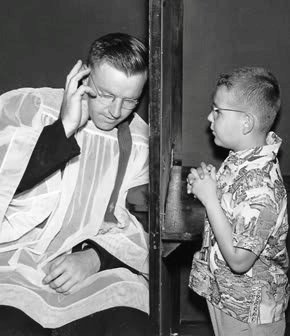
A note to confessors about confessions and keeping your voices QUIET

A note to confessors about confessions and keeping your voices QUIETI have had some encouraging email lately about people returning to the Sacrament of Penance after a long period.  This sort of news makes continuing this blog worth the labor.

Also, some people send concerns about the way the sacrament is celebrated where they are.  One concern I received today bears passing along.  One reader was concerned that perhaps the priest hearing confessions was in danger of violating the Seal of Confession by speaking too loudly and making it possible, inadvertantly of course, for people outside to hear what he, the priest, was saying.  This could indicate to people outside what sort of thing the penitent confessed.  Think about it: “Serial adultery is a serious problem. For your penance….”

Not good.

Fathers, keep your voices down.

Also, while being sensitive to people who are hard of hearing I will often ask penitents to lower their voices.

That said, Penitents, keep your voices down.

Confessionals are not always sound-proofed.

Finally, if you overhear someone’s confession of the confessor’s counsel, you are obliged to keep it secret.  Do not be talking about what you hear.  Ehvvvurrrr.

Posted in "How To..." - Practical Notes, Liturgy Science Theatre 3000, Our Catholic Identity | Tagged , ,
30 Comments

An SSPX communique about their 7 Oct meeting

From the DICI site of the SSPX comes this:

On October 7, 2011, a meeting of all those in charge of the Society of St Pius X was held in Albano, Italy, during which the Superior General, H. E. Bishop Bernard Fellay, presented the content of the Doctrinal Preamble, handed over to him by Cardinal William Levada, Prefect of the Congregation of the Doctrine of the Faith, at the Vatican, during last September 14 meeting.

During this day, the twenty-eight persons in charge of the Society of St Pius X present at the meeting – seminary rectors, district superiors from all over the world – manifested a profound unity in their will to maintain the Faith in its integrity and its fullness, faithful to the lesson which Archbishop Marcel Lefebvre left them, according to St Paul’s “Tradidi quod et accepi – I have handed over what I myself have received” (I Cor 15:3).

Following this work meeting, the study of the Doctrinal Preamble – of which the content still remains confidential – will be pursued and further analysed at the level of the General Counsel of the Society of St Pius X, by the Superior General and his two Assistants, Frs. Niklaus Pfluger and Alain Nely, enabling them to present an answer to the Roman proposals in a reasonable time.
Albano, October 7, 2011

You decide.

Posted in SESSIUNCULA | Tagged ,
34 Comments

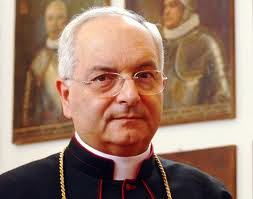
Card. Piacenza to seminarians:”Your will probably be the first generation that will correctly interpret the Second Vatican Council”

Card. Piacenza to seminarians:"Your will probably be the first generation that will correctly interpret the Second Vatican Council"On 4 October the Prefect of the Congregation for Clergy, His Eminence Mauro Card. Piacenza (I have liked this guy for a long time) gave a talk to seminarians in Los Angeles.

The whole text is on the site of the Congregation (which is not the same as the vatican.va site!).

Among the many good comments he made – in Italian, not English – was this:

[…]

You will probably be the first generation that will correctly interpret the Second Vatican Council, not according to the “spirit” of the Council, which has brought so much disorientation to the Church, but according to what the conciliar event really said in its texts to the Church and to the world.

A Vatican II different from that which produced the texts we have in our possession today does not exist! It is in those texts that we find the will of God for his Church and is against these that it must be measured, in company with two thousand years of Tradition and Christian life.

Renewal is always necessary for the Church, because the conversion of her members, poor sinners, is always necessary!  But there cannot be, nor could there be, a pre-Conciliar Church and a post-Conciliar Church! If this could be so, the second one – ours – would be historically and theologically illegitimate!

There is one Church of Christ, of which you are part, which goes from forth Our Lord to the Apostles, from the Blessed Virgin Mary to the Fathers and the Doctors of the Church, from the Middle Ages to the Renaissance, from Romanesque to Gothic to Baroque, and thus until our days, uninterruptedly, without any interruption of continuity, ever!

And all that because the Church is the Body of Christ, it is the unity of His Person that is given to us, her members!

[…]

WDTPRS kudos to Card. Piacenza!

The whole text in Italian is worth reading, if you can read Italian.  Hopefully an English version will be released soon.

Posted in Brick by Brick, Fr. Z KUDOS, Just Too Cool, New Evangelization, Our Catholic Identity, SESSIUNCULA, The Drill, The future and our choices | Tagged
32 Comments

QUAERITUR: Breaking the Host during the consecration

From a reader:

Father – Is it OK for a priest to “break the bread” during the Eucharistic Prayer, when he says “On the night He was betrayed, …Jesus broke the bread…” The priest in question makes an audible snap right there, and it’s shocking. Should I be shocked?? I think this should happen during the Agnus Dei, but I’m not a priest.

No. It is not okay. There is not rubric during the consecration that directs the priest to do this. Furthermore, there is a precise moment in the Mass called the “fraction rite”, during which the priest is to break the Host. You don’t have to be a priest to know when the right moment for the fraction rite is. All you need to be is: able to read.
Some priests think, wrongly, they can make the gestures and words of Mass “more meaningful”. However, by acting our the words at that moment they are doing something rather shallow. They are also violating the rubrics on their own authority at a most important moment, and they are causing confusion.

No. It is not okay.

Should you be shocked? Well, that is something I can’t answer for you. It is pretty hard to shock me, after all these years. I think most people in the pews who are even partially aware of liturgical decorum are rather battle scarred by now and probably will not be shocked as such antics.


UPDATE:

As per a comment below:

Redemptionis Sacramentum says:

[55.] In some places there has existed an abuse by which the Priest breaks the host at the time of the consecration in the Holy Mass. This abuse is contrary to the tradition of the Church. It is reprobated and is to be corrected with haste.

In the Church’s legal language to “reprobate” means to abolish or put an end to a practice in such a way that no one can claim that they can continued to do what they are doing because of long-standing custom. In other words, it really intends to put an end to something completely and for good.

That is how the Church views this host-breaking thing during the consecration.

Posted in "How To..." - Practical Notes, ASK FATHER Question Box, Liturgy Science Theatre 3000 | Tagged
23 Comments

What’s in a “neame”?

A word I don’t know. I am told it is a family name.

20111006-233750.jpg

Posted in On the road |
11 Comments

“Your continuous plugs for going to confession finally wore me down.”

From a reader:

I read your blog everyday, sometimes twice (!), and your continuous plugs for going to confession finally wore me down. I went to confession for the first time in four years several weeks ago, and I returned to the confessional this past weekend. I am fortunate to have found a confessor who doesn’t monkey around with the words of absolution, and for this I am grateful.

I fell into the rut of feeling like I would simply fall back into
patterns of sin. However, what I have realized with frequent
confession is that I get the strength I need to not fall into patterns
of sin. Being able to receive communion is also a great source of
comfort, nourishment, and strength.

Thanks for your good work.

My work here is done!

Posted in "How To..." - Practical Notes, Brick by Brick, Our Catholic Identity | Tagged , ,
6 Comments

MN Catholic Conference: Catholic leaders will not be silenced (STrib editorial)

I was alerted to this on the site of the Minneapolis STrib.  This is from the Minnesota Catholic Conference and it is worth your attention:

Catholic leaders will not be silenced
Article by: JASON ADKINS Updated: October 4, 2011 – 8:35 PM

It is not surprising to see the Star Tribune continue to beat the drum in opposition to the marriage protection amendment that will appear on the November 2012 ballot (“On gay marriage, state is out of step,” Oct. 1).

What is troubling is the paper’s attack on the Catholic Church’s participation in the public debate — an attack that should concern all Minnesotans as out of step with this country’s most cherished traditions of free speech and religious liberty.

The Star Tribune sees in the church the specter of a looming theocracy, but this could not be further from reality. The church only proposes; she imposes nothing.

Legislators and the public are free to accept or reject her witness, and Catholics who participate in the public square are fully conscious that they must make arguments that are persuasive to people of faith and those outside religious communities.

So why are some eager to silence the church’s voice?

The church’s public witness in helping to shape a public order that is just, protects authentic rights, serves the common good and promotes human flourishing is not in any way different from what the Rev. Martin Luther King Jr. did when he, a Baptist minister and theologian, fought for just laws.

His civil rights advocacy was grounded in biblical conviction, the natural law, and the Declaration of Independence, much like Catholic advocacy today. In his words, “a just law is a man-made code that squares with the moral law or the law of God.”

Would the Star Tribune criticize Dr. King for imposing his religious views on others?

To be clear: There is such a thing as a healthy secularism that guides the respective roles of church and state.

But what animates the Star Tribune and other purveyors of a false secularism is a politically correct rewriting of the First Amendment, in which the newfangled concept of “freedom of worship” is substituted in place of “religious freedom” — a move that seeks to “protect the public” by enclosing religious people and their evangelical witness within their own walls.

Our state and our nation cannot afford this naked public square. Do we really want a society where Catholic schools, Catholic hospitals, and Catholic charities serve only Catholics?

Do we really want to marginalize the church’s voice of conscience, a voice that has historically served as the most powerful voice for human rights in our community and around the world?

Do we understand that the secularist attack on the church will have consequences for all religious communities, not just Catholics?

The diktat of the ruling mindset will always seek to silence those such as Dr. King who offer a public moral witness in defense of truth.

The church, however, will not and cannot remain silent in the public square, and especially not now as the bedrock social institution of marriage is under attack in law and in the culture.

Over the next 13 months — and indeed, well into the future — the church and her friends, religious and secular, will seek to share with Catholics and all Minnesotans why marriage between a man and woman plays an indispensable role in the well-being of children and society.

We will discuss what marriage is, why it is important, and what the significant consequences will be, especially for religious freedom, if it is redefined.

We will also work diligently to correct the empty slogans, mistruths, and distortions purveyed by those who claim that preserving marriage denies people rights or constitutes discrimination.

Fallacies are still fallacies, even when they become fads.

This is not a debate the church has chosen, nor is it an intramural conversation about church doctrine. The church is not telling anyone who they can and cannot love. After all, we are commanded to love everybody.

But love must be ordered to truth, and thus we are compelled to lend our voice in defense of the truth that marriage between a man and a woman is a basic good and an ideal that should be upheld in law.

Again, people can agree or disagree with the church’s message, and they may do so vigorously.

But the public should be aware that those who seek to both redefine marriage and silence those who object are the ones imposing a truly intolerant new orthodoxy: an illiberal dictatorship of relativism that is contrary to our Constitution and venerated traditions of civil discourse.

* * *

Jason Adkins is executive director of the Minnesota Catholic Conference, the public policy arm of the Catholic church in Minnesota.

WDTPRS kudos to Jason Adkins.
Posted in Biased Media Coverage, New Evangelization, Our Catholic Identity, The Drill, The future and our choices, The Last Acceptable Prejudice | Tagged , , , , , ,
12 Comments