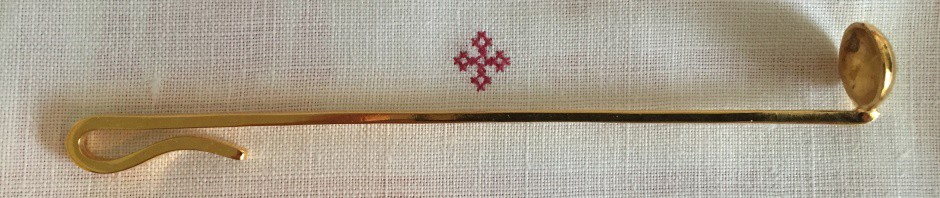
QUAERITUR: Help! I don’t know if I was absolved of helping with an abortion.

From a reader:

Father, back in a “former life” I committed the grave sin of assisting a young lady I knew in grad school to commit an abortion. I regretted it from the start and within a year I had gone to confession to confess that heinous sin.

As I recall (this was almost 20 years ago), at the time I knew it was an “auto-excommunicable” offense so I asked Father what was involved in receiving absolution. I recall him saying that his absolution was sufficient.

Since then I have become much more aware of laxity among clergy, but at the time I was not. So now I question whether the priest really had the authority to absolve me of that sin and whether I carry it to this day.

Should I mention this to my current confessor? Am I being scrupulous? Should I abstain from receiving the Lord in the Eucharist?

Some canonists think that the whole issue of latae sententiae penalties should be rethought.  This is one of those situations which suggest that they may be right.  These penalties can leave people with doubts about their status.  I understand that there is a revision of Book VI currently underway.  The Eastern Code doesn’t have latae sententiae penalties, by the way.

The Ordo Penitentiae states,

“The form of absolution is not to be changed when a priest, in keeping with the provision of law, absolves a properly disposed penitent within the sacramental forum from a censure latae sententiae. It is enough that the confessor intend to absolve also from the censures.”

The confessor may use, but is not required to use, the formula for lifting a censure which is used in the external forum:

“By the power granted to me, I absolve you from the bond of excommunication (or suspension or interdict). In the name of the Father, and of the Son + and of the Holy Spirit.”

So, you were absolved and you are not under the penalty of excommunication. There is no need to mention it again, unless you decide to make a general confession, or unless you are trying to fill a confessor/spiritual director in on your past history.

Posted in SESSIUNCULA | Tagged , , ,
22 Comments

7 October: prayers as SSPX leadership considers what the Holy See has offered

Several people who receive email from the SSPX have received this message and have in turn forwarded it to me.  I share it with you.

“Dear Brothers,
On October 7, feast of our Lady of the Most Holy Rosary, victorious at
Lepanto, an important meeting of the Society of St Pius X will take
place in Albano (Rome) about some potential agreement with the Vatican or to at least evaluate the current situation. We would like to propose that on that day you say a full 15 decade Rosary or make the Way of the Cross… or both.”

I think this is a good intention.

May I recommend it to the readership?

Posted in "How To..." - Practical Notes, Brick by Brick, Our Catholic Identity, Pope of Christian Unity, The future and our choices | Tagged ,
30 Comments

USCCB’s Novena of 9 Fridays for the implementation of the new, corrected translation

I have learned that the USCBB has issued a text of a Novena for a Fuller Participation in the Sacrament of the Eucharist for the next nine Fridays, beginning Sept. 30, to help Catholics prepare for the new translation.

DAY/FRIDAY #2 is coming up 7 October.

There are readings and reflections and prayers.  They can be lead by lay people, apparently.

  • Day One, is dedicated to the intention “That priests will celebrate the Eucharist worthily“. [Do I hear an “Amen!”?]
  • Day Two: That all will celebrate the Eucharist with wholehearted trust in God.
  • Day Three: That parents will help lead their children to more conscious and active participation in the Eucharist.
  • Day Four: That our participation in the Eucharistic Liturgy will lead us to greater care for all members of the Body of Christ.
  • Day Five: That those in consecrated life will keep the Eucharist at the center of their lives.
  • Day Six: That the Eucharistic Liturgy will be a source of strength and hope for all the faithful.
  • Day Seven: That all Christians will grow in unity so as to one day share the one table of the Lord.
  • Day Eight: That all the faithful will proclaim the death and resurrection of the Lord through their words and deeds.
  • Day Nine: That all those who have died in faith may celebrate at the wedding feast of the Lamb.

Have a look, have a think, and then discuss!

Note that this is a NOVENA… after the nine day period from the Ascension of the Lord to the Descent of the Holy Spirit at Pentecost.

Since the same USCCB shortened that nine day liturgical period by moving Ascension Thursday to Sunday, feel free to cut a couple weeks off of their new novena.  Just omit the first two Fridays.  Same impact, right?

o{];¬)

Posted in Lighter fare | Tagged ,
7 Comments

An October observation: “If you get lost…”

October is a month dedicated in a special way to attention to one of our greatest Catholic devotions which is one of our greatest spiritual tools, the Most Holy Rosary of the Blessed Virgin Mary.

On that note, in a CNA story we read:

Cardinal Angelo Amato told attendees at a major Marian conference in Rome that “if you get lost, take the hand of Mary and she will lead you to Jesus.”

The Prefect of the Congregation for the Causes of Saints was addressing the 13th International Mariological Symposium, which concludes Oct. 7.

“For conversion to Christ you must go to the Virgin Mary so that she leads us back to Him,” he told the delegates, adding that Mary leads us to “drink from the cool waters of Jesus Christ.”

[…]

Posted in "How To..." - Practical Notes, Our Catholic Identity | Tagged , ,
5 Comments

A great anecdote

My friend the great p.p. of Blackfen, about to celebrate the parish’s patronal feast, His Hermeneuticalness the mighty Fr. Finigan, has a great anecdote about the late and lamented Michael Davies.  Be sure to read Fr. Finigan’s whole entry, which has all sorts of great anecdotes:

I remember an experiment that Michael used to run with his class of 11 year old juniors. At the end of term, he would leave several piles of holy cards on his desk and simply tell the children that they could take whichever ones they wanted. Some of the cards had traditional devotional pictures of the Sacred Heart, the Crucifixion, or Our Lady; others (in equal numbers) were the sort that had come into vogue in the late 1960s with trees, flowers or snowscapes overlaid with a meaningful verse from scripture or some other source. He would chuckle and tell us that the children took most of the traditional ones but left the modern ones behind.

Ex ore infantium.

Posted in Classic Posts, Mail from priests, SUMMORUM PONTIFICUM | Tagged ,
4 Comments

Gralloching a priest at a wedding reception

From Creative Minority Report with my emphases and comments:

A Priest Lost In Translation
by Pat Archbold Tuesday, October 04, 2011 8:36 PM Comments

What could possibly make a priest so angry?

I went to a wedding in New Jersey last week and I ended up sitting at the same table as the priest who presided at the wedding.  I could tell from some of Father’s, ahem, liturgical stylings, that this priest and I wouldn’t see eye to eye on many issues. Since I was there to wish the happy couple well and to have a little fun, I determined not to engage Father on anything more meaningful than his preference for Dewars over Johnny Walker Red.

I forgot to send my wife the memo.

Half way through reception, my wife innocently decided to make conversation with Father.

“Father, are you ready for the new translation?”

Father turned toward my wife and let let loose a loud and theatrical harrumph worthy of a Mel Brooks movie.  Then, with his diaphragm fully engaged, he bellowed out his discourteous response.

“Oh, whooooooooo caaarrrees?” [What a scrub, as Jack Aubrey would say.  You just don’t do that.]

Before reading what comes next, you need to understand that this man was just very discourteous to my wife in order to make a point about how much he disapproved of the change.  And I had my drink on.  And like I said, he was discourteous to my wife, drink or no drink.

My wife looked at Father and then at me with stunned eyes that said “What did I say?”

At this point my eyes said something else entirely.  I raised my hand.

“I care Father. Don’t you think that as a servant of Holy Mother the Church and a pastor, you should care too?” [Do I hear an “Amen!”?]

“No, I don’t care,” he said. “I took the class because I had to.  Fine.  I did.  But I think it is silly and I don’t care.” [It never ceases to leave me perplexed that some priests don’t take liturgical worship seriously.]

“You don’t think it is important to have a proper translation Father?”

He said, “A translation of what?”

“The mass as it is composed in Latin, Father.”

“Aha!!  See!  The mass is composed in Aramaic!!  Who cares about Latin?  The mass was in Aramaic!  Why don’t we go back to saying it in Aramaic?  Huh?”

“Ummm.  Father, the mass is composed in Latin not Aramaic.”

“No it’s not.  Its in Aramaic.  Why don’t they just go back to saying it Aramaic?  Huh?”

“Father, are you suggesting that that Novus Ordo mass of 1970 was composed in Aramaic?”

“No.  I am saying that if they are so interested in going back to Latin, why don’t they just go back to Aramaic?”

(You see what’s happening here, right?)

“Father,” says I, “Nobody is talking about going back to the Latin here.  This is the same New Mass in the same language.  English.  This is only a moderately more accurate translation of that same New Mass.  Latin and Aramaic have nothing to do with it.  Why would you be so opposed to slightly different English words for the same mass?”

“Aramaic!”

“Father.  Don’t you believe that the liturgy is a living and breathing thing shaped by each generation that has prayed it?”

“Yes, absolutely!!  Exactly.’

“So the liturgy was a changeable thing for centuries—changed by and for generations?”

“Yes, I do!”

“But now that your generation has its input, no more changes allowed?  Don’t you think that is kinda selfish?”

“Oh, who cares?”

Again, I raised my hand and said “I do.”

My wife’s uncle who listened to this whole exchange then raised his hand and said “Me too!”

This was Friday.  On Sunday my young pastor announced in the bulletin a series of courses to joyously prepare for the new translation.  Moreover, he announced that along with the new translation, that all the music sung from now on at regular Sunday masses will be from Franz Schubert’s mass.  I guess he cares too.

The times, they are a changing.

Posted in Brick by Brick, Liturgy Science Theatre 3000, O'Brian Tags, Our Catholic Identity | Tagged ,
61 Comments

Mass with a special amice

This morning I had the privilege of saying Holy Mass wearing an amice of St. John Vianney.

20111005-100832.jpg

20111005-100910.jpg

Posted in Just Too Cool, On the road | Tagged ,
19 Comments

How long has your parish priest, the pastor, been there?

Over at the UK’s best Catholic weekly, The Catholic Herald, I saw a story about a priest who died.  He had been parish priest, pastor as it is called in the USA, for 34 years.

The pastor of what became my home parish was in place for 33 years.  He accomplished some great things.

He had time to accomplish great things.

In many places assignments given to priests are term limited, sometimes 6 years, sometimes extended to 12.  Is that really long enough to get to know people, the place and undertake important objectives? Also, if the priests are constantly moving, could that undermine the role of the priest in the parish under his charge?

Having term limits can cut both ways.

In any event, may Mgr Thomas Fallon of St Francis of Assisi church, Handsworth in Birmingham rest in peace.

Posted in "How To..." - Practical Notes, The Drill |
66 Comments

Meanwhile, on Fr. Z’s Planet…

From CNA:

Pius X leader gives cool reaction to peace Vatican offering
By David Kerr

Rome, Italy, Oct 4, 2011 / 03:01 pm (CNA/EWTN News).- A senior figure [Fr. Niklaus Pfluger] in the breakaway traditionalist group, the Society of St. Pius X, says it could be “very, very difficult” for the Vatican and the Society to agree on terms for reconciliation.  [Immediately after saying this, on Fr. Z’s alternative universe Planet (read “bearded-Spock-reality”), Fr. Pfluger was taken into the parking lot and beaten with an axe-handle before being handed a one way airplane ticket to Chicago and his assignment as assistant to Fr. Pfleger and was told to keep his mouth shut.]

[…]

Posted in SESSIUNCULA |
56 Comments

How are the Germans and Italians preparing new, corrected translations.

Over at Chiesa, the gentlemanly Sandro Magister has posted about German and Italian bishops and the issue of new, corrected translation of the Missale Romanum.  However, the piece is not by Magister.  It is anonymous… signed “***”, which I think is rather shabby. In any event we should have a look at what there is. With my emphases and comments.

Vatican Diary / Not All Bishops Are of Good Will

The Italians are at the front of the line in disobeying Rome, [When it comes to a liturgical issue, I am not entirely surprised.] with regard to the translation of the words of consecration. The Germans and Austrians are bringing up the rear. And even in the translations of the Our Father and of the Gloria, there is disagreement

by *** [I think people should sign their names.]

VATICAN CITY, October 4, 2011 – At the present time, all of the parishes and churches of the United States are receiving the new English version of the Roman Missal, which will be used starting on the first Sunday of Advent, this November 27.  [1 month, 20 days!]

The variations with respect to the previous version are numerous, and hotly debated. But the change that has prompted the greatest dispute is certainly the one that concerns the words of the consecration of the wine, where it says in the Latin version: “Hic est enim calix sanguinis mei […] qui pro vobis et pro multis effundetur.” The “pro multis” of this formula has generally been translated, in the vernacular translations of the postcouncil, as “for all”: [But not in all European language.  In German and Italian, yes.  Not in French.] a translation that not only does not respect the letter of the original Latin, which in turn is derived from the Gospel texts, but has also generated a subtle but lively theological debate. [I’ve written and posted about this many times here.]

In order to resolve this problem, in October of 2006 the presidents of the episcopal conferences all over the world were sent a letter, under the “guidance” of Benedict XVI, from the congregation for divine worship, headed at the time by Cardinal Francis Arinze. It asked that “pro multis” be translated as “for many.” This was done by the episcopates of Hungary (from “mindenkiért” to “sokakért) and of various countries in Latin America (from “por todos” to “por muchos”). The Spanish episcopate is preparing to do so, and the change has already been made, not without very lively discussions even among the bishops, by the episcopate of the United States (from “for all” to “for many”). As for the episcopates of Germany and Austria, they are showing strong resistance to the change from fur alle” to “fur viele.”  [What the writer is not telling you is that this move of Benedict XVI was more than “guidance”.  Only the Roman Pontiff has the authority to approve translations of sacramental forms (AAS 66 (1974) 98-99).  He directed the CDW to inform all bishops conferences about his will in this matter and the CDW urged the conferences to engage in catechesis. (cf. Protocol Number is 467/05/L).]

As for Italy, the issue was addressed by the bishops during the plenary assembly of the episcopal conference held in Assisi in November of 2010, during the examination of the material of the third Italian edition of the Roman Missal.

On that occasion, the Italian bishops showed tremendous reluctance to introduce “per molti.” During the sessions, in fact, it was insisted that the episcopal conferences of the individual regions were already “unanimous” in choosing the version “per tutti.” [And their suggestion was not shared by the Holy Father, who decided otherwise.] And when the bishops of all of Italy were called to vote on this specific point of the Missal, the result was the following: out of 187 voters, in addition to one blank ballot, there were 171 votes in favor of keeping “per tutti,” 4 for the introduction of the version “per la moltitudine” (taken from “pour la multitude,” used in the French Missal), [I love that “taken from the French Missal.   The Missale Romanum is in Latin.] and just 11 for the “per molti” requested by the Holy See in 2006.

At the same meeting, the Italian bishops also voted in favor of two changes to the Our Father and the Gloria.

For the Our Father, in a two-part vote, the bishops first rejected the idea of keeping the phrase “non ci indurre in tentazione [do not lead us into temptation]”; this phrase, in fact, received only 24 votes out of 84, fewer than the two others that were then voted on: “non abbandonarci alla tentazione [do not abandon us to temptation]” (87 votes) and “non abbandonarci nella tentazione [do not abandon us in temptation]” (62 votes). Of these two, the largest number of votes went to the first, with 111 against 68.

As for the Gloria, out of 187 voters, 151 approved the variation “Gloria a Dio nell’alto dei cieli e pace in terra agli uomini che egli ama [glory to God in the heights of heaven and peace on earth to the men whom he loves,” in the place of the phrase currently in use, “Gloria a Dio nell’alto dei cieli e pace in terra agli uomini di buona volontà [glory to God in the heights of heaven and peace on earth to men of good will,” which obtained 36 votes.  [This is the old problem of the subjective and objective genitive again.]

Regarding these same texts, the bishops of the United States preferred not to touch the Our Father, leaving unaltered the phrase “and lead us not into temptation,” linguistically more faithful to the Latin “et ne nos inducas in tentationem.”

But with regard to the Gloria, they decided to change the words “and peace to his people on earth” to “and on earth peace to people of good will,” also in this case following literally the original Latin, “et in terra pax hominibus bonae voluntatis.”

The bottom line is that in most every in the new translations bishops worked up their texts with the help of ICEL and the Holy See, which has greater authority than conferences of bishops in these matters, adjusted them where they desired.  However the Pope alone gets to approve the translations of sacramental forms, and for obvious reasons.  This Pope knows something about the pro multis question and didn’t merely rely on advice from others.

Posted in Brick by Brick, Our Catholic Identity, The Drill | Tagged , ,
20 Comments























