From NYC


And speaking of Wyoming…

WDTPRS commentator “Lynne at Hasty Brook” joined Penjing when she wrote:
I brewed my first pot of Midnight Vigils Blend from Mystic Monks this morning. Its deep flavor without any bitterness is perfect on this chilly, blustery day!
You are eventually going to have to refresh your supply of coffee!
Mystic Monk Coffee will be shipped to you by the Carmelites in … wait for it… Northern Wyoming. Get it? Wyoming?
Please consider trying their good coffee for the first time or refreshing your supply through my link.
Furthermore, Penjing adds…
“I’m 盆景, and I endorse this coffee!”

From Reuters:
Australia’s Catholic church bans pop songs at funerals
– Fri Sep 10, 2:46 am ET
MELBOURNE (Reuters Life!) – Football club songs and pop or rock music have been banned from funerals in Catholic churches in Australia under new guidelines distributed this week to priests and funeral directors.
A funeral should not be a "celebration" of the deceased’s life, Archbishop of Melbourne Denis Hart said in the rules, but a final sacred farewell. Celebrations of that life should be held at social occasions before or after the funeral, he said.
"The wishes of the deceased, family and friends should be taken into account … but in planning the liturgy, the celebrant should moderate any tendency to turn the funeral into a secular celebration of the life of the deceased," the guidelines state. [Do I hear an "Amen!"?]
"Secular items are never [never] to be sung or played at a Catholic funeral, such as romantic ballads, pop or rock music, political songs, football club songs."
Some funeral directors, however, said the directive was insensitive to relatives’ needs as many grieving families wanted to incorporate multimedia presentations, including photographs and video of the deceased person’s life as well as music. [Funeral directors don’t get to make these decisions. And that sort of thing could be done at the funeral home.]
"Funerals have become a celebration of people’s lives and there aren’t many that don’t include a DVD presentation," John Fowler, the general manager of Le Pine Funerals, told Melbourne’s Herald Sun newspaper.
"It really gives you a sense of the joy that this person has brought to the world." [I hate to say this, but that is not the reason for a funeral.]
Pop songs have become more common at funerals as new technology allows churches and funeral parlors to install sound systems and more people opt for services conducted by celebrants [Yet another reason why we need to get rid of the word "celebrant".] instead of religious ministers.
Centennial Park, a leading provider of cemetery, crematorium and memorial services in Australia, in 2008 compiled a list of the 10 most popular songs at Australian funerals.
The top song was Frank Sinatra’s version of "My Way," [My God… think of the lyrics.] followed by "Wonderful World" by Louis Armstrong, "Time To Say Goodbye" by Andrea Bocelli and Sarah Brightman, and "Unforgettable" by Nat "King" Cole. [My God… nice song, but how shallow have Catholics become about the meaning of life and death if this is the stuff they chose.]
Rounding out the top 10 were "The Wind Beneath My Wings" by Bette Midler, "Amazing Grace," "We’ll Meet Again" by Vera Lynn, "Over the Rainbow" by Judy Garland, "Abide With Me" by Harry Secombe, and "Danny Boy." [Stop. Just. Stop.]
The list of top 10 most popular unusual funeral songs included listed as Queen’s "Another One Bites the Dust," AC/DC’s "Highway to Hell, "Always Look on the Bright Side of Life" by Monty Python, and "Ding Dong the Witch is Dead" from "The Wizard of Oz." [Shoot me now.]
(Reporting by Belinda Goldsmith)
On the site of UCANEWS.com Fr. William Grimm (Tokyo-based publisher of UCA News, former editor-in-chief of “Katorikku Shimbun,” Japan’s Catholic weekly) opines about the new, corrected English translation.
My emphases and comments.
Small word, big problem
Published Date: September 10, 2010
By William Grimm
People who have studied English as a second language tell me that three of the biggest challenges they encounter are pronouns, prepositions and articles.
Articles (a, an, the) are the most difficult. Which one to use or even whether to use one or not causes them anguish. The use or non-use of such a short word can make a huge difference in the meaning of a phrase or sentence.
One example of the problem can be found in the translation of the Mass that Rome has recently declared must be used for celebrations in English. [The writer makes a good point. Rome made this decision. That’s it.]
That is relevant to the Church in Asia because in large parts of the continent, English is often used in worship. In South Asia and other parts of the former British Empire as well as in the Philippines, English remains a living language. [I suspect this "living language" point is important to Grimm, much as it is for Bp. Trautman. In that camp, the translation of Mass should be changing to match language trends. The norms used to correct the translation state that we need a sacred style, which means that it must not be constantly shifting.]
In just about every country of Asia, overseas workers from the Philippines worship in English. English is also the language of the Federation of Asian Bishops’ Conferences, [1] the FABC. [Perhaps they should have Latin. That would solve a lot of problems. Why would it be so hard for people who congregations in which there are so many languages to read the other side of the page.]
The new translation has been criticized on many points. In an attempt to follow as closely as possible a Latin original, the English is stilted, verbose and at times nonsensical because of poor grammar. [I suspect he is simply parroting what he picked up from the other wagons he has been following on the trail.]
The whole process of its development has been marked by secrecy and by spinelessness [?] on the part of most of the world’s English-speaking bishops who acquiesced in the destruction by non-English speakers of generally acclaimed new translations prepared a decade or more ago. [It was not generally acclaimed. First, no one except a few insiders knew about it. Second, Rome didn’t acclaim it. Rome shelved it. Not long after, Rome restructured ICEL.]
Tens of thousands of Catholics have signed a petition asking that the new translation not be imposed until after a period of trial to see if it “works.” Of course, the petition has been ignored by the bishops and curia. [Of course. The decision has been made.]
An ancient principle of theology is “lex orandi, lex credendi.” The way we pray is the way we believe. [Not quite. There is a reciprocal relationship.] If our prayer is not in accord with the faith of the Church, it will lead people away from that faith. [Closer. Yes. And the fact is the older, incorrect ICEL translation has done just that. The corrected translation will slowly provide a corrective to the distortions we have experienced for decades.]
[This is where the write postively goes to the ZOO. Get this…] The worst problem of the new translation is that it will, in fact, bring heresy into the Mass, and all because of an article. [Fr. Grimm say the new, corrected translation is… heretical.]
Currently, the words over the cup during the Eucharistic Prayer speak of the Lord’s blood being spilled “for you and for all.” That translates the idea of the probable Aramaic words of Jesus and the Catholic faith that God’s will is that all be saved. The Latin text reads, “pro multis,” which also implies all-inclusiveness. [First, we don’t know the words in Aramaic spoken by the Lord, or if he used Aramaic. The writer is apparently unaware of how thin Joachim Jeremias’s argument was. Second, if God willed that all be saved, then all will be saved. God has a prescriptive will and a permissive will.]
Ever since the currently-used English translation appeared, some people have objected to its inclusiveness. I have run across those who object precisely because they neither believe nor want God to desire the salvation of all. [I think that isn’t true. I suspect he made that up.]
When the new translation was being prepared, it was decided by someone [by the name of Pope Benedict XVI] that the word “multis” must be rendered literally as either “many” or “the many.” [Only the Roman Pontiff approves the translations of forms of sacraments. How poorly informed is this fellow?]
There are two possibilities because Latin does not have articles.
The secrecy of the whole process precludes knowing who made decisions or what their qualifications to do so are, but apparently because Latin does not use articles, the English translation will not do so, either.
Good Latin but heretical English will have priests proclaiming that Christ shed his blood “for you and for many.”
The problem arises from omitting that three-letter word, “the.”
In English, “many” without the article is an indeterminate word. It can mean a handful, a few dozen, a few thousand. It never means, however, the majority, let alone everyone. [I actually agree. I argued on this blog that the translation should be "for the many". But I argued that "the many" could indicate a vast number, even nearly all, but leaving open the probability that not every soul who ever lived was actually saved.]
On the other hand, “the many” can mean everyone. In order to be slavishly faithful to Latin grammar, Rome is telling us that we must pray heresy, saying in effect that Jesus shed his blood for quite a few, but certainly not all. [This is embarrassing. The Church says clearly that Christ shed His Blood for all. The Church clearly teaches that not all will in fact be saved. The Church believes that many, not all will actually be saved. I hope that Fr. Grimm simply doesn’t understand what he is talking about. He has accused the Church of heresy?]
That presents priests with a dilemma. We can obey men who obviously do not know what they want us to talk about or we can continue to proclaim the actual faith of the Church. [Again, the decision about the consecration form was made by the Vicar of Christ. Fr. Grimm is suggesting that people defy the POPE in the matter of the valid form for the consecration of the Precious Blood. Who. Does. He. Think. He. Is?]
I have talked with priests about this and find that many (the many?) say that fidelity to the faith of the Church and their mission to proclaim God’s love will force them to disobedience [Get that? Force them to disobedience. Remember when I said that it was only a matter of time before certain figures began to urge disobedience?] to the liturgical rule [not just liturgical] of that same Church.
None are happy about that, not least because it might result in their suffering at the hands of their bishops. [Well… well… the shoe is on the other foot, isn’t. How many conservative priests who tried to be obedient to the Church and to the regula Fidei suffered at the hands of their liberal bishops? Where was Fr. Grimm then?]
There is, however, reason for these priests to take heart. Though he certainly did not intend it, Pope Benedict has shown the way to go. [He showed you the way to go with giving us a correct form of consecration, too.]
In his apostolic letter Summorum Pontificum [THIS should be interesting…] broadening the use of the 1962 Latin Mass he says, “in some regions, no small numbers of faithful adhered and continue to adhere with great love and affection to the earlier liturgical forms” and goes on to say that such dedication (and some 40 years of defiance that accompanied it) deserve to be rewarded. [ROFL! Can you see where it is going? Please, someone, tell me that he has been having us on! Is he really about to suggest that people appeal to continue to use the incorrect lame-duck translation because it is a tradition, like unto the use of the form of Mass used for centuries? Didn’t I predict this? Also, that "rewarded" is not really right, is it? Let these folks come back in 30 years and ask for a special permission to use the lame-duck translation. After they have had a little pain, perhaps Benedict XIX will "reward" them.]
The clergy and laity of Germany have refused to accept a newly-translated funeral rite and the bishops there reported to Rome that “the new ritual must be considered a failure.”
The result is that the new translation of the funeral rite has been abandoned. This is probably just the beginning of a movement in the Church, a movement that may be of the Holy Spirit. [I’m sorry. But that is just plain dumb.]
It appears to me that when the new English Mass translation becomes mandatory, many priests, if not the many, will continue to proclaim the good news that Christ died for all. [Just plain dumb.]
The Church today, as in every age, will have new insights into the meaning of the Lord Jesus’ Sacrifice. New insights must be in harmony with and deepen the previously defined and clear teachings in our Tradition and Magisterium, not confuse them.
Look at it this way: if the Pope or a new Council chose to explain a new emphasis using a document of sufficient weight and authority, and if the Holy See then changed the Latin of the Missale Romanum to say “pro vobis et pro universis”, then there would be a linguistic justification for saying “for all” as an accurate translation of the Missale Romanum.
But the Church cannot change the Latin from pro multis to pro universis.
That would explicitly contradict the Church’s teaching as expressed in Latin by the Council of Trent (cf. Catechism of the Council of Trent, Part II, 4).
Such a change would contradict doctrine and not simply change emphasis about an aspect of that doctrine. Clear English must reflect the clarity of the Latin.
Many arguments have been forwarded to justify the choice to translate pro multis as “for all”.
In Latin pro multis means “for many”. All the Latin rites, historical or modern, have pro multis and not pro omnibus or pro universis.
The English translations of the Eastern Catholic Rites say "for many".
We get “pro vobis et pro multis … for you and for many” in the formula of consecration from a blending of the accounts in Mark 14:24 (translated from Greek: “this is my blood of the covenant (diatheke) shed for many (tò peri pollôn)”) and Matthew 26:28 also says “for many” together with Luke 22:20 (translated from Greek: “Likewise also the cup, after the supper, saying ‘This cup is the new covenant (diatheke) in my Blood which will be poured out for you.’”
The choice to fuse these together had theological significance.
Our patristic sources, such as the writings of the 4th c. Doctor of the Church St. Ambrose of Milan, when describing the words of consecration in the Eucharistic liturgy, has pro multis and not pro omnibus, etc. The liturgical formulas were from Scripture. The 4th c. Doctor of the Church St. Jerome, who translated from Greek and Hebrew texts into Latin giving us a Bible translation called the Vulgata, chose to use pro multis when translating the Greek tò peri pollôn (genitive plural of polus) in describing Jesus’ words at the Last Supper.
In Greek polus means “many” or “much” or even “most” as in the majority: it does not mean “all”. In the ancient Church, no one said “for all” instead of “for many”. In the Greek Gospel accounts of the Last Supper, Jesus uses a form polus “many”. The liturgical rites of the East retained a form of polus. The rites of the Latin West have ever used pro multis.
The Lutheran Scripture scholar Joachim Jeremias, whose philological fan dance formed the basis for the claims that words in Greek meant something they have never meant in the history of Greek because of his guess about what Jesus may have said in Aramaic, said in the Scripture dictionary article on this matter that he was trying to avoid an interpretation he considered offensive. He tailored his article according to his predetermined idea.
“This is the question whether the broad interpretation of polloí corresponds to the original sense of Mk. 10:45; 14:24 or whether we have here a secondary and more comprehensive understanding designed to avoid the offence of a restriction of the scope of the atoning work of Jesus to ‘many’” (pp. 543-44).
The foundation for our present translation was the Lutheran Jeremias’ rereading of Scripture so as to avoid the offense in Catholic doctrine.
Theological challenge, especially heresy, forces us to reevaluate our doctrines and their formulations. Theological revolt and heresy constrain Catholics to go deeper. Disputes bear great fruits in the long run.
During the 16th c. the Church was compelled to battle the Protestant heresies concerning the Eucharist, grace, and justification, the nature of man, etc. The long process of the Council of Trent (1545-1563) deepened our understanding of the faith and gave clear expression to what we believe. We find the Church’s teaching enunciated succinctly by the Roman Catechism or Catechism of the Council of Trent (1566), the practical guide for pastors of souls.
This is what the Roman Catechism says about the pro multis topic.
But the words which are added for you and for many (pro vobis et pro multis), were taken some of them from Matthew (26: 28) and some from Luke (22: 20) which however Holy Church, instructed by the Spirit of God, joined together. They serve to make clear the fruit and the benefit of the Passion. For if we examine its value (virtutem), it will have to be admitted that Blood was poured out by the Savior for the salvation of all (pro omnium salute sanguinem a Salvatore effusum esse); but if we ponder the fruit which men (homines) will obtain from it, we easily understand that its benefit comes not to all, but only to many (non ad omnes, sed ad multos tantum eam utilitatem pervenisse). Therefore when He said pro vobis, He meant either those who were present, or those chosen (delectos) from the people of the Jews such as the disciples were, Judas excepted, with whom He was then speaking. But when He added pro multis He wanted that there be understood the rest of those chosen (electos) from the Jews or from the gentiles. Rightly therefore did it happen that for all (pro universis) were not said, since at this point the discourse was only about the fruits of the Passion which bears the fruit of salvation only for the elect (delectis). And this is what the words of the Apostle aim at: Christ was offered up once in order to remove the sins of many (ad multorum exhaurienda peccata – Heb 9:28); and what according to John the Lord says: I pray for them; I do not pray for the world, but for those whom you gave to Me, for they are Yours (John 17:9). Many other mysteries (plurima mysteria) lie hidden in the words of this consecration, which pastors, God helping, will easily come to comprehend for themselves by constant meditation upon divine things and by diligent study.
(My translation and emphasis. Part II, ch. 4 (264.7-265.14) from the Catechismus Romanus seu Catechsimus ex decreto Concilii Tridentini ad parochos …. Editio critica. Libreria Editrice Vaticana, 1989, p. 250. Cf. The Catechism of the Council of Trent. Cf. trans. John A. McHugh & Charles J. Callan. Joseph F. Wagner, Inc.: New York, 1934, pp. 227-28.)
So… now Fr. Grimm say that the new, corrected translation is heretical.
People will start pressing for continued use of the lame-duck ICEL translation because it is a) not heretical and it is b) their tradition.
It is too strange to make up.
Under another entry a commentator said:
It’s also about time that Catholics start repudiating those sections of Nostra Aetate referring to Muslims.
Let’s have a look at the relevant paragraph of Nostra aetate.
3. Ecclesia cum aestimatione quoque Muslimos respicit qui unicum Deum adorant, viventem et subsistentem, misericordem et omnipotentem, Creatorem caeli et terrae, homines allocutum, cuius occultis etiam decretis toto animo se submittere student, sicut Deo se submisit Abraham ad quem fides islamica libenter sese refert. Iesum, quem quidem ut Deum non agnoscunt, ut prophetam tamen venerantur, matremque eius virginalem honorant Mariam et aliquando eam devote etiam invocant. Diem insuper iudicii expectant cum Deus omnes homines resuscitatos remunerabit. Exinde vitam moralem aestimant et Deum maxime in oratione, eleemosynis et ieiunio colunt.
Quodsi in decursu saeculorum inter Christianos et Muslimos non paucae dissensiones et inimicitiae exortae sint, Sacrosancta Synodus omnes exhortatur, ut, praeterita obliviscentes, se ad comprehensionem mutuam sincere exerceant et pro omnibus hominibus iustitiam socialem, bona moralia necnon pacem et libertatem communiter tueantur et promoveant.
3. The Church regards with esteem (aestimatio: "an estimation of a thing according to its intrinsic worth") also the Moslems. They adore the one God, living and subsisting in Himself; merciful and all- powerful, the Creator of heaven and earth, who has spoken to men; they take pains to submit wholeheartedly to even His inscrutable decrees, just as Abraham, with whom the faith of Islam takes pleasure in linking itself, submitted to God. Though they do not acknowledge Jesus as God, they (tamen … ?) revere Him as a prophet. They also honor Mary, His virgin Mother; at times they even call on her with devotion. In addition, they await the day of judgment when God will render their deserts to all those who have been raised up from the dead. Finally, they value the moral life and worship God especially through prayer, almsgiving and fasting.
Since in the course of centuries not a few quarrels and hostilities have arisen between Christians and Moslems, this sacred synod urges all to forget the past (praeterita obliviscentes) and to work sincerely for mutual understanding and to preserve as well as to promote together for the benefit of all mankind social justice and moral welfare, as well as peace and freedom.
I wonder if the English translation here, from the Vatican website, is a good reflection of the Latin.
My initial reading gave me the impression that the English is slightly rosier than the Latin.
Also, I wonder about a few things.
First, I wonder if we can truly – nay rather – reasonably "forget things that have occurred in the past". On the face of it, that is not either wise or possible. However, the intent of this is surely meant to be "not be embittered by what has happened in the past". Fine. But my initial comment stands: we cannot, should not, forget the past. Rather, the past should be a spur and a check on our choices today.
Secondly, the document states that Muslims worship "the one, only God" (unicus Deus).
We often hear that Christians and Muslims (and Jews) worship the same God, the God of Abraham.
Is this indeed the case?
I don’t know enough about the Muslim understanding of God to be able to embrace that assertion without hesitation.
It would be helpful to have the help of some experts on Islam on this question.
I know that this is very complicated, and leaves us open to all sorts of bickering, but perhaps we could drill at this question a bit… calmly and intelligently.
I know, for example, that it is said that the God Muslims refer to as "Allah" (among the many other names) is personal, omnipotent, and is said to be compassionate. There is some agreement (to what extent I am not sure) that the Muslim’s Allah is the same God that entered into a covenant with Abraham. St. Augustine says that God is closer to us than we are to ourselves. The Koran says that Allah is closer to us than our own jugular vein… which is an unsettling image.
Christians obviously believe that God is Triune. But, "O People of the Scripture! Do not speak lies against Allah, but speak the Truth. That Jesus Christ, son of Mary, was a messenger of Allah, and His Word, which He bestowed on Mary, and a spirit from Him. So believe in Allah and His messengers, and say not ‘Trinity.’ Desist! It is better for you. For Allah is one God." (An-Nisa 4:17)
Sometimes a contrast is made between the God of the Old and New Testament and Allah, who seems to act in a more "capricious" manner. Christians tend to think of God in terms of Logos while, as I understand it, Muslims tend to think of Allah as "Will", which brings us back to the notion of "capricious", that such a God would not be bound even by his own word. Certainly Pope Benedict raised some interesting questions at Regensburg, in 2006.
Let’s see if we can have a discussion about some of these points without being boors.
Here is an ancient edition of The Feeder Feed live from the Metropolitan Museum in NYC.
Behold a mid 3rd century mosaic from N. Africa. The Nile imagery suggests Egypt, but such exotic images were not uncommon elsewhere.

In this part you can see a crane about to feed on the eye of the Pygmy he is attacking.

A different version of The Feeder Feed.

Somewhat later… a great deal later… we have this sardonic owl.
He has reason to be sardonic, since he is on a Renaissance Hungarian jousting targe.
He says: “Though I am hated by all birds, I nevertheless rather enjoy that.”


I dedicate this in particular to a certain Manhattan cleric who – so I am told – has been dismissive of these ornithological posts.
His Hermeneuticalness has an interesting post concerning the new corrected translation. Let’s jump in media res:
In the combox of the post "Telling the truth – a new corrected translation", Lawrence the Roman writes concerning the new corrected ICEL translation of accipiens et hunc praeclarum calicem in sanctas ac venerabiles manus suas:
Jesus Christ did not take “a precious chalice".
"He the cup" (I Cor 11: 25)
"He took a cup" (Matt 26:27)
"He cup a cup" (Mark 14:23
"He did the same with the cup after supper.." (Luke: 22:20)
"The inspired books teach the truth. Since therefore all that the inspired authors or sacred writers affirm should be regarded as affirmed by the Holy Spirit, we must acknowledge that the books of Scripture firmly, faithfully, and without error teach that truth which God, for the sake of our salvation, wished to see confined to the Sacred Scriptures." (Catechism of the Catholic Church No. 107)
Just as the Sacred Scripture is the “soul of theology” it should also be the “soul of the Liturgy”. Let’s not alter Holy Writ for pious claptrap!The Sacred Scriptures are indeed the soul of the Liturgy in the sense that the texts of the Liturgy include quotations from the scriptures and, when they are not quotations, often allude to them.
Fr. Finigan goes on to make his arguments, and – as you might expect – does a splendid job.
I will add to Fr. Finigan’s masterful treatment of the writer’s error reminding everyone that translation of liturgical texts is not the same as translation of Scripture.
Liturgy constitutes its own theological source.
Liturgical texts must be respected for what they say on their own merits.
The augmentation of the institution narrative at the time of consecration reveals the understanding of the Catholic faithful through the centuries in the transcendent dimension of the moment. The writer’s criticism of this language suggests a desire to strip the transcendent out. This is antithetical to authentic Catholic worship.
Pope Benedict in his 2009 sermon for Holy Thursday drills into this phrase (my emphases and comments):
[…]
After the bread, Jesus takes the chalice of wine. The Roman Canon describes the chalice which the Lord gives to his disciples as "praeclarus calix" (the glorious cup), ["glorious chalice". This will be given a far better expression in the new English translation. In the present very deficient lame-duck translation the word praeclarus was purposely excluded.] thereby alluding to Psalm 23 [22], the Psalm which speaks of God as the Good Shepherd, the strong Shepherd. There we read these words: "You have prepared a banquet for me in the sight of my foes … My cup is overflowing" – calix praeclarus. [glorious in its overflowing-ness] The Roman Canon interprets [This is an important point in this sermon. The Holy Father sees the Canon has being its own theological locus. This is why, for example, he explained years ago that liturgical translation was not bound by the philological considerations of strict translation of Scripture. Translation of liturgical texts must respect the texts themselves because they are their own theological starting point. …] this passage from the Psalm as a prophecy that is fulfilled in the Eucharist: yes, the Lord does indeed prepare a banquet for us in the midst of the threats of this world, and he gives us the glorious chalice – the chalice of great joy, of the true feast, for which we all long – the chalice filled with the wine of his love.
[…]
Fr. Finigan’s interlocutor calls the words of the Roman Canon – a text which has its roots in the very earliest centuries of the Church and which expressed them and still express today the belief of those who embrace the regula Fidei – "pious claptrap".
The words of consecration in the Roman Canon are "claptrap".
I will gladly add my own pious claptrap.
I believe Our Savior’s "cup" on that altar is the chalice of my salvation.
When I take it into my anointed hands, I will without cynicism utter or whisper that perfect word "precious".
Our Savior’s hands endured torments for us.
I will call them "venerable" and "sacred".
The UK’s best Catholic weekly, The Catholic Herald has this interesting article.
It is quite long, so I will show just part of it here.
How I changed my mind about the Pope
Mark Dowd embarks on a personal quest to understand Pope Benedict XVI
By Mark Dowd on Friday, 10 September 2010
June 1945. An exhausted 17-year-old boy has been released from a prisoner of war camp and completes an 80-mile journey back home, eager to see his family and friends. As he descends at sunset from the hills into his home town of Traunstein close to the Austrian border on the feast of the Sacred Heart, he hears music coming from the church of St Oswald. It is almost something from a Hollywood screenplay.
“The heavenly Jerusalem itself could not have appeared more beautiful to me at that moment,” he writes. The teenage Joseph Ratzinger knew that his mother and sister Maria were in the church. You or I might have hastily pulled open the church door and blundered in, scouring the pews in search of eager family reunion. But what does the present Pope tell us in, Milestones, his short collection of memoirs published in 1997?
“I did not want to create disturbance so I did not go in.”
[…]
So what about that reluctance to enter the church?
“My brother has spent his whole life in devotion to the liturgy and knows that it is the central pillar of the Church’s life,” Georg told me. “He knows that if he had gone in, it would have created a disturbance. No, he said a prayer and that was it.”
The young Joseph went home. Father was waiting and later, that long-awaited reunion with his mother and sister. But if ever a story were to touch on so many important themes in the Ratzinger worldview, it is this one: the respect for the aesthetics of liturgical life, the centrality of order and a strongly held sense of boundaries: and not making yourself “the story”, realising that self-assertion is not a central component of personal freedom.
[…]
Mark Dowd’s film, Benedict: Trials of a Pope, will be broadcast on BBC Two on Wednesday September 15 at 7pm
I received this via e-mail and present it for your opportune knowledge and consideration. This needs action.
Dear Colleague,
Radical pro-abortion youth have written a document that the UN General Assembly is considering accepting. This would be disastrous. The document was written under the careful scrutiny of the UN Population Fund and International Planned Parenthood Federation. It calls for all the usual craziness: abortion on demand, comprehensive sex education…all for kids!
A group of smart young people have drafted a counter document that we will present to the UN later this month or early next month. This document will show the UN that radical youth DO NOT TALK FOR ALL YOUTH!
In order to make the necessary big splash, we need as many signatures as we can get. We need you to please sign THIS document right now and then send this note to everyone in your address book? Will you put this email up on Facebook? Will you circulate it among all of your family and friends.
I am often asked what you can do to help our cause at the UN. Here is something you can do that will make a HUGE DIFFERENCE!
UN delegations have requested our help in countering the radical youth document. Your signature on THIS document will help good pro-life delegations fight back against the radical pro-abortionists who want to undermine the morals of our children.
Act now and sign THIS document and then send this email to everyone you know.
Time is running out. We need 50,000 names in three weeks!
Sincerely,
Austin Ruse
President/C-FAM
Editor/Friday Fax
S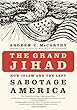 ome time ago, at the recommendation of the great Fr. Welzbacher of St. Paul, I read Andrew McCarthy’s The Grand Jihad: How Islam and the Left Sabotage America. It was an excellent preparation, or propaedeutic, for the controversy over the proposal to build the mosque complex at Ground Zero in Manhattan. And, yes, I think 51 Park Place qualifies as “ground zero” in the sense that landing gear from one of the airplanes struck the building.
As I listened and read about the “Cordoba House” proposal something about it sounded familiar. McCarthy described how militant Islamists of the Brotherhood developed centers for young muslim men which included an athletic program component. The nickle dropped. (Cf. Chapter 4. “Eliminating and Destroying the Western Civilization from Within”.)
Today over breakfast coffee… I saw in the New York Post an article by Amir Taheri, which you should know about.
Amir Taheri is author of 11 books on the Middle East, Iran and Islam.
Let’s have a look with my emphases and comments.
By AMIR TAHERI
Last Updated: 8:35 AM, September 10, 2010
Should there be a mosque near Ground Zero? In fact, what is pro posed is not a mosque — nor even an “Islamic cultural center.”
In Islam, every structure linked to the faith and its rituals has a precise function and character. A mosque is a one-story gallery built around an atrium with a mihrab (a niche pointing to Mecca) and one, or in the case of Shiites two, minarets.
Other Islamic structures, such as harams, zawiyyahs, husseinyiahs and takiyahs, also obey strict architectural rules. Yet the building used for spreading the faith is known as Dar al-Tabligh, or House of Proselytizing.
[NB] This 13-story multifunctional structure couldn’t be any of the above.
The groups fighting for the project know this; this is why they sometimes call it an Islamic cultural center. But there is no such thing as an Islamic culture.
Islam is a religion, not a culture. Each of the 57 Muslim-majority nations has its own distinct culture — and the Bengali culture has little in common with the Nigerian. Then, too, most of those countries have their own cultural offices in the US, especially in New York.
Islam is an ingredient in dozens of cultures, not a culture on its own.
In theory, at least, the culture of American Muslims should be American. Of course, this being America, each ethnic community has its distinct cultural memories — the Iranians in Los Angeles are different from the Arabs in Dearborn.
[Start taking notes if you have to…] In fact, the proposed structure is known in Islamic history as a rabat — literally a connector. The first rabat appeared at the time of the Prophet.
The Prophet imposed his rule on parts of Arabia through a series of ghazvas, or razzias (the origin of the English word “raid”). The ghazva was designed to terrorize the infidels, convince them that their civilization was doomed and force them to submit to Islamic rule. Those who participated in the ghazva were known as the ghazis, or raiders.
After each ghazva, the Prophet ordered the creation of a rabat — or a point of contact at the heart of the infidel territory raided. The rabat consisted of an area for prayer, a section for the raiders to eat and rest and facilities to train and prepare for future razzias. [The “athletic” component I alluded to earlier.] Later Muslim rulers used the tactic of ghazva to conquer territory in the Persian and Byzantine empires. After each raid, they built a rabat to prepare for the next razzia.
[NB:] It is no coincidence that Islamists routinely use the term ghazva to describe the 9/11 attacks against New York and Washington. The terrorists who carried out the attack are referred to as ghazis or shahids (martyrs).
[CONCLUSION:] Thus, building a rabat close to Ground Zero would be in accordance with a tradition started by the Prophet. To all those who believe and hope that the 9/11 ghazva would lead to the destruction of the American “Great Satan,” this would be of great symbolic value.
[Shift gears.] Faced with the anger of New Yorkers, the promoters of the project have started calling it the Cordoba House, echoing President Obama’s assertion that it would be used to propagate “moderate” Islam.
In fact, Cordoba’s history is full of stories of oppression and massacre, prompted by religious fanaticism. It is true that the Muslim rulers of Cordoba didn’t force their Christian and Jewish subjects to accept Islam. However, non-Muslims could keep their faith and enjoy state protection only as dhimmis (bonded ones) by paying a poll tax in a system of religious apartheid.
If whatever peace and harmony that is supposed to have existed in Cordoba were the fruit of “Muslim rule,” [NB:] the subtext is that the United States would enjoy similar peace and harmony under Islamic rule. [That is why “Cordoba” was chosen: to symbolize the goal of subjugation of the USA to Sharia Law.]
A rabat in the heart of Manhattan would be of great symbolic value to those who want a high-profile, “in your face” projection of Islam in the infidel West.
This thirst for visibility is translated into increasingly provocative forms of hijab, notably the niqab (mask) and the burqa. The same quest mobilized hundreds of Muslims in Paris the other day to close a whole street so that they could have a Ramadan prayer in the middle of the rush hour. [These open demonstrations are escalating.]
One of those taking part in the demonstration told French radio that the aim was to “show we are here.” “You used to be in our capitals for centuries,” he said. “Now, it is our turn to be in the heart of your cities.”
Before deciding whether to support or oppose the “Cordoba” project, New Yorkers should consider what it is that they would be buying.

Coat of Arms by D Burkart
 excalibur on YOUR URGENT PRAYER REQUESTS: “Personal intentions.”
 on YOUR URGENT PRAYER REQUESTS: “For the most forgotten soul in Purgatory. And thanks to the Blessed Mother for her support during my recent stroke”
 on ROME 26/5– Day 62 & 63: NEWS: “Fr. Z: Glad you are able to stay longer. It seems like you have had an enjoyable time in Rome.…”
 on YOUR URGENT PRAYER REQUESTS: “I just had my second surgery on my left eye and will have my third surgery on my right eye…”
 on YOUR URGENT PRAYER REQUESTS: “For my son and daughter-in-law, expecting the birth of their first child in June. For my son and daughter-in-law, expecting…”
 on YOUR URGENT PRAYER REQUESTS: “I have a big job interview today. Please pray for me. Sancte Ioseph ora pro me.”
 on ROME 26/5– Day 61: initial notes on the encyclical: “I still haven’t attempted to read it, but the expression “TL;DR” – which Wikipedia cites the OED for telling us…”
 on YOUR URGENT PRAYER REQUESTS: “Asking prayers for my husband to gain strength as he recovers from a fall, and hip surgery. May the Lord…”
A Daily Prayer for Priests










They find you a pro-life agent in your area who commits to giving a portion of the fee to a pro-life group!

PLEASE subscribe via PayPal if it is useful. Zelle and Wise are better, but PayPal is convenient.
A monthly subscription donation means I have steady income I can plan on. I put you my list of benefactors for whom I pray and for whom I often say Holy Mass.
In view of the rapidly changing challenges I now face, I would like to add more $10/month subscribers. Will you please help?
For a one time donation...



Help Monks in Wyoming (coffee – UPDATED LINK) and Norcia (beer) and the wonderful "Soap Sisters" of Summit, NJ!


Please follow me on Twitter!










Visits tracked by Statcounter
since Sat., 25 Nov. 2006:

 People who have studied English as a second language tell me that three of the biggest challenges they encounter are pronouns, prepositions and articles.
 The argument is that Cordoba, in southern Spain, was a city where followers of Islam, Christianity and Judaism lived together in peace and produced literature and philosophy.