Ground Zero Mosque: a “Rabat”, not a “Cultural Center”

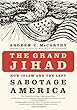
Some time ago, at the recommendation of the great Fr. Welzbacher of St. Paul, I read Andrew McCarthy’s The Grand Jihad: How Islam and the Left Sabotage AmericaIt was an excellent preparation, or propaedeutic, for the controversy over the proposal to build the mosque complex at Ground Zero in Manhattan.  And, yes, I think 51 Park Place qualifies as “ground zero” in the sense that landing gear from one of the airplanes struck the building.

As I listened and read about the “Cordoba House” proposal something about it sounded familiar.  McCarthy described how militant Islamists of the Brotherhood developed centers for young muslim men which included an athletic program component.  The nickle dropped.  (Cf. Chapter 4. “Eliminating and Destroying the Western Civilization from Within”.)

Today over breakfast coffee… I saw in the New York Post an article by Amir Taheri, which you should know about.
Amir Taheri is author of 11 books on the Middle East, Iran and Islam.

Let’s have a look with my emphases and comments.

Islam center’s eerie echo of ancient terror

By AMIR TAHERI

Last Updated: 8:35 AM, September 10, 2010

Should there be a mosque near Ground Zero? In fact, what is pro posed is not a mosque — nor even an “Islamic cultural center.

In Islam, every structure linked to the faith and its rituals has a precise function and character. A mosque is a one-story gallery built around an atrium with a mihrab (a niche pointing to Mecca) and one, or in the case of Shiites two, minarets.

Other Islamic structures, such as harams, zawiyyahs, husseinyiahs and takiyahs, also obey strict architectural rules. Yet the building used for spreading the faith is known as Dar al-Tabligh, or House of Proselytizing.

[NB] This 13-story multifunctional structure couldn’t be any of the above.

The groups fighting for the project know this; this is why they sometimes call it an Islamic cultural center. But there is no such thing as an Islamic culture.

Islam is a religion, not a culture. Each of the 57 Muslim-majority nations has its own distinct culture — and the Bengali culture has little in common with the Nigerian. Then, too, most of those countries have their own cultural offices in the US, especially in New York.

Islam is an ingredient in dozens of cultures, not a culture on its own.

In theory, at least, the culture of American Muslims should be American. Of course, this being America, each ethnic community has its distinct cultural memories — the Iranians in Los Angeles are different from the Arabs in Dearborn.

[Start taking notes if you have to…] In fact, the proposed structure is known in Islamic history as a rabat — literally a connector. The first rabat appeared at the time of the Prophet.

The Prophet imposed his rule on parts of Arabia through a series of ghazvas, or razzias (the origin of the English word “raid”). The ghazva was designed to terrorize the infidels, convince them that their civilization was doomed and force them to submit to Islamic rule. Those who participated in the ghazva were known as the ghazis, or raiders.

After each ghazva, the Prophet ordered the creation of a rabat — or a point of contact at the heart of the infidel territory raided. The rabat consisted of an area for prayer, a section for the raiders to eat and rest and facilities to train and prepare for future razzias. [The “athletic” component I alluded to earlier.] Later Muslim rulers used the tactic of ghazva to conquer territory in the Persian and Byzantine empires. After each raid, they built a rabat to prepare for the next razzia.

[NB:] It is no coincidence that Islamists routinely use the term ghazva to describe the 9/11 attacks against New York and Washington. The terrorists who carried out the attack are referred to as ghazis or shahids (martyrs).

[CONCLUSION:] Thus, building a rabat close to Ground Zero would be in accordance with a tradition started by the Prophet. To all those who believe and hope that the 9/11 ghazva would lead to the destruction of the American “Great Satan,” this would be of great symbolic value.

[Shift gears.] Faced with the anger of New Yorkers, the promoters of the project have started calling it the Cordoba House, echoing President Obama’s assertion that it would be used to propagate “moderate” Islam.

The argument is that Cordoba, in southern Spain, was a city where followers of Islam, Christianity and Judaism lived together in peace and produced literature and philosophy.

In fact, Cordoba’s history is full of stories of oppression and massacre, prompted by religious fanaticism. It is true that the Muslim rulers of Cordoba didn’t force their Christian and Jewish subjects to accept Islam. However, non-Muslims could keep their faith and enjoy state protection only as dhimmis (bonded ones) by paying a poll tax in a system of religious apartheid.

If whatever peace and harmony that is supposed to have existed in Cordoba were the fruit of “Muslim rule,” [NB:] the subtext is that the United States would enjoy similar peace and harmony under Islamic rule[That is why “Cordoba” was chosen: to symbolize the goal of subjugation of the USA to Sharia Law.]

A rabat in the heart of Manhattan would be of great symbolic value to those who want a high-profile, “in your face” projection of Islam in the infidel West.

This thirst for visibility is translated into increasingly provocative forms of hijab, notably the niqab (mask) and the burqa. The same quest mobilized hundreds of Muslims in Paris the other day to close a whole street so that they could have a Ramadan prayer in the middle of the rush hour. [These open demonstrations are escalating.]

One of those taking part in the demonstration told French radio that the aim was to “show we are here.” “You used to be in our capitals for centuries,” he said. “Now, it is our turn to be in the heart of your cities.

Before deciding whether to support or oppose the “Cordoba” project, New Yorkers should consider what it is that they would be buying.

Posted in The Drill, The future and our choices | Tagged , , , ,
58 Comments

Request for prayers for two … three… priests

A request for prayers.

A reader sent:

Our beloved bishop, Bp. Choby [of Nashville], is having open heart surgery tomorrow. After several days of chest pain, he drove himself to the Emergency Room at St Thomas at 5 this morning, and was admitted with one artery 80% blocked and the others blocked to various degrees.  Surgery is scheduled for first thing in the morning. A good and holy man, who bridges pre and post Vatican II with intellectual strength, true faith, and a virile pastoral disposition, we desperately need him as well as love him.


I also ask your prayers for a dear priest friend, and one of the smartest men I know, Fr. George Welzbacher, who is spending this evening with some medical supervision. It is not anything in the order of what I posted above, but when you are over 80 it is good to be careful and have the support of many prayers.  He should be home in the morning.  I have posted some of Fr. W’s good "pastor’s pages" here from time to time.

Would you also offer a prayer for a personal intention?  Many thanks.

Posted in SESSIUNCULA |
Comments Off on Request for prayers for two … three… priests

MUGS GONE WILD 3

I enjoy getting photos of my coffee mugs out there being used in the wild.

A reader writes:

Ave Zedissime Pater,

An example of “startin’ em off right!”  The red, the black, the Mother of God, and Christ the teacher…

You remain in my prayers very frequently.

Thanks for the prayers!

Lucky child.

And while there may be juice in that mug, I hope junior is getting a….

… richly aromatic mug of Mystic Monk Coffee!

Yes, you cannot start too early in building that life-long relationship with good coffee and, in particular, the virtuous habit of refreshing your supply by using my link!

Help Monks.

Help Fr. Z.

Help… the children.

Posted in SESSIUNCULA |
12 Comments

A reflection on reordered churches

During my time in Manhattan this trip I have visited quite a few Catholic churches.  I have been amazed at how badly some of them have been mutilated, and stupidly so.  Some are still being mutilated according to tired old ideas that are now, in the minds of the younger clergy for sure, cliché and monstrous.  The outgoing regime with their tired ideas are still doing damage even as their theological wheelchairs are already turned in the direction of the door.

On Inside Catholic there is an article reproduced from the November 1995 issue of Crisis Magazine.

Read the whole piece for some context and some reflections on death and awareness of mortality.  At the end, however, the writer offered some pretty harsh comments about the fruits of the post-Conciliar reform.

Fair?  Unfair?

Having come from a parish where the all chaos and foolery was over the decades avoided, because of the guidance of well-informed pastors who thought with the mind of the Church, and being a convert, I was spared the full force of the idiocy that went on far and wide.   But I have certainly been around the pike a few times and seen what she was talking about.

Take a look … with my emphases and comments.

The writer is speaking of time spent in a church before the Blessed Sacrament.

He Came Down from Heaven: A Consolation [In the Incarnation, and at every Sacrifice of the Mass.]
Alice Thomas Ellis

[…]

There was a silent peace with a hidden promise of unimaginable joy to which all the objects of devotion attested: the altar, the statues, the crucifix, all the appurtenances of faith belonged to no one and to everyone. Still and worthy of trust, they were there yesterday and now and would be there tomorrow. Inanimate yet living testimony to a vital certainty. It is rare now to find such a church. Stripped and barren, while the people themselves are encouraged to buy more and more to support the market economy and cram their houses with trivia, the churches are denuded in the name of progress.

It is impossible to understand without laying bare the motives of those who wrought such destruction. The result is terrible in the terms of disillusion and loss, and those who say they wished only to affirm life and community have robbed us of consolation, giving death a greater power than is his due. The here and now is what concerns us they say, forgetting that life is short and but a preparation.

The new and re-ordered churches are symbolic only of a denied but underlying despair, a loss of faith to the sad conviction that death is the end. [The fruit of the modernist error: immanentism.] The noisy ceremonies that now fill these churches, the guitars, the clapping, swaying, and showy raptures are a mere extension of the drug culture, a whistling in the wind, a neurotic insistence that happiness is attainable immediately and does not need to be waited for or earned. The notion that suffering can bring forth good, that deprivation can nourish the soul is unacceptable. [I believe this is what I was driving at in that sermon I gave for the Feast of the Exaltation of the Cross on 14 Sept 2007 at Fr. Finigan’s parish.  We remove the Cross at our peril.  We must keep the Cross at the focus point so that we can deal with what St. Augustine called "our daily winter", fear of death.  It is there, in what the Cross reveals, that we encounter mystery both alluring and fearsome, and we are readied for what lies outside ourselves and the passage of the grave.] Suggest that the saints lived their lives in the promise and not the fulfillment of joy and you will not be heard. The Protestant cult of the "born again" with its ecstatic overtones has laid hold of a Church that still claims to lay all store on baptism. We are at the mercy of doctrinal error, often imposed from above, with little recourse to authority which is often too pusillanimous to argue with the trend. The wolves are in the fold.

Now that the churches are no longer peaceful but full of people determined to convey to you their loving care, their innate virtuousness, with handshakes and smiles, the bereft are best off in solitude, listening for the still, small voice. [The still small voice which the prophet eventually heard.  I often use the image of Moses, posted by God at the cleft in the rock.] The country graveyard is perhaps now the place nearest to God on earth, for that too is neutral ground where death has had his way, is satisfied and thus of no more significance and no threat. Freedom lies in looking on the face of death and knowing that there is no true battle here, that he does not need to be fought and defeated, for he is only God’s instrument and God lives.

We remove the Cross and worship redolent of His Sacrifice at our peril.

Posted in Our Catholic Identity, The future and our choices | Tagged ,
34 Comments

What was wrong with the old ICEL translation?

Every once in a while someone might ask you:

What’s wrong with the translation we have?  Why do we need a new one?

Fr. Finigan, to whom I fraternally tip my biretta  o{]:¬)  reminded us in one of his recent posts of a good example of why we needed a new translation:

    Latin text
    accipens et hunc praeclarum calicem in sanctas ac venerabiles manus suas

    Old ICEL
    he took the cup

    New [CORRECTED] ICEL
    he took this precious chalice in his holy and venerable hands

There are many, many other examples of the disservice done by the translation which we have had to use for several decades.


Remember, friends…

It wasn’t that the early ICEL translators didn’t know Latin well-enough to do the job properly.  They certainly did know what the Latin prayers say!  They knew the Latin content and they didn’t like it.

Posted in SESSIUNCULA |
42 Comments

De Defectibus reconsidered: priests learning from the past, going to the heart of Mass

Last year I posted a version of this entry.  In light of some of our recent discussions here, I present it anew.

Recently I have posted Vatican II and the Ordinary Form v. Extraordinary Form.  Good discussion is going on.

As I read through some comments, it came to my mind that, when the suggestion is made that the Novus Ordo is more open to abuse while we all know that the TLM was before Council also celebrated poorly at times, a key remains the priest and his ars celebrandi.

The "art of celebrating" is vital no matter which book is used.

Before the Council is was clear in moral theology that violation of the rubrics could be at least a venial sin.  Since the Council this point has been deemphasized… to our everlasting shame and detriment.  If the idea was to relieve some of the possible scrupulosity on the part of some overly wound up priests,

And so…

As we come now to the 3rd anniversary of the implementation of Summorum Pontificum (14 Sept) it is good to review some of the motives behind Pope Benedict’s Motu Proprio, his "emancipation proclamation" for the older, traditional forms of the Roman Rite.

Pope Benedict is concerned that there had been a break in the organic development of the Church’s worship.  This rupture in the Church’s worship life has affected every other aspect of the Church, how Catholic perceive themselves and how they act in the world.

One of the reasons why the Holy Father issued Summorum Pontificum was to effect a course correction in the way the newer, post-Conciliar forms of liturgy. 

He foresees that side by side celebrations of the older form will have a "gravitational effect" on the way the newer forms are celebrated. 

This is, in fact, what is taking place, especially as younger priests – free from the baggage of the 60’s-80’s – are learning about the older forms which they never experienced in their youth.  Through a familiarity with the older forms, they are learning more about what Holy Mass is, what they are doing at the altar and who they are as priests.

This is part of what I call Pope Benedict’s "Marshall Plan" for the Church.  After the devastation WWII the USA helped to rebuild Europe in order to foster trade and support a bulwark against Communism.  In the wake of the devastation caused by a hermeneutic of discontinuity after the Second Vatican Council, Pope Benedict is trying to revitalize our Catholic identity as a bulwark against the dictatorship of relativism.

Younger priests, and lay people as well, are absorbing something of the wisdom of past centuries.

Say a person wants to learn about the older form of Holy Mass, the TLM.  He picks up some old books – maybe found in used bookstores (such at Loome’s) or maybe the seminary library or the basement of a rectory.  Maybe he orders the reprint of Fortescue-O’Connell, or Reid’s new verison of the same, or an older edition of the same and starts to read. He peruses a volume such as O’Connell’s The Celebration of Mass (1959).

Right away he discovers a very different attitude about the way Mass is celebrated. 

Once upon a time, the Missale Romanum itself contained directives, in the section called De defectibus, which indicated that some defects could be either venial or mortal sins.  That is, there was a moral judgment about some defects.  This section, still present in the 1962 Missale Romanum, was removed from the post-Conciliar editions of the Missale Romanum. That is to say, it is not in any edition of the Novus Ordo. 

The argument was, if I understand correctly, that since that was an issue of moral theology, the distinction did not belong in the liturgical book, the Missale Romanum.  I think this is one of the reasons why experimentation began to deform the way the Novus Ordo was celebrated. 

Once "changing the rite" was separated from "sin" in the minds of priests and future priests … the floodgates opened

This took place in an environment in which there was at times an overly rigid approach to liturgical rites, perhaps inculcated by instructors with jansenistic tendencies.  There was, subsequently, a sharp backlash in the minds of some priests against any rubrics.

Back to my point….

If you look in pre-Conciliar editions of manuals designed to help seminarians and priests learn how to say Mass, to train seminarians and priests in the art and concrete crafts of the Church’s worship, you usually find a chapter on defects. 

A review of these old books can be very useful today. 

Reading these old books especially through the lens of Pope Benedict’s Sacramentum caritatis (which presents us with a reflection on the priest’s ars celebrandi) could be of enormous practical use to seminarians and younger priests today.

Let’s have a look at a snippet of O’Connell’s The Celebration of Mass (1959) focusing on the section which concerns… (my emphases and comments)

III. ARBITRARY CHANGES IN THE RITE OF MASS

10. Despite a custom to the contrary – which is expressly reprobated in the Code of Canon Law (Canon 818 [that is, the old Code, now superseded by the 1983 CIC]) – the Celebrant of Mass is "to observe accurately and devoutly the rubrics" of the Missal, "and take care not to add other ceremonies or prayers by his own authority".  Arbitrarily to change in any way – by addition, omission, or transposition – the rite of the Mass is unlawful.  So strict is the interpretation of this law that the S.R.C. [Sacred Congregation of Rites] refused to allow the Celebrant of Mass, for the purpose of gaining a rich indulgence, to pronounce, even in a low tone, the words "My Lord and my God," while looking on the Sacred Host at the Elevation, and cited Canon 818 to justify this refusal.

11. Whether the mutilation of the rite of Mass would be a grave sin, or a venial one, or no sin at all (for a sufficient cause) is discussed by the moral theologians.  Their reply is that this will depend on: (a) the motive for changing – is it due to contempt for the rubrics, to culpable ignorance of them, to gross indifference and carelessness, or from mere human frailty, like inculpable forgetfulness, or inattention, or from "devotion" of a wrong kind?  (b) The nature and extent of the change – is it one that seriously concerns the reverence due to the Blessed Eucharistic, does it occur in an important part of the Mass (important in itself or because of some extrinsic reason, such as the mystical meaning of the part), is the addition, or omission, serious because of its length?  It is regarded as grave to make even a comparatively small change in the Canon of the Mass, because of its intimate connexion with the sacrifice; and it is more serious to have omission in the ordinary parts of the Mass, the parts that occur in every, or almost every Mass, than in extraordinary parts which occur sometimes only.  Thus the omission of all the Prayers of Preparation at the foot of the altar, of the Gospel, of several of the Offertory prayers, would be regarded as a notable omission; to omit the purification of the paten (unless there were no visible participles on it) or chalice, would be a grave want of reverence for the Blessed Sacrament; to omit the addition of water to the wine in the chalice, or the Fraction of the Sacred Host, or the commingling of the two Sacred Species, would be a serious omission because of the mystical meaning of these rites.  But to omit the Gloria, or Creed, or prayers of commemoration, or the last Gospel would not, ordinarily, be regarded as a grave omission.

ADDITIONS TO THE RITE

12. Arbitrarily to add prayers or ceremonies, with the intention of introducing a new rite, or to a notable extent (especially prayers not found in the Missal), would be a grave violation of liturgical law. To add the Gloria (on days when it should be omitted), or collects not allowed by the rubrics, or ejaculatory prayers would not, ordinarily, be grave.  In general, private (vocal) prayers may not be introduced into the rite of Mass, except where the rubrics provide for it, e.g., at each memento, after the reception of the Sacred Hosts.

REMEDYING OMISSIONS IN THE RITE

13. The directives of De Defectibus do not, generally speaking, encourage the repairing of nonessential omissions (cf. e.g., V, 2). If the Celebrant should omit anything belonging to the validity, or the integrity (e.g., the Offertory), of the rite of Mass, he must, of course, repair the omission.  If an omission be trivial, it need not be supplied, and may not be, if it is not noticed at once.  If an omission be notable (though not concerned with the validity or integrity of the sacrifice) and can be easily made good – because, e.g., it is noticed almost at once – and without causing scandal, it should be.  Thus, if the Celebrant omitted, in error, the Gloria, or a commemoration, or the Creed, he must not interrupt the Mass to repair the omission; but he may, indeed should, repair it, if he adverts to it almost immediately.

The book goes on to describe defects in the matter for Mass, the bread and wine, what is necessary for validity, how to determine of the bread and wine are still good to use for Mass, what to do if there is some problem during Mass.  It describes defects of form, that is, in the words for consecration, and also defects in intention.  There is a section on the defect of the state of soul for Mass and in bodily preparation.  What to do in the face of interruptions in the celebration of Mass such as if the celebrant is taken ill or even dies.  What to do if there are accidents with the Host or Precious Blood. … You get the idea.  I have written about some of these points in a humorous way here.

This is all very useful.  Just the other day I had a phone call from a younger priest who discovered that – for reasons I must omit – he unwittingly consecrated a chalice of mainly water with a little wine.  he wasn’t sure what do to.  He was not culpable in this situation, of course.  But priests need to know what to do.  It is important for them to know which things are grave issues, which must be corrected, what can be left to slide.  It is important to know the rite well from within. 

In my opinion, learning the older form of Holy Mass teaches this in a way that learning the newer form does not.

The point is not – as some claim – to make the celebrant nervous or scrupulous in an unhealthy way.  Rather, it conveys something of a deeper attitude about what Holy Mass is, about how important it is.  It reveals something as well of the intimate connections which exist between the Sacrifice, the rites, the matter, form and the priest himself.

Even though this De defectibus section seems to have been dropped from post-Conciliar editions of these famous manuals, it is important for every young priest and seminarian to have read this chapter at least once. 

There are within some very practical pointers, of course, but reading this section also brings a priest more intimately into the heart of who he is as a priest at the altar of Sacrifice.

Posted in SESSIUNCULA | Tagged
8 Comments

Fidel Castro: Communism failed in Cuba

AP has a story that a writer for The Atlantic, Jeffrey Goldberg, interviewed long-time Communist dictator for three days.

During the interview, Casto admitted that Communism has failed in Cuba.

HAVANA – Fidel Castro told a visiting American journalist that Cuba’s communist economic model doesn’t work, a rare comment on domestic affairs from a man who has conspicuously steered clear of local issues since stepping down four years ago.

The fact that things are not working efficiently on this cash-strapped Caribbean island is hardly news. Fidel’s brother Raul, the country’s president, has said the same thing repeatedly. But the blunt assessment by the father of Cuba’s 1959 revolution is sure to raise eyebrows. ["raise eyebrows"?  An admission from CASTRO that Communism FAILED?  You have to love that sort of bald spin.   The only other thing they could have done to downplay this is to suggest that he is at long last a little gaga.]

Jeffrey Goldberg, a national correspondent for The Atlantic magazine, asked if Cuba’s economic system was still worth exporting to other countries, and Castro replied: "The Cuban model doesn’t even work for us anymore" Goldberg wrote Wednesday in a post on his Atlantic blog.

He said Castro made the comment casually over lunch following a long talk about the Middle East, and did not elaborate. The Cuban government had no immediate comment on Goldberg’s account. [ROFL!]

Since stepping down from power in 2006, the ex-president has focused almost entirely on international affairs and said very little about Cuba and its politics, perhaps to limit the perception he is stepping on his brother’s toes.

Goldberg, who traveled to Cuba at Castro’s invitation last week to discuss a recent Atlantic article he wrote about Iran’s nuclear program, also reported on Tuesday that Castro questioned his own actions during the 1962 Cuban Missile Crisis, including his recommendation to Soviet leaders that they use nuclear weapons against the United States. [What a guy!]

Even after the fall of the Soviet Union, Cuba has clung to its communist system.

The state controls well over 90 percent of the economy, paying workers salaries of about $20 a month [A worker’s paradise, to be sure.] in return for free health care and education, and nearly free transportation and housing. At least a portion of every citizen’s food needs are sold to them through ration books at heavily subsidized prices.  [What father of children wouldn’t be proud to bring that home each week?]

President Raul Castro and others have instituted a series of limited economic reforms, and have warned Cubans that they need to start working harder and expecting less from the government. But the president has also made it clear he has no desire to depart from Cuba’s socialist system or embrace capitalism. [Good luck with that.  What was the old phrase from the Soviet Union?  "So long as the bosses pretend to pay us, we will pretend to work."]

Fidel Castro stepped down temporarily in July 2006 due to a serious illness that nearly killed him.

He resigned permanently two years later, but remains head of the Communist Party. After staying almost entirely out of the spotlight for four years, he re-emerged in July and now speaks frequently about international affairs. He has been warning for weeks of the threat of a nuclear war over Iran.

Castro’s interview with Goldberg is the only one he has given to an American journalist since he left office.

On an amusing note, NPR (aka National Peoples Radio) also posted on this story.  What do you think of their headline?

During Interview With Journalist Jeffrey Goldberg, Fidel Castro Talks Israel, Iran


Posted in Brick by Brick | Tagged ,
6 Comments

A blogger declares: “I’m Burning The NCReporter!”

From Acts Of The Apostacy with my emphases and comments:


Blogger: I’m Burning The NCReporter!

(AoftheAP) A little-known central Kansas Catholic blogger has announced that he will burn a copy of the National Catholic Reporter on his front lawn on Monday September 13, the Memorial of St John Chrysostom.

Renfrew Dachs, who blogs at ‘Orthodachs Review’, announced on Labor Day his intention to set fire to the most recent issue of the left-leaning[ paper. As he wrote on his blog:

"It is time to expose this publication for what it is. It is a heterodox publication that is trying to masquerade as a Catholic publication, seeking to deceive many within the Church."

Dachs’ blog and Facebook page, which combined boasts all of 50 followers, [OORAH!] has been inundated with hits and friend requests since his statement. He says that the split between supporters and detractors is fairly even.

"I’ve had people tell me they’re coming to attend the burning. A bunch have mailed me copies of the National Catholic Reporter, along with some back issues of Commonweal and America, so I expect a pretty large fire Monday. I’ve also received a number of nasty emails, too. They’re not death threats – pretty much just folks telling me to stop being judgmental, or that I’ll harm the environment by increasing my carbon footprint, with all that smoke and stuff."

Dachs said he chose the memorial of St John Chrysostom for this event because the revered Doctor of the Church, whose name means ‘Golden Mouth’, defended Church teachings throughout his life. "The stuff the NCR publishes, on the total opposite spectrum of what he taught, of what the Church teaches," Dachs said. "Reiki, women priests, gay marriage? I think St John would get in their grill over those positions, so I thought it kinda appropriate."

[…]

Enjoy the rest there.

I have never had a copy of the NCR or else….

Now that I think of it, we could add some of Manilo Sodi’s works.

I suspect Vincenzo will be on this one soon.

Posted in SESSIUNCULA | Tagged
18 Comments

Had the Star Spangled Banner been in Latin…

Some item ago, I posted the quintessential old ICEL oration:

O God,
you are so big.
Help us to be big like you.

The blog Last Papist Standing posted a hypothetical pre-reconstituted, lame-duck ICEL translation of a hypothetical Latin original of The Star Spangled Banner:

IF OUR NATIONAL ANTHEM HAD BEEN TRANSLATED FROM LATIN IN 1970…

It might go like this:

The sun just came up so look over there
the flag we saw last night is still up!
It had stars and stripes
and we could see it over the walls while we were fighting;
Once in a while when a bomb went off
We could even see it at night!
is the flag still flying here
where people have courage and freedom
?


Posted in Lighter fare |
35 Comments

The Indefatigable… The Insuperable… strikes!

I believe she has been called “The Human Uzi”.

She may be the best ironist of our times.  Twitter

Love her.  Hate her.  She can write.

Study and learn.

Ann Coulter
Bonfire of the Insanities

In response to Gen David Petraeus’ denunciation of Florida pastor Terry Jones’ right to engage in a symbolic protest of the 9/11 attacks by burning copies of the Quran this Sept. 11, President Obama said: “Let me be clear: As a citizen, and as president, I believe that members of the Dove World Outreach Center have the same right to freedom of speech and religion as anyone else in this country.”

Gov. Charlie Crist of Florida lauded Obama’s remarks, saying America is “a place where you’re supposed to be able to practice your religion without the government telling you you can’t.”

New York City Mayor Michael Bloomberg called Obama’s words a “clarion defense of the freedom of religion” — and also claimed that he had recently run into a filthy jihadist who actually supported the Quran-burning!

Keith Olbermann read the poem “First they came …” on air in defense of the Quran-burners, nearly bringing himself to tears at his own profundity.

No wait, my mistake. This is what liberals said about the ground zero mosque only five minutes ago when they were posing as First Amendment absolutists. Suddenly, they’ve developed amnesia when it comes to the free-speech right to burn a Quran.

Weirdly, conservatives who opposed building the mosque at ground zero are also against the Quran burning. (Except in my case. It turns out I’m for it, but mostly because burning Qurans will contribute to global warming.)

Liberals couldn’t care less about the First Amendment. To the contrary, censoring speech and religion is the left’s specialty! (Any religion other than Islam.)

They promote speech codes, hate crimes, free speech zones (known as “America” off college campuses), and go around the country yanking every reference to God from the public square via endless lawsuits by the ACLU.

Whenever you see a liberal choking up over our precious constitutional rights, you can be sure we’re talking about the rights of Muslims at ground zero, “God Hates Fags” funeral protesters, strippers, The New York Times publishing classified documents, pornographers, child molesters, murderers, traitors, saboteurs, terrorists, flag-burners (but not Quran-burners!) or women living on National Endowment of the Arts grants by stuffing yams into their orifices on stage.

Speaking of lying dwarfs, last week on “The Daily Show” Bloomberg claimed he was having a hamburger with his “girlfriend” when a man came up to him and said of the ground zero mosque: “I just got back from two tours fighting overseas for America. This is what we were all fighting for. You go and keep at it.”

We’re fighting for the right of Muslims to build mosques at ground zero? I thought we were trying to keep Muslims AWAY from our skyscrapers. (What an embarrassing misunderstanding.) PLEASE PULL THE TROOPS OUT IMMEDIATELY.

But back to the main issue: Was Bloomberg having a $150 Burger Double Truffle at DB Bistro Moderne or a more sensible $30 burger [It is New York, after all…] at the 21 Club when he bumped into his imaginary veteran? With the pint-sized mayor shrieking at the sight of a saltshaker, I assume he wasn’t having a Hardee’s No. 4 Combo Meal.

Adding an element of realism to his little vignette, Bloomberg said: “I got a hamburger and a pickle and a potato chip or something.”

A potato chip? Translation: “I don’t know what I was eating, because I’m making this whole story up – I wouldn’t be caught dead eating ‘a potato chip’ or any other picaresque garnish favored by the peasants.” At least Bloomberg didn’t claim the man who walked up to him took credit for setting the Times Square bomb because he was a tea partier upset about ObamaCare – as Sherlock Bloomberg had so presciently speculated at the time.

Gen. Petraeus objected to the Quran-burning protest on the grounds that it could be used by radical jihadists to recruit Muslims to attack Americans.

This is what liberals say whenever we do anything displeasing to the enemy – invade Iraq, hold captured terrorists in Guantanamo, interrogate captured jihadists or publish Muhammad cartoons. Is there a website somewhere listing everything that encourages terrorist recruiting?

If the general’s main objective is to hamper jihadist recruiting, may I respectfully suggest unconditional surrender? Because on his theory, you know what would really kill the terrorists’ recruiting ability? If we adopted Sharia law!

But wait – weren’t we assured by Fire Island’s head of national security, Andrew Sullivan, that if America elected a “brown-skinned man whose father was an African, who grew up in Indonesia and Hawaii, who attended a majority-Muslim school as a boy,” the terrorists would look like a bunch of lunkheads and be unable to recruit?

It didn’t work out that way. There have been more terrorist attacks on U.S. soil by these allegedly calmed Muslims in Obama’s first 18 months in office than in the six years under Bush after he invaded Iraq.

Also, as I recall, there was no Guantanamo, no Afghanistan war and no Iraq war on Sept. 10, 2001. And yet, somehow, Osama bin Ladin had no trouble recruiting back then. Can we retire the “it will help them recruit” argument yet?

[NB] The reason not to burn Qurans is that it’s unkind – not to jihadists, but to Muslims who mean us no harm. The same goes for building a mosque at ground zero – in both cases, it’s not a question of anyone’s “rights,” it’s just a nasty thing to do.

Holy cow!

Not one of these 900 words was wasted as she flayed the objects of her ire.

Posted in "How To..." - Practical Notes, SESSIUNCULA | Tagged
76 Comments
























