Beautiful and above all strong rosaries

I keep my eye open for nice rosaries, probably because I have a penchant for giving them away.

Years ago I encouraged a member of the old COL Forum on Compuserve to start a rosary making business.  Her work was simply stunning.  They were not only beautiful, they were stong enough that you could pull a trailer with them.  She did, and eventually made a pretty good go of it.  It is great to see someone do well with something so important as making beautiful – and above all strong – rosaries.  Alas, she does not make rosaries these days and my source for wedding and ordination gifts is no longer available.

However, one of our frequent participants here at WDTPRS, Henry Edwards, clued me in to another makers of fine rosaries, made in a way similar to those I spoke of above.  I received one recently.  It comes from Immaculata Rosaries.

Beautiful and above all strong rosaries

In a closer view, you see that at the connections the wire is wrapped around a couple times, which makes the whole thing far less likely to pull apart.

Beautiful and above all strong rosaries

If you are interested in seeing more of these nice rosaries, check out Immaculata Rosaries.

Posted in REVIEWS |
32 Comments

Technology and the New Evangelization shall meet… and go “BONG BONG BONG”!

When I was a little kid I used to listen to the shortwave radio tuned to WWV, the National Bureau of Standards time channel.  The clock would tick, and then go bong…bong…bong… bong… bong….  I found it fascinating to hear something from so far away in one direction, and hear the regular tick and know that that was the exact time as measured in another direction, across the Atlantic at Greenwich.

A reader alerted me to this very cool use of technology for the sake of the New Evangelization.

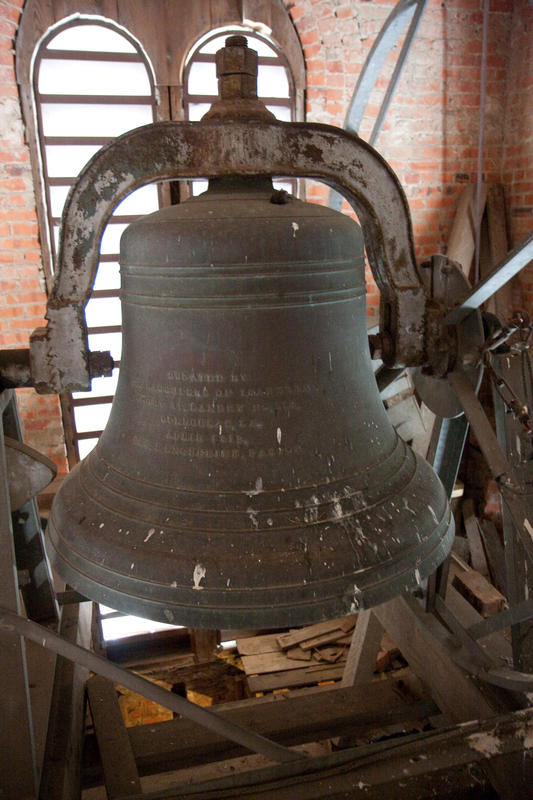
Technology and the New Evangelization shall meet... and go "BONG BONG BONG"!I wanted to tell you a little about a project we’ve been working on in our local parish that, I think, is unusual and hits direct at the call for the New Evangelization that the Holy Father has been talking about.

We have an old church bell that we’ve updated to ring via modern technology. It uses an atomic clock for accuracy, a GPS system to verify the time zone it is located in, and then …

Every time it rings … be it the Angelus, the hours of the day, a funeral toll, or the De Profundis at the end of the day … the bell posts to Twitter, Facebook, and a blog.  [This is very cool.  Sorry… do people still say "cool"?]

 Our bell says “bong” or sometimes “BONG”, mostly.

This morning’s local newspaper has an article on it here.

 A regional magazine is scheduled to release an article on it in the next week.

We included a nice insert in our parish bulletin to teach folks how to return to the Angelus prayer, the Regina Caeli, the De Profundis, and the Canticle of Simeon here.

The bell is going back to its original mission, which is to call people from their daily lives, to call them to prayer, but now when it rings, it is ringing worldwide.

I thought you might find this an interesting fusion of high technology … atomic clocks, GPS, computers, social networking, the internet … and the traditional prayers … Angelus, Regina Caeli, De Profundis, Canticle of Simeon … and a 98 year old bell.

Posted in "How To..." - Practical Notes, Just Too Cool, New Evangelization, SESSIUNCULA |
23 Comments

New ICEL translation has been approved

To the joy of most and the dismay of a few, it looks as if the new ICEL translation has been approved, though it won’t be available for a while yet.

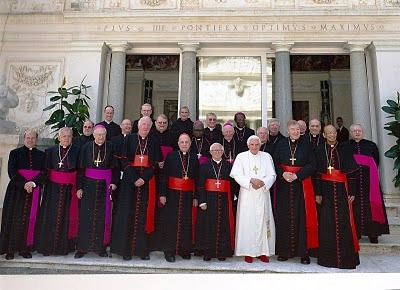
The Vox Clara commission, formed as a liaison between ICEL and the Congregation for Divine Worship and Discipline of the Sacraments, met in Rome.  Here are the Holy Father’s remarks to the group as they completed their work.

From the VIS:

New ICEL translation has been approvedDear Cardinals,

Dear Brother Bishops and Priests,

Members and Consultors of the Vox Clara Committee,

I thank you for the work that Vox Clara has done over the last eight years, assisting and advising the Congregation for Divine Worship and the Discipline of the Sacraments in fulfilling its responsibilities with regard to the English translations of liturgical texts. This has been a truly collegial enterprise. Not only are all five continents represented in the membership of the Committee, but you have been assiduous in drawing together contributions from Bishops’ Conferences in English-speaking territories all over the world. I thank you for the great labour you have expended in your study of the translations and in processing the results of the many consultations that have been conducted. I thank the expert assistants for offering the fruits of their scholarship in order to render a service to the universal Church. And I thank the Superiors and Officials of the Congregation for their daily, painstaking work of overseeing the preparation and translation of texts that proclaim the truth of our redemption in Christ, the Incarnate Word of God.

Saint Augustine spoke beautifully of the relation between John the Baptist, the vox clara that resounded on the banks of the Jordan, and the Word that he spoke. A voice, he said, serves to share with the listener the message that is already in the speaker’s heart. Once the word has been spoken, it is present in the hearts of both, and so the voice, its task having been completed, can fade away (cf. Sermon 293). [HERE IT IS…] I welcome the news that the English translation of the Roman Missal will soon be ready for publication, [That means approval.] so that the texts you have worked so hard to prepare may be proclaimed in the liturgy that is celebrated across the anglophone world. Through these sacred texts and the actions that accompany them, Christ will be made present and active in the midst of his people. The voice that helped bring these words to birth will have completed its task.

[NB:] A new task will then present itself, one which falls outside the direct competence of Vox Clara, but which in one way or another will involve all of you – the task of preparing for the reception of the new translation by clergy and lay faithful. Many will find it hard to adjust to unfamiliar texts after nearly forty years of continuous use of the previous translation. The change will need to be introduced with due sensitivity, and the opportunity for catechesis that it presents will need to be firmly grasped. I pray that in this way any risk of confusion or bewilderment will be averted, and the change will serve instead as a springboard for a renewal and a deepening of Eucharistic devotion all over the English-speaking world. [But it is going to happen.]

Dear Brother Bishops, Reverend Fathers, Friends, I want you to know how much I appreciate the great collaborative endeavour to which you have contributed. Soon the fruits of your labours will be made available to English-speaking congregations everywhere. As the prayers of God’s people rise before him like incense (cf. Psalm 140:2), may the Lord’s blessing come down upon all who have contributed their time and expertise to crafting the texts in which those prayers are expressed. Thank you, and may you be abundantly rewarded for your generous service to God’s people.


The following comes from the National Catholic Register (the good "NCR"):

Cardinal George Pell, chairman of the Vox Clara Committee, the international group of bishops advising the Vatican about the translation, told the Register yesterday that although formal approval will be given today, the new Missal certainly won’t be available before 2011.

Posted in Brick by Brick, Pope of Christian Unity, WDTPRS |
52 Comments

Thanks to readers and Penjing Report

TwitterWhen I receive donations through the donation button on the sidebar or on some posts (especially bird related posts), I always write back an email with a note of thanks.   However, lately some of my e-mails are getting kicked back to me as undeliverable.   If you sent a donation and did not hear from me, that is why. 

Also, I am deeply grateful to readers who used my amazon wishlist to send items. 

Since I am on the road a lot, I thank CQ of WI who sent a couple retractable charge chords.  I hate hauling cords and wires around and this will make things easier.

TS of AL sent a copy of astronaut Jim Lovell’s about about Apollo 13.  I will try somehow to get it autographed.  The Apollo 13 mission still amazes me, 40 years later.
Thanks to readers and Penjing Report
Deep gratitude to JR who sent the riveting page turner Handbook of Literary Rhetoric by Heinrich Lausberg, a book I need for my thesis.  Thank you!

I also received from FW remastered DVDs of what is arguably one of the best TV series ever broadcast, I, Claudius. BTW… did you know that a younger Captain Picard is in this?

PENJING REPORT

I regret to inform you that Penjing is… not well at all.  For weeks this tree has been struggling. 

It lost all its leaves and now, it has repeatedly put out new leaves only to lose them again. And the leaves just don’t look good.  They are a lime color instead of that dark green of yore.

Thanks to readers and Penjing Report

Not good.  The other trees are fine.

Thanks to readers and Penjing Report

Posted in SESSIUNCULA |
6 Comments

Finding a fellow traveller… no coincidence! Fr. Nichols on secularism

I found a great quote toward the end of Fr. Aidan Nichols new Criticising the Critics, which I wrote about here.  This would be a good book to own and read carefully. Order from Amazon UK click HERE.

"Secularization is the work of elites who want to free themselves and the world they inhabit from any appeal to an authority that invokes transcendence."


At the end of his exceptional new book, Fr. Nichols has a chapter which suggests that he and I are so much in sync about the "identity" issue I have been writing for so long that I got shivers.

He is writing in the first place about England, the English, English culture and society, but his work is clearly appropriate for many other nations.  Eerily so for the United States, which hasn’t gone as far down the dismal road Fr. Nichols mapped.

In his last chapter: For Critics of Christendom (Secularization: A Catholic Response), and the subheading "The role of English Catholicism", he writes:


[T]he strategy I advocate is one which might be called ‘in depth re-confessionalisation’.  In this slogan, the adverbial phrase – ‘in depth’ and the noun – ‘re-confessionalisation’ – should be given equal weight.  ‘Re-confessionalisation’ speaks of the renaissance of a kind of Catholicism that would be more secure in its own identity, both doctrinal and cultural, than has been the case in recent decades, where milk has been split in the name of ecumenical adjustment and accomodation to the social life-ways of others.  That more secure identity is needed, not least, in order the better to counter the force of secularism.  …


A necessary component is "a re-enchanting of the Liturgy which is our primary induction into the nature of prayer and so the mystical".

Apropos… Pope Benedict is going to create a new dicastery of the Holy See, the Pontifical Council for New Evangelization.

Order from Amazon UK click HERE.


Posted in Brick by Brick, On the road, Our Catholic Identity | Tagged
21 Comments

Until next time, D.C!

Lunch before heading to the airport.

Until next time, D.C!

Until next time, D.C!

Posted in SESSIUNCULA |
13 Comments

One reaction to the Pontifical Mass in Washington DC: “offensive… silly… undecorous”

A reader sent me a link to a reaction from a priest of the Archdiocese of Seattle to the Pontifical Mass in Washington DC for the anniversary of the pontificate of Pope Benedict XVI.

The writer in question is one… well… here is his blurb from his blog:

Jan Larson, a senior priest of the Archdiocese of Seattle, was ordained in 1968. He received a M.A. in liturgical studies from the University of Notre Dame, and a D.Min. in pastoral liturgy from the Jesuit School of Theology at Berkeley. He has served as director of the Archbishop’s Office of Worship and as liturgical consultant for the building and renovation of churches in western Washington. For eighteen years he wrote a weekly column on various liturgical issues in The Catholic Northwest Progress, the official newspaper for the Archdiocese of Seattle. He currently assists the liturgical ministry of Our Lady of Sorrows church in Snoqualmie, Washington, and St. Anthony church in Carnation, Washington. He teaches for the Archdiocese’s Liturgical Ministry Institute, and presents various workshops.

I note from the onset he does not use the title "Father".

With that snapsnot in mind, let’s look at what "Jan" wrote, with my emphases and comments.

One reaction to the Pontifical Mass in Washington DC: "offensive... silly... undecorous"I watched the first part of the old Latin Mass (the Extraordinary Form) celebrated recently at the National Shrine of the Immaculate Conception. Lots of old fashioned vestments, the bishop wearing gloves, men with all sorts of capes and veils. [Here is an old liberal tactic.  Liberals usually get around to suggesting that men who are liturgically traditional are effeminate.] But vesture is only one of the negatives so apparent [is it?  Is it "apparently negative", as in "obviously bad"?] in the old Latin Mass.  I am familiar with this form of the Mass from seminary days in the sixties, but now the rite does appear to be a museum liturgy, a ritual of mystification rather than mystery.  [It certainly seemed to be alive in the Shrine on Saturday.  These were people who were praying.  The writer uses a nice little play on words with "mystification" and "mystery", but I am left wondering what that means… I am mystified, I suppose.  I think he means that nobody could possible understand what is going on.  Perhaps the writer doesn’t understand the older form of Mass as well as he tries to suggest above.  It’s been a loooong time for him, after all, and he is getting older.]

I must be honest in saying that I find this rite offensive by todays’s liturgical standards. [Are these the same liturgical standards which were founded on the violation of liturgical laws and which involve such dignified elements as big puppets?] It isn’t just the endless bows, nods and genuflections, [Apparently the writer doesn’t like physical expressions of reverence to God or signs of respect to the other people who are involved.] nor even the silly dancing birettas. Nor is it the bishop preaching, surrounded by vested ministers sitting undecorously on the steps, [Why is sitting where you are supposed to sit "undecorous"?  It strikes me that were that posture, that sitting on the steps, undecorous, it would have been phased out perhaps even before the 16th century.   But in those days perhaps people were less concerned about themselves in the liturgical action and more concerned with fulfilling a proper role.] as if the basilica has run short of seating for ministers of the Mass.  [Actually, the basilica did run out of seating….] And to whom, exactly, are the readers proclaiming the scriptures? [Here is an indication of the low opinion with which he holds the congregation: If something is not read directly into their faces, they won’t be able to participate.  He also ignores the fact that the places for singing the readings have reasons.  Perhaps he doesn’t know the older form as well as he thinks he does.] If it’s to the people, then this critical proclamation is in an unintelligible language. If to God, well, God already knows the readings.

I find it offensive that anyone would foster the return of a rite that is immune from the fundamental principles of good liturgy annunciated by the formal teaching of Vatican II. [So, the liturgy before the Council was bad.  And the liturgical directives of the Council Fathers were "formal teachings".  In that case, we might ask the writer how much effort he has put into obeying the formal teachings (what does that mean, btw?  dogmas?  definitions?) about how pastors of souls are obliged to teach their flocks to respond both singing and speaking in both Latin and their mother tongue?  He has made sure that Gregorian Chant and polyphony has pride of place?  Has he made sure that Latin is being used?  After all, the Council formally mandated those things.  I think the writer is simply superimposing his liberal fantasy about what the Council was about and suppressing what it really mandated.] Why would anyone return to a rite that virtually ignores the Hebrew Bible on Sundays and feasts, that requires no homily on the scriptures, that strictly exculdes any lay ministers?  [What on earth is he talking about?  The vast majority of those serving at the Pontifical Mass in Washington were lay people.] The Church teaches that full participation is required by all, [No.  The Church does not teach that it is "required".  This is a goal identified by the Council.  Furthermore, what the writer is saying is that everyone should be carrying things, or singing ever word.  In his view, we would have to force people to do things externally, to require them to move and sing, etc.  Tell that to the old women who is mostly deaf and blind but who knows in her heart what is taking place and longs to unite herself with the Lord’s Sacrifice renewed as she sits in her pew or wheelchair.  The writer has a shallow understanding of what "active participation" means.  His is the old, cliche view which has so harmed the Church’s worship for decades.] that our rites should be simple, short, clear, and unencumbered by useless repitions.  [Tell that to the Byzantines.  I didn’t think any of the repetitions in the Mass on Saturday were "useless".  Did you?  They were all gestures or words of praise of God, which I think are never useless.  You can debate whether they are necessary, but they are not useless. But here comes the big one.  This is the part that shows his colors:] Our rites should  be within the people’s power of comprehension, [Because liberals think you are stupid.] and not require much explanation. The old Latin rite ignores all these fundamental principles. It is a rite that cries out for reform, just as it was crying out the day before Vatican II began.  [The Council Fathers thought the rite required reform as well.]

The Council Fathers thought that some reform was necessary.  They gave some mandates and the mandates were not obeyed.   Even the reforms which we got – which were not actually mandated by the Council – were disobeyed by men such as the writer of the piece above.   And now they want people to obey the Council.  The irony is rich.

Furthermore, the writer pits the Council against John Paul II (Ecclesia Dei adflicta) and Benedict XVI (Summorum Pontificum).  I will just toss this out as a suggestion, but I suspect that both John Paul II and Benedict XVI have at least as clear a grasp of what the Council involved as the writer.  Am I off base?   I suspect that Benedict XVI may know as much about the liturgical vision of the Council as the writer, even though the writer did go to Notre Dame for liturgy!

I particularly liked that "required to participate".  Think about that.  Surely this explains why liberals are endlessly prodding and haranguing people during "liturgy".

There is a great deal more to say, but this is old stuff…. very old and getting older by the minute.

Posted in SESSIUNCULA, The Drill, Throwing a Nutty |
176 Comments

John Allen’s piece on “stampede” away from Card. Castrillón

My friend Mr. John L. Allen, Jr., the fair-minded correspondent for the ultra-lefty NCR wrote a piece about Card. Castrillon and the controversy surrounding his letter to the French bishop.  Think what you will about the dreadful NCR, but I find that Mr. Allen’s analysis is usually very sound.  I just wish he wrote for a better journal.

Let’s have a look with my emphases and comments:

Cardinal Castrillón must feel trapped

by John L Allen Jr on Apr. 23, 2010

Cardinal Darío Castrillón Hoyos must feel trapped in a "Twilight Zone" episode, in which, in a flash, the whole course of his life has turned out differently. Now 80, not long ago Castrillón [Thank you!  Mr. Allen reminds the reader that we don’t call him "Card. Hoyos".] was a consummate Roman powerbroker, a man admired for the nerves of steel that once allowed him to stand up to drug kingpin Pablo Escobar. Novelist Gabriel Garcia Marquez at one point hailed his fellow Colombian as "this rustic man, with the profile of an eagle."

For most of the last two decades, Castrillón, prefect of the Vatican’s Congregation for Clergy from 1996 to 2006, was widely considered a serious contender to become the first Latin American pope.  [Well…. I’m not sure about that.]

Today, even if he weren’t almost 81, Castrillón would have about as much chance of becoming pope as Sinead O’Connor. As the then-president of a Vatican commission that deals with traditionalist Catholics, [the Pontifical Commission Ecclesia Dei, now under the CDF] he took the blame [Perhaps was "given the blame" might also be accurate.] for the Holocaust-denying bishop fiasco in January 2009. [cf. SSPX Bp. Williamson.] Now Castrillón has achieved global infamy in light of a September 2001 letter he dispatched to a French bishop congratulating him for refusing to report an abuser priest to the police.  [Something which seems inexplicable unless we ponder the circumstances.  As I wrote, I suspect his motive was more to do with defense of the Seal of Confession than other.  But … let’s go on…]

Though the letter was actually published on the Internet in 2001, it languished in relative obscurity until a French Catholic publication [Golias] brought it back to life a couple of weeks ago. Given the current media climate, it immediately became a cause célèbre. Outrage has made Castrillón such a lightning rod that he was forced to back out of a Mass tomorrow at the Basilica of the National Shrine of the Immaculate Conception in Washington, D.C., over what organizers described as concerns for "tranquility and good order."  [There would have been a media-fueled circus outside the Shrine.  As it turned out, there was joyful calm and order.]

By way of background, Castrillón’s letter was addressed to Bishop Pierre Pican of Bayeux-Lisieux, France, sentenced by a French court to three months in prison in 2001, though that term was suspended, for failing to denounce [there is the key point] Fr. René Bissey, convicted in October 2000 for sexual abuse of eleven minor boys between 1989 and 1996.

"I rejoice to have a colleague in the episcopate that, in the eyes of history and all the other bishops of the world, preferred prison rather than denouncing one of his sons and priests," Castrillón wrote.

A stampede for distance  [Nice image, Mr. Allen.]

Over the last two weeks, the rush among church leaders to distance themselves from Castrillón has turned into a mini-stampede.

First up was the Vatican itself. In a rare case of "rapid response," the official Vatican spokesperson, Jesuit Fr. Federico Lombardi, had a statement out to reporters almost immediately after stories broke in France.

The letter, Lombardi’s statement said, offers "another confirmation of how timely was the unification of the treatment of cases of sexual abuse of minors on the part of members of the clergy under the competence of the Congregation for the Doctrine of the Faith."

In effect, that was a polite way of saying that Castrillón was part of the problem against which then-Cardinal Joseph Ratzinger, now Pope Benedict XVI, had to struggle in streamlining Vatican procedures for dealing with sex abuse cases.

After Castrillón’s appearance in Washington became a bone of controversy, Archbishop Donald Wuerl likewise put space between himself and the Colombian cardinal. [Part of the stampede?] Through a spokesperson, Wuerl let it be known that he would not attend Saturday’s Mass due to a scheduling conflict. There was no statement of support for Castrillón, no complaint about unfair media coverage.

Wuerl’s spokesperson also said that as a cardinal, Castrillón enjoys "universal faculties" — an indirect way of saying that he didn’t need, or ask, Wuerl’s permission to show up.

Yesterday, Sr. Mary Ann Walsh, director of media relations for the U.S. bishops’ conference, posted a blog item bluntly saying that Castrillón’s 2001 letter illustrates a "disconnect" between the American bishops and one Vatican congregation [presumably, she meant the Congregation for Clergy], as well as possibly inside the Vatican itself. Walsh went on to argue that there is no "wiggle room" in the American sex abuse norms when it comes to cooperation with civil authorities, and that counts for a lot more than a "buck-up letter" from Castrillón to a French bishop.  [Again… we haven’t had an adequate exploration of why Card. Castrillon wrote that letter.]

Needless to say, public talk of a "disconnect" between the American bishops and Rome, or inside the Vatican, is not the usual fare from an official spokesperson for the U.S. bishops.

Bottom line: At least as far as the Vatican and the American bishops are concerned, Castrillón is on his own.  [That’s seems to be the case.]

A broader climate

On April 16, Castrillón spoke at a conference on the legacy of John Paul II at a Catholic university in Murcia, Spain, in which he asserted that he had shown his 2001 letter to the late pope who authorized him to send it. Far from being a previously secret "smoking gun," Castrillón said that he had posted the letter at the time on the Web site of the Congregation for Clergy.

According to media accounts, Castrillón draw warm applause from the audience, which included a couple of senior Vatican cardinals.  [So, not everyone in the Curia has joined the stampede.]

[Read this closely:] Given how far and fast many Catholic leaders are running away from Castrillón, it’s tempting to conclude that he’s a sort of rogue cardinal speaking only for himself. ["it’s tempting"] In truth, there’s an element in his letter that does reflect a broader climate of opinion at senior levels in the church, even if there’s also widespread embarrassment over how Castrillón expressed it.

In a nutshell, there is still considerable ambivalence about the idea of bishops turning their own priests over to the police.

[Here we go…] For one thing, Castrillón asserted in Spain that he was congratulating Pican for defending the seal of the confessional. That’s a bit murky, given that Pican has given somewhat conflicting accounts of how he learned of Bissey’s crimes, especially how direct the connection was to the sacrament. (Under French law, confessional secrets are protected under a category of "professional secrets," though the law makes an exception for crimes committed against children.)

If the issue is truly whether bishops should be willing to go to jail rather than betray the seal of the confessional, then Castrillón would hardly be alone in suggesting that the answer is "yes."  [I raised these questions here.  What we have to think about is also the fact that a priest cannot even make use of anything he learns in the confessional.]

Yet the 2001 letter seems to make a broader argument, which is that putting bishops in the position of reporting priests disrupts the family bond a bishop is supposed to have with his clergy. Traditional Catholic theology teaches that a bishop is both a "brother" to his priests, meaning a fellow member of the clergy, and a "father." 

The objection to "mandatory reporting" requirements is therefore that just as a son should be able to share something in confidence with his father, a priest shouldn’t have to worry that if he bears his soul to his bishop, the bishop’s next phone call will be to the cops.  [But… this is why bishops should not hear confessions of their priests.]

Some of that ambivalence came through in a recent interview with Monsignor Charles Scicluna, the Vatican’s top prosecutor on sex abuse cases, in the newspaper of the Italian bishops. Scicluna said the Vatican’s policy is that in countries where bishops are required by civil law to report abuse themselves, they should comply.

"That’s a very grave matter," Scicluna nonetheless said, "because these bishops are being forced to take a step comparable to a parent who denounces his or her own child."

Where bishops are not required by law to make a report, Scicluna said, they should encourage the victims to make the report — the idea being that the police need to know what happened, but the bishop should also protect a zone of confidentiality with his priests.

Beyond that concern, prelates such as Castrillón are also old enough to remember what happened in regimes hostile to the church — whether police states of Latin America, or Communist governments in Eastern Europe — where clergy were encouraged to inform on one another in order to weaken the church from within, and where refusal to do so was considered a mark of heroic virtue. (Bishops from former Soviet states and from Latin America have sometimes warned against an uncritical embrace of "mandatory reporter" requirements for exactly that reason — it’s a sort of Anglo-Saxon delusion, they say, to believe one can always trust the police and the courts.)

To be sure, even bishops inclined to share those concerns would hardly extol Castrillón’s letter — especially because there’s no word of compassion in it for the victims of the French priest, and no condemnation of the broader phenomenon of sexual abuse within the church.

Still, the letter points to an important insight about where things stand in the church with regard to the crisis: By now, there’s wide consensus that crimes by a priest should be reported to the police, but how and by whom remains contentious.

Ratzinger and Castrillón

Finally, a footnote about the impact of the Castrillón episode: Ironically, resurrecting that 2001 letter may have doomed Castrillón, but it could actually help Pope Benedict XVI.

Throughout the most recent round of media coverage, there’s been a serious mismatch between Pope Benedict’s actual record on sex abuse [] — as the senior Vatican official who took the crisis most seriously since 2001, and who led the charge for reform — and outsider images of the pope as part of the problem.

While there are many reasons for that, a core factor is that the Vatican had the last ten years to tell the story of "Ratzinger the Reformer" to the world, and they essentially dropped the ball. That failure left a PR vacuum in which a handful of cases from the pope’s past, where his own role was actually marginal, have come to define his profile.

One has to ask, why didn’t the Vatican tell Ratzinger’s story?

At least part of the answer, I suspect, is because to make Ratzinger look good, they’d have to make others look bad — including, of course, Castrillón, as well as other top Vatican officials. Lurking behind that concern is a deeper one, which is that to salvage the reputation of Benedict XVI it might be necessary to tarnish that of Pope John Paul II.  [Not sure about that.]

In this case, however, Castrillón has inadvertently licensed the Vatican and church officials around the world to use him as a foil, effectively waiving a cardinal’s traditional immunity from criticism.

From here on out, when spokespersons insist that Pope Benedict fought inside the Vatican for reform, the world will have a much clearer picture of what his opposition looked like.  [I think this conclusion may be a slight misstep.  I don’t think the whole dimension of the Seal of Confession has been adequately explained or… given the circumstances… if it can be.] At stake wasn’t just the question of cooperation with the police. Castrillón was part of a block of Vatican officials who thought the sex abuse crisis was fueled by media hysteria, that "zero tolerance" was an over-reaction, and that removing priests from ministry without lengthy and cumbersome canonical trails is a betrayal of the church’s legal tradition.  [But… doesn’t he have a point?  This is an especially important issue in the case of priests who are falsely accused.  Also, notice that he wrote "lengthy and cumbersome".  It is hard to argue that speeding up the process was bad, so long as the truth and justice to the parties involved are in no way sacrificed for the sake of speed and, worse, appearances.]

That’s important to keeping the record straight, because the truth is that the real choice in Rome over the last ten years vis-à-vis the sex abuse crisis was never between Ratzinger and perfection — it was between Ratzinger and Castrillón.  [I see what Mr. Allen is saying here, but I believe this is more complicated than that.  To repeat: We need to know more, if possible, about the issue of the Seal of Confession in this whole controversy.  Nevertheless, Allen is right in identifying a "block" which holds that the instant removal of priests is problematic.]


A good and thoughtful piece.  I am glad that Allen brought in the question of the Seal of Confession.  We need to know more about that as a motive. 
Posted in Biased Media Coverage, Clerical Sexual Abuse, SESSIUNCULA, The Drill | Tagged , ,
40 Comments

CNS on Pontifical Mass for Pope’s 5th anniversary

From CNS, which is pretty much the news sheet of the USCCB comes this about the Pontifical Mass in Washington, DC.

Read and listen to Bp. Slattery’s sermon if you haven’t heard it yet: Bp. Slattery’s Sermon in Washington DC – unforgettable.

My emphases and comments:

High Mass in extraordinary form honors pope’s fifth anniversary

By Richard Szczepanowski
Catholic News Service

WASHINGTON (CNS) — More than 3,500 people crowded [A young man at the Shrine’s liturgy office confirmed that number to me.  The place was very full.] into the Basilica of the National Shrine of the Immaculate Conception April 24 to attend the first traditional Latin Mass in decades to be celebrated at the high altar there.

Sponsored by the Paulus Institute for the Propagation of Sacred Liturgy, the Mass in the extraordinary form was celebrated by Bishop Edward J. Slattery of Tulsa, Okla., in honor of the fifth anniversary of the papacy of Pope Benedict XVI.

Close to 100 priests and seminarians assisted at the nearly two-and-a-half-hour pontifical solemn high Mass that was sung entirely in Latin. Cardinal William W. Baum, a retired archbishop of Washington, also attended the Mass, which was celebrated with ancient chants and with pomp, splendor and majesty.

During the Mass, the faithful prayed that God would "look mercifully upon thy servant, Benedict" and asked that "by his word and example he may edify those over whom he hath charge, so that together with the flock committed to him, may he attain everlasting life."

Although the Maryland-based Paulus Institute has been planning the Mass for three years [Three years.  This sort of thing takes some work.  But it can be done.] to honor Pope Benedict, it generated negative publicity in the week leading up to the celebration. The originally scheduled celebrant, Colombian Cardinal Dario Castrillon Hoyos, was criticized for writing a letter in 2001 as the head of the Vatican’s Congregation for Clergy, praising a French bishop for not reporting an abusive priest to authorities. In response to the controversy, the Vatican emphasized that bishops are expected to comply with all civil laws that mandate reporting of sex abuse allegations and to cooperate in civil investigations.

The Paulus Institute announced April 21 that in consultation with Cardinal Castrillon, it decided to seek another celebrant for the Mass.

Members of the Chicago-based Survivors’ Network of those Abused by Priests had planned to protest Cardinal Castrillon outside the shrine but did not do so after the choice of Bishop Slattery was announced.

In his homily, delivered in English, Bishop Slattery did not speak directly about the controversy or recent criticism of the pope, but he did not ignore it.

"We have much to discuss, you and I — much to speak of on this glorious occasion when we gather together in the glare of the world’s scrutiny to celebrate the fifth anniversary of the ascension of Joseph Ratzinger to the throne of Peter," he said.

Noting the "enormous suffering which is all around us and which does so much to determine the culture of our modern age," Bishop Slattery pointed to "the enormous suffering of His Holiness these past months" as well as the suffering of those who face poverty, abuse, neglect, disease and heartache. Such suffering, he said, "defines the culture of our modern secular age."

[Ummmm…. why on earth didn’t they quote this?  One of the most important things he said in his sermon?  "… women who have been deceived into believing that abortion was a simple medical procedure and thus have lost part of their soul to the greed of the abortionist, …."  You can read the sermon at the page I linked.  I will edit some of this out.]

[…]

The April 24 Mass was celebrated following the last version of the Roman Missal used before and during the Second Vatican Council. It is different from the missal published in 1970.

Among the differences between the extraordinary form of the Mass and the Masses commonly celebrated in this country are that the entire liturgy is sung in Latin, the priest faces the altar with his back to the congregation, [Oooo …. FUMBLE… right there at the goal line.] he wears gloves for parts of the liturgy, and a blessing and additional reading of the Gospel are offered after the dismissal.

During the distribution of Communion, the faithful came to the altar rail, where they knelt and received the Eucharist on the tongue. Many women at the Mass wore veils.

And there were a few other good parts too.

Posted in SESSIUNCULA |
10 Comments

Looking for reactions to the Pontifical Mass at the Shrine

I would like to ask your help.

If you would care to write some reactions to the Pontifical Mass at the Shrine of the Immaculate Conception for the anniversary of the Holy Father’s pontificate… if you watched it on TV or especially if you were there in person… whether you are a lay person or cleric… whether you were a server or observer….  I would be pleased to receive your thoughts by E-MAIL.

  • Please keep them short, to the point…. maybe 200 words?
  • Please say in what manner you participated.
  • Please put in the e-mail SUBJECT LINE: My thoughts on the Pontifical Mass (IMPORTANT)

I am particularly interested in the reactions of those for whom this was their first encounter in some way with a Mass in the older, traditional form.

I probably won’t respond to your e-mails.  I may not post yours.  I will read it. 

Thanks in advance and brick by brick!

Posted in Brick by Brick |
Comments Off on Looking for reactions to the Pontifical Mass at the Shrine