Roman exorcist says there are satanic groups in Vatican

There is a CNA post about something which is less than savory.  It might be useful to have some discussion here.

Keep in mind that I discourage prurient interest in things having to do with the enemy of the soul and diabolical influence.

My emphases and comments.

Roman exorcist says there are satanic groups in VaticanSpanish exorcist addresses claims of Satanic influence in Vatican

Rome, Italy, Mar 3, 2010 / 04:20 pm (CNA).- A renowned exorcist in Rome recently released a book of memoirs in which he declares to know of the existence of Satanic sects in the Vatican where participation reaches all the way to the College of Cardinals. [Oooooo!] A second demonologist, also residing in Rome, entered the debate this week, clarifying the origins of the information and defending the Vatican’s clergy as an "edifying and virtuous" collection of prelates. [Well… many of them are.]

In a book of memoirs released in February, the noted Italian exorcist Fr. Gabriele Amorth affirmed that "Yes, also in the Vatican there are members of Satanic sects."  [Oooooo!] When asked if members of the clergy are involved or if this is within the lay community, he responded, "There are priests, monsignors and also cardinals!"

The book, "Father Amorth. Memoirs of an Exorcist. My life fighting against Satan." was written by Marco Tosatti, who compiled it from interviews with the priest.  [I have read somethings by Tosatti.  Inter alia he wrote a book on the part of the secret of Fatima which allegedly hasn’t been released.  He made a good case.]

Fr. Amorth was asked by Tosatti how he knows Vatican clergy are involved. He answered, "I know from those who have been able to relate it to me because they had a way of knowing directly.  [Is that … what… second or third hand?] And it’s something ‘confessed’ most times by the very demon under obedience during the exorcisms."  [Now that would be first hand!]

The famous Italian exorcist was also asked if the Pope was aware of Satanic sects in the Vatican, to which Fr. Amorth replied, "Of course, he was informed. But he does what he can. It’s a horrifying thing."

Benedict XVI, being German, comes from a place "decidedly averse to these things," argued Fr. Amorth, saying that in Germany "there practically aren’t any exorcists." [And they need them.  Just like everyone else.] However, he clarified, "the Pope believes (in them)."

The Italian priest also warned of the existence of bishops and priests who do not believe in Satan in the interview.  "And yet, in the Gospel, Jesus speaks extensively about it, so it should be said, either they’ve never read the Gospel or they just don’t believe it!"  [Yep.  That is indeed the case.  I have had conversations with priests who don’t believe in the Enemy, or in Hell.]

Fr. Jose Antonio Fortea Cucurull, a Spanish priest and theologian who specializes in demonology and is now studying for his doctorate of theology in Rome, responded to Fr. Amorth’s assertions on March 1.

After reading reports of Fr. Amorth’s accusations pointing a finger at members of the clergy, including cardinals, Fr. Fortea declared that it is a "duty of justice" to speak out in their defense.

Noting that some prelates "are more spiritual and others more earthly, some more virtuous and others more human," he wrote on his blog, [BLOG?] "from there to affirm that some cardinals are members of Satanic sects is an unacceptable distance."

The Spanish priest then explained the sources of information used by Fr. Amorth to say that Satanic sects are operating in the Vatican.

In addition to the people that seek help for demonic possession, said Fr. Fortea, "innumerable persons come to us who claim to have visions, revelations and messages from Our Lord." Among these, "a certain number offer apocalyptic messages and revelations about the infiltration of Satanism and the Masons within the dome of the Church."

Fr. Fortea added that the only acceptable stance is to suspend judgment of the messages while they are subjected to time-intensive discernment, "sometimes months for each one of the cases."  [The fellow is sounding rather reasonable.]

The other source Fr. Amorth refers to, according to Fr. Fortea, is the demons who are being exorcised. Of this, the Spanish priest wrote that knowing whether or not the demon is telling the truth "is in many cases impossible." [Yes.  I think we are dealing with the "father of lies"…. no?]

"We can know with great confidence when a demon tells the truth in the subject directly related with the exorcism. That is, the number of demons, their name and similar things. But we cannot be confident in what regards concrete news relating to people."

"Father Amorth does not have other sources of knowledge than the two that I just cited," indicated the Spanish exorcist, "I refer to his own words for this affirmation."

Fr. Fortea observed that the existence of similar messages from the same sources is "something known by me just as (it has been) by many other colleagues for many years."

"Among exorcists, some have come to similar conclusions as those of Fr. Amorth. Others have not."  [Auctores scinduntur.]

Fr. Fortea also defended those implicated in Fr. Amorth’s statements, stating, "Our College of Cardinals, if we compare it with past centuries is the most edifying and virtuous that history has ever known. One would have to go back to the epoch of the Roman Empire to find a body of electors so distanced from all earthly pretension as the current one is.

"Cardinals might be better or worse," he reflected, "but all have upright intentions and seek the glory of God."  [That describes just about everyone.  But… but… ]

He concluded by emphasizing, "Statements must be proven, especially when they are about such grave accusations that affect the honorability of those who form part of the Head of the Church as far as they help the Supreme Pastor."


So, there it is.  Perhaps we can have some discussion. 

But if someone has a nutty, I will exorcise him from the blog along with his comments.
Posted in SESSIUNCULA | Tagged , , ,
102 Comments

Help Fr. Z with some literary references!

Folks, can you come up with any literary references for proving identity or discovering lost identity by fitting together the two halves of an object that was broken or cut in half?

Quick!

Posted in SESSIUNCULA |
67 Comments

A few musings about Card. Levada’s homily in Nebraska

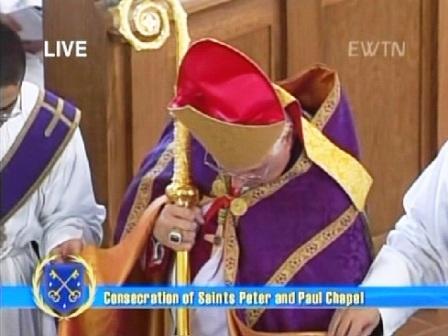
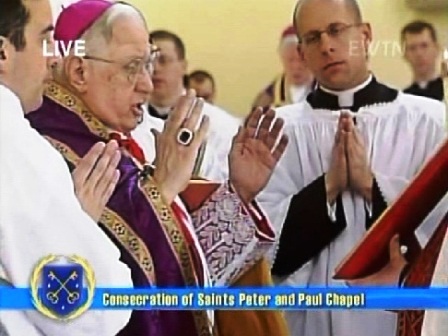
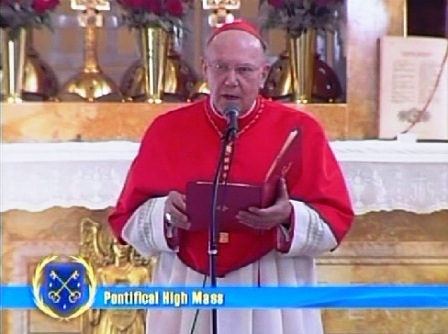
Card. LevadaI am listening to Card. Levada’s homily at the consecration of the new FSSP chapel in Nebraska.
A few things popped out at me.

First, I think it very interesting that he mentioned Anglicanorum coetibus in this talk.

The Cardinal, Prefect of the CDF to be sure, but also the President of the Pontifical Ecclesia Dei, cited a preface for the anniversary of a consecration of a church in the newer missal of Paul VI.  He also mentions that Pope Benedict at the time of Summorum Pontificum spoke of the appropriateness of using Ordinary Form prefaces with the older Extraordinary Form.

Okayyyy… but didn’t the PCED just write that that was not to be done?  Did I miss something?

My first thought is that that clarificatory letter from the PCED to a priest in Poland had to say that for the sake of the talks going on with the SSPX.   There might also be something in the new document about Summorum Pontificum which is is preparation, some regulation of the same.  Until then, don’t do it. 

Also, he raised the point that I made the other day: priests aren’t ordained for a book.  Fine.  But did he really have to press the point of the Ordinary Form in that context? Why not just let their day be their day?  That would be my main point of concern.

I very much liked his contrast of the "dustiness" of the Gospel story, about Zacchaeus up in his tree, and the splendor of the rites.  He also explains that the use of the story of Zacchaeus is appropriate because the Lord eventually goes to Zacchaeus’ house.  Salvation came to his house. 

His dictis it was a great honor for the FSSP and all those who embrace also a traditional form of the sacraments that the Cardinal was present, representing as it were the Holy Father for this occasion.

Also, someone tell the announcers that the man’s name is pronouced Le-VAY-da, not Le-VAH-da.  His name comes from Portuguese.

Posted in SESSIUNCULA | Tagged ,
52 Comments

TAC formally ask an “Ordinariate” for USA

I read that the TAC has formally asked for an "Ordinariate" for the USA.

The House of Bishops of the Anglican Church in America, the American Province of the Traditional Anglican Communion, have issued the following press release.

Orlando, FL – 1 pm EST – Bp. George Langberg

Released by the House of Bishops of the Anglican Church in America, Traditional Anglican Communion 3 March 2010

We, the House of Bishops of the Anglican Church in America of the Traditional Anglican Communion have met in Orlando, Florida, together with our Primate and the Reverend Christopher Phillips of the “Anglican Use” Parish of Our Lady of the Atonement (San Antonio, Texas) and others.

At this meeting, the decision was made formally to request the implementation of the provisions of the Apostolic Constitution Anglicanorum cœtibus in the United States of America by the Congregation for the Doctrine of the Faith.

UPDATE 4 Mar 0117 GMT:

I got an e-mail from a corrector (lots of them out there, btw):

As I read your article about Cardinal Levada’s homily, I come across this: "the man’s name is pronouced Le-VAY-da, not Le-VAH-da.  His name comes from Portuguese". Yes, it comes from Portuguese… where it is pronounced Le-vah-da. It may be worth mentioning on your blog… although I am not sure if you are prepared to accept any contradiction to you personal opinions, as I have seen time and again.


No. As he, Card. Levada, has explained to the Italians, who are entirely baffled by his name, Levada’s name is derived the Portugese for the "olive tree"… “Oliveira”.  And HE, Cardinal Levada, says it is "La-VAY-da".  The Cardinal’s grandfather came from the island of Sao Jorge in the Azores.  Thus, while the orthography of the name is odd, the pronunciation – as explained by the Cardinal – is La-VAY-da.

FWIW

Posted in SESSIUNCULA | Tagged ,
16 Comments

More from John Allen on Msgr. Marini and Benedict XVI

This is a companion piece to Mr. Allen’s interview with Msgr. Guido Marini, the papal MC.

My emphases and comments.

Liturgist: Pope aims to ‘propose’ practices
Mar. 03, 2010
By John L Allen Jr

ROME — For the better part of five years, plenty of experts on Catholic liturgy have been waiting for the “real” agenda of Pope Benedict XVI, known as a traditionalist on matters of worship, to emerge from beneath a façade of patience [But… read Ratzinger on liturgy!  It’s genuine patience.] seemingly built on dropping hints rather than imposing sweeping new rules.

Now, however, the pope’s own liturgist insists that the patient façade is actually the agenda.  [Of course.  When speaking about, for example, ad orientem worship Papa Ratzinger clearly knows that it is superior to versus populum worship.  But he warns against an imposition, which would create many problems… much as it did when the liturgy was being torn to pieces during and after the Council.  We must avoid abrupt changes for the sake of the people of God.]

One month ago, that papal liturgist, Msgr. Guido Marini, sparked wide debate with his public call for a “reform of the reform,” suggesting to some a desire to roll back the clock on liturgical reforms associated with the Second Vatican Council (1962-65). However, Marini insists that no such rollback is underway, and no dramatic new rules are in the works.  [An obvious point, but one that must be repeated and repeated and repeated for the readers of NCR, who are more than a little obtuse on this point.]

When Benedict employs more traditional touches in his own liturgies, such as giving Communion on the tongue, [That might be a "traditional" touch, but it has continued to the norm for the Church.  Communion on the hand is an aberration from the norm permitted by indult.] those amount to “proposals,” Marini said, intended to gradually influence the church’s liturgical culture, and are not harbingers of forthcoming papal edicts.

“I don’t believe that the liturgy of the church needs any radical changes or distortions,” Marini said, saying he “fully” agrees with a comment from then-Cardinal Joseph Ratzinger, now Pope Benedict XVI, that Catholic liturgy needs a “period of stability” after the wave of dramatic, and at times contentious, reforms that flowed from Vatican II.

Marini, the master of papal liturgical celebrations, spoke in an exclusive interview with NCR Feb. 9 in his Vatican office. (Read more of the interview here: Q & A with Msgr. Guido Marini, papal liturgist.)

When Marini addressed a Jan. 6 conference in Rome sponsored by the Australian Confraternity of Catholic Clergy and the U.S.-based Confraternity of Catholic Clergy, he seemed to call into question at least some of the reforms from Vatican II, such as active participation by laity in the liturgy [I am glad Mr. Allen started this with "seems", because that was patently absurd.  What is needed is a deeper understanding of what "active participation" means.] and greater “inculturation,” meaning adjusting the church’s rites to reflect local cultures.  [And we need a better understanding of inculturation, apart from the selling out of Catholic identity which we usually see.]

In his conversation with NCR, however, Marini said that undoing those reforms is not what he had in mind. Marini conceded that the liturgical winds are blowing in a traditional direction, but said any change should happen slowly and without new upheaval.

“I believe it’s a matter of consolidating what we already have, in a more authentic way, according to the true mind of the church,” Marini said. He said that’s what Benedict has in mind when he talks about “development in continuity.”

Marini, 44, has served as Benedict’s master of liturgical celebrations since October 2007. In that role, he is the chief organizer of the pope’s own celebrations; liturgical policy for the wider church is set by the Congregation for Divine Worship and the Discipline of the Sacraments, presently headed by Spanish Cardinal Antonio Cañizares. [Not to mention Pope Benedict.]

Trying to turn back the clock on Vatican II “wouldn’t make any sense, because it’s not how the life of the church works,” Marini said. New developments, he said, should happen “organically,” and “the best way, the most correct way … is certainly not to reject the reforms that were determined by the Second Vatican Council.”

[…]

The rest of the article is pretty much a summary of other points and you can read them on your own.

Posted in SESSIUNCULA, The Drill | Tagged , , ,
17 Comments

John Allen interviews Msgr. Marini: Pope Benedict proposes rather than imposes

When my friend the nearly ubiquitous fair-minded John L Allen does an interview, it is usually a good one.   Try to overlook the fact that he writes for dissenters’ central, the ultra-liberal fishwarp, the National Catholic Reporter. There is a companion piece.

My emphases and comments:

Q & A with Msgr. Guido Marini, papal liturgist
Mar. 03, 2010
By John L Allen Jr

Monsignor Guido Marini, Benedict XVI’s Master of Pontifical Liturgical Celebrations, is one of those Vatican figures who normally operate in the shadows. [Even when viewed by thousands.]  He’s the guy who organizes the Masses and other liturgical events over which the pope presides, so he generally attracts notice only when he happens to be standing near his boss when the TV cameras light up.

Marini took a big step into the spotlight back in January, however, when he gave a speech to a meeting of English-speaking priests in Rome, in which he advocated a liturgical “reform of the reform.” [Which was not a new idea.] Those comments unleashed a wave of speculation in the blogosphere and in liturgical circles about a possible new overhaul of Catholic worship under Benedict XVI, which critics would [hysterically] read as “rolling back the clock” on reforms associated with the Second Vatican Council (1962-65).

Marini sat down for an exclusive interview with NCR in his Vatican office on Feb. 9, to explain what he had in mind by a “reform of the reform.”  [This is a term that has been around for a while, notably in circles around Fr. Joseph Fessio.  At one point people were proposing, inter alia, that we go back to the actual mandates of Sacrosanctum Concilium and do another version of Holy Mass based strictly on the few things the Council Father’s actually mandated.  Great idea, but highly impractical, for that would have introduced yet another "Roman" form into the mix.  What Joseph Ratzinger wanted, and wants, is a way to jump start the heart "organic development" which had an infarct when the Consilium exceeded its mandate and, alas with the approval of Paul VI, imposed on the Church am artificially liturgy created from bits and pieces on their desktops and by committees.  Emancipating the use of the older, pre-Conciliar form of Mass is part of Papa Ratzinger’s project.  And this all takes great patience.]

Read John Allen’s news story here: Liturgist: Pope aims to ‘propose’ practices

In a nutshell, Marini’s message was that under Benedict XVI, the winds are clearly blowing in a more traditional direction, but anyone expecting a dramatic lurch one way or the other is likely to be disappointed – this pope prefers to operate by “proposing,” Marini said, rather than “imposing.”

The following are excerpts from the interview with Marini. (Marini spoke in Italian, and was given an opportunity to review the English translation of his remarks.)

* * *

[Q:] What did you have in mind on January 6 when you talked about a “reform of the reform”?

To tell the truth, I didn’t use this expression as something of my own, but as a phrase used by several others for many years, including, of course, the former Cardinal Ratzinger. I didn’t want to get into the details of what various people might mean by the expression, because there are different ways of understanding it. I believe that [NB] the best way, the most correct way, to understand the expression is certainly not to reject the reforms determined by the Second Vatican Council. [Though we didn’t really get the reforms mandated by the Council… let that pass…]  Rather, it’s to take another step forward in the comprehension and experience of an authentic liturgical spirit, [An echo of the title of Joseph Ratzinger’s Spirit of the Liturgy, named purposefully after Romano Guardini’s famous book, in which Ratzinger called for a new liturgical movement.] carrying together the inheritance of our tradition with the reform that the council accomplished, in a spirit of development in continuity.

[Q:] Of course, the former Cardinal Ratzinger also once warned against new upheavals in the liturgy, saying that we need a period of stability. Do you agree?

Yes, yes … I’m fully in agreement! I don’t believe that the liturgy of the church needs any radical changes or distortions, in part because it’s not in the logic of this spirit of development in continuity. I believe instead that it’s a matter of consolidating what already exists, in a more authentic way, according to the true mind of the church.

[Q: ] There is no “rollback” on Vatican II?  [A softball, but necessary for the liberal readers of NCR who can be more than obtuse on this point.]

Of course not. A ‘rollback’ wouldn’t make sense, because it’s not how the life of the church works. The life of the church moves forward in time, always developing but without losing anything from its life of either the past or the present. [Well… we do lose things, but not essential things.]

[Q:] You spoke about some more traditional touches in Pope Benedict’s liturgies, such as placing a cross on the altar and giving communion on the tongue. If I understand correctly, you’re not suggesting that these are harbingers of new liturgical policy for the whole church. [Note the word "policy".]

The pope has proposed, and proposes, these solutions. It’s the style of the present pope to proceed not though impositions but propositions. The idea is that, little by little, [brick by brick] all this may be welcomed, considering the true significance that certain decisions and certain orientations may have. That seems to me a typical touch of Pope Benedict.

Whether sometime in the future, what the pope’s presenting in this propositional way should become more of a disciplinary norm, we don’t know and can’t say. Certainly, the style at the moment is to offer proposals for the celebrative style of the church. Nevertheless, when the Holy Father proposes, it is not simply his personal preference, but a precise and clear orientation for the whole church.  [Okay… note that answer.  This is not just Joe Bagofdoughnuts making the proposal.  This is Peter.  Also, this is a Pope who knows a great deal about liturgy.  Someone with a true Catholic sense and sense of faith, a man of the Church, will listen and follow these directions.]

[Q.] That raises a broader question. Benedict XVI clearly has a strong liturgical vision, but to date hasn’t launched any sweeping liturgical reform. You seem to have already suggested why not: His strategy is to propose rather than impose. Is that right?

I would say so, yes. It seems to me that he has a vision rooted in great faith in the life of the church, which of course has its own sense of time and its own rhythms. Given certain realities, as well as the times in which we live, [Not a small issue!] sometimes things can’t just be imposed quickly. They have to slowly enter into the way of thinking of the church, its way of feeling, its climate. Within that, maybe one can eventually arrive at providing a more precise disciplinary norm, but perhaps first it is helpful to shape a climate of opinion.  [The fact that we have a new generation of leaders coming in is the big factor here.]

[Q.] You have to shape the culture of the church before its legislation? [A good point.]

I believe so, even if the two things obviously have to go together, because disciplinary norms also help to shape a culture. At the same time, there’s a process of cultural formation that can lead to disciplinary norms. I believe the balance between these two moments has to be kept in mind.

[Q.] The new edition of the Roman Missal in English is about to come out. Have you seen it?

No. As you know, that’s a job for the Congregation for Divine Worship. I know that it’s moving forward.

[Q.] Will the pope use the new missal when he’s in England in September?

I don’t know, because it hasn’t yet been decided. We don’t know if by then it will already be definitively approved. Certainly if it’s approved in the meantime, it would be the text he uses.

[Q.] The new translation has sometimes been criticized for using unfamiliar terms that may not be readily accessible to people. [NB] Do you agree with the logic that sometimes a kind of ‘sacral speech’ is a good thing, in order to lift people out of their daily experience?

[NB] I believe so, yes.  [Sorry, Bp. Truatman.] The liturgy certainly has a popular dimension, but it also has its own language and its own frame of reference. We sometimes need help in considering that in the liturgical space, in the climate of the liturgy, we effectively enter another dimension which is not our every-day world. The pope often speaks of the liturgy as a kind of heavenly space, which is certainly not detached from the world, but in fact offers a new way to live the experience of the world. [One imbued with mystery.] This all has to go together, and sometimes it can be expressed in language that isn’t the speech of everyday life, but the language of prayer and spirituality, which has its own beauty.

[Q.] With his 2007 motu proprio, Benedict XVI authorized wider celebration of the old Latin Mass, the so-called “Tridentine Rite,” alongside the new. Now that the dust has settled on that decision, where do things stand?

In my opinion, what’s important [NB] now is that the two forms of the Roman rite look upon one another with great serenity, [I am not convinced of that, but… ]  realizing that both belong to the life of the church and that neither is the only true, authentic expression. But rather, the two forms of Roman Rite can mutually enrich each other. [Remember that "organic development" point, above.] This must be the path along which we should walk, because perhaps we haven’t yet truly arrived at this attitude of serenity and welcome in daily life.

Posted in SESSIUNCULA, SUMMORUM PONTIFICUM, The Drill | Tagged , ,
10 Comments

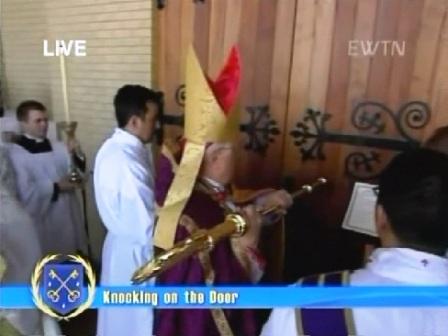
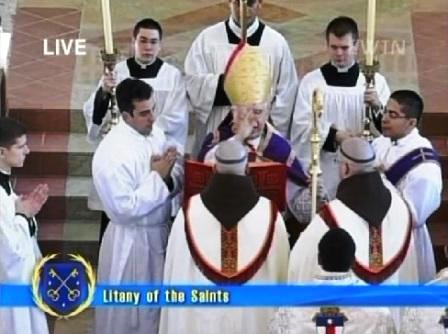
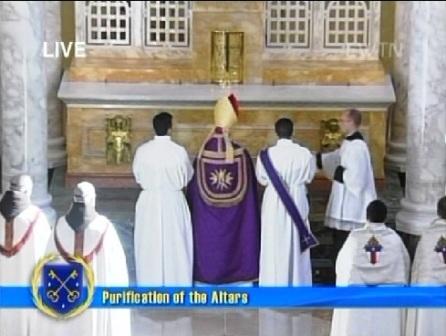
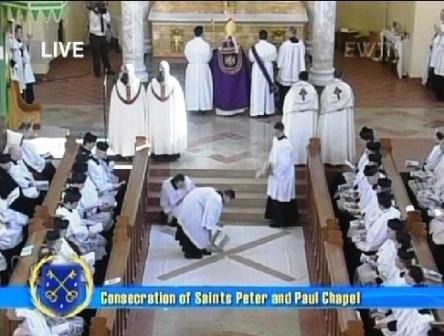
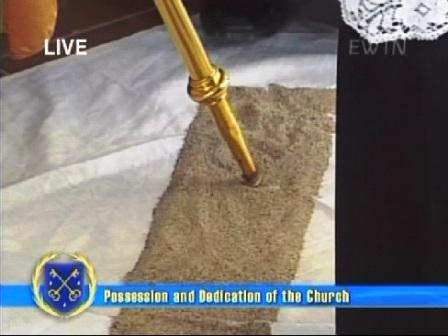
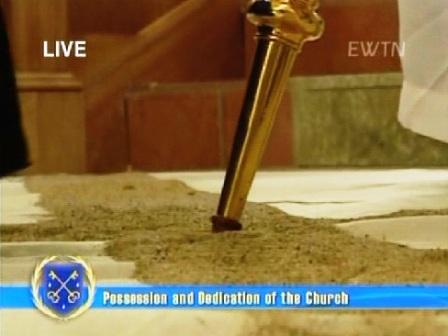
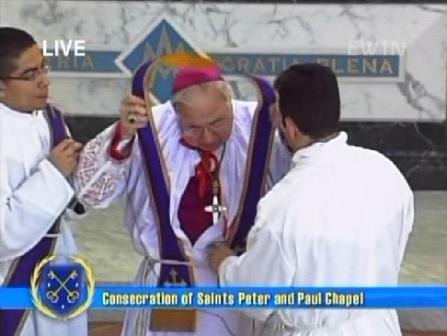
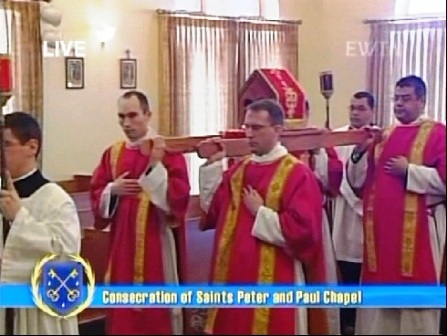
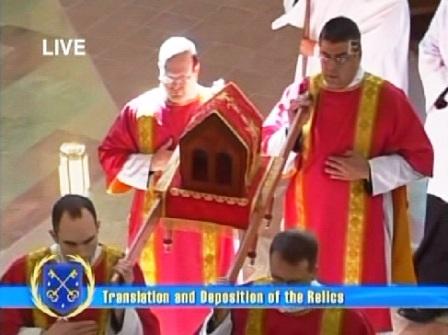
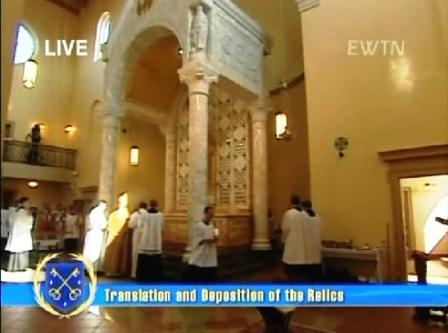
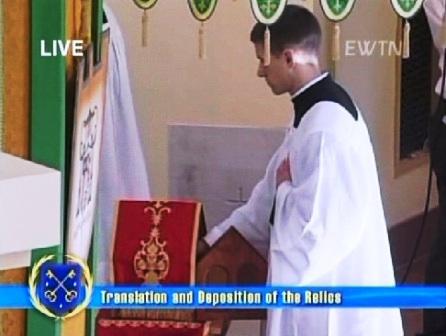
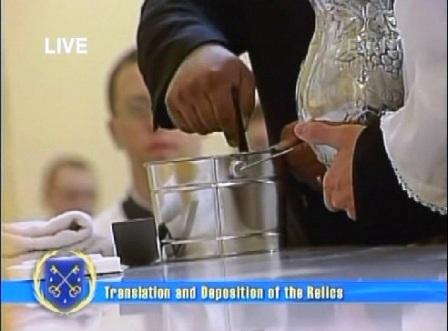
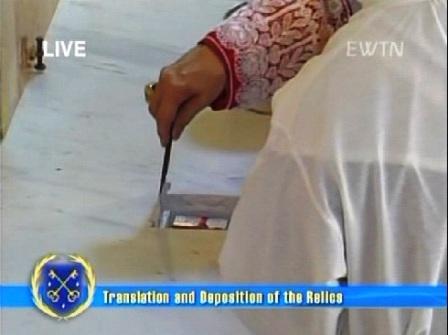
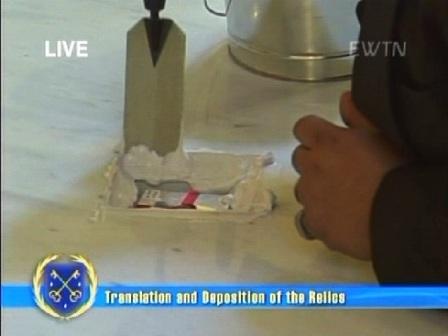
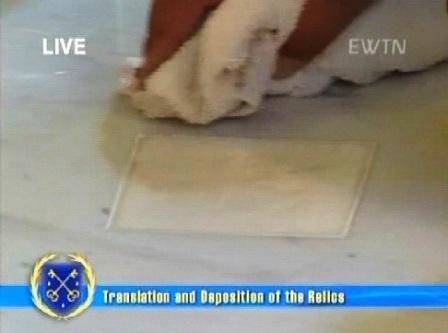
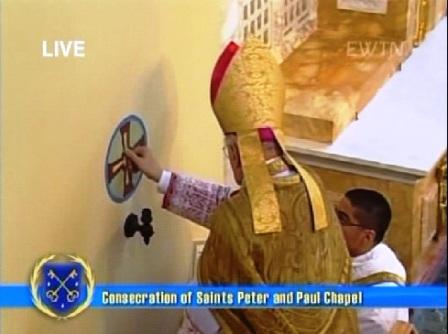
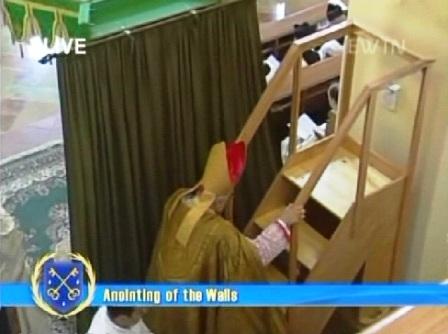
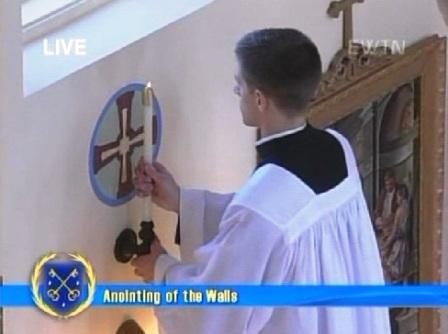
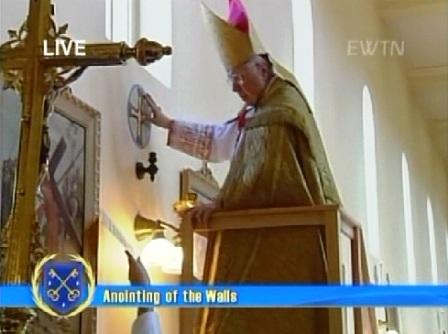
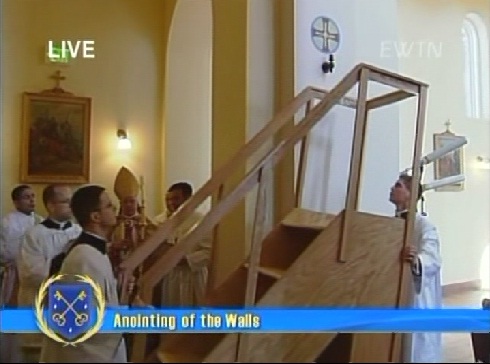
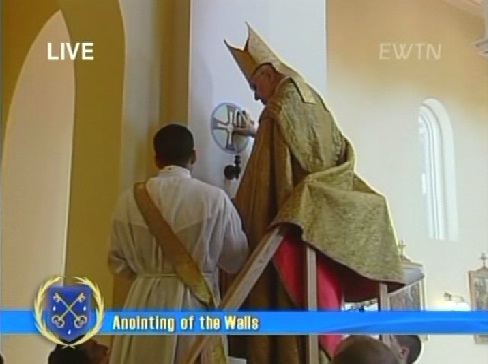
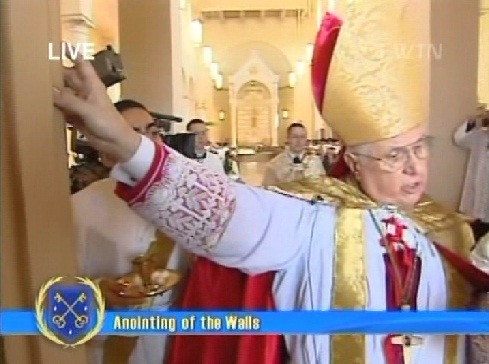
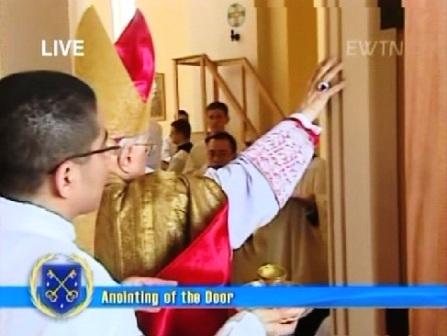
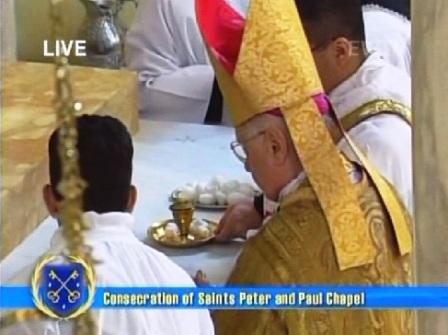
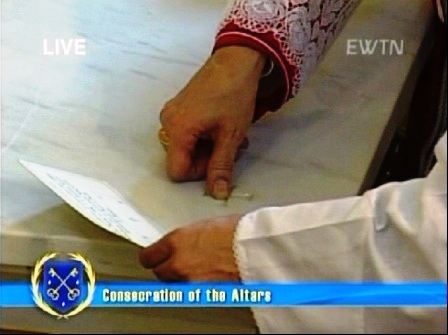
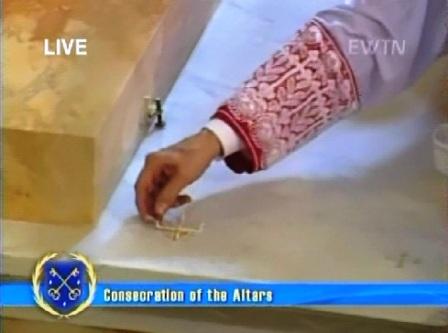
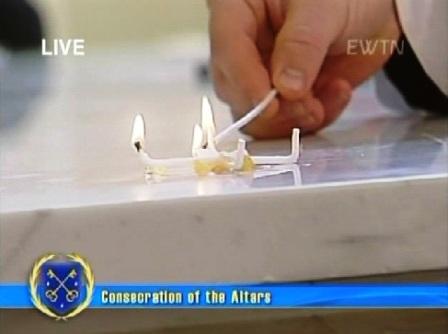
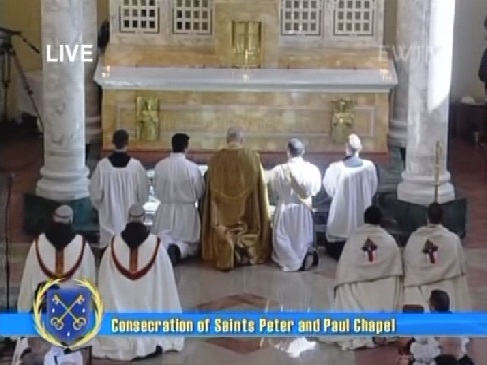
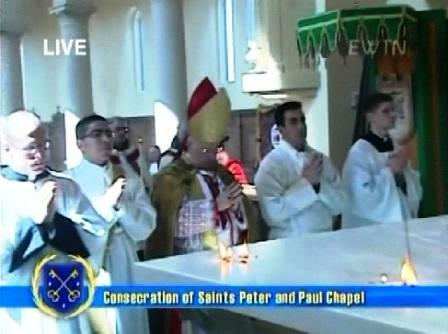
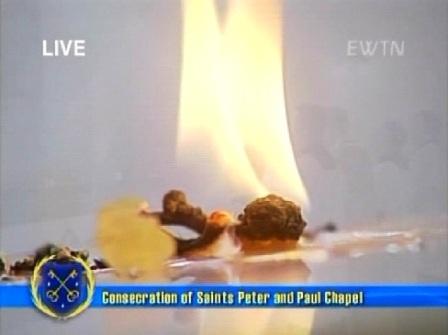
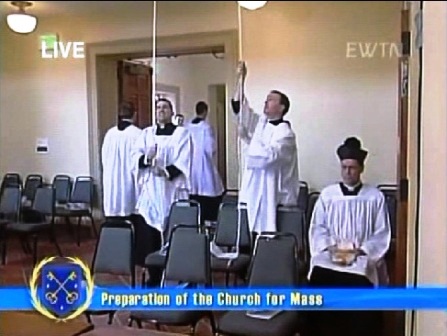
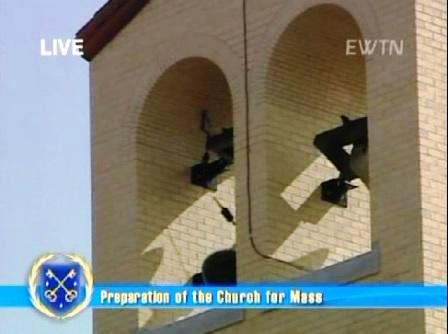
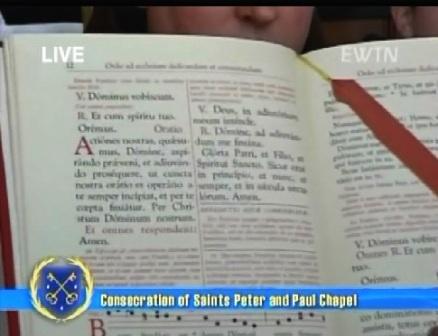
The FSSP Chapel consecration is now LIVE

The consecration of the new FSSP chapel is on now, live, on EWTN.

I will have some Z-Chat for people to talk about it as they watch.

I am pretty sure the liturgical eye-candy specialists at NLM will be posting lots of screen-captures, but I will add a few as time permits.

The FSSP Chapel consecration is now LIVE

The FSSP Chapel consecration is now LIVE

The FSSP Chapel consecration is now LIVE

The FSSP Chapel consecration is now LIVE

The FSSP Chapel consecration is now LIVE

The FSSP Chapel consecration is now LIVE

The FSSP Chapel consecration is now LIVE

The FSSP Chapel consecration is now LIVE

The FSSP Chapel consecration is now LIVE

The FSSP Chapel consecration is now LIVE

The FSSP Chapel consecration is now LIVE

The FSSP Chapel consecration is now LIVE

The FSSP Chapel consecration is now LIVE

The FSSP Chapel consecration is now LIVE

The FSSP Chapel consecration is now LIVE

The FSSP Chapel consecration is now LIVE

The FSSP Chapel consecration is now LIVE

The FSSP Chapel consecration is now LIVE

The FSSP Chapel consecration is now LIVE

The FSSP Chapel consecration is now LIVE

The FSSP Chapel consecration is now LIVE

The FSSP Chapel consecration is now LIVE

The FSSP Chapel consecration is now LIVE

The FSSP Chapel consecration is now LIVE

The FSSP Chapel consecration is now LIVE

The FSSP Chapel consecration is now LIVE

The FSSP Chapel consecration is now LIVE

The FSSP Chapel consecration is now LIVE

The FSSP Chapel consecration is now LIVE

The FSSP Chapel consecration is now LIVE

The FSSP Chapel consecration is now LIVE

The FSSP Chapel consecration is now LIVE

The FSSP Chapel consecration is now LIVE

The FSSP Chapel consecration is now LIVE

The FSSP Chapel consecration is now LIVE

The FSSP Chapel consecration is now LIVE

The FSSP Chapel consecration is now LIVE

Please forgive this next understatement, but the rest is "just" a Pontifical Mass.

Perhaps more later.

Posted in SESSIUNCULA |
36 Comments

PODCAzT 99: Archbp. Chaput’s Houston Speech on The Vocation of Christians in American Public Life

On Monday evening, 1 March 2010, Archbishop Charles Chaput of Denver gave a speech at Houston Baptist University called “The Vocation of Christians in American Public Life”.

The lecture was presented in coordination with the Pope John Paul II Forum for the Church in the Modern World at the University of St. Thomas.PODCAzT 99: Archbp. Chaput's Houston Speech on The Vocation of Christians in American Public Life

He criticized President John F. Kennedy’s historic campaign speech on his faith impacting his possible presidency as “sincere, compelling, articulate – and wrong.” Twitter

I think this was a very important address.  As such, I decided to make a PODCAzT by reading the text of the Archbishop’s speech (yes, it is available also on Youtube) with by comments before and after.  I received the link to the Youtube page while I was making this, but decided to post anyway.  And my rendering of the talk section is a bit short that the original.  Check the page of the Archdiocese of Denver.

https://wdtprs.com/wp-content/legacy/audio-archive/podcazt/10_03_02.mp3


Posted in Our Catholic Identity, PODCAzT, The Drill, The future and our choices, The Last Acceptable Prejudice | Tagged , , , , ,
10 Comments

Heva… Hava… Eva

A reader alerted me to this interesting post at Canterbury Tales:

How do you know which "Vulgate" you have? Open up your Latin Vulgate to Genesis 3:20. How is Eve’s name spelled? This will immediately tell which "Vulgate" you have in your hands:

  • If it’s spelled Heva: Clementine Vulgate (1592) – the standard printed Vulgate of the Catholic Church for Scripture and Liturgy until the Nova Vulgata (1979)
  • If it’s spelled Hava: Stuttgart Vulgate (1969) – a scholarly critical edition of the Vulgate from the German Bible Society, not used in the liturgies of the Catholic Church. This is an academic Vulgate with a critical apparatus – it often includes the Pslater iuxta Hebraeos.
  • If it’s spelled Eva: Nova Vulgata (1979) – the official Catholic edition of the Vulgate currently used in the liturgies of the Catholic Church (i.e. Missale Romanum 1969 & Liturgia Horarum)

This is the only fool-proof way for knowing which edition of the Vulgate that you have in your hands. So grab your Vulgate and check it out. I checked out the New Advent Vulgate at Gen 3:20 and happily discovered that it’s the Clementine Vulgate.

Posted in "How To..." - Practical Notes | Tagged
43 Comments

Archbp. Chaput’s HOMERUN in Houston!

Archbp. Chaput's HOMERUN in Houston!This will stir controversy… and it should. 

For a long time we have known that someone with a MITER on his head should have gone after John F. Kennedy’s speech in Houston?  It will be 50 years… think of that.

Archbishop Chaput of Denver has.

Sandro Magister has the entire text with footnotes on his site, also in Italian.  The speech was delivered last night.  We conclude from this that someone close to Archbp. Chaput in Denver knows what he is doing. 

Archbp. Chaput’s speech relies heavily on Augustine of Hippo.   Someone really knows what is going on.

Check the page of the Archdiocese of Denver.

Ask yourself this question as you read:

Are the consciences of politicians subject to the Catechesim of the Catholic Church or not?

My emphases:

JFK speech on faith was ‘sincere’ but ‘wrong,’ Archbishop Chaput states

Houston, Texas, Mar 2, 2010 / 06:01 am (CNA/EWTN News).- On Monday evening, Archbishop Charles Chaput of Denver delivered a talk at Houston Baptist University, in which he criticized President John F. Kennedy’s historic campaign speech on his faith impacting his possible presidency as “sincere, compelling, articulate – and wrong.” The archbishop called on his audience to get involved in the Christian “vocation” of being engaged in public service, at a time when religion is being increasingly ignored in the political sphere.

Archbishop Chaput gave his address, “The Vocation of Christians in American Public Life,” on the evening of March 1 at the Houston Baptist University’s Morris Cultural Art center. The lecture was presented in coordination with the Pope John Paul II Forum for the Church in the Modern World at the University of St. Thomas.

After offering caveats about his remarks, Archbishop Chaput emphasized the need for ecumenism and dialogue based on truth as opposed to superficial niceties. He then remarked, “We also urgently owe each other solidarity and support in dealing with a culture that increasingly derides religious faith in general and the Christian faith in particular.”

During his talk, the archbishop noted that there are currently “more Catholics in national public office” than there ever have been in American history.

“But,” he continued, “I wonder if we’ve ever had fewer of them who can coherently explain how their faith informs their work, or who even feel obligated to try. The life of our country is no more ‘Catholic’ or ‘Christian’ than it was 100 years ago. In fact it’s arguably less so.”

One of the reasons why this problem exists, he explained, is that too many Christian individuals, Protestant and Catholic alike, live their faith as if it were “private idiosyncrasy” which they try to prevent from becoming a “public nuisance.”

“And too many just don’t really believe,” he added.

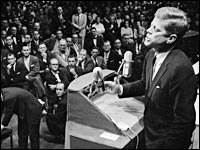
Recounting the historical context that led to the current state of affairs, Archbishop Chaput referred to a speech that the late John F. Kennedy made while running for president in 1960 which greatly effected the modern relationship between religion and American politics. At his speech almost fifty years ago, President Kennedy had the arduous task of convincing 300 uneasy Protestant ministers in a Houston address that his Catholic faith would not impede his ability to lead the country. Successful in his attempt, “Kennedy convinced the country, if not the ministers, and went on to be elected,” he recalled.

“And his speech left a lasting mark on American politics,” the prelate added.

“It was sincere, compelling, articulate – and wrong. Not wrong about the patriotism of Catholics, but wrong about American history and very wrong about the role of religious faith in our nation’s life.”

“And he wasn’t merely ‘wrong,’” the archbishop continued. “His Houston remarks profoundly undermined the place not just of Catholics, but of all religious believers, in America’s public life and political conversation. Today, half a century later, we’re paying for the damage.”

“To his credit,” he noted, “Kennedy said that if his duties as President should ‘ever require me to violate my conscience or violate the national interest, I would resign the office.’ He also warned that he would not ‘disavow my views or my church in order to win this election.’”

“But in its effect, the Houston speech did exactly that. It began the project of walling religion away from the process of governance in a new and aggressive way. It also divided a person’s private beliefs from his or her public duties. And it set ‘the national interest’ over and against ‘outside religious pressures or dictates.’”

Archbishop Chaput then clarified that although “John Kennedy didn’t create the trends in American life that I’ve described,” his speech “clearly fed them.”

In light of this separation of religion from the public sphere, “What would a proper Christian approach to politics look like?” the archbishop queried.

Archbp. Chaput's HOMERUN in Houston!Drawing on St. Augustine [In this section he quotes the work, by name, of a scholar of of Augustine, Fr. Robert Dodaro, OSA, who is my thesis director.  His book Christ and the Just Society is really hard, but worth time for the scholar.  I have had it on the side bar for a long time!  The average reader will find this book to be tooo haaard.  Really.] and several theologians, Archbishop Chaput answered, “Christianity is not mainly – or even significantly – about politics. It’s about living and sharing the love of God. And Christian political engagement, when it happens, is never mainly the task of the clergy.”

“That work belongs to lay believers who live most intensely in the world,” he asserted.

“Christian faith is not a set of ethics or doctrines. It’s not a group of theories about social and economic justice. All these things have their place. All of them can be important. But a Christian life begins in a relationship with Jesus Christ; and it bears fruit in the justice, mercy and love we show to others because of that relationship.” This fundamental relationship then informs how we involve ourselves in public life, he explained.

“As I was preparing these comments for tonight,” he added, “I listed all the urgent issues that demand our attention as believers: abortion; immigration; our obligations to the poor, the elderly and the disabled; questions of war and peace; our national confusion about sexual identity and human nature, and the attacks on marriage and family life that flow from this confusion; the growing disconnection of our science and technology from real moral reflection; the erosion of freedom of conscience in our national health-care debates; the content and quality of the schools that form our children.”

Because of the immensity of these issues, the Denver archbishop stressed that Christians need to united in their societal involvement. “The vocation of Christians in American public life does not have a Baptist or Catholic or Greek Orthodox or any other brand-specific label. Our job is to love God, preach Jesus Christ, serve and defend God’s people, and sanctify the world as his agents. To do that work, we need to be one. Not ‘one’ in pious words or good intentions, but really one, perfectly one, in mind and heart and action, as Christ intended,” he said.

Archbishop Chaput concluded his remarks by saying that “We live in a country that was once – despite its sins and flaws – deeply shaped by Christian faith. It can be so again. But we will do that together, or we won’t do it at all.”

“We need to remember the words of St. Hilary from so long ago: Unum sunt, qui invicem sunt. ‘They are one, who are wholly for each other.’ May God grant us the grace to love each other, support each other and live wholly for each other in Jesus Christ – so that we might work together in renewing the nation that has served human freedom so well.”

Remember Ratzinger to McCarrick… USCCB letters about voting… the Pelosi and Bidens of the world… the Card. Cottier nonesense… Notre Shame.

And do you remember the 2006 letter written by 55 Democrat Catholics in the House of Representatives who wrote to Card. McCarrick claiming, based on a twisting of Christifideles laici, that they can shape social doctrine from their role as laypeople because of their expertise, etc?

It goes all the way back to the hellish 1964 conclave in Hyannisport…. and before.

The rot set in and it began with John F. Kennedy.

This will stir controversy.  And it should.

Posted in SESSIUNCULA | Tagged , , ,
71 Comments