The Feeder Feed

Back at last for a time at home, I have been able to note the changes at the feeder.
The Feeder Feed
The first thing to note is how much they can eat.  Holy cow.

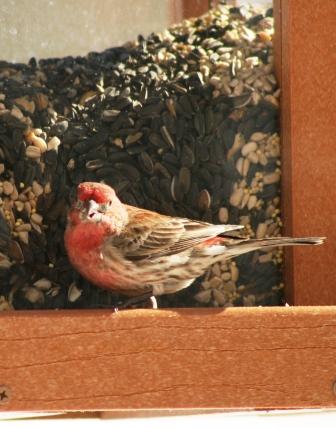
His scriptis, I note with pleasure that House Finches are back from whatever cruise they went on.

I hope it wasn’t on Celebrity.

The Feeder Feed

This Chickadee lost its snack in the wind.Twitter

The Feeder Feed

Posted in The Feeder Feed | Tagged , , ,
3 Comments

Curling continues

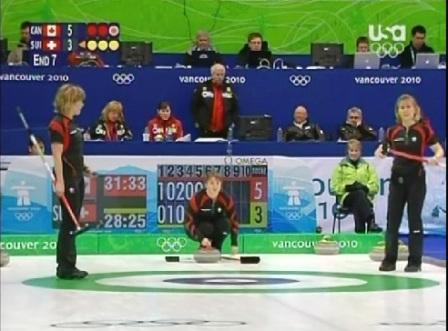
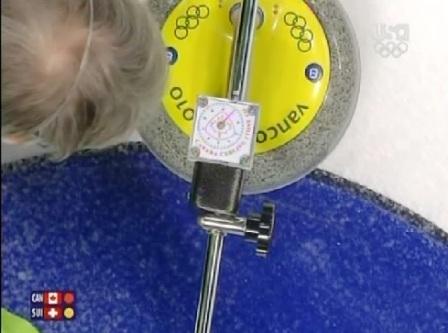
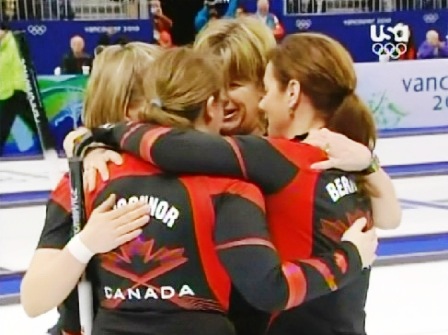
The women of Canada are dueling the women of Switzerland.

Curling continues

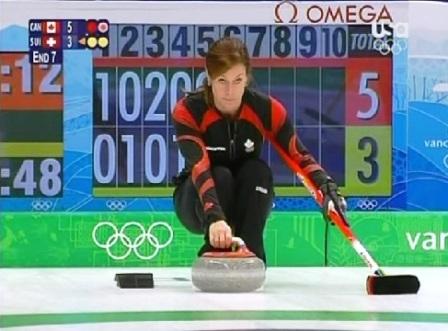
Oh the drama!

Curling continues

Curling continues

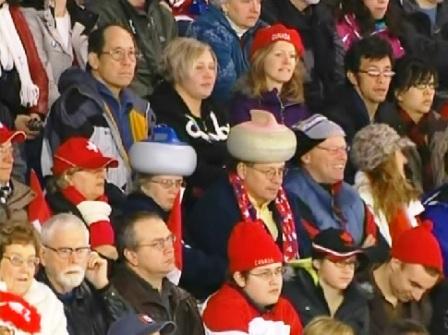
Great hats are available.

Curling continues

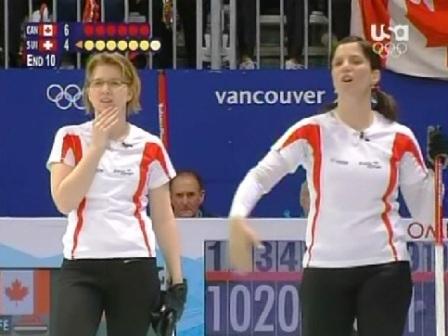
And the Swiss deserve to lose for this, if nothing else.

Curling continues

UPDATE:

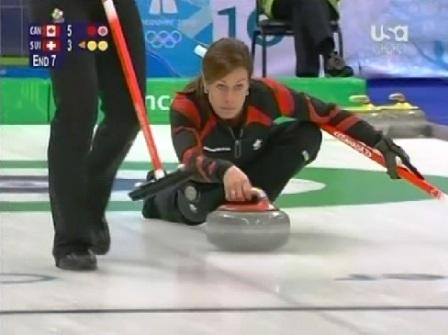
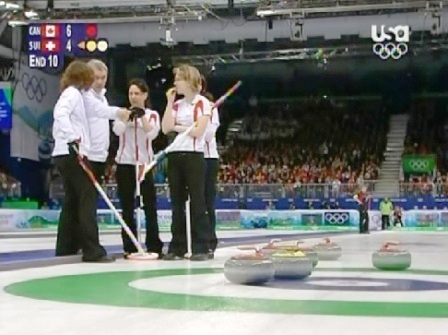
The tension is building.

Curling continues

Curling continues

Curling continues

Curling continues

CANADA WINS!  I am sure you are now exhausted from the tension.

Curling continues
 

Posted in SESSIUNCULA | Tagged
19 Comments

QUAERITUR: How to do vespers in a parish?

I have been getting more and more news of parishes implementing some form of the Office or Liturgy of Hours for the people to sing.

I want to put this out there for informed readers with some knowledge to comment on (I am swamped with work at the moment):

Some friends and I (all laymen who pray the traditional Breviary privately) have discussed the idea of doing Vespers or Compline together some days during the week, since we’re all saying the Office anyway.

However, rather than just doing "group private recitation"…we were wondering about actual Public celebration of the Office (solemn or spoken).

Our pastor has expressed total willingness to let us use the church during those times, since nothing else is going on, and even to alert people in the bulletin, but he himself is not comfortable leading it. (One of the deacons may be, however…)

We’re working on memorizing the "Ordinary" chant parts, especially for Compline.

So, basically, my question is, what ministers are actually required for public celebration of the Office (solemn or otherwise)? Must the celebrant be a priest? Must the celebrant be a cleric? According to the internal rubrics of the Old Rite, must it be a cleric in major orders? Can the roles of hebdomadary and cantor be filled by lay substitutes (as the role of acolyte/altar server can)?

Since celebration of the Divine Office requires no particular sacramental powers, it would be nice if lay volunteers could actually lead it (in cassock-and-surplice like an altar server, at least). But I’m not sure if anything more than spoken "group private recitation" is possible…

Posted in "How To..." - Practical Notes, ASK FATHER Question Box, SESSIUNCULA | Tagged
23 Comments

Wherein Fr. Z rants – QUAERITUR: not genuflecting to tabernacle during Mass

From a reader:

I had a question about the rubrics of the ordinary form that I can’t seem to find an answer to. Before the consecration, it is the practice of the sacred ministers to bow to the altar rather than genuflect to a tabernacle in the sanctuary. But what about after the consecration? As an acolyte (I would assume the priest and deacon are more-or-less stationary at the altar), I have to sometimes cross the sanctuary during Mass after the Agnus Dei and don’t know if I should bow or genuflect to the altar when the Blessed Sacrament is present.

The Ordinary Form prescribes that sacred ministers genuflect at the beginning of Mass when coming to the altar and at the end.  Also, the priest genuflects at the moment prescribed after the elevation of each of the Eucharistic species after their consecrations, and also before taking up the Host atbefore Communion.  Otherwise everyone is supposed to bow to the altar – even if the Blessed Sacrament is present there in a tabernacle – or bow to the tabernacle if it is elsewhere around the sanctuary and you walk before it.

The idea here is that we, as a Eucharistic gathering, ideally all of us seething with meaningful awareness of the ancient Christians who didn’t reserve the Eucharist as later Christians did, all of us ideally focusing our seething awareness and mutual affirmation on how the altar is a sign of the presence of Christ (as are the words Scripture and the congregation itself gathered in His Name, etc.) are to give honor to the altar of sacrifice, blah blah, all of us seething in mutually affirming anticipation as an Alleluia people who stand rather than kneel that sometime during the institution narrative …. 

You get my drift.  This is all very heady stuff.

I am a Say The Black – Do The Red sort of guy, so I am not, I repeat not going to tell people to ignore rubrics… but…. 

Frankly, I think that whole thing should be done away with.  To my mind it is just plain wrong to "ignore" –  to use a contentious word – the Blessed Sacrament in favor of some other thing which at that moment also is a sign of the presence of the Lord, namely the altar.  And yes we all know that Eastern Catholics and the Orthodox bow rather than genuflect and that their bowing is in no way lacking in reverence, etc.

But lets just talk among our Latin Church Catholic selves for a while here.

This is one of those modern liturgical reform oddities of the Novus Ordo, the Ordinary Form, which I just can’t get my old-fashioned Catholic head around.  If someone were to show up in my confessional saying that he genuflected during Mass when walking in front of the Blessed Sacrament I am not sure I would think he sinned, even venially.

"But Father! But Father!", the liturgically-aware will expostulate, perhaps with a little sneer.  They have been waving their arms around for a couple paragraphs by now, saying, "We are not ignoring the reserved Eucharist!  We are rather affirming the Eucharistic presence which is going to be consecrated in the context of this present sacred synaxsis. [They always have to get words like "synaxsis" in there.]  Perhaps the unnuanced find this disconcerting but in time the liturgically more mature come to be able to balance interrelations and seeeemingly challenging phenomena which diachronically …. "  yadda yadda…. yawn yawn. 

I respond: Oh yah? 

That’s all very fancy, but what real people are liturgically aware of, pal, is that you are blowing off the Blessed Sacrament which they can SEE  – RIGHT THERE.  You are walking by the tabernacle where they KNOW or OUGHT TO KNOW the Eucharistic Lord is really and truly present. 

After a while that will take its toll on what people believe and how they themselves give reverence to the Blessed Sacrament.

So… seethe away with liturgical awareness, juxtaposing and balancing your interrelated phenomena. 

I think this should be simple for Latin Church Catholics: 

Are you walking in front of the tabernacle? Hit the deck! 

Unless you are carrying something big or precarious, whether it is during Mass or simply heading across the sanctuary after Mass to scrape some wax off the floor, in my opinion we should genuflect when we walk before the Lord, truly present.

The Goa’uld in Stargate got one thing right, and I wish I could make my eyes flash: Bend your knee to your GOD!

And I will remind everyone that in the older, traditional form of Mass this isn’t a problem.

I am a Say The Black – Do The Red sort of guy, so I am not, I repeat not going to tell people to ignore rubrics… but….  

Posted in ASK FATHER Question Box, SESSIUNCULA, Wherein Fr. Z Rants |
41 Comments

QUAERITUR: Can laypeople own a monstrance?

From a reader:

I trust your judgment and I would like to know if it is ok to own a miniature monstrance.  Sites online sell them. [Image attached for reference.]  It’s a miniature monstrance which is not the same as one used in Mass.

Most of these small "monstrances" are really reliquaries.  They are "monstrances" insofar as they "show" relics, but they are not monstrances for display and adoration of the Sacred Host, more technically an ostensorium.  The terms for these sacred vessels come from words "to show".

Nevertheless, it would not be "bad" to own a large monstrance for a Host.   Of course you could not use it privately for displaying a Host for adoration except with the permission of the local bishop, who could authorize a private chapel with reservation of the Blessed Sacrament.

There is also the question of the consecrated nature of this sacred vessel.  A monstrance is a sacred vessel.  The traditional view of sacred vessels is that they should be touched only by hands which have also been consecrated to handle sacred things, such as the Host Itself and the vessels which contain the Eucharist.  The implication is, of course, if your hands are not consecrated, as those of a priest, then you should not handle a monstrance except in great need.  However, were a sacred vessel to be sold it would lose its consecrated character.  It would be "desecrated".  It would need to be re-blessed.

So, it is not "bad" for people to own these vessels, but great care must be exercised in their regard that they be treated with due reverence.

Posted in ASK FATHER Question Box | Tagged , , ,
14 Comments

Registration update

I just approved a passel of registrations which had piled up during my recent travel.  Sorry about the delay.

However, there were some which I did not approve.  I won’t approve a registration which offers absolutely nothing recognizable in the name categories.  There is no way to distinguish you from a bot or spammer.  Also, some just didn’t strike me as being "right" in some way.  Nixed.

Posted in SESSIUNCULA |
Comments Off on Registration update

Another brick in the Wall of Solomon

Time and time again I read about how archeologists discover things which confirm "tales" from ancient authors or from Scripture, putting skeptics and scoffers in their lonely place.

I picked this up from The Sacred Page:

Archaeologist sees proof for Bible in ancient wall

  By MATTI FRIEDMAN, Associated Press Writer Matti Friedman, Associated Press Writer   – Mon Feb 22, 8:07 pm ET

JERUSALEM – An Israeli archaeologist said Monday that ancient fortifications recently excavated in Jerusalem date back 3,000 years to the time of King Solomon and support the biblical narrative about the era.

If the age of the wall is correct, the finding would be an indication that Jerusalem was home to a strong central government that had the resources and manpower needed to build massive fortifications in the 10th century B.C.

That’s a key point of dispute among scholars, because it would match the Bible’s account that the Hebrew kings David and Solomon ruled from Jerusalem around that time.

While some Holy Land archaeologists support that version of history — including the archaeologist behind the dig, Eilat Mazar — others posit that David’s monarchy was largely mythical and that there was no strong government to speak of in that era.

Speaking to reporters at the site Monday, Mazar, from the Hebrew University of Jerusalem, called her find "the most significant construction we have from First Temple days in Israel."

"It means that at that time, the 10th century, in Jerusalem there was a regime capable of carrying out such construction," she said.

Based on what she believes to be the age of the fortifications and their location, she suggested it was built by Solomon, David’s son, and mentioned in the Book of Kings.

The fortifications, including a monumental gatehouse and a 77-yard (70-meter) long section of an ancient wall, are located just outside the present-day walls of Jerusalem’s Old City, next to the holy compound known to Jews as the Temple Mount and to Muslims as the Noble Sanctuary. According to the Old Testament, it was Solomon who built the first Jewish Temple on the site.

That temple was destroyed by Babylonians, rebuilt, renovated by King Herod 2,000 years ago and then destroyed again by Roman legions in 70 A.D. The compound now houses two important Islamic buildings, the golden-capped Dome of the Rock and the Al-Aqsa mosque.

Archaeologists have excavated the fortifications in the past, first in the 1860s and most recently in the 1980s. But Mazar claimed her dig was the first complete excavation and the first to turn up strong evidence for the wall’s age: a large number of pottery shards, which archaeologists often use to figure out the age of findings.

Aren Maeir, an archaeology professor at Bar Ilan University near Tel Aviv, said he has yet to see evidence that the fortifications are as old as Mazar claims. There are remains from the 10th century in Jerusalem, he said, but proof of a strong, centralized kingdom at that time remains "tenuous."

While some see the biblical account of the kingdom of David and Solomon as accurate and others reject it entirely, Maeir said the truth was likely somewhere in the middle.

"There’s a kernel of historicity in the story of the kingdom of David," he said.

Posted in SESSIUNCULA |
4 Comments

Thugs at the Cathedral of Chicago

From LifeSite:

Monday February 22, 2010

Gay Mob Protests Wedding Vow Renewal at Chicago Cathedral

by James Tillman

CHICAGO, February 22, 2010 (LifeSiteNews.com) – Last Valentine’s day, Feb 14, Chicago’s Holy Name Cathedral offered married couples a chance to celebrate their spousal fidelity by renewing their vows to each other during Mass.  Yet in order to do so, couples had to pass through an angry crowd of "gay rights" protestors who marched by the steps of the cathedral, accusing Church hierarchy of hatred toward gays and telling parishioners to "stop funding the bigots!" 

Police refused to interrupt the demonstration, despite laws that prohibit protesting near places of worship while services are ongoing. [And this is the problem, isn’t it.  What would people be saying to the city of Chicago if the police had not shut down a protest on the steps of a mosque where some stupid thing was being said?]

Chicago lawyer Nora Doherty, who was present during the demonstration, recounted via Renew America’s Matt Abbott how "one of the particularly angry protesters yelled at my three-year-old daughter, ‘Little girl, I hope you grow up to be gay so that your mother will disown you and you can know how I feel!’”

"There were some kinder protesters standing next to her trying to make excuses for her behavior," she continued, "but she was inexcusably uncivilized and there was literally frothy saliva visibly draining from the corners of her mouth."  [My favorite protestors are always spittle-flecked.]

The demonstration was organized by the Gay Liberation Network (GLN), which proclaims that the protest was meant "to draw attention to the Catholic hierarchy’s continued opposition to equal rights within the church and in society at large." [And the Church will continue to teach that homosexual sex and attraction is a perversion of the natural order.]

In particular, the protest was intended to target Chicago’s Cardinal Francis George, current President of the Conference of Catholic Bishops, and the "anti-civil rights posture of the current Pope."

"We want to drag the Church’s bigotry out of the closet," Andy Thayer, a well-known militant co-founder of the group, told the Chicago Tribune.

At one point, a speaker with a microphone and blow-horn asserted that "the Catholic hierarchy, particularly in the Knights of Columbus [sic] [!] and the organization of bishops, have regularly been clear that they want people who love people of the same gender … to stay in the closet; also, to not get jobs." [Not to get…. jobs….   Okay.  They are going to target the Church for discrimination suits.  Just watch.]

Protestors held signs proclaiming "the Pope is anti-women and anti-gay," "anti-equal Rights =’s hate," and "love transcends doctrine."   They also chanted "Holy Name, Holy Shame," "Stop the harm. Stop the hate. Separate the Church and State!" and other similar mantras.  [Pretty stupid, all in all.] The noise was audible from within the church.

[NB] The Chicago Municipal Code states that someone is punishable for disorderly conduct whenever he "pickets or demonstrates on a public way within 150 feet of any church, temple, synagogue or other place of worship while services are being conducted."

When Doherty asked an officer why they were permitting the protest to continue immediately outside the cathedral, she recounts, he "said that the organizer of the protest currently has 20 lawsuits pending against the city of Chicago and he tends to name officers personally as defendants in his civil suits."

For this reason, says Doherty, he went on to say that "unless the Commander gave explicit instructions to move the protestors to the other side of the street, he intended to do nothing."  [So, these homosexuals are effectively thugs, rather like organized crime.]

Ironically, Chicago rigorously enforces protection of its abortion mills with the "bubble zone" ordinance, which prohibits pro-life counselors within 50 feet of an abortion facility from approaching within 8 feet of an individual entering the facility, without that individual’s explicit consent.

Holy Name Cathedral’s pastor has asked the archdiocese to look into why Chicago police allowed the demonstration to take place
.

Colleen Dolan, spokeswoman for the Archdiocese of Chicago, said that the protestors’ efforts were misguided.

"They may not like it, but it’s the teaching of the Church that marriage is between one man and one woman," she said. “Those of us in the Church don’t get to choose what the teachings are."

Posted in The Last Acceptable Prejudice, Throwing a Nutty | Tagged ,
49 Comments

Availability of the TLM in Italy

Rorate has this interesting post about the availability of the TLM in Italy.

 The current situation for the TLM in Italy

(This set of statistics – taken from Unavox via Messa in Latino – counts 64 places throughout Italy where the Traditional Latin Mass is said on Sundays under diocesan auspices, in contrast to the 73 counted by Agoramag. This report also counts a total of 116 Mass sites in Italy [of which 99 are currently active] compared to 119 in the Agoramag report. CAP.)

The Current Situation:

Since Summorum Pontificum went into effect, at least one location with a regular TLM has been established in 42 out of the 225 dioceses in Italy (19% of all dioceses). A total of 116 Mass locations (of which 99 are active as of February 10, 2010) have been established since Summorum Pontificum went into effect, or in 0.4% of all the parishes (which total around 26,000). Worldwide, the Traditional Latin Mass is currently offered regularly (but not necessarily weekly) in a total of 1,425 Traditional Latin Mass locations all over the world (under diocesan auspices), compared to the 222,530 parishes of the Catholic Church.

The 116 Mass sites in Italy are distributed as follows:

In cities with a population greater than 300,000: 27 Mass centers (23%)

In medium-sized or small cities: 19 (16%)

In medium-sized villages /towns : 13 (11%)

In small villages /towns : 40 (34%)

Locations where the Mass has been suppressed: 15 (13%)

Locations where the Mass has been suspended: 2 (2%)

The frequency of Mass in these sites is as follows (note that the categories overlap):

Daily: 19 locations (16%)

Locations with Sunday and Feast Day Masses: 64 (55%)

Weekday Masses (but not apparently on feast days): 23 (20%)

Monthly Masses (not on feast days): 26 (22%)

Sites with occasional Masses: 3 (3%)

A comparison of the situation pre- and post- Summorum Pontificum

The total number of Mass centers has increased from 27 to 116, for a total increase of more than 330%.

Locations where the TLM is said daily have increased from 7 to 19, for a total increase of 170%

Locations where the TLM is said on Sundays and feast days have increased from 11 to 64 (for a growth of 480%)
Locations with weekday Masses from 5 to 23 (an increase of 360%)

Locations for monthly Masses from 4 to 26 (an increase of 550%)

Last but not the least, the number of dioceses where a regular Mass location for the TLM has been established has increased from 24 to 42 (an increase of 75%).

Posted in SESSIUNCULA |
3 Comments

WDTPRS – Wednesday 1st Week of Lent – Oratio super populum (2002MR)

ORATIO SUPER POPULUM (2002MR):
Tuere, Domine, populum tuum,
et ab omnibus peccatis clementer emunda,
quia nulla ei nocebit adversitas,
si nulla ei dominetur iniquitas
.

This "Prayer over the people" was in the Liber sacramentorum Augustodunensis for Ash Wednesday, and it seems to have been inspired in some measure by St. Leo the Great’s s. 57.

SLAVISHLY LITERAL VERSION:
Protect your people, O Lord,
and mercifully cleanse it from all sins,
for no adversity will harm it,
if it is dominated by no iniquity
.

OR:
O Lord, protect Your people,
and cleanse us from every sin,
because no adversity can harm us,
if we are not dominated by sin
.

This comes at the end of a Mass in which we hear also of the Sign of Jonah and hear Christ’s words about the evil generation, how the men of Nineveh will arise in judgment.

I think you have probably heard the darkly facetious quip that if God does not punish us now, He will owe Sodom and Gomorrah and apology.

Do penance.  

Posted in LENT | Tagged
11 Comments