WDTPRS – Friday 1st Week of Lent – Prayer over the People (2002MR)

Here is the Oratio super Populum which may be used NOW (in Latin) after Holy Mass.  Each day in Lent in the Ordinary Form now has this revived tradition according to the 2002MR which is, now, the edition of the Missal in force for the Ordinary Form.

PRAYER OVER THE PEOPLE:
Respice, Domine, propitius ad plebem tuam,
ut quod eius observantia profitetur extrinsecus,
interius operetu
r.

I am pretty sure this is a reworking of at least part of an ancient prayer which is the Secret for Ember Saturday in Lent (tomorrow) in the 1962MR:

SECRET (1962MR):
Praesentibus sacrificiis, quaesumus, Domine,
ieiunia nostra sanctifica:
ut, quod observantia nostra profitetur extrinsecus,
interius operetur
.

In the Ordinary Form we also have this "Prayer over the gifts", itself a reworking of a prayer in the 1962MR, and that in its own turn from the ancient Gelasian and Hadrianum and Paduense Sacramentaries.

SUPER OBLATA (2002MR):
Praesenti sacrificio, quaesumus, Domine,
observantiam nostram sanctifica,
ut, quod quadragesimalis exercitatio profitetur exterius,
interius operetur effectu
.

Perhaps some of you can exercise your Latin powers with your own slavishly accurate versions, or smoother polished renderings, and the pick over the changes, asking yourselves: Is there a change of theology or merely of emphasis?
Posted in LENT, SESSIUNCULA, WDTPRS |
9 Comments

Instruction on Summorum Pontificum “imminent”?

For a long time people have wondered about the "Instruction" that was to come from the Pontifical Commission Ecclesia Dei (now under the CDF) on the Holy Father’s "emancipation proclamation" Summorum Pontificum.

For some time I wondered whether it would be a good thing to have one.  But over time I have come around to the idea a bit more, given that we have seen good leadership from the revised PCED.

I found this on Rinascimento Sacro in turn from Panorama.  My translation with a bit of editing.

Instruction on Summorum Pontificum should be imminent.

[…] The arrival also of the instruction of the Pontifical Commission Ecclesia Dei for the interpretation and application of the Pope’s Motu Proprio Summorum Pontificum…. is in the homestretch.  At about three years since the release of the controversial papal document, groups of traditionalists have again denounced obstructionism by some bishops against the celebration of Mass with the Tridentine rite.  To this are joined points of doubt and differences of interpretation of the norms.  The awaited instruction should give the final word to these divisions.  [Ignazio Ingrao]

Who knows what "imminent" means.

Posted in SESSIUNCULA, SUMMORUM PONTIFICUM | Tagged
25 Comments

WDTPRS – Ember Friday in Lent – (1962MR)

TWDTPRS - Ember Friday in Lent - (1962MR)his is Ember Week in Lent. 

I had a PODCAzT which spoke about Ember Days.

During the week after the 1st Sunday of Lent we observe the Ember Days of Lent.  “Ember” derives from Anglo-Saxon ymbren, “a circuit or revolution (from ymb, “around”, and rennen, “to run”), the annual wheel of the sun.”

Winter, spring, summer and autumn all had their Ember Days.  These days of fasting and abstinence on Wednesday, Friday and Saturday fell during the weeks after the first Sunday of Lent, after Pentecost, around the time of the feast of the Exaltation of the Holy Cross on 14 September, and after the third Sunday of Advent (more or less St. Lucy’s day, 13 December). 

There is a medieval couplet in rather degenerate Latin about the times they fell rendered in archaic English that is just about as bad: “Fasting days and Emberings be / Lent, Whitsun, Holyrood, and Lucie.”  Rood is Middle English for a Crucifix.  Whitsunday is Pentecost, from Old English hwita sunnandæg, “white Sunday” for the color of vestments once used for that feast. 

The Fathers of the Church (e.g., St. Leo the Great (+461) and St. Jerome (+420) spoke of this custom, which perhaps stemmed from a Jewish practice of fasts at different times during the year.  As far back as Pope Gelasius (+496) Ember Days were often auspicious for ordinations. 

In Latin we call the Ember Days the Quatuor Tempora, or "four times" of the year.  This Latin term gave rise to a form of food which I am sure you all know.

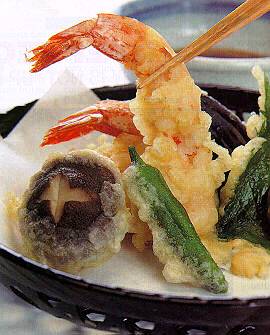
In the 16th c. Spanish and Portuguese missionaries settled in Nagasaki, Japan.  From their interest in inculturation and out of sensitivity for the ways of the people, they tried to make meatless meals for Embertide, which is a fast time.  They started deep-frying shrimp.  The Japanese ran with and developed it to perfection.  This is “tempura,” again from the Latin term for the Ember Days "Quatuor Tempora". 

POSTCOMMUNION:
Per huius, Domine, operationem mysterii,
et vitia nostra purgentur,
et iusta desideria compleantur.

SLAVISHLY LITERAL VERSION:
Through the working of this mystery/sacrament, O Lord,
both let our sins be purged,
and let our righteous desires be fulfilled
.

Mysterium and sacramentum are often interchangeable in liturgical prayers.  But when we do interchange them, be careful not to lose touch with the other term.  It should ring in your ear as an echo.

At Holy Mass, when we celebrate the sacrament of the Eucharist, we are also having an encounter with that which is mysterious, indeed, mystery itself.

This is an encounter which should leave us transformed.

Posted in LENT | Tagged ,
4 Comments

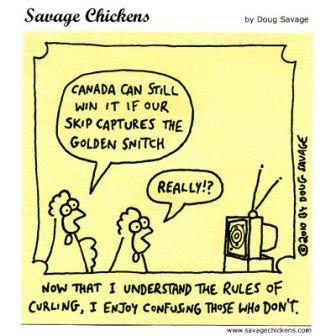
Curling confusion

Do not be deceived.
Curling confusion

Posted in SESSIUNCULA | Tagged
12 Comments

D. Green Bay Wisconsin will withhold 2010 funds from CCHD

From CNA:

Wisconsin diocese withholding 2010 funds from CCHD

Green Bay, Wis., Feb 25, 2010 / 06:15 pm (CNA).- The Diocese of Green Bay in Wisconsin has chosen to withhold its annual funding of the Catholic Campaign for Human Development (CCHD) until further information has been gathered on allegations that recently surfaced.  [Is this the first diocese to adopt this policy?]

The CCHD, which is under the jurisdiction of the U.S. bishops, has recently come under fire for alleged connections with a network of community organizations that have promoted homosexual causes and abortion advocacy. In response to recent allegations the CCHD subcommittee has been investigating claims.

The Diocese of Green Bay’s newspaper The Compass reported on Wednesday that Bishop David Ricken has decided to send his diocese’s donations only to CRS and Peter’s Pence, citing his need for more time to assess CCHD’s situation locally and nationally.

Every year on the fourth Sunday of Lent, parishes in the Diocese of Green Bay have traditionally taken up a collection with a portion of it going to the CCHD.

“There have been some questions about programs that have received funding from CCHD,” said Fr. John Doerfler, vicar general and chancellor for the Diocese of Green Bay to The Compass. “That, along with the enormous post-earthquake needs in Haiti, we decided this is an appropriate time to give additional support to Catholic Relief Services while we analyze the situation with CCHD.”

The Green Bay Compass clarified that there have been no apparent problems in the local diocese regarding CCHD grants and church teachings. CCHD grants in the area so far have been allotted to Spanish-speaking immigrants, homeless and formerly homeless individuals and home health care aids, the paper reported.

Posted in SESSIUNCULA | Tagged , , ,
31 Comments

Rubrical Olympics

A reader offered this:

A light hearted proposal in the Olympic Spirit…
 
The Inaugural Rubrical Olympics would be held at the Blackfen Minor Basilica and accept teams of clergy and servers from any Rite, Form, or Use approved by the Holy See. Priests with bi-ritual faculties or taking advantage of the motu proprio Summorum Pontificum may enter multiple events.
 
Individual events to include Censing (chain clinks a key judging point) and Blessing (Byzantine priests should pay particular attention to finger positions).
 
Team events would, of course, revolve around Masses and Divine Liturgies with marks awarded for sychronicity and reverence. Post Consecration thumb-forefinger action would be an important skill. Innovation, creativity, or artistic license would result in point deductions. The use of guitars would result in disqualification.
 
Periodic testing for banned substances (i.e. polyester, felt, ceramic) would see any offending priests sent to rehab with Msgr. Marini, the Master of Papal Ceremonies.
 
The Holy and Ancient Order of Rubricarians would, of course, act as judges for all events.

Posted in Lighter fare |
20 Comments

To people who write and cite documents

I have noticed lately that when citing Church documents some writers are perhaps less than clear about the use of capitalization.

Here is a small point for students and writers to take into consideration.

A common "mistake" rests in simply capitalizing all the words of the title of a document,  itself usually taken from the first few words of the document.  I write "mistake",  though that word is too strong.  It is so common to capitalize all the words as to be acceptable.  You find this even on the Holy See’s website collections of documents.

But… if you want to be perhaps more precise, you could capitalize only what ought to be.

You will often see Lumen Gentium for the Council’s document on the Church.  That’s fine, I guess.  But more correctly it could be written as Lumen gentium, because that is how the document begins.  So too for Gaudium et spes or an encyclical such as Humanae vitae.
To people who write and cite documents
On the other hand we should write Sacrosanctum Concilium, not Sacrosanctum concilium, because the word Concilium ought to be capitalized on its own merit. 

The same goes for the encyclicals Mystici Corporis Christi or Divino afflante Spiritu or the Motu Proprio (or motu proprio, etc.) Summorum Pontificum…. not Summorum pontificum. 

If you are going to chose one convention or another, be consistent.  Also, if you are going to go with the more correct way, double check to make sure you are in fact capitalizing what needs to be capitalized.

A small point.

Posted in SESSIUNCULA |
16 Comments

Scrolling posts reminder

Dont’ forget these, which have scrolled off:


Posted in SESSIUNCULA |
Comments Off on Scrolling posts reminder

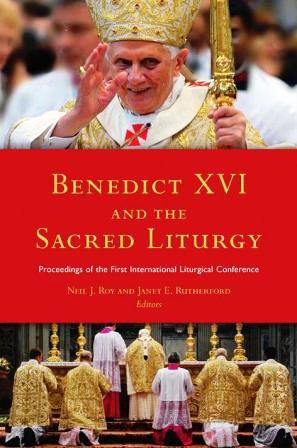
Proceedings of 1st (2008) FOTA International Liturgical Conf. in Cork, Ireland

Proceedings of 1st (2008) FOTA International Liturgical Conf. in Cork, IrelandA friend sent a note about a forthcoming book entitled Benedict XVI and the Sacred Liturgy, which will include the proceedings of the 1st FOTA International Liturgical Conference in Cork, Ireland in 2008.


It can be pre-ordered.  I will post about it again when/if I get a review copy.  I am sure the content will be useful.

"Benedict XVI and the sacred liturgy

Neil J. Roy & Janet E. Rutherford, editors

Benedict XVI and the Sacred Liturgy is the published proceedings of the first Fota International Liturgical Conference held in Cork, Ireland, in July 2008 and it aims to provide a general overview of some of the more important themes in Benedict XVI’s liturgical writings. It serves as a broad introduction to issues central to Benedict XVI’s concern for authentic renewal of Catholic worship, according to the principles set out by the Second Vatican Council, and to his critique of liturgical innovations deviant from those principles. The book explores some of the formative influences on Joseph Ratzinger’s liturgical vision and points to the consistent application of those critically assimilated influences over a spectrum of issues facing modern liturgical scholarship: the recovery of the sacred, the cosmic and eschatological dimensions of Christian worship, advocacy of continuity rather than rupture in the liturgical tradition; the need for historical and intellectual honesty in discerning development (as well as in areas such as vernacular translations of the core texts of the Roman Rite); and the renewal of genuine scientific exploration of the sources of the Roman Rite. The book is aimed at a professional and general audience. For the most part, it is easily accessible and plots the map for a series of more specific issues to be dealt with in the Fota Liturgical Conference Series. 

Revd Dr Neil J. Roy is visiting assistant Professor, University of Notre Dame, Indiana. Janet E. Rutherford is the hon. Secretary, Patristic Symposium, Maynooth".

Posted in SESSIUNCULA, The Campus Telephone Pole | Tagged
2 Comments

iPhone advice

For those of you using an iPhone try the browser called "Journey" instead of Safari.

UPDATE:

For those of you viewing WDTPRS with your mobile device, I switched some of the settings around.  Lemme know what you think.  Some of you were complaining about the mobile version.

Posted in SESSIUNCULA |
17 Comments