ASIANEWS: Underground Bishop of Xiwanzi dies, security tightened for funeral

Lest we get too involved with our oh-so-difficult problems in our parishes or dioceses….

From AsiaNews:

Underground Bishop of Xiwanzi dies, security tightened for funeral
by Zhen Yuan

Although the area is under heavy snow, thousands of faithful are expected for the funeral. The government bans display of Episcopal insignia, prohibits the publication of obituaries and allows only three priests to attend the ceremony. In 2009, 7 Chinese bishops died. In China only 94 pastors remain.

ASIANEWS: Underground Bishop of Xiwanzi dies, security tightened for funeral

Beijing (AsiaNews) – Coadjutor Bishop Leo Yao Liang of Xiwanzi, Hebei province, died in hospital Dec. 30 at the age of 86, almost one year after his release from a 30-month detention. Authorities have tightened security ahead of his funeral.

 Meanwhile the ordinary Bishop Hou Jinli 93, is quite ill, suffering from diabetes. Both prelates are not recognized by the government-sanctioned open Church in China.

The death of Bishop Yao has left 94 bishops alive in mainland China – 38 from the underground and 56 from the official Church, according to Anthony Lam, senior researcher of Holy Spirit Study Centre in the Hong Kong diocese.  Speaking to AsiaNews, he adds that seven bishops in China – three from underground (including Yao) and four from the official Church – passed away, in 2009.

 Despite heavy snow in northern China, thousands of local Catholics are expected to attend Bishop Yao’s funeral Mass at Xiwanzi town church, Chongli county, Hebei province, on Jan. 6. Local sources say public security has been tightened, preventing people from outside the county from attending the funeral. 

Government officials only recognized Bishop Yao as a priest and as such will only permit the funeral for priest not for a bishop. Only three priests of the diocese are allowed to celebrate the funeral Mass, and local Catholics are not allowed to issue a Church obituary on the prelate.

Bishop Yao was brought away by police in July 2006 and was returned to the church on Jan. 25, 2009, the Chinese New Year Eve, after a 30-month detention (see. 03/08/2006 Hebei: bishop, priest and 90 unofficial Catholics arrested). Since then, the prelate had been under close surveillance. Bishop Hou in near by Zhangbei county is also closely monitored.  Despite this Bishop Yao had started to build a church in Xiwanzi, and its foundation has just been laid.

Born in 1923, Yao was ordained a priest in 1948 and clandestinely ordained coadjutor bishop in 2002. His body will be buried in the clergy graveyard, about 10 minutes from the Xiwanzi church, in which the last Bishop Melchior Zhang Kexing of Xiwanzi who died in 1988, and other priests were buried.

Succeeding Bishop Zhang, Bishop Hou was clandestinely ordained a bishop in 1984. Hou was born in 1916 and ordained a priest in 1943.

Requiescat.

Posted in Our Catholic Identity | Tagged , ,
11 Comments

Bp. Vasa’s (D. Baker) 2010 predictions

A reader sent me this serious yet amusing bit:

The following hoaxes/myths will be exposed in 2010:
 
Manmade global warming
Atheistic evolution
Relativism is the only absolute
Abortion is "health care"
Nobody can do health care better than the government
A Catholic can be pro-choice
The government will take care of you
How Obama saved America
America no longer needs God
 
Come, Lord Jesus!
 
The Most Rev. Robert F. Vasa is bishop of Baker, Oregon.


UPDATE:

Here is the source for those predictions.  Check out Inside Catholic.

An emailer asked me why my predictions weren’t on their page.  I wasn’t asked for any.  Thus, I posted them today, HERE.

Fr. Z’s predictions for 2010

Posted in SESSIUNCULA |
28 Comments

Your good news

Do you have some good news to pass along to otherwise shell-shocked readers?

I will start it off.  It turns out that after lots of tests my mother does not have bone cancer after all.  Pretty good news.

Posted in SESSIUNCULA |
44 Comments

QUAERITUR: reading Liturgy of Hours on iPhone during Adoration

From a reader:

I purchased an iPhone this weekend, and have downloaded the ibreviary so far it works great. I was wondering if it would be appropriate to use my ibreviary during adoration. I typically will bring along one of the four volume set of my Liturgy of the Hours and my phone (I am scheduled for 3am and am alone the phone is for safety), but now it seems I could just bring my iPhone. It just feels a little uncouth to be reading from an iPhone during adoration as opposed to a book. So what do you think is it OK or uncivilized?


I am glad you are enjoying the use of the iPhone app iBreviary.  You must be using some language other than Latin.  Latin is never updated, though it is given as an option.

I don’t think the means by which you read your texts makes too much difference, so long as the instrument (whether book, or scroll, or screen, clay tablet, or phone, etc.) doesn’t become the true focus of your attention.  I think some people turn their books into objects of veneration, nearly to the point of bibliomancy [or bibliolatry].  This is easier to fall into with the beautiful old editions of the Breviarium Romanum than it is with the generally poorly bound editions of the Liturgy of the Hours.   But consider as well that something people today seem to have turned their smart phones into their oracles.  [portatiliolatry?]

Furthermore, there is not only your own approach to the phone, but also how others might interpret what you are doing.  I was recently wait for some folks at a church.  I parked myself in a corner of a pew at at the back while they took care of business decorating the sanctuary.  While waiting I read my office on my iPhone.  As my party approached one made the observation that at least had the chance to read my e-mail.  These phones are not associated with prayer, even in pious company.  The first reaction that people have is that you are doing something quite removed from the sacred.  If you will be alone in the chapel, that won’t be a problem, of course.

I have in the past joked that one day we would see Gospel processions with liturgical laptops equipped with covers of the liturgical color of the day.  I have quipped that one day we might find monks praying in their dark chapels with their faces illuminated by their hand held devices.

We are no longer readers of wax tablets, or scrolls, or parchment, or vellum.  Technology of the delivered word is changing.   Young people seem to read screens of all kinds more willingly than books.  Newspapers are dying and books sales are down.  Kindle and other readers are on the rise.

But connotions change slowly.  The content you read on a phone or reader may be the same as that which you find in a book, but holding the book and holding the gadget are perceived as different activities.

Posted in ASK FATHER Question Box |
28 Comments

A cautionary tale in France

Sometimes it seems that the trajectory of your life is to serve a a warning to otheres not to go down the same path you took.

His rebus dictis, there is a truly bizarre dust up in France in a town called Thiberville.  The local bishop of the Diocese of Evreux removed from office the long-time and much beloved parish priest, who coincidently celebrated also the Extraordinary Form.  He assigned another priest.   This didn’t go down well.

The site Fratres has posted a couple Youtube videos together with something of the story.  One of them shows an astonishingly scandalous scene which occurred when the bishop, who has a very liberal reputation apparently, came to the parish seemingly to install the new pastor.  The bishop made a pretty bad choice to wear vestments with a rainbow.  The congregation erupted in boos and some women actually faced him down and berated him. 

In the video you can see the faces of the shocked children watching this ugly scene unfold.

UGLY.
 

Posted in "How To..." - Practical Notes | Tagged ,
61 Comments

Malaysia: hackers’ cyber attack Catholic newpaper

Watch for a lot more of this in the future.

From CNA:

Malaysian protesters and hackers target Catholic newspaper after ‘Allah’ ruling

Kuala Lumpur, Malaysia, Jan 5, 2010 / 04:08 am (CNA).- Following the Malaysian High Court’s approval of a Catholic newspaper’s use of the word “Allah” for God, hundreds of Muslim youth have protested and the newspaper’s website has been hacked several times.  [I suspect this would not be the time to rerun the Holy Father’s Regensburg Address.]

The Herald, the country’s only Catholic publication, has been threatened with the loss of its printing license for using “Allah” to name the Christian God in its Malay-language section.

The newspaper argued that its usage follows centuries of tradition, while the Malaysian government argued the usage by Christians would confuse Muslims.  [Because no doubt many Muslims are reading the Catholic newspaper?  I hope so, but I wonder.]

On Dec. 31 Judge Lau Bee Lan ruled in the Herald’s favor.

On Jan. 2 the Herald’s website was hacked twice and was found to be hacked once again by CNA staff on the morning of Jan. 4.

Fr. Lawrence Andrew, the editor of the Herald, told the Malaysian Insider that technicians have confirmed the cyber attacks took place and the website was operating normally.

He declined to comment in detail, saying he did not want to add to the tension on a “very sensitive” issue.

In Penang, about 250 members of the group Umno Youth conducted street protests in front of the High Court building to protest the decision.

The Malaysian Insider says that protesters shouted “seditious” obscenities in their protests.

Opponents of the ruling are also using social networking sites like Facebook to rally support and to call for the ruling’s reversal.

Malaysian Prime Minister Datuk Seri Najib Razak has said the Home Ministry will appeal the ruling.


It just doesn’t get easier.

And it won’t until the Lord returns.

Posted in SESSIUNCULA | Tagged
5 Comments

Positive news about the talks between the SSPX and Holy See

The always interesting Rorate as well as the experts of liturgical eye-candy NLM, not to mention the Italian site messainlatino.it all get my biretta tip for this.        I share it here to make it known to a wider group of readers.

My emphases and comments:

Some News about the SSPX Discussions

Via the website Panorama Católico Internacional (found via messainlatino.it) come news about the doctrinal discussions between the Holy See and the SSPX.

The follwing is a synthesis of remarks made by Bishop Alfonso de Galarreta, head of the SSPX delegation for the discussions, on the occasion of recent ordinations of the SSPX at its Argentinian seminary of La Reja.  [de Galarreta has in the past been one of the hard liners.]

1) The outcome of the first meeting has been good.

2) Primarily the agenda and the method of discussion were established.

3) The issues to be discussed are of a doctrinal nature to the express exclusion of any canonical question regarding the situation of the SSPX. [So, they are not discussing whether the 1988 excommunications were legitimate, they aren’t dealing with the fact that SSPX clerics are suspended or whether they validly absolve sins (under normal circumstances), etc.]

4) The common doctrinal reference point will be the Magisterium prior to the Council. [Before the Council the Church said X.  Now the Church seems to be saying Y.  Can these two positions be harmonized or not?  Actually, that’s a very good project.]

5) The talks follow a rigorous method: an issue is raised, and the party raising it sends a paper substantiating its doubts. The Holy See responds in writing, after prior email exchanges among the technical advisers. At the meeting, the issue is discussed.  [Good methodology.]

6) All meetings are taped by both parties and filmed.

7) The conclusions of each topic will be submitted to the Holy Father and the Superior General of the SSPX.  [Not that there is any equivalence between them, of course.]

8) The timing of these meetings depends on whether the topic is new or is already being discussed. In the first case, it will be approximately every three months. In the second, every two. The next meeting is planned for mid January.  [This is going to take a while… depending on the number of questions.  I suspect they will limit themselves to key issues, such as the claim by the SSPX of an anthropocentric starting point in the Council’s documents, rather than a christocentric.  They will surely discuss religious liberty and ecumenism, which are probably two sides of the same coin.]

10) The theological representatives of the Holy See "are people you can talk with", they speak "the same (theological) language as we". (meaning presumably they are Thomists). [Very good.]

11) Some of the topics mentioned by the bishop in his homily, not exhaustively, are:

a) The Magisterium of the Council and after the Council.

b) The conciliar liturgical reform.  [I suspect that will be more easily dealt with.]

c) Ecumenism and interreligious dialogue.

e) Papal authority and collegiality.  [Right.]

f) Freedom of conscience, religious freedom, secularism and the social reign of Jesus Christ.

g) Human rights and human dignity according to the Council’s teaching.

The Bishop repeated that the results of the first session are good, compared to the previous situation. The parties talked entirely freely and only about doctrinal issues in a Thomist theological framework.

No one can foresee what will happen in the future. One will move forward day by day, as prudence and evangelical spirit direct.

How many times did I write about the need for men of good will to sit down and start talking?

One of the real benefits of these meetings and discussions for the whole Church will be greater clarity about the continuity between the pre-Conciliar teaching and Conciliar together with post-Conciiar teachings on a range of important issues.  I suspect that in some points the talks may reveal that there seems to be a discontinuity which requires greater explication.  Certainly some ecclesiological questions need to be worked through.   It is the constant claim by (usually) liberals that the Council changed the Church’s ecclesiology (theology of the nature of the Church).  This new ecclesiology undergirds the post-Conciliar liturgical reform and the revision of Canon Law, as well as what is taught in seminaries, etc. 

In other words: Cult, Code and Creed.

No one should fear these talks or their results.  Everyone benefits from an honest and intelligent search for answers to the burning questions of our time.

Also, I urged you on many occasions for pray for the parties involved.  Please keep them on your list.

Finally, I am pleasantly surprised by the positive tone of the remarks by SSPX Bishop de Galarreta.

Posted in Brick by Brick, Ecclesiae unitatem, Our Catholic Identity, The Drill | Tagged ,
32 Comments

Chosing bishops

At Stella Borealis, which blog covers churchy news of my native place and region, there is an interesting entry about the appointment of bishops in the zone… and a brief description of how appointments are made.

Search for a new bishop shrouded in secrecy.

There have been quite a few episcopal appointments in the area in the past few years.

  • 2004 — Bishop Raymond Burke of La Crosse became Archbishop of St. Louis and then in 2008 went to Rome
  • 2004 — Bishop Robert Carlson (formerly an Auxiliary in St. Paul-Minneapolis) left Sioux Falls for Saginaw and then went as Archbishop to St. Louis in 2008
  • 2004 — Bishop Jerome Listecki replaced Bishop Burke in La Crosse, coming from Milwaukee, and then today replaced Archbishop Tim Dolan, now in New York, in Milwaukee
  • 2005 — Bishop Daniel Di Nardo of Sioux City headed off to Galveston-Houston as Archbishop and soon thereafter as Cardinal
  • 2006 — Bishop Ralph Nickless came from Denver to fill the vacancy in Sioux City
  • 2006 — Bishop Paul Swain came from Madison to fill the vacancy in Sioux Falls that had been overlooked because of the simliarity of names, it is thought.
  • 2007 — Bishop Peter Christensen went from Nativity Parish in St. Paul to Superior to fill the vacancy caused by the retirement of Bishop Raphael Fliss.
  • 2008 — Bishop John Nienstedt, originally from Detroit, came to St. Paul Minneapolis from New Ulm as Coadjutor Archbishop. He succeeded in 2009
  • 2008 — Bishop John Levoir went from Winona to Crookston to full the vacancy caused by the retirement of Bishop Victor Balke.
  • 2008 — Bishop Richard Pates, an Auxiliary in St. Paul Minneapolis went to Des Moines as Bishop
  • 2008 — Bishop John Quinn came from Detroit to Winona to fill the vacancy caused by the retirement of Bishop Bernard Harrington.
  • 2009 — Bishop Lee Piche’ became the Auxiliary Bishop in St. Paul Minneapolis
  • 2009 — Bishop Dennis Schnurr of Duluth went to Cincinnati as Coadjutor Archbishop and just recently succeeded.
  • 2009 — Paul Sirba just became Bishop of Duluth.

So where do all these bishops come from? How do they decide in Rome who gets to be a bishop and who gets moved or promoted? The Diocese of Scranton, Pennsylvania, is now awaiting the appointment of a successor to their bishop who retired for health reasons. The newspaper there has printed an informative article on the appointment process.

Four months after Bishop Joseph F. Martino resigned as head of the Roman Catholic Diocese of Scranton, the search for his successor is well under way. But the exact progress of the search is unclear because the timeline for selecting a bishop is not fixed and the process is largely kept secret.

A spokesman for the diocese declined to specify the status of the process or to say whether the diocese’s administrators have submitted a report on the condition and needs of the diocese to the Vatican’s ambassador, or apostolic nuncio, in Washington, D.C. – an early step in the process of appointing any diocesan bishop.

In a written statement, spokesman William Genello said, "The process to select a new bishop typically includes inquiries by the papal nuncio to people in the diocese, regarding conditions in the diocese and potential candidates. This is confidential. It is not known who might have been contacted."

The clearest timeline for the selection process was outlined by Cardinal Justin Rigali, the apostolic administrator of the diocese who also sits on a key Vatican council that helps select bishops, on the day that Bishop Martino’s resignation was accepted by the Vatican.

"I would hope – and it is only my hope – I would hope that within six months we would have a bishop," he said during an Aug. 31 press conference. "Maybe sooner, maybe it will take longer."

If the selection process takes six months, which would fall around the end of February, the appointment of Martino’s successor will have taken far less time than many appointments of U.S. bishops. The four vacant sees most recently filled in the U.S. waited an average of a year to receive a new leader.

The process for selecting a bishop begins before a see is vacant. During periodic meetings, the bishops in each province vote on well-regarded priests to add to a list of potential bishops to be sent to the nuncio. Scranton is part of a statewide province whose metropolitan is Rigali, the head of the Archdiocese of Philadelphia.

Once a bishop resigns, is appointed elsewhere, or reaches the retirement age of 75, the nuncio, currently Archbishop Pietro Sambi, requests a report from the leader of the diocese about its condition, needs and challenges. The nuncio also does his own investigation into the needs of the diocese and suitable candidates to lead it. He consults past bishops of the diocese, other bishops in the province and around the country, and the metropolitan. He may also consult priests and lay members of the diocese.

Once he narrows the list to a handful of candidates, the nuncio sends confidential questionnaires to people who know the candidates, including priests, religious and well-respected laity. Those who receive the questionnaire are bound by the code of papal secrecy: they cannot tell anyone that they have received the letters or what they write in response.

The nuncio then gathers the information and writes a report including a list of three candidates, a terna, and notes his preference, which he sends to the Congregation for Bishops at the Vatican, the body of about 30 cardinals, including Rigali, that oversees the selection process.

An English-speaking cardinal assigned to review the Scranton position studies the file and makes a recommendation to the body of cardinals at one of its twice-monthly meetings. The congregation then votes for its preferred choice, which may not be the same as that selected by the nuncio or the presenting cardinal, or it may ask for more information or to be given a new terna.

Once the congregation agrees on its choice, that information is passed on to the pope during a Saturday meeting with the head, or prefect, of the congregation. The pope can follow the council’s recommendation or, in a rare case, make a different decision. He is ultimately responsible for selecting the bishop.


In my opinion, during the pontificate of John Paul II, and into the present pontificate, the central part of the US was targeted by the Holy See for a faster overhaul of the episcopate. 

Slowly but surely bishops in this country are getting some traction and the younger bishops are making a big difference.
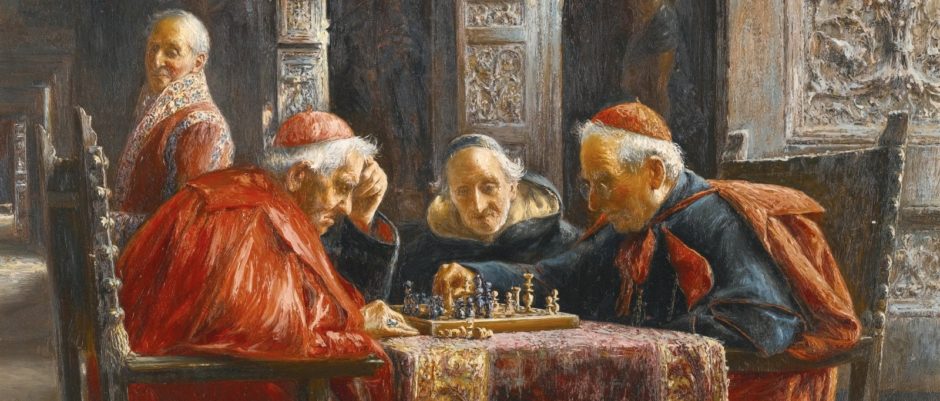
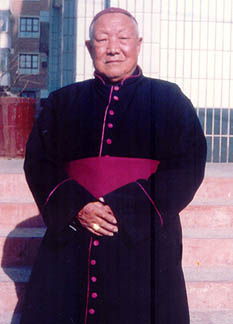
Posted in SESSIUNCULA |
26 Comments

How do they manage?

Okay… I am watching the news and the East Coast newsies are worked up about how cold it is there, as if the temperatures on the East Coast are somehow… I don’t know… news.  Oh… it’s so very cold.  Brrr… it might get down to 22F in New York!  Imagine!  Yesterday it got down to 20!  It was 40 degrees in Florida!  Oh my!

How do they manage?

It was -28F in International Falls, MN yesterday. 

Posted in SESSIUNCULA |
54 Comments

Return to the Kindle question

On my last airplane trip, I sat by a guy using a Kindle.  He thought it was great.

We had a question about Kindle here on the blog before.  But now that the gadget has been out for a while, I want to reopen the issue with questions. 

Do you like it?

Do you actually use it?

What do you use it for?  Books?  Periodicals?  Blogs?  (WDTPRS is available on Kindle, btw.)

Anything else to add?

Since I am actually looking for useful information, if you don’t have a Kindle or something like it (there are other readers, I believe) or haven’t used one, enjoy the entry without posting comments.

Posted in SESSIUNCULA |
33 Comments























