WDTPRS POLL: Color of Advent Vestments – Wherein Fr. Z rants

Here is my annual rant on blue vestments for Advent (see the POLL results about that).

"But Father! But Father!", you might be saying.  "Aren’t the confused liberal dinosaurs dying off?  Aren’t blue vestments
cliché?

Yes and yes.

Nevertheless, there are still some liturgical abusers out there.  Therefore, my annual rant.

But first a poll… let’s see what’s going on.

n

{democracy:35}

Post comments about what you see in your parish for Advent.

Now for my rant:

Blue is not an approved liturgical color for Advent or any other time.

Sorry, I am not making this up.

Not that I have anything against blue, of course. It is simply liturgically illegal right now.

When the Holy See approves the use of blue I will happily put it on!

Instead of agitating for women priests, I wish the agitators would agitate for blue vestments… without breaking the law, of course.

Imagine! Traditional priests, deacons and subdeacons putting on blue maniples, blue dalmatics and tunics, covering chalices with blue veils and blue burses, hiding patens under blue humeral veils.  I believe some groups use blue for Marian feasts on the justification that in Spain and Spanish territories there was a special indult, etc.  I find that argument a little weak unless you actually in Spain and it is 8 December and you are using the Novus Ordo.  The Spanish bishops conference in its ordo (cf. pp. 21 & 30) lists blue as a possible color for 8 December for the Novus Ordo or in Puerto Rico, etc.   I think in the Basilica at Padua there is a permission to use blue vestments.  I suppose those of the Anglican Use do and will use blue, with permission of the Holy See because that is part of their liturgical tradition.

The point is that Advent has its color: violet/purple.  Let it be, if you want, a shade closer to blue than to red.  But it is purple.  You need a special permission to use blue.  You don’t just decide for yourself as pastor or liturgy director of St. Ipsidipsy in Tall Tree Circle because its so nice.

This whole liturgical blue issue always brings to my mind a parody song made years ago by one of our participants here, the Timothy the Parodist, now the official WDTPRS parody songwriter. 

Sing this to the tune of O Come, O Come Emmanuel:

O come, o come liturgical blue;
out with the old, and in with the new.
Let’s banish purple vestments from here,
the color blue is very HOT this year.

REFRAIN:

Gaudy, gaudy, gaudy chasubles,
in baby, navy, powder-puff and teal.

Since Advent is the Blessed Virgin’s time,
we’ll wear blue, though it’s a canonic crime,
and in the third week, we’ll wear white.
Although it’s wrong, we’ll say that it’s alright.

R.

Around the wreath we’ll place blue candlelight,
and in one corner, we will place one white.
We’ll drape blue over our communion rail,
and use blue burses with blue chalice veils.

R.


Posted in ADVENT, Parody Songs, POLLS, SESSIUNCULA, Wherein Fr. Z Rants | Tagged , ,
62 Comments

QUAERITUR SPECIAL! An online “confession”

From a reader:

Bless me Father for I have worshiped in a language I don’t understand, and heard the word "ineffable" no fewer than three times within the same worship experience.

That would have been singing at my local Russian Orthodox church on Thursday evening for a reader service (a truncated form of the Vigil because the priest was called away) for the Entry of the Most Holy Theotokos into the Temple, the equivalent of our Presentation of the BVM in the Temple. And there’s no telling how many times they slipped "ineffable" into the Slavonic without me knowing.

Thank you for sharing, my friend.

I’m afraid it falls to me to fill you in on the harsh reality of your experience. 

But don’t get the idea that I am judging you.  You’re nice just the way you are.

First, as a subject of the so-called "Latin" faith community, still dominated by bishops and far-away-out-of-touch bureaucrats in Rome, you are clearly too stooopid to understand this sort of "sacral" language. 

What have we been telling you all these years?  Why go to such a place when it will upset you?  Of course, as a non-Roman community of believers they automatically have advantages.  But… you should think happy thoughts about them without actually praying with them.  You never know what will happen if you do that.  Best not to go at all.

Stick with the lame-duck ICEL "pastoral" prayers in a similarly reformed worship space where you won’t be distracted by any sense of the sacred or, Gaia forbid, have an encounter with mystery.

For your penance… er um…. happy thought for the day, think nice thoughts about Bp. Trautman and go sign your name on the petition of that guy in Seattle who has essentially regurgitated Trautman’s arguments.

But, finally… I don’t want you to feel any guilt.   Clearly guilt is an outdated category.   Try to look at these last few minutes as a nice chat more than anything else.  In the future, you would do just as well to get a nice cup of fair-trade coffee in a recyclable cup somewhere within walking distance.  Okay?  Need a hug?  No?

I affirm you in yourself in the name of the Creator, Redeemer and … Community Organizer.

Have an ineffable day!

Posted in ASK FATHER Question Box |
10 Comments

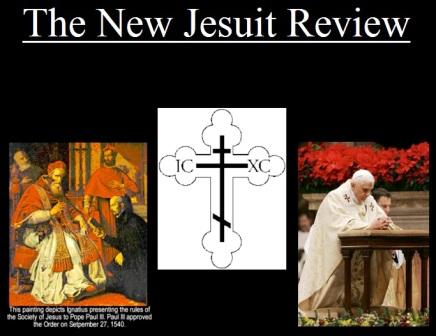
A new worthy Jesuit initiative: New Jesuit Review

We all know that the Society of Jesus (Jesuits), have their… problems.

But I know some younger Jesuits (older too) who are outstanding.  They maintain that old time Jesuit spirit and excellence.

One such e-mailed me today about a new initiative called the …

Pay attention to this new review!

What do they aim at?A new worthy Jesuit initiative: New Jesuit Review

The New Jesuit Review has as its goals the recovery of Jesuit spirituality from its authentic sources and reflection by contemporary Jesuits on its significance for their lives.  The writings of St. Ignatius and the First Companions, the lives of Jesuit saints and martyrs, and classics of Jesuit spirituality are examined in the spirit of Perfectae Caritatis, the Decree on the Adaptation and Renewal of Religious Life of the Second Vatican Council:

It redounds to the good of the Church that institutes have their own particular characteristics and work. Therefore let their founders’ spirit and special aims they set before them as well as their sound traditions — all of which make up the patrimony of each institute — be faithfully held in honor. (Perfectae Caritatis, 2)

Posted in Brick by Brick | Tagged
24 Comments

WDTPRS – 2nd Sunday of Advent (2002MR)

From an old WDTPRS article.

These articles were the original reason why I started this blog in the first place.

[…]

Lest any “traditional” Catholics think today’s Collect is less valuable because it isn’t old enough, or wasn’t in the 1570 Missale Romanum, it is from the Gelasian Sacramentary, compiled from material in use much earlier.

COLLECT – LATIN TEXT (2002MR):
Omnipotens et misericors Deus,
in tui occursum Filii festinantes
nulla opera terreni actus impediant,
sed sapientiae caelestis eruditio
nos faciat eius esse consortes
.

ICEL (1973 translation of the 1970MR):
God of power and mercy,
open our hearts in welcome.
Remove the things that hinder us
 from receiving Christ with joy,
so that we may share his wisdom
and become one with him
when he comes in glory,…

What does the Latin prayer really say? 

We now consult that sure stock of Latin lemmas the Lewis & Short Dictionary for actus which means, “an act or action” but also, “the moving or driving of an object, impulse.”  Impedio (built from the word pes, pedis, “foot”) is “to snare or tangle the feet”.

Sapientia means “wisdom”.  In Christian contexts, especially of the Early Church, Wisdom is simply loaded with different overtones from theology and philosophy (philosophia, “love of wisdom”).   The Bible has a group of writings called “Wisdom literature” which were, according to the Fathers of the Church, filled with foreshadowings of Christ who is identified with Wisdom.    

The phrase faciat eius esse consortes calls to mind both the Collect prayer in Mass for Christmas Day and also the priest’s prayer when preparing the chalice at the offertory.  A consors is someone with (con) whom you share your lot (sors).   This is at the heart of today’s Collect prayer.  Remember: Deus, “God”, is declined irregularly and in solemn discourse the nominative is used as the vocative form (e.g. cf. Livy 1, 24, 7).  Do not, like ICEL did, fall into the trap of thinking that Deus is the subject of the verbs.  The subjects are plural opera and singular eruditio. 

SLAVISHLY LITERAL TRANSLATION:
Almighty and merciful God,
let no works of worldly impulse impede
those hurrying to the meeting of Your Son,
but rather let the learning of heavenly wisdom
make us to be His partakers
.

Last week we were rushing to meet the Lord who is coming and meriting our reward through good works, meritorious for heaven because they are made so in Christ. 

In Advent, as the Baptist warns us, we are to make smooth the path for the coming of the Lord. 

This week we are again rushing, but, perhaps we are wiser this week after the first rush of excitement: now are now also wary of obstacles on that path which could impede us, snare our feet. 

WDTPRS - 2nd Sunday of Advent (2002MR)These would be our merely human, simply worldly, works. 
These “works of worldly impulse” are not meritorious since they are not performed in Christ. 

There is a sharp contrast between heavenly Wisdom which liberates and worldly “wisdom” which entangles.  The Apostle St. Paul contrasts the wisdom of this world with the Wisdom of God (cf. 1 Cor 1:20;  3:19; 2 Cor 3:19). In Romans 12:2 Paul says, “Do not be conformed to this world but be transformed by the renewal of your mind, that you may prove what is the will of God, what is good and acceptable and perfect.” 

This is not just a Pauline concept.  Compare our Collect today also with 2 Peter 1:3-4 (RSV): “His divine power has granted to us all things that pertain to life and godliness, through the knowledge (cognitio: cf. eruditio) of him who called us to his own glory and excellence, by which he has granted to us his precious and very great promises, that through these you may escape from the corruption that is in the world because of passion, and become partakers of the divine nature (efficiamini divinae consortes).”  

St. Augustine of Hippo (+430) beat up some Donatist heretics and dismantled their argument that all clerics ordained by a sinful bishop would be automatically stained in the same guilt. He used imagery like that of our prayer today (Ad Donatistas post collationem in CSEL 53:19.25, p. 123 my translation):

“The sludge (lutum) their feet are stuck in is so thick and dense that, trying in vain to tear themselves out of it, they get their hands and head stuck in it too, and lingering in that sticky mess they get more tightly enveloped.” 

The Donatist argument was based in worldly, not heavenly, wisdom. 

Sticky lutum is a metaphor of worldly life. 

Neglecting God, who speaks in the Church and our conscience, we weak sinners can convince ourselves of anything, over time: down becomes up, back is made front, black turns into white, and wrong is really right. 

We justify what we know, or knew, to be sinful. 

Once this becomes a habit, it is a vice in more than one sense of that word. 

Occasionally our consciences will struggle against the grip of self-deception, but quite often the proverbial “Struggle”, Novocain for the conscience, supplies permission: “I really ‘struggled’ with this, … before I did it!” 

If we go off the true path into the murky twisted woods, thoroughly mired in sticky error we will not escape the Enemy, the roaring lion seeking whom he might devour (1 Peter 5:8). 

Nor will we elude Christ the Judge, who will come through dark woods by straight paths. 

Advent reminds us to prepare for the coming of both the Enemy lion and the Lion of Judah who will open the seals and read forth the Book of Life (Rev 5:5).

Posted in ADVENT, SESSIUNCULA, WDTPRS |
5 Comments

6 Dec. – African martyrs who suffered horribly at the hands of heretics

The 2005 Martyrologium Romanum (which I will remind you is a liturgical book, and is therefore required to be translated according to the norms of Liturgiam authenticam) might have a short, dense entry for the far more famous St. Nicholas, but there is a long and interesting entry for these quite unfamous African martyrs.

Perhaps some of you WDTPRSers can work up your own flawless and fluent English versions.

3. In Africa, commemoratio sanctorum martyrum, tempore vandalicae persecutionis sub Hunnerico rege ariano, gravissimis et innumeris suppliciis pro catholicae fidei defensione excruciatorum; ex quorum turma [1] Dionysia et filius eius Maioricus laudantur, qui, cum adulescentulus adhuc esset ac tormenta pavesceret, matris obtutibus verbisque corroboratus, ceteris fortior factus in tormentis animam reddit.

[1] Inter quos: sancti Aemilius medicus, Dativa, Leontia, Tertius, Bonifatius Sibidensis, Servius, Victrix.

We certainly live in difficult times for our faith in the public square. 

This is not new for the life of the Church.

The Lord promised that the attacks of hell would not in the end prevail, He would.

But the Lord did not promise that the Church would survive in the USA or in Europe.

Consider the Church in North Africa and how it grew in the period after the Imperial persecutions until it was overrun by the Vandals and then Islam. 

There is no Church to speak of in North Africa now, is there.

Do not be complacent.

You have a sacred obligation to shape the world around you according to your particular vocation.

How’s it going?

Are you ready were things to go very bad very quickly?

Posted in Our Catholic Identity, Saints: Stories & Symbols, The future and our choices |
31 Comments

6 Dec – St. Nicholas

Today is the Feast of St. Nicholas of Bari.

Here is his very terse entry in the 2005 Martyrologium Romanum.

1. Sancti Nicolai, episcopi Myrensis in Lycia, sanctitate et intercessione apud thronum gratiae divinae praeclari.

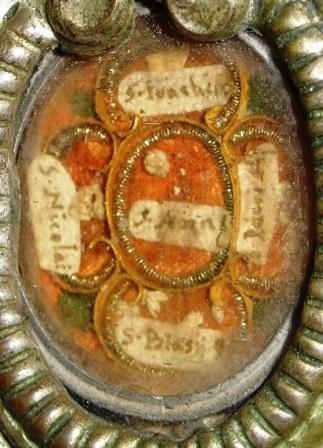
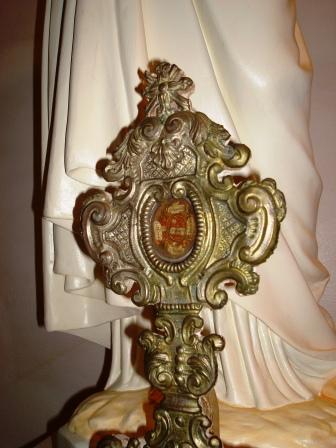
There is a relic of this great saint in my chapel.

6 Dec - St. Nicholas

There are several relics in this very old reliquary.

Here we have St. Nicholas (left), St. Blaise (bottom), St. Joachim (top), St. Ann (middle) and St. Paul, Apostle (right).

6 Dec - St. Nicholas

Posted in Saints: Stories & Symbols, SESSIUNCULA | Tagged
16 Comments

Gotta see to believe

It’s amazing what monks with a vow of silence can accomplish.

With a biretta tip to CMR… you might actually LOL.

Posted in Lighter fare |
15 Comments

Caption call

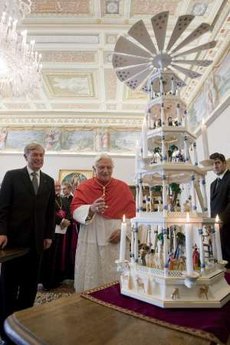
Caption call

A new "Benedictine arrangement" forrrr…. which Basilica? 

Posted in SESSIUNCULA |
31 Comments

WDTPRS: Post Communion – Saturday – 1st Week of Advent

We continue a look at Advent Post Communions in the 2002MR.

This prayer, also the Post Communion of the 3rd Sunday of Advent, is in the ancient Gelasian Sacramentary. It is also the Postcommunio for this same Sunday in the 1962MR, though slightly rearranged for the Novus Ordo giving it a more elegant sound.

POST COMMUNION:
Tuam, Domine, clementiam imploramus,
ut haec divina subsidia, a vitiis expiatos,
ad festa ventura nos praeparent.

Our handy Lewis & Short Dictionary reminds us that imploro is a high test word.  It is a compound of ploro which is "to cry out, to cry aloud … to weep over any thing, to lament, bewail".  Imploro is more intense yet: "to invoke with tears, call to one’s assistance, call upon for aid; to invoke, beseech, entreat, implore".

The verb subsideo gives us the substantive subsidium originally meaning, “the troops stationed in reserve in the third line of battle (behind the principes), the line of reserve, reserve-ranks, triarii.” By extension it also means “support, assistance, aid, help, protection.”  We find this word with some frequency in orations during Lent, which suggest to me that the word is associated with a time of fasting and penance.

SLAVISHLY LITERAL VERSION: …

No… wait… let’s see what the lame-duck ICEL version will inflict on people first:

ICEL (1973 translation of the 1970MR):
God of mercy,
may this eucharist bring us your divine help,
free us from our sins,
and prepare us for the birthday of our Savior.

And I was in such a good mood.  Still, here we find a use of “help” which surprisingly reflects the Latin and doesn’t make us sound like Pelagians!

SLAVISHLY LITERAL TRANSLATION JUST TO ANNOY LIBERALS:
We implore Your mercy, O Lord,
that these divine supports may prepare us,
purified from our faults,  for the coming feast days
.

I love the fact that in the Latin original we beginning with Tuam… YOUR.…  We would have to say "Your mercy we implore, O Lord…".

Keep in mind the context of this prayer.

This is Advent, which is a somewhat penitential season, although not as severe as Lent.  Today we have a slight lifting of penitential attitude in the liturgy without forgetting the Baptist’s urging to “make straight the paths” for the Lord, our Judge.

Never lose sight of the fact that Advent looks both to the first coming of Christ at Bethlehem, but also to the Second Coming at the end of the world.  Today during Mass we anticipate the joy of Christmas with flowers, instrumental music, and vestments.  But now we come to the end of Mass and hear a stark prayer, spare in its language, reminding us of our sins.

We hear military language (subsidia) which reminds us that we are engaged in spiritual warfare.

In the Latin Rite, Holy Mass ends abruptly.  Seconds after the priest intones the Post Communion, he blesses us and literally orders us to get out, to go back into the world to our work: “…  Go!  Mass is over!”  

In our Roman Rite we therefore have a strong connection between the reception of the Eucharist at Mass and its effect on our daily lives. 

The rapid ending of the Mass creates a continuity between the act of receiving Blessed Sacrament and our acts as we live our vocations.

Receiving the Body, Blood, Soul and Divinity of Christ in the Eucharist shapes us for the challenges of life. In fact, unlike normal food we consume and change into our own bones and flesh, the Eucharist is the food which transforms us into what It is.

After our act of thanksgiving, we must carry this Eucharistic sense with us out the door of the church and into every corner and encounter.

Posted in ADVENT, WDTPRS |
7 Comments

The Feeder Feed

At the Sabine Feeders a variety of woodpeckers swoop in to feed.

This is Hairy Woodpecker.

The Feeder Feed

Here is a triumphant Red-Bellied Woodpecker.

The Feeder Feed

This is Downy Woodpecker, smaller than Hairy.

The Feeder Feed

And the Missus.

The Feeder Feed

And then there is the relentless TEAM GOLDFINCH.The Feeder Feed

The American Goldfinch Eating Team does not restrict itself to summer feeding.

In fact, I have never seen so many of these dopey little birds, who constantly fling themselves against my windows.

The Feeder Feed

Many thanks to the kind soul, KA, who used my Amazon Wish List to send me some nyger seed for the "socks" on this finch feeder. 

I think TEAM GOLDFINCH will probably put up a plaque in your honor in their clubhouse.

Posted in The Feeder Feed |
15 Comments