Stephen Maturin would enjoy this

Is this like something William Mowett would have come up with?

From the Laudator:

Max Beerbohm on Thomas Hardy and A.E. Housman:

    How compare either of these grim two?
      Each has an equal knack,
    Hardy supplies the pill that’s blue,
      Housman the draught that’s black.

Readers of the Aubrey/Maturin novels will catch the reference to "blue pill" … no, nothing to do with The Matrix… and "black draught".

Beerbohm is, of course, comparing the experience of these poets to the malady for which blue bill and black draught was prescribed.

Might we substitute for the names of the poets, perhaps, Dawkins and Hitchens?

Stephen Maturin would enjoy this

Posted in SESSIUNCULA | Tagged ,
7 Comments

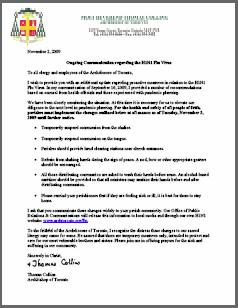
Communion in the Time of Swine Flu & Dioceses which issue Documents

Communion in the Time of Swine Flu & Dioceses which issue DocumentsI have received about 20 e-mails from people in Toronto.

They are incensed by a memo sent to all churches in the Archdiocese of Toronto It has a requirement that all churches "must implement the changes outlined below" including "Temporarily suspend communion on the tongue".

I have written more than once on this issue of (pace Gabriel Garcia Marquez) Communion in the Time of Swine Flu and I don’t have anything more to add.

First, I am unaware that any diocese can override what we read in Redemptionis Sacramentum about reception of Communion on the tongue. 

If you have some beef with what you are experiencing, you have the right to express yourself with respect to the Congregation for Divine Worship in Rome.  I would love to be able to handle this for you, but until my paygrade rises pretty far pretty quickly, you had better turn to the CDW.

You must balance your own reaction and practice against the circumstances and what is being asked.

Ask yourselves if what is being requested by the local diocese is reasonable or not.

From my own experience, I have always been able to distribute Communion on the tongue without any contact between my fingers and any tongue.  I could probably count the number of times they have made contact on my otherwise dry fingers.

Still, that’s me and not Extraordinary (often Unnecessary) Ministers of Communion.  

This also doesn’t not take into account some people who at Communion time, for whatever reason, can’t present a stable target or who in some previous incarnation was a snapping turtle or hungry frog.

You would do help yourselves if you would take stock of how you are receiving on the tongue!  If you were all really good at it, paying attention to making it easy, this issue might not be coming up as it has.

I have seen letters from various diocesan chanceries on this point.  Most of them, the smart ones, approach these issues as a matter of strong recommendation.  Others take the imperious approach and run the risk of compromising people’s rights under Redemptionis Sacramentum.

Nevertheless, people – pleeeeeeease – ask yourself if the request, no matter how aggressive or gentle it is, is reasonable… in the time of high contagious influenza.

Over the weekend two doctor friends of mine told me what this flu is like, both saying "You really don’t want to get this."

And if you are really worked up, and are fuming about it at the time of Holy Communion, the don’t go to Holy Communion.  That way you will have only something to be angry about rather than compound your anger with a possibly sacrilegious Communion.

Posted in SESSIUNCULA |
48 Comments

The Feeder Feed and Thanks

I am pleased to report that donations allowed me to get my camera cleaned!  Therefore, here is a report from the feeder.
The Feeder Feed and Thanks
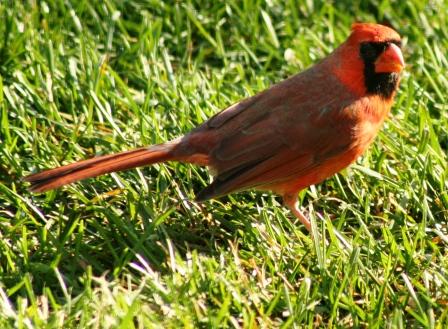
For some reason I have not seen Cardinals at the feeder except for the rare bird.  Today I was delighted to see both Mr. and Mrs. Cardinal!

Here is a very jaunty Missus.

The Feeder Feed and Thanks

Mister stands out against the still green grass.

The Feeder Feed and Thanks

This is European Starling in its winter plumage.  I hope he will be moving along soon.

I was surprised at how big it is.
 
The Feeder Feed and Thanks

In the meantime, the Chickadees are in charge.

The Feeder Feed and Thanks

UPDATE:
The Feeder Feed and Thanks
since I have been on the road for a while, I want also to thank the kind souls who sent things from my amazon wish list.

MA sent a volume of English translations of Sermons of St. Augustine.  Very helpful!

LR of CA sent Spies in the Vatican: The Soviet Union’s Way Against the Catholic Church by John Koehler, as well as God is No Delusion: A Refutation of Richard Dawkins by Thomas Crean. The Feeder Feed and Thanks
The Feeder Feed and Thanks
I was also very pleased to receive the English translation of Antonio Socci’s book The Fourth Secret of Fatima. 

These gestures of kindness, as well as the donations, lift my spirits, especially on tough days.  They keep me coming back to the keyboard.  

I always remember to pray for benefactors – which is what I consider you to be – at the Lord’s altar.  

Posted in The Feeder Feed |
12 Comments

Summit Soap Sisters Send Salutations

As the Christmas buying season revs up, consider helping good communities of religious by buying their good stuff as gifts.

I would be willing to post about other communities too.  I prefer to actually see things they sell so that I know they are good and can talk about them.

In any event, this is from the Dominican Sisters of the Monastery of Our Lady of the Rosary in Summit, NJ:

I was away last week at another of our monasteries working with other sisters to plan the ongoing theological formation for the 11 monasteries that belong to our Association www.dominicannuns.org. … When I came home, the novices told me that we were awash in soap orders and that one person said that she found out about us through you. So, I went to your blog and lo, there it was! THANK YOU SO MUCH! Even if we didn’t get a single order the comments had me chuckling!

While there is no way at this stage that our soap making venture could support us—nor do we intend to do that; … —still every order we receive helps in paying our bills, etc. Through God’s Providence our monastery has always survived on the support of so many people! In fact, our monastery was built after the Depression by asking people to contribute 10 cents for a brick! Our monastery, like places like St. Patrick’s Cathedral and other Churches, was built on the pennies, dimes and nickels of so many people and in a way, our little soap business is in the same tradition.

The other benefit is that it makes people more aware of our monastery. So many people in the area find out about the soaps and come in and say, “Wow! I didn’t know you had a chapel and Adoration! Can I come pray here?” You might say it is a “slippery” way to get people into Church!

Father, you remain in our prayers. Thanks for the suggestion of praying for deceased priests on Thursday. I’ll post something on our blog. 

Please continue to pray for us and bug the Lord to send a few more young women to our day of recollection on Saturday! We have 3 coming so far.

Thank God for these good sisters.

Posted in SESSIUNCULA |
7 Comments

UPDATE: on Sinsinawa Dominican Sister – escort at abortion clinic

Update on the Sinsinawa Dominican Sister who acts as escort to women entering an abortion clinic.  HERE.

Posted in SESSIUNCULA |
Comments Off on UPDATE: on Sinsinawa Dominican Sister – escort at abortion clinic

A bishop gets it: doing things is not necessarily active participation

I have written before in these electric pages about His Excellency Most Rev. Robert Vasa, Bishop of Baker Oregon.  He has a column in The Catholic Sentinel, the instrument of the Archdiocese of Portland and the Diocese of Baker.  

His theme is of interest to your humble correspondent and I share it with my emphases and comments.

To understand liturgical changes, study meaning of liturgy

By Bishop Robert Vasa

BEND — I wrote very briefly last week about the presentation at our presbyteral assembly on the upcoming revised translation of the Roman Missal and I want to reflect a bit more on this topic. It will undoubtedly be a bit difficult for some to accept with peace and tranquility the changes and amendments which are forthcoming for the Sacred Liturgy. The possibility that there may be some difficulty understanding and accepting the changes is understandable. Unfortunately, it can often happen that the reason why we anticipate such a difficulty has less to do with the Sacred Liturgy than it does with our own attitudes. It will indeed be the case that the Church in approving changes to the texts for the Sacred Liturgy will also be asking that we change. In looking at myself, I must admit that I am much less affected by the fact that the sacred language may change than I am by the fact that this change affects me and perhaps, in some ways, also challenges me. [Unlike the inveterate enemy of Rome’s norms for translation, Bp. Trautman, Bp. Vasa seems to have no problem with the idea that sacred language is used in the sacred liturgy.]

If there is one factor for the laity, in my estimation, which will impact on the ease with which changes are accepted or the strength with which they are resisted it is our [here we go…] fundamental understanding of the nature and purpose of the Sacred Liturgy. The frequency with which comments are heard such as, “I really like Father X’s Mass,” or “I find it very difficult to go to Father Y’s Mass,” [What about Fr. Z’s Mass?] or “That Mass did not do anything for me,” or the most common, “I don’t get anything out of the Mass” are all indicators of a certain understanding of the nature and purpose of the Sacred Liturgy. Underlying these comments, and many more variations thereof, is a certain concept of the liturgy. The proposed changes present us an opportunity to reflect, even in a significantly self critical way, on our understanding, or misunderstanding, of the meaning and purpose of the Sacred Liturgy.  [Hear hear!]

In order to begin to reform or reshape our understanding of the Sacred Liturgy we need to go to the Church and to the catechism which she has given us. There we read and hear that: “Sunday is the pre-eminent day for the liturgical assembly, when the faithful gather ‘to listen to the word of God and take part in the Eucharist, thus calling to mind the Passion, Resurrection, and glory of the Lord Jesus, and giving thanks to God who ‘has begotten them again, by the resurrection of Jesus Christ from the dead’ unto a living hope.’” (CCC, 1167) Admittedly, the paragraph addresses the Holy Sacrifice of the Mass rather than Liturgy as a whole but the paragraph is instructive. On Sunday, when we gather for Mass, we do so to listen to the Word of God. While there are a number of other ceremonies which accompany the Liturgy of the Word, the reason we gather is to “listen to the Word of God.” [Attend:] There is thus an importance placed on what God gives to us, His Word. We gather to hear it. We also gather to “take part in the Eucharist.” This involves much more than simply being present and receiving Holy Communion. Centrally, it involves “calling to mind the Passion, Resurrection and glory of the Lord Jesus” and giving thanks to God for the salvation which Jesus has won for us.

These are participatory activities which include everyone without exception. Thus it is not only the reader or the servers or the extraordinary ministers of Holy Communion who participate in the Mass but rather everyone is able to fulfill the mandate of the council about “full, active and conscious participation.” This is so because an essential part of the “activity” is listening, offering, remembering, rejoicing, thanking. [NB:] These are all interior actions. [INTERIOR!] Without a doubt the participation also includes responding, singing, standing, kneeling, et cetera but these are to be external manifestations of the fact that we are participating interiorly because simply doing these things is not necessarily the same thing as actively participating.  [Exactly.  It is nice to read what a BISHOP writes about this.]

“The Eucharist is ‘the source and summit of the Christian life.’ The other sacraments, and indeed all ecclesiastical ministries and works of the apostolate, are bound up with the Eucharist and are oriented toward it. For in the blessed Eucharist is contained the whole spiritual good of the Church, namely Christ himself, our Pasch. The Eucharist is the efficacious sign and sublime cause of that communion in the divine life and that unity of the People of God by which the Church is kept in being. It is the culmination both of God’s action sanctifying the world in Christ and of the worship men offer to Christ and through him to the Father in the Holy Spirit. Finally, by the eucharistic celebration we already unite ourselves with the heavenly liturgy and anticipate eternal life, when God will be all in all. In brief, the Eucharist is the sum and summary of our faith: Our way of thinking is attuned to the Eucharist, and the Eucharist in turn confirms our way of thinking.” (CCC 1324-27)

I am particularly struck by the reminder that the Eucharist is the culmination of “God’s action sanctifying the world.” This is what we are called to participate in and belong to when we come to Holy Mass. It is, at the same time, the culmination of the “worship men offer to Christ.” I like to think of our participation in worship as being drawn up into the saving actions of God, being a part of them, remembering and experiencing them and coming away from them knowing that we have been in contact with Him Who is all holy. Ideally, the Eucharist changes us because we celebrate who God is and what he has done and is doing in our midst. As the catechism notes, “Our way of thinking is attuned to the Eucharist,” not vice versa.

The proposed linguistic enrichments of the Sacred Liturgy, or if you prefer, changes, give us the opportunity to reflect upon the Eucharist anew. They certainly give us the opportunity to listen with new ears to new language, to refresh our interior and reflective participation, and to enter more consciously into that which God is doing. If necessary, it provides the occasion for each of us to align our understanding and expectation of the Holy Mysteries more closely with the vision of the Church expressed in the Catechism.


WDTPRS kudos to Bp. Vasa.

Posted in SESSIUNCULA, The Drill | Tagged
21 Comments

A priest’s reflection on “The Land of the Living”

Here is a good piece in First Things from a priest friend in NYC, Fr. Gerald Murray pastor of St. Vincent’s (where as of tomorrow I will be spending a few days).

 Into the Land of the Living
Nov 2, 2009
Gerald E. Murray

The second day of November is a busy one for parish priests. On that day, we celebrate three Masses for the dead. These liturgies follow directly on the previous day’s joyous celebration of the saints in glory. The living—those souls who are truly living because they have entered heaven, the Land of the Living—and the dead—those who died in the state of grace yet need purification before they may enter eternal life—are joined to us in worship and prayer. The altar is the crossroads between life, death, and eternal life. On the altar, on consecutive days in November, we offer the Holy Sacrifice in honor of the saints and in supplication for those being made fit for heaven.

The supernatural mission of the Church is to unite man to God, here and hereafter, and the priest is one of God’s key instruments in bringing about this blessed union. On All Souls’ Day, I am very conscious of this mission. The Church’s solicitude for her children does not stop at the grave. We accompany our deceased faithful across the doorway of death, and we pray to God for their quick release from the purifying fire of purgatory into the joy of salvation.

The stained-glass windows in my church are beautiful reminders of the invisible world we all hope to see firsthand. The photos in my study of deceased friends are reminders not only of past blessings received through them, but also of my duty not to forget them in my prayers and Masses. On November 2, past, present, and future come together, especially at the altar. All of our lives are in the hands of a merciful God. The joy of heaven is assured for the holy souls in purgatory, yet the experience of that joy must wait. We can hasten that moment through our appeals to God, in prayer and mortification, on behalf of those whom we no longer see.

Is the Church’s preoccupation with the souls of the dead morbid? Does the insistence on praying for the dead reflect a refusal to accept the reality of death? Quite the contrary. The dead are dead to this world, but they live to God. Our prayers reflect the communion of love that death does not destroy. We remember those whom God placed into our lives here below for a time and who are united with us still, even after they have left our sight. This fact, taught to us by our faith, compels us to act. We pray, and we rejoice at the goodness of God—he who allows us to help those we love who are beyond our earthly vision yet still are seen by God.

Black vestments are traditional on All Souls’ Day. They denote the tragic nature of death, which tears soul from body and brings that soul before God for its particular judgment. Our spirits must be serious about our duty to pray for the dead. Forgetfulness of the holy souls can be a problem for us: out of sight, out of mind. On the feast of All Souls, the Church tells us, “Remember!” In that act of remembering, we also must prepare for our own departure from this world, at a time of God’s choosing. Death is familiar to us, and we must not hide from it nor push it from our thoughts. Rather, we must turn to the one who conquered death by his own death. We must ask him to grant eternal life to all those who have gone before us, in the hope of our own entrance, one day, into the Land of the Living.

Fr. Gerald E. Murray is pastor of St. Vincent De Paul Parish in New York.


Well said.

I add:

To gain a Plenary Indulgence form noon Nov. 1 until midnight Nov. 2, visit the church, pray for the Holy Souls and also for the intentions of the Holy Father. On All Soul’s Day and for a week afterward, a Plenary Indulgence for the Holy Souls is granted for a visit to the cemetery with devotion and prayer for the dead. All through November, you can gain partial indulgence every day you visit the cemetery and pray for the dead.


Posted in SESSIUNCULA | Tagged
Comments Off on A priest’s reflection on “The Land of the Living”

Is Christopher Hitchens sick in the head?

What is special bone is missing from the heads of people who hate saints and holy people, especially holy women?  Of course we all suffer from the wounds to our human nature, but something else is at work in people who pour their venom on the manifestly holy.

This is from the Catholic League with my emphases and comments.

November 2, 2009

HITCHENS CONDEMNS MOTHER TERESA

On October 30, atheist Christopher Hitchens appeared on Dennis Miller’s Internet radio show condemning Mother Teresa, yet again. Here is one of his choice statements: “The woman was a fanatic and a fundamentalist and a fraud, and millions of people are much worse off because of her life, and it’s a shame there is no hell for your bitch to go to.”  [I once suffered in the too close company of a priest who referred to the Little Sisters of the Poor and the Dominican Sisters of Hawthorne (who ran a hospice) as "bitches who bilk poor people out of their money".  What is wrong with these people?]

Catholic League president Bill Donohue responded today:

I once told Hitchens that one of the real reasons he hates Mother Teresa has to do with his socialist ideology: [If that is true, then he hates her because she makes him see the emptiness of his efforts?] he believes the state should care for the poor, not voluntary organizations, and he especially loathes the idea of religious ones servicing the dispossessed. Indeed, he sees in Mother Teresa the very embodiment of altruism, a virtue he cannot—with good reason—fully comprehend.

The fact of the matter is that socialism is the greatest generator of poverty known to mankind, and Mother Teresa did more to heal and rescue its victims than anyone in the modern era. This explains why she is adored by the people who knew her best—the men and women of India (she is second only to Gandhi as the nation’s most revered person).

Hitchens is positively obsessed by Mother Teresa, and that is a very telling commentary on his psyche. She is a constant reminder that reason without faith is a dark hole.

Contact Hitchens at chitch8003@aol.com


I can understand that perhaps a person might be a little indifferent to Bl. Theresa of Calcutta, but anyone who would hate her must be profoundly wretched and frightened. 

In his dotage it may be that the only visitors he will have will be the sisters of the Missionaries of Charity.

Posted in Green Inkers | Tagged ,
29 Comments

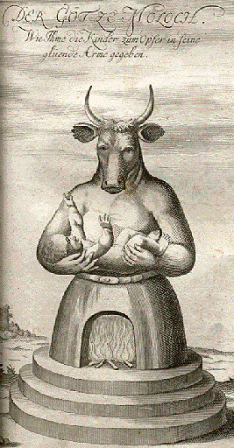
Worshipers of Moloch panic after American Bishops’ call to arms

MolochIt has been a bad week for Planned Parenthood, which originated from the eugenecist ravings of Margaret Sanger who wanted an organization to eliminate black people.

First, we read this, which a reader sent me.

Here is a video interview with a Planned Parenthood director who stepped down after coming in contact with the Coalition of Life organization down the block from her clinic.  She is now a sidewalk counselor at her former clinic and is facing charges by Planned Parenthood. An extraodinary testimony to the power of grace.  HERE.

Second, Planned Parenthood, which has its origins in eugenics and racism, is in a panic about the USCCB’s project to motivate parishes to get people to call their congressmen.

They are sending out the frantic message to their fellow worshipers of Moloch:

Catholic bishops are doing all they can to force anti-choice amendments into the health care reform bill — and they’re instructing their congregations to help them.

Stand up for women’s health and tell your senators and representative to reject this dangerous effort from the Catholic bishops.

Folks… the USCCB deserves support.  They did exactly the right thing and the panic proves the point.

Remember… if 100 parishioners from every parish would act on the bishops’ call to arms… imagine… imagine…

Posted in Emanations from Penumbras | Tagged ,
23 Comments

REVIEW: The 13th Day (new Fatima film)

REVIEW: The 13th Day (new Fatima film)There is a new film – The 13th Day: The True Story of Fatima – about the apparitions of Our Lady at Fatima, Portugal.  I was sent a copy for review and I watched it.

Before anything else, this film is going to be a source of lots of discussion.  I think it will help to spur interest in the message of Our Lady and to consider it in our time.

The film opens with a touch of the apocalyptic via a reference to the red dragon of the Book of Revelation.  Also, at the beginning the is some narration by Lucia, 20 years after the apparitions, to put you in the historical context. 

Do not expect a documentary, or anything like a complete story of the whole story of the Fatima apparition.  The film is not long and it doesn’t move very quickly.  Therefore, a great deal of the story is simply left out.  Don’t be expecting a movie like the trailer, either.  The trailer is actually more engaging than the movie, in some ways.  But let’s leave that aside.

I liked the film, in the final analysis, but in the way a guy who has watched a lot of "film" for several decades likes films. 

The acting is good enough, I suppose.  A very strong performance is giving by the ominous mother of Lucia.  Eventually she and Lucia will will have together perhaps the best acting moment of the film.  The three children, prettier by far than their historical counterparts, are fairly convincing.  You will, however, be hard pressed to see a 10 year old girl in the actress who plays Lucia.

But that ultimately won’t be too much of a problem in that the film is highly stylized.  Most of the work is done in black and white.  The black and white is used to contrast the normal with that which is touched by the supernaturally.  When the supernatural intervenes, we are given strong sepia and pastels.  There are also little splashes of color at other moments to get your attention.  But it is a little contrived.

And so we are introduced to our first problem.  The black and white with splashes of color thing we have seen before, for example in Schindler’s List.  In this movie it is even done, again, with a burning candle.  When I heard the narration at the beginning, I couldn’t help but think of the beginning of the first of the Lord of the Rings movies when Galadriel is filling us in on the past.  The music is derivative too, you will hear a little splash of Allegri’s Miserere.  At the end of the movie is the eye-roll provoking pop single style song over the credits, in a style that conflicts with the rest of the movie.  The style of the filming is that of an early silent movie in some respects.  You may be reminded, as I was, of Grapes of Wrath or the classic of the 1920’s The Passion of Saint Joan (of Arc), remastered not long ago with new music sung by the Anonymous 4.  Lo and behold in this film, in the credits, you find the Anonymous 4 as well.  The bottom line, this is a deft recycling of some things you will have seen before. 

After a while I was looking for things that I had seen before, as you will too if you watch a lot of movies.  And not just movies.  The color scheme, shot framing and camera angles smack of the graphic novel so popular with young people.

Still… to be fair… the whole incident of Fatima was a splash of glorious color in a dark flat fearful time.

And so we arrive at their who I think their target audience probably is.  I think that teens and young people will resonate with this perhaps more than more seasoned Catholics.  That is a good thing, because they are the ones we need to get interested in the message of Our Lady.  It seems to me that the elements the makers imitated will capture their attention.

So, young people strike me as the target.  I wonder if this is good for younger children, actually.  There are some pretty ominous moments which could be scary for youngsters.  I don’t know.  We have to remember that the three children were sometimes frightened too. 

A few details.  I think you will be pleased with the way the Virgin Mary is portrayed.  You will be pleased with the "Miracle of the Sun". 

Going on.  The makers I think must have made a choice to focus on the emotions of the principles and their relationships rather than try to tell a more complete story of the apparitions.  I got the idea that within this highly stylized film, with its fusion of graphic novel with silent film, we also had a dash of commedia dell’arte going on: the characters, while not untrue to their historical counter-parts, were perhaps a little like stock characters, pure types.  The secondary characters and extras had fascinating faces, which were made even more interesting by their treatment in light and sharp shadows.  The actors were expressive and they pushed themselves out to you through the screen.  There were a couple times I wished the director would have just let us see them do their thing without the distracting style.

Concerning the Third (or Fourth) Secret.  The film doesn’t really go there very much.  Some time is given to the vision which is the subject of the part of the Third Secret revealed a few years ago.  You see the devastated city and the bodies of the slain, the image of the bishop in white (obviously the Holy Father in the film) going up the slope of a hill to a crucifix where he is killed.  As a matter of fact, that moment is one of my points of concern for young children.  Still, regarding the Third Secret, the film neither dwells on it or ignores it.  It is there, but it isn’t given lots of attention.  The door is not slammed on the possibility, raised by some, that there is more to the Third Secret than we have been told.  Again, the film began with the sight of Sr. Lucia 20 years after than apparitions writing things down at the command of her superiors.

The movie will probably be a starting point for discussions also of that controversial topic.

At this point you might be thinking that I intend to pan this film.  I don’t.

There are some real strengths and good moments. 

For example, given that I think the target audience is teens and young people, the reimaging of the story for the screen, in a style familiar to their age group, will surely draw them in. 

Also, one of the subplots in the film comes from the historical context.  The anti-Catholic government is shown to be fearful of these apparitions and pretty hateful, all in all.  The reps of the government who try to frighten the children, the reporter who comes for the October apparition, smack of something we are experiencing in our own day.  The bubbling undercurrent of potential wars, even the death of Francesco by influenza seems current. 

It seemed to me that we have a film that repackages the Fatima story for younger people in our own day, facing today’s problems.  This is a great strength.  As a matter of fact, it had the effect of me of prompting me to look up on some materials about Our Lady and her message and reach for a couple of my books to review.  So… it was effective!

Therefore, I think this would be a very good project for an evening or more in a parish, with discussion before and after.  The film can be obtained with a year long license for group screenings for example at parishes or in schools. 

You can go to the site The 13th Day to find out where the film is showing and to get the license package. 

Click HERE to pre-order (buy) the DVD.

Posted in REVIEWS | Tagged ,
15 Comments