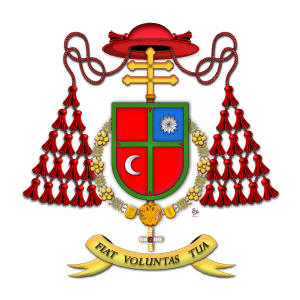
Formerly Archbishop of Toledo, Spain, Cardinal Cañizares is the current Prefect of the Congregation for Divine Worship and the Discipline of the Sacraments, that has competence over the way in which Mass is celebrated throughout the world. He was elevated to the cardinalate in 2006 by Pope Benedict XVI.
ROME, Italy, July 27, 2009 (LifeSiteNews.com) – With the help of a translator, the Cardinal kindly consented to speak with LifeSiteNews.com on July 24th at the offices of the Congregation on the Via della Conciliazione in Rome, down the road from St. Peter’s Basilica and the Apostolic Palace.
* * *
LSN: What is the connection between faithfulness to the norms of the liturgy and faithfulness to the Church’s moral teachings?
Cardinal Canizares Llovera: There is no doubt about the connection.
To recognise what is the Eucharist is to recognise Jesus Christ. Jesus Christ is the Son of God that became man. Christ is the most absolute ‘yes’ of God to man. He is the revelation of God and the revelation of the truth about man. Man cannot be separated from God; man was created in the image and likeness of God.
In creation, God manifests Himself as love in favour of man. In His Son, the true image of the Father, we have been created in the image of the Son. For that reason, all human beings have a greatness and a dignity that cannot be separated or violated.
Jesus Christ shows the face of God that loves man to the utter extremes. The biggest demonstration of this love of Jesus for Man is seen on the cross, dying for man. But this love could not be destroyed or chained by death. It has triumphed over death. The love of Jesus, Son of God, brought to an extreme on the cross, shows how all men are loved by God with a love from which nothing and no one can separate us. Each man has been saved or repurchased by the blood of Christ, which is the blood of God. This is how much every human being is worth, the blood of God. [The Cardinal points out that God loves man so much that He deigned to shed His Blood for him. However, I think it is useful to point out that that phrase "This is how much every being is worth", might be over stating it is. The fact is that nothing human is on the same level of "worth" as the divine, even the divine which is also human. With that slight caveat, let’s get to the important conclusion the Cardinal wants to make:]
For that reason, between the Eucharist and the defence of life there is a link that cannot be separated. To live the Eucharist, is to enter in communion with Jesus Christ and as a consequence with His love. This is a communion of life and makes us participate in the life which is Christ. Divine life, eternal life, but at the same time it makes us be givers or carriers of love and defenders of life. [Note the connection of Eucharist and a consequence. Let’s take "Eucharist" as being not only the Blesses Sacrament Itself but also the celebration of the Eucharist, which is Holy Mass. The "Eucharist" in this sense is, as the Second Vatican Council stated, the "source and summit".]
If the Christians would live all that the Eucharist means, we would be defenders of life in every moment.
LSN: We were wondering since the issue is very serious in the US and growing more so in Britain and Canada if there is planned a definitive statement or teaching on the reception of Communion by politicians and public figures who reject the Church’s teaching on life. The issue still hasn’t been resolved since the US election in 2004. [A great question!]
Cardinal Canizares Llovera: I think that the strongest words are found in St. Paul: one who goes to the Eucharist and is not properly prepared, duly prepared, "he eats his own condemnation." This is the strongest thing that we can say and what is the most truthful statement.
When the Church states that to take part in or request an abortion, to take an active role in one way or the other, the person incurs automatically excommunication. This means that politicians should become aware and they should be helped to become aware of the gravity of their conduct. When they approve laws against life, in favour of abortion or euthanasia, priest and bishops should say this.
I don’t know if there’s going to be a document on the politicians who are in favour of abortion, [He doesn’t know this… but he mentions it…. why…?] but the politicians have to be conscious of the teachings of the Church that I have just pointed out.
LSN: There’s a conflict in the US now. There are some bishops who are saying they will speak to, educate and address the issue with these people but they refuse to refuse. Others are saying, ‘No, you may not receive Communion in my diocese". How is that conflict going to be resolved?
 Cardinal Canizares Llovera: I cannot judge one group of bishops or the other group of bishops but I think that all of us know what has to be done, or should be done. In the presence of cases of public sinners … at the same time we don’t know what is happening in the consciences of those politicians. [That’s right. We don’t. But do we have to? We see their actions. When their actions have been seen by everyone, when they are public, they have committed public scandal. That must be repaired in a similarly public way. It seems to me that a bishop could deny Communion to a very visible and public pro-abortion Catholic politician, even one who has privately repented his views, on the grounds that he has not yet taken steps to repair the public scandal he caused.] I understand the prudence with which we have to act. But I think also that it is our duty to clarify their consciences. To help the person to act in accordance with a right and true conscience. Bishops have a function to help the due formation of conscience. To form consciences in such a way that people should act in accordance with the truth. [His Eminence was, until recently, also Archbishop of Toledo. I don’t know enough about what happened in Spain, in Toledo, with the problem of pro-abortion Catholic public figures, but I wonder how Card. Canizares handled the situation or what he said at the level of the Spanish bishops conference.]
The pope JPII in his encyclical Evangelium Vitae offers criteria that show how politicians should act with regards to the questions of life. Also the congregation of the Doctrine of the Faith published an instruction when Cardinal Ratzinger was the prefect on the way politicians should act on these questions of life. Also the most recent encyclical of Pope Benedict XVI, when he was referring to abortion offers criteria in such a way that politicians should act in accordance with truth.
I believe that the Pauline principle, that gives the title to the most recent encyclical of Benedict XVI, Caritas in Veritate, should be the principle that guides us to speak about this question. This principle, Caritas in Veritate [Love in Truth] should be the principle first for politicians when they come to Communion, and second it should be the rule for bishops when they decide to give or to withdraw Communion.
LSN: Is there a movement in the Vatican to return to the traditional manner of reception of Communion? (With the recipient kneeling and the host placed directly on the tongue.)
Cardinal Canizares Llovera: There is no resolution that forbids giving Communion in the mouth. [Except, Your Eminence, where some local bishops are doing just that, right?] In the same way, there is no norm that forbids Communion in the hand. [Hmmm… in a sense there is, no? The norm is that Communion is to be received on the tongue and there is presently an exception for that norm in those places where local bishops permit the exception to be applied.] Neither can be forbidden. Neither one nor the other. [Well… Redemptionis Sacramentum 92 states that it is not to be give where there is risk of profanation.] This means that Communion in the mouth has a long history and tradition that expresses in a profound way the sense of adoration, reverence in the presence of the body of Christ. Everything that is at stake in the real presence of Christ. If Communion in the mouth goes with the gesture of kneeling, it expresses in a stronger way, with stronger force, the real presence of Christ, the sense of adoration, the participation in the body of Christ that offers Himself for us. [Sooo… if this is the better way to do it… why isn’t it the only norm?]
If the papal liturgy is a sign, an indication for all the Church, we should promote Communion kneeling and in the mouth. But, this does not mean not permitting or forbidding Communion in the hand if it is done with due respect. [Though clearly this is a "weaker way, with weaker force", right?] With a previous gesture of adoration. This could be kneeling, or a genuflection or with a deep bow. And also in the moment of receiving Communion, the right hand should be placed under the left hand forming a cross expressing in this way the recognition of the real presence of the body of Christ offered for us. We should take care that no particle should be lost. [Harder to do with Communion in the hand though, right?] And the body of Christ should be received in front of the priest.
We should recognise that frequently Communion in the hand many times is not received in this way.
It is very lamentable. [So lamentable that maybe we should… I don’t know… do something about it? Just askin’.]
LSN: We know that over the years a great many people have seen and complained about abuses of the liturgy at Mass. What can the faithful do when they see these?
Cardinal Canizares Llovera: They should say to the priest immediately after Mass as a part of fraternal correction. [Hmmm… I am not trying to be contrary, but it seems to me that people often think some things which are actually right are wrong.] If it is not possible, they should say to the bishop. If the bishop does not act, they should come here and report it to the Congregation. [And Redemptionis Sacramentum also says that people can always have direct recourse to the Holy See.]
There are two documents that are important. One by the Cong. for Divine Worship, Redemptionis Sacramentum, that talks about some of these abuses and talks about the rights of the faithful and how they should act.
The other is Sacramentum Caritatis, of Benedict XVI that also gives criteria on the way that the Eucharist is abused. [As well as guidelines for better celebration.]
We should all fight to avoid abuses against the Eucharist. It is the holiest, greatest, most important [thing] in the Church and in life. We should respect the Eucharist and the rules and discipline of the Church that give the warranty of ecclesial communion that has its sources, its roots, its truth in the Eucharist, in the celebration of the Eucharist, in the rite that the Church has indicated.
LSN: Is the liturgical revolution over? Is the Church in general becoming more balanced about the liturgy?
We’re still suffering it but also we are in a moment of great hope. The Pope Benedict XVI makes the renewal of the spirit of liturgy to rekindle in the conscience of all the true sense of the liturgy. [As a matter of fact, I think it is clear that Pope Benedict has a plan for the revitalization of the Church. I call it his "Marshall Plan".] Which should help to impose a great new unstoppable liturgical movement. ["a great new unstoppable liturgical movement"] Nevertheless, [get this…] we have not yet applied in a truthful way the teachings of Vatican II read in continuity with the tradition of the Church. [Exactly.] This is the commitment of this congregation continuing the [work of the] Holy Father that presides over us in faith and charity and over the whole Church.
We want a Church that should be present in the world, [or, active in the public square…] that is ready to transform the world and [lead] the renewal of mankind in accordance with God’s will. This will not be possible without Sacrosanctum Concilium, without liturgy, adoration, without putting God in the centre of all, living of God’s gift, and offering Him whatever we are in order to bring about His will.
In other words, there is no new humanity [This is an important point. Progressivists are very keen on claiming that modern man is "all grown up" now. We don’t have to do childish things such as kneel. We are now homo sapiens sapiens. Aren’t we special now? But Card. Canizares is exactly right. Change as we may through various advancements, human beings remain fundamentally the same.] and there is no hope for man that is not grounded in God that would come from God and would return everything to God as His glory. The future of humanity is in the liturgy. When we read the last encyclical of the Holy Father, we can understand that the liturgy occupies a central role in the concerns of the Holy Father.

 as a transcript of an interview with His Eminence Antonio Card. Cañizares Llovera, Prefect of the Cong. for Divine Worship.
 Cardinal Canizares Llovera: I cannot judge one group of bishops or the other group of bishops but I think that all of us know what has to be done, or should be done. In the presence of cases of public sinners … at the same time we don’t know what is happening in the consciences of those politicians. [That’s right. We don’t. But do we have to? We see their actions. When their actions have been seen by everyone, when they are public, they have committed public scandal. That must be repaired in a similarly public way. It seems to me that a bishop could deny Communion to a very visible and public pro-abortion Catholic politician, even one who has privately repented his views, on the grounds that he has not yet taken steps to repair the public scandal he caused.] I understand the prudence with which we have to act. But I think also that it is our duty to clarify their consciences. To help the person to act in accordance with a right and true conscience. Bishops have a function to help the due formation of conscience. To form consciences in such a way that people should act in accordance with the truth. [His Eminence was, until recently, also Archbishop of Toledo. I don’t know enough about what happened in Spain, in Toledo, with the problem of pro-abortion Catholic public figures, but I wonder how Card. Canizares handled the situation or what he said at the level of the Spanish bishops conference.]
 We should all fight to avoid abuses against the Eucharist. It is the holiest, greatest, most important [thing] in the Church and in life. We should respect the Eucharist and the rules and discipline of the Church that give the warranty of ecclesial communion that has its sources, its roots, its truth in the Eucharist, in the celebration of the Eucharist, in the rite that the Church has indicated.



 fac on Daily Rome Shot 1118 – Paddywhack!: “Speaking of the disputatio back on October 31st between Archbishop Vesco and Bishop Barron (Vesco saying the Catholic Church was…”




























