Seattle TLM alert

From a reader:

Fr. Saguto (FSSP) of North American Martyr’s Parish in Seattle has announced in this weekend’s bulletin that Archbishop of Seattle Alex J. Brunett  will assist from the throne at a Solemn TLM Mass in the Presence of a Bishop.  From the bulletin:

"Mark  your  calendars  now  to  attend  the  Solemn  Mass  to celebrate  our  first  patronal  feast  as  a  parish  on  Friday evening,  September  25,  at  7:30.  Archbishop  Brunett  has graciously  accepted  the  invitation  to  assist  at  the  Mass  from  the  throne  (otherwise  known  as  a  Solemn  Mass  in  the Presence  of  a  Bishop—an  impressive  ceremony).  Other  Fraternity clergy  will  be  in  attendance  as  well.  A  festive  dessert potluck  will  follow  which  will  provide  the  opportunity to greet the Archbishop at his first visit to the  new parish."

North American Martyrs Catholic Church is served by the Priestly Fraternity of St. Peter with the approval and blessing of the Most Reverend Alex J. Brunett, Archbishop of Seattle. All Masses and Sacraments are performed in the Latin usus antiquior of the Roman Rite.

I usually prefer to receive notes from people with the concrete information included, but I just don’t have time to rewrite everything that is sent to me.

This sounds like a good occasion and a shot in the arm for that community.


Posted in Brick by Brick, The Campus Telephone Pole |
6 Comments

Fr. Z to Card. Cottier: Check your facts!

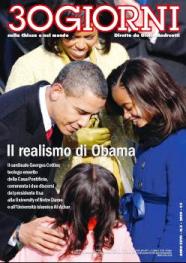
Fr. Z to Card. Cottier: Check your facts!The Italian monthly 30 Giorni published an article purportedly by His Eminence Georges Card. Cottier, 87, the former papal theologian under the late Pope John Paul II.

In 2005 Card. Cottier retired at the age of 83.

Was Fr. Wojciech Giertych, the current papal theologian, otherwise engaged? 

I’m just askin’…

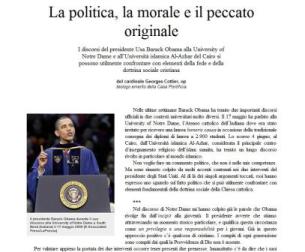
The Italian language piece under Card. Cottier’s name is entitled "La politica, la morale e il peccato originale: I discorsi del presidente Usa Barack Obama alla University of Notre Dame e all’Università islamica Al-Azhar del Cairo si possono utilmente confrontare con elementi della fede e della dottrina sociale cristiana"  [Politics, morality and original sin: the discourses of the US President Barak Obama at the University of Notre Dame and at the Islamic University Al-Azhar of Cairo can be usefully compared with elements of the faith and social doctrine of the Church.].

Mr. John Allen, the nearly ubiquitous former Rome correspondent for the ultra-lefty NCR posted a good precis and some comments in his Friday piece relevant to the article under Card. Cottier’s name.  If you don’t read Italian you might start with Allen’s piece.

Keep in mind: some in the Secretariat of State really wanted to have this meeting with President Obama. They too hope to promote "common ground".  The timing and content of this 30 Giorni article were tailored for Pres. Obama’s Rome visit.  Consider: it is not written by a current member of the papal household, but Card. Cottier was once a member.  30 Giorni is not a Vatican sanctioned publication, but it was sure to be picked up by the Catholic Press in the United States and it is very visible in Italy.  The article could be issued with effect, bearing as it does a noticeable name, appearing in a noticeable journal.  It can if necessary also be denied by the Holy See as representing the the Holy See’s interests.

There are a lot of claims in the Cottier article I could debate, but there is one central claim at issue between us.

The writer of Card. Cottier’s article argues that the Church should trust that President Obama is sincere in wanting to reduce the number of women seeking abortions, and that on this point the Church shares a “common ground” with the President.

But there is an abundance of convincing evidence that the President was insincere in his statement to this effect at Notre Dame.

I reject as naïve the idea that there can be “common ground” between Pres. Obama and the Catholic Church where abortion is concerned.

The writer of Card. Cottier’s article says (with my translation and my emphases), 

“C’è chi, come noi, considera l’aborto un intrinsece malum; ci sono quelli che lo accettano, e addirittura alcuni che lo rivendicano come un diritto. Il presidente non prende mai quest’ultima posizione. Al contrario, mi sembra che dia dei suggerimenti positivi – lo ha sottolineato anche L’Osservatore Romano del 19 maggio –, proponendo pure in questo caso la ricerca di un terreno comune.  [There are those who consider, as we do, abortion to be an intrinsece malum; there are those who accept that, and some – really – who claim it as a right.  The President never takes this last position.  On the contrary, it seems to me that he gives positive suggestions – which also the 19 May L’Osservatore Romano underscored – , proposing even in this case the search for common ground.]

…

“Il terreno comune che lui propone è questo: lavorare tutti insieme per ridurre il numero delle donne che cercano di abortire. E aggiunge che ogni regolamentazione legale di questa materia deve garantire in maniera assoluta l’obiezione di coscienza per gli operatori sanitari che non vogliono dare la propria assistenza a pratiche abortive. Le sue parole vanno nella direzione di diminuire il male. Il governo e lo Stato devono fare di tutto affinché il numero di aborti sia il minore possibile. È certo soltanto un minimum, ma è un minimum prezioso.” [The common ground he proposes is this: to work everyone together to reduce the number of women who seek to abort.  And he adds that every legal regulation of this matter must guarantee in an absolte manner conscientious objection for health workers who do not want to give their own assistance to abortive practices. His words tend in the direction of diminishing the evil.  The government and the State must do everything so that the number of abortions be as small as possible There is certainly only a mininum, but it is a precious mininum.]

First of all, Card. Cottier is flat out wrong in stating that Obama does not support abortion as a right.

Claims such as this raise the suspicion that the writer of Card. Cottier’s article is either disingenuous or poorly informed.  This sort of statement makes the Vatican, by implication, seem amateurish.

Pres. Obama has frequently stated that he wants to defend the right of women to procure an abortion.

He campaigned on that position.  He made sure everyone understood his differences with his Republican opponent, John McCain, on the matter.

Pres. Obama’s position on abortion as a woman’s right is still proudly posted on his website. Let’s quote directly from Pres. Obama’s website:

“Support Reproductive Choice

“President Obama has been a consistent champion of reproductive choice and believes in preserving women’s rights under Roe v. Wade. At the same time, he respects those who disagree with him. The President believes we must all come together to help reduce unintended pregnancies and the need for abortion.”

So, let’s be clear.

Pres. Obama does in fact support the right to abortion.  Abortion is, in fact, "a need".

As for his stated goal to reduce the number of abortions, or, to put it another way, to reduce the number of women seeking abortion (which he also refers to as reducing the need [sic] for abortion), this claim too is a charade.

While Pres. Obama was – addiritura – being awarded an honorary doctor of laws degree from Notre Dame, his administration was – and still is – doing everything it can to extend access to abortion, not only to women in the US, but, by means of the UN, to women throughout the worldFr. Z to Card. Cottier: Check your facts!.

It is either disingenuous or amateurish to take the President at his word on this promise without checking the facts.

The writer of this 30 Giorni piece could have asked more information from Archbishop Rino Fisichella, President of the Pontifical Academy for Life, who knows very well the Obama administration’s track record on the abortion issue. 

He could have checked with the Catholic Family and Human Rights Institute (www. c-fam.org) which does yeoman’s work at tracking and reporting how the abortion issue is dealt with at the UN. 

He could have asked Priests for Life, or even Tom Grenchik, the Executive Director of the Secretariat of Pro-Life Activities at the USCCB (see his informative posting, “Reducing Abortions by Promoting Abortions?”).

He could have asked any one of the 80+ American bishops who publicly protested the decision by Notre Dame University to bestow and honor Pres. Obama.

But the voice you should really have heard, Your Eminence, is that of Pope Benedict XVI. 

During his address to the UN General Assembly on 18 April 2008, Pope Benedict warned that there would be dire consequences for humanity if the 1948 UN Declaration on Human Rights were to be amended in such a way as to recognize the addition of pseudo-rights, such as “women’s reproductive rights”, as fundamental human rights.

“The founding of the United Nations, we all know, coincided with earth-shaking upheavals that humanity suffered when the reference to the meaning of transcendence and natural reason was abandoned, and in consequence, freedom and human dignity were grossly violated. When this happens, it threatens the objective foundations of the values inspiring and governing the international order and it undermines the cogent and inviolable principles formulated and consolidated by the United Nations. In the face of new and insistent challenges, it would be a mistake to fall back on a pragmatic approach, limited to determining ‘common ground’, minimal in content and weak in its effect”.

“Common ground” and “pragmatism” can seem such positive, inviting concepts in political (or religious) discourse.

Yet, as Pope Benedict reminds us, these terms can also conceal morally destructive compromises, as those which the Church experienced prior to, during and after the Second World War, when it searched for ways to coooperate with totalitarian fascist States without compromising its own ethics. As a consequence, the Church did not always allow its opposition to the immoral policies of totalitarian regimes to take the form of explicit political opposition to these policies.

The Church today still lives with this memory that continues to taint its reputation as a result of those compromises.

Like his predecessor Servant of God John Paul II, Pope Benedict is determined not to repeat that history. For this reason, in his UN address Benedict raised the specter of that earlier tragedy as a premonition of the sort of consequences to come from the moral compromises that should be avoided in our times.

I believe that the Pope is signaling that it will be difficult, if not impossible, for the Catholic Church to collaborate with the UN if and when utilitarian ethics and anti-religious world views lead the organization to a complete repudiation of natural law ethics, as it is now headed.

As the author of Card. Cottier’s article admits, appeals to Pope Paul VI’s encyclical letter Ecclesiam Suam or to the Second Vatican Council’s decree Dignitatis Humanae must not be allowed to obscure the Catholic Church’s opposition to intrinsic moral evils such as abortion.

But neither should such appeals be allowed to provide cover for an American President determined to make the practice of abortion more, not less, available to women throughout the world.

_____________

UPDATE 6 July 1405 GMT:

The English version of the Cottier piece is available on the site of 30 Days.

Posted in I'm just askin'..., SESSIUNCULA, The Drill | Tagged , , , , , ,
42 Comments

Archbp. John Caroll’s Prayer for Government

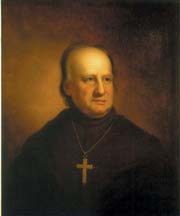
Archbp. John Caroll's Prayer for GovernmentThe following prayer was composed by John Carroll, Archbishop of Baltimore, in 1791. He was the first bishop appointed for the United States in 1789 by Pope Pius VI. He was made the first archbishop when his see of Baltimore was elevated to the status of an archdiocese.
John was a cousin of Charles Carroll of Maryland, a signer of the Declaration of Independence.

Americans among the readership might print it and bring it to your parish priests and ask them to use it after Mass on national holidays.

This needs no translation for Catholics who love their country!

PRAYER FOR GOVERNMENT

We pray, Thee O Almighty and Eternal God! Who through Jesus Christ hast revealed Thy glory to all nations, to preserve the works of Thy mercy, that Thy Church, being spread through the whole world, may continue with unchanging faith in the confession of Thy Name. We pray Thee, who alone art good and holy, to endow with heavenly knowledge, sincere zeal, and sanctity of life, our chief bishop, Pope Benedict, the Vicar of Our Lord Jesus Christ, in the government of his Church; our own bishop, N., all other bishops, prelates, and pastors of the Church; and especially those who are appointed to exercise amongst us the functions of the holy ministry, and conduct Thy people into the ways of salvation. We pray Thee O God of might, wisdom, and justice! Through whom authority is rightly administered, laws are enacted, and judgment decreed, assist with Thy Holy Spirit of counsel and fortitude the President of these United States, that his administration may be conducted in righteousness, and be eminently useful to Thy people over whom he presides; by encouraging due respect for virtue and religion; by a faithful execution of the laws in justice and mercy; and by restraining vice and immorality. Let the light of Thy divine wisdom direct the deliberations ofArchbp. John Caroll's Prayer for Government Congress, and shine forth in all the proceedings and laws framed for our rule and government, so that they may tend to the preservation of peace, the promotion of national happiness, the increase of industry, sobriety, and useful knowledge; and may perpetuate to us the blessing of equal liberty. We pray for his excellency, the governor of this state , for the members of the assembly, for all judges, magistrates, and other officers who are appointed to guard our political welfare, that they may be enabled, by Thy powerful protection, to discharge the duties of their respective stations with honesty and ability. We recommend likewise, to Thy unbounded mercy, all our brethren and fellow citizens throughout the United States, that they may be blessed in the knowledge and sanctified in the observance of Thy most holy law; that they may be preserved in union, and in that peace which the world cannot give; and after enjoying the blessings of this life, be admitted to those which are eternal. Finally, we pray to Thee, O Lord of mercy, to remember the souls of Thy servants departed who are gone before us with the sign of faith and repose in the sleep of peace; the souls of our parents, relatives, and friends; of those who, when living, were members of this congregation, and particularly of such as are lately deceased; of all benefactors who, by their donations or legacies to this Church, witnessed their zeal for the decency of divine worship and proved their claim to our grateful and charitable remembrance. To these, O Lord, and to all that rest in Christ, grant, we beseech Thee, a place of refreshment, light, and everlasting peace, through the same Jesus Christ, Our Lord and Savior. Amen.

Posted in Classic Posts, The future and our choices | Tagged
Comments Off on Archbp. John Caroll’s Prayer for Government

QUAERITUR: Fr. Z steps on the 3rd rail – noisy children at Mass

QUAERITUR: Fr. Z steps on the 3rd rail - noisy children at MassI haven’t stepped on the third rail for a little while, so… why not today, with a burst of fireworks.

This question about children at Mass comes via e-mail:

I enjoy your blog immensely. Thank you for your hard work. And Happy year of the priest :) I have a question about children in mass. Our priest told us it would be better to leave our children at home and have my husband and I go to separate masses so we can get more out of mass.

I love going to morning mass with my little ones and now feel as if he thinks I should not be there at all with them.

Is it better to go separately?

My feeling has always been that seeing and participating as a family unit was beneficial and that waiting until they have received first communion to bring them to mass was a loss of years of worshiping (at their own level) the holy sacrifice of the mass. 

QUAERITUR: Fr. Z steps on the 3rd rail - noisy children at MassHere goes!  (I can smell the burning and hear the buzzing ZZZZZAP already!)
You don’t specify how old your children are, but I am guessing that none of this would have come up if they weren’t of the wiggly or difficult age.

I note that the priest said one thing and you are now feeling that he thinks something else.  Take him at his word.  He thinks one way would be "better".  He didn’t say that your coming to Mass with children is bad.

I am sure you love going to Mass with your children.  I am sure that the other daily Mass participants also love going to Mass… with your children.  

Once upon a time it was not unusual for parents to go to Mass in shifts.  That was certainly easier in the age before urban sprawl in ethnic neighborhoods where it was not impossible to walk to the local parish.  These days, people tend to travel farther for Mass and, simply put, everyone has to go at once.

Surely we can agree that there are some places and occasions where the presence of very small children is not appropriate – no matter how great we think kids are, blah blah blah.  For example, I think we will agree that two year olds are not good candidates for a recital of Schubert Lieder at the concert hall.  They are not good candidates for the university lecture hall.  They are not good candidates for Charlie Trotter’s in Chicago.

But, though there are some overlapping characteristics, church is not quite like any of those three situations.

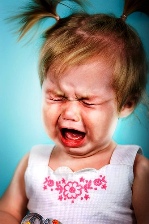
Next, I am not quite sure how participating as a family at Mass has its own special benefits if … if …a great deal of attention must be paid to the small children who are pretty much oblivious to what is going on anyway. 

I imagine parents of children will want to chime in on that point and help us out.

Children learn – at their own level as you say – from the example of their parents and pick up subtle social cues which become part of the deep warp and weft of their worldview. 

There is always an "on the other hand" in these discussions, isn’t there?

But back to an important point.  The priest also suggested that you and your husband would get more out of Mass were you not to have to cope with your busy little darlings.  Get that?  You and your husband were the focus of Father’s concern.  That is a legitimate thing to suggest, you know.  And the priest was not saying that it is bad for you to be in church with your kids.  He is saying that you might be able to participate better, be more actively receptive to what is going on at Mass, if your attention wasn’t so divided. 

And yes, I know that perhaps Father was being subtle and was really suggesting that the kids were too noisy.  But let’s stick to the story as written.

Some at this point are on the verge of saying "But Father! But Father!", with furrowed brow.  "Priests are supposed to be pro-life!  How can you even suggest that we shouldn’t have all our children all the time in every church!  You hate kids!"

"Tisk", I reply. 

I think having children at Mass is fine.  It is especially nice when they are not throwing fits. "On the other hand"… just because Catholics are pro-life that doesn’t mean that everyone should always have to share the agony and ecstasy of you handling your children during Mass.

Digression: I imagine most parents are truly concerned, anxious even, that their children not bother other people in church.  That must be – as I imagine – a real strain on one’s ability to focus on anything else.   And, even though we know that a parent still, in a way, participates at Mass when at a certain decibel level he or she takes the little darling outside, that is hardly the best way to participate.

While I am rambling… some people who don’t have children, or haven’t had little ones for many years, might be overly touchy about their personal zones of silence.  It is possible to get used to quiet to the point where noise really irritates.  These folks have to get themselves into a mental place where they can be a bit more tolerant.   One the other hand, it might not be the best choice not to leave when junior is turning purple from the screaming.  Some couples may have a really high tolerance level to noisy children, so that they barely take notice of them… when everyone else in a two block radius are noticing little else.  These people need to get themselves into a mental place where, when they go into church, they remember that they are not at home in their back yard. 

Consider also this story.

A baby was howling in the front pew during the sermon and the mother started out of the church with her treasure, passing right in front of the pulpit as she headed for the door.

The priest wanted to demonstrate how open he was to noisy children at Mass, no matter how distracting they might be.  Father stopped his sermon and said "Please don’t think you have to leave.  The baby doesn’t bother me."

Over her shoulder the mother shot back, "You’re bothering the baby!"

Yes, it is possible that, at times, parents are not entirely aware of the effect of their little bundles of love on others in the church.  I have met people who were pretty self-absorbed with their children. Therefore, it might not be the very best choice to sit in the front pew, far from the door. 

A little kid noise in church isn’t going to disturb people very much – including the parents of the squeaker.  But there are limits, right?

In sum, your priest is probably right.  You could get more out of Mass by not having to deal with your children all the time.  Still, this may not be a practical solution.  If you think Father was really hinting at something else, perhaps you should ask the priest if someone complained or if he himself had a concern.  Don’t wonder or imagine why he made the comment.  If it wasn’t clear to you what he was saying, ask him nicely. 

I will now drag my cripsy fried body to the edge of the tracks to wait for the next train to run me over with a resounding crunch.

Posted in ASK FATHER Question Box, Classic Posts, SESSIUNCULA |
167 Comments

Fr. Sirico about dissenters and the upcoming “social” encyclical

You might inoculate yourself against some of the foolishness of the lefties on the upcoming "social"encyclical of Pope Benedict with this piece by Fr. Robert Sirico from the site National Review Online.

My emphases and comments.

The Divine Economy: On the New Papal Encylical    [Rev. Robert A. Sirico]

On Tuesday, Pope Benedict XVI will release his first social encyclical, Caritas in Veritate. The pre-release buzz from the Catholic Left on each of his two previous encyclicals has so far proven wrong each time, [Sr. Chittister and Fr. Reese are cases in point.] so the rule should be to wait and see what the pope will actually say.

Each time, with previous encyclicals, we have been told that the pope is preparing to lambaste capitalism and call for state measures to heavily regulate it with an eye to redistributing wealth, cleaning up the environment, controlling consumption, etc. Each time, the final text has demonstrated that the pope’s conversion to progressivist causes has been greatly exaggerated. Invariably, his arguments have been highly sophisticated and have defied easy political categorization.

In advance of Caritas in Veritate, Catholic “progressives” are working themselves into a frenzy of predictions, recommendations, and anathemas — and not one of them, to my knowledge, has seen even an early draft of the encyclical which has been two years in the making. [And revision too, I believe.]

Will the document draw attention to the weaknesses of Western-style capitalist systems? One hopes so. [Because, clearly, there is room for improvement.] We might expect the pope to call on market forces to be regulated by moral concerns, within a strong juridical framework, and an exogenous apparatus of standards to curb excesses.

[Q] But here is the operative question: In what sense would such a call be a blow against the idea of free economic institutions? [A] The short answer is that it will not be.

There are few advocates of market economics who advocate a complete lack of regulation rightly understood. Every transaction in the marketplace is in fact regulated by contract law, reputation, industry standards, competition, certification and monitoring, and profit and loss systems that reward prudence and punish excess over the long term. [There must be rule of law and some regulation so that people can trust that the agreements they enter into will be honored.  If not, trade is very difficult indeed.]

Do these need strengthening? Certainly, and it should be noted that a main force for weakening them is not the market as such, but partisan interventions in the market.

Consider the drive for ever-lower interest rates as one of many examples. [Which just drives up borrowing.] This is a subsidy for excess because it encourages borrowing [yep] at the expense of saving. If Benedict writes of the need for greater prudence and caution in economic affairs, permitting interest rates to rise to a market level would go a long way toward achieving that.  [NB: Fr. Sirico is not saying that this is what Pope Benedict is going to say.]

Will the pope overtly call for a global, centralized, state-based management of economic systems about which would-be central planners have long dreamed? I would be very surprised. This is a man who has stood firm against every form of statist control of society. As his first encyclical, Deus Caritas Est, illustrated, he has a deep attachment to subsidiarity as an essential principle for a free and good society, and I would be amazed to see him give up his love for liberty because the concern of the moment is economics.

But details aside, it is good to step back a moment and reflect on what Catholic social teaching is and what it is not, so that in studying the new encyclical, we gain a deeper appreciation of its intent and scope.

[Pay attention…] Since 1870, the papacy has explicitly claimed to exercise the charisma of infallibility in the very area that "progressives" — “dissenters” is a more accurate word — have labored to dilute and “episcopalianize” for 40 years: faith and morals. In fact, Catholic progressives will find themselves on the horns of an intolerable ecclesiological dilemma no matter what the contents of the document. [I am reminded of the mordent comment of the late Fr. Neuhaus that the purpose of episcopalianism was to make irony redundant.]

On the one hand (doctrine, liturgy, and sexual morality), progressives tend to take dissenting positions from defined and binding Church teaching. On the other hand (economic and social policy), they want to boast of the Church’s "best kept secret," especially to the extent that they think it coheres with any number of secular-left platforms, while ignoring those aspects of Catholic social teaching that clearly don’t fit the leftist nostrums.  [They want it both ways.  Ignore these teachings, but pay attention to these (ours).]

It is quite a spectacle to see Catholic progressives — who in other circumstances contort themselves into exegetical pretzels when they want to undermine clear, emphatic, authoritative, and repeated magisterial prohibitions on same-sex relations, female “priests,” and contraceptive acts — morph into virtual Ultramontanists on prudential matters such as the precise level of a minimum wage.  [Bravo.  Well said.]

Let us be clear: The Church explicitly makes no such claims of infallibility on those policy matters that it considers a matter for prudential judgment (i.e., most policy issues) but allows for Catholics to hold a variety of viewpoints on such questions such as the exact size of the state’s share of the economy. [This is exactly what I am talking about all the time in my critique of the Kmiec/Jenkins/Chittister Catholics.  People are free to disagree about solutions to many social ills, about contingent moral judgements.  There are, on the other hand, teachings about which Catholics are not free to disagree.]  Clearly no Catholic can be an anarchist or a communist — but there is a lot of room for prudential disagreement within these parameters. Benedict XVI has followed the model of John Paul II in saying that the Church has no infallible model of political economy to impose on the world. The Church’s social teaching is not, as John Paul stated, a “third way.”

Further, as pointed out by my friend Michael Novak, the word capitalism is being thrown around in reckless ways these days. Citing Fr. Thomas Reese, S.J., whom Novak charmingly calls “one of our most reliable leftist bellwethers,” in an article in the Washington Post, [here.] Novak shows how such thinkers don’t even know what modern capitalism is. 

Fr. Reese asks, "If they think that Obama is a socialist, what will they think of Benedict after the encyclical?" and prophesies, "Conservatives will be shocked and disappointed by the encyclical, which will reflect Benedict’s skepticism toward unbridled capitalism based on greed."

I am not sure who such conservative defenders of "unbridled capitalism based on greed" are supposed to be. Perhaps Fr. Reese has the disciples of the atheist Ayn Rand in mind, but they are hardly representative of those modern defenders of the market economy such as Rocco Buttiglione, Wilhelm Röpke, and William F. Buckley. I think it is a fair prediction to say that any pope would come out against any system "based on greed." Erecting fictions about capitalism and its defenders — and then criticizing them [i.e., straw man arguments] — might take you a long way in the bubble of the Georgetown Faculty Lounge, but that hardly constitutes a serious argument.

— Father Robert A. Sirico is president and co-founder of the Acton Institute.

Okay!

Get ready for another battle of the Acton-Bots and the Distribu-Cons!

___________

UPDATE 4 July 2305 GMT:

The author of the article, Fr. Sirico, chimes in, below, in the comments.


Posted in SESSIUNCULA | Tagged ,
65 Comments

YOUR NEW TLM announcements

YOUR NEW TLM announcementsFrom time to time it seems like this blog is the cyber version of a campus telephone pole.  People want me to post their announcements.

I like good "brick by brick" news, and when time and other things permit I will happily help out.

But since this blog is not, in fact, the campus telephone pole, here is an entry where you can do that.

What are your NEW TLM announcements?

Posted in SESSIUNCULA |
31 Comments

Catholic New Media Awards 2009 – RESULTS

The results of the Catholic New Media Awards for 2009 have been released.

Many thanks to everyone who gave your support!  And kudos to all the other blogs and podcasters out there!  We must all help each other!

WDTPRS made a good showing in quite a few calendars.

  • Best Blog by a Cleric
  • Best Blog by a Religious
  • Best Written Blog
  • Most Informative Blog
  • People’s Choice Blog
  • Best New Podcast
  • Best Podcast by a Cleric
  • Best Podcast by a Man
  • Best Podcast by a Religious
  • Best Produced Podcast
  • Best Video Podcast
  • Funniest Podcast
  • Most Entertaining Podcast
  • Most Informative Podcast
  • Most Spiritual Podcast
  • People’s Choice Podcast
  • Best Overall Catholic Website

Posted in SESSIUNCULA |
21 Comments

Sr. Joan’s precious insights on the upcoming encyclical

Sr. Joan's precious insights on the upcoming encyclicalOn the site of the ultra-liberal dissenting NCR Sr. Joan Chittister, OSB shared her precious insights on the text of the Holy Father’s encyclical, about which she can know really very little.

I won’t tire you with the whole sad thing, but this little blurb you should read.

… [E]arly reports indicate that the pope’s upcoming encyclical, Veritas in Caritate (“Charity in Truth,”), [what the… ?!?] clearly argues that the defense of the poor and the defense of unborn life are "necessarily linked."

Which leaves us in a quandary. Is the attempt by some to ostracize those who seek alternative approaches to the subject of abortion really the most effective — and the most moral position — a Catholic can take? By ignoring — and so minimizing — all other social justice issues, can we possibly consider ourselves sufficiently grounded in a Catholic vision of the world, even in regard to our commitment to this one?

She doesn’t even get the name of the encyclical right.  And even if it were entitled Veritas in caritate that wouldn’t be translated "Charity in truth". 

But she knows what the unpublished encyclical says. 

Trust her! She knows.

Read what she wrote in the context of President Obama’s attempts to jam through universal abortion through the present UN meeting.

UPDATE 2235 GMT:

It is sure that Sr. Chittister and those of her school – alas a school involving very little Latin  – are going to claim that His Holiness’ reception of Pres. Obama will amount His Holiness’ approval of Pres. Obama’s agenda.

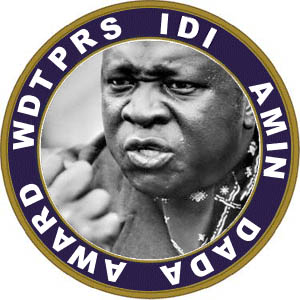
Upon these we are pleased to bestow the new WDTPRS "Idi Amin Dada" Award, inaugurated in honor of the 10 September 1975 visit of this famous head of state to Pope Paul VI.   The president kept the Pope waiting and the Pope did not bestow upon Idi Amin Dada the honor of a doctorate in law.

Sister should feel free to capture the graphic and put it on her own blog.

Sr. Joan's precious insights on the upcoming encyclical

Posted in SESSIUNCULA |
40 Comments

“What was missing was the crunching of popcorn and peanuts in the pews.”

From a reader:

I’m sure this has been discussed to death (as has holding hands during the Our Father, whether it should be done or not, etc) but I was wondering about reverence for the Mass.  Or even reverence before, during and even after the Mass.

I’m in my mid 40’s so was very familiar, and was even comfortable, with the new Masses of my youth, the music, etc. Maybe it was the Church’s way of welcoming or bringing back the youth, I don’t know. But now I believe that something was lost along the way. 

I read that Catholics younger than me are thirsting for more, wanting and seeking the reverence that they do not find in some of their parishes. I seek that too.

One Sunday, whilst waiting for Mass to begin, there was casual chit-chat behind my husband and I, and voices in other places, that I felt as if we were waiting for a show to begin.  What was missing was the crunching of popcorn and peanuts in the pews. My husband described is as "cacophony" and I was later surprised to read online that there were others who described it that way too.

I understand that sometimes people need to talk in hushed whispers or that the choir needs to practice. But why is there still conversation going on while the other parishioners are saying the rosary? My husband sits in his seat with his eyes closed. That is how he prays in the church. I remain quiet in my seat. And yet one parishioner goes over to the seat behind my husband, where her friend is seated, and they have a conversation. And not in hushed tones, either. My husband later said that there was no respect. If it were the Pope seated there, surely they wouldn’t do that. I had to agree with him.  [But they do so in the presence of the tabernacle and… their fellow worshipers.]

I  have never attended a Latin mass and I don’t think there are any around here. I enjoy our Masses but it’s disturbing as well as frustrating when a priest exerts his own personality upon the mass and turns it into a show of sorts.  There was a visiting priest who said a few masses several Sundays in a row. He was very respectful during the consecration but was otherwise "entertaining". I know we are not supposed to judge but I also suppose that is precisely what I am doing right now.

How to deal with this, Father, on a regular basis, when there are others who insist on talking and carrying on whilst waiting for the Mass to be performed. It is not always that way but it does depend on the priest, I have to admit, not only the congregation.

Unlike me, my husband doesn’t care what others think of him, but I do sometimes wonder if there are other parishioners who think that we are too quiet in church. But then, are we not supposed to be quiet and prayerful in church?  I miss that. I used to love sitting quietly in church by myself (when churches used to be opened during the day and before they had adoration rooms). It’s not that way anymore.

Here are a few thoughts. 

I believe that over the last decades there has been a dissolution of our Catholic identity and our Catholic worship.  They are inextricable, the one from the other.  When we changed our forms of prayer, the design and decoration of our sacred spaces, and the manner of the prayer – so much in the hands of priests – we slowly but surely have been forgetting who we are in church, who others are in church, who we come to find in church. 

Our Holy Father in his letter Sacramentum caritatis addressed the issue of the manner and style of liturgical celebration, especially in reference to the priest celebrant.  The ars celebrandi or "art of celebrating" is of critical importance.  The foundation of a sound ars celebrandi must rest on the priest getting himself out of the way of the words and actions of the true Actor during our worship: Christ the High Priest.  We must carefully follow our texts and rubrics and get ourselves out of the way so that what Christ desires to give us through the ministry of Holy Church will ring clear and true.

Our sacred spaces must ring clearly only with what is sacred.  Our texts and music must be oriented to God.  But just as important is what does not ring at all: silence.  Worship must must must include silence.  We are busy creatures, easily distracted, with many cares. We depend for our proper attitude of participation in worship – our active receptivity to what the Priest is offering  – on the proper environment, before, during and after.  We need silence for the sake of our immediate disposition for our receptivity. 


We are culturally bound, to a certain extent.  We are people of our era and our environment.  But surely it is incumbent on the priest to help his flock to the very best sort of active participation in our worship even if what he proposes – imposes – is counter-cultural.  Even if he must strive to break bad habits, it is his duty to see to it that his flock benefit as much as possible from what the Church is offering.

Posted in Our Catholic Identity, SESSIUNCULA, The future and our choices |
56 Comments

Back in the day… forbidden books and seminarians

A good story from Stella Borealis, a blog which focuses on matters churchy in my native place and surrounding territories.

This tells the tale of one of the most amazing used book stores I know and a certain (present Archbishop of St. Louis):

Archbishop Carlson Saved Loome Theological Booksellers in Stillwater (long ago) .

St. Louis Archbishop Robert Carlson once saved Loome Theological Booksellers [the world’s largest used book store dealing in books on religious subjects and theology] from the "out with the old, in with the new" spirit of Vatican II hardliners in the Archdiocese of St. Paul/Minneapolis.

Before he was Archbishop of St. Louis, before he was Bishop of Saginaw, before he was Bishop of Sioux Falls, and before he was the Auxiliary Bishop of St. Paul/Minneapolis, he was the Chancellor for the Archdiocese. Before Loome Theological Booksellers was the largest theological bookstore in the world, it was not. The following story was recounted to me by Dr. Loome just last week (some embellishments of suspense and style were added by me – but most of the story is true).

In those dark days Dr. Loome received a tip from a certain Dr. Briel at the University of St. Thomas that an edict had gone out from the chancery that seminarians were not to patronize Loome Theological Booksellers. St. John Vianney seminary was told that Loome Theological Booksellers was "out of bounds" because it sold "retrograde, conservative" books. It was then that they started coming at night, the seminarians that is. After hours the Loome family (who lived in the bookstore at the time or rather the bookstore was part of their house) would hear furtive knocks on their door and open the door a crack to let in the disobedient seminarians. The seminarians seemed to know that the books in Loome Theological Booksellers were necessary for their education. [I can solemnly attest that those were very bad days for seminarians of any true Catholic faith.  There were many casualties and expulsions for offenses such as "having a driving need to know the truth" or having such dangerous religous objects as a statue of Our Lady of Fatima in one’s room.  Seminarians had to pretty much sneak out to gather on Tuesday evenings at St. Agnes rectory, sometimes referred to in code.  But I digress.]

Although the furtive visits were exciting for Dr. Loome and his wife Karen they decided that the damage to the store’s reputation by this edict needed to be addressed. Dr. Loome soon made the call to the chancery and who happened to answer the phone, but our hero, Chancellor Carlson himself! Dr. Loome asked him why the edict had been issued against his bookstore. Chancellor Carlson paused . . . and said as delicately as he could, "no such edict has been issued". As Dr. Loome struggled to understand his meaning, Carlson further explained that no such edict had been issued by him and therefore no such edict had effect. Later, Dr. Loome learned that the Assistant Chancellor had been the one to issue the edict.

Chancellor Carlson, recognizing the great good of Loome Theological Booksellers, came up with a plan to save the bookstore’s reputation. He asked Dr. Loome, "Has your business been blessed yet?"  [Shopkeepers, are you paying attention?] Dr. Loome began to smile and said, "No it has not". Chancellor Carlson then made plans to bless Loome Theological Booksellers and invited the local diocesan newspaper to the event. In no time at all the reputation of Loome Theological Booksellers was rightly corrected and seminarians soon could come in plain clothes during the day. That’s how Carlson saved Loome Theological Booksellers and thwarted the schemes of the "out with the old, in with the new" spirit of Vatican II hardliners.

Back in the day I must have paid Loome’s rent several times over and some of my acqusitions are still near to hand and used with frequency today.

Back in the day, back in the day … those were bad days for Catholic seminarians …

UPDATE 4 July 1630 GMT:

In a comment, below, the present rector of St. John Vianney Seminary, Fr. Wm. Baer, chimes in.  Be sure to read his comment.


Posted in SESSIUNCULA |
86 Comments