A reader sends:
I know you have made the explanation clear for the true liturgical color of "rose," but could you please give a brief lesson on the true liturgical color of "violet"? It seems when the seasons of Advent and Lent arrive, we see all different shades and hues of violet or purple. How did the color of "Roman violet" evolve into "purple?"
Roman violet or "Roman purple" is violaceus.
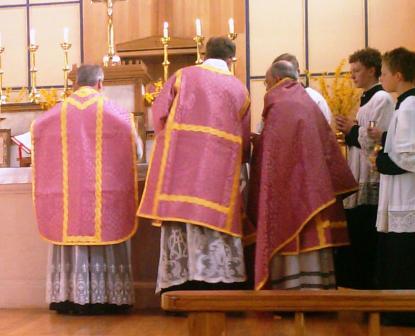
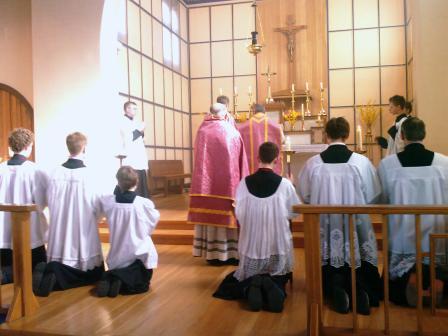
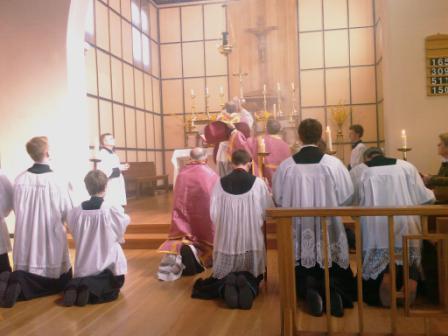
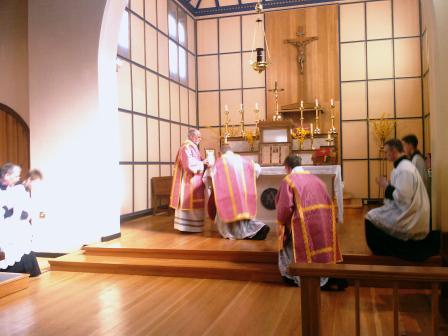
Part of our problem with understanding liturgical purple is the loose use of the term "purple". "Purple" can be all sorts of different colors, ranging between the reddish and the bluish. On the other hand violaceus or "Roman Purple" is in modern times considered to be a specific color on the reddish side close to the color of the gemstone amethyst. But historically our colors varied.
Remember that dies for cloth were obtained from plants and sea animals. The famous case of the ancient world is the fabulously expensive purple dye, "Tyrian purple", made from the murex, a sea critter who totes around a spiny seashell. Muricidae are unfortunate enough to have a tiny gland producing a purple goo endowed with a marvelous staining quality. The difficulty of finding the little creatures, which were best fished in the “dog days” when the “Dog Star” Sirius was high during the summer, and the sheer quantity needed to make enough dye to matter, made purple cloth very expensive indeed. The best and most famous was from shores of Tyre.
The word “purple” itself came in time to signify anything expensive or precious. In Jerome’s Vulgate you can look up spoils of battle in 1 Maccabees 4:23 for a reference to purpura marina. The Roman senators were distinguished by a band of purple, called a laticlavium, on their toga praetexta. Purple robes were eventually worn only by Emperors. In the Church the reddish-orange color worn by cardinals is today still called in Italian “porpora sacra” for in earlier times they were a more purple hue. Today, the Cardinal’s "sacred purple" is closer to scarlet.
I digress. Back to the "amethyst" color of "Roman purple". In ancient times the naturalist C. Plinius Secundus (Pliny the Eldar +AD 79) speaks of amethyst as a tint, "amethystum inebriatur Tyrio" (cf. 9, 41, 65, § 139).
So, Roman purple is really a color, through what has been take to be "purple" has shifted through the centuries. If memory serves the old Sacred Congregation for Rites defined a specific shade of violaceus, "Roman purple", with a sample of fabric as the standard or point of reference.
So our violaceus gets translated into the obvious "violet", which is a real and specific color as well as a loosely used term for a darker color, and also into "purple", which is also a loose term for a range of colors from the reddish to the bluish. Some people prefer to say that purple is on the redder side and violet is on the bluer side.
This is how some folks want to say that during Lent we should use the reddish Roman purple, which true violaceus and during Advent we should use the bluish purple, or a shade so close to blue that it really is blue.
I think if you were going to be picky or a purist, a true liturgically psiloligical doryphore, we would want to be use "Roman purple".
In any event, just as in the case of Roman rose or rosacea the term violaceus is a precise color, but the term is loose. Purple or violet has drifted around the spectrum over the centuries and we shouldn’t be overly picky.







 mibethda on Pope Leo XIV airplane interview: remarks about relaxing Traditional Latin Mass restrictions: “The prime rationale underlying Traditionis Custodes and the restriction of the Vetus Ordo Missae as declared by Pope Francis, Cardinal…”




























