PODCAzT 82: St. Joseph: a hymn dissected and a sermon of St. Bernardine of Siena

Happy Name Day Holy Father!

In this rapid PODCAzT, we will drill into a beautiful Gregorian chant hymn to St. Joseph in the Liturgia Horarum, the Liturgy of the Hours.

The hymn is Te, Ioseph celebrent and it is in the Liber Hymnarius for 1st and 2nd Vespers for the Feast of St. Joseph.

APODCAzT 82: St. Joseph: a hymn dissected and a sermon of St. Bernardine of Sienalso we listen to an indulgenced prayer written by Pope Leo XIII, Ad Te Ioseph.

PODCAzT 82: St. Joseph: a hymn dissected and a sermon of St. Bernardine of SienaFinally, we hear St. Bernardine of Siena (+1444) preach on our Patron of the Universal Church who is Patron of the dying.

Sing along with the hymns! Buy a Liber Hymnarius!

https://wdtprs.com/wp-content/legacy/audio-archive/podcazt/09_03_19.mp3


Posted in PODCAzT, SESSIUNCULA | Tagged , , , , , ,
13 Comments

Marco Politti’s attack on Pope Benedict

Italian journalist Marco Politti, of La Repubblica, is usually well-informed.  But he often brandishes less than a friendly quill when it comes to traditional or conservative expressions of Catholicism. 

To put it mildly, he is not a fan of this Pope.

In this piece, Politti is not reporting, he is pushing and agenda.  He is pushing it outside the narrow band of Italian readers.  Politti is helping in the call to arms against Pope Benedict.

Therefore, he fits with the slant of The Tablet.

My emphases and comments.


The Church’s new age of dissent
Marco Politi

Earlier crises in the pontificate of Benedict XVI have involved relations between the Church and other faiths. But the one precipitated by the lifting of the excommunications of four Lefebvrists has prompted Catholic bishops to express their desire for a different kind of relationship with the Vatican  [So the other crises were external and this crisis is internal.]

In spite of a letter to bishops around the world that immediately provoked professions of solidarity, Pope Benedict XVI, it seems to me, is like a solitary monarch in a curia that has lost its bearings.  [This is now a common talking point for liberals: The Pope is a solitary monarch.   But it is very possible that the Curia has lost his bearings.]

The storm caused by the remission of the excommunications against four Lefebvrist bishops may appear to have died down but the crisis that exploded following the chain of errors which Pope Benedict sought to explain has not. It has become a pontificate of two halves: before the break and after. The period after has brought to light questions concerning the leadership of Joseph Ratzinger, revealing at the same time a tension between the Church’s central government and important bishops from the Northern Hemisphere.  [You can guess at the subtext already.]

Reading between the lines of the bishops’ messages of solidarity to the Pope, there are requests that he change his style of government. The German hierarchy professes itself delighted that the Pope wants to enter "into dialogue with the bishops" (signalling that thus far this has not happened). The French bishops underline the necessity for the Vatican to become accustomed to an exchange that is "rich and substantial", hinting that the relationship between the Pope and the bishops should not consist simply of orders from on high. In Switzerland, the Bishop of Lugano, Pier Giacomo Grampa, expresses the hope that the humble and fraternal style of Benedict XVI’s letter should become the style adopted in the day-to-day governance of the Church.

But it is the Austrian bishops who delivered the most strongly worded message. The Church guided by one of his most faithful disciples, Cardinal Christoph Schönborn, reminds the Pope that he is not the only person who is suffering and that pain has also been endured "by many local churches and people outside the Church".

The main problem in the Church today is not the existence in the Curia of an anti-Ratzinger party. There may be cardinals who are more or less enthusiastic about the direction in which the Pope is guiding the Church. Certainly the secretary of state, Cardinal Tarcisio Bertone, is not considered part of the curial apparatus or "one of their own". However, in the main the heads of congregations are well aligned and follow papal instructions faithfully. Centres of opposition or dissent do not exist. [Uh huh… riiiight.] The real problem appears to be the absence of a guide inspired by a coherent strategy who can take account of the geopolitical scene and of public opinion both inside and outside the Church.  [One wonders if that is possible.  However, this begs us to ask the question: Is that the Church’s mission?  To be geoolitical?  We can admit that it is important to have a good standing in the Church.  But… isn’t this view a left-over of the era of, say, Paul VI?  Ostpolitik?]

Did it make sense to revoke the excommunications of the four Lefebvrist bishops – without obtaining any statement of faithful adherence to the Second Vatican Council – on the very day that marked the fiftieth anniversary of Pope John XXIII’s decision to call the council? [What better day?  And the Pope really did explain his reasons.  Isn’t it possible that the Pope really meant what he wrote in "making sense" of his motives?]   Did it make sense to insist on pardoning the Holocaust-denying Bishop Richard Williamson in the very week dedicated to the memory of the Shoah?  [That was bad timing.  But the liberals would always be able to find some anniversary or other to toss in the Pope’s face.  They can always find something.]

Here an important detail should be remembered. The Vatican decree lifting the excommunications was published a full 48 hours after the story was first leaked to the press. Immediately afterwards Bishop Williamson’s interview with Swedish television was published in which he insisted that six million Jews did not perish in the Holocaust. There were two days in which Benedict XVI and his aides had ample opportunity to block the publication of the decree and avoid the need for the warnings, explanations and requests to the Society of St Pius X (SSPX) that emanated from the secretary of state only after the catastrophe had happened. [And would that have been right?  Issue to the SSPX the letters informing them about the lifting of the excommunications and then going back on the decision?  But keeping the SSPX out of the mainstream Church is worth even such a dishonorable price.] The generosity with which the Pope in his letter avoided blaming any of his collaborators – foremost among them Cardinal Castrillón Hoyos, president of the Ecclesia Dei Commission charged with negotiating with the Lefebvrists [a President of the PCED who tried to do his job] – does not negate one fact: although he was warned by the world’s media of the impending crisis, the Pope did not consider it opportune to call a halt and review the decision. [Astonishing!  The Pope doesn’t guide his decisions after the opinions of The Tablet or Marco Politti.]

I immediately thought of the days following 12 September 2006 at Regensburg. Several hours before Benedict XVI delivered his lecture to the university, quoting the anti-Islamic words of a distant Byzantine emperor, a group of journalists (who had received a copy of the lecture under embargo at 7 a.m. that day) had already advised the Vatican spokesman, Fr Federico Lombardi, that the talk would cause problems with Muslims. [They would be sure to prolong the problems, too.] The journalists were from La Repubblica, New York Times, Los Angeles Times and Associated Press as well as the Italian television company, Channel 5. No one can doubt that Fr Lombardi informed his superiors. Above all, it is well known in the Vatican that Cardinal Angelo Sodano warned the Pope of the risks he was taking with his lecture. Yet Benedict XVI went ahead, with the consequence that he had to express many times his regret to the representatives of Islam.  [But… the were very good things that came about as a result of the Regensburg Address.  Clearly just doing and saying the same old pointless things wasn’t bringing about any progress.  A different approach was needed.  In the case of the SSPX bishops, the excommunications in 1988 hadn’t brought about the desired medicinal effect.  Thus, to achieve the desired effect, it was time to do something else.]

The Pope’s entourage has a maxim: "Do not disturb the driver." But this is not the way to guide a community of 1.2 billion faithful. [Get the subtext?] Pope Benedict’s letter expresses a great personal sincerity but also betrays a weakness. To speak of hostility directed against the Pope especially from within Catholic circles raises some serious questions. [I wonder if they are the same questions I raise.] It suggests that either the Pope considers every criticism to be a personal attack – and this should not be the reaction of a leader who needs to understand the complexity involved in the process of government – or that there exist in the Church many people who are uneasy with the direction being taken by the Pope.  [Incredible.  It is not possible that the Pope is doing the right thing and that the Catholics who attack him for it are wrong? The fact is that the enemies of the Church.]

This is the first real crisis of the Pope’s leadership. In past years the crises were always outside the Church: relations with Islam, the relationship with the Jewish community impatient over moves to beatify Pius XII. But this time the crisis exploded "inside" the Church and the fact that emerges clearly is that the bishops have denounced an absence of collegiality in the government of Pope Benedict.  [You see Politti’s agenda, and how congenial it is to The Tablet.]

The Pope was fully aware that a majority of the members of the College of Cardinals which he convened in Rome in March 2006 were of the view that the followers of the SSPX could only return to the bosom of the Church if they expressed a "faithful adherence to Vatican II", but he chose not to take account of this. [ehem… I am sure he did take account of it.  Then he decided to do something.] In taking the decision to remit the excommunications he consulted neither heads of dicasteries of the Curia nor the bishops with a particular interest. He did not consider it important or necessary.  [Remember: When liberals says "consult" they really mean " get permission".]

When I interviewed him in November 2004, just a few months before the conclave in which he was elected Pope, the then Cardinal Ratzinger said: "It is increasingly apparent that a worldwide Church, particularly in this present situation, cannot be governed by an absolute monarch … in time a means will be found to create realistically a profound collaboration between the bishops and the Pope, because only in this way will we be able to respond to the challenges of this world."

Benedict XVI has done nothing to realise this principle. [I wonder if that is really the case.  Politti would like us to think that it is.  But is it?] The affair concerning the Lefebvrists – like the unilateral decision in 2007 to re-establish in permanent form the pre-conciliar Mass – has brought to light the heart of the crisis: the failure to implement collegiality. [The implication is that this Pope really is trying to roll back Vatican II.] Pope John Paul II also preferred an exercise of power that was strongly personal but behind his charisma he kept a close ear on world public opinion, had a profound sense of history and the ability to perform gestures that threw open new perspectives to the Catholic Church and to the whole of Christianity. There was for instance his act of penitence for the errors and the horrors committed by the Church down the centuries, the joint prayer with leaders of other world religions, the celebration of the unique ties between the Abrahamic faiths – Judaism, Christianity, Islam – and the final proposal of a consultation with the heads of the Christian Churches to review together the exercise of papal primacy.  [So… as long as Popes rub gravel through their hair, say their sorry, and don’t do anything without considering public opinion, they are wise and good Pope.   BTW… why is it that only dead Popes are good Popes for liberals?]

Today, without these leaps forward, what remains is the naked problem of an exercise of power that is authoritarian and solitary before which the bishops around the world are increasing their demands for collegiality. The affair concerning the nomination of Fr Gerhard Maria Wagner as auxiliary Bishop of Linz becomes emblematic of this. It had never happened that a national bishops’ conference opposed a papal nomination and obliged the Pope to revoke the decision. [Wasn’t the situation in Warsaw similar?] Yet this happened in Austria. And it is a sign of an underlying tension that could easily ignite. Similarly, it had never happened that an archbishop proclaimed an excommunication, [The dust up in Brasile] later validated by the Vatican, and bishops from another country protested against the decision to the point where the Vatican newspaper, L’Osservatore Romano, had to criticise the excommunication. This happened with the excommunication pronounced in Brazil by Archbishop José Cardoso Sobrinho on the mother of a nine-year-old girl who allowed her daughter to have an abortion after she was raped and became pregnant. The violent reaction of a number of bishops in France against the excommunication created a difficulty for the Vatican.

Truly, beneath the surface of Roman power – as under a volcano – one can hear ominous rumblings. 


You can sense what is happening.  The enemies of the Pope, whom I think we can group as "rupturists", were bidding their time.  They have now become alarmed by what Pope Benedict is doing to the point that they have skulked out of the woods and have formed packs.  They have even tasted some blood and are therefore emboldened.

Of all the liberal nightmares, the old Mass is their worst.

The SSPX brings a different view of the Council to the table.

They hate Pope Benedict.

Posted in SESSIUNCULA |
63 Comments

Way of the Cross PODCAzTs

I have audio PODCAzT versions of the Via Crucis available.

St. Alphonsus Liguori

Joseph Card. Ratzinger

Posted in SESSIUNCULA |
1 Comment

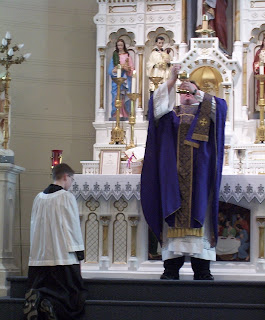
What’s wrong with this picture

My friend John Sonnen has posted a photo about which I ask a question.

What is wrong here?

What's wrong with this picture

The main altar was designed by Michelangelo, if that makes any difference.

Posted in SESSIUNCULA |
65 Comments

Calling for recordings of your chant schola or choir

Do any of you direct or belong to a Gregorian chant schola or a polyphonic choir?

Do you make any recordings of your group?

You might consider sending me a good, clear mp3 file.

I could include it in a PODCAzT if it is nice a clear or also on the stream RADIO SABINA.

Posted in SESSIUNCULA |
15 Comments

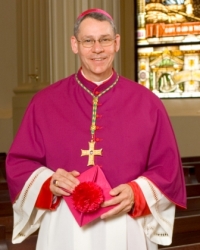
Bp. Robert Finn on going to Confession

From the most excellent Bishop of Kansas City, MO, His Excellency Most Rev. Robert Finn.

This is on The Catholic Key blog.  My emphases.

Bp. Robert Finn on going to ConfessionBishop Finn – Take the Family to Confession this Lent
Following is Kansas City – St. Joseph Bishop Robert W. Finn’s column from the upcoming print edition of The Catholic Key:

Lent is an Important Time for Sacramental Confession

By Most Rev. Robert W. Finn

On Saturdays whenever I am in town, I try to be available at the Cathedral so that I can fulfill one of my greatest privileges as a priest – to hear the confessions of the faithful, and offer sacramental absolution

Hearing Confessions in the sacrament of Reconciliation is one of the most wonderful priestly acts – to represent Jesus in mercy. It is also a very significant responsibility to act as judge and as counselor in the work of reconciling sinners to God and the Church.

This sacrament was given to the Church by Jesus Christ as the normal means for us to receive the forgiveness of our sins, particularly our serious sins. At the same time, it is a powerful way to grow in virtue and holiness.

Pope Pius XII in Mystici Corporis (#88) urged frequent confession of venial sins “to ensure more rapid progress day by day in the path of virtue.”

According to the Pope, some of its benefits are these: Genuine self-knowledge is increased; Humility grows; Bad habits are corrected; Spiritual neglect and tepidity are resisted; The conscience is purified; The will strengthened; A helpful self-control is attained; and Grace is increased in virtue of the Sacrament itself.

I have found personally that frequent confession – I try to go every week – helps me to try harder to be a better and more holy bishop.

Almost every Pope since the 1950’s has said that the great “sin of our century” is the lack of the sense of sin. It is true, I fear, that unless we reflect honestly and with humility every day on God’s commandments, we can quickly become numb to so many of the wrongs that flourish in our culture. We may not even realize how far away from God we have grown.

The most important ingredient of Confession, on the part of the penitent, is contrition or sorrow for our sins. We must begin to realize, with the help of the Holy Spirit, and perhaps the caring direction of another person, how we have hurt others; how we have damaged the integrity of our life through the decisions and choices we make; how we have compromised the great dignity and love to which we are called by Jesus.

Our Lord, because He knows and loves the human heart, also knew this Sacrament of Penance or Reconciliation would be necessary for us in our path to heaven. Lent, because it is a kind of community retreat for the Church, provides a particularly helpful moment of grace. Many of our parishes have Lenten Penance services, or missions, or additional times of prayer and reflection that provide a help to us to examine our conscience. The presence of additional priests may make it easier for us to take this important step back to the life of the Church, even if we have not visited the Sacrament for many years.

I have asked our priests a number of times to help me make the renewal of this Sacrament of Reconciliation a pastoral priority in our Diocese. I am grateful that so many of them spend long hours in the confessional and greet those who come with gentleness. They are blessed instruments of Christ’s peace. Make good use of this wonderful gift, during Lent and frequently throughout the year. Consider going to church for confession as spouses or as a family. In this way you can strengthen each other in your resolve to be more faithful.

O Mary Conceived without sin; Mary ever-sinless virgin; Mary Mother of Mercy: Pray for us sinners!

Posted in SESSIUNCULA |
15 Comments

Dorr, MI: TLM announcement, Gregorian workshop, maniple sighting

Fr. Robert Johansen of Thrownback has posted a note about an upcoming TLM at his parish on Laetare Sunday, … this coming Sunday.

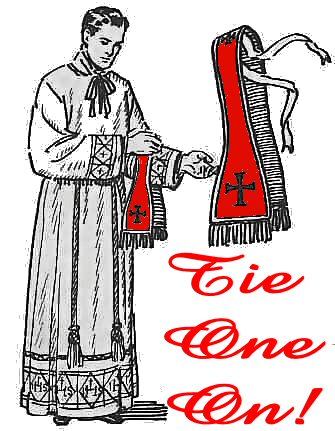
There is a good shot of a maniple, btw.

Dorr, MI: TLM announcement, Gregorian workshop, maniple sighting

Tie one on, Fathers!

Dorr, MI: TLM announcement, Gregorian workshop, maniple sighting

Also, Fr. J asked me to mention a Gregorian chant workshop which is coming up on 28 March in Benton Harbor, MI.

Posted in Brick by Brick, Mail from priests |
4 Comments

John Allen on the Pope’s trip to Cameroon

My friend John Allen, the fair-minded nearly ubiquitous columnist of the ultra-leftist NCR has a very interesting piece today on the Pope’s trip to Africa.

Here are a couple excerpts, but you should read his whole piece.

My emphases and comments.

Benedict in Cameroon a tale of two trips
By John L Allen Jr
Created Mar 20, 2009

By the time this column appears, Pope Benedict XVI will have left Cameroon for Angola, beginning the second leg of his March 17-23 maiden voyage to Africa. I’ve filed close to a dozen stories from Cameroon (see links at the bottom of this page), so here I’ll just offer my dominant after-the-fact impression: I don’t think I’ve ever covered a papal trip where the gap between internal and external perceptions has been as vast as over these three days.  [That is saying a lot.  Mr. Allen has covered a lot of trips, both of this Pope and the late Pope.  He is a keen observer.]

It’s almost as if the pope has made two separate visits to Cameroon: the one reported internationally and the one Africans actually experienced.

In the U.S. and many other parts of the world, coverage has been "all condoms, all the time," triggered by comments from Benedict aboard the papal plane to the effect that condoms aren’t the right way to fight AIDS. In Africa, meanwhile, the trip has been a hit, [Go figure!] beginning with Benedict’s dramatic insistence that Christians must never be silent in the face of "corruption and abuses of power," and extending through a remarkable meeting with African Muslims in which the pope said more clearly and succinctly what he wanted to say three years ago in his infamous Regensburg address, and without the gratuitous quotation from a Byzantine emperor.  [That didn’t get a lot of press, did it!]

Vast and pumped-up crowds flocked to see the pope, and Benedict seemed swept up in the enthusiasm. Twice he referred to Africa as the "continent of hope," and at one point, this consummate theologian even mused aloud about a new burst of intellectual energy in Africa that might generate a 21st century version of the famed school of Alexandria, [!] which gave the early church such luminaries as Clement and Origen.

As counter-intuitive as it may seem to Westerners, it was difficult to find anyone in Cameroon — at least anyone who wasn’t a foreign journalist or missionary, or an employee of an overseas NGO — for whom the condoms issue loomed especially large. The locals had different opinions on whether condoms are the right way to tackle AIDS, of course, but it didn’t seem to dominate their impressions of the event.

Bottom line: Seen from abroad, the trip has been about condoms; on the ground, it’s felt like a celebration of African Catholicism.

Here’s a surreal experience that underscores the disjunction.

On Tuesday, I prepared a piece on the pope’s indirect, but unmistakable, rebuke of Cameroon’s President Paul Biya — a former Catholic seminarian who has tried repeatedly to wrap himself in the papal flag while Benedict is in town. Billboards around Yaoundè assert a "perfect communion" between the two, and colorful African-style shirts and dresses distributed for the trip are festooned with pictures of Biya and Benedict. Biya is also, however, a classic African strongman, who has ruled Cameroon since 1982 through a blend of occasional repression and constant corruption.

Benedict didn’t want to embarrass his host, but he also didn’t want the photo-op to imply a papal seal of approval. Thus, without mentioning Biya directly, Benedict said pointedly that Christians must speak out against "corruption and abuses of power." That was enough to set off shockwaves in Cameroon, and it seemed to invigorate local church leaders. The next morning, Cardinal Christian Tumi, [I love this guy.  I reported his comments on liturgy once upon a time in my column in The Wanderer.] Cameroon’s lone cardinal, publicly asked Biya to withdraw as a candidate in elections set for 2011, something that previously almost no one would have dared to do.

I was outlining all this in my article when I had to break off to do an interview with CNN International about day one of the trip … which was entirely devoted to the condoms controversy. To be honest, I had to wonder if we were even talking about the same event.

That said, let me be clear: This perception gap is not exclusively, or even primarily, the media’s fault. [talk about counter intutive!] The reporter from French TV who asked Benedict the condom question aboard the papal plane was well within bounds; AIDS is serious business, and it’s fair game to ask the pope about it on his first visit to the continent that’s been hardest hit by the disease.

Once the question was popped, the ball was in Benedict’s court. Much of the blame for what happened next, therefore, has to lie at his feet.  [blame?]

By that, I’m not taking any position on the substance of the pope’s answer, though in fairness he did no more than repeat church teaching on contraception, as well as the nearly unanimous view of every African bishop I’ve ever interviewed: that condoms give their people a false sense of invulnerability, thereby encouraging risky sexual behavior. That may be debatable, but one can hardly fault the pope for taking his cues from the bishops on the ground. (Ironically, popes usually get in trouble precisely for not listening to local bishops.)

Setting aside what he said, there’s still the matter of whether this was the right time and place to say it — especially since it would inevitably overshadow the message Benedict was flying to Africa to deliver. [True enough.] (It’s worth recalling that the pope has been down this road before. En route to Brazil in 2007, he took a question about excommunicating politicians who support abortion rights, thereby blotting day one of his first trip to Latin America out of the sky.)

Anybody who’s ever spent time in front of cameras knows how to dance around a question that’s not going to lead anywhere good. Benedict could have said something like: "Of course the church is deeply concerned about AIDS, which is why a quarter of all AIDS patients in the world are cared for by Catholic hospitals and other facilities. As far as condoms are concerned, our teaching is well-known, but today isn’t the right time for discussing it. Instead, I want to focus on my message of hope to the African people," etc., etc.

The story that probably would have resulted — "Benedict shrugs off condoms query" — would hardly have generated a global uproar.

Someone hungry for a silver lining might be tempted to say that the sideshow on condoms made the world pay attention to the Africa trip — except, of course, it didn’t. Instead, Africa became a backdrop to another round in the Western culture wars.  [As usual.]

Yet however one assigns the blame, the fact remains that international discussion of Benedict in Cameroon has left a badly distorted impression of the trip’s aims and content. If the first rule for assessing an event is to understand what actually happened, then drawing conclusions about Benedict’s African journey is going to require more than simply following the bouncing ball on the great condom debate.

That is very good observation and commentary.

Here is another excerpt.


1. African liturgy

Without any doubt, Africans know how to stage a Mass. Quite aside from its spiritual significance, the liturgy at Amadou Ahidjo Stadium in Yaoundè on Thursday was a blast. [Which is, of course, the point of liturgy.] It featured some of the most infectious singing, dancing, and music I’ve ever witnessed, along with the sensation of being among 40,000 people who were genuinely happy just to be in one another’s company.  [Sigh… it is really hard to get one’s head around the balance of the real point of liturgy and the real point of authentic inculturation and bring them together in a concrete moment, one as powerful, as meaningful for people as a PAPAL VISIT.  It’s very hard.]

The depth of faith felt in that stadium was remarkable.

I was reminded of a similar experience I had in Mexico City, during the canonization Mass of Juan Diego, which also featured exuberant local music and dance. One hard-bitten agnostic from network TV who was hanging out with me in the press area whispered: "If they did it this way every Sunday, even I would show up!"

To be sure, African rhythms of worship can take a little getting used to. Organizers positioned the press corps adjacent to some of those lucky enough to draw seats close by the papal altar. One minute, they were chiding us for talking too loud and telling us to put out our smokes; the next, they were gyrating and singing so loudly we couldn’t hear ourselves think. Before long, however, we got the hang of it.

Here’s a rave review: The first bus back to the hotel for the press corps during a papal Mass leaves right after the homily, since that’s usually the "newsy" part of the event. Generally people get antsy to leave because they have stories to file, but in Yaoundè, the Mass was so entertaining that a few of us lost track of time and almost missed our ride.


Again… good coverage of what happened.

That whole issue of inculturation…. oh my…

Yes… we need Summorum Pontificum and the continuity it will prompt down the line.


Posted in SESSIUNCULA |
26 Comments

Today’s Ray of Hope: the Pont. Comm. “Ecclesia Dei” acts – Killala, Ireland

I found this on the blog Clerical Whispers.  You can make your own assessment of what it means.

My emphases and comments.

A high-profile Vatican office has ordered Bishop John Fleming to make provision for the traditional Latin Mass in his Killala diocese.  [IRELAND.  It would be interesting to see that letter!]

The move, from the powerful ‘Ecclesia Dei’ Commission ["powerful" isn’t a word usually associated with the PCED.  However, it can exercise "power" in the sphere of its competence, if the Cardinal President has the will to exercise it.  Good things can happen when the PCED acts.] comes after the Killala Council of Priests decided that no provision should be made for the celebration of the Mass in the Extraordinary Form. [Yah… well… the really can’t do that, can they.  A Council of priests, a diocese bishop, a parish priest cannot simply ignore a papal document.]

In July 2007, Pope Benedict’s letter, Summorum Pontificum, eased restrictions on the pre-Vatican II Mass, the so-called Tridentine Rite and established that any Catholic priest can celebrate the traditional Latin Mass without first seeking the permission of his bishop.  [Rather, that parish priests can celebrate public Masses in their parishes, regularly or occasionally, without the permission of the local bishop.]

Prior to the coming into force of Summorum Pontificum bishops had the right to restrict access to the Latin Mass.

Initially, the Killala Council of Priests, an advisory body made up of both elected members and priests appointed by Bishop Fleming, advised that no provision should be made for the Latin Mass pending a request for clarification from the Vatican on aspects of the Pope’s letter.  [I guess they got their clarification.]

This advice was accepted by Bishop Fleming and an announcement made that the Mass would be unavailable in the Killala diocese.

However, The Irish Catholic has learned that the matter came to the attention of the Holy See as a number of people in Killala wrote to the Vatican to express their frustration at the lack of provision.

The Irish Catholic also understands that a number of diocesan priests who believed the decision countermanded papal legislation, contacted Bishop Fleming to register discontent.  [No doubt very respectfully.  And they kept copies of their correspondence.]

The ‘Ecclesia Dei’ Commission, headed by Cardinal Darío Castrillón Hoyos, then wrote to Bishop Fleming insisting that the restriction was forbidden under Church law since Pope Benedict had made universal provision for the availability of the Mass in the extraordinary form.

In its letter, the Commission insisted that neither Bishop Fleming, nor the Council of Priests, had the right to place a restriction on a right approved by the Pope.

Bishop Fleming has now designated the Church of the Assumption, Ardagh, Crossmolina, Co Mayo as the centre for the traditional Mass in the Killala diocese and the celebrant will be Fr John Loftus, a priest of the diocese.  [NB: Every other parish priest of that diocese still has the right to implement Summorum Pontificum in his parish even though the bishop designated that church.]


This is very good news!

It is nice to see action.

Posted in SESSIUNCULA, SUMMORUM PONTIFICUM |
20 Comments

A hopeful sign

We know that one robin does not make spring, but…

A hopeful sign

Yes, we have Robin.

Turdus migratorius has migrated back.  The ground is still pretty hard, and much of it snow covered where I am, but… well.. they’ll figure something out.

The usual suspects are still here, of course.

A hopeful sign

American Goldfinch is getting a new coat.  The males are getting brighter.A hopeful sign

A hopeful sign

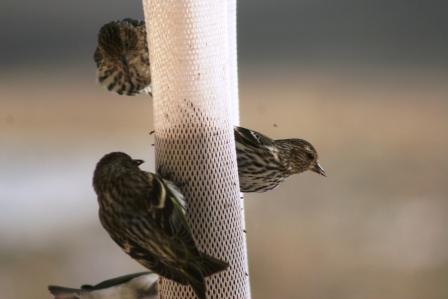
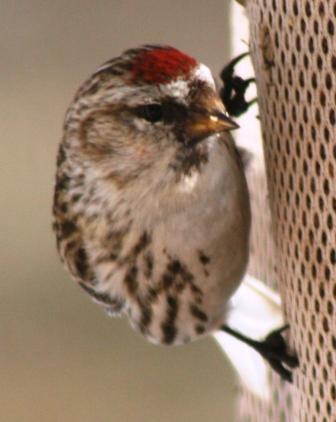
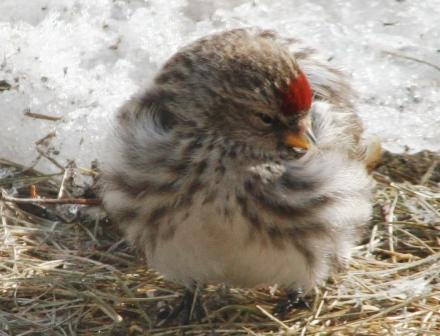
I am not sure if the Redpolls will stay or not.  I am pretty sure there have been more then one sort of Redpoll here this winter.

This Redpoll is having an intense breakfast.

A hopeful sign

This one is all puffed up and having an power nap.

A hopeful sign

Pretty much motionless for the better part of 10 minutes now.  He looks around occasionally.

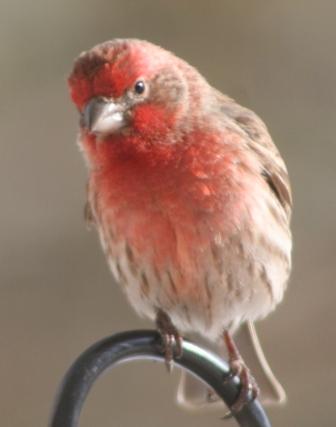
The House Finch is around and looking for an opening.

A hopeful sign

And I hadn’t seen this guy for a long time.  A hopeful sign

A hopeful sign

A pair of the hated Sciurus had shown themselves, and a single Tamiasciurus, not seen for a long time, appeared yesterday.   This ""timber tiger" is living up to his reputation of being Spermophilus, as he stuffs his cheeks with seeds.  The birds on the ground scatter when he… she? … dashes in for another load.

The doves are now beginning to coo.  You can see how their colors help to hide them from hawks.

A hopeful sign

Meanwhile, the Redpoll is still napping.  Several of them are at it now, after eating.  They seem to like to sit along the edge of the snow in the sun.

A hopeful sign

Posted in My View |
12 Comments