QUAERITUR: confirmation robes

From a priest: 

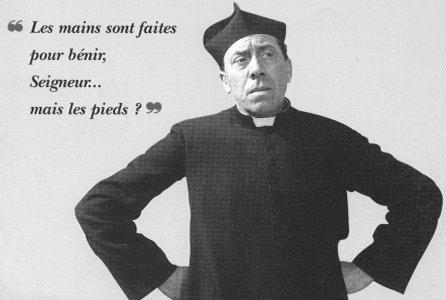
From amongst your readership, would anyone have an idea where to find/purchase traditional Confirmation robes similar to those in common usage before the Council?

There are very few resources available online, and these tend to resemble the blandest red or white choir robes (some including a stole!) more than some of the garments I have seen used in older film footage of past Confirmations.  Any leads would be very much appreciated.

QUAERITUR: confirmation robesInteresting question.

I always like to suggest calling "John" in church goods at Leaflet Missal in St. Paul.

Readers?  Help this priest!

Posted in "How To..." - Practical Notes, ASK FATHER Question Box, Mail from priests |
46 Comments

Never-to-be-satisfied ADL still rebuking the Pope

I have mentioned elsewhere that certain groups will never let the whole SSPX/Williamson/excommunication thing die.  EVER.

From Haaretz.   My emphases and comments.

I think this was aimed at reinforcing anti-Catholic bias among a narrow slice of Jewish readership.

ADL chief: Pope Bendedict’s condemnation of Holocaust denial not enough
By Shlomo Shamir, Haaretz Correspondent

Abe Foxman, the head of the Anti-Defamation League, sought to temper the enthusiastic responses  [If dropping something nasty into the punchbowl is "tempering", then sure! "temper" is the perfect description.] expressed by Jewish leaders following their meeting on Thursday with Pope Benedict XVI over the reinstatement of a bishop who denies the Holocaust.

"The problematic and controversial chapter of the church and the matter of Holocaust denial do not end [nor will they ever…] with the pope’s declaration condemning Holocaust denial," Foxman told Haaretz.

Foxman, who was present at the meeting in the Vatican, refused to echo the compliments which other Jewish leaders feted [the writer seeks to trivialize the event] the pope over his forceful denunciations of Holocaust denial.

"A meeting between Jews and the pope is always an important, historic event," Foxman said.  [Now watch this!] Yet, "as long as the church allows an anti-Semitic bishop who denies the Holocaust to continue in his post under the aegis of the church, this means that the church is saying one thing yet doing another." 

[Foxman is well-informed and not stupid.  So, he must be choosing to distort the facts.  SSPX Bp. Williamson has never had a "post" under the "aegis" of the Church.  That.Is.The.Whole.Point.  Foxman is trying to reinforce hatred of the Catholic Church in this misstatement.  He cannot be unaware that Williamson doesn’t hold a "post" in the Church.]

Foxman, himself a Holocaust survivor, seeks to emphasize that he appreciates the pope’s condemnation and his moving statements on his planned visit to Israel. Yet, in his words, "you cannot say that you are against anti-Semitism and Holocaust denial when you allow an anti-Semitic bishop and Holocaust denier to continue serving in the clergy."  [Again… the Church has never allowed Williamson to serve in the clergy. The lifting of the excomm does not give Williamson a "post"… under the "aegis" of the Church.]

"The church gave the bishop enough time to recant," Foxman said. "But he asked for forgiveness only from the pope [It wouldn’t make any difference to the ADL if he rubbed gravel in his hair as a begger on the steps of Yad Vashem.  He will never be able to do enough.] and he said he is waiting for proof that indeed six million Jews were murdered in the Holocaust and the Nazis used gas chambers."

"Holocaust denial is a crime by law in key countries," Foxman said. "Only after the church recants from the rehabilitation and restores his prior standing as excommunicated can we say that the matter of the church and Holocaust denial has been solved."  [He wants the Church not to observe her own laws and deny a man just treatment.]

The ADL is the largest Jewish organization active in the United States.


Posted in SESSIUNCULA |
Comments Off on Never-to-be-satisfied ADL still rebuking the Pope

WDTPRS: Sexagesima

WDTPRS: SexagesimaExcerpted from columns for The Wanderer.  The whole column can be found in that publication.

What Does the Prayer Really Say?  Sexagesima Sunday (1962 Missale Romanum – Roman Station: St. Paul’s outside-the-walls)

According to the traditional Roman calendar, this is the second of the Sundays in “pre-Lent”, called Sexagesima, as in the Latin for the “Sixtieth” day before Easter.  This number is more symbolic than arithmetical.  Last week was the first of these pre-Lenten Sundays, Septuagesima or “Seventieth.  The Latin term for the whole of Lent Quadragesima is “Fortieth”.  The pre-Lenten Sundays prepare us for the discipline of Lent, which once was far stricter. Purple is worn rather than the green of the season after Epiphany and there is a Tract instead of an Alleluia.  The prayers and readings for the pre-Lenten Sundays were compiled by St. Gregory the Great (+604). In the Novus Ordo of Paul VI there is no more pre-Lent, which was a real loss. 

Since this is a special year dedicated in honor of St. Paul, and the Station for today is St. Paul’s Basilica “outside the walls”, and since the prayers are relatively short today, we can take a look at all three orations.

The Collect or “Opening Prayer” as it is sometimes called in the post-Conciliar way of thinking, is found in ancient manuscripts of the so-called Gelasian Sacramentary, namely the 9th century Liber Sacramentorum Augustodunensis and also the L.S. Engolmensis.   This is a very interesting and ancient prayer, in that it makes explicit reference to St. Paul, the Doctor of the Gentiles.

COLLECT:
Deus, qui conspicis, quia ex nulla nostra actione confidimus:
concede propitius; ut, contra adversa omnia,
Doctoris gentium protectione muniamur.

This prayer didn’t survive in any form to live in the Novus Ordo.  Sometimes the snipping gluing experts of the Consilium would deign to allow ancient prayers to be prayed as the third option for some never-used votive Mass.  Not this time.   It can’t even be found as an alternate for any feast or Mass of St. Paul, whom the prayer explicitly names.

The jam-packed Lewis & Short Dictionary informs us that conspicio means “to look at attentively”.  In the passive, it is “to attract attention, to be conspicuous”.  Conspicio is a compound of “cvm…with” and *specio (the * indicates a theoretical form of a verb, of which we have no examples in ancient literature) which has to do with perception. The useful French dictionary of liturgical Latin we call Blaise/Dumas says that conspicio refers to God’s “regard”, presumably because God “sees” all things “together”. 

The last word here is from munio, which is “to build a wall around, to fortify, …protect; strengthen, support”.

LITERAL TRANSLATION:
O God, You who perceive that we confide in no action of our own:
propitiously grant; that we may be fortified against every adverse thing
by the protection of the Doctor of the Gentiles.

The Roman Station today is the Major Basilica of St. Paul “outside the walls”.  Few prayers of the Roman Missal display such an obvious connection with the place the Mass was celebrated in Rome and the readings, though in the Station Masses it is not rare to have oblique connections through some allusion in texts. 

Our Lenten discipline, which these pre-Lenten Sundays remind us of ahead of time, helps us with God’s grace take better control of that over which we can exercise control.  So it is that we may pray with earnest that God set His defenses around us, who must strive in the here and now according to grace and elbow grease.  So many adversities beset us daily, as the Apostle of the Gentiles knew well in his own life.  He experienced the thorn in the flesh, the troubles from within even has he endured hardship from without.  In this Pauline Year, this Pauline Lent, we do well to call upon the Apostle to help us plan for the forty-day discipline.

In today’s Epistle from 2 Cor 11 and 12 describes St. Paul gives us a portrait of how we must live. Christians face a battle.  We may be called to endure suffering.  It is an apt reading before Lent.  We should take it to heart and let it inspire us to consider the discipline we will undertake in Lent.  The Gospel is the Lord’s parable about the sower of seeds (cf. Luke 8).  Some seeds make it. Many do not.  Some people hear the Word of God. Many hear it and fail. The seed is received in the words of Holy Writ, in the teachings of the Church, in our sacraments.  The seed is always effective.

It is our own disposition that makes the difference, not the seed that the Sower sows in us. 
We might consider that in the context of Holy Mass.  The Host we dare to receive, made from the flour of seeds of wheat, is the seed Christ the High Priest sows in us.  St. Paul teaches us a stern lesson the reception of the Eucharist by the worthy and the unworthy.  We are not in control of our salvation, but we cooperate.  Certainly by no action of our own are we saved.  Still, we have a role.  We are in control of our disposition to receive what God offers, no one else!  God will help us with grace to overcome our reticence to confess our sins and seek forgiveness.  But we must get ourselves to confession.  We must examine our consciences and live according to our vocations.  We must fast before Communion and choose to unite ourselves to the sacred action.  We must do so with discipline, to form good habits.

The Secret was also prayed for centuries by the ancient Church, as it occurs in the same collections as the Collect.  It is terse.

The priest has all things in readiness before him.  The Host rests on the corporal.  The wine with a few mingled drops of water, Christ’s divinity ready to transform our humanity, is still in the chalice.  Incense makes the shafts of light apparent to the eye, just as the words of our prayers make deeper realities available to our ears… except this one.  The priest whispers the…

SECRET:
Oblatum tibi, Domine,
sacrificium vivificet nos semper et muniat.

An oblatum is a thing that is “offered”.  This is from offero, “to bring before; to present, offer” and in Church Latin, “to offer to God, to consecrate, dedicate; sacrifice”.  An “oblation” is something sacrificed to the divinity.  An “oblate” is someone consecrated to God.  The sacrificium oblatum here is what has been placed on the altar for the Sacrifice: bread and wine.

The oblatum sacrificium on the altar must not only be the bread and wine, but also our own aspirations and weaknesses.  Think of the preparation of the chalice moments before.  A tiny amount of water, symbolizing our humanity is joined to the wine, representing Christ’s divinity.  The water is taken in and transformed in to what the wine is. 

LITERAL TRANSLATION:
May the sacrifice which is offered up to You, O Lord,
quicken us always and secure us.

WDTPRS: SexagesimaConcise, but layered.  First, we have the concept of vivifico, “vivify… give life” which is also “restore”.  I love the old word “quicken”, … not to be mistaken for tax preparation software.  Think of the English phrase “the quick and the dead”.  “Quick” is also the edge or border of hedges or grass. It is also the place where the fingernail connects to the flesh.  If you are “cut to the quick”, you have been pushed to the edge, something vital in you has been hurt.

This quickening concept is coupled with “defend… strengthen… protect”.  We see here munio once again.  So, there is the positive, but also the dire.  We need protection.  That means there is something out there which is dangerous.  There is something in us that is dangerous as well, and this needs to be “restored… brought to life”.  When it is brought to life, it must be defended.

You were dead in your sins.  You were brought to life.  You need the defenses the Lord has thrown around you in Holy Church.

POSTCOMMUNIO:
Supplices te rogamus, omnipotens Deus,
ut, quos tuis reficis sacramentis,
tibi etiam placitis moribus
dignanter deservire concedas.

This prayer survived into the Novus Ordo as the Post communionem during the 1st Week (not Sunday!) in Ordinary Time.  It is also used for the 2nd Sunday of Lent in the older Missal.  This would be a good question for your Latin students. Quaeritur: here are four instances of the ending –is … how are they different/similar?

LITERAL VERSION

Humbly we beseech You, Almighty God,
that You may grant that those whom You refresh with Your sacramental mysteries,
may also serve You worthily
in pleasing moral conduct of life.

We pick up on what is implied in the invocation of St. Paul at the beginning of Mass. There is no proper disposition for reception of the Blessed Sacrament, or admission to the Beatific Vision, without a proper Christian conduct of life.  Good works, which are good through the merits of Christ, and the graces we are given in the sacraments, make us worthy of eternal life. 

“Work out your own salvation with fear and trembling.” Philippians 2:12

Pre-Lent reminds us that our season of penance is coming.  St. Paul! Intercede for us as we consider our Lenten discipline.

Posted in WDTPRS |
4 Comments

1961 Breviarium Romanum – online: dynamic site

From a reader:

I am writing to you about a website I have created that you or your readers may find useful.  The address is  HERE. I actually e-mailed you in 2008 when I was beginning this project, and your encouragement at that time was appreciated.  This is an online dynamic version of the Breviarium Romanum according to the rubrics of 1961.  By “dynamic” I mean that each office of each day is constructed on the fly so that all of the appropriate prayers, hymns, psalms, commemorations, etc…are displayed with no input required from the user or needing to follow different links to obtain the required information.  The layout is simple hopefully easy to follow, so I hope to be able to reach as wide an audience as possible.  I think this site may be very useful to seminarians, for example, who are not normally required to recite the office daily, but may want to cultivate a traditional liturgical sense.

As of this afternoon, the site is usable with some restrictions
.  The primary restriction is that I do not yet have Matins completed; this is a huge project in itself, and I felt that having the day hours available for use with no Matins would be better than delaying the entire project until Matins could be completed.  Other smaller aspects of the site still need work, but these do not detract from using the content currently available.  For example, I still need to format some pages more to be more pleasing to the eye (for example, by including an extra line break between text), and I am continuing to proofread the texts.

Future enhancements will hopefully include the option to localize the site (for example, to include local feasts), ability to generate PDF files for downloading/printing individual hours, optimization for mobile browsers such as the iPhone, and more.  Though the site is not optimized for mobile browsers, the main content displays well on the devices I have tested, and the only problem areas are the page headers and footers.  Even though the site is not 100% complete, it is definitely usable and hopefully will enable anyone who wishes to pray the traditional office.

As I said, I am unsure if my site can be any help to you or others, but I thought I would inform you of its progress in case you find some need for it.


Posted in Brick by Brick |
35 Comments

Jerusalem Post is satisfied with the Pope’s remarks

Apparently the Jerusalem Post is satisfied with the Pope’s statements:

Die „Jerusalem Post” ist zufrieden mit den Worten von Papst Benedikt zum Judentum und zum Holocaust. In einem Artikel mit der Überschrift „Die Entschuldigung des Papstes“ wird begrüßt, dass der Papst am Donnerstag vor einer jüdischen Delegation aus den USA die Nähe zwischen Christen- und Judentum bekräftigt hat. Allerdings mahnt die Zeitung, Benedikt müsse dafür sorgen, dass sich Probleme wie unlängst nicht mehr wiederholten. In dem Artikel wendet sich die Zeitung ausdrücklich gegen eine mögliche Seligsprechung von Papst Pius XII., den sie „Hitlers Papst“ nennt. – Die „Jerusalem Post“ hatte in einer ersten Reaktion auf den Williamson-Skandal einen unbefristeten Abzug des israelischen Botschafters vom Vatikan gefordert. (reuters)

Posted in SESSIUNCULA |
46 Comments

POLL: pompoms

POLL: pompomsThere has been discussion of the biretta lately, around this blog…. real birettas and photoshopped.

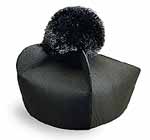
Also, the other day when I was tidying up an older foldable biretta I can put in a travel bag, I decided to remove the pompom.  It had started to look a little desperate and the Roman style is nothing to cross your eyes at.

That choice and all this discussion of the superbly useful clerical cover raises a burning issue for our time.

Do you prefer the biretta with or without the pompom?

Without a pom pom is the more Roman style.  You see that Cardinals have a biretta without.  They are clergy of Rome, so to speak, no matter where in the world they are lent out.POLL: pompoms

POLL: pompomsThe pom pom is more a French use, as I understand it.

There is also the eccentric tassel, a variation of the pompom which I choose to keep separate now, because it is a little strange.

POLL: pompomsThe biretta developed from softer hats which eventually developed these "points" as they were pinched for uncovering and covering.  They have a historic connection with academic and magisterial head gear, mortar boards and the like.

Birettas, which were obligatory for Mass, are also used outside liturgical occasions.  For example, a priest’s academic headwear is the biretta trimmed with the color appropriate to his field, red for philosophy, blue for theology, green for law, etc.

They can have three or four points, depending on circumstances not entirely relevant here.

They keep your head warm too.

So, what will it be?  Pompom?  None? Cheer on your choice and give your reasons below.

POLL CLOSED

Which style of priest’s biretta do you prefer?

  • Without pompom, in the Roman manner (52%, 838 Votes)
  • With pompom, in the French manner (41%, 662 Votes)
  • Tassel … and, yes, I am ecentric. (6%, 97 Votes)

Total Voters: 1,597

Posted in POLLS, SESSIUNCULA |
80 Comments

Rodari: Archbp. Dolan to NY?

Paolo Rodari of Il Riformista is saying that Archbishop Timothy Dolan my be translated from Milwaukee to New York.

This rumor as floated around for a while now.

Rodari’s take is that this is the Vatican’s soft approach toward an anti-Catholic Obama administration.

We’ll see.

I wonder if this wouldn’t be more a measure of TLC to the priests of the Archdiocese of New York!  I am told that relations between Card. Egan and the presbyterate are strained.

Posted in SESSIUNCULA |
Comments Off on Rodari: Archbp. Dolan to NY?

Fr. Longenecker: more and more troubling!

With concern I must post that Fr. Longenecker, whom I have ever treated with brotherly charity in these blog entries, has once again offered me undeserved sass!

He claims that he "missed" my post about his biretta.  Okay… let’s take him at his word.  Sure, Father… you missed it. 

He then accuses me of… and I can hardly bring myself to type thFr. Longenecker: more and more troubling!is… a "low blow" for wondering whether or not the biretta in his photo was actually photoshopped! 

Well.. just look at it!

Could it be that that is why the altar boys are grinning?  They are in on it?

…

No… no.. Fr. Z… don’t stoop, so.  Go not there!  Rise now above this line of attack.  Leave that sort of thing to… others.

…

I will let all of this go, along with my regret for the words of Fr. L, whom I have always, by the way, treated will friendly interest. 

From a sense of fairness I will accept that Fr. L does from time to time use someone’s biretta. 

I do wonder about his birettiquette, however.  Just how does he use the biretta … but that is the stuff of another post.

But – and this nearly beyond credulity – he then simply parrots me in opining that I am trying to borrow a ferraiuolo. 

It is to laugh. 

Clearly that is his gig, not mine. 

Father has gone to great lengths in the last few days, I think, to be able to produce this … one way or another… with the help of a kind priest, no doubt.

Fr. Longenecker: more and more troubling!

Dear Fr. Longenecker, whom I have always treated with utmost respect, the only problem I face is not where to obtain a ferraiuolo, but which of mine I should allow you to view and when!

In the meantime… vote for WDTPRS for this award!

Fr. Longenecker: more and more troubling!

Posted in SESSIUNCULA |
54 Comments

Will Speaker Pelosi have an audience with Pope Benedict in the next few days?

I am sure more details will emerge, but pro-abortion Catholic Speaker of the House Nancy Pelosi (D-CA) is heading to Europe with a delegation.

They are supposed to go to Rome.

I understand that there is a meeting with Pope Benedict.

Interesting, no?

Posted in SESSIUNCULA |
Comments Off on Will Speaker Pelosi have an audience with Pope Benedict in the next few days?

D. Rockville Centre: Bp. Murphy clarifies his SSPX position

Not long ago, His Excellency Most Rev. Bishop William Murphy made comments about the SSPX/Williamson/Holocaust controversy in The Long Island Catholic, the newspaper of the Diocese of Rockville Centre.

I have written of Bp. Murphy before.  His comments are usually good. 

The last time His Excellency wrote about the SSPX, I was not convinced that he conveyed with precision certain details of some points.

However, in his recent offering Bp. Murphy makes some clarifications. I respectfully include them here below with my own emphases and comments.  I edited out a few things not directly relevant to our immediate interest.

A pastoral clarification

My column last week commented on several issues of Church interest that had been in the news. Those comments were received favorably by a goodly number of persons who wrote to me. They did, however, elicit some negative reaction and even some sharp argument from some who believe that I wrote inappropriately and inaccurately. [I sympathize.  Sadly, there are people on the "right" who harm their own cause by being, simply put, nasty.] Upon prayer and reflection, I believe I need to share these thoughts with you in the hopes that I might be more precise and more irenic in my reflections to respond better to the concerns some of you have expressed.  [Admirable.]

…

Regarding the Society of St. Pius X, (SSPX), I believe I need to re-visit my own language. Their founder, Archbishop Marcel Lefebvre, took strong exception to some of the teachings of the Second Vatican Council. He argued his positions during the Council, but his arguments did not prevail. The documents of an ecumenical council are binding on all Catholics, once passed and then approved and promulgated by the Pope. From direct personal experience I know how much the Servant of God, Paul VI, suffered from the public and private criticisms of Archbishop Lefebvre regarding aspects of the Council’s teaching and the Holy Father’s implementation of that teaching. These criticisms continued against the Servant of God John Paul II and caused him much suffering. This included public criticisms of some of John Paul’s pastoral initiatives in which I was personally involved. Thus my own history is interwoven in a small way here.  [Could it be that Bp. Murphy worked in the Roman Curia for a time and was involved in something that the SSPX sharply criticized?  Are we really going to make "he hurt the Holy Father" a criterion for how we treat with the SSPX?]

Here again Pope Benedict may be the “chosen instrument” to bring healing and reconciliation. I certainly pray daily that this will be the case. Thus as I reflect on my own words regarding the status of the SSPX, I recognize that I should shape my statements on the statements of Pope Benedict and the Secretariat of State. Good and qualified canonists maintained that the ordained bishop and priest members of the SSPX were in schism following canons 751 and 205.  [On the other hand, Card. Castrillon, Pres. of the Pont. Comm. Ecclesia Dei is insisting that they are not in schism.  This is a thorny matter for many observers.  If you apply the "duck argument" it looks as if they are, especially in light of JPII’s use of the word in the M.P. Ecclesia Dei adflicta.  But the Holy See gets to judge these things, not canonists, nor bloggers, … nor members of the SSPX!] They are validly ordained, but they are not in full communion with the Church. When Pope Benedict lifted the excommunications of the four SSPX bishops, he removed, as one Vatican official said to me, “a roadblock” to help them as leaders of the SSPX to move more easily along the road they need to travel toward full communion. I am totally in agreement with that and rejoice in this further expression of the Holy Father’s generous and paternal benevolence.

Further, last Friday, after my column had been written and published, the Secretariat of State felt the need to offer a note of clarification. You may find the full text on the Web site of our diocese, www.drvc.org. I urge you to read it. From that point on, I make its language mine. Note, however, what the Secretariat of State says in part: “The remission of the excommunication has freed the four bishops from a very serious canonical penalty, but it has not changed the juridical status of the SSPX which presently does not enjoy any canonical recognition by the Catholic Church. The four bishops, even though they have been released from excommunication, have no canonical function in the Church and do not licitly exercise any ministry within it.”

The statement goes on to explicate the major issue, “A full recognition of the Second Vatican Council and the Magisterium of Popes John XXIII, Paul VI, John Paul I, John Paul II and Benedict XVI himself is an indispensable condition for any future recognition of the Society of Saint Pius X.”

Because the SSPX does not yet have canonical recognition nor do its bishops and priests licitly exercise any ministry within the Catholic Church at the present time, I, as Pastor of this Church, continue to urge the faithful of this diocese not to participate in the Masses offered and the sacraments administered by priests of the SSPX.  [This is his right as the bishop.  I, too, am not wholly satisfied when people attend SSPX chapels exclusively.] No Catholic incurs any sin by attending Mass celebrated by a priest of the SSPX, but neither does one fufill the Sunday obligation by doing so. [?] Canon 1247 states that, on Sundays and holy days of obligation, the faithful are obliged to participate in the Mass. This obligation is fulfilled only by participating in Mass celebrated in a Catholic rite by a priest who is in full communion with the Church. [I am perplexed.  That is not what can. 1247 says.  Can. 1247 states an obligation to participate at Mass, but it doesn’t clarify how.  It is one of those canons which stress a theological idea.  It is can. 1248 which speaks of how we fulfill the obligation.  There is nothing in either canon which talks about the priest who says the Mass.  More on this below.]

When first I came to this diocese, I expanded the opportunities for the faithful to participate in Mass according to the “extraordinary rite.” After Pope Benedict published “Summorum Pontificum,” I saw to it that this Mass, based on the 1962 Missal of Blessed John XXIII, was available at three locations, one in each vicariate of our diocese. In addition, some pastors also offer this Mass on Sundays. I sent priests who wanted to learn how to celebrate the extraordinary rite to a special school set up by the Fraternity of St. Peter. [Excellent!  I wish every bishop was as open as Bp. Murphy!  He should be thanked for this.] At the request of some of the faithful, I celebrated and conferred the sacrament of Confirmation at the Cathedral of St. Agnes last June in the extraordinary rite.  [Wonderful!] As pastor, I believe I have done my best to respond generously and appropriately to the legitimate requests of the faithful here in our diocese. I will continue to do so to the best of my pastoral ability.

In response to Donatism in the fourth century, St. Augustine was always very clear about the shortcomings of the Donatists, yet he always maintained friendly relations with their bishops and priests. [Augustine tried to do that, but didn’t succeed.  Initially, as a priest and first as a bishop he tried to reach out to them.  Things deteriorated.  Remember: Donatists actually were schismatic.  Donatists regarded Catholic sacraments as null and void, while Catholics regarded Donatist sacraments as valid but not efficacious.  The Holy See says the SSPX is not in schism formally.  There is no issue about validity of sacraments at stake.  Also, relations with the SSPX are improving.] He differed with their inadequate teaching, but he urged them by his prayers and words to come to full communion. And he always called them his “brothers.” I will always do the same with the SSPX because they are our brothers and sisters and, while we pray that soon they will come to full communion with us, we never forget that we, which is all of us and the members of SSPX, all pray together “Our Father.”

I am glad that Bishop Murphy engages tough issues in his column and doesn’t simply offer pabulum.  Well done.

Now some points.

First, Card. Castrillon, who is President of the Commission which has competence in all these matters, has let us know the Holy See’s position about the question of schism.   Bp. Murphy does not say in this article that the SSPX is in schism.  He makes reference to canonists who think it is.  I get the sense that he thinks it is.  I sure understand his position!  I scratch my head, but accept what Card. Castrillon has said.

Second, Bp. Murphy says that his subjects do not fulfill their Mass obligation by attending Mass at an SSPX chapel. 

I am entirely mystified by this.  The Holy See’s Pontifical Commission Ecclesia Dei has made it clear that people do fulfill their obligation.  But we don’t need the Commission to clarify this.  The 1983 Code of Canon Law is already clear.

The Code describes in can. 1248 how we fulfill our obligation. 

The obligation of participating in the Mass is satisfied by one who assists at Mass wherever it is celebrated in a catholic rite, either on the holyday itself or on the evening of the previous day.

In Latin can. 1248 says "ubicumque … wherever/anywhere". 

Because canons 1247 and 1248 talk about our obligations, we are bound by can. 18 to interpret them strictly.  That means that we cannot add additional points to the obligation which are not in the canon.  Anything which imposes an obligation must be strictly interpreted so that the restrictions don’t become even more restrictive!

Simply put, the canon says that when you attend Mass in a Catholic Rite anywhere on the preceding evening or day itself, you fulfill your obligation.  Nothing more.

The Law is entirely silent about the place and the priest, whether it is a chapel of the SSPX or another group or the priest is in good standing or not. 

This has been the consistent position of the Holy See about the Masses of the SSPX. 

Furthermore, the British commentary on the Code (The Canon Law: Letter and Spirit by the Canon Law Soc. of Great Britain and Ireland, p. 701) says a person fulfills the obligation even by attending an Orthodox Mass (cf. Ad totam Ecclesiam (1967)!  

Even if you maintain that the SSPX is in formal schism you would still be able to fulfill your obligation.  If they are not in formal schism, then it is even clearer that you fulfill your obligation.

I think the law and the SSPX need the benefit of the doubt, of the law and of the present approach of the Holy See.

Thirdly, I note that His Excellency make reference to his own past experiences and the suffering of two Popes because the SSPX treated things they did harshly.

I can entirely sympathize with how treatment by some of the more zealous on the traditional side of things can really spoil your enthusiasm to receive them kindly.  The nastiness which which some of them express themselves is in my experience rivaled only by the hate mail of anti-Catholic homosexuals.

That aside….

When His Excellency makes reference his own experience and the suffering caused by traditionalists, SSPX members, to the Pope, I have to ask whether, again with all due respect, we are really going make "you hurt the Holy Father’s feelings" a criterion for whose Masses we can attend?

If so, then the Masses of certain university professors or priests of whole religious orders might be excluded.

Okay… I exaggerate.. but not by much. I am trying to make a point.

But the question is a serious one.  If we are really going to make "causing the Holy Father to suffer" some sort of element in our judgment about whether or not we fulfill our Mass obligation on Sunday, then we are in serious trouble. 

Can we doubt that the dissents of the left have caused the our Popes far more pain than what the members of the SSPX have caused?

I have stated clearly that people should not regularly attend chapels of the SSPX to the exclusion of regular parish churches, so long as there truly isn’t a grave moral of physical impediment to seeking the sacraments from regular place in good standing, etc. 

Nevertheless, I would not want to place an undue burden of fear on people about fulfilling their Mass obligation.

I need instruction from a canonist about whether or not a bishop can place additional restrictions on how to fulfill Mass obligations.  I don’t understand that part. 

If I am in error, I seek correction.

Also, and this is important if you write to Bishop Murphy, or any bishop, about something that bothers you: don’t be a jerk.  You hurt your own cause.  You advance nothing.  You harden hearts – yours and the bishop’s. 

If they are already not happy with the SSPX or anything to do with the older Mass, your attitude  confirms them in their unease.

It is just wrong to treat a bishop that way, even if you don’t care that you are harming your own cause. 

If you have a concern or disagree, it is your right to express it, but be respectful.  I think most of them will consider respectful disagreement carefully because they are for the most part men of good will.

So… for the love of God don’t screw it up for everyone else.

I will leave the combox closed on this, to avoid the knuckle-headed stuff sure to come in.

Posted in SESSIUNCULA |
Comments Off on D. Rockville Centre: Bp. Murphy clarifies his SSPX position