These numbers suggest a seriously unhealthy Church. UPDATED

From this new study about vocations to the priesthood and ordinations in these USA: HERE

I was told by a bishop that bishops say they do not hear that men have been inspired toward priesthood by Francis.  Of course the plural of anecdote is “data”.

These numbers suggest a seriously unhealthy Church.  I think it was, in part, purposely engineered to force massive secularization of the Church and “changes” to doctrine.

On the other hand, traditional groups like the FSSP have no room in their seminary for more.

Hmmm.

UPDATE 28 Feb 2023:

I received this graph.

Posted in "How To..." - Practical Notes, ACTION ITEM!, Hard-Identity Catholicism, Priests and Priesthood, Seminarians and Seminaries, The Coming Storm, The future and our choices | Tagged , ,
33 Comments

From “The Private Diary of Bishop F. Atticus McButterpants” 23-02-27 – Ad Lumina visit to Rome

February 27th 2023

Dear Diary,

It chaps my hide, as my dad always said, that I’ve only been on one Ad Lumina visit to Rome. The pandemic messed so much up. So they’re talking about our region getting over there soon. No firm date yet, maybe the fall. But I’ve already got a hankering for all that pasta and brushettas and expressos. Best is the wine. They’ve got both red and white of course, a lot of them named Monty something-er-other. I could down a tub of that one. The best.

I always brighten up when I think of my last Ad Lumina. Rome is the City of Lights after all! Lumina… brighten up… lights…. I crack myself up sometimes. But, seriously, it was great. We stayed at the North American College. Spectacular views and all those nice young men running around — gives me some hope for the future. Such a huge, grand place — the guys were hilarious, laughing about “it’s not home but it’s much!” HA! I wasn’t so sure what I thought about the number of men with cassocks. Still aren’t sure. A future rector’s going to have to deal with that. I mean, they’re okay, but they seemed to be kinda normal to them instead of something you use maybe a couple times a year. And there was the time when Dozer and me and a couple of the other bishops there for the trip looked into the chapel and they had a Mass going on in Latin, deacons and everything, and chant. “What the hell?!?”, said Dozer, a little too loud, and started in. Jude Noble looked like he was going to punch him in the face and Dozer piped down. Bully. Dozer, I mean. I’m not really into that Latin Mass thing, like Jude is, but I guess as long as it is in Rome and is rare in other places it isn’t too harmful. We want people to be happy, right? So long as it doesn’t catch on.

Another bright point was meeting the Pope in person. So meaningful for me. I went to Jesuit schools all the way through, K through undergrad, and I learned SO much. I remember hearing something about how Jesuits were supposed to refuse to become bishops, but this has worked out great.

Posted in Diary of Bp. McButterpants, SESSIUNCULA |
9 Comments

27 Feb – St. Gabriel of Our Lady of Sorrows: Patron of seminarians, hand-gunners, marksmen

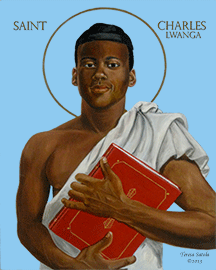
st gabriel of our lady of sorrowsToday we celebrate a wonderful saint.

27 February is the feast of St. Gabriel of Our Lady of Sorrows, Gabriel Possenti, according to the calendar of the Novus Ordo. In the older, traditional Missal we find that 28 February was given to him.   27 February is the day he died and was born into heaven in 1862, his dies natalis.

I visited his shrine beneath the great mountain Gran Sasso in Italy while I was in seminary.

Little Francesco Possenti came from a large family, 13 children, in Spoleto and was baptized in the same baptismal font as St. Francis of Assisi.

During a childhood illness he promised to become a religious if he were healed. This actually happened twice, but like many of us who make promises to God if He would only do something for us, Francesco forgot about it.  However, during a procession in honor of an image of Our Lady of Sorrows, Francesco finally felt strongly the calling to be a religious.  He took off for a Passionist house and noviatiate on the eve of his engagement.

When Francesco made his vows he was given the name in religion of Gabriel adding of Our Lady of Sorrows.  Gabriel made a special promise to spread devotion to Our Lady of Sorrows. His writings are imbued with this devotion and a special focus on the Passion of the Lord.  He was known for his perfect observance of the rule of the Passionists.

While still young was contracted tuberculosis.  He remained always in good spirits, never quitting his harsh mortifications however.

Before he could be ordained a priest, he died embracing an image of Our Lady of Sorrows.

Gabriel was canonized by Pope Benedict XV 1920 and declared him patron of Catholic youth. In 1959, Pope John XXIII named him the patron of the Abruzzi region, where he spent the last two years of his earthly life.

He is also invoked by seminarians and novices.

St. Gemma Galgani attributed to St. Gabriel the cure which led her also to her vocation as a Passionist.

Let us look at his Collect from the 1962 Missale Romanum.

COLLECT:

Deus, qui beatum Gabrielem dulcissimae Matris tuae dolores assidue recolere docuisti, ac per illam sanctitatis et miraculorum gloria sublimasti: da nobis, eius intercessione et exemplo; ita Genetricis tuae consociari fletibus, ut materna eiusdem protectione salvemur.

LITERAL TRANSLATION:

O God, who taught blessed Gabriel to reflect constantly upon the sorrows of Your most sweet Mother, and through her raised him on high by the glory of holiness and miracles: grant us, by his intercession and example; so to be joined to the tears of Your Mother, that we may be saved by her maternal protection.

Now here is the politically incorrect part of the story.  

st gabriel of our lady of sorrows 02From the Possenti Society:

In 1860, soldiers from Garibaldi entered the mountain village of Isola, Italy. They began to burn and pillage the town, terrorizing its inhabitants.

Possenti, with his seminary rector’s permission, walked into the center of town, unarmed, to face the terrorists. One of the soldiers was dragging off a young woman he intended to rape when he saw Possenti and made a snickering remark about such a young monk being all alone.

Possenti quickly grabbed the soldier’s revolver from his belt and ordered the marauder to release the woman. The startled soldier complied, as Possenti grabbed the revolver of another soldier who came by. Hearing the commotion, the rest of the soldiers came running in Possenti’s direction, determined to overcome the rebellious monk.

At that moment a small lizard ran across the road between Possenti and the soldiers. When the lizard briefly paused, Possenti took careful aim and struck the lizard with one shot. Turning his two handguns on the approaching soldiers, Possenti commanded them to drop their weapons. Having seen his handiwork with a pistol, the soldiers complied. Possenti ordered them to put out the fires they had set, and upon finishing, marched the whole lot out of town, ordering them never to return. The grateful townspeople escorted Possenti in triumphant procession back to the seminary, thereafter referring to him as “the Savior of Isola”.

st gabriel of our lady of sorrows 03Thus, some consider him to be the patron of shooters, marksmen, and handgun users.

For good reason. Thus endeth the lesson.

Any and all of you readers out who consider getting a concealed carry license, after courses etc., you should get lots more training and practice.  Even if you choose, for one reason or another, not to carry – and for some people that is the reasonable, prudent, better choice – it is still good to go through the process and have the training, because you also learn about how to de-escalate confrontations, avoid conflicts, increase your situational awareness, etc.  It is useful on many levels.

Don’t depend on the idiocies of the liberal media for your information about these things.  Get first hand and hands on experience.  Then you can have an opinion with weight.

Ask St. Gabriel to help you in the process.

Meanwhile…

“I want to break my own will into pieces, I want to do God’s Holy will, not my own. May the most adorable, most loveable, most perfect will of God always be done.” St. Gabriel


Posted in Saints: Stories & Symbols | Tagged
3 Comments

Daily Rome Shot 676

From a friend in Rome.

Open in new tab for larger.  It’s nice.  Right click…

Please use my links when using Amazon?  The income is important, especially as we get to the end of a month.  Thanks in advance.  US HERE – UK HERE

Use FATHERZ10 at checkout

Meanwhile,…

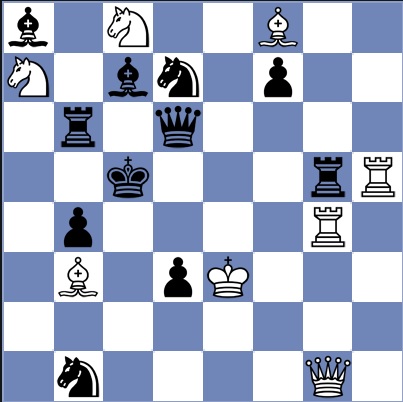
White to move and win… in a while.  This is a great puzzle.  A little hard.

NB: I’ll hold comments with solutions ’till the next day so there won’t be “spoilers” for others.

I’ve been switching out colors for variety.  Does it make a difference?

Think about that over a wonderful beer by the traditional Benedictine monks of Norcia.

The Catholic Thing is sponsoring a new online course that begins on 1 March, just a couple days away.   They have in the past tackled the Dante’s Divine Comedy and The Confessions and City of God by St. Augustine.  This new course is on St. Thomas More’s Utopia.   It will be a four-week course. Utopia shows an additional side of More: his Christian humanism in a very rich work that contains elements of both idealism and satire over human follies. The very title of his book captures that ambiguity. It describes what many would like to think would be perfection — a “utopia” here on earth. But in Greek, as the learned More well knew, “utopia” means literally “no place.” As any real Christian knows, there’s no heaven on this earth, and attempts to create one often lead to hells.  Click HERE and follow the simple instructions to register.

Meanwhile,….

The Pro Chess League returns to action tomorrow from both the Capybaras and Maniac Shrimps.

UPDATE:

Inspired by the photo yesterday of flowers at my usual vendor on the Campo de’ Fiori, one of you kind readers sent a donation specifically for flowers for the apartment during my upcoming April/May ’23 Roman Sojourn.  Thanks, WH!   I’ll have to start a separate Remembrance Memo for Flower Donors.

Meanwhile, here’s a shot of flowers from my October Sojourn.  Long-lasting alstroemeria.

Posted in SESSIUNCULA |
9 Comments

“Be perfect.” “How’s that, again?!?”

Quoted from Robert Royal’s latest column at The Catholic Thing:

St. John Henry Newman explains in his “simple rule of life”:

It is the saying of holy men that, if we wish to be perfect, we have nothing more to do than to perform the ordinary duties of the day well. A short road to perfection – short, not because easy, but because pertinent and intelligible. There are no short ways to perfection, but there are sure ones. I think this is an instruction which may be of great practical use to persons like ourselves. It is easy to have vague ideas what perfection is, which serve well enough to talk about, when we do not intend to aim at it; but as soon as a person really desires and sets about seeking it himself, he is dissatisfied with anything but what is tangible and clear, and constitutes some sort of direction towards the practice of it.

Our notions of “perfection” often tend to make it into something impossible. Newman helps by offering a definition, “By perfect we mean that which has no flaw in it, that which is complete, that which is consistent, that which is sound.” Practically, this means:

Do not lie in bed beyond the due time of rising; give your first thoughts to God; make a good visit to the Blessed Sacrament; say the Angelus devoutly; eat and drink to God’s glory; say the Rosary well; be recollected; keep out bad thoughts; make your evening meditation well; examine yourself daily; go to bed in good time, and you are already perfect.

Good advice, if more difficult than it sounds.

Speaking of “more difficult than it sounds”, The Catholic Thing is sponsoring a new online course that begins on 1 March, just a couple days away.   They have tackled the Dante’s Divine Comedy and The Confessions and City of God by St. Augustine.  This new course is on St. Thomas More’s Utopia.   It will be a four-week course. Utopia shows an additional side of More: his Christian humanism in a very rich work that contains elements of both idealism and satire over human follies. The very title of his book captures that ambiguity. It describes what many would like to think would be perfection — a “utopia” here on earth. But in Greek, as the learned More well knew, “utopia” means literally “no place.” As any real Christian knows, there’s no heaven on this earth, and attempts to create one often lead to hells.  Click HERE and follow the very simple instructions to register.

Posted in "How To..." - Practical Notes | Tagged ,
1 Comment

Your Sunday Sermon Notes – 1st Sunday of Lent 2023

Historically, today, the 1st Sunday of Lent, was the beginning of Lent.  Ash Wednesday and the intervening days were added later. That makes this Sunday historically and theologically important.

Too many people today are without good, strong preaching, to the detriment of all. Share the good stuff.

It is the 1st Sunday of Lent in the Novus Ordo and in the Vetus Ordo.

Was there a GOOD point made in the sermon you heard at your Sunday Mass of obligation?

Tell about attendance especially for the Traditional Latin Mass.  I hear that it is growing.  Of COURSE.

Any local changes or (hopefully good) news?

In very good news, Bp. Paprocki of Springfield changed the status of a church where the Vetus Ordo is celebrated so that it is no longer a parochial church.  Hence, the Roche Rescript won’t affect it.   Paprocki is a distinguished canonist.  He knows more than his prayers.

I have a few thoughts about the orations in the Vetus Ordo for 1st Sunday of Lent: HERE


Posted in Sermons | Tagged
15 Comments

From “The Private Diary of Bishop F. Atticus McButterpants” – 23-02-26 – Saturday Vigil Mass

This just in.

February 26th 2023

Dear Diary,

Annoying Finance Council meeting Friday. Aren’t they all. Why they scheduled it for a Friday beats me. But anyway, we’re rolling in it. Or at least I think we are? Anyway, I’ve got lots of nice stuff and I want our parishes to have nice stuff, too. Like new pianos! No expense spared.

I was wiped out after that, so I just spent a quiet Saturday at home and I had the Saturday vigil Mass so I could have Sunday free! Hello, mimosa brunch!

The rest of the day was pretty quiet.  I tried to scare up some company for a movie or something, but no one picked up.  I guess its okay.  Turned in early.

Before I forget, on Friday Chester got away from Fr. Tommy again during their walk – Tommy really enjoys those – and went after the neighbors toy poodle. I think its name is O’Brien, like the potatoes.  That’s what the woman was shouting when… it happened.  I could hear it through the window. Wierd name for a dog.

I had a note from the mole that it might be hard to keep sending these in.

Anyway, my hope is to be able to post them – when I get them – at Noon EST.

And, yes, I did get the request to see Bp. F. Atticus’ coat-of-arms, which was mentioned in the diary entry about the vimpa that Chester got ahold of.  I’ll see what I can do about a good view.

Posted in Diary of Bp. McButterpants, SESSIUNCULA | Tagged
1 Comment

Daily Rome Shot 675

From a friend in Rome, at my usual flower stand run by “Pippo” where I have bought flowers for some 30 years.

Welcome new registrants:
PHILAPOL6464
CaptainH

Use FATHERZ10 at checkout

From the 1969 musical version of Goodbye, Mr. Chips.

YouTube thumbnailYouTube icon

What a lot of chaos there was in 1969, in and out of the Church! BUT… this was a nice retelling of a lovely story, made several times into a film. The book, Goodbye, Mr. Chips! was by James Hilton in 1934 and the first movie adaptation was in 1939 with Robert Donat and Greer Garson. Donat won the Oscar for this over Clark Gable, James Stewart, Laurence Olivier, and Mickey Rooney. It was very successful. The 1969 musical remake was updated to the time between the wars, in the 20’s, and some plots were altered. It starred Peter O’Toole and Petula Clark. There are some nice views of S. Italy. A lesser known remake, and a splendid one, was in 2002 made for Brit TV with brilliant Martin Clunes and Victoria Hamilton. A young Henry Cavill has a role. This is a movie – movies – I return to with some regularity and with a touch of melancholy. I sometimes think that it might have been very good “fit” for me to teach Latin in one of these great old schools. Alas, they are mostly gone and the years have slipped away. Oddly, I’ve never read the original book. It would be nice to have a good 1st edition for that pleasure.

Meanwhile,…

NB: I’ll hold comments with solutions ’till the next day so there won’t be “spoilers” for others.

Need to move? These realtors contribute part of the fee to pro-life causes.


Please use my links when shopping online.  For me it means groceries, insurance, utilities, car, etc.

US HERE – UK HERE

In other news, Levon Aronian – wearer of wild shirts – beat in tie breaks Gukesh and Nepo to win the WR Chess Masters (and €40K) in Dusseldorf.

In the Pro-Chess League, nihil fit.

Finally, through Twitter I saw an obit article about a truly interesting fellow, who was a great Classics scholar, fine player and, it seems, a true gentleman.  HERE  This is the type of fellow whom I’d like to have as a coach and perhaps fellow live streamer.  You might put in a word to the Guardian Angel network to bring us together.

Posted in SESSIUNCULA |
5 Comments

WDTPRS – 1st Sunday of Lent (N.O.): our season of transforming mystery

The Roman Station for the 1st Sunday of Lent is St. John Lateran.

COLLECT – LATIN TEXT (2002MR):

Concede nobis, omnipotens Deus, ut, per annua quadragesimalis exercitia sacramenti, et ad intellegendum Christi proficiamus arcanum, et effectus eius digna conversatione sectemur.

Quadragesima is the Latin word for the season of Lent, literally “fortieth” (from quadraginta “forty”) for the fortieth weekday before Easter (Ash Wednesday). In Souter’s A Glossary of Later Latin to 600 A.D., we find quadragesimalis is the adjective form for “forty” and means “Lenten”. Pope St. Leo the Great (+461) used the phrase quadragesimale ieiunium, literally “the Forty Fast”, for Lent. In our WDTPRS version let us say “forty-day” together with “Lenten” (“Lent” comes from the Old English lencten for “spring”).

Exercitium indicates military and other practices for preparedness, “exercises”. Christians of the Church Militant must “exercise” (repeatedly drill) the virtues and pious practices to fulfill their mission, the vocation in life.

Arcanum means something that is “closed” and thus, “a secret thing or place.” It refers to sacred rites and sanctuaries and “a sacred secret, a mystery”. The always handy Lewis & Short Dictionary reveals that the verb sector is “to follow continually or eagerly, in a good or bad sense” and also “to run after, attend, accompany.” It also can be “imitate.” Effectus is “a doing, effecting” but in respect to the result of an action it means “an operation, effect, tendency, purpose.” We can get at both of those meanings with “consequence.”

Conversatio will fool you if you are not careful. It means “conduct, manner of living” and not the English false-friend “conversation.”

Early Christian writers lacked specialized vocabulary for their new theology and so made up new words or adapted existing words and gave them new meaning. Sacramentum was first used – that we know – in a Christian context by Tertullian (+ c. 225). In early Christian writings in Latin sacramentum translates Greek mysterion, “mystery”. Its root is sacer, “dedicated or consecrated to a divinity, holy, sacred” (like sacerdos… “priest”). Sacramentum had a legal/juridical meaning as a bond or initiation confirmed by an oath. In the military sacramentum was the initiation into service and the oath taken by a soldier. In the Christian context, sacramentum referred to the pledge and profession of faith made by catechumens when they were baptized and initiated in the Church. Sacramentum pointed to the content of the faith the Christian pledged he accepted. Thus, sacramentum involves the mysteries of our salvation, the meaning of the words and deeds of Christ explained in a liturgical context, the liturgical feasts themselves, and the rites of initiation themselves (baptism, confirmation, Eucharist). St. Augustine of Hippo (+430) used sacramentum also for marriage, the laying on of hands at ordination, anointing of the sick and reconciliation of penitent sinners. We can say for sacramentum something like “sacramental mystery”, or simply “mystery”. So, in Latin texts, sacramentum can mean more than just the English word “sacrament”.

LITERAL TRANSLATION:

Grant to us, Almighty God, that, through the annual exercises of the forty-day Lenten mystery, we may both make progress in understanding the hidden dimension of Christ and imitate the consequences by worthy conduct of life.

OBSOLETE ICEL (1973):
Father,
through our observance of Lent,
help us to understand the meaning
of your Son’s death and resurrection,
and teach us to reflect it in our lives.

CURRENT ICEL (2011):
Grant, almighty God, [already better!]
through the yearly observances of holy Lent, [holy]
that we may grow in understanding
of the riches hidden in Christ
and by worthy conduct pursue their effects
. [what a contrast!]

Even though this is a prayer during Mass, sacramentum here refers not just to the sacrament of the Eucharist, but also its ancient meaning: the forty-day long discipline of Lent which mysteriously bonds Christians and Christ more closely together.

The whole season of Lent is a transforming mystery, a “sacrament”, during which our practices have consequential effects: they bring us into the mystery of the dying and rising Jesus.

This transforming bond with Christ is brought about through denial of self and good works for others, penitential mortification and works of mercy, both spiritual and corporal.

In Lent the words of the Baptist must ring in our ears daily, even hourly: “He must increase, I must decrease” (John 3:30). When He increases in us, we are more who we are supposed to be. Thus, we have to make “room” for Him by our self-denial.

Keep two things about Jesus firmly in mind:

He is eternal almighty God and He is fully human.

He took our human nature into a bond with His divinity in order to save us from our sins and also to reveal to us who we really are (cf. GS 22).

Through His words and deeds in Scripture (and continuing teaching through the Church), Christ reveals us more fully to ourselves while showing us the invisible Father. We know some things about Christ (and ourselves) that can only be known through an ongoing relationship with Him in which He increases and we decrease. We perhaps might measure the length and breadth and height of the Cross (cf. Ephesians 3:18-19), but part of It is hidden: the part under ground which holds it up. The sensible accidents of the Eucharist can be studied, but the divine reality is hidden from our senses. We pierce through the mystery to the hidden mysteries through faith and penance.

As our prayer says, Lent – the quadragesimale sacramentum – is a season during which we learn things about Christ, and therefore about ourselves, we can learn in no other way.

In our Collect, Holy Church calls the season of Lent a sacramentum, a “mystery”. There is an intimate bond between the whole Lenten cycle and the Person of Christ Himself.

The Lent and Easter cycles make present for us, in a sacramental way, the reality of the Paschal Mystery, Christ’s life, passion, death and resurrection.

Remember! Sacramental reality is no less real than the sensible reality we normally pay attention to. When we participate actively in Lenten practices, God the Father conforms us to His Son who died and rose. During Lent each year the Church conforms herself to the dying and rising Jesus.

This is why traditionally the Church stripped the liturgy of its ornaments: music and all decorations such as flowers. On Passion Sunday (the Sunday before Palm Sunday) statues and images would be draped and hidden. Bells would disappear on Good Friday and there was no Mass at all. The Mass experiences a liturgical death so that at Easter, when everything returns ten-fold, our joy can be that much sweeter, the flowers that must more florid, the music more splendid, the church that much brighter. In our Collect today we are humbly asking God to make this annual series of disciplines and exercises effective in our lives so that we can have the joy the deprivations promise.

To be good Catholic Christians our lives must take on the qualities of the mysteries we profess.

Our participation in these mysteries is not just in this or that particular Mass, for an hour or so on Sunday. We are asked to participate actively and fully in the whole liturgical year. In church and outside of church this participation does not end.

Posted in LENT, Liturgy Science Theatre 3000, SESSIUNCULA, WDTPRS | Tagged
1 Comment

WDTPRS – 1st Sunday of Lent (TLM): our season of transforming mystery

With this 1st Sunday of Lent we are fully into our forty day season of purification and preparation.

Speaking of forty, the Latin for Lent is Quadragesima, “fortieth”.  St Leo the Great (d 461) used the phrase quadragesimale ieiunium, “the Forty Fast”, for Lent.  English “Lent” comes from Old English lencten for “spring”.

I have more pertinent things to say about Lent in another post wherein I look at the Collect for the Novus Ordo on this Sunday.  HERE

Let’s see the Collect for Holy Mass in the traditional Extraordinary Form of the Roman Rite, in the 1962 Missale Romanum.  This prayer was in the 8th century Liber Sacramentorum Engolismensis, the version of the Gregorian Sacramentum at Angoulême.  Charlemagne (d 814) wanted to spread the use of the Roman Rite throughout his realm.  He asked Pope Adrian I (d 795) for the Roman liturgical books.  What Adrian sent was attributed to Gregory I (“the Great” d 604).  These books were recopied many times with local variations. The Gallic changes and additions eventually returned to Rome, were interpolated into the Roman Rite and, therefore, are in the Roman Missals we use today.

Deus, qui Ecclesiam tuam annua quadragesimali observatione purificas: praesta familiae tuae; ut, quod a te obtinere abstinendo nititur, hoc bonis operibus exsequatur.

LITERAL TRANSLATION:

O God, who purify Your Church by means of the annual forty-day Lenten observance: grant to Your family; that, what it strives to obtain from You by abstaining, may be achieved by good works.

All three major prayers for this Sunday contain the theme of purification (purificas, purgatos) and denial (abstinendo, restrictione).  The discipline of self-denial and works of mercy help us to overcome temptations and to dispose ourselves to receive the graces God offers.

In his Message for Lent 2008, Pope Benedict offered that almsgiving,

“…represents a specific way to assist those in need and, at the same time, an exercise in self-denial to free us from attachment to worldly goods. The force of attraction to material riches, and just how categorical our decision must be not to make of them an idol, Jesus confirms in a resolute way: ‘You cannot serve God and mammon’ (Lk 16,13). Almsgiving helps us to overcome this constant temptation, teaching us to respond to our neighbor’s needs and to share with others whatever we possess through divine goodness. This is the aim of the special collections in favor of the poor, which are promoted during Lent in many parts of the world. In this way, inward cleansing is accompanied by a gesture of ecclesial communion…”.


Posted in LENT, Liturgy Science Theatre 3000, WDTPRS | Tagged
4 Comments