What is the TMSM up to? Spiffing new BLACK vestments! Photos.

I’ll start with a bid for funds for the Tridentine Mass Society of the Diocese of Madison.  In this weird time of ecclesial demolition it is hard to know where your monetary support should go for constructive purposes.

Always remember the TMSM – 501(c)(3).

What are we doing?  Right now we have two vestment projects underway.

One is a Gammarelli in Rome.  We have having a new Pontifical set made for Pontifical Requiem Masses at the Throne.  There will be a matching pall.   They made a sample with the trim, fringe and lining so that I could see what it would be like.  We will use this as a book stand cover.

This is now underway after the traditional August break in Rome.   The guys at Gammarelli sent photos of the cutting of the black fabric.

Here are a few of the best shots.

This one I’ll leave large, so you can right-click and see the fabric close up.

The great Stefano at work.

I think this is the hand of the legendary Max.

Yes, that’s Max.  Always cufflinks and narrow sleeves.

So black is under construction.

Yesterday, a priest friend of mine was in Gammarelli while they were cutting the fabric.  He sent his own photo with the caption (that must have amused Max):

I stopped in at Gammarelli and purchased these right out from under some poor sucker who thought they were being made for him!

Meanwhile… I also have these underway.   This will be a set for Low Mass and Sung Mass.  We have a green Pontifical set and a beautiful green Solemn set.  I don’t like using pieces of vestments out of large sets because they sustain wear unevenly.

In this shot, the ribbons look black, but are really a dark green.  I choose to go with black anyway.

And the lining?  Burgundy.

That’s a little of what we are up to in the TMSM.

We could use your support!

Those wishing to make a tax-deductible donation to support the Tridentine Mass Society of Madison, a 501(c)(3) organization, can do so without any service fees extracted by mailing a check to:

Tridentine Mass Society of Madison
733 Struck St.
P.O. Box 44603
Madison, WI 53744-4603

Or, you can donate via PayPal (which does extract a service fee), using the button below:


UPDATE:

They are cutting fabric for the pall.  It will be in black velvet.

BTW… speaking of black vestments, over the Labor Day break I was on a trip with a group of Catholics who like to have daily Mass.  Here is the portable altar made by St. Joseph’s apprentice decked out for a Requiem.

Note the miniature antependium!

Posted in "How To..." - Practical Notes, Liturgy Science Theatre 3000, What Fr. Z is up to | Tagged ,
4 Comments

Australia: New legislation – priests must violate the Seal or face jail

It believe it is more important now than ever that we return to the old-fashioned confessionals with a complete physical barrier between the penitent and confessor, with a window having a fixed grate and a curtain or something to obscure view that the penitent cannot touch or move.  Thus, anonymity of the penitent is secured the penitent has no physical access to the priest.

I shudder at the thought of what I call “law suit rooms”, especially those where the penitent winds up between the priest and the door and there is no window.

From the Australian site The Age:

Laws forcing priests to report child abuse passed in Victorian parliament

The Victorian government says it hopes it does not have to jail priests who fail to report child abuse revealed in the confession box.

The state’s Parliament passed laws on Tuesday carrying sentences of up to three years for failing to report abuse, [for violating the Seal of Confession] but Premier Daniel Andrews said on Wednesday morning that he did not know of any convictions under Victoria’s broader mandatory reporting laws, in place for 25 years.

The Premier said the laws, and the new legislation passed on Tuesday, were intended to create a culture in which all abuse or mistreatment of children was reported, regardless of how it came to light.  [It’s an attack on the priesthood and on the Church.]

Mr Andrews said the bill, which passed the upper house on Tuesday night with bipartisan support, was intended to send a message all the way to the top of the Catholic Church in Rome[See?  This statement is superfluous, if “Rome” isn’t the target.]

“The most important thing is to send a message that the law is to be taken seriously, if people don’t obey the law, then the penalties are very significant,” the Premier said.

“The culture is one where people have taken the laws and their responsibilities in terms of mandatory reporting very seriously.”

The changes will bring religious leaders into line with police, teachers, doctors, nurses, school counsellors and youth justice workers who are required to report child abuse to authorities.

“The special treatment for churches has ended and child abuse must be reported,” Child Protection Minister Luke Donnellan said in the wake of Tuesday night’s Parliamentary vote.

[…]

“They’ll have to get the prisons ready,” declared Melbourne’s best-known Catholic priest, Father Bob Maguire, on Wednesday.

Asked whether the clergy would refuse to report abuse to the police, he said: “I presume so. Well, they have to in principle.”

[…]

But Mr Andrews said the state government now expected church workers to obey the law of Victoria, not rules written in Rome.

“I’ve made it very clear that the law of our state is written by the Parliament of Victoria, it’s not made in Rome and there are very significant penalties for anybody and everybody who breaks the Victorian law,” the Premier said.

[…]

The Northern Territory and South Australia have introduced mandatory reporting laws to which clergy are subject, and Western Australia and Tasmania have committed to doing so.

Mr Andrews, a practising Catholic, announced the policy in November, during the 2018 state election campaign.

St. John Nepomuk, pray for us.

Bl. Miguel Pro, pray for us.


Posted in GO TO CONFESSION, Hard-Identity Catholicism, Priests and Priesthood, Religious Liberty, Si vis pacem para bellum!, The Coming Storm, The Drill, The future and our choices | Tagged , ,
27 Comments

What the papalatrous are doing with the term “schism”

Sometimes I have to triage my time.  For example, I can do some reading about “chaos theory” or “fundamental force concepts”. On the other hand, I can read the transcript of a papal presser aboard an airplane.   Either way, I have to really strain to figure out what the heck anything means.

The National Catholic Register has a piece about the latest surreal papal plane presser (PPP) HERE.

I’ll rant a little.

A lot of people are writing to me about a strange comment made by Francis during the PPP about “schism”.

It seems that Francis said:

I am not afraid of schisms, I pray that there will be none, because what is at stake is people’s spiritual health. Let there be dialogue, let there be correction if there is an error, but the schismatic path is not Christian.

This is preceded and followed by various ramblings which drive me back to the relative ease of deciphering the interplay of weak and strong forces in quantum  physics.

Did, as my questioners ask, Francis say that “schisms don’t scare me!”, as if to say, “Bring on the schisms!”?

I doubt it.

The more reasonable explanation is that Francis just sort of talks.  He has a microphone and he rambles.

I think what he meant to say, probably, is that he doesn’t think that schisms will happen.  He’s not worrying about it.

Whether that’s what he really wants or not is another matter.  If you read biographies, there is a history of division when he is involved.  Also, he has probably intentionally fed energy to the Anglophone movement to brand loyal critics and faithful Catholics as “schismatic”.

Every self-respecting and faithful Catholic has an innate horror of schism, which is a manifest violation of charity on many levels that ultimately leads to heresy.

That said, “schism” is a term which the New catholic Red Guards have instrumentalized in order to provoke something they hope for.

They, in fact, are the ones who want the schism.   In mock horror of “schism”, they seeks to bring it about.

Libs, the Left, have had schismatic tendencies for decades, during the pontificates of John Paul II and Benedict.  Hence, “schism” is their default position.  This is where they automatically tend.  This is, as a result, how they see people on the other side of the issues.  They were perpetually schismatic for decades and still are.  Hence, every body else is.

What they are doing started out from these hard-wired impulses.  Now, however, their version of catholic Deep State has coordinated their messaging.  The Central Committee of El Pueblo, as it were, has seen the potential that “schism” talk can have. Remember, they are all about dividing, not unifying, breaking, not building.  So, the CC of El P has given a signal to the troops in the streets, the street thugs of the New catholic Red Guards.  The NcRGs are now marching up and down the streets, pumping their arms up and down with copies of Amoris and Laudato, confronting anyone and everyone who questions the movements of the pontificate.  They specialize in targeting certain figures for vituperation and intimidation.  They call for their firing.  They call their bishops to tattle and to bully.  They drum the drums and stoke the fires of conflict relentlessly.  They spread Disinformation, intended to deceive.

What they hope will happen is that those conservative or traditional Catholics with whom they are now incessantly picking a fight with fighting words like “schism” will eventually get fed up and will make imprudent statements and gestures out of frustration.  There are professional provocateurs among them.  They run hither and thither on Twitter and other venues posting their Large Character Posters about

In China, during the Cultural Revolution, when the Red Guards virtually rioted, police who tried to gain control were denounced as “counter-revolutionaries”.  Eventually even the head of the National Police shrugged at the violence of the Red Guards and said that beating people to death in the street was “no big deal”.   So the Guards hunted down anyone suspected of being “capitalist roaders” with views that didn’t coincide with the ever moving targets of the positions of the powers that be.

You can see how this is building in Anglophone circles.  Indications were sent out to the New catholic Red Guards in the form of loony notions about the American Church burbled by Antonio “2+2=4” Spadaro, SJ, in La civiltà cattolica.  Nonsense essay, but filled with signals to the cells.  The same Spadaro travelled to these USA to Boston to coordinate messaging with key figures present by invitation only.  Thereafter, slowly, a narrative was spun up out of thin air implying that anyone who didn’t think that adulterers should receive Communion, or that not everything that Francis uttered was the equivalent of the 13th apparition of Vishnu, was probably a crypto-schismatic.

I am not sure how to create and embed a “thread” from Twitter, but Christopher Lamb, a wannabe New catholic Red Guard member, offered some logorhea about this “schism” tactic.

I made a screenshot of the thread.  It’s small, but legible.

Crazy stuff.

Remember… they want a schism.  In an incredibly ironic charade, the gang that despised and resisted John Paul II and Benedict XVI for decades with their heterodoxy are now fashioning themselves as the defenders of the papacy.  They’ve created a new orthodoxy, which shifts with every papal plane presser or document with vague authority.

If you have the stomach for this, there are some figures who are driving this.

Austen Ivereigh – various, but always Twitter
Michael Sean “Madame Defarge” Winters at the Fishwrap
Massimo “Beans” Faggioli especially on Twitter
James Martin, SJ especially at Amerika
Bobby Mickens at La Croix International

Posted in Liberals, The Coming Storm, The Drill, The future and our choices | Tagged
11 Comments

Our Lady of Sorrows Project: 3rd Sorrow – The loss of the Child Jesus in Jerusalem

So far…

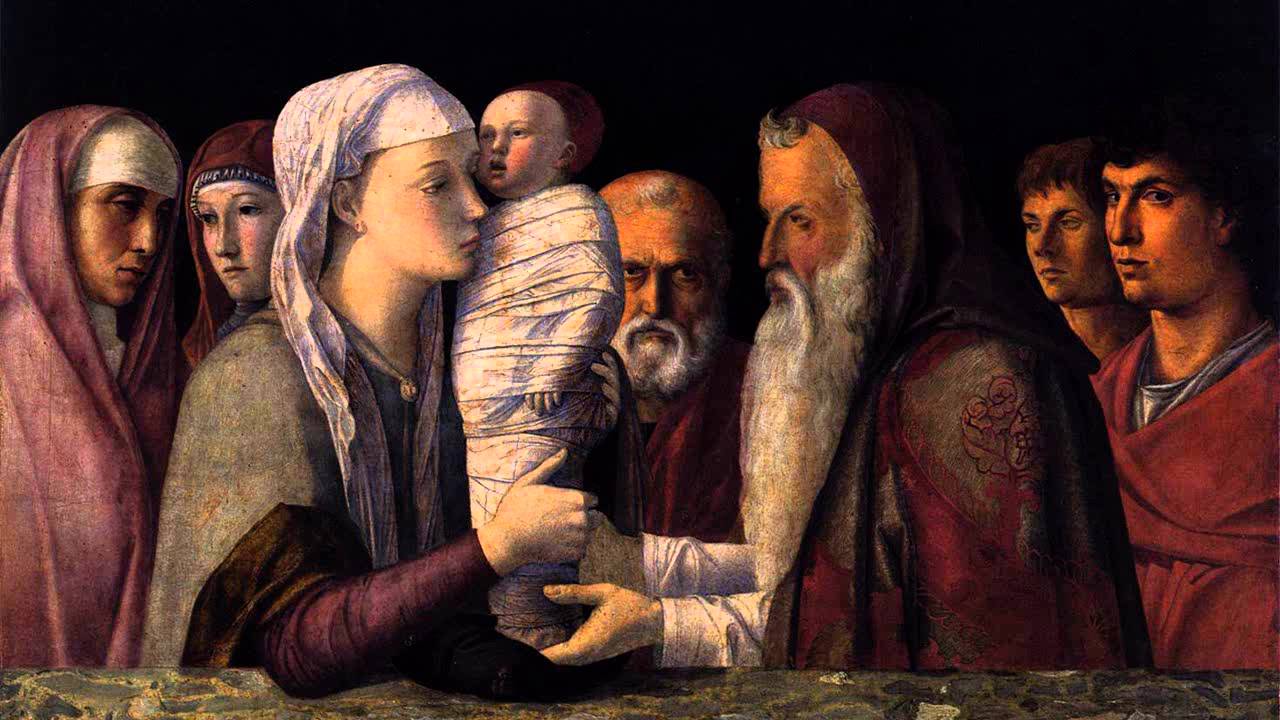
1st Sorrow – The Prophecy of Simeon
2nd Sorrow – The Flight into Egypt

Now we turn to…

The Loss of the Child Jesus in the Temple in Jerusalem. (Luke 2:43–45)

In the Presentation, the Lord – the New Temple – comes to His Temple for the first time.

At Passover of His 12th year, He comes to His Temple for the Second Time.

So far I have tried to underscore in the first two offerings that Mary’s Sorrows were also shot through with joy.  Mary, humanity’s solitary boast, was not disturbed by passions in the way that we are.  Her deep commitment to the plan of God would have given her great confidence in the face of even catastrophic events.

And so, keep in mind that this 3rd Sorrow of the Blessed Virgin Mary is also the 5th Joyful Mystery of the Most Holy Rosary.

Mary and Joseph were pious and desirous to fulfill the Law.  So, just has they brought Christ to the Temple for his circumcision – when Mary heard Simeon’s prophecies about the piercing of her heart – now they have brought Christ to the Temple in Jerusalem to fulfill the Law at Passover.  One can suppose that in this 12th year after the Lord’s Birth, she was still pondering that first visit to the Temple, the first shedding of His Blood, the ominous quality of Simeon’s words.

Luke describes what happened in chapter 2. Christ is 12.

Christ has gone in a caravan with his Holy Family up to Jerusalem for Passover.

Under the Law, at 13 years all boys were bound to go up to Jerusalem for Passover. However, this was often anticipated for mature boys. It is likely that this is the first time the Lord, the New Temple, has seen with more mature eyes the old Temple.

When they were to return to Nazareth, the caravan departed Jerusalem. Mary and Joseph believed that their Son was somewhere in the good sized group. Why wouldn’t He be? Try to imagine how responsible and diligent the Lord was. The caravan departs, but Our Lord “tarries” (hypomeno) in the Temple. After a day of travel Mary and Joseph figure out that Jesus not with them, so they rushed back to Jerusalem, no doubt seeking and inquiring along the way. They find him after three anxiety-filled days. They enter the Temple and see him where He tarried, with the learned scholars of Talmud and Mishna, engaged in questions and answers about interpretation of Scriptures.

The Greek “hypomeno” can mean “linger, tarry, stay back” or also, “persevere” especially in trials, “to bear ill treatment bravely”.

Jesus is the Word of God made flesh. Do you suppose that Mary and Joseph heard the Lord’s colloquy?  They wouldn’t have been surprised.  There is no support for this in Scripture, but I picture them finding the Lord amidst the scholars and both of them stopping and listening for a bit before interrupting during a stunned pause.

Remember… before Mary acts and speaks, she listens and ponders.  That’s her pattern in Scripture.

“How is it that you sought me? Did you not know that I must be in my Father’s house?”

Where were they in the Temple complex?  The sight of the Temple, after the simplicity of Nazareth, would have made an immense impression on the young Lord.  The Temple was literally clad with gold. Where there was no gold, it was brilliantly white. Before the Temple itself, within which was the Holy of Holies, was the Court with its great altar with four “horns” at the corners at the top of a huge stairway of 12 steps, below which was the place for slaughter. Only priests and Levites could enter there. Up these steps the priests would have pass the silver and gold basins with the blood of the Passover lambs to be thrown against the altar. The Temple faced East. To the East of the main Court, though the Nicanor Gate, was the Courtyard of the Women. To the North and South were buildings and gates, bounded by terraces. It would have been on one of these terraces that the young Jesus was found by Mary and Joseph amidst the Scripture scholars and theologians, “Doctors of the Law”, “nomikoi”. Babylonian Talmud says this is where the Sanhedrin and scholars gathered on sabbaths and during festivals. Hence, because this is still the festive time following the Passover, this is where He was discovered and where He spoke the first words of His that are recorded in Scripture.

The Lord is 12. He has now seen the slaughter of the lambs as the Psalms were sung and how they were then prepared in cruciform for roasting. The Lord’s human intellect and memory are learning in human ways, but they are informed by His divine nature. Having experienced His first Passover, His thoughts have turned from His earthly family to His Father’s House, the Temple, with which He, the New Temple, thrummed in the resonance of fulfillment. So powerful was the Passover and experience of the Temple that He left His earthly family and tarried there.

To get something of the anxious sorrow of Mary, remember that Jesus was daily with Mary and Joseph, hardly apart for any length of time in their flight from Herod, in Egypt, on the road home and in daily life. Suddenly, for the first time, the Boy whom the murderous Herod had hunted is missing. St Alphonsus of Liguori, writing of this Sorrow of Mary, said,

“He who is born blind is little aware of the pain of being deprived of the light of day; but to him who has once had sight and enjoyed the light, it is a great sorrow to find himself deprived of it by blindness.

In The World’s First Love, Fulton Sheen wrote:

“Mary lost Jesus only in mystical darkness of the soul, not in the moral blackness of an evil heart. Her loss was a veiling of His face, not a flight. But she does teach us that, when we lose God, we must not wait for Him to come back. We must go out in search of Him; and, to the joy of every sinner, she knows where He can be found!”

Because they were seeing the events only as if through a glass, darkly, Mary and Joseph sought Jesus with anxiety. Perhaps they worried that He was dead, as any parent might.

They find Him, after three portentous days, foreshadowing the Resurrection.  As Ambrose wrote, “He who was believed dead for our faith would rise again after three days from his triumphal passion and appear on His heavenly throne with divine honor” (Exp. Luc. 2.63).  Christ had, at a triumphant 12, has gone up to Jerusalem. There is a passion in his loss.  He is found “seated” among the elders who were honoring Him for His questions.

Christ speaks about “my Father’s House” even as Joseph regards Him in the full sight of the great men of Jerusalem. Mary hears His words, perhaps checking Joseph’s reaction. There is joy in the finding of the Lord, of course, just as parents rejoice in finding a child whom they thought was lost. This is the 5th Joyful Mystery, after all.

But any human heart, even the Immaculate Heart of this Mother, would have twinged a bit with these words.  They had some sense of what must someday befall her Child. This has been Mary’s constant consideration to ponder, since her encounter, here, with Simeon and during their sojourn in Egypt.

Finally, in the Lucan account, Mary pondered it all: “His mother kept all these things in her heart.”

Joyful Sorrow… Sorrowful Joy.

A Prayer of St. Alphonsus:

Oh Blessed Virgin, why art Thou afflicted, seeking Thy lost Son? Is it because Thou dost not know where He is? But dost Thou not know that He is in Thy Heart? Dost Thou not see that He is feeding among the lilies? Thou Thyself hast said it: “My beloved to me and I to Him who feedeth among the lilies.” These, Thy humble, pure, and holy thoughts and affections, are all lilies, that invite the Divine Spouse to dwell with Thee. Ah, Mary, dost Thou sigh after Jesus, Thou who lovest none but Jesus?

Leave sighing to me and so many other sinners who do not love Him, and who have lost Him by offending Him. My most amiable Mother, if through my fault Thy Son hast not yet returned to my soul, wilt Thou obtain for me that I may find Him. I know well that He allows Himself to be found by all who seek Him: “The Lord is good to the soul that seeketh Him.” Make me to seek Him as I ought to seek Him. Thou art the gate through which all find Jesus; through Thee I too hope to find Him.

4th Sorrow – Mary meets Jesus on the way to Calvary

Posted in Our Solitary Boast, Patristiblogging | Tagged , ,
6 Comments

“How are they down, how have they fallen down Those great strong towers of ice and steel”?

There are times when being a priest has its perks.  Today was one of them.  I had an early call from the oldest friend of my life who needed a prayer intention covered.  I was able to say Mass for his intention.

And because today is 11 September, I added the orations “Pro defensione ab hostibus… for defense against enemies“.  I included, as I prayed these orations, enemies within the Church, especially those who are intent on creating in reality a “schism” which was at first born only in their minds.

The Collect:

Hostium nostrorum, quaesumus, Domine, elide superbiam: et eorum contumaciam dexterae tuae virtute prosterne.  Amen.

Shatter to pieces, we beseech Thee O Lord, our enemies’ pride and humble their insolence by the might of Thy hand.

Contumacia, by the way, can mean not only “insolence”, but “rigidity”, a word much in the news right now.   Ironically, there’s none more rigid, in the worst sense, than a committed liberal, or contumacious.

I’ll be adding these orations often for the near future.

Meanwhile, …

… on this day I can’t shake the images of 9-11, the debris scattered field, the burning Pentagon, the collapse of the towers.  I have in mind especially the people who were close up and survived, a good friend in particular, and the many LEOs and FFs and others who went toward the danger, with long term consequences.

And while the context is a little different, the seemingly prophetic words of a poem by Thomas Merton come back to my mind.  I’ve posted them before.  I’m not at all a fan of Merton, especially his later stuff, but his poetry is thoughtful and at times gracious.  US HERE – UK HERE

In the late 1940’s Merton published his complicated poem Figures For An Apocalypse.  One of the sections of the poem is entitled “In the Ruins of New York“.

While the whole section concerns a great downfall, a city and way of life overturned in materialism, there are some striking lines which – when isolated – call to mind the horror of 11 September 2001.

Oh how quiet it is after the black night
When flames out of the clouds burned down your cariated teeth,
And when those lightnings,
Lancing the black boils of Harlem and the Bronx,
Spilled the remaining prisoners,
(The tens and twenties of the living)
Into the trees of Jersey,
To the green farms, to find their liberty.

How are they down, how have they fallen down
Those great strong towers of ice and steel,
And melted by what terror and what miracle?
What fires and lights tore down,
With the white anger of their sudden accusation,
Those towers of silver and of steel?

From Figures For An Apocalypse, VI – In the Ruins of New York (1947) by Thomas Merton

The poem does not line up perfectly with the events of 9/11, but the imagery is, for me at least, evocative.

The whole poem, even just the section of “In the Ruins of New York” is worth your time.  Merton paints the ugly with beautiful images.  Other moments of his poem are now striking. Consider this:

“This was a city
That dressed herself in paper money.
She lived four hundred years
With nickels running in her veins.
She loved the waters of the seven purple seas,
And burned on her own green harbor
Higher and whiter than ever any Tyre.
She was as callous as a taxi;
Her high-heeled eyes were sometimes blue as gin,
And she nailed them, all the days of her life,
Through the hearts of her six million poor.
Now she has died in the terrors of a sudden contemplation
– Drowned in the waters of her own, her poisoned well.”

But now the moon is paler than a statue.
She reaches out and hangs her lamp
In the iron trees of this destroyed Hesperides.
And by that light, under the caves that once were banks and theaters,
The hairy ones come out to play….

The hairy ones come out to play…

The hairy ones are romping, in the Church as well.

Sts. Nunilo and Alodia, pray for us.

Sts. of the Roman Canon, pray for us.

St. Michael the Archangel, defend us.

Mary, Queen of the Clergy, pray for us.

Sacred Heart of Jesus, have mercy on us.

Posted in Linking Back | Tagged , ,
5 Comments

Tech advice from readers about new computer

Apart from the back end of the blog, which is a nightmare for me, I have close to home tech issues.

I’ve been running an HP Pavilion, with Windows 7, since 2009.   Windows will end support for 7 soon.  I had four monitors going.  After an update, only two now function.  One of these days, this dear mother ship will need to be retired.  Thanks, HE, for this incredibly productive tool those many years ago.

I am thinking ahead.

I’ve not kept up with what’s going on in “desktops”.  I know that, these days, laptops are now far more powerful than this decade old box.  Hence, I am look for some discussion of options.   I have a Mac laptop, but… meh.

Ready… set… GO!

Posted in "How To..." - Practical Notes |
26 Comments

“The Church of priests is coming to an end.” What’s really going on.

At Settimo Cielo long time vaticanista Sandro Magister posted something that should make everyone stop, breathe for a while, and consider options.

Context: In October there will be a meeting of the Synod of Bishops on the Amazon, during which the Church is supposed to learn about spirituality of trees and insects and the ways of tribes in touch with nature.

The Synod will be a pry bar into the core of priesthood.

The fact that there is a shortage of priests is an excuse to overturn the Church’s understanding of priesthood.

Some are straining against the gate, hammers and prybars in restless hands.

NB: It is important to watch carefully what is going on in the Church in Italy.   You find in Italy signals about what is going on behind the scenes in Rome.

Let’s see some of this (my emphases):

In the Amazon Married Deacons Are Already Saying Mass. And the Pope Knows It

For a few days a video has been circulating on the web in which an Italian priest of the highest rank, among those closest to Jorge Mario Bergoglio, says that in the Amazon the celebration of the Mass by married deacons is already a de facto reality, authorized by the local bishops. And Pope Francis, informed of the matter, is alleged to have said:”Go ahead!”

The author of this revelation is not just anybody. He is Giovanni Nicolini, 79, an esteemed priest of the archdiocese of Bologna, which has as its archbishop that Matteo Zuppi whom a few days ago Francis promoted as cardinal.

Fr. Nicolini is currently a national ecclesiastical assistant of the Catholic Associations of Italian Workers, ACLI, and was previously director of Caritas of Bologna, in addition to being a parish priest in the neighborhood next to the prison. A priest of the poor, of the imprisoned, of the immigrants: this is his best-known profile.

But even before this he was a spiritual son of Giuseppe Dossetti (1913-1996), a leading politician in postwar Italy and then, as monk and priest, a protagonist of Vatican Council II along with Cardinal Giacomo Lercaro. [A key player, with Bugnini, in the systematic undermining of the Roman Rite prosecuted in the name of Vatican II.]

In the footsteps of Dossetti, Fr. Nicolini founded in the 1970’s the Family of the Visitation, a community now made up of around thirty monks and nuns and as many married couples, divided between the countryside of Bologna and the archdiocesan missions  in Tanzania and Jerusalem.

Moreover, Fr. Nicolini is connected to that influential progressive Catholic think tank known as the “school of Bologna,” which had its founder in the same Dossetti and has in Church historian Alberto Melloni and in Bose monastery founder Enzo Bianchi its current mainstays and gurus, both of them ultra-Bergoglians. [Bose monastery… see below!]

So here is a link to Fr. Nicolini’s shocking video:

> “Sento l’opportunità di ricordare…”[In Italian]

The video is part of a broader “lesson” by Fr. Nicolini, it too recorded, at the summer school of the political-cultural Catholic association La Rosa Bianca, held in Terzolas, Trentino from August 21 to 25.

And the following is an exact transcription of his words concerning the celibacy of the clergy and the “Masses” that already are said to be celebrated by married deacons in the Amazon, with the authorization of the local bishops and the support of Pope Francis.

*

AND THE POPE SAID: “GO AHEAD!”

I feel it is fitting to recall, together with you, that the Church of priests is coming to an end. Is this a prophecy?

[…]

Let’s connect some dots.

Right now there is a systematic effort on the part of the New catholic Red Guards to slander, intimidate and silence anyone who offers an observation or criticism of any kind whatsoever about the radical changes being made even to Catholic teaching during this pontificate.   This is going on across various language groups, and representatives from various languages are getting more organized.  They are coordinating.

A dot to connect.

Professional self-promoter, bomb-throwing strawman-stuffer Massimo “Beans” Faggioli tweeted”

Bose (Bo-zay) is – sort of – like an Italian Taize.  There is a breathy piece about it at Commonwelt. HERE The community has roots in a post-Conciliar leveling ecumenism which cherry picks elements of different traditions.   I don’t understand their canonical, ecclesiastical status.  They are doing their own thing and, a while back, a bishop said, “Okay.”  Their site says:

The Monastic Community of Bose was canonically approved by a decree dated 11 July 2000 of the Bishop of Biella, Massimo Giustetti, who also approved its statute and the monastic rule that went with it. The present Ordinary, Bishop Gabriele Mana, confirmed the above status of juridical person and approved modifications to the statute in a decree dated 29 June 2010. The monastic rule was approved by Cardinal Michele Pellegrino of Turin on the occasion of the profession of the first seven brothers, 23 April 1973, and was confirmed by his successor, Cardinal Anastasio Ballestrero on 6 August 1978.

It seems to me that this community – a private association of the faithful – is all about a version of Christianity that tends toward a “one world religion” with some Catholic elements that they like. It’s generic, a strain of “mere Christianity” somewhat attached to Catholicism and Catholic roots but less intellectually than, say, the Touchstone folks.  It is, perhaps, driven by sentimentalism and a kind of Italian “contempt” for the Church that arises from “familiarity”.  It is a kind of Catholic-lite place, with Eastern touches and a little bit of Woodstock and new-agey Findhorn.  I’m not sure what Protestants contribute.  They have a meaningful bell named after Dietrich Bonhoeffer. “Eucharist” is mentioned on their site, but so sparsely that it seems a purposeful avoidance.  I think it might be Mass, but I am not sure. There are Catholic priests there, so I guess there is Mass. Who receives Communion?  Everyone?  Anyone?

Quite a lot of money circulates around the place it seems.  But all the people in the community seem to work for a living or make things which are sold, which is admirable.  They are making a go of it by work and some sort of prayer.

I would note that Rome seems to embrace this model, but it crushed the Franciscan Friars of the Immaculate and those sisters in France who took care of the poor because they were too traditional.

This is something that Beans is really into: “I owe so much spiritually and intellectually to the Community of Bose.”

UPDATE:

And minutes before I posted this, Beans tweeted:

A central motivation of the Protestant Revolt in the 16th century and onward was precisely the destruction of the priesthood.

Posted in Liberals, New catholic Red Guards, Pò sì jiù, The Coming Storm, The Drill, The future and our choices, What are they REALLY saying? | Tagged ,
16 Comments

On “Bullshit” and the New ‘c’atholic Red Guards

Today there is an amusing and insightful piece at First Things about the “Theory of Bullshit”… no, it’s a real thing… proposed in the 80s by the distinguished Princeton professor and philosopher Harry G. Frankfurt.

BTW… I usually write B as in B, S as in S on this blog, but in this case “Bullshit” is a technical term.  All words, even the ugly ones, have their apt applications.

I had a thought while reading the front of the article, which briefly expounds on Bullshit.  (My emphases and comments)

As Frankfurt himself notes in On Bullshit:

One of the most salient features of our culture is that there is so much bullshit. Everyone knows this. Each of us contributes his share. But we tend to take the situation for granted. . . . In consequence we have no clear understanding of what bullshit is, or what function it serves. And we lack a conscientiously developed appreciation of what it means to us. In other words, we have no theory. I propose to begin the development of a theoretical understanding of bullshit, mainly by providing some tentative and exploratory philosophical analysis.

Frankfurt argues that “bullshit is unavoidable when circumstances require”—or invite, or encourage—“someone to talk without knowing what he is talking about. Thus the production of bullshit is stimulated whenever a person’s obligations or opportunities to speak about some topic exceed his knowledge of the facts that are relevant to that topic.” The bullshitter, in Frankfurt’s theory, “does not care whether the things he says describe reality correctly. He just picks them out, or makes them up, to suit his purpose.”

For Frankfurt, bullshitting is not quite the same as lying. Liars must acknowledge and engage the truth even as they subvert it. By contrast, “[the bullshitter] does not reject the authority of the truth, as the liar does, and oppose himself to it.” Rather, “he pays no attention to it at all. By virtue of this, bullshit is a greater enemy of truth than lies are.”

Much like the poison of disinformation.  More on that below.

While I was reading the above, I was thinking “This is exactly what guys like Antonio Spadaro, Bobby Mickens, Massimo “Beans” Faggioli, Michael Sean Winters, Austen Iveriegh and others are doing to smear anyone who raises questions or criticisms about what’s going on in this present pontificate.   They have, without the least consideration of facts, constructed a narrative, a strawman – that conservative American Catholics are forming some sort of “schismatic” movement in the Church.  It’s total Bullshit.  But they are committed to it, synchronized (mark my words), and relentless.

That is what I was thinking as I read.  Then, the writer went there!

[…]

Note also that a new French text, Comment L’Amérique veut changer de pape (How America Wants to Change the Pope), may offer an especially promising environment for testing Frankfurt’s theory; but currently available only in French, it’s not included here. [This was the book on the papal airplane which Francis called a “bomb” at the time he said he was “honored” to be criticized by Americans.]

We can start with “Evangelical Fundamentalism and Catholic Integralism in the USA: A surprising ecumenism.”[This is the product of the Jesuit, Antonio “2+2=5” Spadaro. He also maintains a site dedicated to homoerotic Italian writer Pier Vittorio Tondelli.] Now a 2017 classic of the genre, it easily meets the Frankfurt standard of speaking “extensively about matters of which [the authors] are to some degree ignorant.” Impressive in its length, turbulent in its imagination (claims of political Manichaeism; a cult of apocalypse, etc.), and generous in use of hyperbole (“ultra-literalism,” “ecumenism of conflict,” “nostalgic dream of a theocratic type state,” etc.), it embodies a peculiar kind of European anxiety about American influence and otherness. In the process, it fails to engage—in fact, seems uninterested in engaging—the real issues and actual terrain in long-term evangelical/Catholic relations.

A similar anxiety spills over into [Bobby Mickens, who lost his job at the ultra-lefty Tablet because he wished Benedict XVI dead, at] La Croix International’s “The rise of ‘devout schismatics’ in the Catholic Church.”

[.]

Get it?   He also cites Winters (aka Madame Defarge aka the Wile E. Coyote of the catholic Left – US bishops should drop everything and focus on preventing schism.) and his ravings about “schism”, ironic from someone who writes for the Fishwrap.

And check out the relentless tweeting by Beans (if you haven’t been blocked).  There are ways around that.  He’s obsessed.

Read the whole First Things piece.  It really tears the mask off the builders of the strawman.

At this point, I will also redirect you from Bullshit to Disinformation.   I wrote about this some years back.

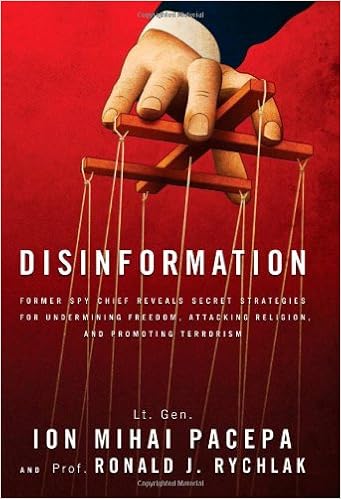
There is a book by the highest ranking Soviet block operative ever to defect to the West, the invaluable Disinformation: Former Spy Chief Reveals Secret Strategies for Undermining Freedom, Attacking Religion, and Promoting Terrorism by Ronald Rychlak and Lt. Gen. Ion Mihai Pacepa. US HERE – UK – HERE

Gen. Pacepa, who ran intelligence for Romanian despot and Soviet thug Nicolae Ceaucescu, fled to the West when he was asked to start killing people. He is an expert on the Soviet technique of framing, disinformation, creating false narratives and history. The book exposes the Communist background of seemingly-benign organizations and explains the treatment received by Cardinals Stepinak, Mindszenty and Wysznski and, of course, Pius XII.  It is riveting and extremely useful in understanding what the deep-state catholic Left and their New catholic Red Guard operatives (like Beans and Bobby and Madame Defarge) are up to.

Hmmm… I just remembered back in 2017 when the fights were beginning over the infamous paragraphs in Amoris laetitia. The Four Cardinals had submitted the Five Ignored Dubia.  Remember that there was a meeting in Boston, involving Jesuits such as Spadaro, who flew over from Rome, and invited journalists and key liberal bishops?  They were going to coordinate their messaging about Amoris.  I wrote about it a couple times, for example HERE.

Bullshit and Disinformation are related, but not the same.  Bullshit is more ad hoc, while Disinformation is carefully crafted, disciplined.   It seems to me that the bizarre narrative of a possible “schism” in these USA on the part of conservative Catholics is beginning to move from Bullshit to Disinformation.  It is as if, in their constant grinding away at the Faith they found a theme that got some traction and have rallied around it to push that truck full of Bullshit up that hill.  They are coordinating now, which suggests Disinformation.

It also smacks of the “große Lüge” propaganda technique.  Tell a “big lie”, but tell it so often that people start thinking that maybe it’s true after all, otherwise they wouldn’t be repeating it with such conviction.

And, as Pacepa wrote:

Soviet leader and long-time KGB head Yuri Andropov, apparently a real aficionado of dezinformatsiya, put it this way: “[ Dezinformatsiya is] like cocaine. If you sniff once or twice, it may not change your life. If you use it every day though, it will make you an addict— a different man.”

They have sniffed so much Bullshit that they can’t smell anything else.

UPDATE:

Because we need a good eye-roll once in a while!

A fourth-grader can see what’s wrong with this.  “Oooo… someone near Chaput… wink wink nudge nudge.” Never mind the argument.  It’s Chaput, get it?  And “potty language”?  In that context?  Frankfurter’s essay on the philosophy of language?  Oh dear!  Her delicate ears!  But, no, she’s writing for a particular primed-public by now. She has to aim at the right pitch for them to catch the dog whistle.  Too bad it has come to this.  We wanted better.

Ceterum, Beans’ article deserved derision.

What a brave man Faggioli is, who teaches at a “catholic” school in Chaput’s archdiocese, to post something against Chaput shortly before he is canonically required to submit his resignation.

Brave brave Beans.  Bravely bold Faggioli.  He’s taking on the big ones!

YouTube thumbnailYouTube icon


Posted in Fr. Z KUDOS, Jesuits, Liberals, The Coming Storm, The Drill, The future and our choices | Tagged , , ,
6 Comments

Concerning Mutual Enrichment. Wherein Fr. Z rants.

I remember, years ago, some folks who were deeply attached to the Traditional Latin Liturgy of the Roman Church almost lynched me when I suggested that there was something that we could learn from the Novus Ordo.

Over the years, I have been proven right, even to the point that Pope Benedict wrote about “mutual enrichment”.  I like the image of a “gravitational pull”.

One of the things I proposed “back when” was that the Novus Ordo at the very least reminded us that “there are people out there”, in the body of the church.  And that, because the Roman Rite itself excludes the sensory participation in some of the sensory experience of what Father does at the altar (because they can’t see some things and can’t hear some things), that means that those parts which are more accesible through sight and sound have to be exemplary, in such a way that they are edifying.

What I was driving at was what Benedict, years later in Sacramentum caritatis, described as the ars celebrandi of the priest: all that goes into how the priest does anything liturgical, his attitude, voice, gestures, demeanor, etc.   These things have a knock-on effect on congregations.  They are extremely important.

This is why learning the TLM is of critical importance for young priests: it’ll have a big effect on their use of the Novus Ordo and, therefore, on their congregations.

I saw a post at NLM which touches on this matter of ars celebrandi and the genius of the Roman Rite enshrined in the rubrics.

Rubrics are not arbitrary.  They are there for a reason.  Sometimes, they maintain a part of an ancient liturgical action which, for the most part, has fallen away.  That doesn’t mean that the rubric or what it designates is “superfluous”.  I refer everyone to the great book by my friend Fr. Jackson on that point. US HERE UK HERE More the most part, rubrics solved practical problems.  Over time the gestures and things used at Mass also become loci theologici, departure points for theological reflection.

Because our forebears truly loved Holy Mass with all their hearts, they polished and perfected, carefully, what we do as if it were the setting of the most beautiful jewel ever found.  Then, again in love, they passed it down to us because they loved us.

Rubrics reflect love.

This is one reason why I constantly say: We Are Our Rites!   They shape us even as, over centuries, we shape them out of what we believe, whom we believe ourselves and the Church to be, who Christ is, what He did for us and does for us.   That’s why the sudden imposition of an artificially crafted rite was so upsetting – and is still upsetting – the Church.

At NLM the piece in question concerned the celebration of Low Mass by a priest who, even for those texts that are required by the rubrics to be stated clara voce, in a clear, raised, audible voice, read everything silently.

There are a few cases, such as a truly private Mass when you might do that.  A priest would do that if he was “concelebrating” at his altar near to other priests saying, reading, Mass at their altars: you keep your voice down.  But in a parish church or a setting where people are participating, unless the New catholic Red Guards are hunting you, you use all your levels of voices and you follow the rubrics.

It seems to me that there are some ideas about Low Mass that still have to be overcome.

First, Low Mass is NOT the paradigmatic Mass of the Roman Rite, as if it were the default to which we add things to make it more solemn when the occasion arises.  No.  It’s quite the opposite.  Solemn Mass, indeed with the bishop, is the paradigm.  But because we can’t have Solemn Mass in a lot of places, due to the lack of priests, we – as a solution to a deficit – pare things off of the rites and simplify so that we can, indeed, have Mass, and have it daily in humble surroundings.   The Roman Rite seeks always to make things big.  It’s modernism that seeks to make the supernatural into the small and natural, to dumb it down.   So, if you have some notion that the Low Mass, with nothing sung and just an altar boy or two, is the norm, think again.  You are witnessing what we tolerate, not what we desire, even though it is “the norm” because it is widespread.  It’s not the norm!

Next, given the way that Low Mass cuts down the rites in a pragmatic way, all the more reason to obey the lovingly crafted rubrics and pay closer attention to those sensory points of Mass which bring the baptized participants into the sacred action so that they can exercise more readily their mode of the priesthood they receive from Christ the High Priest.

When it is time to speak with a clear voice, follow the rubrics and use a clear voice.  It’s important.  When it is time to be very quiet, then be quiet.

Say the Black according to what the Red prescribes.

The liturgical desert we experienced, when many were (falsely) convinced that the Traditional Forms were forbidden, is behind us.  That wearisome, thirsty time has, I hope, given many of us old warriors, a real sense of renewal and gratitude.  And we have, I hope, learned a few things about where we were before the desert, what the desert was like, and where we are now.  We have such potential in front of our eyes.

Posted in ¡Hagan lío!, "How To..." - Practical Notes, Hard-Identity Catholicism, Liturgy Science Theatre 3000, The Coming Storm, The future and our choices, Wherein Fr. Z Rants | Tagged , , , ,
12 Comments

Our Lady of Sorrows Project: 1st Sorrow – The Prophecy of Simeon

Sunday, 15 September is, in the traditional calendar, the Feast of Our Lady of Sorrows (2nd Class). For Holy Mass we will use the 14th Sunday after Pentecost with commemorations of the Feast.

I believe that the Rubricae Generales of the 1962 Missale Romanum (342 & 370-372) allow a diocesan bishop to permit the celebration of the Feast on the Sunday (2nd Class). This mystery is also observed liturgically during the 5th week of Lent in the traditional calendar. And, of course, Good Friday has also called forth devotional practices such as processions with statues of the Mater Dolorosa. How could it not?

In the 12th c. German Benedictines began to develop the devotion of Our Lady in her moments of sorrow. In the 13th c, the Servite Order, founded near Florence, made the sorrows of Mary a central dimension of their devotion. They developed, among other things, a kind of rosary and a Black Scapular dedicated to Our Lady’s sorrows. Over the centuries Mary has been depicted not just as the Mother holding her dead Son, Pietà, but also as having seven swords, one for each moment of sorrow attested in Scripture and tradition, piercing her breast. Alternatively, you see her surrounded with images of those moments.

The Seven Sorrows

The prophecy of Simeon. (Luke 2:34–35)
The flight into Egypt. (Matthew 2:13-23)
The loss of the Child Jesus in Jerusalem. (Luke 2:43–45)
Mary meets Jesus on the way to Calvary. (Tradition)
The Crucifixion of Jesus. (Matthew 27:34–50, Mark 15:23–37, Luke 23:33–46, John 19:18–30)
The Piercing of the Side of Jesus, and His Deposition. (John 19:34)
The Burial of Jesus by Joseph of Arimathea. (Matthew 27:57–61, Mark 15:43–47, Luke 23:50–53, John 19:40–42)

Shall we, in the next few days, look as some aspects of the Seven Sorrows?  Here are a few ideas to consider.  And before any of you enthusiastically write, as inevitably some do, “You forgot… X!”   No.  I didn’t.  I offer here some ideas, not all possible thoughts.  Many great writers have contemplated Mary.  Each of these mysteries is a bottomless serving of rich fare, like baskets and fish that keep on feeding.

The Prophecy of Simeon. (Luke 2:34–35)

And Simeon blessed them and said to Mary his mother, “Behold, this child is set for the fall and rising of many in Israel, and for a sign that is spoken against (and a sword will pierce through your own soul also), that thoughts out of many hearts may be revealed.”

It is usual for Catholics to say an Our Father and seven Hail Marys for each of the Sorrows of Mary.  You might do that now.

Context: The Lord comes to the Temple for the 1st time. Ultimately, His Body is the New Temple, to be established in the heavenly Jerusalem. Now He comes to the earthly Temple, already High Priest, already perfect Victim, ready to shed His Precious Blood for the first time for His mission of propitiation and to teach us who we are, to reveal man more fully to himself (GS 22).

Here are Anna, the prophetess, whose Feast was 1 September. Even in our calendar, she is close to the Temple where she, a widow, waited for 80 years for the true Bridegroom. Here is elderly Simeon, probably a priest, whose 8 October feast, with Anna’s, brackets the first of the sorrows of Mary, the presentation of the Christ Child for His Circumcision.

Simeon takes the Child into his arms and raises in that moment a song of joy which we sing every evening at Compline, the Nunc Dimittis. Surely it is a paen of joy, but with a profundity that expresses itself not in enthusiasm, but expresses also the weariness of a labor completed, like that of the satisfaction of a hard day’s, life’s, task. Many composers through the centuries have set the Nunc Dimittis, so important in the Roman Rite, to music. The settings, whether of Josquin des Prez, or Palestrina, or Holst, Rachmaninov, or Dyson, or Pärt, are restrained and introspective, calm as befitting a sense of completion of a life lived in uprightness and in hope.

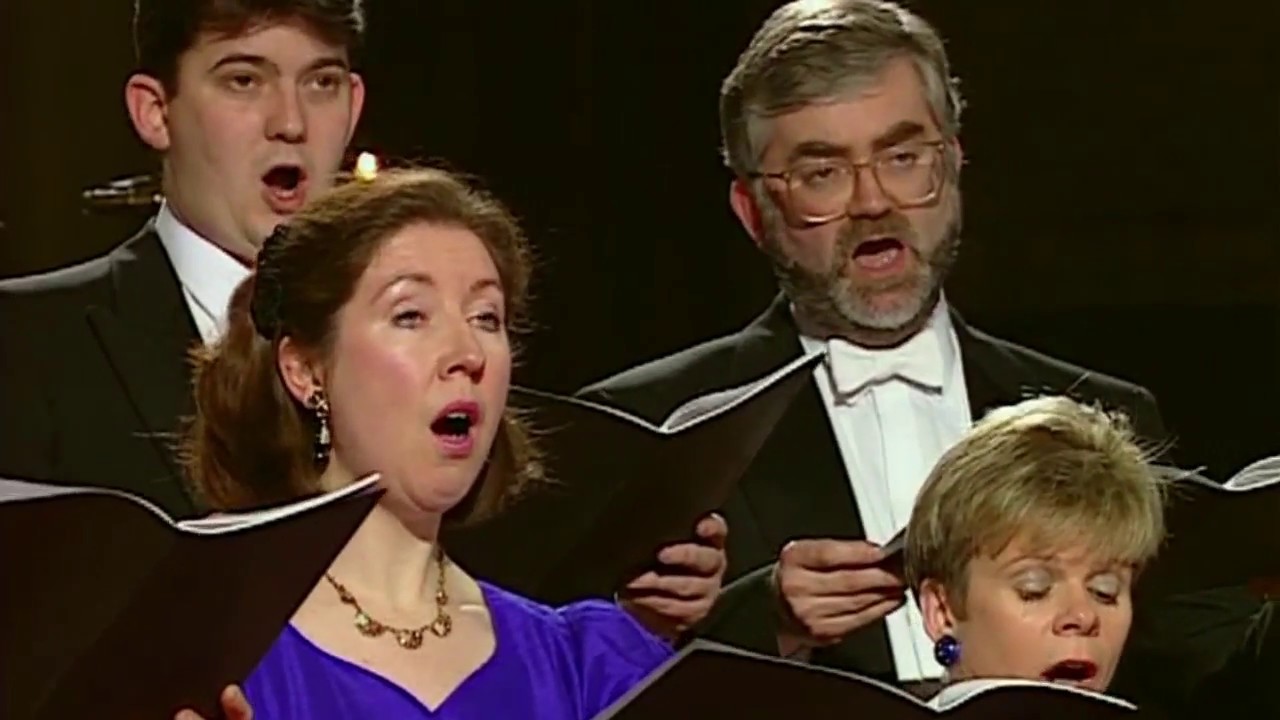
Here is Palestrina’s version, sung by the Tallis Scholars in St Mary Major in Rome in 1994.  I was present at this concert.

YouTube thumbnailYouTube icon

Haunting Pärt.

YouTube thumbnailYouTube icon

Simeon’s joy is weighted with gravity.

Mary’s pattern, in Scripture, is to be still and take all things in before she ponders and then speaks.  As I picture the moment, she watches and listens.  She is utterly still, taking it all in.  Simeon holds Jesus as he pronounces his Nunc Dimittis.  Then he turns to look at her.  Still guided by the Holy Spirit, the old priest prophesies – for her benefit – about “the fall and rising of many”, and that Christ is a “sign of contradiction”, literally “spoken against”, and that “a sword” would pierce Mary’s soul so that “thoughts out of many hearts be revealed”.

What mother wouldn’t halt in her tracks at this description of her and her Child’s destiny?

Consider that Mary hears with ears perfectly tuned to what God says to her in Scripture, in the human voice, in the sounds of nature. She knows the Scriptures. She knows of the Suffering Servant.  She knows about Eve.

The word for “sword” here in Greek is rhomphaia which can be a large sword but is more accurately a curved blade on a short staff, slung on the back, used in close combat by Thracians.

Ancient reliefs show it to be almost like a Japanese odachi, though the odachi is a bit long. Interestingly, the odachi eventually was not used for battle, but became an exceptional temple offering. In any event, Luke uses the odd rhomphaia rather than machaira, the shorter sword of Luke 22:36, which the Lord at the end of the Last Supper instructs His apostles to obtain, the sword which the Lord said he came to bring (Matthew 10:34),  and with which Peter cut the ear of the servant of the High Priest (Matthew 26:52). The machaira is the sharp two-edged sword Paul references when describing the word of God (Heb 4:12).

No, in the Temple Simeon mentions the terrible, large curved slashing, thrusting weapon of a notably savage tribe, the rhomphaia. This is the sword of awesome images in the book of Revelation, the “son of man” “the Alpha and Omega” in ch. 1 from whose mouth came a sharp rhomphaia, at whose feet John fell. This is the rhomphaia of the rider of the pale horse, Death in Rev 6, with power to slay a fourth of all living things. This is the sword of the rider of the white horse, Faithful and True, whose robe was dipped in blood, the Word of God, followed by the hosts of heaven (Rev 19).

To pierce with the rhomphaia, you would need to raise your arms high to thrust downward or, more horribly, keep them low to thrust upward, under the ribs, where the Lord was physically conceived, and into the heart, where He was spiritually conceived.

How terrible will be the sorrows that pierce the “soul”, the “psyche”, the seat of feelings and desires, “the heart” of Mary?

Think rhomphaia.

In obedience to the Law, Mary and Joseph have brought their Child to the Temple. St Jerome, who spent much time in Jerusalem, opines that the Child who opened the closed door of the Virgin, now comes as High Priest to open the closed East Door of the Temple, through which only the High Priest can pass. (Adv. Pelag. 2.4)

Already there is a priestly coming with sacrifice toward the East, and then a return, having fulfilled the sacrifice from the East.

Christ has come to be the New Adam and Mary is the counterpoint to the Old Eve, hence the image of the sword brings to mind also the expulsion of Adam and Eve from paradise by the angel with the sword at the garden gates. Remember that Eden was a mountain, and mountains are where altars were built, sacrifices took place for the creation of covenants with God. They are now at the Temple in Jerusalem.  Is the piercing of Mary’s heart the conclusive sheathing of the sword of Eden?

Cutting to the quick, the Word pierces her.  Eden is no longer needed, for greater than Adam and greater than Eve are now here in the fullness of time.

Simeon says that a rhomphaia will pierce Mary’s heart, which surely refers to the Crucifixion. Is it hard to imagine that Mary will begin to prepare for the Passion of her Son from this point in her life onward? She would have known about the preparation of the lambs at the Pasch, their cruciform stretching on crosses for roasting.

The core Apostles, Peter, John and James, needed their Transfiguration moment with Jesus to prepare for His Passion.  Is this the moment, the Presentation in the Temple and Simeon’s solemn prophesies, that guides Mary to prepare for the next 33 years for her sharing in the Passion?  In her Magnificat, she rightly proclaimed in joy that her Son would scatter the proud and bring down the mighty.  In Simeon’s pronouncement, Christ will be the fall and rising of many, but his message is less of joy than one of warning.

Imagine the rush of thoughts and images which flood Mary’s soul as she stands in the Temple, as Simeon concludes.  What follows, the first shedding of the Precious Blood.

Piercing.  Cutting.  Obedience.  Self oblation.

Mary’s sorrow is that of a Mother with a bond more intimate than any mother with her child.  Mary’s sorrow is at the same time shot through with pure exalting joy because she relies entirely on God and knows that this is it.  This is the time and the “hour” is fast approaching.  Sorrowful joy.  Joyful sorrow.

Mary will now ponder, for ponder Mary does, in an ongoing, inexorable piercing of her heart over the next 33 years of anticipation of the 3 days of magnificent saving horror.

The Collect for the Feast of the Sorrows of Mary
V. The Lord be with you.
R. And with thy spirit.
Let us pray.
O God, in Whose Passion the sword, according to the prophecy of blessed Simeon, pierced through the soul of Mary, the glorious Virgin and Mother, mercifully grant that we, who reverently commemorate her piercing through and her suffering, may, by the interceding glorious merits of all the saints faithfully standing by the Cross, obtain the abundant fruit of Your passion.
Who livest and reignest with God the Father, in the unity of the Holy Spirit, one God, world without end.
R. Amen

2nd Sorrow – The Flight into Egypt

Posted in Our Solitary Boast | Tagged ,
6 Comments