ASK FATHER: Boys choosing female saints for confirmation names

12_04_27_confirmationFrom a reader…

Today at our new parish, we had the Bishop administer the Sacrament of Confirmation. Among the girls, 2 took the name Sebastian, 3 took Luke, 1 took John, 2 took Raphael, 2 took Francis, with one Michael. The other 2 girls chose Cecilia and Katherine. Is this acceptable? Notably, none of the boys chose Felicity or any other female names. As a homeschooler, I’m very hesitant to let these catechists form my son (he wants to be a priest). My husband and I were rocked by this and the bishop never batted an eye. It just felt dark and weird. Are we being too “rigid”?

“Dark and wierd…”

Hmmm. St. Jean Marie Vianney, St. Frances Xavier Cabrini…

The custom of taking a name at the time of Confirmation is not ancient, but is nonetheless laudable. Those to be confirmed take the name of a saint as a personal patron. The custom perhaps arose in imitation of vowed religious, who often take, or are given, another name to signify that their old life is over and their new life has begun. There is also the element of personal choice. While one’s baptismal name and patron saint was given by parents usually during infancy, at the time of confirmation, being a little older (in the Latin Church at least) one could choose a patron.

Names are important, more important perhaps than we think. Patron saints are also important. Choosing a personal patron could be a moment in a young person’s life when he or she truly makes the Faith a personal commitment.

Patrons provide us with examples to follow, and also powerful intercession. If they were only to provide us with good examples to follow, it might make sense for one’s patron to be of the same sex. Since they also are chosen to provide intercession, the grounds for choice shift somewhat.

Within our tradition, particularly within religious life, there are many examples of women either receiving from their superior (once very common) or choosing male patrons and male names.  Visit the cemetery of a religious order and read the tombstones of Sr. Urban, Sr. Michael, Sr. George, Sr. Hyacinth.  You might remember the funny British sitcom Bless me, Father with the ominous Mother Stephen (US HERE – UK HERE).  Male religious often receive or choose women’s names, almost always that of the Blessed Virgin, and often in combination with a male name, such as Br. Mary John, Fr. Michael Mary, etc.

There’s also the feminization or masculinization of names. Michelle is from Michael.  Joan is from John.  St. Peter as a patron for a religious would result in Sr. Petra. A man wishing to invoke St. Faustina might take the name Faustino, though Faustina is probably from Faustinus in the first place.

So, the long and short of it is that all of the saints can provide us with powerful intercession. They can also serve as good examples for young people to grow in holiness.

The choice of a patron who is of the opposite sex is not something novel.  It certainly isn’t “dark and weird”, unless there are other attendant issues, such as teachers pushing some sort of demonic “gender theory” or blurring of the distinction between the sexes.

Posted in "How To..." - Practical Notes, ASK FATHER Question Box | Tagged
34 Comments

SSPX claims about permission from Rome to ordain priests

SSPX Bishop and Superior Bernard Fellay recently made comments in a video interview which caught my attention.

At about 15:20 listen for him to say:

“Last year, I received a letter from Rome, telling me you can freely ordain your priests without the permission of the local ordinary. So if I can freely ordain that means the ordination is recognized by the Church not just as valid but in order. If I can freely do it it’s clear that this is just already recognized and accepted. So this is one more step in this acceptance that we are, let me call it, ‘normal Catholics.'”

He goes on to say that he does not see any desire on the part of Rome to interfere or “take over”.

Bishop Fellay Answer Recent Questions – April 2017 from Society of St Pius X on Vimeo.

While I am encouraged by Bp. Fellay’s words, I also am compelled to track back to public statements from the effective head of the Pontifical Commission “Ecclesia Dei“, Archbishop Guido Pozzo (technically the head is the Prefect of the CDF, but Archbp. Pozzo runs the show). Last January, La Stampa recounted what Archbp. Pozzo said:

La Santa Sede – spiega il segretario di Ecclesia Dei – permette e tollera le ordinazioni sacerdotali della Fraternità San Pio X, pur continuando a ritenerle valide ma non lecite, previa comunicazione dei nomi degli ordinandi al vescovo del luogo.

The Holy See – the Secretary of Ecclesia Dei explained – permits and tolerates the priestly ordinations of the Fraternity of St. Pius X, even while continuing to consider them valid but not licit, subject to communication of the names of the ordinands to the bishop of the place.

In the absence of any subsequent statements about this matter from the Holy See, this last bit from January is the Holy See’s present position.

When the SSPX ordains, the Holy See (still) considers the ordinations to be valid but illicit.  That’s not quite “recognized and accepted”.  [On this point, there is an interesting argument made in one of the comments which has me pondering. Check it out.]

Bishops must have permission or faculties to ordain, either by the fact that (in a nutshell) they are the diocesan bishop or equivalent or because they receive permission from another bishop through what are called “dimissorial letters”.  Under normal circumstances, were a bishop to ordain without proper permissions to ordain (either because of their office or because legitimate authority granted) then that bishop could be subject to canonical penalties.*

Right now, in regard to the SSPX, it seems that the Holy See is saying, “If you ordain, you are doing so illicitly. However, we won’t punish you for it.  Please let the local bishop know what you did so that there can be an official record of it.”  That also says that the SSPX’s records are not the official records.

Hence, what B. Fellay said perhaps edges just a few inches farther than what the Holy See laid down.

In any event, I am pleased that there is positive movement and there are positive words on both sides.  Pray for a swift and happy resolution.

The moderation queue is ON.

*In 1976, the founder of the SSXP, Archbp. Lefebvre (R.I.P.) ordained priests without the approval of the local bishop and in defiance of letters from Rome forbidding him to ordain.  Though that was under the previous Code of Canon Law, the situation under the 1983 Code is pretty much the same: bishops need permission from a legitimate authority to ordain.  As a result, Archbp. Lefebvre was suspended a collatione ordinum, “from conferring holy orders”.  The situation degenerated and later Lefebvre was suspended a divinis, from licitly conferring any sacrament.

As an aside, to show how serious the issue of dimissorial letters is, when I was ordained a priest, my diocesan bishop had to communicate permission to the Pope’s Vicar for Rome (because I was ordained within the Diocese of Rome – St. Peter’s is within the Diocese of Rome) that I be both validly and licitly ordained.  In the document I received before ordination, this is mentioned:

per praesentes tibi facultatem largimur ut ad Sacrum Presbyteratus ordinem …ab E.mo ac Rev.mo D.no Cardinali Urbis Vicario, sive per se sive per alium (i.e., The Pope), praemissis de iure praemittendis, valide et licite promoveri possis et valeas.

As another aside, when I worked in the PCED I wrote a lot of dimissorial letters for ordinations.  As a matter of fact, I recently met a priest ordained for a traditional group whose name I remembered from back in the day.  Fun!

Posted in Hard-Identity Catholicism, SSPX | Tagged
21 Comments

A young priest recounts his experience and aspirations

Our Lady of Clergy 01For decades priests have done all sorts of goofy things to Mass and bishops did little or nothing to safeguard our sacred worship.

Almost a year ago Robert Card. Sarah called for priests to celebrate Mass ad orientem more often, where possible, prudently and with catechesis.  The left had a spittle-flecked nutty.  In many places bishops and others came down on the heads of the priests who took up Card. Sarah’s call.

However, inroads are being made.

The importance of ad orientem worship cannot be over emphasized.

Also, many seminarians and young priests are deeply interested in our traditional sacred liturgical worship.  They want it.  However, in the present climate, which I sense is slipping back into the Reign of Lib Terror that many of us (now older) men experienced into the 80s, traditional priests and seminarians who are in that vector are concerned that they will be punished for their “legitimate aspirations” as St. John Paul II called them.  Libs talk about “mercy”.  To borrow a phrase,  I do not think that word means what they think it means.

Today I got a note from a young priest in these USA.  I’ve redacted it to protect him.  He has been bullied from above and fears retribution (with my emphases and comments):

I was recently asked to serve as a sacred minister in a TLM. My initial reaction was to say, “no,” in fear of what some of the ramifications might be. But after prayer, and realizing that it is something I’ve always wanted to get involved with, I’ve decided to help. I’m nervous, I’m honored, and I’m thankful to you and your blog for giving me perspective on the ancient Mass. You know, I’ve heard so much recently about, “going to the periphery.”  [In fact, the realm of the traditional he been turned into a periphery by the lib left.  And far from going to the periphery in charity, they continue to abuse those who simply want to be Catholic.] And when I look at my [d]iocese, I realize that the group of people that seems to be at the farthest edge of a [d]iocesan periphery is the TLM community. The community was moved around but finally received a pastor to provide for them. There are tons of programs in our diocese for all kinds of organizations and groups. However, it has always seemed that the TLM community is passed around or constantly in flux.

Even though this might be the case, I’ve found that the level of devoutness, and sincere love, and understanding of the Church is manifested fiercely and sincerely by the TLM community in general. There is so much they could teach the majority population of Catholics here in my diocese! I suppose I’m writing this to you because I want to say, “thank you.” Thank you for being open and honest about your priesthood and how the TLM has sustained it.

It’s given me the courage to start this journey and I hope to offering the Holy Sacrifice of the Mass in the Extraordinary Form sooner than later… for my family, for the TLM community who sit at the periphery of my [d]iocese, and for the greater glory of God.

(Fr. Z, please do not use my name or [d]iocese. I’ve only been a priest for [a few] years, and my love for Tradition is a thorn in the side of those who run my [d]iocese. They have a lot of power and pull, and it has already impacted my assignments. You should have seen the uproar I caused when I offered the Mass Ad Orientem. I was threatened if I didn’t stop. … Thanks for all you do. And pray for me…its hard out here for a young priest.)

I assure you of my prayers, young Jedi.

I know that the readers here will stop and say a prayer to Mary, Queen of the Clergy, for you right now:

Remember, O most gracious Virgin Mary, that never was it known that anyone who fled to thy protection, implored thy help, or sought thy intercession was left unaided. Inspired with this confidence, I fly to thee, O Virgin of virgins, my Mother; to thee do I come; before thee I stand, sinful and sorrowful. O Mother of the Word Incarnate, despise not my petitions, but in thy mercy hear and answer me. Amen.

Priests and seminarians: I’ll always defend your anonymity.

Posted in ¡Hagan lío!, Be The Maquis, Hard-Identity Catholicism, Liberals, Liturgy Science Theatre 3000, Mail from priests, New Evangelization, Priests and Priesthood | Tagged ,
16 Comments

ASK FATHER: Is having a “straw subdeacon” for a Solemn TLM okay?

13_09_29_Latin_subdeaconFrom a reader…

QUAERITUR:

I’ve been to Solemn High Masses where a seminarian (perhaps having been instituted as an acolyte) was acting as Subdeacon (a “straw” subdeacon, I think, since he’s not ordained). Other than ordained men, who can act as the subdeacon in this way?

Yes, there can be a “straw subdeacon”.  As a matter of fact we had one this morning: an officially installed acolyte took the role.  There were slight adjustments to the rite as a result.

There is support for this.  The Pontifical Commission “Ecclesia Dei“ once responded to a question posed by the Australian Ecclesia Dei Society in the early nineties about this very issued.  The reference for this PCED letter is 7 June 1993, Prot. 24/92 to the Australian Ecclesia Dei Society. The PCED said then that, yes, an officially installed acolyte could take the role of the subdeacon in a Solemn Mass if a cleric wasn’t there to take the role.

Also, as recently as 2013 the Pontifical Commission “Ecclesia Dei” responded to a question about this.   They responded, though not in an official public way, that

“[T]his Pontifical Commission would limit itself to saying that the function of Subdeacon can be legitimately assumed by an acolyte suitably instituted by a Bishop, but with the particular appropriate ritual differences.”

What would those “appropriate ritual differences” be?  First, they wouldn’t be to the institution of the acolyte, which is how you could read the letter.  They concern differences for what the subdeacon does.  For example, he doesn’t wear the maniple and the offertory is a little different for his role.

Posted in "How To..." - Practical Notes, ASK FATHER Question Box, Liturgy Science Theatre 3000 | Tagged ,
11 Comments

Pope Francis sets date for Consistory for new Cardinals – short, odd list

13_03_08_cardinalsAt the English site of Vatican Radio we find the names of the soon-to-be Cardinals.  There is something rather odd in the list.

(Vatican Radio)  Pope Francis on Sunday announced a consistory for the creation of new Cardinals. He made the announcement at the end of the Regina Caeli in St Peter’s Square.

The new Cardinals come from Mali, Spain, Sweden, Laos and El Salvador. The Consistory will take place on June 28th.

Find below the list of new Cardinal designates:

Archbishop Jean Zerbo of Bamako, Mali.

Archbishop Juan José Omella of Barcelona, Spain.

Bishop Anders Arborelius, Bishop of Stockholm, Sweden.

Archbishop Louis-Marie Ling Mangkhanekhoun Apostolic Vicar of Paksé, Laos.

Bishop Gregorio Rosa Chávez – Auxillary[!] Bishop in the Archdiocese of San Salvador, El Salvador.

This is pretty strange.

My take is that Francis intends to move the now-Auxiliary Bishop almost immediately after the consistory, if not before.  Remember that he made the Archbishop of Indianapolis a Cardinal and then moved him right away.

These men are all under 80, so they will be electors.  Popes often name some cardinals who are over 80 as an honor.  Right now there are 116 electors.  Card. Vegliò, an Italian, turns 80 next February, so the College will have 121 electors for the time being.

Once again a notable American prelate is absent from the list.

Stockholm… In 2014 the Diocese of Stockholm had a population of 9.6 million, of whom 1.1% are Catholic, for some 106k Catholics, and 159 priests, both diocesan and religious.  The Pope was recently in Sweden, in Lund, to celebrate Martin Luther.  Arborelius played a key role in organizing the visit.

Paksé, in Communist Laos, is an Apostolic Vicariate, not a diocese. In 2014 there were 1.2 million there, with 1.3% Catholics, for a total of 15702 Catholics, and a total of 7 priests. In 2015, Pope Francis authorized the beatification of 17 Laotians “Joseph Tien and companions” killed between 1954 and 1970 by Communist Pathet Lao forces.

The Archdiocese of Bamako in 2014 had a population of 4.4 million, with 136k Catholics, 3.1% of the population, with 54 priests.

Posted in The Coming Storm, The Drill | Tagged , ,
30 Comments

GOOD BOOKS: For LutherFest 500 and for the TLM

I get quite a few books for review. I can’t handle all of them, but this one, for sure, I will recommend even before I read it… and I will read it. This is timely.

Luther and His Progeny: 500 Years of Protestantism and Its Consequences for Church, State, and Society

US HERE – UK HERE

IMG_1917

To give you a sense of the thrust of the book, the Introduction is entitled: “Half a Millennium of Total Depravity (1517-2017): A Critique of Luther’s Impact in the Year of His ‘Catholic’ Apotheosis”.  In other words, this is not an unqualified “RAH! RAH! FOR THE REFORMATION!”

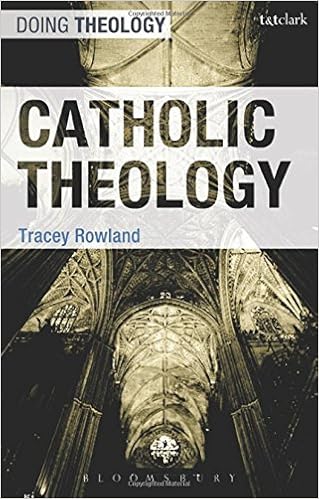
In a way, I wish that I had 30 copies of this, to give to the seminarians and deacons of the diocese in August.  Instead I chose Tracey Rowland’s terrific new book Catholic Theology.  

US HERE – UK HERE

But I digress.

Next, as a perfect counterpoint to the LutherFest book, a kind reader sent something about which I have already written and which is also advertised on the side bar.

IMG_1918

This is a truly lovely book, informative and engaging.  A great tool for learning about our Latin liturgical tradition and the older, traditional form of Holy Mass.

This is Treasure and Tradition: The Ultimate Guide to the Latin Mass

IMG_1919

Some pics.  Remember, that reverent and faithful sacred worship is doctrine, a great counter to heresy.

IMG_1925

IMG_1920IMG_1921

IMG_1923

IMG_1924

The illustrations are plentiful and lush and interesting.  It would be a great gift to someone who may be thinking about the TLM.  Or… if you are going to invite someone to a TLM for the first time, perhaps get them a copy of this book.

Posted in Our Catholic Identity, REVIEWS, The Campus Telephone Pole | Tagged , , ,
11 Comments

Wherein Fr. Z relates a brutal tale of sudden realization and horror

once upon a timein S. California, in the exotic periphery of Bakersfield, a priest friend zoomed up to the door of where I was staying and gruffly said, “Get in the car!”.
“Ralph!”, quoth I, “Is something wrong?”

“Just get in the car!”, he grumped.

I was used to this, since he occasionally did this sort of thing and in this sort of way. I, compliant, grabbed what I knew I might need for a longish Adventure With Ralph and, obediently, got into the car.

Off we went.  I tried to wheedle our destination and mission from him, but he was stoic.

Soon we pulled into the driveway of the Kern County Juvenile Detention Center.

“So someone is in trouble after all,” I thought in my innocence.

Little did I realize that my innocence was about to be deluded.

“Get out of the car,” he growled, as his own door swung open.  I, dutiful, obeyed.

“Take a good look,” he snarled.  I, docile, looked.

I intently studied the Kern County Juvenile Detention Center.

“Get in the car!”, he barked.

“Ralph!”, quoth I, “What…?”

“Just get in the car!”, he grumped.

Off we went, down the drive, through side streets, on to southbound I-5 towards the Grapevine and smoggy Los Angeles beyond.

It’s not a short drive to LA so I had ample time to contemplate my recent visual experience of the architectural splendors of the Kern County Juvenile Detention Center.

Ralph, as his name suggests, was a pretty good conversationalist, God rest his soul.  So we chatted about many things, except where we were going and why we were going there.

Over the Grapevine and down into the hot sprawl of that ghastly city we drove, reaching the city center.  Having wound through various streets Ralph plunged the car down into an underground lot.

Mere minutes later we were escalated back into the heat and sunshine onto a largish open paved square.  Turning, I beheld it for the first time in my life.

The sight took the breath from my lungs.  It was, quite simply, one of the ugliest buildings I have ever seen.

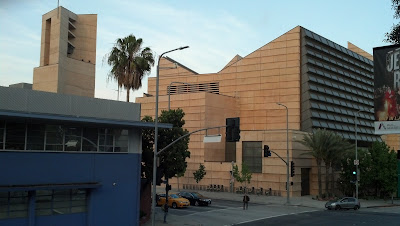
The RogMahal.  The TajMahony.  The Yellow Armadillo.  The Cathedral of Los Angeles, Our Lady of the Angels.

“What do you see?”, Ralph rumbled.

It was obvious. Inescapable.

“The Kern County Juvenile Detention Center.”

___

I write this today, for the record, because I saw at the site Gloria Romanorum some photos of the LA Cathedral in all its brutality.  My experience flooded back.

Just so that you know what I am talking about….

The Kern County Juvenile Detention Center

kern country juvenile detention center

The LA Cathedral.

Epilogue:

Ralph, mischievous, then brought me to gaze upon the horrors of the LA Opera House.

By now, you are wondering if he had a heart at all.

Subsequent to my brutally eye-opening treatment, we visited the LA County Museum, took a look at the Union Station, visited a couple of charming old churches, and then had supper at a place he knew would serve me my first authentic taste of mole.  Thus, the blows to my soul were salved.

But never will I forget my first glimpse of, quite simply, one of the ugliest buildings I have ever seen.  It will forever be fused in my mind with growling Ralph and The Kern County Juvenile Detention Center.

They returned home tired but happy the end


Posted in Lighter fare | Tagged
28 Comments

Latinists! A great opportunity in June

I’ve been in touch with the folks who are organizing Sermo Fidelium (Talk/Language of the Faithful).

This will be a few days in a truly beautiful setting for Latinists and students of Latin to spend time together latine loquentes. The dates 13-17 June.  It is remarkably inexpensive.

I was invited to come to be able to celebrate Mass for the group and preach in Latin. Alas, I had a conflict in my schedule. But I really wanted to go, especially after looking at the place and the program.

Check it out. HERE

Posted in Events, The Campus Telephone Pole | Tagged ,
Comments Off on Latinists! A great opportunity in June

ASK FATHER: Am I obliged to do the strange penance Father gave during confession?

penance_confession_stepsFrom a reader…

QUAERITUR:

When I went to confession the priest asked me to watch a certain movie for my penance. I have done a search for it but what I found (trailers) seems contrary to the faith, very progressive/liberal ideas. Am I bound to do this penance? Thank you for your help.

In my judgment, no, even though that really could be “penance”, in more ways than one.

Priests must give penances to penitents and penitents are obliged to fulfill penances themselves (can. 981).  However, the penance should be clear, reasonable and doable in a reasonable period of time.

It should be clear: “Think a nice though about someone,” isn’t clear.  How do you know when you have done it?

It should be reasonable: “Rebuild with your own hands old St. Ugthred’s Church, which has been abandoned since 1923.”  Most people can’t do that.

It should be doable in a reasonable time frame: “Say the rosary for 100 days… Travel to the Shrine of Our Lady at La Vang, Vietnam… Next Easter Sunday (months away) do… Obtain and watch this questionable movie which I like and watch it….”

Getting and watching a movie isn’t commensurate with, say, saying a chaplet of the rosary or reading a specific Scripture passage for a few minutes.  For one thing, unless it is free, he has asked you to spend money.  Next, you may not have the means to watch it.  Also, are you supposed to watch it without blinking?  What if you have to make supper for your children and, therefore, must needs interrupt the movie?  What it you don’t want your children to see it, but can’t stay up late to watch it alone?

Look. A priest can give whatever penances he can get away with, I guess.   If the penance is too onerous or impossible, or too vague, you can, as a penitent, ask for a something clear and doable.

In my opinion it is – in general – a bad idea to propose (and that is what assigning a penance is, a proposal which the priest is obliged to propose) something that the penitent cannot do easily and in a short period.

In the counsel part of a sacramental confession a priest might usefully advise someone to seek therapy, or to attend AA, or to join Weight Watchers, watch a movie, or to frequent meetings of Liturgical Ad-Libbers Anonymous (LALA). Those suggestions or counsels, not good penances.

Fathers… especially you NEW priests being ordained in this season… assign something the penitent can complete before leaving the church.  Thus, short prayers are good penances.

The moderation queue is ON.

Posted in "How To..." - Practical Notes, ACTION ITEM!, GO TO CONFESSION, Liturgy Science Theatre 3000 | Tagged , ,
19 Comments

A Pope in hell?

St. Peter Celestine

Today is the feast of St. Peter Celestine, Pope Celestine V, who famously resigned the papacy.

One of the fascinating people in our Catholic family history.

Pietro da Morrone, born c. 1215, in the Molise area of central Italy, came from a family of peasants.  He entered a Benedictine monastery and later became a hermit.  Peter eventually guided a community of hermits modeled along the lines of the Cistercian Benedictine rule.  He was well-known for his holiness and his acclaimed ability to heal.

With the death of Nicholas IV, the see of Peter was vacant for three years.  Pietro was eventually elected “by inspiration” in 1294. He took the name Celestine.
Celestine came out of the blocks with a strong spiritual program.  He created 12 cardinals, the number of the apostles, including 5 monks.  Celestine was inspired by the musings of Joachim de Fiore.  Celestine probably wanted to ring in a new age of the Spirit, with a strong monastic dimension, in preparation for the end times.

In a loose way, perhaps we can see today the rise of “movements” and some of the charismatic elements of these movements – as we still emerge from the horror of the 20th century and battle the dictatorship of relativism, as being part of a pattern that repeats itself through our history after the Ascension of the Lord, the end times.  Every generation has sensed itself to be in the end times.  But I digress.

Poor Pope Celestine couldn’t hold it all together.  He abdicated on 13 December 1294 after only 5 months as Pope.  The cardinals elected Benedict Caetani, who took the name Boniface… Boniface VIII.

The former Pope-monk but once-again-Peter fled Rome and went to his hermitage back in the hills of central Italy and Apulia.  He tried to get out of Italy to Greece, but he was apprehended in June 1295 and brought to Boniface.  Boniface imprisoned him.  Peter Celestine died a year later on 19 May 1296 and was buried in L’Aqulia.

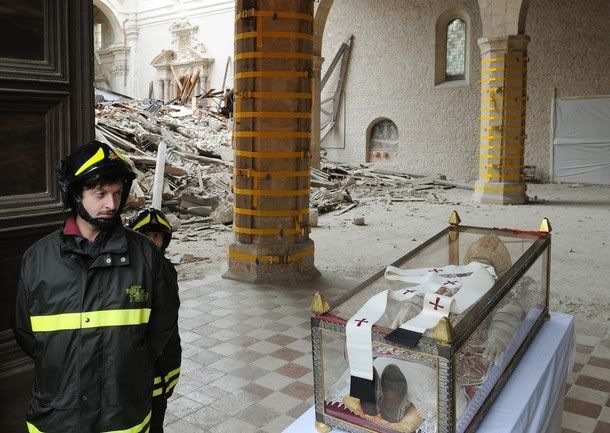
He was canonized in 1313.  He was removed from the universal calendar of the Roman Church in 1969, but he is still venerated in the Abruzzi area of Italy.  The church in which he was interred was damaged in the earthquake that rocked central Italy some time ago.

Benedict XVI visited the church.  More on that, below.

Dante, in his Divine Comedy, in Inferno 3, places in hell someone whom we think may be Peter Celestine V.  Dante calls him “the shade of him who in his cowardice made the great refusal”.  “The great refusal” being the rejection of the highest office to which one might ascend in this world, with all the duties and responsibilities and implications for the bonds of society that that office carries.

Remember that the Divine Comedy is about, among other things, the interrelationship of the secular and the sacred.  Dante was writing political theory in the Divine Comedy.  His Hell is constructed to reflect the ways in which people harm not just themselves, but also the bonds of society.

Dante would have hated Peter Celestine’s abdication also because he opened the way for Dante’s great enemy Boniface VIII, whom he detested.

If you have never read the Divine Comedy, you should.

You could start with Esolen’s (Part 1, Inferno HERE) or perhaps with Dorothy Sayer’s fine version (Part 1, Inferno, HERE).  There are many renderings to choose from.

When Pope Benedict visited the tomb of Pope Celestine he left his palium there, that first one he used, the longer paleo-palium.

An interesting gesture.  O, my prophetic soul.

From the 2005 Martyrologium Romanum:

6. Ad Castrum Fumorense prope Alatrium in Latio, natalis sancti Petri Caelestini, qui, cum vitam eremeticam in Aprutio ageret, fama sanctitatis et miraculorum clarus, octogenarius Romanus Pontifex electus est, assumpto nomine Caelestini Quinti, sed eodem anno munere se abdicavit et solitudinem recedere maluit.


Posted in Linking Back | Tagged
6 Comments