
Today is Childermas, the Feast of the Holy Innocents.
Lully, lulla, thou little tiny child,
By by, lully lullay, thou little tiny child,
By by, lully lullay.
O sisters too, How may we do
For to preserve this day
This poor youngling,
For whom we do sing,
By by, lully lullay?
Lully, lulla, thou little tiny child,
By by, lully lullay, thou little tiny child,
By by, lully lullay.
Herod, the King, In his raging,
Charged he hath this day
His men of might,
In his own sight,
All young children to slay.
Lully, lulla, thou little tiny child,
By by, lully lullay, thou little tiny child,
By by, lully lullay.
That woe is me, Poor child for thee!
And ever morn and day,
For thy parting
Nor say nor sing
By by, lully lullay!
The “Coventry Carol”, a lullaby of mothers to doomed children, dates to the 16th century. It was part of a Mystery Play, “The Pageant of the Shearmen and Tailors”, about chapter two of the Gospel of Matthew. The carol is about the Massacre of the Holy Innocents. The carol came to greater popularity after the BBC broadcast it at Christmas of 1940, after the Bombing of Coventry: it was sung in the ruins of the bombed Cathedral.
We could sing it on every street corner.
There is sometimes attributed to St. Augustine a quote about the Holy Innocents with some beautiful imagery. Here it is… mind you, attributed to the Doctor of Grace:
These then, whom Herod’s cruelty tore as sucklings from their mothers’ bosom, are justly hailed as “infant martyr flowers”; they were the Church’s first blossoms, matured by the frost of persecution during the cold winter of unbelief.
Lovely, no? Augustine didn’t say that. It was Caesarius of Arles who preached:
Quos herodis impietas lactantes matrum uberibus abstraxit; qui iure dicuntur martyrum flores, quos in medio frigore infidelitatis exortos velud primas erumpentes ecclesiae gemmas quaedam persecutionis pruina decoxit. [s. 222, 2 in CCL 104]
 Some interesting things are going on in the Latin. First, you need to know that gemma isn’t just “gem”, but can also be “bud, blossom”. In Latin there are two related verbs, lacto, lactare, “to contain milk, to give suck”, and lacteo, lactere, “to suck milk, to be a suckling”. However, in all periods they swap meanings. We could use one English verb for both, “to nurse”. This is also why we for the famous line “out of the mouth of infants and of sucklings” both “ex ore infantium et lactentium” and “ex ore lactantium”. By the way, if you like this drilling into Latin, try Latin Synonyms, with Their Different Significations, and Examples Taken from the Best Latin Authors, by M. Jean-Baptiste Gardin Dumesnil, translated into English, with additions and corrections, by the Rev. J. M. Gosset. US HERE – UK HERE Decoquo is “to reduce by boiling”. I found an interesting reference in Suetonius how Nero made a icy-cold drink decoction, a decocta. Pliny uses decoctum as a medicinal drink. Note the juxtaposition of the heat indicated in decoquo and the cold of frost. The heat of persecution brought forth flowers before their day. Here is a literal rendering:
Whom the ungodliness of Herod dragged as nursing babies from their mothers’ breasts; who rightly are called the flowers of martyrs, whom the frost of persecution cooked up, grown up in the midst of the cold, bursting forth as the first buds of the Church.
Here is the Collect from the 1962 Missale Romanum:
Deus, cuius hodierna die praeconium Innocentes Martyres non loquendo, sed moriendo confessi sunt: omnia in nobis vitiorum mala mortifica; ut fidem tuam, quam lingua nostra loquitur, etiam moribus vita fateatur.
O God, whose public heralding the Innocent Martyrs professed this very day not by speaking but by dying; mortify in us every ill of vices; so that (our) life might confess Your Faith, which we speak with our tongue, also by (our) morals.
Look at the not-so-subtle change made to the Collect by the cutters and pasters who glued together the Novus Ordo:
Deus, cuius hodierna die praeconium
Innocentes Martyres non loquendo,
sed moriendo confessi sunt:
da, quaesumus, ut fidem tuam,
quam lingua nostra loquitur
etiam moribus vita fateatur.
Can you spell “bowdlerize”?
LITERAL VERSION:
O God, whose public heralding the Innocent Martyrs
professed this very day not by speaking but by dying;
grant, we implore, that (our) life might confess Your Faith,
which our tongue declares,
also by (our) morals.
That lingua nostra could, I suppose, be ablative, but it is probably the nominative subject of loquitur. I originally swerved that into “which we speak with our tongue”. There is a strong temptation to reconstruct these clauses when rendering it into English.
NEW CORRECTED VERSION:
O God, whom the Holy Innocents confessed
and proclaimed on this day,
not by speaking but by dying,
grant, we pray,
that the faith in you which we confess with our lips
may also speak through our manner of life.
Did the translator not get that fateor is deponent? The subject is vita, no? Accusative fidem is the object, not the subject.
What a mess.
OBSOLETE ICEL:
Father,
the Holy Innocents offered you praise
by the death they suffered for Christ.
May our lives bear witness
to the faith we profess with our lips.
I’ll stick with the older Collect in Latin, thank you very much.
St. Thomas Aquinas dealt with the question of how the Innocents could be considered martyrs if they didn’t yet have use of their free will so as to be able to choose death in favor of Christ and if they were not baptized. The Angelic Doctor answered that God permitted their slaughter for their own good and that their slaying brought them the justification and salvation that would also come from baptism.
This was a “baptism of blood”. In their deaths they were truly martyrs. And they were indeed for Christ, since Herod, fulfilling the prophecy of Jeremiah 31:15, killed them from ill-will for the new-born Christ.
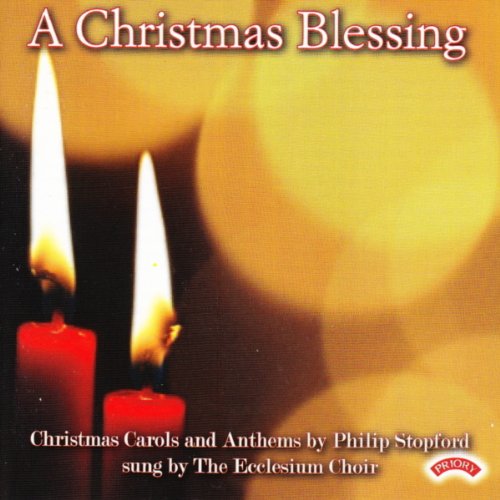
And a modern reworking of Lully Lulla Lullay by Philip Stopford which might quite simply make you choke up and then, at the descant about 3:15, lose it.
Like it?
US HERE – UK HERE
 I haven’t posted about Ham Radio lately. I haven’t been active. I have no “shack” at the moment here in the Cupboard Under the Stairs. (No bird feeders, either… though I do have a stove, now. That’s something.) However, I had an evening with my local Elmer which was very pleasant. He had some great keys, which has made me get motivated again. I can at least work on Morse Code. I still must figure out how to get an antenna up. There was a plan, and then God, through weather, took out my target tree just as I gathered the necessary parts. Grrrr. A dramatic example of


 From a priest…
 From a reader… already…
 I have occasionally exhorted you to …
 The person confessing should not be visible to the priest as they approach or leave, he continued.




 From a reader…
 I suspect it’s use stemmed from Ps 23: “Virga tua et baculus tuus consolata sunt… Thy rod and thy staff they have comforted me.” The sight of these churchy gizmos would have given great confidence and consolation to the penitent or one seeking an indulgence; he would know that this confessor had greater jurisdiction.




























