I received this. It may be helpful to some of you.

Frankly, quite a few seriously meaningful notes have come.
This is a fruit of The Present Crisis that the Enemy probably didn’t foresee.

I received this. It may be helpful to some of you.
Frankly, quite a few seriously meaningful notes have come.
This is a fruit of The Present Crisis that the Enemy probably didn’t foresee.
 Was was alerted to an item in German. It seems that Gerhard Ludwig Card. Müller gave quite the sermon last Saturday in Rome for the ordination of Michael Sulzenbacher, SJM.
The whole text in German is on kath.net
Here are some of the most important parts…
On the current crisis:
But the Church, founded by God and made up of human beings, is, according to its human side, in a deep, man-made crisis of its credibility. In this dramatic moment, we suspect and fear the possible negative consequences of scandals and leadership mistakes. Involuntarily we think of the splitting of Western Christendom in the sixteenth century or the secularization of spiritual life in the wake of the Enlightenment and the French Revolution.
On the causes:
Not clericalism, whatever that may be, [Do I hear an “Amen!”?] but the turning away from the truth and moral lawlessness are the roots of the evil. [One particular lawless sin, as a matter of fact, and then complicity of the corrupt who covered it over.] The corruption of teaching always entails the corruption of morality and manifests itself in it. The grave rejection of the sanctity of the Church without remorse is the result of relativizing the dogmatic foundation of the Church. [For example… that adulterers can receive Communion ultimately will lead to approbation of homosexual perversion… at any age.]
On reforms:
What is behind the iridescent and media-friendly propaganda formula “reform of the Curia and the whole Church”, if not – as I hope – the renewal in the truth of the revelation and the following of Christ is meant? It is not the secularization of the church, but the sanctification of men for God, that is the true reform. [Do NOT miss THE BOOK! More below.]
It is not reform but a heresy to think that the doctrine of the Church can be kept, but for the sake of the weak man one must invent a new pastoral which diminishes the claims of the truth of the Word of God and of Christian morality. [After all, what the Church (and Christ) teaches are just ideals that not everyone can be expected to live up to! We have to show mercy and condone the sin while denying that God offers everyone sufficient graces to live holy lives.]
On the mission of the Church
The Church does not gain in relevance and acceptance when she adds the drag of the spirit of the times (Zeitgeist) to the world, but only when she brings the torch to her with the truth of Christ. We should not care about secondary issues and work on the agenda of others who do not want to believe that God alone is the origin and the sole purpose of man and of all creation.
For the real danger to today’s humanity is the greenhouse gases of sin and the global warming of unbelief and the decay of morality when no one knows and teaches the difference between good and evil. The best environmentalist and nature lover is the Gospel Herald that there is only survival with God, not just limited and soon, but forever and ever.
Note well that Card. Müller is quite concerned about the environment! He didn’t go down the rabbit hole that another Cardinal wants us to avoid. No no. Müller faced head on the real dangers of green house gasses and global warming.
¡Hagan lío!
THE BOOK

At Crisis there is a thoughtful piece about fatherhood and how priests are assigned to parishes.
Permanent Assignments for Parish Priests Long Overdue
The first part of the article is a something that every young man looking forward to marriage and fatherhood should read. Seriously. Take the time.
Quite a bit long the way, after talking about fatherhood, he gets to the topic of how priests are assigned.
It is a good juxtapositioning.
I’ve long contended that the way that parish priests are assigned – as pastors – in these USA has been undermining the identity of priests and harming vocations to the priesthood. In most US dioceses – I think that is safe to say – a practice has been adopted of assigning priests for a short term, such as 6 years, with the possibility of renewing the term once for a total of twelve.
From what I’ve seen, problems follow.
Sure, it is necessary to move and remove certain guys, find the right match, etc. That will always be the case for obvious reasons. But the downside of sort terms is far farther down than is good for any of us.
This is something that was perpetrated in a JESUIT church in NYC, the once and still mostly beautiful St. Francis Xavier, which is part of a large and once important High School.
Watch and bite your lip till bloody. This was in 2017. PENTECOST.
On Sunday June 4, 2017…parishioners at The Church of St. Francis Xavier in New York City were asked to let loose and “celebrate” in honor of Pentecost. Father Bob VerEecke blasted Kool & The Gang’s 1980’s hit “Celebration” and asked his congregation to “abandon care to the wind” and join him in THE WAVE!
An NYPD cop friend who went to that school wrote to me:
That’s unbelievable. It’s offensive. Ignatius is probably embarrassed. Kool and the gang is probably mortified as well
Not to mention God the Holy Spirit!
Run, don’t walk, to my Papa Ganganelli page with great swag. Clement XIV suppressed the Jesuits in the 18th c.
>>HERE<<


UPDATE:
But wait… there’s more. Here’s the guy who did that… thing in church.
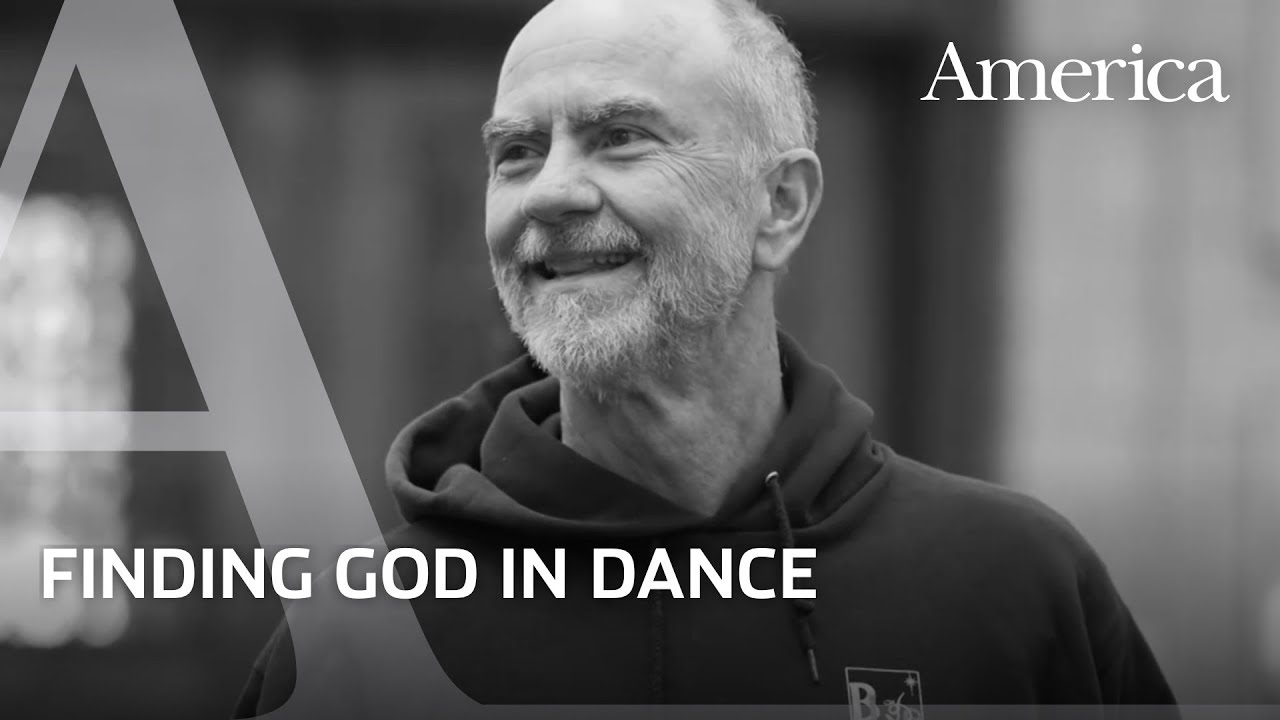

He keeps using the word “dance”. I don’t think that “dance” meant the same thing to the early Jesuits as it does to him.
Perhaps he will be joined by this fellow.
Noooo… on second thought the video of the openly “gay” Jesuit candidate would just pointless.
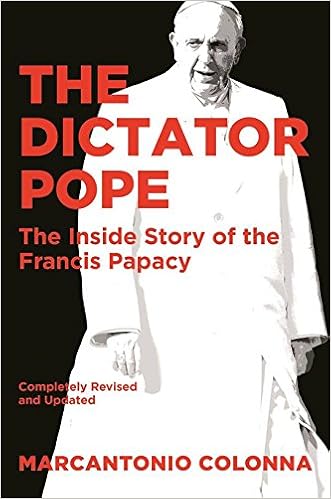
From the Twitter feed of the author of The Dictator Pope.
1) IMPORTANT NEWS: my sources confirm that Archbishop Viganò is now living in fear of his life, quite literally. As everyone knows, Archbishop Viganò went into hiding after his explosive revelations. But he is not just trying to avoid canonical reprisals…
2) He has confided to his friends that he now has good reason to be in fear of his life. We need to reflect on what this implies. If, six years ago, Dan Brown had published a novel telling the present story just as it is, he would have been ridiculed as presenting…
3) … a grotesquely sensationalist picture of the Catholic Church. This is the measure of what Pope Francis has achieved in just five-and-a-half years. He has taken the Church back to the age of the Borgias, with all the disembellishments of the twenty-first century.
4) And things are only going to get worse.
CLARIFICATION: With respect to my earlier tweet, I can indeed confirm, based on impeccable inside sources, that Abp. Viganò is not only in hiding, but that he fears for his life. However, I am not privy to the reasons for his anxiety about his safety. Henry Sire
The book…
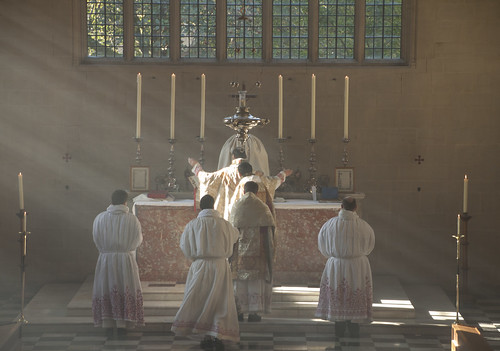 From a priest…
QUAERITUR:
On Sunday, even after concelebrating a conventual Mass with the Dominican Friars, I was drawn to assist at an E.F. Mass at a local FSSP parish, and I’m glad I did.
Which brings me to my question: Does S.P. allow for a Dominican tertiary priest to celebrate the older Dominican Rite Mass, or do I need to seek faculties to do so? Since I’m a doctoral student specialising in the Trinitarian theology of St Thomas Aquinas, I would be glad to have opportunities to celebrate the older Dominican Rite Mass so as to contemplatively absorb what I’m learning.
That’s a good question, to which I know not the answer. I think there are well-informed Dominicans around here who could help.
My instinct is to underscore that, though you are a tertiary, you are a diocesan priest of the Latin Church and that your Rite is the Roman Rite. That’s your mainstay.
I suspect that, as a tertiary, you would be able to celebrate the Dominican Rite especially with Dominicans. Whether or not you can do it, as an option, as a diocesan, is unknown to me.
I find myself once again in The City of Big Shoulders, Chicago. The last couple of days have been fascinating, as I have met an interesting priest with an interesting story and had the chance to hear about what some lay people are doing – or plan to do – in these parts about The Present Crisis.
As I have commented before, a great deal of the clean up of The Present Crisis will be (must be) driven by lay people, who have, above all, numbers, and who have, ultimately, the money.
This will be a two-edged sword.
The sword, I think, has been drawn.
What I am picking up – I wonder if you priests and bishops out there are picking this up – is that lay people are angry in a way that I’ve never seen.
This leads me to the next point.
At The Weekly Standard there is a piece by Mary Eberstadt about what has been, is and will be going on for a while. She really nails it. After considering the way The Former Crisis was handled in the early 2000’s, she gets into the present, looking at language and how it is being used by the catholic left to deflect the cleansing of the Church that must be accomplished away from the true causes of the filth.
They’ll do anything, it seems to prevent us from dealing with homosexuality. I’m sure that’s because they are self-interested.
Here are some choice bits:
[…]
Another word that continues to cloud rather than illuminate is homophobe, and its related variants, homophobia and homophobic. Inside parts of the church, and ubiquitously outside it, homophobe has become an automatic smear deployed for partisan purposes. We see this clearly by observing that related teachings of the church are not similarly made into epithets. Do people speak of contracept-ophobes, to criticize church teaching against contraception? Do they decry klepto-phobes or forni-phobes?
The fact that those other words aren’t in circulation shows that homophobe is meant to shame, intimidate, and sideline apologists for the magisterium. Homophobe, like gay, has become a political term, not a spiritual one. It’s an epithet, not an argument.
Words are never a matter of indifference. As Aleksandr Solzhenitsyn insisted, we aren’t obliged to participate or even to acquiesce in false accounts of reality. [That’s what libs insist on: you must deny facts in front of your eyes.] If we can’t speak clearly and plainly, we can’t think clearly and plainly. And if we can’t think clearly and plainly, we will never be able to reduce the damage being done in the house of God by the pachyderm trying to wreck it from within.
[…]
Today the moral coin is flipped: It is the antagonists of tradition-leaning Catholics who are trying to look the other way and carry on against overwhelming evidence that there’s nothing to see here.
They’ve also put new slurs into circulation. Some of the people uncovering the truth have been disparaged as haters, for example, including by Fr. Antonio Spadaro, who is presumed by many to speak for the pope. Haters, like homophobe, is an epithet imported from the antinomian secular political culture. Its suggestion that some people are beyond redemption is profoundly un-Christian. It should never be used by anyone in religious authority.
Another slur is even worse than haters. Many agonized Catholics desiring only to know whether allegations are true are now accused of participating in religious treason—of planning a “putsch” within the church, as Michael Sean Winters has put it in the National Catholic Reporter. Or consider some characterizations of the testimony of Archbishop Carlo Maria Viganò, former nuncio to the United States and author of a historically unprecedented and detailed 11-page letter released last month, accusing the pope and others of covering up abuse. Theologian Massimo Faggioli has called the work a “coup operation.” Fr. James Martin has tweeted similarly of a “coordinated attack” intended to “delegitimize” the pope.
This list could go on and on. Such martial language is designed to marginalize and malign anyone interested in the veracity of Viganò’s claims. It also sends the terrible signal that some churchmen and theologians underestimate the sufferings caused by unchecked abusers hiding behind Roman collars. The increasingly hysterical insistence that all will be well if only everyone leaves the pope alone underestimates the intelligence of the laity. [Do I hear an “Amen!”?] Anyone who has read Viganò’s letter knows that the testimonial isn’t some anonymous comment tossed into cyberspace but a series of intricate assertions about who knew what and when—all of which can be verified or not in the long run. That bishops and others in authority have testified to the credibility of its author makes the document even harder to discredit, let alone ignore.
[…]
First, clerical leaders around the world who do believe in a hereafter must avoid further scandalizing the remaining faithful. They must grasp that just as the scandals themselves have become an engine of secularization, so too has the refusal to address them.
[…]
But in this grave moment for the church, the laity knows more than it did 16 years ago. Back then I wrote, “If humility is now required of Catholics, so too is backbone. If it takes shutting down certain seminaries to protect boys of the present and future, close them now. If vocations to the priesthood should be so far reduced by stringent screening for abuse victims that American Catholics have to travel 50 miles to Mass, let them drive.” [You mean like some trads have been doing for years just to find a Mass that isn’t filled with fluff or abuses?] Today, a laity forged in this latest round of scandal knows all too well that there are worse things for the church than a priest shortage. And thanks again to the Internet, the same laity is scrutinizing the hierarchy as never before.
[…]
There is a good deal more that you can explore on your own.
This is a good time to repeat my mantra.
No initiative that we undertake in the Church – including cleansing – will succeed if it does not begin with and return to our sacred liturgical worship of God.
We must revitalize our liturgical worship. This is URGENT. In turn, this will have a massive knock-on effect on priests and, with them congregations.
We have to get serious again about how we fulfill our obligations under the virtue of religion both individually and collectively. That means liturgy.
And by liturgy I don’ mean Mass! PLEASE, people, stop using the word “liturgy”… “the liturgy” if you are talking about Holy Mass. Mass is liturgy, but liturgy is more than Mass. Liturgy includes the liturgical hours and all manner of other rites.
We need a restoration of The Liturgy across the board, from top to bottom. That is why I am encouraged that some bishops have turned their eyes to liturgical calendrical moments in the Church’s year such as Ember Days. That’s a sign that, perhaps, in some places we might be sobering up after the decades of drifting on the halcyon vapors of the 60’s and the delusions about what was mandated and what was not by the Council Fathers.
The revitalization of our Catholic identity – isn’t that what we are talking about in This Present Crisis? – must come from revitalization of our collective formal liturgical worship of God. Then it must return to worship in an unending circle. Christ is the one who is the True Actor in every world and liturgical gesture. Our participation in those words and gestures have transformative power. This is TRUE “Liberation Theology”! Authentic active participation by active receptivity in serious and reverent and time-proven liturgical rites that tie across the gulfs of centuries, regions and even the door of death.
Fathers! Bishops!
LEARN THE TRADITIONAL ROMAN RITE.
Teach about it. Make it available. Use it often and oftener.
This is one of the greatest tools we have in The Present Crisis to help us do what needs to be done.
The brilliant Benjamin Wiker, author of the indispensable and highly entertaining (in an alarming way) 10 Books That Screwed Up the World: And 5 Others That Didn’t Help has penned a piece at the National Catholic Register (the non-evil NCR) about the various “lavender mafias”… yes, plural.
He writes:
Yes, you read that correctly. Lavender Mafias—the plural. The coercive network of homosexualization that has gained so much power within the Catholic Church hierarchy is just one of a number. To understand more fully the current crisis in the Church, we need to be aware of them all, since they all work together toward a homosexualization of the culture.
That there is such a thing as a Lavender Mafia in the Church used to be a rumor, but with the seedy revelations of the rise of Theodore McCarrick to the cardinalate, it’s now an established fact. Only the existence of a widespread network of protection and coercion in the highest reaches of the Church hierarchy could explain McCarrick’s ongoing power and prestige despite the fact that his homosexual proclivities were widely known among his fellow bishops and cardinals. Only such a network could make sense of McCarrick’s curial Teflon coating under Pope Francis’ watch that kept sanctions from sticking to him but not honors and advancements.
But if any doubt remains about the existence of a Lavender Mafia within the Church, the deeper investigation into the McCarrick affair called for by an increasing number of bishops and a flood of the laity, will reveal exactly how deep and wide such a network really is. One suspects that’s why there is so much stalling among the bishops, the cardinals and the Vatican.
[…]
Wiker goes on to identify other institutions which have been infiltrated by perversion.
Psychology
Academia
Hollywood
Was there a good point made in the sermon you heard during your Mass to fulfill your Sunday Obligation?
Let us know.
Today, I was struck by the collect and I put aside what I had prepared, for the most part.
Here is the audio. I left the re-reading of the Scripture pericopes in English and the Prayer for Vocations, and I cut the announcements.
One wag, after Mass, said that the sermon was good, but that it was “objective ineffective”, because it was more than 8 minutes long. Apparently Francis said that homilies longer than 8 minutes are not effective. Indeed.
Podcast: Play in new window | Download
Subscribe: RSS
 Is this prayer appropriate today or what?!?
I used it as a starting point for my sermon today.
This Sunday’s Collect prayer – in the Extraordinary Form:
Da, quaesumus, Domine, populo tuo diabolica vitare contagia: et te solum Deum pura mente sectari.
The phrase diabolica vitare contagia is a glory of the Latin Church’s millennial life of prayer.
Note the wonder assonance and the separate of diabolica from contagia by the verb, a use of hyberbaton.
This Collect, used for centuries in the post-Tridentine Missale Romanum, is in ancient prayer books such as the Liber Sacramentorum Gellonensis, a form of the Gelasian Sacramentary. It appears as the Collect for the Sunday after the Autumn Ember days (Spring in the Southern climes, though that wasn’t a consideration of the ancients). As such, it would have been a time of prayer and fasting and for ordinations.
Let’s check our vocabulary to see if we can find treasures beneath the surface.
I am sure you know the words “contagion” and “contamination”. In Latin we have, as our steadfast Lewis & Short Dictionary informs us, feminine contagio, onis, and neuter contagium, ii, or contamen, inis, which mean “a touching, contact, touch, in a good or bad sense”. It comes then to indicate “a contact with something physically or morally unclean, a contagion, infection” and thence “an infection, pollution, vicious companionship or intercourse, participation, contamination, etc.”. Surely those of you who were educated by the sisters or brothers lo those many moons ago in Catholic schools were warned to “avoid the company of bad friends”. Not only is your reputation tainted with their stains but you subject yourself to their “contamination” and the near occasion of sin.
Go with bad friends, and you go down.
We won’t get into the complicated idea of mens, which can mean “mind”, but also “heart, soul”, in fact the whole of the human person in some contexts. But we can glance at purus, the adjective for, basically, “clean, pure, i. e. free from any foreign, esp. from any contaminating admixture”. Obviously, this can refer not only to physical cleanliness, but also moral faultlessness. There are juridical and religious overtones as well. For example, for the ancient Romans a thing which is purus, such as a locus purus, a “pure place”, was not just undefiled, it was unconsecrated, not sacer. On the other hand, purus does also mean “undefiled”, in the sense that nothing dead had been there. There had never been a funeral or burial, etc. It is interesting how the Romans got down to brass tacks.
Then we have the verbs vitare and sectari. While a sector, m. is a “cutpurse”, the sort of bad friend you don’t want to follow around, the verb sector, deponent (passive form but active meaning) is “to follow continually or eagerly, in a good or bad sense; to run after, attend, accompany; to follow after, chase, pursue”. On the other hand, a vitor is, in fact, just a “cooper; basket-maker”. We are interested in vito, which is not the name of a character in The Godfather (well… it is and it isn’t). The verb vito means “to shun, seek to escape, avoid, evade”. The word sort of looks like it should be related to something having to do with “life”, vita. In reality, however, vito is shortend from vicito, having the root vic-, related to the ancient root wik in Greek eikô (“to yield”).
The important thing to follow, and not avoid, is that in our prayer there are contrasting pairs: contamination v. purity, avoidance v. association.
Each pair reveals our need to make choices and to persevere in what is right.
LITERAL TRANSLATION:
Grant, O Lord, unto Your people, to shun diabolical contamination: and with a pure soul to follow You, the only God.
ICEL (1973 translation of the 1970MR):
…
This collect barely survived the scalpel-wielding experts of the Consilium, who sliced and diced our orations under the surveillance of the late then-Fr. Annibale Bugnini. It was not in the typical edition of 1970 or the edito altera of 1975.
Then a miracle occurred.
The third edition, the 2002 Missale Romanum includes this Collect, though in nearly complete obscurity. It took me a while to hunt it up in the 2002MR. If you are interested, look in the section Missae et orationes pro variis necessitatibus vel ad diversa, subsection Ad diversa, 48. In quaecumque necessitate, scheme “C”, “Aliae orationes (shortcut, go to p. 1152). The 1970 and 1975MR, both, had two schemes for Masses In quacumque necessitate (“In whatever necessity”). In the 2002MR a third was added.
The redactors of the newest edition added quite a few things, such as new schemes for vigils of important feasts and the “Prayer over the People” on the days of Lent. It is as if they recognized that too much had been lost to the Novus Ordo. Of course with the promulgation of Summorum Pontificum we can make use of the 1962 Missale Romanum and celebrate the sacred mysteries also in light of all we have learned of the ars celebrandi in the intervening decades.
CURRENT ICEL (2011):
Grant, we pray, O Lord, that your people may avoid the contagion of the devil and follow you, the only God, in purity of heart.
As I read and reread the Latin, and then the literal English version, the Biblical imagery of faithlessness as “adultery” or “prostitution” came to mind. The relationship between the People and God was conceived as an exclusive covenant like a marriage bond.
When the People of Israel were faithless to God they are described as “going with”, so to speak, false idols, “whoring after” other gods. Think for a moment of Jeremiah 3:6-11 wherein the people go up the mountains or under every tree like a prostitute.
Could that pertain to some leaders and assemblages of God’s Holy People today? But I digress.
It seems to me that we are dealing in this prayer with the time-hallowed warning of Christians to shun the three great temptations that corrupt the rational soul (mens) and pull it away from communion with the Holy Trinity. The three contaminations are mundus, caro et diabolus, “the world, the flesh, and the devil”.
A solid reference to the trio is found in a sermon of a pseudo-Augustine, but it becomes a solid reference in late-antique and mediaeval spiritual thought. The influential theologian Peter Abelard (+1142) puts it succinctly in his Exposition of the Lord’s Prayer: “Tria autem sunt quae nos tentant, caro, mundus, diabolus… For there are three things which try us: the world, the flesh, the devil” (petitio vi). St. Bernard of Clairvaux (+1153) speaks of this deadly trio, as does St. Thomas Aquinas (+1274). It is no surprise that the post-Tridentine Missale would include this prayer, for this was part of the warp and weft of Catholic spirituality. The Sixth Session of the Council of Trent wrote, with heavy reliance on St. Paul, in its 1547 Decree on Justification about perseverance:
He that shall persevere to the end, he shall be saved, (Matt 10:22; 24:13) which cannot be obtained from anyone except from Him who is able to make him stand who stands, (Rom 14:4) that he may stand perseveringly, and to raise him who falls, let no one promise himself herein something as certain with an absolute certainty, though all ought to place and repose the firmest hope in God’s help. For God, unless men themselves fail in His grace, as He has begun a good work, so will He perfect it, working to will and to accomplish. (Phil 1:6, 2:13) Nevertheless, let those who think themselves to stand, take heed lest they fall, (cf. 1 Cor 10:12) and with fear and trembling work out their salvation, (Phil 2:12) in labors, in watchings, in almsdeeds, in prayer, in fastings and chastity. For knowing that they are born again unto the hope of glory, ( cf. 1 Pet 1:3) and not as yet unto glory, they ought to fear for the combat that yet remains with the flesh, with the world and with the devil, in which they cannot be victorious unless they be with the grace of God obedient to the Apostle who says: We are debtors, not to the flesh, to live according to the flesh; for if you live according to the flesh, you shall die, but if by the spirit you mortify the deeds of the flesh, you shall live. (Rom 8:12ff)
The language, and therefore the concepts, of those formative ages of our Catholic faith and spirituality are very much at risk today. But it is being recovered and reconsidered, especially in the wake of Pope Benedict’s efforts to reinvigorate our Catholic identity in continuity with our profound past.
Of course, there are those who vigorously seek to snuff out all mention of these categories. It is unfashionable in many circles to speak things so distasteful as the sort of temptation to which you can’t, with just a sly wink and hint of naughty struggle, simply give into along with everyone else.
To remind people of sin, guilt, and their eternal consequences is now rude, especially from pulpits in many parishes and cathedrals. If you speak of the devil and sinful temptations, and the contamination of the soul – as if it isn’t always and automatically pure – you are considered a throwback to an era before modern man grew up.
“No longer do we grovel! The old bogey-devil won’t drive us down to our knees! (But then neither does the Blessed Sacrament.) How feudal! I choose what my boundaries are. I choose when to receive Communion, with our without reference to the “official” church.”
As a consequence, what sense does it make in some circles now to speak of “perseverance”?
When we are our gods, what sense does it make to speak of all these distasteful, out-dated categories with which shriveled up old men tried to scare us, as a wicked uncles might terrify mere children?
I respond saying that the Enemy of the soul seeks our destruction.
He seeks to thwart God’s design and our own best destiny of bliss in heaven by guiding us away from the only God down into false gods, created things. The Enemy seeks to accompany us, lead us, delicately into the ways of the world of which he is the prince, tempt us in our appetites and passions, so hard to control after the Fall he originally provoked, draw you into infidelity.
And for what?
In his eternal sickness of angelic malice Satan yearns to crow over your fallen soul, damned to eternal separation from God in hell and amidst the unending agony to boom heavenwards in a twisted oration: “Here’s another victory You will now not have!”
Each day sets choices before us. Most of the time they are rather simple, even black and white. Only rarely are we ever truly at a loss as to what is right or what is the wrong thing to do. Our habits and passions make our choices more difficult, as does the wound to our intellect.
But Holy Church gives us the guidance of authority, which steers our still marvelous ability to reason. We have not just intellect, but our Faith as well. We are not alone, but God gives us graces.
Today’s prayer gives us insight in an important dimension of our lives: contamination in sin v. purity with God – avoidance of sin and the Enemy v. association with God.

Coat of Arms by D Burkart
 happymom on ASK FATHER: For Benediction why the humeral veil?: “This gorgeous post deserves a gold star!”
 on Wherein Fr. Z rants. Benediction using the humeral veil BUT… blessings at Communion time? Fathers! THINK!: “@Fr. Reader: I’m from South America. Many things that are now customs were imported via people consuming US media (so…”
 on A few things I found today that I think are interesting: “I used to be rather horrified by Sagrada Familia. And then, when I was in Barcelona, I went in. That…”
 on Brooklyn 26/6 – Day 2: CHINESE: “As one who loves Chinese more than the rest of my family (for the most part), I love finding good…”
 on A few things I found today that I think are interesting: “Agree with Archaic and Kenneth re: the (modern art)istry of the basilica/altar cards.”
 on Wherein Fr. Z rants. Benediction using the humeral veil BUT… blessings at Communion time? Fathers! THINK!: “My mother used to express her disgust at being in line for Communion and seeing the Priest’s hand that would…”
 on A few things I found today that I think are interesting: ““Trust has broken down.” Noooooo. Really? What isn’t captured in this statement though is that the break in trust is…”
 on Wherein Fr. Z rants. Benediction using the humeral veil BUT… blessings at Communion time? Fathers! THINK!: “As long as the ushers dismiss people pew by pew and architects keep spacing the pews so close together that…”
A Daily Prayer for Priests










They find you a pro-life agent in your area who commits to giving a portion of the fee to a pro-life group!

PLEASE subscribe via PayPal if it is useful. Zelle and Wise are better, but PayPal is convenient.
A monthly subscription donation means I have steady income I can plan on. I put you my list of benefactors for whom I pray and for whom I often say Holy Mass.
In view of the rapidly changing challenges I now face, I would like to add more $10/month subscribers. Will you please help?
For a one time donation...



Help Monks in Wyoming (coffee – UPDATED LINK) and Norcia (beer) and the wonderful "Soap Sisters" of Summit, NJ!


Please follow me on Twitter!










Visits tracked by Statcounter
since Sat., 25 Nov. 2006:

