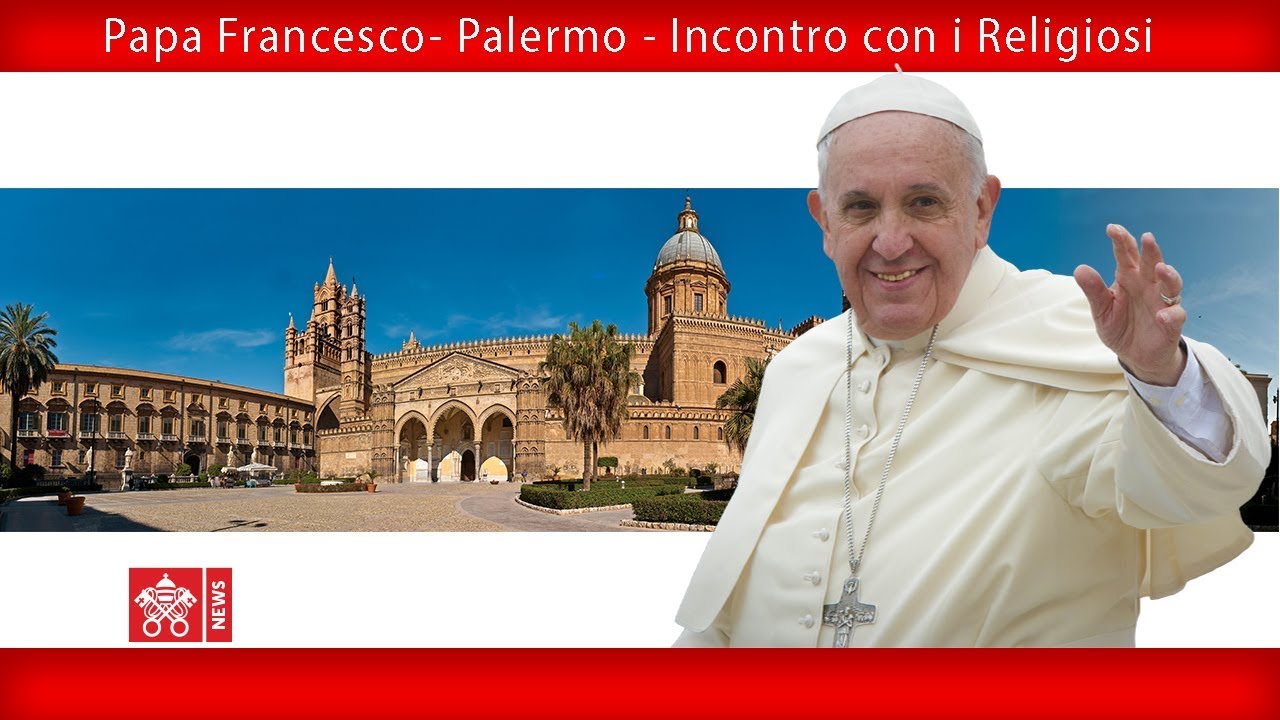
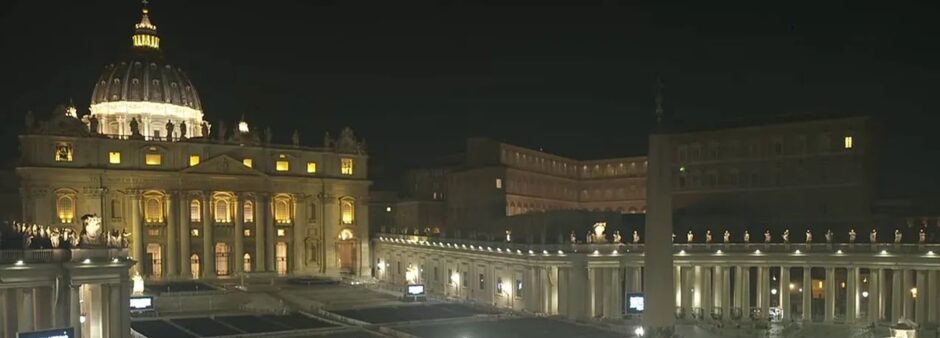
At end of youth meeting, no Apostolic Benediction from Francis.

I think I understand what he is getting at. However, I don’t think this is the better approach, especially with young people.

Perhaps “refused” isn’t the right word. “Demured”? “Declined”? “Balked”?

It is hard to imagine that anyone would be offended by “A Pope who acts like a Pope”. Popes do certain things. It is expected of them. People are not surprised or, if they are sane, offended by a Pope who, for examples, teaches the perennial teaching of the Church on faith and morals, puts on certain vestments, or gives the Apostolic Benediction at the end of an audience of any kind. The only think that might surprise of offend would be a “A Pope who acts like a non-Pope” or maybe, “A Pope who does not act like a Pope”.

It seems to me that when the Sunday Angelus is recited in St. Peter’s Square, there are lots of non-Catholics. At Wednesday Audiences and other papal events, lots of non-Catholics. So, should there by no Apostolic Benediction?

I think I understand what he was proposing. I can’t bring myself to agree with the choice.

Posted in SESSIUNCULA |
37 Comments

Francis to clergy, seminarians, religion in Palermo: “Clericalism… one of the most difficult perversions”

Francis made a pastoral visit to Palermo.  One of the events celebrated is the 25th anniversary of the death of Fr. Pino Puglisi, a venerated local figure.  He challenged the Mafia.  They killed him.

BTW… the infamous Stonewall Inn in NYC was started by the Mafia.

In one speech (not included in today’s public Bolletino for some reason – yet, at least), [It is updated HERE] Francis is said to have said in the afternoon when he visited the parish where don Pino was. He addressed the clergy, religious and seminarians.

“There must be banned every form of clericalism: it’s one of the most difficult perversions to get rid of today, clericalism is.”

Clericalism is one of the most difficult “perversions”?  A curious word to use.

When you hear “perversions” most people make the connection to things like homosexual acts.

I saw an embargoed text of a speech that Francis was to give in that occasion, which included part of that quote, above.  But it was a little different.   It didn’t mention “perversions”.   “Per questo, cari fratelli, va bandita ogni forma di clericalismo: non abbiano in voi cittadinanza atteggiamenti altezzosi, arroganti o prepotenti.”  Then again, Francis goes off text and you have to stick to what he actually says rather than what is sent out beforehand under embargo.

In this version – HERE – the coverage quotes the released, embargoed version, without the mention of “perversions”.  However, that is not what he actually said.

However, in the video, you here him say what Tridente wrote in the tweet. He got it right.

YouTube thumbnailYouTube icon

I don’t want to read too much into this single line, but… commonsense suggests that Francis is, once again, worried about The Present Crisis.  It seems to be on his mind.

He and his Team have been redirecting attention away from the mastodon in the rectory, a homosexual subculture in the Church (even if it includes a relatively small number of priests compared to the whole, but of priests and of bishops in positions of greater influence).    It’s not homosexuality in the clergy that causes abuse of young men, seminarians, priests.  No no.  It clericalism.  Clericalism is a real perversion!

Francis spoke off the cuff very often in that speech – a nightmare for journalists, frankly.  However, he thought this important enough to say.  That word “perversion” seems to be the give away.

On another note, Francis also spoke about the “maternal” role of women religious in the Church.  When the finalized transcript is released, that could be worth checking.

Posted in Clerical Sexual Abuse, What are they REALLY saying? | Tagged
26 Comments

UPDATE: 15 Sept: Seven Sorrows of Mary, Mater Dolorosa, Queen of Martyrs – Queen of Clergy

UPDATE 16 Sept

I received a request from a priest in Germany for the base artwork.  He wants to translate the prayer and make cards in German.

And so it begins.

Originally Published on: Sep 15, 2018 @ 09:56

Today is the Seven Sorrows of the Blessed Virgin Mary.  Can you name them?

Many priests and bishops chose to have some kind of piacular event yesterday, Exaltation of the Cross.  To my mind, however, today may be even more appropriate.

Mary stayed there and suffered, and her particpation in the Cross of her Son was transformative and exemplary.

Here the entry from the Roman Martyrology:

Memoria beatae Mariae Virginis perdolentis, quae, iuxta crucem Iesu adstans, Filii salutiferae passioni intime fideliterque sociata est et nova exstitit Eva, ut, quemadmodum primae mulieris inoboedientia ad mortem contulit, ita mira eius oboedientia ad vitam conferret.

In the older, pre-Conciliar Missale Romanum we find this wonderful Collect for today’s Holy Mass.

COLLECT (1962MR):

Deus, in cuius passione, secundum Simeonis prophetiam dulcissimam animam gloriosae Virginis Matris Mariae doloris gladius pertransivit: concede propitius; ut qui dolores eius venerando recolimus, passionis tuae effectum felicem consequamur.

LITERAL VERSION:

O God, at whose Passion, according to Simeon’s prophecy, the most sweet soul of the glorious Virgin, Mary our Mother, was pierced by a sword of sorrow: mercifully grant that we who observe her sorrows by veneration may attain to the happy result of Your Passion.

Also, in the old Communion Antiphon we have a connection between the great sorrow of Mary at the Cross and how she merits to be called Queen of Martyrs:

ANTIPHONA AD COMMUNIONEM: 

Felices sensus beatae Mariae Virginis, qui sine morte meruerunt martyrii palmam sub Cruce Domini.

Sensus is an incredibly complicated word. It means, among other things, the faculties of sensing and perceiving, but also of the sentiments of the heart and mind. In a collective “sense” sensus stands for “the common feelings of humanity, the moral sense”. Sensus is also our disposition of mind or humor and inclination. It signifies understanding of the thinking faculty, in the sphere of reason.

LITERAL VERSION:

Blissful the sentiments of the Blessed Virgin Mary, which beneath the Cross of the Lord, without death merited the martyr’s palm.

This antiphon underscores how the totality of Mary’s being, “magnified” by God at every point of her life, was united with her Son as He endured the sufferings of the Cross.

This counter-intuitive feast reminds us that there is a path to holiness through the sufferings and sorrows we endure. 

We must learn to unite them to the sufferings of our Lord.  Mary teaches us to do this.  The martyrs teach us to do this.

Here is something that I wrote for the best Catholic weekly in the UK, the Catholic Herald in my column “Omnium Gatherum”:

September is traditionally designated for devotion to the Seven Sorrows of Mary, a feast celebrated in the heart of the month, the 15th, immediately after the Feast of the Exaltation of the Cross. These feasts, together with other traditional observances, imbue the whole month with a somber tone.
Speaking of somber, other traditional September observances might deepen the penitential and reparative spirit without which our Catholic identity is enervated and incomplete.
For example, in September’s third full week on Wednesday, Friday and Saturday, we have the Ember Days, moments of fasting and penance. Bishops can even yet today, using the post-Conciliar Ordinary Form calendar, assign Ember Days observances in the dioceses entrusted to them. This year, for example, in the wake of horrifying new clerical scandals some bishops in the United States have called for people to penance on Ember Days. Bishop Morlino of Madison in Wisconsin has invited people to fasting and abstinence, “in reparation for the sins and outrages committed by members of the clergy.” “Some sins, like some demons, can only be driven out by prayer and fasting,” the bishop wrote.
What we face as a Church right now surely has a strong demonic content and intent. We have to tackle this crisis with all the spiritual tools at our disposal. Fasting is recommended by the Lord. Without chosen penance, we cannot be who our Lord calls us to be as Catholics.
This week, on 17 September, we celebrate the Feast of the Impression of the Stigmata on St Francis of Assisi at La Verna in 1224. Francis, like other great saints such as Padre Pio, Catherine of Siena, Gemma Galgani, and perhaps the Apostle Paul (Galatians 6:17), received the wounds of the Crucified Lord. Francis was fasting during the annual “St Michael’s Lent”, 40 days stretching from 15 August, Assumption of Mary, to Michaelmas, 29 September, the Feast of the Dedication of the Basilica of St Michael the Archangel on Mount Gargano in Italy.
Somber September, with our celebration of the Lordly Cross and Marian Sorrows, with its saintly Stigmata and seasonal Ember Days, with its Lent of St Michael, was traditionally a time of fasting and penance for our forebears. Why shouldn’t it be also for us?
The Church’s laws are greatly relaxed, but, given what is going on, who of us are exempted from some form of regular acts of penance, fasting and abstinence?
Posted in Liturgy Science Theatre 3000, Our Solitary Boast |
3 Comments

@BishopZubik announces traditional practices for @DioPitt

Bp. Morlino, in his 27 August Statement, asked the faithful of the Diocese of Madison to observe the Ember Days as times of reparation for the sins that brought on The Present Crisis.  HERE

I read at LifeSite that Bp. Zubik of Pittsburgh, which has suffered dreadfully and while was a focus of the PA AG Report, has asked the faithful of that Diocese also to observe the Ember Days.

I am hopeful that this course of events, a return to traditions and devotions that work and that have a track record, will bear fruit.

Pittsburgh bishop revives traditional devotions in response to abuse crisis

PITTSBURGH, September 14, 2018 (LifeSiteNews) – Traditional devotions that have all but vanished from the majority of Catholic parishes will be revived in one prominent American diocese on account of the abuse crisis.

Bishop David Zubik of Pittsburgh has announced a “Year of Repentance” in his diocese that will begin on Sunday, September 23, 2018. Zubik has asked all clergy to fast and pray for the purification of the Church “in light of the scandal of sex abuse.”

In service of this fasting and prayer, the bishop has instructed the priests to observe the twelve Ember days of the coming year by abstaining from meat and praying before the Blessed Sacrament for an hour on those days.

[…]

Tradition works.

When Benedict XVI wrote to the Irish people, after their world fell apart, he recommended a return to traditional devotions.

May he was on to something?

It is interesting how the Ember Days have been dusted off.

Oh yes… there’s more:

In addition, the Bishop of Pittsburgh has asked his priests to consider leading the Prayer to Saint Michael the Archangel after all Masses, a devotional practice established in 1884 and discontinued in most parishes after the Second Vatican Council. Two or three other American bishops have recently requested its return.

Rather than creep up to it, why not just institute the Leonine Prayers, the whole thing?

Still, Fr. Z kudos.

Posted in ¡Hagan lío!, "How To..." - Practical Notes, Clerical Sexual Abuse, Fr. Z KUDOS, Liturgy Science Theatre 3000 | Tagged ,
19 Comments

Bits and pieces

At The Weekly Standard there is a superb summary article about The Present Crisis in the Church.

It is rather devastating for papalotrous and blinkered Team Francis.

The Catholic Church Is Breaking Apart. Here’s Why. by Jonathan V. Last

At the bottom, there are a few factual errors which have been corrected.  They are not substantive.  Also, there are a couple more errors in the piece, again, not substantive.

The best line:

Then again, the church survived Caligula, the bubonic plague, the Third Reich, the Gather hymnal, and the autoharp. It will survive McCarrick, Wuerl, and Francis, too.

Also, check out remarks by Fr. Wilson, whom I’ve know for many a year.  He responds to a question at VirtueOnline:

Q: “This is a stunning betrayal of all that you must hold near and dear. My prayers are for you as a priest, ministering in the midst of knowing all this. How do you, dear friend, move forward?”

One of best parts from that piece.

Over this past Summer I began with great profit to read systematically through the wonderful writings of Saint Teresa of Avila, a great Doctor of the Church on the sixteenth century. We have spiritual works and many letters of hers, suffused with her lively personality. She founded a reformed branch of the Carmelite Order; her nuns would live very simply in small convents and focus on prayer behind their cloister walls.

She wrote a book on prayer for them called “The Way of Perfection”, and at the beginning of it she says something so pertinent to our situation today that it startled me. Right at the start of the treatise she says to her sisters, Why do you think I founded the Reform? It is because of the state of the Church, those dreadful Lutherans up there in the North who are rejecting the Mass and the authority of the Church, the people who are confused, the courageous priests who are attacking the heresies… Women like us cannot go to the front of the battle lines, but we can found oases where Jesus can find welcome and rest and home in a world which has forgotten Him. And that is what our convents shall be, where we dwell with Him. This from a cloistered nun!

And there, she draws us right back to the one thing only that is necessary, doesn’t she? We persevere in the place in the vineyard where He had put us, we watch, we pray, and look for the day when He raises up a Dominic, a Francis, a Teresa of Avila, and the renewal begins. We look for holiness, we try to open ourselves to grace, we try to make of ourselves a cloister for Him. The scandalous failure of our leadership really does not surprise me at all; most of our bishops are anything but leaders. When Mass attendance falls from 88% (1965) to perhaps 14% today (and clearly they are doing their damnedest, literally, to drive it lower) and there is no visible sign of concern let alone panic, but a constant chanting of the mantra age of renewal over fifty years; no question raised, Can we have done something wrong???, it’s hard to take them seriously. There is a great gent named Frank Walker who runs the invaluable canon212.com blog, covering the crisis in the Church (a must read every day twice a day at least), who startled me out of my wits recently by quoting something I said in, I think, 2004 in an article: “Watching the bishops’ conference in action is like viewing the film of a train wreck over and over again. With bright-colored clowns hanging out the train windows, waving and blowing kisses. One only wishes one had a tomato.” That about sums it up.

Posted in SESSIUNCULA |
15 Comments

Videos and hi-res photos of the Consecration of the Abbey and Abbess of Gower

I’ve written a few posts about the recent Consecration of the Abbey, and the Abbess, of Gower.

HERE and HERE

It was a terrific occasion, in the deepest sense of “terrific”.

There are now available hi-res photos of the events.

>>HERE<<

Also, the videos are available.

The ceremonies were streamed through the generosity of Conception Abbey.

www.conceptionabbey.org/live.

Download the “worship aid” for the Consecration of the Church by clicking HERE.

These are rare ceremonies even in the newer rites, which have lost much of the depth and meaning of the traditional ways.  To be able to watch this is a true gift.

Consecration of the Abbess…

Download the Worship aid for the Abbatial Blessing and Professions by clicking here.

Posted in Hard-Identity Catholicism, Just Too Cool, Our Catholic Identity, Women Religious | Tagged , ,
2 Comments

UPDATED Mary, Queen of the Clergy holy cards with Daily Prayer for Priests – AVAILABLE!

A few days ago I posted about receiving holy cards of Our Lady, Queen of the Clergy. HERE

Since them, I have been in close contact with the nice lady who made them and we have improved the cards.

  1. The artwork on the front has been touched up.
  2. The Daily Prayer for Priests has been updated to a more traditional version.
  3. Also, because some sources for the prayer said merely “Cum approbatione ecclesiastica” and another said that it had been approved by Card. Cushing, whose name has been mentioned in some ugly documents, I applied for and obtained approval of the Prayer from His Excellency Most Reverend Robert C. Morlino, Bishop of Madison.


A website has been created where you can download the files to have the cards printed on your own.

There are two versions, which are simply different sizes of cards. They are in other respects the same.

>>HERE<<

Everything is explained at that site.

There is also provided the link to a printer who has the files.  You can simply order the cards.  Easy peasy.

Otherwise, download the files and take them to your local printer if you can get a better deal.

BOTTOM LINE: Make them… buy them… distribute them lavishly…. USE THEM.

We who are being tossed by The Present Crisis have powerful means for helping the whole of the Church.  Fasting and prayer is needed.

Invoke the intercession of Our Lady, Queen of the Clergy.  Make reparation for sins as she asked at Fatima.

Posted in ¡Hagan lío!, "How To..." - Practical Notes, ACTION ITEM!, Just Too Cool, Our Solitary Boast, Priests and Priesthood, The Coming Storm | Tagged , , ,
2 Comments

Of Friday and festive penitential Pesto fit for a King

It may be the Feast of the Exaltation of the Cross, but it is also a Friday.  Festive penance is in order.  Or, if you prefer, penitential festivity.

A fine meal for a Friday with a feast such as the Exaltation of the Cross, and the 11th anniversary of Summorum Pontificum going into force could involve … pesto.

As I have posted about pesto in the past, I opportunely repost this pesto piece:

The aromatic herb, basil (Ocimum basilicum) has long been associated with the Holy Cross.
Etymologically, it is related to basileios, the Greek word for king. [Great connection!]

According to a pious legend, the Empress Saint Helena found the location of the True Cross by digging for it under a colony of basil. Basil plants were reputed to have sprung up at the foot of the Cross where fell the Precious Blood of Christ and the tears of the Mother of Sorrows.

A sprig of basil was said to have been found growing from the wood of the True Cross.

On the Feast of the Exaltation of the Holy Cross it is customary in the East to rest the Holy Cross on a bed of basil before presenting it to the veneration of the faithful.

Also, from the practice in some areas of strewing branches of basil before church communion rails, it came to be known as Holy Communion Plant Blessed basil leaf can be arranged in a bouquet at the foot of the crucifix; the dried leaves can also be used by the faithful as a sacramental.

V. Our help is in the name of the Lord.
R. Who made heaven and earth.

Let us pray.

Almighty and merciful God,
deign, we beseech You, to bless
Your creature, this aromatic basil leaf. +
Even as it delights our senses,
may it recall for us the triumph of Christ, our Crucified King
and the power of His Precious Blood
to purify and preserve us from evil
so that, planted beneath His Cross,
we may flourish to Your glory
and spread abroad the fragrance of His sacrifice.
Who is Lord forever and ever.

R. Amen.

The bouquets of basil leaf are sprinkled with Holy Water.

Here is the entry, with my translation, in the Martyrologium Romanum for the Feast of the Exaltation of the Holy Cross:

Festum exaltationis Sanctae Crucis, quae, postridie dedicationis basilicae Resurrectionis super sepulcrum Christi erectae, exaltatur et honoratur, sicut victoriae eius paschalis tropaeum et signum in caelo appariturum, alterum adventum eius iam universis praenuntians.

Would you all like to have a try at rendering this into flawless and yet smooth English?

Our wonderful Lewis & Short says that a tropaeum is “a sign and memorial of victory, a trophy; orig. a trunk of a tree, on which were fixed the arms, shields, helmets, etc., taken from the enemy; afterwards made of stone and ornamented in the same manner”. So, a tropaeum is a kind of war memorial.

To my mind there are echoes here of the magnificent hymn of Venantius Fortunatus, the Vexilla Regis prodeunt

Vexilla regis prodeunt,
fulget crucis mysterium,
quo carne carnis conditor
suspensus est patibulo.

I think there is also a “once and future” reference to the vision Constantine had of the Cross before his victory over Maxentius. Constantine would later build the Basilica of the Holy Sepulcher. The future dimension is, of course, the appearance of the Lord in the East at the Second Coming (a great reason to celebrate Mass ad orientem).

(Any references to Basil in this post and similarity to digital hamsters are purely coincidental.)

Biretta tip to Vultus Christi.

Posted in "How To..." - Practical Notes, Liturgy Science Theatre 3000 | Tagged ,
3 Comments

BOOKS RECEIVED: A hard look at Francis in Spanish by Argentinian author

Books arrive from publishers and from readers.

For those of you who read Spanish, you might check out a volume which came to me in Kindle form.

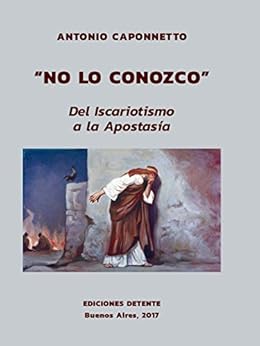
“No lo conozco”: Del Iscariotismo a la Apostasía (Spanish Edition) by Antonio Caponnetto

US HERE – UK HERE

Sinossi
El título de este libro es una de las afamadas e incómodas respuestas, mediante las cuales –según coinciden los cuatro evangelistas? el Apóstol San Pedro negó a Nuestro Señor, en el ocaso del día que lo apresaron. Está aplicado a Jorge Mario Bergoglio, devenido en Francisco cuando se iniciaba el año 2013. Esta es la situación en la que aquí y ahora tenemos
la impresión de estar inmersos. Ya no parece bastar el Iscariotismo para inteligir el mal que nos estremece. Ya no es sólo un beso taimado y treinta monedas tiznadas.
Hay más. Quien funge de Pedro reúne todos los indicios de que no conoce a Cristo. Quien conoce a Cristo no puede permanecer indiferente ante este extraño Pedro que merece cada día, tras una nueva trapisonda de su inagotable repertorio, el clamor del Hijo exigiéndole el irrevocable ¡Vade retro Satanás!
Aquí se centra nuestra acotada pretensión. En intentar reflexionar sobre este tránsito dramático que estamos padeciendo; y que, insistimos, aunque antecedentes tiene y no conviene nunca ocultarlos, hoy ha llegado a una cima que es sima. Esto es, hablando en paradojas, a lo más alto de lo más bajo.

More on the author HERE.

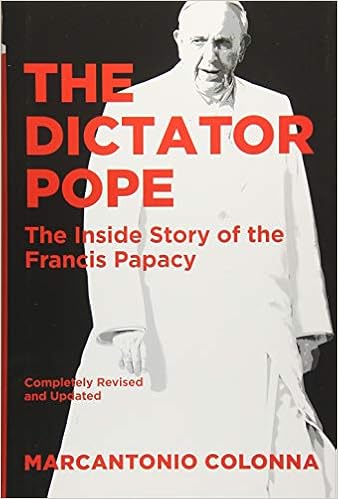
I would also remind the readership of the book by Henry Sire

The Dictator Pope

US HERE – UK HERE

He is also the author of another book, which I’ve noted here in the past.

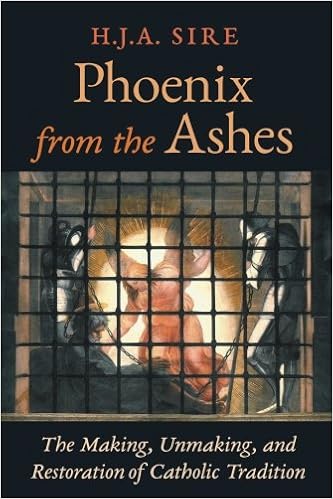
Phoenix from the Ashes: The Making, Unmaking, and Restoration of Catholic Tradition

US HERE – UK HERE


Posted in Francis, REVIEWS | Tagged ,
3 Comments

14 Sept: 11th Anniversary of Summorum Pontificum – Thank you, Benedict XVI!

Spars are carried away and sails shred.  Lines lash in the winds and crack like whips in the tempest. It’s nevertheless all hands on deck as the Barque of Peter takes on water and flies before the storm.

As The Present Crisis continues to build and to build and to build, I am mindful that today, 14 September, the Feast of the Exaltation of the Cross, is the 11th anniversary of the moment that that great charter for ecclesial reform, Summorum Pontificum, went into force.

As I have written before, I write now again to Benedict:

Your Holiness, thank you for Summorum Pontificum.

Since the late 80’s I had the pleasure of speaking with you about these matters, and I think I know your mind on them and motives.

You gave us a great and timely gift.

Today, on this 11th anniversary of the implementation of your Motu Proprio Summorum Pontificum, I offer my Holy Mass for your intention.

I will try to carry forward your vision and hopes.

Ad multos annos.

Posted in Benedict XVI, SUMMORUM PONTIFICUM, The Coming Storm, The future and our choices | Tagged
1 Comment